 Ami MagazineAmi Magazine
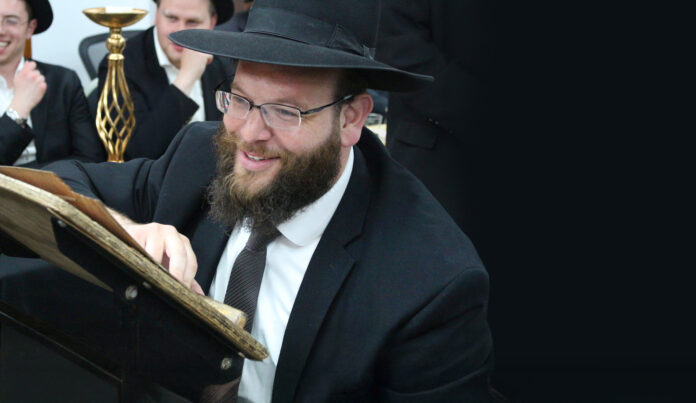
Born and raised in Monsey, New York, Rabbi Shmuel Luger’s trajectory to becoming a rosh yeshivah is nothing short of extraordinary. From a very young age he wrestled with profound questions of emunah and struggled with alcoholism, teetering on the brink of losing connection to a life of purpose and meaning. Yet against all odds, he found the inner strength to reclaim his life. Through recovery, relentless dedication to Torah and a deep immersion in Yiddishkeit, he transformed his challenges into a source of wisdom and inspiration for others. Today, Rabbi Luger guides his talmidim through the lessons that he learned.
As a respected rosh yeshivah, I think it’s very courageous of you to share the story of your early struggles.
I spoke to my rebbe, Rav Zishe Solomon, the rosh yeshivah of Toras Simcha in Yerushalayim, about my reluctance to discuss that part of my life. He agreed that it’s hard to do. But he added that if sharing it will help others and be mechazek them, then I have to do it. That’s why I don’t want to glamorize my past or have anyone be misled by it.
On the one hand, people may say, “If he could overcome such challenges, I can overcome anything,” and I agree 100%. Aderaba, someone else could do a far better job. At the same time, I don’t want anyone to see a person go off the derech and say, “Echta v’ashuv—I will sin and then I will return.” That would go against everything I’m trying to accomplish.
Is your primary message about staying away from alcohol consumption?
Not at all. Because I’m in recovery, people often assume I’m simply anti-alcohol. I’m not. Being an alcoholic is a symptom of an inability to deal with life. While there is such a thing as chemical addiction, the deeper issue is that even if someone goes to rehab and becomes sober, he still hasn’t necessarily fixed his inability to cope. People aren’t comfortable with who they are, so they turn to things that allow them to escape.
When it comes to consuming alcohol and similar behaviors, the root problem is that we are so uncomfortable with ourselves that we can’t stand being alone. Rabbi Dr. Avraham Twerski, z”l, spoke about this often. Despite being extraordinarily successful, brilliant and arguably the most well-known psychiatrist in America, he spoke openly about how he struggled with low self-esteem. He once described being alone at a resort in Switzerland and finding that after just 20 minutes by himself, he couldn’t take it.
In my view, the struggle with self-esteem is the greatest challenge of our generation. I’ve discussed this with Rabbi Eytan Feiner—I’m a talmid of Sh’or Yoshuv and lived in Far Rockaway—as well as with other rabbanim, and they agree.
 Ami MagazineAmi Magazine
“Claims against Israel seem to be raced to air or online without adequate checks, evidencing either carelessness or a desire always to believe the worst about Israel.”
—Michael Prescott, former political editor of the Sunday Times who served as an independent adviser to the BBC’s Internal Standards Committee, in a leaked memo that claimed that the BBC repeatedly published misinformation about Israel.
“I want to ask you a difficult question. There’ll be some people looking in, and they’ll go, look at what happened in Gaza and of course something was coming, what would you say to them?”
—BBC journalist Nick Robinson, interviewing a Jewish family in north London after the Bondi Beach terrorist attack and suggesting that attacks on Jews around the world were to be expected because of Gaza.
 Ami MagazineAmi Magazine
Among the pages of the Republican tax bill passed into law in July is something called a Trump Account, a way to invest for children. The IRS has issued its guidance about Trump Accounts, and we now know the details of these accounts and how they will be taxed.
One exciting aspect of the Trump Accounts is that they will consist of free money (with some caveats) for many American families. The government will put $1,000 into an account for each child born between January 1, 2025, and December 31, 2028, who is an American citizen with a Social Security number.
In addition, a number of billionaires have pledged to put varying amounts of money into these accounts for specific groups of children. This means some children will have more money in their investment accounts than the base $1,000.
Free money is definitely good, and experts have uniformly said that signing up newborns (and perhaps older children) for a Trump Account is a good idea. But when it comes to making investment portfolios for your children and putting in more money for them, there are some disadvantages to Trump Accounts, and it is worthwhile to know what they are.
This article is for informational purposes; a tax expert should be consulted before deciding on investments.
 Ami MagazineAmi Magazine
Much attention was paid, for good reason, to the recent sold-out convention of Turning Point USA, the group The New York Times describes as the nation’s “preeminent conservative youth organization.”
The attention-paying was due to more than the fact that TPUSA, which was founded by the late Charlie Kirk, has become a major player on the American political field. The main attraction was the deep fissure that emerged at the MAGA-minded gathering. Some called it a “civil war,” one whose victors will determine the future orientation of the growing conservative movement in American politics.
On one side of the divide was commentator Ben Shapiro, who, in his speech, minced no words condemning the grand poobah of the other side, popular podcaster Tucker Carlson, for having hosted and coddled the repulsive misogynist and anti-Semite Nick Fuentes on his program.
Mr. Shapiro said that hosts are “responsible for the guests they choose.” He characterized Mr. Fuentes as “an evil troll,” and Mr. Carlson’s friendly interview of him “an act of moral imbecility.”
 Ami MagazineAmi Magazine
Dear Ima,
I don’t know how to do this. I sit here beside you, watching you struggle for breath, fighting for life, and I am filled with so many regrets. The ICU is loud and quiet at the same time. I hear machines hum, alarms beep, the hiss of the ventilator pushing air into your lungs, and the nurses at their station chatting. But you are quiet. Too quiet.
Are you in pain? Oh, how I wish you could let me know what hurts.
So many numbers on the screens. The ones that should be high are low. The ones that should be low are high. They give medication to bring up your blood pressure, and it shoots too high. They lower the dose, and it drops again. Back and forth, up and down.
The doctors gently tell me, “Your mother is very sick. We are doing everything we can for her.” I nod, fighting back tears. What else is there to do?
As I sit here watching you, Ima, I keep drifting back to better times, before dementia changed everything. Before the silence. Before I lost the version of you who could ask me how I was doing, how the kinderlach were. You always knew when I was struggling, even when I tried to hide it. Your love didn’t need words. I felt it.
Things were not always easy for you, but you didn’t let that stop you. I remember you sitting in your chair near the front window and saying Tehillim. That worn Tehillim, the pages soaked with your tears, soft from years of holding. I know you had so much to daven for. Abba. Each of your children. Our struggles, our shidduchim, our health, our parnasah.
Now it’s my Tehillim that is getting soaked. Now I’m the one turning those pages, finding comfort in the same words that comforted you. There’s something about saying Tehillim; the words carry you when you don’t have words of your own. They hold your pain and give it somewhere to go. I understand now, Ima. I understand so many things now that I wish I had understood then.
When I got engaged, you took me from store to store, preparing me for my new life. You didn’t sit me down and give long speeches about marriage. That wasn’t your way. But you showed me by example how to be a devoted wife and caring mother.
Coming home to you after the birth of my first baby, you taught me how to care for him, how to swaddle him, bathe him and soothe him when he wouldn’t stop crying. When I had my first postpartum meltdown, you took the baby from my hands and told me to take a nap.
Now I’m the one tending to you. Now I’m the one sitting by your bedside. The roles have reversed, but they can never truly be equal. You spent years taking care of me. Feeding me, clothing me, worrying about me, davening for me. You gave me everything I needed without ever asking for anything in return. Now it’s my turn to take care of you, but I can never repay what you gave me. Not even close.
I feel so helpless sitting here watching you suffer. All I want is to take away your pain. To make you comfortable. To fix this. And I can’t. I can’t do anything except hold your hand and daven, and wonder if I’m doing enough. If I’ve ever done enough.
This is the part that breaks me, Ima. The regret.
I should have visited more, called more, asked more questions while you could still answer. I should have sat with you longer and held your hand while you could still squeeze back.
I know all the things I should have done. I knew them then, too.
I knew. And still, I said, “Tomorrow.”
Tomorrow I’ll visit. Tomorrow I’ll call. Tomorrow I’ll sit with you and really be present, not rushing, not distracted, not already thinking about what I have to do next.
But tomorrow became next week, next week became next month, the months became years. And here I am, sitting in the ICU, regretting all the tomorrows.
Thinking about everything I should have done differently, I know that I was doing the best I could. I was raising children, working and managing a life with a thousand demands pulling at me from every direction. I was tired. I was overwhelmed. I was human.
And yet, the excuses feel hollow now. Because the truth is that we make time for what we prioritize. And I should have prioritized you more. I should have put you higher on the list. I should have known that the list itself would one day feel meaningless, but you never would.
Now I am crying for all the precious time I wasted.
I cry for the conversations we’ll never have, the questions you’ll never answer, the things I will never know about you. What did you daven for all those years, sitting with your Tehillim? What would you tell me now if you could speak?
I cry for all the times I was impatient with you. The times I rushed our phone calls. The times I visited but wasn’t really there, physically present but mentally already out the door.
I cry because I understand you so much better now that I’m a mother myself. Now I’ve lived enough to know how hard you worked and how much you sacrificed, but by the time I understood this, you couldn’t hear me say it.
That is my pain, Ima.
A daughter’s pain.
A daughter’s guilt.
A daughter’s regret.
* * *
I know I’m not alone in this. I know that right now, in hospitals and nursing homes and living rooms around the world, other daughters and sons are sitting with this same weight. The weight of “I should have.” The weight of “why didn’t I?” The weight of realizing that time is not a renewable resource, and we spent it on things that don’t matter.
We think we have forever, but we don’t. We think there will always be another chance, but there won’t. We think that love is enough, that they know how much we care, even if we don’t show it as often as we should.
Maybe she knew, but that doesn’t ease the unbearable weight of not showing it more.
Regret is the price we pay for being human.
It teaches us to stop saying “tomorrow.” That the people we love won’t always be here, and neither will we. It teaches us that the dishes can wait, the emails can wait, the to-do list can wait, but the people we love can’t.
It teaches us to forgive ourselves. Beating ourselves up for not doing more doesn’t honor anyone. It just adds more pain to a world that already has enough.
* * *
I hope that you can forgive me, Ima. Forgive me for not visiting more. Forgive me for not giving you the kavod you deserve. Forgive me for all the tomorrows I wasted.
I can’t go back, but I can go forward differently.
Maybe the message I’m supposed to learn, listening to the machines breathe for you, is that it’s never too late. Until it is.
Al kol neshimah u’neshimah tehallel Kah. For every breath, we praise Hashem.
Sitting here beside you, I thank Hashem for every breath. Yours and mine.
I can’t undo all the wasted moments, Ima, but I can be here for this moment.
I’m here now, Ima. I’m here.
 Ami MagazineAmi Magazine
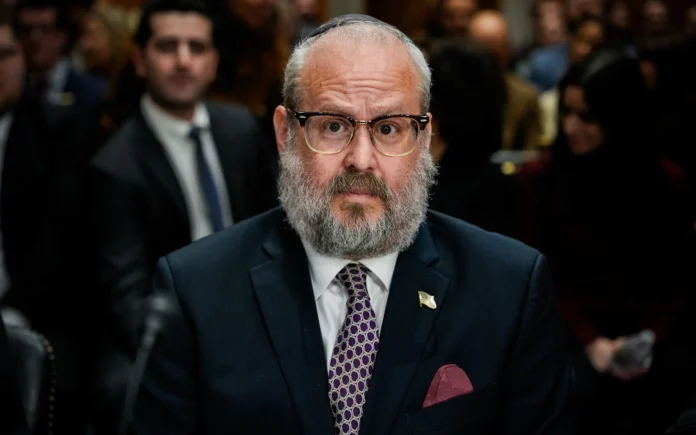
Born in Kfar Chabad, Israel, into a Lubavitcher family, Rabbi Yehuda Kaploun was raised with deep roots in Jewish communal life. His parents served as shluchim of the Lubavitcher Rebbe.
The family later moved to New Haven, Connecticut, where his father worked as a rabbi and educator. Kaploun’s heritage reflects a long history of Jewish leadership; his father’s maternal grandfather, Rabbi Moshe Zalman Feiglin, helped establish Yiddishkeit in Australia and was referred by the Lubavitcher Rebbe as the Avraham Avinu of Australia. His maternal grandfather, Rav Moshe Yitzchak Hecht was one of the first shluchim in America and served as a rav and mechanech in the New Haven area for decades.
Rabbi Kaploun has pursued a career spanning business, philanthropy and community service. He is the cofounder and president of RussKap Water, a company focused on atmospheric water generation technology, and he previously served as a senior partner at a consulting firm advising on government relations and publicprivate partnerships. He has also been active in disaster relief and charitable efforts, including volunteer work after 9/11 and during major hurricanes, and he cofounded the Moses and Aaron Foundation with the late Elie Wiesel to support children with special needs and their families.
 Ami MagazineAmi Magazine
The words “Free Palestine” were followed by fire—an attack with three Molotov cocktails.
The attack in June on a group of Jews marching in Boulder, Colorado, for the Israeli hostages left one older Jewish woman dead and several other marchers injured. When the police investigated Mohamed Sabry Soliman, who carried out the attack, they found that he had been influenced online by the teachings of the Muslim Brotherhood.
That determination spurred Senator Ted Cruz (R-TX) to reintroduce legislation to brand the Muslim Brotherhood a foreign terrorist organization, legislation that had been in the works on and off since 2014. That legislation is still making its way through Congress.
But in late November, President Trump also took action. He issued an executive order setting in motion a process by which the executive branch would make a determination about branches of the Muslim Brotherhood and decide whether they were terrorist organizations.
The executive order specifically mentions the Brotherhood chapters in Egypt, Lebanon and Jordan as ones that have called for violence, though it does not immediately designate them terrorist groups.
Trump’s order left some of his supporters unhappy, because it fails to simply say that the Muslim Brotherhood is a terrorist organization.
In contrast, Governor Greg Abbott of Texas and Governor Ron DeSantis of Florida went ahead and issued rules designating the Muslim Brotherhood and the Council on American-Islamic Relations (CAIR)—an American organization that has been tied to the Brotherhood—as foreign terrorist organizations. CAIR is suing both states in court.
Around the world, only one Western country, Austria, has designated the Muslim Brotherhood a terrorist organization. The other countries that have done so are all Arab or Muslim countries, which generally have lower thresholds and standards of evidence to make such declarations.
What the divide between the White House and Texas and Florida hints at is that dealing with the Muslim Brotherhood is a bit more complicated than dealing with other international Islamist organizations. The groups affiliated with the Brotherhood extend to clearly recognized terrorist groups like Hamas, but they also include a political party that was a coalition partner in Israel’s government. That leaves the US government with a dilemma.
 Ami MagazineAmi Magazine
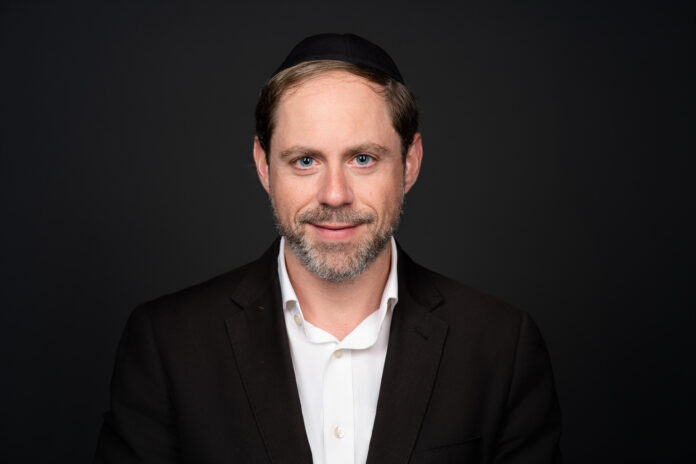
In all likelihood, you either own a Tesla or your kids have asked you to get one. Around 10% of people in the US own an electric car, with that number expected to grow every year. And electric cars need charging. Enter Munish Klein, co-founder of KWEV, a company that installs charging stations for electric cars in multi-family and commercial properties across the US.
Electric cars are a fun topic, and Munish is a fun person to talk to. An entrepreneur who had his own company until his partners wanted to sell, he has many years of experience in the energy-saving industry. After COVID, he pivoted his current company to focus on the ever-expanding industry of charging electric cars, with KWEV being his latest venture.
We spoke about energy, infrastructure and EV charging, how to build partnerships that last, and why emunah and patience matter as much as execution.
 Ami MagazineAmi Magazine
In 2003, during the Second Intifada, Shalom Har-Melech and his wife Limor, expecting their second child, were attacked by Palestinian gunmen while in their car. Shalom was killed and his wife injured.
Today, Mrs. Har-Melech is remarried (her current surname is Son Har-Melech) and a member of the Knesset. She testified before the body about the fact that one of her first husband’s killers went on to be released in a prisoner exchange deal. And went on to command a deadly attack on another Israeli and to take part in the October 7 massacre before finally being killed during the Gaza war.
Her testimony was in regard to a bill before the Knesset that she is sponsoring, with the enthusiastic support of Minister of National Security Itamar Ben-Gvir.
The bill, which passed its first reading (of the required three readings) by a vote of 39 to 16 on November 10, would mandate a death sentence for anyone convicted of “intentionally or out of indifference causing the death of an Israeli citizen, when the act is carried out from a racist motive or hate to a certain public…and with the purpose of harming the State of Israel and the rebirth of the Jewish people in its homeland.”
 Ami MagazineAmi Magazine
Rav Yitzchok Kolodetsky, a son-in-law of Rav Chaim Kanievsky, zt”l, is a distinguished gaon and tzaddik in his own right. Known for his asceticism and fasting daily, his brachos and counsel, particularly in matters of chinuch and shidduchim, are highly sought after. His presence leaves a lasting impression on all who encounter him.
Together with his wife, Rebbetzin Leah Kolodetsky, he provides encouragement and guidance to countless individuals. Their home is a haven for those seeking wisdom and solace.
After the October 7 tragedy, Rav Kolodetsky demonstrated extraordinary empathy for the hostages. For months he slept directly on the floor in order to share in their suffering. When winter brought illness from the cold, he continued sleeping on a thin wooden board, maintaining his austerity while safeguarding his health.
So in your estimate, the root cause of addiction is low self-esteem?
There’s an even deeper issue, which is identity. If a person doesn’t know who he is, anything you say to him can feel like an attack. That’s because he doesn’t have a foundation to deal with life. He lacks the atzmiyus of having a solid identity.
I once attended an asifas harabbanim in America with Rav Aharon Leib Shteinman. Afterward, there was a protest outside over his stance on an issue in Eretz Yisrael. At first, I thought it was a chillul Hashem, but then I asked myself: Does this bother Rav Shteinman? No. He’s one of the gedolei hador. You simply can’t offend someone like that because his sense of self is intact. When a person lacks that, external expectations can create a gap between who he truly is and who he feels he’s supposed to be.
Are you saying that the higher the level the person is on, the stronger his self-identity?
Yes. On occasion, I like to leave my phone at home and go learn in different places around Bnei Brak. One of my favorite spots is Ponovezh. When I sit down, I usually wait a few minutes to make sure I’m not in someone else’s seat, and then I look around and take it all in. Almost every bachur in the main beis midrash is dressed exactly the same: white button-down shirts with unbuttoned collars, sleeves rolled down; no one rolls them up. Their tzitzis are out but at a standard length; none are hanging down past their knees. Maybe someone is wearing glasses or a watch, but otherwise it’s very uniform. I once noticed someone wearing a rekel, and it really stood out.
There are only two or three rebbeim in the beis midrash, yet over 1,000 bachurim are sitting and learning. At one point, I found myself wondering: Do these bachurim see themselves as exactly the same or as distinct individuals?
I developed a bit of a kesher with one bachur, and I asked him that question one day. He looked at me with incomprehension. “Of course I’m me,” he said. “I have my own name. It’s not just the chitzoniyus that makes someone different. I’m myself, with my own maalos and chesronos.”
I didn’t go any deeper than that, because I didn’t want to push him or make him start questioning things, so I changed the subject. My point is that they all have strong identities that aren’t dependent on external factors.
The self-esteem problems we see stem from a Western culture that teaches us to believe that we must be different from others in external ways. The real issue begins when a person doesn’t know who he is on the inside. So he looks outward—to others and to society—and says, “This is what people value. This is what matters.” And he begins to act accordingly.
My grandmother is a Twersky, so I read all the articles in Ami about the family very carefully. In the article you ran about the late Rachmastrivka Rebbe of New York, Rav Chai Yitzchak Twersky, zt”l, it mentioned that Rav Yochanan of Rachmastrivka wanted to inherit the middah of “gornisht” from his father, Rav Mottel of Chernobyl, but one of his brothers had already gotten it first, so he took the “gor gornisht.” So yes, a person can break himself and channel these things in the right away.
That’s a high madreigah. But the average person needs to feel a sense of self-worth in a very real way.
Nowadays, there are conversations in the frum velt—more common in America than in Eretz Yisrael—about what we can call “Kiddush Club culture.” People talk about exciting things there; we might call it “Make Yiddishkeit Geshmak Again.” The world was like that when I was growing up. I believe it stems from a lack of being comfortable with oneself, creating a need for a constant matzav to keep the geshmak going.
People travel to other countries for Sukkos or rent apartments for exorbitant amounts of money and then complain that there’s too much alcohol at Simchas Beis Hasho’eivah. But the alcohol isn’t the problem.
In your opinion, the need to keep the geshmak going is the problem.
Indeed. Years ago, I was in a place where recovery meetings are held when I saw a notice about Shoplifters Anonymous. At first, I couldn’t process it, but apparently there are enough people addicted to shoplifting that they hold meetings. It’s a wild idea, but the way that alcohol, drugs, gambling and similar behaviors work is partly chemical, as they’re all the same chase for dopamine. When dopamine is released, a person feels good. And the more a person engages in dopamine-inducing activities the more the body adapts, and the less effective the same activity becomes. That’s why everything has to be bigger, more intense or more frequent.
Yiddishkeit is structured in a way that regulates dopamine in a healthy way. We have Shabbos every seven days. Special occasions—like a bris, a bar mitzvah of a chasunah—naturally give us an extra rush of dopamine. Constantly chasing highs, however, is dangerous. A person tries to recreate the initial thrill of drinking or using drugs, but it can’t be duplicated. The Kiddush might have been geshmak, but now he seeks an even better one. The more we give in to our taavos, the more the body expects and craves it.
This is how opiates and similar drugs work. A small dose never feels the same again, so people chase stronger doses, and when the body constantly pursues more dopamine, it can never be satisfied.
To read more, subscribe to Ami
If anti-Jewish reports in mainstream media were a toxic flood before October 7, afterward they became a virulent tsunami. Much of that was anti-Israel lies that teetered well over the boundary between inaccurate reporting and into anti-Jewish propaganda. But there were also plenty of articles putting Jews around the world in a harsh light, blaming them for attacks carried out against them or using token “as a Jews” to cast the rest of the Jewish community as evil.
Is there any end in sight?
Buying the media and changing it
One major change that happened this past year was the acquisition of the media company Paramount Global by David Ellison, backed by his father, Oracle CEO Larry Ellison. The Ellisons, a pro-Israel Jewish family, immediately made changes at CBS, a Paramount subsidiary. Most importantly, they put Bari Weiss, the editor-in-chief of the centrist and pro-Israel Free Press, in charge of the news division at CBS, one of the three major non-cable TV news channels in the US.
That has already led to controversy. Weiss delayed the airing of a 60 Minutes investigative report about the Trump administration’s use of the CECOT prison in El Salvador to hold deportees. The 60 Minutes show is the flagship news program at CBS, and insiders accused Weiss of both being a shill for the Trump administration (the Ellisons have a close relationship with Trump) and being incompetent in the field of journalism.
The outcome of that kerfuffle may show whether Weiss will be able to permanently change the tenor and focus of a major news channel in the US.
(One concerning issue that has come up, however, is the suggestion that the Ellisons might bring Saudi and Qatari government investment funds into their proposed acquisition of Warner Discovery, which might give the Saudis and Qataris sway over CNN.)
Another major change may have been the way that light has been shed on nasty practices at the BBC. As Ami has previously reported, a leaked memorandum from Michael Prescott, who had been serving as part of an internal standards review at the BBC, showed that there were numerous failures of reporting—seemingly to the point of clear bias—on a number of issues. One of those focused on by Prescott was Israel, with him pointing out that the BBC had slanted its coverage against Israel in many ways, especially in its Arab-language service.
While the usual suspects complained about the memo, British members of Parliament called for changes. If anything comes of that, it may change the way one of the most prominent and widespread news outlets does its reporting.
Social media, in any case
One question about the few possible changes to media outlets is whether it matters anymore. Young people aren’t getting their news directly from these outlets one way or the other. Instead, they’re turning to the even worse world of social media.
According to a poll by Inside Higher Ed and Generation Lab taken at the end of 2024, three out of four US college students at 181 institutions said that social media is their main source of news. About half of the students said that their second-most used source of news was word of mouth. Only one out of five students said that they regularly turned to newspapers, whether digital or print, for news.
And this wasn’t because students thought that newspapers were less reliable. In fact, they mostly believed that they were more reliable than what they were seeing on social media or from influencers. That didn’t matter.
And even when they want to check up more about a story, they are more likely to end up reading about it in an AI-generated response from Google than in a primary news source.
To read more, subscribe to Ami
Investment in what?
The money in Trump Accounts must be invested in index funds in American equities and not in sector-specific indexes. In other words, the money will go into either mutual funds or exchange-traded funds that track something like the S&P 500 or a similarly broad stock index.
The money cannot be invested in index funds of foreign stocks or in bonds.
How to sign up
The $1,000 and any other money won’t automatically be put into accounts for children. Instead, you need to sign up for an account for your child by filing an IRS Form 4547. The forms aren’t ready yet, but the government says they should be available in 2026, and at that time, it should be possible to enroll online.
Free money?
One of the biggest draws of these accounts is that the government and some billionaires will be putting money into them.
First is the government, which will be putting in $1,000 for children born between January 1, 2025, and at least the end of 2028. (It would require further legislation to extend the opportunity to children born afterward.)
Even children who were born before January 1, 2025, and are no older than ten will have $250 deposited in their Trump Accounts through a donation from tech billionaire Michael Dell.
Furthermore, kids in Connecticut who are less than ten years old and live in the poorest ZIP codes will get an additional $250 in their accounts through a donation from mega-investor Ray Dalio.
The Trump administration has thrown down a challenge for other billionaires to make similar donations.
(Those who are on a government assistance plan that has an asset limit do not need to worry, according to the latest guidance. The free money placed in the accounts by the government and others does not count toward those assets. However, when the money is withdrawn, it will count as income for the owner of the account—the child, who by then will be an adult.)
Beyond the money given by the government and billionaires, parents and others can put up to $5,000 in an account each year before the child turns 18.
To read more, subscribe to Ami
“If you host a Hitler apologist, Nazi-loving, anti-American piece of refuse like Nick Fuentes,” he said, “you ought to own it.”
Mr. Shapiro also denounced rabid anti-Semitic conspiracy theorist Candace Owens, media personality Megyn Kelly and pundit Steve Bannon, whom he called “frauds and grifters.”
“The conservative movement is in serious danger,” he asserted, “from charlatans who claim to speak in the name of principle but actually traffic in conspiracism and dishonesty.”
Mr. Carlson, in his speech, dismissed Mr. Shapiro’s attempt to “deplatform and denounce” people, and called him “pompous.”
The following day, Ms. Kelly, noting the internecine feud, declared the end of her friendship with Ben Shapiro and criticized another traditional conservative, CBS News editor-in-chief Bari Weiss. And went on to play the Israel card.
“It’s about Israel,” she said. “Those two are very…ardent Israel activists, which is fine, but they don’t get to dictate how the rest of us feel about Israel or what we do with respect to our friends and our friends’ opinions on Israel.”
She called Mr. Shapiro’s insistence that the conservative movement sever ties with people like Carlson and Owens “a betrayal.”
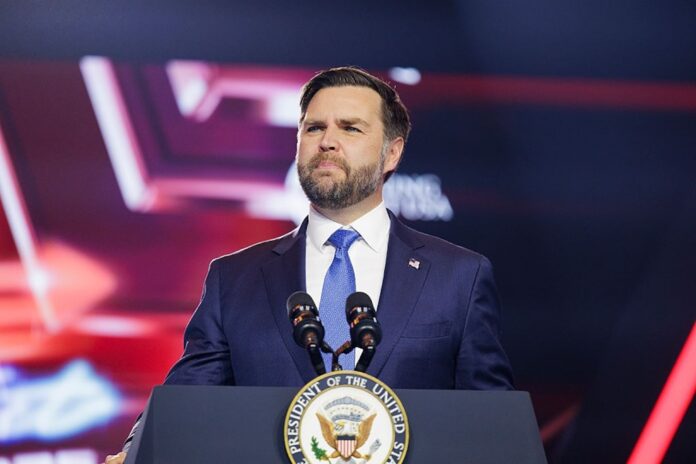
Particularly disturbing to me, though, was the closing convention speech delivered by Vice President JD Vance, who, in a thinly-veiled swipe at Mr. Shapiro, condemned what he called conservative “purity tests.”
“I didn’t bring a list of conservatives,” he said, “to denounce or to deplatform.”
In addition to his subtle defense of Mr. Carlson and, by association, Mr. Fuentes, the vice president also declared that “Christianity is America’s creed.”
He stressed that he was “not saying you have to be a Christian to be an American,” but was just noting how, “If you go to almost any food pantry in this country, you will find Christians feeding the poor…you’ll find Christians sitting patiently beside hospice beds and in recovery rooms and in all the places of the world where people have given up on other people.”
He seemed oddly oblivious to non-Christians dedicated to chesed.
Israel was on the vice president’s mind as well. In a subsequent interview in the British medium UnHerd, Mr. Vance said that the fear of Fuentes and his ilk are “overstated by people who want to avoid having a foreign-policy conversation about America’s relationship with Israel.” He further claimed that concerns about anti-Semitic voices are raised as a way to avoid discussing “a real backlash to a consensus view in American foreign policy” regarding Israel.
Mr. Vance has called Israel an “important ally.” But his words, to my ears, reflect a purely transactional embrace of the country. Israel provides intelligence and promotes regional security, and, in exchange, earns American aid and cooperation.
The opposite of a transactional relationship is a “relational” one, where the parties value each other for reasons beyond mutual benefits.
Joe Biden, whatever one may think of his presidency or policies, and despite his disagreements with Israel’s current government, had a relational connection to Israel. He regularly called himself a Zionist.
“Biden’s connection to Israel,” former Middle East negotiator Aaron David Miller once said, “is deeply ingrained in his political DNA.”
I don’t quite get that feeling from Mr. Vance.
To read more, subscribe to Ami
Miriam
Please daven for a refuah shleimah for Toba bas Sara Rivka
To read more, subscribe to Ami
Congratulations on your confirmation. It should be with a lot of hatzlachah.
Amein.
What do you see as your primary mission in this role? How do you plan to combat anti-Semitism?
In practical terms, there are three or four ways to do it. One is through education. Unfortunately, the educational system in this country and around the world lends itself to promoting hatred of Jews, with a lot of inaccuracies and things that are untrue. Therefore, we have to confront the untruths. That’s a very important part of confronting anti-Semitism. When The New York Times writes an article and has a misleading picture about a famine in Gaza, and 50 million people see it but their apology is seen by only 100,000 people, it means that 49.9 million people are getting the wrong information. There has to be a more concerted effort in confronting the inaccuracies that help spread the hatred.
Number two, some governments have policies that definitely lend themselves to not protecting their Jewish communities. The protection of American Jews and the Jewish community around the globe is my priority. That is what the job entails, and it includes dealing with governments, such as how to get Australia to ratchet up what they’re doing, which is something the American government had been requesting for a long time; they were ignoring the rising anti-Semitism. Unfortunately, we are seeing the results now. So I would say that protecting, educating and confronting are probably our three top goals.
Many people assume that this is mainly a domestic position, but your remarks highlight its international nature.
The position is formally titled Special Envoy and Ambassador-at-Large to Combat Global Antisemitism, and my intent is to honor that responsibility.
I know that you have roots in Australia.
Correct. My great-grandfather founded the Jewish community in a place called Shepparton, and he was considered to be the Avraham Avinu of Australia. My father was born in the Australian outback, and he went to school in Melbourne as a young child.
So you also have a personal connection to what happened in Australia.
Yes, but that doesn’t change the goals. It does, however, add an impetus and allows me to explain to the officials that I have a personal involvement. But of course, every Jew is someone I have to protect, regardless of affiliation. Kol Yisrael areivim zeh lazeh.
Do you believe that the problems faced by the Australian Jewish community are the result of governmental decisions, or from the downstream effects of immigration policies from the Middle East?
The American president and secretary of state have made it very clear that countries that tolerate terroristic behavior and call for things that are not in accordance with US policy are not helping to decrease hate. In fact, they embolden terrorists. Part of the problem was that the Australian government didn’t listen to the US when they asked them not to recognize a Palestinian state and to condemn Hamas in the strongest terms. They also ignored the recommendations of their own special envoy to combat anti-Semitism up until last week.
I’m receiving more and more information every day, but there’s no question that an unwillingness to confront the anti-Semitic rhetoric or the people who were on Australia’s own watchlist and ended up having guns anyway played a role. How does that happen? The question is how much responsibility the government bears for its inaction. There is obviously some culpability there.
You noted that the president and secretary of state have spoken out on these matters. Could you clarify your role in this initiative?
My function is to represent the administration in areas that involve anti-Semitism and expanding the IHRA definition of it, which lays out very specific roles for governments. It’s a non-binding agreement, but we would still like to see more countries join. I report directly to the secretary of state and will work with ambassadors and governments all over the world.
During your nomination, some people, including Jerry Nadler, expressed concern that the role is meant to be apolitical and you might be too partisan. How would you respond?
Allow me to address two things. During the process, I invited every member of Congress to meet with me to voice any concerns they had. I said during my Senate hearing that anti-Semitism is a bipartisan problem. For people who have an agenda against the president, it wouldn’t make a difference who was nominated. This is the same individual who commended the work I did with Elie Wiesel for children with special needs; in fact, I believe he authored eight or ten proclamations in Congress saluting it. So this is a purely political agenda, and when you have staffers who work for J Street and other anti-Orthodox groups and anti-Israel Jewish groups, you’re going to have that kind of person coming out against you.
The interesting thing is that many Democrats, including Josh Gottheimer and Dan Goldman, met with me and were thrilled by my nomination.
As a member of the chareidi community, in what ways do you anticipate that your Yiddishkeit will inform your approach?
Having grown up and experienced walking in the street and being called dirty Jew, having witnessed the Crown Heights riots, having a sister who passed away from cancers that were caused by 9/11, and having a cousin who was killed on October 7, I bring a different sense of purpose to what the role is all about.
My grandfather, Rav Moshe Yitzchak Hecht, was one of the Rebbe’s first shluchim, and my other grandfather, Reb Aharon Kaploun, was an ish chesed in Yerushalayim and Australia who did acts of kindness that are legendary. I learned from both of them that there are different ways to serve the community. There are times when things are better done quietly, and there are times when things must be done very publicly.
The Lubavitcher Rebbe explained to me and my parents when I had the experience of a yechidus for my bar mitzvah that we have the responsibility to light up the homes of other families. These are things that you take with you every day.
The responsibility of combating global anti-Semitism is a very awesome and daunting one. It’s not something I take lightly. But I take courage in the fact that because of how I was educated and my association with present-day gedolim, I have the ability to lean on giants to assist me in finding the right way to deal with each case. What works in one case doesn’t necessarily work in the other.
Baruch Hashem, many ambassadors have reached out to me over the last four or five months to work with me from their countries. They were all waiting for my confirmation to start the process. I believe that we are in a very strong position to hit the ground running and have an immediate impact. I would also like to thank US ambassadors like Mike Huckabee and Bill White, as well as the staff at the State Department and the assistant secretary for religious liberty.
You asked earlier about my responsibilities. Well, one of the points in the Gaza agreement is to engage in dialogue about how to reduce hatred. That’s something that’s extremely important. So is working with the UN so the Arab textbooks will stop praising martyrdom and children will no longer be taught to hate. As the president just reiterated the other day, American aid must be used to promote American interests around the world rather than hatred.
To read more, subscribe to Ami
A Brotherhood Around the World
The Muslim Brotherhood dates back to 1928, when it was founded by a schoolteacher and imam named Hassan al-Banna. In the aftermath of Ottoman rule, Egypt was under the influence of the British, though there was an independent Egyptian government, which demanded that the country be secularized.
Al-Banna was of the opinion that Islam should be the bedrock and basis of all of society’s institutions, not merely a religion in a secularized country, and he created the Muslim Brotherhood to promote that “from below,” meaning as a grassroots organization that would overwhelm society. The organization established hundreds of social institutions, like schools, mosques and health clinics, throughout Egypt.
But Al-Banna also espoused violence as a proper way of spreading Muslim doctrine, and a military wing of the organization began carrying out attacks, including political assassinations, in Egypt during the 1940s. The organization also sent volunteers to attack Israel in 1948.
The Muslim Brotherhood was outlawed in Egypt in 1948 because the government felt that it was a threat, possibly a violent one, to its rule. Al-Banna was killed on the street in 1949, and his followers claimed that it was an assassination by the government.
The Brotherhood would continue to be oppressed in Egypt after the 1952 revolution that brought Gamal Abdel Nasser to power. Nasser was nearly assassinated in 1954 by what was suspected to be a Brotherhood plot, and that led to many of the Brotherhood leaders being imprisoned or executed.
One who would go on to have outsized influence was Sayyid Qutb, whose writings in prison would influence Sunni radicals and terrorist groups, such as Al Qaeda and ISIS. Qutb was eventually executed in 1966, but his writings lived on.
While that kind of extreme radicalism was an offshoot of the Brotherhood, the general mass of the Brotherhood took a different route during the 1980s, founding political opposition groups in many countries that often ran in elections, including in Syria and Jordan.
There were still openly violent groups that were part of the Muslim Brotherhood, such as Hamas, which was officially recognized as the Palestinian branch of the Muslim Brotherhood. But in many places, the Brotherhood took on an air of respectability. Most notably, Mohamed Morsi, whose party was affiliated with the Brotherhood, became the president of Egypt from 2012 through 2013. The “growth from the bottom” idea of Al-Banna had achieved success—at least for a little time.
Morsi was quickly ousted by the current regime, and the Brotherhood was oppressed once more. But they had shown that the strategy worked.
To read more, subscribe to Ami
I was born in Montreal, Canada. I am 42 years old and the youngest of five children. My father was born right after the war in Kerestir, or, as his passport calls it, Bodrogkeresztúr. My father’s parents were both from Kerestir as well. One of his grandfathers was the rosh hakahal, and the other was the town’s shochet and dayan. In 1956, his family immigrated to Canada.
“My mother was born in Czechoslovakia. Both of her parents were survivors. My grandmother, whose maiden name was Mendelowitz, was a teenager during the war and her brother was a baby, not even a year old. Her father was very wealthy. One Friday, Nazis ransacked the house, and for some reason, they threw a big blanket over the baby’s crib. My grandmother stayed away all of Shabbos, and when she came back later, she found her baby brother still in the crib. She kept him with her throughout the war. Their father hid all his children with non-Jews, and they all survived. After the war, they all reunited.
“I went to the Skvere cheder. For high school, I went to the Mesivta of Lakewood. My cousin had gone there two years earlier and had a good experience, so my parents felt it would be a good fit for me as well. After Mesivta of Lakewood, I went to Vyelipol (Frankel’s Yeshiva) in Flatbush for about two years. That was 12th grade and my first year of beis midrash. After that I learned in Darchei Torah in Far Rockaway. The current rosh yeshivah of Darchei Torah, Rav Shlomo Avigdor Altusky, had been our next-door neighbor in Montreal.
“My grandfather started a shul called Bais Moshe in his basement. He also ran a kind of soup kitchen there, and every Erev Shabbos he would distribute free food to Holocaust survivors. Huge lines of people would form there every week. My grandmother once asked him, ‘You’re giving out all this food. Where’s the money? Where do you write it down?’ He answered, ‘It’s being written down up above.’
“My father was a caterer, primarily for weddings. He was a pioneer of off-premise catering. His food was so good that other caterers, like Michael Schick, used to call him for his recipes. But he was very modest; he never attributed his success to his own talents. He always said, ‘M’leigt es arein in oiven, in m’nemt es fun oiven, s’iz allehs fun oiven—you put it in the oven, you take it out of the oven, but it all comes from above.’
“My mother ran the bakery side of the catering. She baked fresh, heimishe cakes for every wedding, and people really liked them.
“I was always entrepreneurial. Growing up, I helped my father in his business during the summers, when there wasn’t much going on. When I was 12 years old, I was already selling cell phones. I had a family friend who was a dealer for AT&T, and they were giving out licenses, so I latched onto him. It’s not like I opened a storefront on 13th Avenue; eBay was still in its infancy, so I made myself an eBay account. This was about 30 years ago, and cell phones were a different world. I had a StarTAC. The next model, the Vader, was half the size of the StarTAC, but it never really took off. I still have both the StarTAC and the Vader stored away in a special box in my house.
“I also pioneered schnitzel sandwiches at Mesivta of Lakewood and started doing cholent on Thursday nights. It was more for fun and the challenge than for money; my parents always gave us whatever we needed. I don’t think I even tracked how much money I made; it was more for the thrill.
“I got married while still in Darchei, before I turned 20. I think I broke the record there as the youngest to get engaged. I may still hold it; I should call Guinness World Records to see if it counts.
“I learned in Darchei’s kollel for about a year after getting married. I was living in Borough Park and commuting. After we had a baby, the commute became harder, so I moved to the Mir in Flatbush. Rabbi Binyamin Eisenberger used to sit in the back row and handle shidduchim. After about two years in kollel, I went to work.
“My first real job was with a mobile billboard company. We were innovators in the truck-side advertising industry. We turned standard white box trucks into moving assets, selling the ad space and wrapping them with brand advertising. We built a national network, signing contracts with trucking companies across all 50 states. We would ask companies, ‘Why pay $10,000 for one stationary billboard on the BQE when for the same price you can have 100 trucks all over the city?’ It worked. We had defined routes, and with the tracking system we installed, we could show our clients exactly where the trucks were traveling on a daily and weekly basis.
“I did that for about two years, until 2005. The owners decided to stay in marketing but pivot into what was then the emerging digital marketing. Not digital ad space like on the Internet but installing plasma screens in entertainment spaces, like restaurants. You still see versions of them today. We contracted with these spaces in New York City, placed private-network screens in their locations, and ran ads for well-known companies like Bacardi and Coors. We were targeting major brands.
“It was a phenomenal experience—until 2008, when the market crashed and all the big companies pulled back on their marketing. For example, at their peak, General Motors was spending about $650 million a year on advertising, but that was cut down to roughly $100 million. As a result, all the newer players, including us, were basically pushed out of the business.
“After that venture folded, I moved into the solar and energy space. I had a brother-in-law in the solar business, so I started brokering for him. I was also brokering electric contracts. Large energy users go out annually and buy blocks of electricity rather than relying on fluctuating utility prices, and I was involved in that process. One thing led to another, and I became more involved in energy efficiency overall, analyzing buildings to see where consumption could be reduced.
“Around 2012–2013, lighting became a major focus in the energy industry, specifically, economical lighting. Buildings were transitioning from magnetic fluorescent fixtures, the T8 bulbs, the four- and eight-foot lamps, to more efficient lighting. There was a tremendous amount of activity in the business at that point, and that’s when I got heavily involved.
“I started my own venture, Advanced Energy Resources, which was primarily a consulting shop. We partnered with utility companies to process incentives and rebates for end users, meaning their clients. I later spun off a separate division called AER Lighting, which focused solely on installations. At our peak, around 2016, we had 20–30 technicians retrofitting lighting systems in well over a 1,000 buildings across the five boroughs, including multifamily and commercial properties. We were running a large operation with a monthly payroll of about $100,000.
“Then, when I was 32, I hit a crossroad. I had two partners in that business, and they wanted an exit. They had lost patience and believed this was a big opportunity, so we sold the entire company in exchange for shares in a public entity, ‘The Power Company.’ They completed a reverse merger into a shell and then spent several years restructuring many of the companies they had acquired. That process is still ongoing. They’ve continued to develop, but the shares haven’t appreciated in a meaningful way yet. Today, my shares are probably worth only a few thousand dollars.
“Siyata dishmaya always comes around; you simply have to keep your eyes open to see it. Since I hadn’t signed a non-compete, I was back in the office the next day, managing transactions on my own but taking it slowly. About a year later, two former employees of mine, David Lax and Charles (Luzee) Stengel, reached out and invited me to join them in their new lighting business, Solo Electric. It’s been ten years and we’re still operating.
“Unlike my previous massive, high-payroll operation, Solo Electric is more of a boutique firm. We’re licensed electrical contractors in both New York and New Jersey, employing technicians and project managers in the field and office. We handle everything from complex service upgrades to the installation of high-end lighting controls, incorporating occupancy and motion sensors and daylight harvesting, primarily for commercial properties throughout the tri-state area.
“We also oversee comprehensive energy compliance. As the city kept introducing increased energy regulations, companies needed a lot of auditing. For example, the city passed Local Law 84, requiring annual benchmarking for every building. Property owners have to collect all their energy usage, electric, gas and oil, document it, and submit it to the city. Then New York City introduced Local Law 88, which requires property owners to benchmark and complete lighting assessments through a very specific portal. Shortly after that they enacted Local Law 87, affecting retro-commissioning, which includes boiler tune-ups, boiler upgrades, insulation, piping insulation and related work.
“We essentially became partners with property owners, bringing in engineers and site surveyors to assess buildings and prepare these reports every year. Once we completed the full assessment, we would handle certain components ourselves and subcontract the rest.
To read more, subscribe to Ami
Needless to say, the proposal has outraged a bevy of human rights groups (who tend to downplay the human right to be safe from crazed killers), occupants of the political left and the Palestinian Authority.
Not to mention the Knesset National Security Committee, whose legal advisers determined that there are fundamental problems with the bill.
They object to the removal of judges’ sentencing discretion, since a murderer found guilty of the described crime would automatically be sentenced to death; and to the bill’s seeming de facto applicability only to Palestinian perpetrators and Israeli victims (although its wording makes no ethnicity-based distinctions).
The committee also insists that proof must be proffered for the contention that implementing the death penalty would deter terrorism.
What’s more, as currently written, the bill requires executions by lethal injection, involving doctors in the process. And the Israel Medical Association objected to medical personnel being involved in any execution.
Israel abolished the death penalty for murder in 1954 (when the UK and France were still carrying out executions, as do some 27 US states and the federal government today). But capital punishment remains on the Israeli books for certain offenses, including crimes related to the Holocaust and to genocide or treason. Famously, Israel convicted and hanged Adolf Eichmann in 1962.
In 1967, military courts established in the captured territories were authorized to impose the death penalty on murderous residents. But every Israeli government since has maintained a policy of abstaining from its use, instructing military prosecutors not to seek death sentences.
And so, the elephant cowering in the corner here is already existent Israeli law. The creature needs to be coaxed forward, watered and fed.
While the Son Har-Melech proposal may have its heart in the right place, a new law, especially one that raises questions, legitimate or not, that will be used to prevent its implementation, isn’t what’s needed.
Especially since passage of the bill will only add to the hatred for Israel that has spread like some poisonous kudzu around the world. That is why Degel HaTorah’s rabbanim instructed the party’s MKs to vote against the proposal. Rav Dov Landau called the bill “provocation for its own sake” and asserted that it could “cause bloodshed.”
Instead of a new law, what is needed is governmental direction to judges to no longer refrain from prosecuting terrorists under existent law, and to start sentencing the murderous among them appropriately. Doctors needn’t be involved in carrying out those sentences. Gallows work fine.
Terrorists with blood (Jewish or otherwise) on their hands deserve execution. Not because of some lust for revenge or hatred. But because of the simple fact that removing such people from the world concurrently removes the incentive that terror groups have to kidnap Israelis, namely, to effect the release of imprisoned murderers.
As MK Son Har-Melech succinctly put it: “A dead terrorist does not get released alive.” He can no longer serve as a living bargaining chip.
Nor does he have opportunities to pick up where he left off.
To read more, subscribe to Ami
This devotion moved many families of hostages to tears. During a visit to their home, Rebbetzin Leah showed them the wooden board, underscoring her husband’s profound identification with their pain.
I recently had the merit to meet with Rav Kolodetsky. In the course of our conversation, he reflected upon—among other things—his wife’s illustrious ancestry and their enduring spiritual legacy.
Why is the Rav currently in America?
There was a shvache neighborhood that my shver, Rav Chaim, wanted to strengthen, so he decided to open a kollel there that would be l’eila u’l’eila. Baruch Hashem, it has been very successful.
Today, we have two branches, one in Pardes Katz and the other on Rechov Sokolov, with a total of 1,000 yungeleit throughout the day. This means that I am responsible for supporting approximately 6,000 children. To sustain them, we need half a million dollars every month. I have shutfim who contribute and it adds up. Once a week, I daven by the kevarim of Rav Chaim and the Chazon Ish for my shutfim to have siyata dishmaya.
That’s not a kollel, that’s a full yeshivah.
Absolutely. But I don’t give shiurim, I give shmuessen. There are many kevutzos there, and each kevutzah has a rosh chaburah.
Perhaps the Rav can share a shmuess with our readers as well.
In the beginning of Parshas Vayeishev, Rashi quotes the pasuk (Ovadiah 1:18), “V’hayah veis Yaakov eish uveis Yosef lehavah uveis Eisav l’kash—And the house of Yaakov will be a fire, and the house of Yosef a flame, and the house of Eisav straw.” Eisav has bombs. Iran has huge bombs with which they could have wiped out everyone in a single day like Haman; it could have been l’hashmid, laharog ul’abeid. But there were great nissim well above derech hateva. America, which is a non-Jewish country—there are Yidden there, but the president isn’t Jewish—threw itself into the parshah in order to help. People don’t appreciate what happened.
For 30 years Iran had been amassing terribly destructive weapons that no one could reach because they were buried so deeply, and the Israelis, with all their capabilities, couldn’t do anything about it. Why should a non-Jewish president care about that? It was derech neis, and there were several nissim involved. The commander of the Israeli Air Force, who isn’t frum, told me, “I saw Hashem in front of my own eyes. Something like this doesn’t just happen.” In the end there were no casualties even though they had to fly over a number of Arab countries to get there. After that, the Americans were able to reach those bombs and destroy them; it was mamash neis Chanukah. People don’t recognize this because they’re used to things happening, but we have to thank Hashem for the nissim. And we also have to know Who it was Who saved us.
When Yosef was born, Yaakov said that the time had come to leave Lavan and face the satan of Eisav (Rashi, Bereishis 30:25). What is the koach of Yosef that is different from his brothers? Beis Yaakov is a fire, but a fire can be extinguished. However, beis Yosef is a flame. It’s the gasoline that makes the fire too powerful to be put out. Without that power, the fire cannot destroy Eisav.
What does this mean? There are two parts: sur meira and asei tov. The sur meira of Yosef was a big chiddush. He ran away from eishes Potifar and left his cloak behind even though he knew it would be used as evidence against him. But as the lehavah, the flame, he doesn’t remain for even one extra second when there’s a possibility of an aveirah; he immediately runs away. She had been bothering him for a long time and he kept rejecting her, but now he had no other option but to flee. He was a gibbor, so he could have spent the extra second it would have taken to get his cloak away from her, but his richuk mei’aveirah was very great.
On the pasuk (Tehillim 114:3), “Hayam raah vayanos—The sea saw and fled,” the Midrash says, “What did it see that caused it to flee? It saw Yosef, about whom it says, ‘Vayanas vayeitzei hachutzah—He fled and went outside.’”
Rav Aryeh Levin, zt”l [who was Rav Elyashiv’s shver], said that when he was ten years old, the Chofetz Chaim came to their village to sell his sefarim. In those days, there were many shuls that had a sign with the words “Shivisi Hashem L’negdi Samid” hanging over the amud, and they would cover it with glass so that the smoke from the candles wouldn’t erase Hashem’s name. When the Chofetz Chaim walked into the shul and noticed that there wasn’t any glass, he asked what happened to it. The people he was talking to made gestures with their hands as if to mock the gabbai. The Chofetz Chaim realized that they might be about to say lashon hara, so he grabbed his sefarim and ran out of the shul before he could hear it, even though you’re not allowed to run in a shul.
Rav Aryeh said, “This story happened over 70 years ago, but I still remember the fear on the Chofetz Chaim’s face as he ran out. Since then, if I ever hear something that seems as if it might have even the slightest hint of lashon hara, I say, ‘Stop! Enough!’ I see the Chofetz Chaim in front of my eyes.” That’s a lehavah. It’s not enough to not do an aveirah, there has to be a flame as well. “L’olam yargiz adam yetzer tov al yetzer hara.”
In the Lederman Shul in Bnei Brak we don’t use electricity on Shabbos because it’s chillul Shabbos, so we use gas instead. As soon as the baal tefillah says Barchu on Motzaei Shabbos, all of the kids are already waiting at the electrical panel to turn it on. One time, one of the boys mistakenly turned it on right before Barchu, and the Steipler Gaon yelled out, “Mechallelei Shabbos! Mechallelei Shabbos!” We saw the lehavah of Yosef. That’s the sur meira.
What’s the asei tov? Chazal say that Yosef was an eved who obviously had to work, but he would learn Torah by heart as he was working. That’s the meaning of lehavah. He didn’t just learn when he had time; he was burning with it all day. And that’s what saved him from doing an aveirah.
The Chofetz Chaim wrote a sefer for Jewish soldiers who were serving in the various European armies and had to go through terrible nisyonos. He said that they should learn whenever they could, and just as Yosef was saved from giluy arayos in the zechus of Torah, so too would they be saved from their nisyonos.
To read more, subscribe to Ami