
News and community hub serving Chabad-Lubavitch communities in Crown Heights and worldwide.
News and community hub serving Chabad-Lubavitch communities in Crown Heights and worldwide.

 COLlive15 hours ago
Photos: Tzvi Levenhartz/COLlive
This week is Parshas Matos Masei
Candle Lighting in Crown Heights: 8:10 PM
Shabbos ends: 9:17 PM
This week’s Shalom Zachors:
Schneur Zalman & Bryna Oster – 456 Brooklyn Ave 2E 10 pm – 12 am
Levi and Mrs. Chein – 450 Crown St, 9 pm (bet Kingston and Brooklyn)
Mendy and Mrs. Toledano – 455 Crown St. (bet Kingston and Brooklyn)
Good Shabbos from the staff of COLlive.com!
 COLlive18 hours ago
The Farbrengen Retreat, led by Rabbi Gavriel Kollin, recently hosted an unforgettable Shabbaton in the Pocono Mountains, leaving a lasting impact on every participant.
Eighteen neshamos boarded the iconic Farbrengen Retreat bus—affectionately known by the bochurim as “Busya”—early Friday morning, excited for a weekend of growth, connection, and inspiration. Upon arriving in the Poconos, the group spent the day swimming, playing frisbee, participating in team-building activities, bonding with one another, and reconnecting with nature and its beauty.
Before Shabbos, the bochurim gathered in small groups with staff members to learn Chassidus, setting the tone for a meaningful and uplifting Shabbos. They welcomed Shabbos with a beautiful Kabbalas Shabbos—remarkably, the first one many of the participants had experienced in months.
One of the most meaningful parts of the weekend was the retreat’s signature “Circle Time,” where every bochur was invited to share whatever was on his heart in a safe, supportive, and judgment-free environment. Many participants describe Circle Time as the highlight of every retreat, giving them the opportunity to connect with peers facing similar challenges while experiencing the genuine care, openness, and acceptance of the staff.
Maariv was followed by a spirited Shabbos seudah filled with singing, divrei Torah, laughter, and heartfelt conversation that continued late into the night before naturally transitioning into board games and meaningful one-on-one discussions.
The energy of the group continued throughout Shabbos. Local mispallelim who joined the minyan were deeply moved by the warmth and enthusiasm of the bochurim. Time and again during davening, the Farbrengen Retreat participants invited fellow chassidim to join hands in joyous singing and dancing. At one point, several local chassidim even placed their shtreimels on the bochurim’s heads—a powerful display of love, unity, and acceptance. It was a scene that undoubtedly brought tremendous nachas to Hashem. Only at the Farbrengen Retreat could you witness someone wearing shorts, Crocs, and a shtreimel, all at the same time.
Following an uplifting and rejuvenating Shabbos, the group enjoyed a late-night swim and an outdoor barbecue under the stars.
On Sunday, the bochurim embarked on a scenic hike that culminated at a breathtaking waterfall, where many embraced the adventure with an exhilarating cliff jump.
One participant summed up the weekend by sharing:
“I feel like I’m in paradise. This past Shabbos was the first one I’ve kept in six months, and it’s the longest I’ve been off my phone in years. The real human connection and genuine love from the staff is so refreshing, and I’m so grateful. I’m definitely going home different than how I came.”
The Shabbaton concluded with a visit to the Ohel. Throughout the drive, the bus was filled with heartfelt niggunim, creating a truly unforgettable atmosphere. At the Ohel, many of the bochurim put on tefillin, accepted tzitzis, and took time to strengthen their connection with the Rebbe through heartfelt prayer and reflection.
The group then returned to Crown Heights, where they celebrated the conclusion of an extraordinary weekend together at Joseph’s Dream.
The Farbrengen Retreat continues to provide a welcoming environment where every bochur is valued, supported, and inspired to reconnect with himself, with others, and with Yiddishkeit.
Those who would like to partner in this vital shlichus and help make future retreats possible are invited to contribute.
Cash App: $Gavrielkollin
Zelle: 3103844286
 COLlive20 hours ago
Cheder Oholei Chinuch of Chabad Argentina, in Buenos Aires, was filled with energy this past Iyar and Sivan as 17 talmidim of grades six, seven and eight immersed themselves in a mivtza on Kitzur Shulchan Aruch, taking on dozens of simanim of practical halacha.
What made the achievement especially remarkable is that the learning took place entirely outside the regular school schedule. On their own initiative, the talmidim studied the material at home, on their own time, and returned to be tested on their progress. Under the leadership of Menahel Rabbi Shmuel Geisinsky and Sgan Menahel Rabbi Dovid Orbach, and coordinated by Rabbi Tuvia Schmukler, the participants were divided into two learning tracks (maslulim), each with its own goal.
Talmidim in Maslul Aleph completed 16 simanim. Along the way they covered a wide range of practical halacha — refining one’s character and doing everything l’shem Shamayim, guarding one’s speech, safeguarding one’s health and keeping away from danger, the laws of tzedakah and hafrashas challah, immersing new utensils, the kashrus of foods prepared by a non-Jew, and the full order of a meal, from washing before bread through hamotzi, birkas hamazon and zimun.
Talmidim in Maslul Beis pushed further still, completing 35 simanim. In addition to the above, they mastered the laws of forbidden foods, non-Jewish wine and the koshering of utensils, the entire range of berachos on food, drink and even remarkable sights, and the halachos of honesty in business dealings.
Throughout the Mivtza, the talmidim were tested each week on the material they had learned, culminating in a comprehensive final test covering everything they had studied.
The Mivtza culminated this past week with a special closing event, which featured divrei brachah from the Rav and Moreh Hora’ah, Rabbi Efraim Halperin. Before all those gathered, the talmidim demonstrated the bekius they had worked so hard to acquire. words of encouragement and praise where also given by the director Rabbi Shmuel Geisinsky and coordinator Rabbi Tuvia Shmukler.
Mazal Tov to all the talmidim who took part! Their diligence in Torah study and their dedication to halacha are a tremendous source of pride for the entire Cheder Oholei Chinuch family.
 COLlive22 hours ago
Fifty years ago, the Rebbe launched Mivtza Chinuch, calling on Chassidim to take responsibility for the chinuch of every Jewish child. This summer, mechanchim from across the Chabad school network will gather at the Annual International Kinus HaMechanchim with that mission at the center: raising a generation of פרומע, ערליכע, ווארימע, חסידישע אידן, focused on the עיקר.
“This year is about coming back to the core,” said Rabbi Mendy Kotlarsky, General Chairman, Merkos Chinuch Office. “The Rebbe gave us a clear shlichus in Chinuch. The Kinus is a chance for mechanchim to step away from the daily rush, reconnect with that mission, and return with practical tools and renewed chayus.”
Taking place July 28 to 29 / י״ד–ט״ו מנחם אב at the Armon Hotel in Stamford, Connecticut, the Kinus will bring together classroom teachers, principals, administrators, day school educators, and Base Commanders for two days of practical guidance, inspiration, and connection.
At a time when mechanchim are navigating questions previous generations never faced, from classroom behavior to emotional health and school leadership, the Kinus will focus on what remains unchanged. How do we raise children with Yiras Shamayim? How do we build classrooms filled with warmth and Chassidishkeit? How do we support struggling students without losing sight of the goal?
Featured presenters include Rabbi Nochem Kaplan, Director of the Merkos Chinuch Office, addressing school leaders on “The Menahel and His Responsibility to Struggling Students: The Rebbe’s Guidance.”
Rabbi Zvi Bloom of Torah Umesorah joins Rabbi Yehoshua Lustig for “Leadership Unfiltered,” an administrators’ panel tackling the questions every school leader wants to ask.
Rabbi Hertzel Pewsner, Rabbi Zalmy Kudan, and Rabbi Shmuli Friedman lead “Using the 12 Pesukim to Guide Real Classroom Challenges,” a session for elementary mechanchim built around practical, day to day application.
Rabbi Zalmy Kudan also presents “Baby to Bochur: A Roadmap for Lasting Chinuch and YOUR Role in It,” a session for Base Commanders and elementary mechanchim.
Rabbi Yoseph Chaiton, Founder of Chinuch Solutions, presents “When Kodesh and Chol Work Together: Creating True Educational Synergy” for day school mechanchim.
Rabbi Yisroel Grossberg, MS.Ed., Rabbinic Director of Amudim, presents “Proactive Behavior Management: Connect, Motivate, Prevent” for teachers, and “Every Talmid Counts: Educational Intervention, Remediation & Collaboration” for principals.
Avi Landa, LCPC, Director of Education for Amudim, leads a session on ADHD and anxiety in the classroom, helping mechanchim understand and support their students.
Rabbi Shua Piekarski and Rabbi Aryeh Gurowitz lead a two part session on attaining financial freedom, covering practical steps toward becoming debt free and building long term financial success.
Beyond these highlights, the Kinus offers dedicated tracks for every role in the school, including teachers, principals, administrators, day school mechanchim, and more, so each participant leaves with sessions built specifically for their work.
With rooms filling up and the Kinus less than three weeks away, mechanchim are encouraged to register as soon as possible.
Register now at kinus.chinuchoffice.org
The Merkos Chinuch Office would also like to thank our corporate sponsors, Amudim and Darcheinu, for their partnership and support of this year’s Kinus HaMechanchim.
 COLlive22 hours ago
Every day I see another article.
The shidduch crisis.
The problems with shadchanim.
The flaws in “the system.”
The frustrations are real. There are singles who feel overlooked, shadchanim who are overwhelmed, and a process that can sometimes feel discouraging.
But for a moment, I want you to imagine something else.
Imagine there was no shidduch system at all.
Not a broken one.
None.
You’re 27. Or 30. Maybe you’re 35.
You’ve decided you want to settle down and get married.
Where do you go?
Who do you turn to?
Who is thinking about you?
Who wakes up in the morning wondering who might be right for you? Who calls a friend because they think they know someone? Who asks around on your behalf? Who genuinely cares whether you build a Jewish home?
Without a shidduch system, the answer is often… no one.
As frustrating as the system can sometimes be, at least there are people trying.
Now imagine you didn’t grow up in a community where everyone knows everyone. Maybe you don’t keep Shabbos. Maybe you don’t keep kosher. Maybe your parents aren’t connected to a Jewish community. There are no shadchanim calling. No parents asking around. No one making introductions.
So where do you go?
Do you walk into a bar hoping that the person you’re attracted to also happens to be Jewish… also happens to share your values… also happens to be looking for marriage… and also happens to be looking for someone like you?
Or maybe you hope someone new gets hired at work.
Or perhaps you spend night after night downloading another dating app, matching with strangers, getting ghosted, having conversations disappear overnight, being stood up for dinner, and wondering if this is really what finding your soulmate is supposed to look like.
That isn’t hypothetical.
For millions of Jewish singles around the world, that’s their reality.
They don’t have a community introducing them to people.
They don’t have a shadchan calling with ideas.
They don’t have a friends constantly thinking of suggestions.
They don’t have a system.
And that loneliness is something most people never see.
That’s why we created Met at Chabad.
Today, thousands of Jewish young professionals are connected to Chabad houses around the world. They have a relationship with their shliach. They come for Shabbos meals, classes, holiday events, and community.
But when it comes to dating, too many are left to navigate it alone.
Now, their shliach can finally say,
“Let me help.”
Not just with advice.
Not just with encouragement.
But with real introductions.
With a network of fellow shluchim around the world.
With thoughtful matchmaking.
With a community that genuinely cares whether they build a Jewish home.
Will this solve the shidduch crisis?
No.
Because finding your person isn’t a religious problem. It’s a human problem. We simply feel it more deeply because building a Jewish home matters so much to us.
But every one of us can be part of the solution.
Every one of us knows someone who isn’t part of a traditional shidduch system. A friend. A coworker. A cousin. Someone you met on mivtzoyim.
You may not have an idea for them
But you can introduce them to a community that does.
At Met at Chabad, every single is personally vetted and verified as Jewish. They don’t have to be religious. They don’t have to be “Chabad.” They simply have to be serious about dating with intention and building a Jewish future.
So here’s my request.
Think of one person.
Just one.
Someone who doesn’t have a shidduch system. Someone who’s been trying to do this on their own. Someone who could use a community that’s rooting for them.
Send them to Met at Chabad.
You never know where that one conversation could lead.
A first date.
An engagement.
A wedding.
A Jewish family.
Sometimes changing someone’s life doesn’t begin with making the match.
It begins with making the introduction.
-The Met at Chabad Team
Metatchabad.com
 COLlive23 hours ago
Back for the second year, Cheder Chabad Baltimore’s Summer Program, publishes a Kovetz Haoros, with campers participating by giving in questions, and challenging their friends and staff to find answers. This adds a tremendous Chayus and Koch in learning Torah by the campers and staff alike, with the special flavor of the summer.
This is in connection with the theme of the Mivtza for the summer, מבצע אנגעצונדן, based on a Yechidus of the Rebbe with college students in the 5710’s. The students asked the Rebbe, what’s the “job description” of a Rebbe. The Rebbe responded with a Mashal, (which was brought out in a special Mivtza launch video): You see this light switch? This receives its electricity all the way from Niagara Falls, which is then sent to Downtown Brooklyn to be limited and toned down, and from there its connected with wires to this light switch. You have tremendous energy at your fingertips. All you need to do is turn it on. However, you may not know where this switch is. You may need somebody to show it to you. So too, every Yid has tremendous capabilities and potential, all waiting to be brought out. You just need to turn your switch on. The Rebbe is the one that shows us where this switch is. (Based on an JEM interview with Dr. Yitzchok Block).
One of the things that the Rebbe has always encouraged is to write and publish Chiddushei Torah, and through that it will add in the Geshmak in learning Torah. In this way, we hope to be “turned on”, in learning Torah, and that it will add tremendous Chayus to the entire summer for the entire camp!
 COLlive1 day ago
A special Shabbos Mevorchim Tehillim contest is being held in 17 Chabad overnight Gan Yisroel girls and boys camps as well as Crown Heights.
Children are encouraged to recite Tehillim on Shabbos Mevorchim Av, and will be entered into a raffle at participating camps in New York, Pennsylvania, Florida, Detroit, and Montreal more, as well as at Bais Shmuel Chabad in Crown Heights.
The Tehillim is being recited in the merit of the safety of the Jews in Eretz Yisroel.
A raffle for a $150 gift certificate will be held in each camp. Each child who participates will receive a danish.
The project is held in memory of the bochur Shmuel Karnowsky OBM, who passed away at the young age of 15, and has grown and seen great success since being founded in his memory.
Shmuel’s parents, Osher and Rivka Karnowsky, wanted to do something special to honor the memory of their son, who was a straight-alef student and a diligent bochur who was beloved by his peers.
“We all know the great power of reciting words of Tehillim, and the many brochos which come from it, especially when it comes to children,” said Rabbi Moshe Pinson, President of Bais Shmuel Chabad in Crown Heights.
The project encourages children, boys and girls, to recite Tehillim in Shul on Shabbos Mevorchim. The children receive prizes and incentives for joining. This week, in honor of Shabbos Mevorchim Av, 17 boys and girls overnight camps, in addition to Bais Shmuel Shul boys and girls, who recite 30 kapitlach of Tehillim will be entered into a raffle for exciting prizes.

 COLlive1 day ago
Is biology destiny? How much do we independently determine our choices in life? The Avner Institute presents three letters highlighting the paradox of effortlessly choosing the right school, synagogue, or neighborhood, yet encountering human challenges; and the Rebbe’s emphasis on Torah observance and the innate will to overcome deviant temptations or to correct sinful or negligent behaviors.
In loving memory of Hadassah Lebovic A”h
“Suitable for you and your family”
By the Grace of G-d
24 Tammuz 5739
Brooklyn, NY
Dr. Yonoson Yitzchok Adler
1528 East-West Highway
Silver Spring, MD 20910
Greeting and Blessing:
This is to acknowledge receipt of your letter of the 20th of Tammuz, and many thanks for the good news it contained, including the opportunity to purchase a house as you described in your letter. According to your description, the house seems suitable for you and your family, as well as being in a suitable neighborhood, especially being within walking distance of a shul.
May G-d grant that your purchase of the house should be in a happy and auspicious hour, and that the change should be a change for good and blessing.
In view of the subject matter of the letter, it is sent to you ahead of time.
With blessing,
[signature]
“To overcome the extraordinary difficulty”
By the Grace of G-d
25 Shevat 5746
Brooklyn, NY
Greeting and Blessing:
This is to acknowledge receipt of your letter of Jan. 26th, in which you write about a serious problem.
As requested, I will remember you in prayer for the fulfillment of your heart’s desires for good.
While all blessings come from Hashem, a Jew is expected to do what is necessary in the natural order. In the matter of the said problem, you surely know that there are doctors and psychiatrists who treat it and have been successful in many cases. I know of a number of cases of people who had this problem but eventually overcame it, married, and raised a family.
Clearing Misconceptions
While on this topic, I would like to clear up a misconception that has led some individuals into confusion and wrong conclusions. The misconception stems from the argument that since some individuals are born with this problem, it must be a “natural” thing; hence it cannot be designated as a wrong, or a sin, and there is therefore no need to do anything to change it or, at any rate, it is not a serious problem at all.
That this approach is entirely without foundation can be seen from the fact that the Torah (called Toras Chaim and Toras Emes because it is our true guide in the everyday life) declares that to indulge in it, or even to dwell on it mentally, is a grave transgression of Hashem’s commandment. Hence, it is also clear that the problem is controllable, for if it were beyond human control, Hashem would not have made it a sin.
The fact that the problem may largely be congenital does not alter the situation. Every day children are born with particular natures and innate tendencies or drives, some of them good and some of them bad. This is why human beings have to be trained and educated, so as to develop and strengthen the positive characteristics and eliminate the bad ones. The Creator endowed human beings with the capacity to improve, indeed, even to change, their “natural” (i.e. innate) traits.
Inborn Trait?
A case in point is kleptomania. It is generally recognized that kleptomania is a very compulsive drive. But no one will suggest that because it is probably inborn and extremely difficult to resist, the kleptomaniac should be told that it is okay for him to steal, or that there is nothing he can, or should, do about it, and so on.
Similarly, in the case of one who is born with a drive to destroy things, or with a quarrelsome or aggressive nature, or with a propensity to cheat or lie, or any other innate trait that is considered reprehensible. No normal society would declare that since one was born that way, one should be allowed to go through life according to one’s natural desires and tendencies. Such an attitude will help neither the individual nor the society. On the contrary, everything should be, and is, done to help individuals overcome their neurological problems, whatever they may be.
Needless to say, the person who is afflicted with this or other neurological problems may well ask, “Why has Hashem created such a compulsive drive, which is in direct contradiction to His moral Code? Why has He afflicted me, who desires to comply fully with His commandments?”
No human being can answer such questions, which only Hashem, the Creator, can answer. One observation that can be suggested in relation to the question, “Why me?”—if an individual experiences a particularly difficult, or trying, situation, it may be assumed that Hashem has given him extraordinary powers to overcome the extraordinary difficulty. The individual concerned is probably unaware of his real inner strength; the trial may therefore be designed for the sole purpose of bringing out in the individual his hidden strength, which, after overcoming his problem, can be added henceforth to the arsenal of his revealed capacities, in order to utilize both for infinitely greater achievements for the benefit of himself, and others.
Maimonides, the “Guide of the Perplexed” of his generation and of all subsequent generations, who was also acclaimed as the greatest physician of his time, declares in a well known passage in his famous Code, MishnehTorah (Yad Hachazaka): “Every person has the option (power), if he so desires, to direct himself to do only good and be a Tzaddik, or, if he chooses, to follow the bad road and be a Rasha [evil person]. Do not ever think that a person is predestined from birth to be a Tzaddik or Rasha. Nor is there any inner compulsion to make a choice, but one has the capacity to choose the right behavior, and it is entirely a matter of one’s own will and determination” (Free translation from Hil. Teshuva, ch. 5. See it there at length).
Considerable Progress
A final remark from the scientific viewpoint.
To say that the human mind and neural system are unimaginably intricate is to say the obvious. Only the Creator knows His handiwork. But the Creator has endowed the human mind with wonderful qualities to probe the mysteries of nature, to research and experiment and steadily gain more knowledge about himself and his physical and mental capacities.
Considerable progress has been made by scientists in their studies of the brain cells and hormones. It is now clear that a wide range of human emotions and sensations can be stimulated artificially with the aid of electronic and biochemical techniques. It is not generally agreed that most, if not all, neurological disorders, including deviant sexual behavior, probably proceed from chemical (hormonal) deficiencies or irregularities during the period of youth. Some neurological disorders are already being treated successfully in certain areas involving the neural system, and it is to be hoped that the range will expand and eventually include the whole spectrum of neurological disorders, both of individuals and of nations.
In the meantime, we can only put our trust in Hashem, and strengthen our adherence to the Torah and mitzvoth, of which it is written, “They are our life and the length of our days.”
With blessing,
[signature]
By the Grace of G-d
11 Tishrei 5749
Brooklyn, NY
Greeting and Blessing:
It was a pleasure to meet with you and our other distinguished friends on the day before Erev Yom Kippur.
A personal meeting between Jews should always be a good, pleasurable, and productive event. When it coincides with the other two auspicious dimensions, namely, time and place—it is certain to have all three elements: goodness and sweetness to themselves, and usefulness to other fellow Jews, in the fullest measure.
To focus on the dimension of time—what could be a more auspicious time than the period between Rosh Hashanah and Yom Kippur, at the beginning of an especially auspicious year, an ibbur year [Jewish Leap Year), a year that has thirteen months.
The essential aspects of our Jewish Leap Year have been discussed on various occasions. One point, which cannot be overemphasized, is particularly relevant at this time of year. It has to do with the Torah concept of time.
Recurring Phenomenon
Normally, the lunar year (which is the basis of our luach, the Jewish calendar, lags behind the solar year by about eleven days. In order that our festivals occur in their due season (Pesach in the spring; Succoth in the autumn, etc.), the time lag is made good by the inclusion of an extra month every two or three years. This makes an ibbur year, which not only evens out the score, but surpasses the solar year by as many as eighteen, nineteen, or twenty days, as the case may be.
While the ibbur year is a recurring phenomenon involving highly intricate calculations and details that affect Jewish life in totality, it also provides a simple, abject lesson. Every Jew has been endowed with the capacity to recoup and complete those “lost” days which, for one reason or another, have not been fully utilized in terms of Yiddishkeit, Torah, and mitzvoth.
This means, in effect, that a Jew has the spiritual strength to make himself “master over time.” Indeed, he can gain mastery over time not only in terms of the present and the future, by setting for himself the highest standards of conduct, but he can also rectify his past.
New Worlds
This is why the above lesson of the ibbur year is particularly relevant in the Ten Days of Return, the Asseres Yemei Teshuva—that period of time that has been assigned for Jews to return even closer to their true essence.
The same period, inasmuch as it begins with Rosh Hashanah, marks the origin and creation of the world. It is written, “The world was built on chessed (kindness).” The Creator, the Master Builder, in His kindness, among other things, set the stage for created man to become a builder of worlds—our own world as well as “new worlds.”
We Jews have been particularly privileged to be builders, especially where our children are concerned: “Banayich, bonayich.” Banayich—“your children;” Bonayich—“your builders.” Each child, boy or girl, brought up in the way of Yiddishkeit, Torah and mitzvoth, is a binyan adei-ad, “an everlasting edifice,”—a world in his/her own right, as well as a builder of worlds.
This is why our recent meeting, during the Ten Days of Return, at the “head” of the current new ibbur year, for the purpose and cause of building new worlds, must become meaningful and vitally important.
With prayerful wishes for hatzlacha [success] in all above, and for a joyous Succoth festival, and
With esteem and blessing,
[signature]
To receive to your inbox email: [email protected]
 COLlive1 day ago
It’s been two months since I lost my mother, and I would like to share a few points for those people who have never experienced this, yet may have people in their lives who are going through it.
Firstly, for some reason people are scared to send the person a message or give them a call (if you’re one of those people who still calls in 2026). They have the notion that the person is far removed or whatever. The person isn’t scary. They’re the same person as before, but now they’re broken. Send them a message. They may never respond. They might turn off blue checks on WhatsApp. Send the message.
What to say in the message: Just show support. Don’t say “let me know if you need anything”. While this might sound nice, if you’re living in South Africa while the person is in New York, it doesn’t help them to see this. If you’re not close with them from before, they’re not gonna reach out. Even if you are close with them, they’re not gonna reach out. Find out or think about what they need and just do it. (My mother passed away early Friday morning. A close friend immediately said he’s coming over with breakfast. He showed up 20 minutes later with a bagel and an iced coffee. He forced me to eat it. My mind wasn’t on food. I had no appetite. I didn’t think I needed it. Four hours later it hit me, whoa, he saved me. He didn’t just say “I’m here if you need anything”. He acted.)
In the message, writing BDE is fine, but writing it out in full is slightly more meaningful. Saying “I was saying Tehillim for them” is very nice. Again, it’s all about the support. There really are no words to say. The whole thing is beyond words. You can say “sending you love” “wishing you comfort and strength” “I’m davening and thinking about you” etc.
Many people will send a message in the beginning, but for the person, the loss is still very real for a long time. Sending that “random” message several months later simply tells the person “hey, we haven’t forgotten about you”.
Do not ask the person every day how they are doing. As a matter of fact, don’t ask them at all unless you plan on actually sitting there and being their therapist for a few minutes. While it might sound nice, think of it this way. The person is going through a lot. So many thoughts and questions and emotions. Asking them how they are doing could be frustrating to them because the answer is either “Thank G-d”, or a long rant about their feelings. Once again, it’s all about just being there and showing support. Support doesn’t mean giving advice or asking questions (in some cases it could but not in most). Support means just being there for them and letting them know they are on your mind.
If you bump into them, bringing up the topic by just saying that you’re thinking of them is fine. It’s either way on their mind. You’re not going to be triggering anything. If anything the person wants to know that you’re feeling their pain. Be aware however, some people may respond by closing up and being non-receptive to your comment. That’s just their way of grieving. They themselves are trying to figure this out.
It’s also extremely important to recognize that the person really wants to live a regular normal life with regular interactions. Very likely they have no interest in discussing this topic with you, especially if you’re not so close. Once you’ve made it clear that you’re thinking of them, don’t bring it up again. Just interact with them as you usually would.
Something to be cognizant of when sending a message or making a comment. People can often tell when it’s genuine or when you’re saying it to be polite but don’t actually mean it. Don’t feel obligated to send a message. Remember, the goal is support. The goal is not to flood the person’s WhatsApp account with ingenuine messages because you read in an article that you need to send messages every week.
If you are a close friend, you have an obligation and a duty to really be there for the person. That could mean making an effort to spend some time with them or take them on an outing, and not mention anything about this topic. Having that attention and social life could be massive. Again, the person really desires to live a normal life with regular interactions. Being there for a friend could also mean that the person knows they have someone with a listening ear who they could talk to. Sometimes they need a response, but often times they just need to feel like they are heard and validated.
And finally, going and getting the person dinner one night, sending them a bar of chocolate, or legitimately finding out what they need could be absolutely huge. It’s not even so much about what you get them or if they need it or not, but it’s a matter of you went through that extra effort to support them. It could be that if you go over and offer to do the person’s laundry or wash their dishes (obviously depending on your relationship with them), it would make the person feel like a massive burden has been lifted off of them. It’s the small acts that make an impact. The person is broken. Very likely they are struggling to do even basic productive tasks. And even if not, it’s really all about letting the person know that there are people out there who legitimately care about them. The person knows it regardless, but when some time goes by with no active support, it could be a struggle for the person. Going and actually getting them something shows that active support.
Just a disclaimer: These are my personal feelings and experiences. Everyone will experience emotions differently.
 COLlive1 day ago
By COLlive reporter
Summer visitors to the Catskills can now enjoy a familiar taste of Crown Heights, as Prime Avenue has opened a seasonal location in Monticello, bringing its popular menu of Chinese, Israeli, and American cuisine to the area’s summer community.
Owned by Yossi Gershovitz, the same entrepreneur behind Prime Avenue and Bread and Dairy in Crown Heights, the new restaurant is operating under the same management team led by Avremi Scheinfeld, giving many longtime customers a familiar experience. Prime Avenue first opened on Kingston Avenue in 2011, offering both Chinese and Israeli-style menus under one roof.
The spacious Monticello location seats nearly 300 guests, making it one of the larger kosher dining options in the Catskills. Designed with families in mind, the restaurant offers a relaxed atmosphere and will remain open through Labor Day.
The menu mirrors the Crown Heights location, featuring Chinese favorites alongside grilled Israeli specialties and classic American fare. Among the most popular items this summer are the restaurant’s burgers, appetizers, and its signature fresh Chinese dishes, led by the well-known sesame chicken.
In addition to serving daily diners, Prime Avenue is also catering events throughout the Catskills during the busy summer season.
To accommodate the area’s diverse kosher community, the restaurant operates under the supervision of Tarnapol/Babad. For customers requesting Lubavitch shechita, select burgers, chicken sandwiches, and other menu items are available upon request through the restaurant. All salad greens are pre-checked by Bodek or other certified checking companies.
Customers can order directly through the restaurant’s Catskills website or via Uber Eats, making the menu accessible throughout the surrounding bungalow colonies and vacation communities.
With familiar staff, an expanded dining space, and the same menu that has made Prime Avenue a Kingston Avenue favorite for years, the seasonal Monticello location aims to provide summer visitors with a taste of home throughout the Catskills season.
Prime Avenue
Located in the Mountains Square Mall
321 E Broadway, Monticello
Hours daily 12pm-1am
Thursday and Sunday 12pm-2am
Friday 12-5
M Shabbos 10-2

 COLlive1 day ago
By Shloimy Galperin – Chabad.org
“We dreamed of this moment for years,” Rabbi Avraham Feldman told the crowd packed into the brand new center on July 7. “And now we are sitting in this dream that has become reality.”
The dream in question is the Beit Shvidler Jewish Center of Iceland, a 9,000-square-foot structure that opened that evening as the country’s first Jewish center and Jewish culture house. Three stories tall, its distinctive color and design makes the building a landmark and instantly recognizeable.
Jews have lived in Iceland for more than a century, but the community spent most of that time without a permanent rabbi or a synagogue of its own, an absence that set Reykjavik apart from every other capital in Europe.
That changed in 2018, when Rabbi Avraham and Mushky Feldman, moved to the city as Chabad-Lubavitch emissaries and opened Iceland’s first Jewish center. For the past eight years, the Jewish Community Iceland—Beit Tovah Chabad- the only active Jewish organization in the country- has been operating out of the Feldman’s home and temporary spaces. Until now.
“The center is a home. It’s a place where you can walk through the door and feel comfortable,” Feldman said in his remarks. “Where you can simply be Jewish.”
Serving both Iceland’s local Jewish community and the Jewish travelers who pass through the country, the center will also have space for programming that the community’s previous, more limited quarters could not accommodate. It will house a Judaica and kosher store, as well as a stunning social hall for community events.
It is also designed to open outward: any Icelander curious about Jewish life can now walk in and encounter it directly. The center will host the Gallery of Jewish Life in Iceland, a new permanent exhibit that traces more than a hundred years of the island’s Jewish history through photographs and documents that, until now, had nowhere to be shown. Now, that history finally has a home.
“This is exactly the kind of place the Rebbe [Rabbi Menachem M. Schneerson, of righteous memory] envisioned when he spoke of ahavat yisrael, giving every Jew the chance to connect with and celebrate their Judaism.”
A Country-Wide Celebration
Jón Gnarr, Reykjavik’s former mayor and now a member of the Icelandic Parliament, used his remarks to talk about the country’s debts to its Jewish community, and the Jewish authors he has been influenced by. He described the new center as “a living bridge, connecting cultures, dispelling ignorance, and fostering dialogue and understanding.”
“Many Jews in Iceland have felt hesitant to say out loud that they’re Jewish,” Gnarr said. “That’s why education and dialogue are key.”
Acting U.S. Ambassador Joanie Simon, Rabbi Mendy Kotlarsky, community member Patrick Sulem and Mushky Feldman also addressed the gathering, while cantor Aryeh Leib Hurwitz brought the sound of traditional chazzanut into a room that had never held it before.
The opening drew recognition from the highest levels of Icelandic government.
Prime Minister Kristrún Frostadóttir, a guest of Jewish community events in the past, sent a letter describing the center as “an important milestone for the Jewish community and for Icelandic society,” and expressed hope for “continued cooperation between the Jewish community and the Government of Iceland.” Þórunn Sveinbjarnardóttir, Speaker of Althingi (parliament), wrote separately to recognize the occasion.
The evening closed with thanks to the donors whose generosity built the center, among them Eugene Shvidler, whose vision, leadership and generosity helped propel the center from an idea into a building people could actually walk into and celebrate Jewish life, philanthropists Isaac and Tovah Cohen, George and Pamela Rohr, The Shmuel Isaac and Miriam Popack Foundation and Dovid and Rivka Feldman.
“Together,” Rabbi Feldman told the room, “we are writing the Icelandic chapter in the story of the Jewish people.”
 COLlive1 day ago
Rabbi Heschel Greenberg has launched a new series of classes on the Rambam’s Mishneh Torah in response to the Rebbe’s call to learn at least one halacha in depth.
The Rebbe initiated a major effort to unite all Jews with the study of the entire encyclopedic work, Mishneh Torah, by learning three chapters a day and completing the entire work in less than a year. Alternatively, one can learn one chapter and complete the entire Mishneh Torah in close to three years. The Rebbe also gave a third option to study Maimonides’ companion work, Sefer Hamitzvos that parallel the Mishneh Torah.
In addition, the Rebbe requested that we learn one halacha in depth.
We recently began the 46th cycle of Mishneh Torah which inspired Rabbi Greenberg to record brief classes on selected passages of the Mishneh Torah.
Rabbi Heschel Greenberg is a shliach of the Rebbe in Buffalo, NY and the Director of the Jewish Discovery Center, and, for over 50 years, has taught thousands of classes on all aspects of Jewish knowledge.
Rabbi Greenberg has also authored dozens of works on diverse subjects including several volumes of commentary on the Mishneh Torah.
Many of Rabbi Greenberg’s classes can be accessed on his website rabbigreenberg.com.
What if I told you that simply speaking words of consecration could earn you Malkus (lashes) — even though Jewish law normally requires a physical action for such a penalty? In this deep, Rambam masterclass, we unpack one of the most fascinating and counterintuitive halachos in the entire Mishneh Torah: the prohibition against sanctifying a blemished animal (Ba’al Mum) for the Mizbeach. This isn’t dry legal theory — this is a window into Rambam’s revolutionary legal mind, the power of speech in creating spiritual realities, and the profound debate between two great Rishonim (Chinuch and Lechem Mishneh) that reveals how “just words” can carry real halachic weight. Whether you’re a serious Torah student, a halacha enthusiast, or simply fascinated by how Jewish law thinks about intention, speech, and holiness, this video will transform the way you understand the gravity of our words and commitments.
 COLlive1 day ago
It was a night of palpable joy and gratitude as families, friends, and community members filled Yeshiva Ohr Elchonon Chabad in Los Angeles to celebrate a new group of musmachim from Kollel Tiferes Menachem — now marking 26 years of preparing rabbanim, shluchim, dayanim, and other Torah leaders who serve Jewish communities around the world BH.
The year’s curriculum centered on halacha shiurim led by Rosh HaKollel Rabbi Dovid Schmukler, delivered with a depth, clarity, and interactivity the bochurim consistently praised, alongside Chassidus classes from Rabbi Dovid Schmukler and Rabbi Yisroel Noach Raichik, as well as a guest lecture series from Jerusalem Prize recipient Rabbi Zvi Ryzman.
Beyond the classroom, countless hours of learning and farbrengens together forged a genuine camaraderie among the students — the kind of bond that was unmistakable in the room that night. Before receiving Smicha, students passed rigorous examinations on the halachos required for rabbinic ordination.
The program also included a comprehensive marriage and dating curriculum, featuring presenters Rabbi Yosef Yitzchok Jacobson, Rabbi Yosef Shusterman, Rabbi Dovid Schmukler, Rabbi Mendel Lipskier, and Rabbi Mendel Schapiro. Sessions covered everything from navigating the dating process to building a Torah home — preparing the musmachim not just for communal leadership, but for their own families.
The evening’s speakers included Rabbi Shlomo Cunin, Dayan Levi Yitzchok Raskin of London, Rabbi Yisroel Noach Raichik, Rabbi Dovid Schmukler, and Rabbi Yosef Yitzchok Jacobson, who spoke on behalf of the parents about the role of halacha in Jewish life. Three of the new rabbis — Shneur Wagner, Menachem Barash, and Yisroel Jacobson — addressed the crowd with reflections on their years of study, offering a moving glimpse into the sense of purpose that carried them through the program.
Two moments stood out. Rabbi Yossi Niasoff, a businessman who completed the full program alongside full-time students, opened his remarks by reciting Shehecheyanu over a new fruit — an emotional expression of gratitude to Hashem for reaching this special milestone. And newly ordained Rabbi Yankel Friedman moved the crowd with a heartfelt rendition of “Tanyeh,” filling the hall with music and joy.
The emotional high point of the evening came with the formal presentation of Smicha certificates to this year’s musmachim: Rabbis Moshe Bacher, Menachem Barash, Ari Dworcan, Yankel Friedman, Dovid Geisinsky, Yisroel Jacobson, Nechemia Kessler, Avi Kurinsky, Yossi Niasoff, Yaakov Potash, Mendel Rapoport, Shneur Vidal, Shneur Wagner, and Dovi Wilhelm. As they embark on the next stage of their lives, they do so prepared to serve, strengthen, and inspire Jewish communities around the world bezH.
For more information or to apply, contact [email protected].
 COLlive1 day ago
An excerpt from the LEC Community Magazine, Summer Edition
by Mothers of The Club at LEC, Miami
Summer: a time for relaxing, travel, camp, and for many parents, when they consider giving their child their own phone to help navigate all that. As mothers of The Club, proactively working to help our children experience healthy and happy childhoods, both physically and spiritually, we put together some information for our school’s magazine that we hope will be useful to you as you make these decisions.
Wishing you a happy and healthy summer!
—Mothers of The Club at Lubavitch Educational Center, Miami
A Mother’s Musings
Becoming a mother has an interesting way of making you revisit your own childhood. Holding my brand-new, precious baby and imagining her future naturally takes me back to a pivotal shift in my own youth.
When I was in Middle School, I begged and begged my parents to give me a phone. It felt like all my friends had one and there was so much happening on social media. Calls, group chats, games—a whole life I was missing out on.
So they gave me one. My friends and I didn’t have them in school but the day ended, we took them out. Much of the time, in the carpool line, at home, on the bus, at sleepovers, on weekends, we were on our screens instead of talking to each other or our families. I scrolled, checked, and watched for longer than I meant to.
I remember how I would check my phone every two minutes. Sometimes I’d stay up until two in the morning even when my parents thought I was sleeping because the phone was right next to my bed and the green light kept blinking, and I couldn’t make myself put it down.
Even WhatsApp wasn’t just messaging. I always checked my friends’ Statuses to see what they were doing. A lot of times it made me feel sad and left out, like my life wasn’t as fun as theirs. I posted on my Status too. And then I checked, and checked, and checked who saw it and who liked it and worried about it. The group chats never, ever stopped and kids shared things I wouldn’t have chosen to see—and now I can’t unsee them. I had access to all of it.
It felt like everyone was watching me, all the time. I felt a constant pressure to look a certain way. Even when my phone was in my pocket, the worries about how I fit in and measured up moved to my head.
Looking back, those short videos that went around did something to my concentration. My brain learned to expect something new every few seconds. Sitting down to read a book, listen to a teacher, or even have a regular conversation, felt almost impossible some days. My homework took twice as long as it did before my phone.
My parents and teachers were teaching me how the value of every person is intrinsic, from Hashem, and how externalities don’t truly define us. But on my phone, views and likes seemed so important. While I was learning that what is real about a person isn’t their followers or vacation picture but who they truly are on the inside, their essence, my phone was focusing only on appearances.
Now that I am beginning the journey of raising my own children, I want to give them the best that I can. I know that the habits they form as children are wiring the brains they will carry for the rest of their lives and I want to make sure they’re healthy ones.
Thankfully, there’s a lot I can do, starting with my own behaviors, though it won’t always be easy.
Looking at my child’s sweet face, I think: my phone influenced my past. Now I will take that experience and use it to shape my family’s future for the better.
Just Consider…
The Rebbe viewed modern technology as a useful tool to elevate the world, but one that must be used with caution. The Rebbe utilized live satellite hookups to broadcast farbrengens and encouraged Torah to be taught on the radio, but he also spoke out repeatedly against having a television at home, pointing to its “destructive influence on youth,” and the immorality that is inevitably transmitted. (—Likutei Sichos Vol. 18, p. 459-61)
Technology is like everything else in the world: it exists only for Hashem’s honor, to be used for Torah and mitzvos. “The ultimate purpose for which these new technologies were developed,” the Rebbe teaches, “is that they be used for holy purposes… The fact that they can also be used for mundane purposes, and even things that are the opposite of holiness, is to facilitate free choice… and Hashem commands, requests and grants the capacity that ‘you shall choose life.’” (—Toras Menachem Hisvadius 5742 Vol. 4, page 2150)
This principle is what we are trying to live by now: use technology where we are in control of it, as a tool for Hashem, and keep out of the home anything that controls us or brings us to negativity. Smartphones for kids, with social media and apps—whose sole goal it is to capture our attention and keep us scrolling, and where access to content that is against kedusha is a swipe away—falls on the other side of the line. When a human being is using technology, good can come from it, but when technology is using the human being, no real good can come of it.
Because even when technology can be harnessed for kedusha, it has to be used with caution and limits to keep it holy.
What We Can Do
Let your children be bored, send them outside, and do not rescue a bored child with a screen. Boredom is the birthplace of creativity, resilience, and imagination.
Fill your child’s time with real-world things first, like library trips, baking, LEGO, sewing, journaling, a musical instrument, or dance—so the screen just isn’t necessary for entertainment.
Use a dedicated family phone for kids who need to be reachable: a landline through Google Voice or your internet provider, or a basic flip phone they can borrow.
Use standalone, single-purpose devices for music and stories: 24six and Naki Radio for kosher music and radio; screen-free audio players; a basic Kindle for reading only.
Put real filters on every device: TAG South Florida helps families set up filters on phones, computers, and home WiFi; Google Family Link and Apple Screen Time are free; Circle Home Plus and the Xfinity app cover the whole network, including turning the internet on and off by device.
Keep all screens in public spaces, never behind closed bedroom doors. Presence is protection.
No phones at mealtime, parents included.
Research any new app before you approve it. Common Sense Media gives quick reviews on apps and sites.
Phone Alternatives
Thankfully, the choice today isn’t between a smartphone or nothing. A growing number of non-smartphone options let you stay in touch with your child without giving them a portal to social media and the open internet:
Though The Club does not recommend a smartphone at all, if your child does have one, consider using a managed iPhone which locks the phone down to a specific allow-list of apps (like Waze, Uber, banking) and disables social media and the open internet.
Here are two local Florida options:
About MUST & The Club
Our LEC community has built two initiatives that work to make it possible for a family to say no to a smartphone and social media without leaving the child feeling left out. We encourage parents in other schools to consider starting their own chapters!
MUST (Mothers Unite to Stall Technology) is a delayed phone use agreement for parents of elementary-aged children. It works because the “everyone has one” argument stops being true the moment a few other families in the grade are choosing the same path. Starting a parent pact in your child’s class only takes one other parent.
The Club is the parent-run, parent-funded initiative at LEC for girls who have chosen, together with their families, to live without a smartphone and without a personal social media account. Founded by mothers Rivkah Bloom and Esti Chazanow, it partners closely with the school, which provides in-school time for programming, incentives, and direct engagement with the girls. The Club currently runs in the LEC Girls Middle School and Beis Chana High School, led by groups of two to three parents in each grade. The original cohort just completed its second year with a Grand Trip to North Carolina.
Over 175 LEC students are currently benefitting from being part of The Club!
The clearest sign that the culture is taking hold came recently from an eighth grader whose older siblings each got phones at the start of ninth grade. She told her mother she does not want one and her closest friends do not have one. The pressure she feels is not to get online, but to stay off. We’re very proud!
Contact your child’s division to join or start The Club for their grade!
LEC gives a heartfelt thank you to the incredible Club mothers whose dedication, advocacy, and leadership have brought greater awareness and meaningful action to LEC: Mrs. Chanale Altein, Neomi Bialo, Rivkah Bloom, Esti Chazanow, Touba Fitzig, Gitty Freedman, Chana Gopin, Chanale Kornfeld, Dina Kranz, Shaynee Kroker, Rivky Rodal, Chana Rubashkin, and Rochel Zuckerman.
 COLlive1 day ago
The residents of Carroll Street between Troy and Schenectady Avenues would like to express our heartfelt appreciation to the Crown Heights Jewish Community Council, and especially to Rabbi Zalman Friedman, for their outstanding responsiveness and dedication to our neighborhood.
Following the recent storm, a large tree branch came down and completely blocked our sidewalk, creating a serious inconvenience and safety hazard. After contacting the City, we were told it could take up to a year for the issue to be addressed—an astonishing response for something that clearly required immediate attention.
Hoping they might be able to help move the process along, we reached out to the Crown Heights Jewish Community Council. To our surprise, they didn’t just make a few phone calls or try to pressure the City. Instead, they immediately took responsibility for the situation themselves. Within a couple of hours, someone arrived with the necessary equipment, removed the fallen tree, and restored the sidewalk.
Their swift action transformed what could have been a long-standing problem into a same-day solution.
In a time when it is so important to demonstrate the values of Torah in our everyday lives, this was a beautiful Kiddush Hashem. The care shown for the entire neighborhood, the willingness to help without hesitation, and the quiet professionalism with which it was done reflected the very best of our community. It made a tremendous impression on everyone on the block—Jewish and non-Jewish alike.
On behalf of all the residents of Carroll Street between Troy and Schenectady Avenues, we extend our deepest thanks to the Crown Heights Jewish Community Council and especially to Rabbi Friedman. Your commitment to serving the community, your readiness to step in when help was needed, and your dedication to making Crown Heights a better place are truly appreciated.
Thank you for all that you do.
Shmuly Goldman
 COLlive1 day ago
A family in our community with children who have special needs has been struggling with significant financial hardship and ongoing challenges for an extended period of time.
Despite sincere efforts to improve their circumstances, and despite many factors beyond their control, the burden has become overwhelming. The situation has now reached a point where there is a genuine risk of the family losing their home and being unable to keep a roof over their heads.
רחמנים בני רחמנים — we ask all those who are able to please lend a helping hand and assist this family as best as they can during this difficult time.
Please open your hearts and help as generously as you can.
Every contribution makes a difference. Every dollar is a lifeline.
https://abcharity.org/Save
The campaign is endorsed by Harav Shmuel Chaim Bluming of Crown Heights.
 COLlive1 day ago
Lubavitcher Yeshiva is preparing to open its new Mesivta this coming Shnas Halimudim, welcoming its first Shiur Aleph with over 40 bochurim, experienced Hanhalah and Mechanchim, and a dedicated group of Talmidei HaShluchim.
The new Mesivta will be housed at Lubavitcher Yeshiva’s Ocean Parkway campus, a building with deep roots in the history of Tomchei Temimim in America. Originally built after the Yeshiva outgrew its Bedford and Dean location, the Ocean Parkway building served for many years as the home of the Mesivta,and Beis Medresh educating generations of Lubavitcher bochurim.
Now, with the launch of the new Mesivta, the building will once again be home to bochurim learning and growing in the atmosphere of Tomchei Temimim.
In preparation for the opening, Lubavitcher Yeshiva has made a substantial financial investment into renovations and upgrades. The dormitory has been fully reconstructed, the mikvah has been renovated and expanded, and the Zal has been prepared to welcome the new Mesivta.
The Mesivta will be led by Rabbi Mendel Scharf, He will be joined by a dedicated team of Mechanchim, including Rabbi Shmuel Wagner, Rabbi Mayer Rodal, Rabbi Shmueli Matusof, Rabbi Boruch Dahan, and Rabbi Moshe Javen, each of whom has spent years guiding bochurim through these formative yeshiva years.
While the Mesivta originally anticipated opening with one Shiur Aleph class, strong interest from parents led to the creation of two classes, bringing enrollment to over 40 bochurim for the inaugural year.
The Mesivta has also drawn significant interest from outside New York, with approximately one-third of the incoming class coming from out of town, including many children of shluchim. For these families, the new Mesivta offers a unique opportunity: a focused dormitory yeshiva setting with the added benefit of being near Crown Heights, making it easier for parents and shluchim visiting for simchos, the Kinus, and other occasions to stay connected with their sons and the yeshiva.
As the Yeshiva prepares to open this exciting new chapter, the hanhalah looks forward to strengthening Tomchei Temimim and continuing to build a Mesivta where bochurim can grow העכער און העכער, both b’gashmiyus and b’ruchniyus.
 COLlive1 day ago
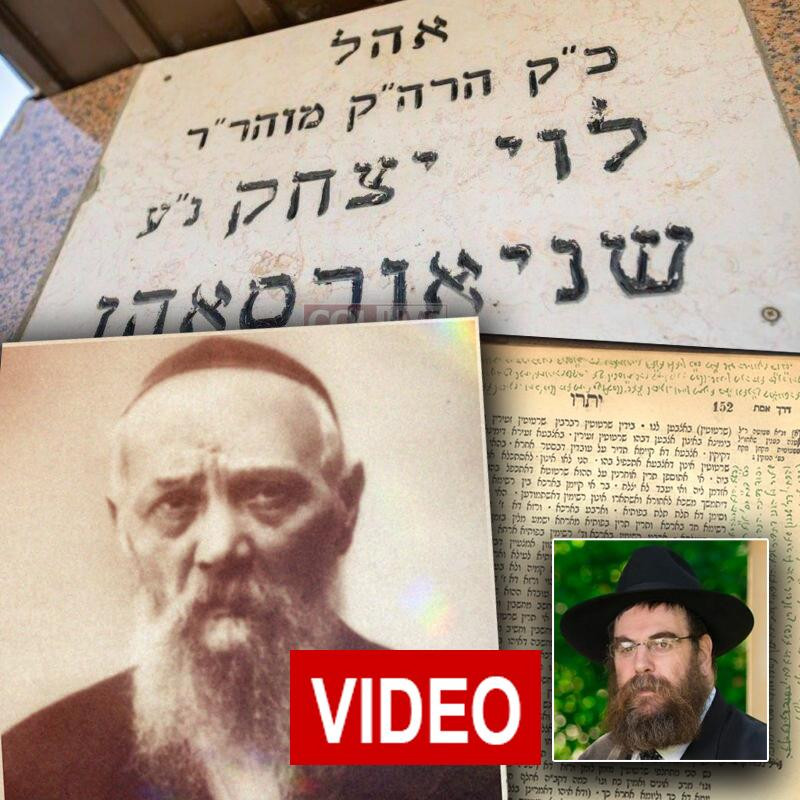
Insights from Toras Reb Levi Yitzchok, a weekly class based on the teachings of Harav Levi Yitzchak Schneerson, chief rabbi of the city of Dnipropetrovsk, Ukraine, during the bloody Bolshevik revolution and the subsequent Communist oppression and father of the Rebbe.
The shiur is presented by Rabbi Dovid Dubov, Director of Chabad of Mercer County in Princeton, New Jersey, and author of Yalkut Levi Yitzchok, an anthology of commentaries collected from the works of Harav Levi Yitzchak, of blessed memory.
Organized by Irguntorah.org and aired on community news service COLlive.com.
From The Rebbe’s Father זצ״ל
Massai
They camped along the Jordan from Beth jeshimoth to Abel shittim, in the plains of Moab
33:49
The Talmud (Eiruvin 55b) States, the area was 3 Parsa , which equals 12 Mil.
Questions
A) Why was the stop at מבית הישימות עד אבל השיטים?
B) The Meaning of the name בערבות מואב
C) Why was it 3 Parsa – 12 Mil?
לקוטי לוי יצחק, אגרות קודש ע׳ ת
Get The Weekly Shiur On Whatsapp: https://chat.whatsapp.com/Gespf7sF2KKK0opfrv3SVO
For more shiurim and podcasts visit: irguntorah.org
 COLlive1 day ago
Six years ago, Rabbi Mordechai Kanelsky commissioned Rabbi Schneor Henig, a scribe from Jerusalem, to begin writing the Bris Avrohom Unity Sefer Torah. The mission was to create a Torah in which every Jew connected to Bris Avrohom could have a share.
Over the past six years, the Rabbis of Bris Avrohom- Rabbi Mordechai Kanelsky, Rabbi Baruch Lepkivker, Rabbi Dovid Wilansky, and Rabbi Avremy Kanelsky- encouraged thousands of people to participate and acquire a letter in the Sefer Torah.
On Sunday, June 14, that vision reached its joyous conclusion. More than 500 people gathered to celebrate the completion of the Unity Sefer Torah.
The event opened with Bris Avrohom sponsors receiving the honor of writing the final letters. A portion of the Torah was dedicated in memory of Jews who perished in the Holocaust or under the Communist regime in Russia or in Israel’s wars. At the Siyum Sefer Torah, many attendees put on tefillin, adding to the spirit of unity.
Following Hagbah and the singing of Sisu V’simchu, a lively procession began under a beautiful canopy, making its way from 824 Salem Ave. to the Bris Avrohom Shul. Singer Berel Zucker led heartfelt songs as the crowd danced through the closed-off streets.
Upon arrival, the new Sefer Torah was greeted by the 11 existing Sifrei Torah in the shul. Rabbi Kanelsky spoke about the significance of now having 12 Sifrei Torah—corresponding to the twelve tribes of Israel.
The celebration concluded with a lavish seudah enjoyed by all.
Rebbetzin Shterney Kanelsky worked tirelessly to coordinate the extensive preparations for the Siyum Sefer Torah, ensuring the celebration ran smoothly. Mr. Chesky Hirschfeld, manager of Bris Avrohom, expertly organized and arranged the beautiful event.
Of the Torah’s 304,805 letters, 30,000 have already been purchased. To acquire a letter for yourself or a loved one, please contact the Bris Avrohom office at 908‑289‑0770.
 COLlive1 day ago
On 22 Av, August 5, 2026, as over 1,200 Jews glide up the palm-lined roads leading to Miami’s Trump National Doral Resort, the most dynamic program in the Jewish world will be waiting for them inside.
The National Jewish Retreat is returning to Miami this year with its boldest program yet—featuring a live historical drama, “Libel!” that pulls the audience into dynamic story-driven Torah study, concert and comedy by world renowned comedian Elon Gold
In five days and 150 workshops, many of the Jewish world’s most fascinating and respected speakers will lead workshops that pull back the curtain on the secrets of Judaism—and the universe itself.
Historian Dr. Henry Abramson will tell the story of the ancient Khazar Kingdom in “The Khazars and the Jews,” while Rabbi Yechiel Krisch explores the secrets of who your soul was before you were born in “Before I Was Me;” and Mrs. Rivkah Slonim, Rabbis Simon Jacobson, Yitzchak Schochet, Moshe Bryski, Yisroel Bernath, Dr. Edward Reichman, and Manis Friedman share Judaism’s most breathtaking insights on everything from the nature of the soul to beating antisemitism, AI, and what happens when a machine can carry a pregnancy to term.
“This is the only Jewish event today where a surgeon from Manhattan and a college student from Kansas can study Torah together at a live drama, with leading Rabbonim, and hear the kabbalistic secrets of their soul together, and sing together like old friends—all in one day,” says Rabbi Hesh Epstein, the National Jewish Retreat’s chairman. “You don’t go home the same after this.”
Held at one of America’s most iconic golf resorts, with a program that will effortlessly fill the Trump National Doral’s 24,079 sq. ft. Grand Ballroom, with gourmet food, live winetasting, art, and more—this year’s National Jewish Retreat is turning out to be a landmark cultural and spiritual event.
To join the National Jewish Retreat, or to learn more, visit jretreat.com.
Click Here to view the full National Jewish Retreat Highlight booklet.
 COLlive1 day ago
This article is brought to you by the editorial team of JLI’s Living Jewish series, which has recently released The Complete Guide to Keeping Kosher, as previously reported on COLlive.
I’m away on summer vacation, hunting the local grocery aisles for a makeshift supper. Then I spot them in the freezer section: par-baked baguettes with a hechsher, the kind you finish in your own oven for ten minutes. I grab a pack before I notice that the hechsher doesn’t say whether it’s pas Yisrael. Does it need to be, or can I fix this myself?
Let’s first understand what makes bread pas Yisrael in the first place. Pas akum is bread baked by a non-Jew, which Chazal restricted to curb the socializing that comes from breaking bread together. If a Jew takes part in the baking by doing some minimal act that helps it along, the bread becomes pas Yisrael.
Classically that means lighting the oven, putting in the dough, raising the heat, or fanning the flames. With a modern oven it’s simpler: turning it on, adjusting the temperature, setting a timer, or closing the oven door all make the final product count as baked by a Jew.
So finishing my par-baked baguettes in the toaster oven we brought is fine, then?
Yes. Par-baked goods are usually baked to roughly 80 percent in the factory, then frozen before the bake is done. When you finish the last few minutes in your own oven, you’re completing the baking, and the baguettes come out pas Yisrael.
What about these burger buns that aren’t par-baked but would taste much better after a few minutes on the grill? Can a Jew toasting them further make them pas Yisrael****?
No. A Jew’s participation only counts while the bread is still not fully ready to eat. Throwing the buns on the grill makes them taste better, but it isn’t completing the baking, it’s reheating finished bread. Once bread is pas akum and fully baked, toasting won’t turn it into pas Yisrael.
That said, the hechsher not labelling them as pas Yisrael doesn’t necessarily mean they aren’t. Some products are pas Yisrael even when the packaging doesn’t say so. To help you identify them, kashrus agencies release annual lists of pas Yisrael products. The OU, Kof-K, cRc, and others post theirs online, and you can find them by searching “Pas Yisrael list.”
So check that list before you give up on those buns. They may be pas Yisrael after all.
If you have a question you’d like to submit, email us at [email protected].
Note: The Halachic rulings in this article were reviewed by Bais Hora’ah Chabad.
 COLlive1 day ago
Nearly two years have passed since the passing of Mrs. Chaya Sofer obm, yet the light she brought into the world continues to illuminate the lives of those who encountered her.
Some people leave behind memories. Others leave behind a mission.
Chaya Sofer a”h belonged to the second kind.
For years, she served as a devoted midwife, accompanying mothers through one of the most profound moments in life. Bringing Jewish children into the world was never simply her profession—it was her shlichus.
Every birth was approached with warmth. Every mother with dignity. Every family with genuine care.
Yet perhaps the greatest expression of her strength emerged during the most difficult chapter of her own life.
For more than six years, Chaya courageously battled cancer.
It was a journey marked by pain and difficult treatments, yet she refused to let illness define who she was.
Those around her rarely saw the depth of her suffering.
Instead, they saw a woman whose smile never disappeared, whose emunah remained unshaken, and whose first instinct was always to strengthen someone else.
During those years, Chaya recorded a series of deeply personal podcast episodes.
With remarkable honesty, warmth and wisdom, she spoke about emunah, family, gratitude and discovering Hashem’s presence even in life’s greatest challenges.
Rather than asking why difficult things happen, she taught how to live with purpose through them.
One of those conversations became especially memorable. Every Chossid knows the Rebbe’s timeless words: “Tracht Gut Vet Zein Gut.” “Think good, and it will be good.”
Chaya gently added her own perspective. “Think Good. Now Is Good.”
Not because life had suddenly become easy. Not because the pain disappeared. But because she believed that even in the midst of challenge, one can discover the goodness Hashem has already placed in the present moment.
It was more than a sentence. It became the way she lived.
During Aseres Yemei Teshuvah 5784, COLlive featured an interview with Chaya in which readers were given a glimpse into that extraordinary perspective and unwavering faith.
There is another reason why this particular project carries such deep meaning. Long before Chaya became known as a devoted midwife and a source of strength, she was a young girl growing up in the Chabad community of Lod, Eretz Yisroel.
Her father, Harav Jurkowicz, has served for many years as the Mara D’Asra of the Chabad community there.
Lod is where Chaya grew up, where her values and emunah were nurtured, and where her lifelong connection to the Chabad community began.
Following her marriage, Chaya and her family made their home in Crown Heights, where they lived throughout the final six years of her life. It was there that she continued raising her family, fulfilled her shlichus as a midwife, and shared words of inspiration that continue to resonate long after her passing.
As construction continues on the new Chabad Women’s Mikvah in Lod, the Sofer family has established a personal fundraising campaign within the broader building project.
Their goal is to dedicate Chaya Sofer’s annual yahrtzeit so that every year, on the date of her yahrtzeit, the day’s immersions in the new mikvah will be dedicated in her memory.
For years, Chaya devoted her life to accompanying Jewish mothers at the very moment new life entered the world.
Today, her family hopes to connect her memory with one of the most fundamental mitzvos upon which every Jewish home is built—taharas hamishpacha.
Their vision is that each year, on her yahrtzeit, a day of taharah, tefillah and kedushah will forever be associated with Chaya’s precious neshama.
It is a mission that will continue year after year.
The Sofer family warmly invites friends, Anash and the wider Jewish community to become partners in this meaningful initiative.
Every contribution toward this personal campaign helps bring this vision closer to reality.
Those who are unable to participate financially can become partners by sharing the campaign with friends, family and others who may wish to take part in this special zechus.
Sometimes, a single shared message reaches exactly the person it was meant to reach.
Supporting from Outside Israel
The donation page is in Hebrew. With today’s translation tools, the process is simple for English-speaking donors.
When asked to enter an Israeli ID number, donors outside Israel may simply enter any sequence of nine digits (for example *123456789* or *000000000*) and continue with the donation.
Click here to participate in Chaya’s memory: https://donext.co.il/public-screen/201?fundraiser=3698
 COLlive1 day ago
With a renewed sense of achrayus for the future of Chassidishe homes, Machon Taharas Habayis welcomed a new cohort of aspiring Madrichei Chassanim as the latest Chosson Teacher Training Course officially got underway.
The evening was opened by Machon director Rabbi Menachem Mendel Yusewitz, who welcomed the participants and spoke about the tremendous zechus and responsibility entrusted to those preparing the next generation of Chassanim.
The keynote address was delivered by Rabbi Sholom Ber Chaikin, senior Chabad Rav of Cleveland, Ohio, veteran Chosson teacher, and the longtime Rav of Mikvah.org. Together with the Crown Heights Badatz, Rabbi Chaikin has been one of the visionaries behind Machon Taharas Habayis, working tirelessly to raise the standards of Taharas Hamishpacha in the Rebbe’s shechunah and throughout the wider Lubavitch community.
Drawing upon decades of experience, Rabbi Chaikin shared the tremendous responsibility and privilege of serving as a Madrich Chosson, while offering practical guidance, valuable insights, and critical perspectives from the field. His heartfelt words inspired the participants as they embarked on this important shlichus of helping establish Batei Yisroel on the foundations of Torah, Halacha, and Chassidus.
The course then began with its opening segment, led by Rabbi Yitzchok Meir Einstein, who introduced the participants to the יסודות of preparing Chassanim with clarity, sensitivity, and dedication to Halacha. This was all brought together by Rabbi Chananya Hoffinger with Rabbi Yossi Overlander working tirelessly on preparing the course.
The launch comes following the enthusiastic endorsement of Mara D’Asra Rabbi Yosef Yeshaya Braun, who recently reviewed the curriculum and expressed deep admiration for the program. Reflecting on the immense responsibility of teaching Hilchos Taharah, Rabbi Braun became visibly emotional, praising the way the material was carefully organized and brought to life in a practical and relatable manner for both teachers and talmidim.
As another group of dedicated Rabbonim prepares to become certified Madrichei Chassanim, Machon Taharas Habayis continues its mission of strengthening the kedusha of the Yiddishe home, ensuring that every Chosson enters marriage equipped with the Halachos, Hashkafos, and guidance necessary to build a true Bayis Ne’eman B’Yisroel.
For more info, see: TaharasHabayis.org/apply

 COLlive2 days ago
Every day after school, in cities and towns across the world, children walk through the doors of a CKids Afterschool program and into a space built for one purpose: to make Torah learning and Yiddishkeit part of their everyday lives.
For many of these children, this is their primary connection to Jewish life. Their days are spent in public school, typically with little exposure to their heritage. But each afternoon, they step into a structured environment away from the noise of the world, where they have an opportunity to learn about Judaism, build friendships with Jewish peers, and develop pride in who they are.
“In today’s world, every Jewish child must have access to a robust Jewish education,” says Rabbi Mendy Kotlarsky, Executive Director of Merkos 302 and Chairman of CKids International. “There’s no substitute for daily exposure to Yiddishkeit, daily reinforcement of their identity, and connection to Hashem.”
In an effort to bring that vision to life, Rabbi Moshe Kotlarsky OBM stood at the Kinus HaShluchos two years ago and announced a bold goal: to establish 100 CKids Afterschool programs, where children would learn Torah and live their Yiddishkeit four days a week instead of just at Hebrew School once a week. It was Rabbi Moshe Kotlasky’s last Kinus address ever. “And in just two years,” shares Rabbi Mendy Kotlarsky, “boruch Hashem, we’re nearly a third of the way to that original goal.”
What began as a pilot program has quickly grown into a network serving more than 1,500 children in over 30 CKids Afterschool programs worldwide, with over a million dollars invested to date. From New York to Stockholm, from Johannesburg to Vancouver, children are taking time after regular school hours to bolster their Yiddishkeit. They’re learning Torah, doing mitzvos, and growing up proud to be Jewish, all week long.
Mrs. Chaya Rosenfeld of Chabad of Vancouver, British Columbia, recalled how a student from the local public school joined the afterschool program and became close friends with her daughters.
Soon, the girl was joining the family for Shabbos meals and participating in bas mitzvah classes. As she grew more connected to Jewish life, her parents also began building relationships within the community.
“What started as an afterschool activity became something much bigger,” Mrs. Rosenfeld said. “The friendship helped an entire family feel at home in Jewish life.”
Similar stories are unfolding in communities around the world. Now, six shluchim have been selected as new recipients of the CKids Afterschool Program Grant, joining the growing network of communities creating new opportunities for Jewish learning and connection.
As the Jewish community marks the 50th anniversary of the Rebbe’s landmark Mivtza Chinuch initiative, expanding access to Torah learning and engagement has never felt more urgent. The Rebbe consistently championed the need to elevate the prestige of Jewish education.
“No more once-a-week Judaism,” says Rabbi Zalman Loewenthal, Director of CKids and Associate Director of the Chinuch Office of Merkos L’Inyonei Chinuch. “A child learning secular studies every day needs to know that Judaism doesn’t live in the shadow of secular education.”
“For young couples looking for their makom hashlichus, afterschool is the new frontier,” says Loewenthal. “It’s a full-fledged shlichus opportunity in hundreds of Chabad houses around the world.”
The new CKids Afterschool grant recipients include:
Rabbi Mendel and Peri Raichik – Chabad Israeli Center, Houston, TX
Rabbi Yisroel and Chanale Cotlar – Chabad of Cary, NC
Rabbi Yudi and Chana Eisenbach – Chabad Israeli Center of Fair Lawn, NJ
Rabbi Eliyahu Nachum and Tzivia Block – Chabad Center for Jewish Life & Learning, San Antonio, TX
Rabbi Sholom and Sarale Posner – Chabad of Rancho Mirage, CA
Rabbi Moshe Dovid and Chaya Rochel Cohen – Chabad of Manchester, UK
 COLlive2 days ago
Born without legs, Rivky Holtzberg has built a life defined by resilience, independence, and unwavering faith. Raised in a Chabad family, she credits her parents with instilling the confidence to embrace challenges rather than be limited by them.
Despite growing up in schools that often lacked accessibility, Rivky refused to let obstacles define her. Today, she works full-time in marketing, runs her own party planning company, drives independently using adapted vehicles, and continues to pursue her goals with determination.
At the heart of her life is her family’s Chabad shlichus. Together, they welcome and host approximately 200 people each week, creating a warm, vibrant community where Rivky plays an active role. Her commitment to hospitality and Jewish outreach reflects the values of kindness, service, and faith that have shaped her life.
Rivky also speaks candidly about the challenges of dating while living with a disability, noting that she hopes people will look beyond appearances to appreciate who she is. Through it all, she remains optimistic, drawing strength from her faith, her family, and her belief that every challenge carries purpose.
 COLlive2 days ago
Supporters of the Yaldei Shluchei HaRebbe organization, a division of Merkos Suite 302, gathered for their annual men’s BBQ at The Arches in Brooklyn.
Guests enjoyed a delicious barbeque spread and Kumzitz by superstar Chasidic singer Avraham Fried in support of children of Shluchim who have special needs. Speaking at the event were Yaldei director Dovid Leib Shur, Rabbi Ari Shishler and Rabbi Mendy Kotlarsky, Director of Merkos 302.
Yaldei Shluchei HaRebbe supports and assists Shluchim who are raising children with special needs, so the Shluchim can focus their energy on spreading the light of Torah and Yiddishkeit in their communities.
 COLlive2 days ago
The final call has arrived. Registration is now closing for the newest Taharas Habayis Chosson Teacher Training Cohort, and this is the last opportunity for Rabbonim, mashpi’im, and qualified yungerleit to join this unique program dedicated to preparing the next generation of Chassidishe chosson teachers.
With communities around the world experiencing a growing need for knowledgeable and well-trained madrichei chassanim, the Taharas Habayis program has become a trusted address for comprehensive, practical, and halachically rigorous training. Participants receive in-depth instruction from leading Rabbonim and experienced educators, equipping them to guide chassanim with clarity, sensitivity, and confidence.
The program was launched with words of inspiration and guidance from Rabbi Sholom Ber Chaikin, senior Chabad Rav and veteran chosson teacher of Cleveland, who emphasized the tremendous responsibility and privilege of helping establish Jewish homes built on the foundations of Torah, halacha, and kedusha. Throughout the course, participants benefit from practical insight, real-life guidance, and a structured curriculum designed specifically for today’s needs.
The initiative has also received the strong endorsement of Rabbi Yosef Yeshaya Braun, Mara D’Asra of Crown Heights and member of the Badatz, who praised the importance of properly training those entrusted with teaching these vital halachos.
Applications are now in their final hours. Those who have been considering becoming a certified chosson teacher are encouraged not to delay. Once registration closes, the next opportunity may not be available for some time.
To reserve your place in this cohort and take part in this important mission of strengthening Yiddishe homes, register now as enrollment is about to close! TaharasHabayis.org/apply
 COLlive2 days ago
For Sophie Bassman, the numbers tell only part of the story.
Yes, the CKids division at Camp Balaton has more than doubled since last summer. Yes, it is now topping 65 campers. And yes, the full camp has grown into a 100-plus camper lakefront experience, with children and teens spending their summer surrounded by friends, counselors, Shabbos, learning, trips, sports, and proud Yiddishkeit.
But for Sophie, the real story is what those numbers feel like on the ground.
It is standing on the campgrounds near Lake Balaton and realizing that a vision that once felt ambitious is now full of real children, real families, real bunks, real staff, and real impact.
It is seeing a camper who may have only known Yiddishkeit from a local Chabad program suddenly living it all day long. Davening with friends. Singing at a Shabbos table. Running to activities with Jewish kids from other cities and countries. Looking around and feeling, maybe for the first time, “This is mine.”
And it is knowing that the work is no longer happening in isolation.
Behind the calls to parents, the planning, the staff meetings, the late nights, the logistics, and the endless effort to bring one more child to camp, there is now support. There is a strategy. There is a network that understands what Shluchim are trying to build and is stepping in to help make it happen.
The CKids grant has made that difference felt in a very practical way.
For many families, camp is not a simple yes. There are costs. There are questions. There is hesitation. The grant gives Shluchim and Shluchos a way to move the conversation forward. It helps turn “we’ll think about it” into “we’re signing up.”
At Camp Balaton, that shift has been clear.
“This grant has been a real catalyst for the growth of our CKids division,” said Rabbi Tzemmy Bassman. “We are deeply grateful to George and Pamela Rohr for their vision and generosity, and to Rabbi Mendy Kotlarsky and Rabbi Zalmy Lowenthal of CKids for understanding what Shluchim need on the ground and becoming that partner. Their support is helping us reach more children here in Hungary, and it is strengthening the work of Shluchim around the world.”
That partnership is exactly what makes the growth feel so meaningful.
Camp Balaton did not grow because of one flyer, one phone call, or one program. It grew because local shlichus met real backing. A beautiful lakefront campsite. A team on the ground. Families who were ready. Children who needed the next step. And a grant that helped open the door.
For the CKids campers, that next step matters.
These are children connected through Chabad Houses, Hebrew Schools, holiday programs, Gan Izzy day camps, and local peulos. Many already have a spark. Camp gives that spark room to grow. It gives them friends. It gives them memories. It gives them a summer where Yiddishkeit is not something they visit once a week, but something they live.
That is why Sophie sees this summer as more than camp growth.
More campers means more families reached. More children walking into Shabbos with confidence. More young Jews coming home with songs, stories, friendships, and a stronger sense of who they are.
When there is a big vision, and direct support is placed into the hands of the Shluchim and Shluchos doing the work, great things happen.
At Camp Balaton, you can see it.
You can see it in the doubled CKids enrollment.
You can see it in the energy across the lakefront campus.
And most of all, you can see it in the children.
 COLlive2 days ago
For years, Cary, North Carolina, has been one of the fastest-growing and most family-friendly communities in America.
Nestled between Raleigh and Durham, Western Wake County has become known for beautiful neighborhoods, excellent schools, strong economic opportunity, and a quality of life that continues to attract families from across the country.
But something else has been growing here too.
Jewish life.
A frum traveler passing through North Carolina on business walks into Chabad of Cary on Shabbos morning, expecting to find a small minyan in a quiet storefront.
Instead, he opens the door and is greeted by the smell of cholent, the sound of spirited conversation, children running in and out, and a room filled with fifty or more mispallelim.
For a moment, he pauses.
“Where am I?”
This is not Long Island.
This is not Atlanta.
This is not Houston.
This is Cary, North Carolina — a suburban town in an area with no long history of Jewish life.
And yet, something remarkable is happening.
Originally founded by Rabbi Aaron and Leah Herman, Chabad of Cary has been led for the past sixteen years by Rabbi Yisroel and Chana Cotlar. What began as a modest small town Chabad presence has grown into a thriving center serving Cary, Morrisville, Apex, Holly Springs, and the greater Western Wake region.
Today, close to 100 children are enrolled in Hebrew School, ka”h. Multiple shiurim take place every week. Yomim Tovim and community programs regularly fill beyond capacity. Shabbos mornings are alive with davening, Kiddush, and a lively Parsha discussion that often continues long after davening has ended.
But the numbers only tell part of the story.
Slowly, quietly, something deeper is being built: a real culture of Torah life in a place where many would never have expected it.
In the last six months alone, five Jewish families have moved specifically to be within walking distance of the future shul. More homes are being kashered. Teenagers are seeking deeper connection. Several young people who first became involved through Chabad of Cary have gone on to Lubavitch mosdos and are today living fully observant Jewish lives.
Because Cary is only minutes from RDU Airport, there is also a steady flow of Jewish travelers who unexpectedly discover a warm meal, a place to daven, and a Jewish home away from home.
Over the years, many groups of Lubavitcher girls have come to Cary for a year of shlichus. Many describe it as one of the most transformative experiences of their lives — learning what it means to build Jewish life from the ground up, one family, one mitzvah, and one neshama at a time.
The Farmer Who Found His Jewish Home
Recently, “Murray”* — a North Carolina farmer for decades — found his way to Chabad of Cary.
Like many Jews living in smaller communities, his connection to Yiddishkeit had slowly drifted over the years. But when a Chabad of Cary family moved into his neighborhood, he was drawn to the warmth of their home, their Sukkah, their kosher kitchen, and the visible pride with which they lived as Jews.
He soon asked to join them at Chabad.
Today, he puts on tefillin every single day. After reading a book about the Rebbe, he asked Rabbi Cotlar for a picture of the Rebbe to hang in his home.
“This is the first time in my life,” he said quietly, “that I’ve found my Jewish home.”
Think about that.
A Jewish man, with a precious neshama and generations of Jewish heritage behind him, lived most of his life without ever experiencing that feeling — even after years in larger Jewish cities.
And then, in a storefront in Cary, North Carolina, he found it.
Building the Future
After nearly a decade of planning, dreaming, perseverance, and countless small miracles, construction is finishing up on the Mendel Jewish Center — a permanent 13,000-square-foot home for Jewish life in Cary/Morrisville, at the heart of the community it serves.
Named in memory of Mendel Cotlar, a special young bochur whose life continues to inspire kindness & gratitude the center is being designed as a true Jewish community hub. Mendel’s legacy continues to inspire the values that define this growing community: seeing every bracha as a gift and every Jewish soul as precious.
The new center will include:
• A spacious permanent shul
• Expanded Hebrew School and CKids facilities
• A dedicated CTeen lounge
• Community gathering and learning spaces
• Kosher Dining for locals and travelers
• A future community mikvah
This is not a project being carried by one major donor.
There was no single multi-million-dollar gift leading the charge. Instead, hundreds of local families, friends, supporters, and people who believe in this shlichus have helped bring the campaign to nearly five million dollars raised.
Now, the finish line is in sight. Construction is nearing completion. The dream is becoming real.
But funds are still urgently needed to complete key portions of the building, furnish the new spaces, and bring the vision fully to life.
The next “Murray” is already out there somewhere.
The next child who will discover the beauty of Yiddishkeit is waiting.
The next family searching for a Jewish home may be only a few miles away.
And the infrastructure to reach them is being built right now.
We are turning to Anash, friends, supporters, and all those who believe in the power of shlichus in places like Cary, North Carolina — including those who know the Shluchim personally — to please partner with us in completing the Mendel Jewish Center. Every contribution, large or small, helps turn this storefront story into a permanent landmark of Jewish life.
As a token of appreciation, all contributors of $54 or more from Anash worldwide will receive a beautifully produced Birchos HaShachar booklet, a new initiative of Chabad of Cary dedicated in Mendel’s memory. Featuring a clear translation of the morning brachos, along with meaningful reflections and meditations, the booklet is designed to help readers begin each day with gratitude and awareness of Hashem’s gifts. It is equally suited for personal use, for sharing with mekuravim, or for use on mivtzoim.
Cary, North Carolina, may once have been a secret.
Not anymore.
To partner in completing the Mendel Jewish Center, please visit:
 COLlive2 days ago
Rabbi Aryeh and Chana Wells (née Laber) along with their son Yisroel will be establishing the first Chabad Center in Auburn, Alabama this summer.
Auburn, Alabama, known as “The Loveliest Village on the Plains”, is the fastest growing metropolitan area in the state. Auburn is famous for being home to Auburn University — the highest academically ranked university and second largest university in Alabama, nationally recognized for its engineering, business, agriculture, nursing, and athletic programs.
Over the past few years, Rabbi Sholom Posner of Chabad on Wheels, Alabama traveled to Auburn as part of his shlichus to strengthen the remote Jewish communities around the state. As the Jewish student population of the university continued to grow, he realized that the students needed a permanent Jewish presence. The new shluchim have been appointed under the direction of Rabbi Yossi Posner, head shliach to Alabama.
Chabad of Auburn will be dedicated to supporting the Jewish students of Auburn University, as well as the communities of Auburn and Opelika. The Chabad house will offer Shabbos and holiday meals, Torah classes, community events, and programs throughout the year.
The Wells bring warmth, authenticity, and a passion for creating meaningful Jewish experiences. They look forward to being a steady presence of Jewish life in Auburn, building one on one relationships, and having a place for Jewish students to relax and connect with each other
Originally from Boynton Beach, Florida, Aryeh graduated from Columbia University with a degree in Philosophy. Although always connected to Judaism, it was through Chabad on Campus at Columbia that he first fell in love with the depth and beauty of Yiddishkeit. After spending several years studying in yeshiva in Jerusalem and Brooklyn, he is excited to share his love of Torah, Jewish mysticism, and music with the Auburn community.
Chana grew up in Rensselaer, New York, where her parents run a Chabad House and the Jewish girls’ retreat summer camp. A self-taught artist and educator, she has led painting workshops around the world and loves helping people connect through creativity, warmth, and meaningful conversations.
You can partner with the Wells family in launching Chabad of Auburn through their Charidy campaign or Zelle:
https://charidy.com/chabadofauburnalabama
Zelle: [email protected]
 COLlive2 days ago
In Episode 66 of Lamplighters: Stories From Chabad Emissaries On The Jewish Frontier, reporter/producer Gary Waleik presents the story of Rabbi Zalman and Rebbetzin Rifky Lent, Shluchim to Dublin, Ireland. The Lents’ Chabad House is a nexus point for Dublin’s diverse Jewish community and, with the help of their kosher deli and market, also a very popular meeting place for non-Jews.
Lamplighters: Stories From Chabad Emissaries On The Jewish Frontier is producing a series of moving, beautifully produced, sound-rich and often surprising stories of Chabad shluchim and the people they inspire in every corner of the world.
Listen and subscribe at www.Lubavitch.com/podcast and on all major podcast platforms.
To pitch a story for our podcast about Chabad emissaries or for dedication/sponsorship opportunities, email us at [email protected].
 COLlive2 days ago
During these days of summer vacation, thousands of children from all corners of the Russian Federation are gathering at Jewish camps in dozens of different locations. They are enjoying weeks of Yiddishkeit at all levels and for all ages, operated by the dedicated and experienced hands of hundreds of rabbis and Shluchim, featuring highly organized and deeply invested programs.
The vanguard of Russian Jewry is represented by hundreds of young Shluchim and children of community rabbis. These children grow up throughout the year in remote cities, often serving as the only observant Jewish children in their environment. The summer months are not just a break from their regular studies; they are a time for Chassidic gatherings, social bonding, and spiritual recharging ahead of the coming year of Shlichus.
At the center of this educational endeavor once again stands the “Camp Gan Israel – Tzeirei Hashluchim,” located in the pastoral ‘Ramenskoye’ complex in the suburbs of Moscow. The camp, expertly directed by the educator Rabbi Avraham Zaks, experienced a moment of historical closure this week. This occurred during a visit by the founder of the camps, Chief Rabbi of Russia, Rabbi Berl Lazar, to the camp grounds. During the visit, Rabbi Lipsker, director of educational institutions in Moscow, presented him with a unique gift that embodies the concept of “Zeh L’Umas Zeh” (one in contrast to the other). Chief Rabbi Lazar received an original, century-old red “Pioneer” tie, which was used in the summer camps of the communist regime that attempted to uproot religion. Alongside it was a new green tie bearing the emblem of the Chassidic camp—a living testament to the victory of the Jewish spirit and tradition.
In his remarks to the campers, Chief Rabbi Lazar said that alongside their responsibilities, they must remember the immense privilege each one holds, especially as they are on Shlichus in Russia. He thanked the educational staff, adding: “The greatest success in Shlichus is when people see how we care for our children.”
The spiritual climax of the camp days was recorded when the “soldiers” set out on an emotional journey to the cradle of Chassidus: the town of Lubavitch. Following prayers and a spiritual awakening at the holy Ohel of the “Tzemach Tzedek” and his son, the Rebbe Maharash, they continued with a tour of the historical sites in the area. The campers joined a special initiative of archaeological excavation and exposure works taking place in the courtyard of our Rebbes—the very courtyard where the first “Tomchei Temimim” Yeshiva was established and founded, and the complex where several generations of Lubavitcher Rebbes lived for many years. During these works, a literal treasure from the past was suddenly uncovered: a luxurious and incredibly rare pocket watch, alongside ancient ruble coins that had been buried in the ground for decades.
The discovery sparked tremendous excitement among the children and staff, who immediately broke into sweeping Chassidic dances on the holy soil of the famous Yeshiva courtyard in the center of the town. The rare findings were reverently transferred to the hands of Rabbi Gavriel Gordon, the Shliach and director of the Chabad House in Lubavitch, who is responsible for the restoration and maintenance of the holy sites. After an initial examination of the items, Rabbi Gordon noted that the finish and luxury of the watch indicate with high probability that it belonged to a family member of the Rebbes, a fact that further elevated the spiritual upliftment among those present.
As mentioned, this camp is one of many. Particularly noteworthy is the framework for the daughters of the rabbis and Shluchim, running concurrently in the city of Nizhny Novgorod, dedicatedly directed by Rebbetzin Fradi Lerman, with the assistance of the city’s rabbi, the Shliach Rabbi Shimon Bergman, and Rebbetzin Bergman.
These events, which combine deep-rooted Chassidic education with a tangible connection to a glorious history, are expected to leave an indelible mark on the campers’ hearts. As the children return to their places of Shlichus across Russia for the upcoming school year, they will, with God’s help, carry with them the immense spiritual charge they absorbed. They will continue to illuminate their communities with Jewish pride and the dedication that characterizes the legion of the Lubavitcher Rebbe. Exactly 70 years ago during these very days, the Rebbe arrived for a rare tour of the first camp, which was founded at the initiative of the Chassid Rabbi Moshe Lazar, father of the Chief Rabbi of Russia. Since then, the name “Gan Israel” was established by the Rebbe, named after the founder of Chassidism, the holy Baal Shem Tov; a project that today spans the entire globe, educating hundreds of thousands of Jewish children during the summer months.
Photography: Levi Nazarov
 COLlive2 days ago
Many of us know the concepts. We have learned the sichos, heard the ideas, and spoken about Moshiach and Geulah for years.
But what would happen if we stopped simply knowing about Moshiach—and began allowing these ideas to reshape the way we see ourselves, our challenges, and the world around us?
This summer, N’shei Chabad is launching Think Again: a refreshed way of living with Moshiach, a new four-week learning experience for Chabad women in Crown Heights, bungalow colonies, and communities worldwide.
The course explores four foundational sichos of the Rebbe and presents them in a clear, relevant, and deeply personal way. Each week will uncover another dimension of what it means to live with Geulah—not only as a future event we are waiting for, but as the true reality that can already shape the way we think and live today.
The curriculum will address questions such as:
How much power should we give the limitations and struggles of Galus?
What does it mean to recognize Hashem’s presence within every detail of our lives?
When we talk about Geulah, are we imagining a world where candies grow on trees, the shofar sounds on its own, and we soar on eagles’ wings—what are we actually waiting for?
And if the whole world needs a transformation, what does my one small mitzvah contribute to this overwhelming task?
This is for you. Wherever you are. Join together with other woman around you and start “Think Again”.
“We all know the concepts. We have heard the sichos and spoken about Moshiach and Geulah for years,” organizers shared. “Think Again is an opportunity to revisit these ideas with fresh eyes—and allow them to reshape the way we see ourselves, our challenges, and the world around us.”
Groups can be formed in bungalow colonies, neighborhoods, blocks, or among friends. Each group will receive a fully prepared, beautifully designed curriculum, teacher guidance, preparation classes, marketing materials, and participant incentives.
The four-week program will begin Rosh Chodesh Av, transforming the Three Weeks into a meaningful period of learning, reflection, and active preparation for Geulah, and will conclude Rosh Chodesh Elul.
Participants are invited to approach familiar ideas with fresh eyes—to move Moshiach from the back of their minds to the center of their lives.
Because perhaps the ideas are not new.
Perhaps we simply need to Think Again.
To create or join a group and receive a personal registration link, visit:
womenseventch.com
For questions email [email protected]
 COLlive2 days ago
During the Kinus for 198 Chabad educators in Israel, held by the Reshet Oholei Yosef Yitzchak Lubavitch, an inspiring film was shown, presenting the moving story of Rabbi Shlomo Chaim Lison, a Shliach chinuch from Haifa.
The film tells the story of his medical struggle and reveals the extraordinary dedication of a Shliach chinuch to his students – even in the most challenging moments.
Now, for the first time, the film is available for viewing by the broader community with English subtitles.
“Ashrei Adam Bote’ach Bach”
VIDEO:
 COLlive3 days ago
Forty-three newer Shluchim gathered in Crown Heights earlier this month for Merkos 302’s seventh annual Fundraising Seminar, walking away with a new mindset, a practical toolkit, and a network of peers to carry them through the years ahead.
The event was organized by the New Shluchim Desk at Merkos 302 and spearheaded by Rabbi Mendy Shanowitz, the Desk’s director. “Fundraising is the engine that powers a Shlichus,” he said. “We send them home with the mindset, the tools, and a network of peers to lean on from day one.”
The full-day masterclass is geared for Shluchim within their first seven years on Shlichus and was led by Rabbi Elazar Green, Shliach to Lancaster, Pennsylvania, and founder of Grow Gelt Solutions.
Rabbi Mendy Kotlarsky, Executive Director of Merkos 302, set the tone for the day. “The Rebbe’s vision for Shlichus was never about buildings or budgets. It was about people,” he said. “You cannot fundraise successfully if you don’t love your donors. You cannot build a community if you don’t love your community. When you genuinely care about them — about their family, their struggles, their simchas — they feel that. And that is what they support.”
The program covered identifying the right donor prospects, making a confident ask, and cultivating the long-term partnerships that sustain a Mosad for decades. Participants worked through the material in live role-playing exercises.
Sessions also covered setting up a Chai Club monthly giving program, navigating major gift conversations, following up on pledges with dignity, and understanding why donors stop giving.
One Shliach pointed to the “Elephant” analogy running through the day. “Seeing it from both the donor’s perspective and the fundraiser’s, and how it comes up at every step on both ends,” he said. Another described learning to find a donor’s hidden hesitation “in a straightforward and mentshlich way.” A third pointed to something more concrete: having a written budget ready to show a donor before being asked for one. “It gave me something concrete to walk out with,” he said.
All participants have access to a dedicated WhatsApp group for guidance and peer support after the seminar.
 COLlive3 days ago
By COLlive reporter
Rabbi Tuvia Bloy, one of the eldest Chabad rabbis and thinkers in Israel, passed away on Wednesday, 23 Tammuz 5786.
He was 90.
He was born on 16 Iyar 5696 (1936) to Rabbi Boruch Yehuda Bloy, one of the leaders of Poalei Agudas Yisrael (PAGI) in Jerusalem. He was the grandson of Rabbi Moshe Bloy, chairman of Agudas Yisrael in Eretz Yisrael.
In his youth, Rabbi Bloy became close to the Belz and Gur Chassidic courts and regularly attended the tish of the Gerrer Rebbe, the Beis Yisrael, despite the risks involved in traveling there.
In 1953, he was introduced to Chabad through Rabbi Avraham Leib Klein, head of the Hasmidim Yeshivah where he studied. Rabbi Klein, himself a Chabad chassid, also brought Rabbi Bloy’s brothers, Rabbi Yosef Bloy and Rabbi Amram Bloy, closer to Chabad.
Rabbi Bloy was among those who helped guide Chabad’s evening yeshivos in Jerusalem’s neighborhoods, established under the initiative and leadership of Rabbi Shmuel Elazar Halperin, rosh yeshivah of Toras Emes in Jerusalem.
He married Chana Frumet Rosenberg, daughter of Rabbi Chaim Uri Rosenberg, on 20 Kislev 5715 (1954).
Following his marriage, he worked closely with Rabbi Shmuel Menachem Mendel Schneerson, director of Colel Chabad, to spread the Rebbe’s teachings among Jerusalem’s charedi community through Tzeirei Agudas Chabad of Jerusalem. After internal disputes arose within the organization in 1959, the Rebbe instructed Rabbi Azriel Zev Slonim to dissolve the existing leadership and reestablish it with a new administration. Rabbi Bloy was appointed to the new executive alongside Rabbi Yehoshafat Alpert and Rabbi Tzvi Eisenbach, serving in that role for approximately thirty years.
In 1975, he was appointed principal of the Beis Chana girls’ high school in Jerusalem.
Rabbi Bloy began writing for the Chabad journal in 1959. Following the passing of his close friend Rabbi Uriel Zimmer, he continued Zimmer’s translation of Sefer HaZichronos and produced numerous additional translations.
In 1970, he wrote an article explaining the Rebbe’s methodology in Rashi commentary. The Rebbe’s secretariat later instructed him to expand the subject into a book. The result was Klalei Rashi, published in 1980. A second edition followed in 1991, and a greatly expanded third edition was published in 2018 with the assistance of his grandsons, Rabbi Yosef Yitzchak Bloy and Rabbi Moshe Levi Yitzchak Laufer.
In the summer of 1980, Rabbi Bloy joined the editorial staff of Kfar Chabad magazine, where he began publishing a regular column titled “Da Mah SheTashiv” (“Know What to Answer”), responding to ideological critiques originating in certain circles in Bnei Brak. Rabbi Binyomin Klein, one of the Rebbe’s secretaries, later recalled that the Rebbe once described Bloy’s essays as “ringing articles,” a reference to their forceful and impactful style.
He remained with Kfar Chabad until 1990. Afterward, he published less frequently in Chabad periodicals, except for Pardes Chabad, which he edited from 1997 through 2007.
With the establishment of the Levi Yitzchak Institute, Rabbi Bloy undertook the translation of the Rebbe’s Likkutei Sichos from Yiddish into Hebrew.
Over the years, Rabbi Bloy also wrote under several pen names, including “A. Choker” (“A. Researcher”) and “T. Me’aleil,” which he used in both the Chabad journal and Kfar Chabad magazine.
Rabbi Bloy passed away during the shloshim, the thirty-day mourning period following the passing of his wife.
He is survived by his children: Mrs. Leah Laufer of Ashdod, Rabbi Peretz Uriel Bloy, Mrs. Raizel Halperin of Kfar Chabad, Rabbi Yaakov Meir Bloy of Jerusalem, and Mrs. Shaina Tzipora Wilhelm of Nachlas Har Chabad, as well as many grandchildren and great-grandchildren.
Baruch Dayan Haemes.
 COLlive3 days ago
Shluchim from across the Netherlands gathered for a focused Halacha L’Maaseh training day addressing real-life questions in Shlichus, including amira l’nochri on Shabbos, the Alter Rebbe’s approach to Eruvei Chatzeiros, and practical Yichud guidelines.
The program was led by Dayan Rabbi Chaim Hillel Raskin, Mara d’Asra of Chabad Central Petach Tikva, Dayan on the Chabad Rabbinical Court in Eretz HaKodesh, and Head of the Shluchim Rabbanus Kollel under Merkos L’Inyonei Chinuch, who traveled from Israel to guide the Shluchim through sources and practical psak.
Joining as a guest was Shliach Rabbi Menachem Hadad, Chief Rabbi of Brussels, who shared insights from his extensive experience in Kashrus.
In a moment of Hashgacha Pratis, Rabbi Mendel Kotlarsky, Chairman of the International Kinus Hashluchim, arrived in the city and offered warm words of encouragement. He praised the initiative and shared a vort from his father on the importance of Shluchim being true lamdanim who can learn and apply Halacha aliba d’hilchasa.
The event was organized by the Shluchim under the auspices of Chabad Netherlands – Central.
 COLlive3 days ago
Hundreds of students, alumni, community members, and friends gathered over Memorial Day weekend for an uplifting evening of Jewish music and unity as Illini Chabad hosted world-renowned Israeli music star Ishay Ribo in Skokie, Illinois.
The concert drew more than 800 attendees, including alumni spanning more than two decades. Some traveled from New York and other states to reconnect with friends, celebrate their shared experiences, and strengthen their connection to the growing Illini Chabad community.
The event reflected the vision of Rabbi Dovid and Goldie Teichtel, as they enter their 24th year of shlichus in Champaign. Beyond serving students during their years on campus, Illini Chabad continues to foster lifelong relationships through its expanding network of thousands of alumni around the world.
Attendees included members of Illini Chabad’s very first class from 2003 alongside current students, high schoolers, and many community members experiencing the organization for the first time. Organizers said the evening highlighted the lasting bonds created through Chabad and the vibrant community that continues long after graduation.
A particularly memorable moment came at the conclusion of the concert, when Rabbi Dovid Teichtel joined Ishay Ribo on stage for spirited dancing, bringing the crowd together in celebration.
Organizers described the evening as both a reunion and an inspiration, serving as a fitting lead-up to the fall semester, when Ishay Ribo is scheduled to return to campus for an evening dedicated to Jewish heritage and pride.
 COLlive3 days ago
For the first time, visitors and locals in Jackson Hole have access to a dedicated kosher pop-up grill, bringing fresh kosher dining to one of America’s most popular summer destinations. The Kosher Grill, which opened on July 5, is operating from the Chabad Jewish Center of Wyoming and is offering an exciting menu throughout the busy summer season.
While located at Chabad, the Kosher Grill is an independent venture operated by three Chabadniks from New York: Mayer Balkany, Tzvi Torenheim, and Yehudah Schultz. Chabad of Wyoming is providing the hashgacha and overseeing the kashrus.
The opening marks a significant milestone for the region, where the Jewish community is relatively small and kosher dining options have traditionally been very limited. Jackson Hole has become an increasingly popular destination for Jewish families exploring the nearby Grand Teton and Yellowstone National Parks. Until now, those seeking fresh kosher meals while in the area had few convenient options.
“One of the Rebbe’s well known mivtzoim campaigns was encouraging greater access to kosher food for Jews wherever they may be. Alongside his campaigns encouraging men to put on tefillin and women to light Shabbos candles, the Rebbe emphasized making kosher food more readily available to every Jew,” said Rabbi Zalman Mendelsohn of the Chabad Jewish Center of Wyoming. “We’re grateful that this initiative helps further that vision by making fresh, high quality kosher meals available throughout the summer.”
The seasonal Kosher Grill features a diverse menu of freshly prepared favorites, providing a new kosher dining destination in northwest Wyoming during the busy summer season. The project is especially noteworthy because it brings together three Chabadniks who traveled from New York, transporting equipment, supplies, and their culinary expertise across the country to establish the seasonal venture.
Beyond serving meals, the team is also committed to giving back to the Jewish community. Every Tuesday, the grill closes so its operators can travel throughout Yellowstone National Park and surrounding areas to connect with Jewish visitors. They will help men put on tefillin, distribute Shabbos candles, and offer opportunities for Jewish inspiration and connection, continuing the Rebbe’s vision of reaching every Jew wherever they may be. The weekly outreach reflects the team’s commitment to strengthening Jewish life alongside operating the Kosher Grill.
“We’re excited to bring quality kosher food to Jackson Hole and make it more accessible for Jewish visitors and the local community,” said Mayer Balkany. “We’ve put a great deal of thought into creating a menu that people will enjoy, and we hope the Kosher Grill becomes a welcoming place where guests can relax, enjoy a delicious meal, and connect with fellow travelers during their time here.”
The Kosher Grill is expected to operate throughout the summer, expanding kosher accessibility in one of the nation’s premier vacation destinations.
For hours, the menu, and additional information, JewishWyoming.com/Grill.
 COLlive3 days ago
Rabbi Benjy Korf, Head of School of Lubavitch Educational Center in Miami, Florida, has been announced as the keynote speaker at the banquet of this year’s Kinus HaMechanchim.
The Annual International Kinus HaMechanchim will take place on July 28–29 / י״ד–ט״ו מנחם אב at the Armon Hotel in Stamford, Connecticut, bringing together mechanchim, principals, administrators, and school leaders from across the Chabad school network for two days of inspiration, professional development, and connection.
This year’s banquet will focus on the theme: “פרומע, ערליכע, ווארימע, חסידישע אידן — Focused on the עיקר.”
Rabbi Korf will address the central mission of Chinuch: raising students to be frum, ehrlich, warm, and Chassidishe Yidden. Drawing on his years of experience leading one of the largest Chabad schools in the country, he will speak to the heart of the mechanech’s shlichus and the responsibility of staying focused on the עיקר in today’s classroom.
“Rabbi Benjy Korf brings decades of hands-on dedication to Chinuch, focused on what matters most: raising children to be frum, ehrlich, warm, and Chassidishe Yidden,” said Rabbi Mendy Kotlarsky, General Chairman of Merkos Chinuch Office. “His message at the Kinus banquet will speak to every mechanech’s shlichus — staying focused on the עיקר and giving talmidim a strong foundation for life.”
The banquet is expected to be one of the highlights of the Kinus, bringing together hundreds of mechanchim for an evening dedicated to strengthening and celebrating the vital work of Chinuch.
Following the banquet, a special farbrengen will be led by Rabbi Yossi Paltiel, giving mechanchim the opportunity to continue the inspiration of the evening in a warm and uplifting atmosphere, with niggunim, stories, and meaningful reflections that will help carry the message of the Kinus into their daily avodah in Chinuch.
The Kinus will feature a full program of sessions, tracks, workshops, and networking opportunities designed for mechanchim, principals, administrators, and school leaders.
Stay tuned for exciting new tracks focused on AI and curriculum development.
Registration is still open.
Register now at:
kinus.chinuchoffice.org
 COLlive3 days ago
One month before Chof Av, the yahrzeit of the Rebbe’s father, the mekubal Rabbi Levi Yitzchok Schneerson, a special initiative and raffle has been launched for all those who carry his name.
The initiative, organized by the Rebbe’s shluchim in Kazakhstan, where the resting place of Rabbi Levi Yitzchok is located, invites anyone named Levi Yitzchok, or anyone who gave that name to one of their children, to submit their information and join a first-of-its-kind global list of those named after the baal hahilula.
From all those who register by Sunday, 12 Menachem Av, one name will be drawn to receive a trip to Alma-Ata, Kazakhstan, where he will daven at Rabbi Levi Yitzchok’s holy tziyun on Chof Av as the representative of the entire group.
In addition, the names of all participants and their families will be mentioned for brachos and hatzlacha at the holy tziyun.
“Every chossid named for Rabbi Levi Yitzchok is a living expression of the deep connection chassidim feel to the Rebbe and to the Rebbe’s father,” the organizers said. “To gather all those names together and bring them to his tziyun on the yahrzeit is a powerful zechus, and surely a great source of nachas to the Rebbe.”
Are you named after Rabbi Levi Yitzchok: Levi Yitzchok, Levi, or Yitzchok?
Enter the raffle here:
https://forms.gle/7ovVJpdWG6JMMJVZ6
Have a son, brother, or friend named after him? Please share the form and invite them to join.
 COLlive3 days ago
By Nochum Greenwald
The Montreal community marked a major milestone with the dedication of a brand new men’s mikvah at Congregation Lubavitch.
The previous men’s mikvah was in need of extensive repair. With much patience and support from the community, Boruch Hashem, a brand new Bor Al Gabey Bor Mikvah has now been built.
The Mikva Committee put together architectural plans and raised funds for several much-needed improvements — accomplishing the goal of completing a beautiful and comfortable mikvah for the entire community.
Under the guidance and direct oversight of Rabbi Dovid Banon, Rabbi Berel Bell, and Rabbi Moshe Stern, the committee engaged Rabbi Gershon Grossbaum — an expert who has built and supervised numerous mikvaos — together with an experienced local team. Their combined expertise ensured the new Bor was constructed in accordance with the highest halachic and professional standards.
The committee would like to thank Rabbi Pesach Sperlin for his expertise in constructing a brand new Otzar [reservoir of rain water].
The Montreal community expresses immense appreciation to the entire Mikva Committee:
Rabbi Dovid Cohen, Rabbi Baruch Aaron Hus, Mendy Mochkin, Dovid Slapochnik, and Mendy Zirkind.
Your tireless dedication to this project paid off.
Special thanks to Rabbi Chaim Shloma Cohen, the Montreal Torah Center, and Tzeirei Hadas, for making their mikvaos available to more members during construction.
 COLlive3 days ago
Alumni of Yeshiva Tiferes Bachurim gathered for a memorable Shabbos reunion, culminating in a Chanukas Habayis celebrating the yeshiva’s new state-of-the-art zal and expanded facilities. The reunion followed a Yarchei Kallah that brought professionals from across the Tri-State area together for a yeshiva experience.
Talmidim spanning more than five decades returned to spend Shabbos in yeshiva, reconnect with friends and hanhalah, and revisit the place that helped shape their formative years.
The Chanukas Habayis program on Sunday opened with chavrusa learning, followed by a shiur delivered by Rabbi Zalman Dubinsky.
A panel discussion featured members of the hanhalah, Rabbi Chaim Brafman and Rabbi Dovid Faiden, together with alumni representing different eras of the yeshiva: Rabbi Menachem Schmidt (1974–1979, now with Chabad on Campus International), Rabbi Shaul Wertheimer (1999–2004, now of Chabad of Queens College), and Rabbi Gavriel Isenberg (2013–2017, now of Chabad Vanderbilt JGrads). The discussion centered on “The Life of a Chossid,” exploring how the values instilled in yeshiva continue to guide alumni throughout their lives.
Several alumni then shared personal reflections on their years in Tiferes Bachurim and the lasting impact the yeshiva has had on their lives, whether in shlichus, their professions, or their communities around the world. The program then paused for a group photo before continuing with the dinner.
During the dinner, Rabbi Yaakov Wagner spoke about the yeshiva’s continued growth and the vision behind its expanding facilities. Rabbi Mendy Herson, Head Shliach of New Jersey and Dean of the Rabbinical College of America, followed with remarks reflecting on the yeshiva’s legacy and the mission established by its founder, his father, Rabbi Moshe Herson, a”h.
Rabbi Ari Weindruch of Chabad at Penn State also addressed the gathering, speaking about how the values learned in Tiferes continue to influence alumni in their shlichus, leadership, and everyday lives, while emphasizing the lasting achdus shared by graduates across generations.
Throughout the event, many alumni shared stories of their personal journeys and accomplishments since leaving yeshiva, expressing the strong sense of family and lifelong connection they continue to feel toward Tiferes and one another.
The evening concluded with a farbrengen led by Rabbi Tuvia Teldon and Rabbi Michoel Muchnik, members of the yeshiva’s inaugural class more than fifty years ago. They reflected on the vision upon which Tiferes Bachurim was founded and the generations of talmidim who have carried that mission forward ever since.
 COLlive3 days ago
Earlier this week, while in New York, I made it a point to stop at the Ohel, as I often do. This isn’t something I grew up doing, nor was it a practice of most of my rebbeim. So I found myself wondering: What draws me there? Why do I keep going back again and again? The cookies, apples, and hot and cold beverages, all provided to make a beracha, are fantastic, but that isn’t it. So, what is it?
The simple answer is the opportunity to connect with the Lubavitcher Rebbe, his father-in-law, the Frierdiker Rebbe, their Rebbetzins, and other holy people buried there. Indeed, I am regularly inspired and moved by the Rebbe’s legacy, tenacity, what he stood for, what he accomplished, his energy, positivity, and his leadership, which unleashed an army around the world, including selfless followers who were only born after he passed away but nevertheless love him as their spiritual father. That is certainly a reason to go daven there once or occasionally, but it still doesn’t explain what draws me back regularly.
And then it occurred to me. The holiness of the Ohel comes not only from the righteous people buried there, but from the diversity of the living people who unite there. Men and women, people of all backgrounds, levels of knowledge, levels of observance, and modes of dress come together there. In that Ohel are people who have never felt more whole, happy, and grateful for something good that has happened, and people who have never felt more broken, wanting, longing, waiting, and desperately hoping. This diverse group is united in being drawn to this holy place, to connect with our Creator by leaning on the merit of these great people who loved all Jews unconditionally and who saw the best in us, believed in us, all while demanding the best of us and having expectations for us.
The Rebbe brilliantly lived and modeled for us how to be principled, steadfast, and unrelenting when it comes to Torah, mitzvos, and halacha, while being loving, welcoming, and open-minded when it comes to loving and seeing the good in fellow Jews. That combination is palpable in that place, and it energizes and obligates all who visit there.
At the Ohel, one’s eyes are easily drawn to the matzeivos, the tombstones of these extraordinary tzaddikim, and to think of them. But I believe they would remind us and encourage us also to look around, to see others and to make them feel seen, to connect with them, love them, and see the best in everyone gathered there, no matter how they are dressed, what they have on their head, or why they are there. Going to the Ohel is to daven at a holy site, but it is also to go to a gathering place for our holy people.
We find ourselves in the Bein HaMetzarim, the Three Weeks during which our people suffered countless calamities, most prominently the destruction of our two Batei Mikdash. Our prophets, and later our great rabbis, didn’t pull punches in telling us that what caused it was our mistreatment of one another, including judgment, dismissiveness, and divisiveness.
Starting with the Nine Days, countless siyumim will be celebrated across the Jewish world, marking the completion of a significant section of learning but usually motivated by the meat menu that goes with it. There is a fascinating Chabad custom, going back at least to the Rabbi Sholom DovBer Schneersohn, to make siyumim during the Nine Days but nevertheless specifically not to serve or eat meat at the meal. The Rebbe explained that a siyum is an opportunity to invite and bring together a group of Jews to celebrate and share in another person’s accomplishment. By having a siyum with no meat, one demonstrates that the purpose and goal are Torah and loving fellow Jews, with no ulterior motive, agenda, or personal benefit.
In fact, for that reason, the Rebbe strongly encouraged making a siyum every day of the Nine Days, even on Tisha B’Av itself (on a masechta permitted to be learned that day), and continuing through the 15th of Av. Meat is permitted anyway on Shabbos, and eating altogether is forbidden on Tisha B’Av, so clearly the goal of such siyumim is simply to come together and celebrate Torah and one another.
The antidote and answer to the Three Weeks, Nine Days, and Tisha B’Av is more Ohel in our lives. I don’t necessarily mean visiting there, but rather bringing its energy into our lives and our communities: to be unrelenting and inflexible when it comes to Torah, yet unconditionally loving of all Jews, and to find a way to be united despite our differences.
 COLlive3 days ago
Ziv Moshe Shulman, a 17-year-old Chabad Yeshiva bochur passed away on Tuesday, 22 Tammuz 5786.
Shulman was the son of Eyal and Mrs. Shulman, active members of the Chabad community in the city of Rechovot in Israel.
Shulman was beloved by his friends and acquaintances and has been dedicated to learning with diligence and taking an active role in Mivtzoim.
Two days ago, he suddenly collapsed in the courtyard of the Chabad Yeshiva in Rechovot, where he studies. He tragically passed away today.
The levaya will be held this evening in Rechovot.
Baruch Dayan Haemes.
 COLlive3 days ago
A Yid living with ALS could no longer communicate the way he once had. Speaking became impossible, and even the simplest interactions required tremendous effort. But the Torah inside him was still alive, and his chavrusa, his family, and his community still needed to hear what he had to share.
That is where CSB CARE stepped in. With eye-tracking communication technology, customized computer access, accessible Torah materials, and ongoing support, he could once again express what was inside. Using only his eyes, he could communicate with his family, continue learning with his chavrusa, and share divrei Torah.
What looked like technology was really something much deeper: dignity preserved, connection restored, and a life of Torah that could continue.
When we come together as a community, blindness cannot prevent learning. ALS cannot silence Torah. And disability cannot separate a Yid from tefillah, family, or connection. This A World of Light campaign, you have the opportunity to make that possible for thousands of individuals and families who depend on CSB CARE every day. Please give generously and help bring the light of Torah, communication, and hope to those who need it most Donate Here.
 COLlive3 days ago
Residents and passersby in Crown Heights were startled Tuesday morning as numerous FBI agents descended on an office building at 361 Kingston Avenue at the corner of Carroll Street.
The early morning operation drew significant attention as multiple marked FBI vehicles, along with several unmarked cars, lined the block while agents carried out the raid.
FBI personnel at the scene declined to comment on the nature of the investigation or identify who was being investigated.
COLlive has learned that the investigation is focused on a Jewish office tenant who rents space in the building from Hamafitz Stam. However, it remains unclear what the individual is being investigated for, and no official information has been released regarding the case.
The large federal law enforcement presence prompted concern among local residents and those arriving at nearby businesses, with many stopping to watch the unfolding operation.
COLlive will provide updates as more information becomes available.
 COLlive3 days ago
Over 125 people gathered at the newly dedicated Beit Shvidler building in Rockland County, New York, on 10 Tammuz for an evening focused on the imprisonment and miraculous liberation of the Frierdiker Rebbe.
Hosted by Igud Anash together with local Anash shuls, the program featured Rabbi Yechiel Krisch in conversation with author Rabbi Dovid Eliezrie. His recent book Undaunted, the result of four years of research, draws on letters, sichos, maamarim, memoirs, and previously inaccessible archival material to present a deeper account of the Frierdiker Rebbe’s arrest and leadership.
Rather than offering a conventional historical overview, the discussion emphasized the personal and practical lessons emerging from these events. Rabbis Krisch and Eliezrie explored questions often overlooked in standard retellings, including why the Rebbe stressed that Jewish observance remained legal under Soviet law, how his years in Latvia shaped the educational infrastructure later developed in America, and what mesiras nefesh can look like in contemporary communities.
The conversation also highlighted the Frierdiker Rebbe’s model of leadership—firm in conviction yet collaborative in approach—and its relevance for today’s communal life.
Excerpts from Undaunted were woven throughout the evening, featuring firsthand accounts of rescue efforts, support for Torah institutions, and the Rebbe’s unwavering focus on investing in Jewish youth.
The program concluded with audience questions, a book signing, Maariv and a beautiful farbrengen that continued late into the night.
“This unique setting brought together people from across Rockland, including members of Anash as well as the Litvish and Chassidishe communities,” said Rabbi Levi Tiechtel, the organizer of the event. “Many attendees shared that the evening was informative, enjoyable, and most importantly, inspiring.”
 COLlive4 days ago
Yeshivas Lubavitch Northwest Florida concluded a beautiful and successful year filled with growth in learning, Chassidishkeit, and achdus.
The bochurim celebrated the end of the year with a special trip and Shabbaton in Tallahassee, warmly hosted by Rabbi Schneur and Chanie Oirechman. The Shabbaton was a fitting culmination to a year of tremendous effort, as the bochurim completed a Maamar in honor of Gimmel Tammuz. Along with the learning and inspiration, they enjoyed swimming, rock climbing, and spending quality time together, creating lasting memories.
Back at Yeshiva, families and friends gathered for a meaningful Mechina Graduation and Shiur Aleph Siyum, celebrating the accomplishments of each talmid and the strong foundation built throughout the year.
With much gratitude to Hashem, Yeshivas Lubavitch Northwest Florida is excited to continue growing. For the upcoming 5787 year, the Yeshiva will be offering:
* 8th Grade Mechina
* Shiur Aleph Mesivta
* Shiur Bais Mesivta
Limited spots remain available for the coming year. Families interested in joining our unique environment of serious learning, Chassidishe warmth, and personal growth are encouraged to reach out and apply at www.YeshivasLubavitchNWFL.com.
IY”H Looking forward to another incredible year of raising Chassidishe bochurim!
 COLlive4 days ago
At the Simchas Torah 5736 farbrengen, the Rebbe said, “Those who have already obtained semicha for “Yoreh Yoreh,” should add and commit to finishing, by next year, semicha on “Yadin Yadin” too.
Machon Limud Halacha, Lemaan Yilmedu, offers a comprehensive course designed to prepare students for the prestigious Yadin Yadin semicha. This enables those for whom this is pertinent, to have a methodical course of study to earn the most reputable semicha certificate for Yadin Yadin.
Rabbi Tuvia Kasimov, moreh tzedek in the Crown Heights Beis Horaah, and well-known maggid shiur, who has an excellent reputation for giving shiurim in halacha on a high level with the utmost clarity, runs the program. The learning includes the entire chain of halacha, starting from learning the Tur and Beis Yosef in depth, and then the piskei Shulchan Aruch and the nosei keilim, down to the practical application. An emphasis is placed on how to decide what to do with questions that arise in our modern era.
This is a four-year program. In the first year, the halachos from Orach Chaim and Yoreh Deah are studied. In the second year, the halachos from Even HaEzer. In the final two years, the halachos from Choshen Mishpat.
As mentioned, this course is for those who have already successfully studied for semicha and are prepared to invest the time in studying the halachos needed by dayanim. The course is especially suited for shluchim who run kehillos or young men who see themselves leading kehillos and paskening halacha for the members of their communities.
Course Details:
Start date: 22 Av 5786, August 5, 2026
Course Duration: 4 Years
Course Days: Wednesday
Class time: 8:00 – 10:00 pm
Have a look: https://www.lemaanyilmedu.com/product/dayanus-program
 COLlive4 days ago
By a mother
How to market your child?
How do I show the worth?
Of a charming splendid diamond,
There are so many on this earth.
Each mother searching diligently.
Their son needs perfection.
All these girls wandering the globe.
Need a total inspection.
Are they pretty?
Are they smart?
Is there money?
Is there land?
Is there fame?
Are they classy?
Are they perfect all around?
Are you looking for a wife for your son, who, of course, is magical?
So many girls, so many gems, each one a queen, an angel.
As these girls float around, their sincerity, with depth,
Girls with voices, girls with faith,
Girls majestic full of taste.
These girls are praying hard.
These girls hope for a future soon.
They are playing all their cards.
Dear G-d, the king of all these princesses,
I’m sure you want more homes.
Homes built of purity and beauty,
Homes divine, full of sanctity.
We need a palace for each to be queen.
They’ve been alone for far too long.
They are looking for their partners,
They’ve sung to every song.
Dear G-d, as a father,
Dear G-d, as a king,
Please help your precious daughters,
to acquire their wedding rings.
 COLlive4 days ago
A project of LEC’s Mesivta Lubavitch Miami – The bochurim at Yeshivas Kayitz Miami have jumped into the summer with real excitement and energy, and the first week has already been jam-packed with incredible learning and exceptional fun.
From the very beginning, the talmidim have kept up a solid learning schedule with their devoted Mesivta Magidei Shiur who stayed on through the summer to keep the shiurim at the highest level. The steady hashgacha has brought a visible sense of stability and strength to the daily sedorim and tefillos, providing structured grounds for success. “The davening is reminiscent of Tomchei Temimim of Amohl,” said one of the balabatim that joined for Shachris.
At the same time, the bochurim have been treated to a full list of meaningful, fun experiences.
On the first day, they enjoyed a fantastic water skiing trip on the beautiful Miami waters, followed by a lively Seder Sichos including inspiring times with the Shluchim and special farbeisin. The same week included a full draft, launching the sports segment, a delicious schnitzel baguette evening bash, and a tasty pre-fast fleishig wrap gala, that had everyone satisfied.
A major highlight was the memorable Shabbaton in Key West. Before Shabbos the bochurim cycled along the stunning Overseas Highway, taking in the breathtaking views of the Keys. They were warmly hosted for Shabbos by Rabbi and Rebbetzin Zucker of Chabad of Key West, where they spent the entire Shabbos and were Zoche to a special farbrengen with Rabbi Zucker all Shabbos afternoon, where he shared personal special memories of the Rebbe and many Shlichus stories. Motzei Shabbos brought a lavish barbecue with fireworks on the beach, and on Sunday they wrapped up the trip with an exclusive sailing training session on the stunning waters of the southern-most point of the USA.
All week long, the talmidim have thrown themselves into several meaningful mivtzas. The campaign for adding in Chassidishe hanhogos comes with great merch incentives, a separate Mivtza Torah is encouraging extra accomplishments in learning and completing Mesechtos, and the Mivtza Shmiras Hasedorim is rewarding punctuality, all with prizes and rewards to recognize and celebrate the Bochurims efforts and hard work.
The incredible Mesivta Shluchim invested beyond their all to make every part of the summer top-notch — from the sports activities, the mivtzoim and Mivtzas, the delicious food menu, to the voluntary learning sedorim and constant chavrusos with bochurim. They’ve left no stone unturned to give the bochurim an unforgettable, meaningful, and fabulous summer experience.
The staff has spared no energy to create what is shaping up to be the summer of a lifetime. In an environment steeped in limud hatorah, ahavas Yisroel, and the warmth of Tomchei Temimim, the bochurim are thriving — growing simultaneously in yidishkeit and chassidishkeit, while enjoying rich experiences and creating memories together that they will cherish for years to come.

 COLlive4 days ago
Today, Shliach Rabbi Moshe Spalter joined the growing number of shluchim who have gone the extra mile by donating a kidney to save the life of someone they had never met—giving the ultimate gift of life.
Originally from Costa Rica, where his parents serve as shluchim, Rabbi Spalter now leads Chabad of Lake Forest and Lake Bluff in suburban Chicago together with his wife.
Kidney donation had been on his mind for years. When his brother-in-law needed a transplant, he volunteered to be tested and viewed becoming a match as a clear sign from Hashem. A father of three young children, he hopes his decision will inspire others to consider the gift of living donation.
Just last week, Renewal celebrated its 1,500th kidney transplant—each one representing a life saved, hope restored, and the extraordinary impact of living donation.
If you are interested in learning more about becoming a living kidney donor or would like to begin the confidential screening process, please contact Renewal at [email protected]
https://collive.com/wp-content/uploads/2026/07/vid-20260706-wa0080_1.mp4
https://collive.com/wp-content/uploads/2026/07/vid-20260706-wa0079.mp4
 COLlive4 days ago
Each week, Rabbi Braun explores fascinating halachic questions across a wide range of practical topics — real inquiries that have reached his desk, along with his clear and insightful responses.
You can listen to the podcast on all major platforms, including Spotify, Apple Podcasts, 24Six Amazon Music and Pocket Casts
The podcast is also available at https://asktherav.com/podcast/#ep15, where you can see extensive marei mekomos for the answers.
In this week’s episode, the topics discussed by Rabbi Braun include:
When the chassan’s ring is lost, is it preferable to use a borrowed ring or a coin?
May a paper bill or contemporary coin, which have no intrinsic value, be used for kiddushin the way a valuable coin could?
What are the halachic advantages of using a ring specifically?
Is it an option to use both a coin and a borrowed ring together, or would that backfire?
May one ask a non-Jew to drive on Shabbos to warn people about milchig dessert at a sheva brachos?
Can a non-Jew be asked to do a melacha d’oraisa for a mitzvah need?
Does “michshol derabim” justify asking a non-Jew to do melacha?
What is actually the true nature of the michshol in the case of an unknown milchig dessert or torn eruv?
Does the possibility that one of the participants might be dangerously allergic to dairy create a pikuach nefesh justification?
If tachanun and v’hu rachum were skipped by mistake, e.g., in the mistaken belief that a bris would follow, must they be made up later, such as at mincha?
Does the Alter Rebbe’s ruling that one who was genuinely exempt (as in a mourner’s home) need not make them up apply equally when the omission was simply an error?
Does the status of v’hu rachum being a direct continuation to Shemoneh Esrei depend on the nusach, whether v’hu rachum is recited before or after tachanun?
If the chazzan mistakenly recited Kaddish instead of tachanun, should he go back and say tachanun?
For a side door, as opposed to the front door, is the mezuza placed according to heker tzir (the way the door opens)?
Was the Rebbe’s printed response on this a definitive ruling, or did the Rebbe in fact leave the matter as an open question, illustrating the broader concern that printed ma’anos can contain copying errors?
Why does the Chabad nusach say HaMerachem on weekdays but veHaMerachem on Shabbos and Yom Tov?
Does the veHaMerachem form extend to the mussaf of Rosh Chodesh and Chol HaMoed?
What variances in this regard do we know from the practice of the Rebbeim?
Is the practice in some communities to refrain from meat throughout shiva (beyond the period of aninus) a legitimate minhag, and would someone who kept it need hataras nedarim to eat meat?
What is the common minhag in our circles regarding this?
What is the significance of eating meat on Shabbos as an expression of simcha, such that we do so even when Tisha B’Av falls on Shabbos?
 COLlive4 days ago
Marking fifty years since the Rebbe’s call to study Hilchos Beis Habechirah during the Three Weeks, Crown Heights is seeing what organizers describe as a record number of shiurim taking place in neighborhood shuls.
Coordinated by the Lubavitch Youth Organization (Tzach), the initiative has expanded across the community, making it easier than ever for Chassidim to fulfill the Rebbe’s directive to learn about the Beis Hamikdash during this time of mourning for its destruction.
The Rebbe placed special emphasis on the Midrash Tanchuma (Vayikra 14). When Hashem instructed the Navi Yechezkel to teach Klal Yisroel about the design of the future Beis Hamikdash while they remained in Golus, Yechezkel questioned the value of studying its structure before it could actually be built.
Hashem’s response established a timeless lesson: the study of the Beis Hamikdash is itself considered an act of building. “Should the construction of My House be neglected because My children are in Golus?” Hashem declared. “Occupy yourselves with learning its design, and I will regard it as though you have built it.”
Following the Rebbe’s hora’os, the daily shiurim cover a broad range of sources relating to the Beis Hamikdash, including the Torah’s sections on the Mishkan, Yechezkel’s prophecy describing the Third Beis Hamikdash (chapters 40–43), Masechtos Tamid and Midos, and the Rambam’s Hilchos Beis Habechirah.
The Three Weeks initiative also includes daily Siyumim throughout the Nine Days. To facilitate participation, Tzach has produced a sign for each participating shul featuring a schedule where community members can sign up to make a Siyum on a specific day.
The Rebbe repeatedly encouraged arranging Siyumim during the Nine Days, following the custom of the chassidim of the Baal Shem Tov. In addition to increasing Torah learning, these Siyumim introduce an element of permitted simcha during this period and strengthen the hope that our efforts will hasten the end of the present Golus and the rebuilding of the Beis Hamikdash.
This year’s Three Weeks and Nine Days programming is dedicated l’iluy nishmas Rabbi Shmuel Menachem Mendel ben Horav Schneur Zalman Butman a”h, the longtime director of Tzach, who was dedicated to strengthening the study of Hilchos Beis Habechirah throughout the community.
 COLlive4 days ago
Architect Liran Shukrun describes one of the most important moves in Givat Hashalvah with a kind of quiet simplicity: the cars went underground. On a mountain, that decision is anything but simple. Parking, access roads, and technical systems had to be buried into the hillside. It required engineering, cost, and persistence. But once that happened, the entire ground level changed meaning. It became available for families, movement, greenery, courtyards, and community life.
That is where the “spaces between” become the point. In many residential developments, the areas between buildings are leftover space. At Givat Hashalvah, they are part of the architecture. They are where children pass one another on the way home, where parents meet without scheduling it, where a walk to shul becomes part of the neighborhood rhythm, and where the project begins to feel familiar before anyone formally defines it as a kehilla.
The master plan is built around a sequence of courtyards connected from east to west, almost like walking through an old city. You move from one pod to the next, from home toward school, shul, park, daycare, or shared space, without needing the street to do the work. That matters because the community is not only created by those who live nearby. It is created by how often people naturally cross paths, how easy it is to walk, and how much the plan invites daily life to happen outside the front door.
In Liran’s view, this is the human work of urban planning. A neighborhood has to help people use their feet, see one another, and feel part of the place around them. Givat Hashalvah was planned with that belief at its center. The buildings matter, of course. But the life between the buildings may be what turns the project into a community.
Explore Givat Hashalvah → https://go.lyo.group/3QCjBcy
 COLlive4 days ago
Every summer, Oholei Yosef Yitzchok Lubavitch invites its students to step into a world that is both deeply rooted in the past and powerfully alive in the present.
Through its summer program, Journey Back to Lubavitch, the students travel through the rich history of Lubavitch: the Rebbeim, the Rebbetzins, the children of the Rebbeim, and the prominent Chassidim who shaped the life and spirit of each generation. Each week is dedicated to a different era, personality, and atmosphere, allowing the children to enter the world of Lubavitch not only through stories and lessons, but through experience.
As part of this unique curriculum, the students also explore what daily life looked like in the old shtetl. They learn about the different baalei melachah – the craftsmen and workers who helped build Jewish life in a very practical way: the carpenters, farmers, bakers, blacksmiths, shoemakers, and others whose work was woven into the rhythm of community life.
But at OYYL, history is never taught as something distant or frozen in the past. The goal is to help the students connect the world of yesterday to the world they live in today. The trips and hands-on experiences are designed to help the children see how the concept of a baal melachah still exists, though in different forms, in our own community and in our own time.
This week, the OYYL Elementary Girls Division had the special opportunity to visit a local sheitel macher, Sheeba Wigs, located at 1564 Union Street, 2nd Floor, run by Mrs. Chani Hasis and Mrs. Tania Zikvashvilli.
The girls were thrilled as they entered the beautifully arranged space. What could have been a simple trip quickly became a meaningful and memorable chinuch experience. The students heard a detailed explanation about the mitzvah of head covering, the beauty and dignity of kisui harosh, and the Rebbe’s hora’os regarding covering the hair with a full sheitel.
Mrs. Chani Hasis, the co-founder of Sheeba Wigs, shared with the girls the personal story behind her involvement in sheitels. She explained that her journey began from a deep desire to help make beautiful sheitels more accessible and affordable, so that more women would be able to fulfill this precious mitzvah in a beautiful, dignified, and mehudar way.
The girls were fascinated to learn how sheitels are made, what goes into selecting hair, designing the piece, creating a natural look, and preparing a sheitel so that it can be worn comfortably and beautifully. They were able to see the wigs up close, touch the different textures, ask questions, and even try on some of the display pieces.
The energy in the room was electric. The girls were curious, excited, and deeply engaged. What they were learning was not theoretical. It was alive. They were seeing how a mitzvah connects to craftsmanship, skill, care, beauty, and real life.
Mrs. Mila Schneiderman, founder and vision director of Oholei Yosef Yitzchok Lubavitch, shared that the trip was a beautiful example of the OYYL approach to chinuch.
“This was such a meaningful and hands-on experience for the girls,” she said. “They were able to explore the mitzvah in a practical way from a young age. We are setting the foundation stones of perception early, so that their appreciation for Torah and mitzvos is solid and strong enough to withstand the winds from the outside.”
She added that this is the broader vision of OYYL: to raise children who do not see mitzvos as abstract obligations, but as beautiful, living treasures.
“At OYYL, our goal is to be mechanech children to fulfill mitzvos in the most mehudar way, with knowledge, practical understanding, emotional connection, and deep appreciation. When a child sees the beauty of a mitzvah up close, it becomes part of her inner world.”
The visit to Sheeba Wigs was more than a trip. It was a bridge between past and present, between the shtetl craftsmen of old and the skilled Jewish women today who use their talents to help others fulfill mitzvos with pride and beauty.
Through experiences like these, Journey Back to Lubavitch continues to bring history to life — showing students that Lubavitch is not only something we learn about. It is something we live.
We are deeply grateful to Sheeba Wigs and to Mrs. Chani Hasis and Mrs. Tania Zikvashvilli for opening their doors so warmly to our students and creating such a meaningful, hands-on exploration. Their patience, warmth, and detailed explanations helped the girls experience this special mitzvah in a way that was real, beautiful, and memorable. It is a true zechus when local community businesses partner in chinuch and help bring Torah, mitzvos, and Chassidishe values to life for the next generation.
For more information about the OYYL summer program, visit:
www.OYYL.org/camp
 COLlive4 days ago
After taking Eretz Yisroel by storm and selling more than 30,000 copies, the bestselling book I Didn’t Ask to Be Born has finally arrived in English.
Praised by religious and non-religious Jews alike, this powerful and thought-provoking book is now available in print for English readers and is already generating major excitement.
To encourage the community to support local bookstores, the book will be sold exclusively in stores for the first three weeks before becoming available on Amazon.
To mark the launch, Rabbi Manis Friedman and Dr. Elad Ben Elul walked up Kingston Avenue, stopping in local bookstores and meeting students, friends, and community members along the way. Everywhere they went, people were excited to see the new book on the shelves.
A special book launch event is scheduled for Tuesday in Crown Heights.
Titled I Didn’t Ask to Be Born, the book explores a range of timeless and deeply relevant topics that touch every part of life. Its message is powerful, practical, and deeply impactful.
“Since the book became such a sensation in Israel, I got countless requests for an English version,” said co-author Dr. Elad Ben Elul. “It’s the sort of book that you read and then want everyone you know to read as well. So I’m very excited that we can finally share the message in English. I’m sure it will inspire many people.”
Readers have also been quick to share how strongly the book has affected them. “This is the kind of book that after every chapter you need a few moments to think,” said Talia. Noam called it “simply life-changing” and said it is “a must-have in every Jewish home.”
Rabbi Zalman Friedman, director of It’s Good to Know, offered a bold endorsement: “If you read this book and your outlook on life doesn’t change, we will give you your money back. (if you bought it from us).”
Short, engaging, and easy to read, I Didn’t Ask to Be Born is a book with the potential to inspire, uplift, and transform countless lives. Give it a chance — it may change the way you look at life.
 COLlive4 days ago
A distinguished gathering of senior administration officials, diplomats, and Jewish leaders came together in Washington, D.C., for a special America 250 Shabbat Dinner attended by American Friends of Lubavitch (Chabad) Executive Vice President Rabbi Levi Shemtov and his wife Nechama.
The elegant event held at the Donald J. Trump US Institute of Peace was hosted by Undersecretary of State for Economic Affairs Jacob Helberg and US Special Envoy to Monitor and Combat Antisemitism Ambassador Rabbi Yehuda Kaploun. Combat Antisemitism Movement sponsored the event, with Mr. Arie Lipnick, Advisory Board Chair (US), as well as leading attorney Ms. Alyza Lewin, US Affairs President, along with additional CAM leadership.
The Glatt Kosher reception began 90 minutes before Shabbos, and included remarks by the hosts as well as Dr. Miriam Adelson. During his remarks, Ambassador Kaploun pointed out that among the greatest Americans are the Lubavitcher Rebbe, Rabbi Menachem M. Schneerson, of blessed memory, who received the Congressional Gold Medal in 1994, Haym Solomon, without whose crucial funding provided to general George Washington the Revolutionary War would probably not have succeeded. The third, he half-jokingly remarked, was Secretary of State Marco Rubio, who is not actually Jewish but “makes a good story” and is widely regarded as one of the strongest supporters of Israel and the Jewish community in America’s history.
Afterward, a number of guests filed into a room for Kabbalat Shabbat followed by Kiddush and a tasteful Shabbat dinner together with over 200 invited guests.
Specially printed siddurim and bentchers (meal grace booklets) were prepared for the occasion, and attendees also received commemorative challenge coins bearing the State Department’s America 250 logo.
In addition to many ambassadors and other dignitaries, among those present were Secretary of Labor (Designate) Keith Sonderling, several Undersecretaries of State, Commerce, etc. as well as Assistant to the President White House Staff Secretary Will Scharf, Deputy Assistant to the President and National Security Council Executive Secretary Eli Diamond, Special Assistant to the President and White House Liaison to the Jewish Community Martin Marks, White House Council of Economic Advisors official Michael Oved, (fmr) State Department Legal Counsel Reid Rubenstein, US Holocaust Memorial Council Chairman Jeff Miller and others.
The Shabbat 250 celebration continued the next day with a packed celebratory “America 250” Kiddush and Shabbat services at TheSHUL at the Chabad Lubavitch Center and welcomed guest speaker Rabbi Dr. Ari Berman, President of Yeshiva University.
The event was held as part of the nationwide America 250 and Freedom 250 commemorations, alongside other Shabbat events held at other venues in the city bringing together public officials, diplomats, and community leaders to uniquely, Jewishly and proudly celebrate Shabbat in the nation’s capital in honor of this special occasion.
https://collive.com/wp-content/uploads/2026/07/whatsapp-video-2026-07-05-at-12.39.06-pm.mp4
 COLlive4 days ago
Six years ago, a small CTeen chapter opened in Budapest.
This week, that small beginning turns into something much bigger.
More than 125 campers from Europe, Israel, and North America are arriving at Camp Balaton for a summer of friendship, Yiddishkeit, and Jewish pride.
CTeen Hungary was launched by Rabbi Shlomo Koves, Head of Chabad Mosdos in Hungary, as part of the growing network of Chabad programs serving Jewish families, children, and teens across the country.
Soon after, Rabbi Tzemmy and Sophie Bassman opened the first CTeen chapter in Budapest. The need was obvious. Jewish teens were looking for something real. Not another speech. Not another classroom. They needed a place where Yiddishkeit felt alive — through friends, Shabbos meals, trips, programs, late-night conversations, and the feeling that being Jewish is something to stand tall about.
What began as a local peulah in Budapest quickly reached far beyond the city.
Today, Camp Balaton, one of the Chabad mosdos across Hungary operating under the leadership of Rabbi Boruch Oberlander, Head Shliach of Hungary, has become a summer home for Jewish campers from around the world.
This Sunday, the campers arrive at the historic Camp Balaton grounds, a Chabad-run campus set on more than 100 acres near Lake Balaton.
The staff are already there.
They came early for a full staff Shabbos and training. There are bunks to set up, schedules to learn, trips to prepare, activities to plan, and a hundred details that need to be ready before the first bus pulls in.
But that is not the real work.
The real work is the shlichus.
At Camp Balaton, a counselor is not just there to run an activity or keep a bunk in order. A counselor is a dugma chaya. Someone who notices. Someone who listens. Someone who can help a camper feel that Yiddishkeit is not far away, not forced, and not meant for someone else.
It belongs to them.
Camp will still have everything campers wait for all year — sports, swimming, boating, trips, night activities, color war, music, and the kind of friendships that only happen in camp.
But this year, there is also a new layer running through the summer.
The camp theme is Journey of a Nation.
Developed in partnership with Bader Hillel High of Milwaukee, the program is built to help campers see Jewish history not as a school subject, but as their own story.
Not dates.
Not facts.
A chain.
From Avraham Avinu to Yetzias Mitzrayim. From exile and return to survival against every enemy and every prediction. From the courage of earlier generations to the responsibility of our own.
The theme will come alive across camp — in bunk discussions, team challenges, night programs, camp-wide reveals, farbrengens, trips, and the quiet moments between staff and campers that often leave the deepest mark.
For younger campers, it may be a story, a game, a song, or a hands-on activity.
For teens, it may become a serious conversation about identity, courage, purpose, and what it means to live today as a proud Jew.
A conversation about Yetzias Mitzrayim can become a conversation about freedom.
A story of Jewish survival can become a question about courage.
A moment from history can help a camper ask, “Where do I fit into this?”
That is the point of the summer.
For every camper to leave knowing that being Jewish is not just a label. It is a mission. It is a privilege. It is a chain. And they are part of it.
For Rabbi Tzemmy and Sophie Bassman and the Camp Balaton leadership, this summer is another step in a story that began with a small group of teens in Budapest and has grown into an international camp experience.
It is the Rebbe’s vision in action: reach every Jewish neshama, wherever they are, and help them see that Yiddishkeit is not only their past.
It is their future.
This week, on the shores of Lake Balaton, 125 Jewish campers will take their place in the journey.
 COLlive4 days ago
Mr. Eliyahu Kholedenko, Founder and CEO of Questrade Financial Group, will join this year’s Kinus HaMechanchim, bringing with him a demonstrated commitment to advancing Chinuch through meaningful initiatives and support.
In recent years, Mr. Kholedenko has played a significant role in strengthening Chinuch, including funding a major initiative dedicated to supporting Chinuch programs and backing the development of innovative AI-driven tools designed to enhance educational outcomes. His involvement reflects a forward-thinking approach to addressing the evolving needs of today’s classrooms.
The annual Kinus HaMechanchim will bring together mechanchim, principals, administrators, and school leaders for two days of professional development, practical guidance, collaboration, and inspiration.
During a general session, Mr. Kholedenko will hear directly from mechanchim about their experiences, the challenges they face, and the areas in which additional resources and support are most needed. The session will provide educators with an opportunity to share their perspectives and help strengthen understanding of the needs of the broader Chinuch community.
A highlight of the Kinus will be the banquet, where Mr. Kholedenko will serve as a featured speaker, addressing attendees and sharing his vision for the future of Chinuch and the role of innovation and partnership in supporting mechanchim.
Since founding Questrade in 1999, Mr. Kholedenko has grown the company into one of Canada’s leading financial institutions. Alongside his professional accomplishments, his commitment to Chinuch is deeply personal, and he continues to invest in initiatives that empower educators and strengthen schools.
“Strong Chinuch depends not only on the dedication of our mechanchim, but also on committed individuals who recognize its importance and are prepared to invest in its future,” said Rabbi Mendy Kotlarsky, General Chairman of the Merkos Chinuch Office. “Bringing together educators and supporters of Chinuch creates opportunities to listen, build meaningful partnerships, and provide mechanchim with the resources they need to succeed.”
Mr. Kholedenko’s participation reflects the Kinus’s broader mission of connecting mechanchim with Rabbonim, educational leaders, professionals, and supporters who share a commitment to strengthening Chinuch.
The Kinus HaMechanchim will take place י״ד–ט״ו מנחם אב | July 28–29 at the Armon Hotel in Stamford, Connecticut.
Registration is still open.
Register now:
kinus.chinuchoffice.org
 COLlive5 days ago
Chabad Early Childhood of the Shluchim Office releases a brand new preschool resource, “My First Kosher Cookbook”, a highly requested comprehensive collection of preschool friendly recipes.
Chabad Early Childhood is the international network supporting Chabad preschools on Shlichus with curriculum resources, teacher training, and more.
“At CEC, we are constantly looking for ways to support preschool directors with the practical needs of running their schools,” said Mrs. Rivky Baitelman, Director of Chabad Early Childhood. “One request that comes up time and again is for recipes that work well for children, if in preschools, camps, Hebrew Schools, etc.”
To address the need, “My First Kosher Cookbook” was created, a comprehensive collection of preschool friendly recipes featuring options for every Jewish holiday, along with many wholesome, allergy friendly recipes.
The cookbook was designed with young children in mind with pictures of each ingredient allowing preschoolers to follow along independently and actively participate in the cooking process.
There are teacher tips for the educators that will give them ways to spark curiosity, encourage conversations and support development of important skills. “My First Kosher Cookbook” includes recipes that will be skills for sequencing, measuring, problem-solving, language development, fine motor coordination, and independence.
“This cookbook was inspired by my own experience as a preschool teacher,” says Mrs. Mussie Gopin, who compiled and tested the recipes. “I wanted a collection of recipes that teachers could rely on year round. Each recipe was carefully selected and tested to be simple, wholesome, and successful in a preschool classroom, while helping children build skills and confidence through cooking.”
“My First Kosher Cookbook” is now available for preorder at ChabadEarlyChildhood.com/Cookbook.
For more information, please ChabadEarlyChildhood.com and email [email protected] with any questions.
Chabad Early Childhood is a project of the Shluchim Office.
 COLlive5 days ago
Every mother spends countless hours caring for her family, often placing everyone else’s needs before her own. This summer, The Long Short Road is creating a space where mothers can pause, recharge, and return home with renewed strength.
On Sunday, July 26 (12 Av), mothers from across the community are invited to Healing Arts Haven, a full-day retreat in Brooklyn designed to nurture emotional well-being, build resilience, and foster meaningful connection.
The day will feature three experiential workshops led by respected facilitators:
Leigh Ioffe, Founder and Executive Director of The Long Short Road, who has dedicated her work to supporting mental health, resilience, and suicide prevention within the Jewish community.
Dini Gourarie, Certified Tapas Acupressure Technique (TAT®) Practitioner, offering gentle tools for releasing emotional stress and finding greater inner calm.
Channy Mockin, somatic coach and creator of the Alive Method, leading an engaging movement experience that helps participants reconnect with themselves through music, movement, and nervous system regulation.
Throughout the day, participants will explore practical tools that can be integrated into everyday life while connecting with other mothers in a warm and supportive environment.
In addition to the workshops, attendees will enjoy two catered meals, beautiful swag bags, exciting raffle prizes, and opportunities for reflection and connection.
“Healing Arts Haven was created to give mothers permission to pause,” says founder Leigh Ioffe. “When we take time to care for ourselves, we become better equipped to care for the people who depend on us.”
Event Details
Healing Arts Haven
Sunday, July 26, 2026 (12 Av)
8:30 a.m. – 5:00 p.m.
Crown Heights, NY
Scholarships are available for single mothers, and payment plans are available.
For more information or to register, visit:
 COLlive5 days ago
Mrs. Susan Shuster, matriarch of a proud Jewish family who merited many answers from the Rebbe and who were instrumental in founding Chabad communities in Florida, passed away on Friday, 18 Tammuz, 5786.
She was 87.
Mrs. Shuster was born on April 27, 1939, to Ella and Sam Scher. Her mother, Ella Scher, was among the first women criminal attorneys in New York City and in the United States, and her father, Sam Scher, was a pioneering plastic surgeon. Susan grew up in a home of distinction and, by every account, a life of royalty and luxury.
Susan and her husband, Dr. Marvin Shuster, built an extraordinary relationship with the Rebbe. It began at a time when, though she had everything she thought she wanted, she still felt an emptiness inside. The Rebbe looked at her and said simply, “But you are Jewish. You have your religion.” In one sentence, he helped her discover what had been missing all along, and from that moment she never looked back. What followed was a lifelong bond of correspondence, guidance, trust and love, with the Rebbe as the compass by which the family lived.
Their path forward began with their son Kenny, who was learning at Landow Yeshivah in Florida. As Kenny grew in his own observance, he wanted to make his parents’ home kosher, and he connected them with Rabbi Sholom Lipskar and his family. Susan and Marvin embraced the idea wholeheartedly. They hosted a koshering party, opening their home to the high society of Hollywood, Florida. Their kitchen was filled with designer china and beautiful things collected over the years, yet anything that could not be koshered was lovingly given away, not because anyone made them, but because once they knew the truth they wanted their home to reflect it.
Some time later, when Dr. Shuster’s father passed away, the family needed a minyan, and they opened their home for davening. That minyan took root and grew, leading the family to purchase a place to serve as a shul and to their close bond with Rabbi Raphael Tennenhaus. From those beginnings, Chabad of South Broward was born. In time, the family moved back to Bal Harbour, Florida.
Susan merited a special connection with the Rebbe, and she treasured a number of remarkable stories from those encounters. The Rebbe once gave her the mission that would define the rest of her life, telling her, “Your husband makes people beautiful on the outside. Your mission is to make people beautiful on the inside.” She took those words literally. She opened her home, set a magnificent Shabbos table centered around an extravagant green marble table that seated twenty, and welcomed guests of every kind: families, students, neighbors, searchers and children. In her home, Yiddishkeit was not simply observed. It was experienced, joyful and beautiful.
There is another story she treasured. When the family was designing the doors of their home, she turned to the Rebbe for guidance, and he told her to engrave on them the teaching that the world stands on three pillars: Torah, avodah, and acts of kindness. Those doors became far more than an entrance. They became an invitation to Shabbos, to mitzvos, to belonging and to Yiddishkeit.
She trained as a nurse and carried herself with rare grace: a hostess par excellence who made every guest feel like the most important person in the room. Her generosity was legendary; if you complimented something she owned, she would give it to you on the spot.
Above all, Susan took a life of luxury and transformed it into a life of purpose and meaning, giving of herself wholly, with love and generosity of heart. She spent her years filling the lives of others and building a home where countless people discovered the beauty of being Jewish.
She is survived by her children Kenny, Shirley (Tovah) Greenbaum and Bernie, along with grandchildren and great-grandchildren who continue in her path, and by her brother, Charlie Scher.
Shiva details are as follows:
Shiva @ 6:30 – 8:30 PM
Sunday – Thursday
Shuster residence
8945 dickens ave
Surfside fl 33154
Greenbaum Residence
1445 Carroll street
Thursday
10am-2pm
6:00-9:00
Friday
10am 1pm
MOTZEI shabbos
9:30pm-
12:30am
Boruch Dayan Ha’emes – Chana Basya bas Reb Shmuel Leib HaLevi.
 COLlive5 days ago
More than 650 attendees gathered at Le Windsor in Montreal as Montreal’s medical community came together for the inaugural Quebec Jewish Healthcare Gala, honoring Chabad Care and AMJQ’s impact on hospital patients and families and the medical community.
The historic event brought together Quebec’s medical community to recognize excellence in medicine, honor both emerging and veteran physicians, and celebrate the growing impact of Chabad Care on patients and families across the city.
Opening the evening, Dr. Lior Bibas, President of AMJQ said “Healthcare is much more than procedures, diagnoses, and treatments,” he told the assembled physicians. “It is also about dignity. Human connection. Care. And making sure nobody feels alone during difficult moments.” He described Chabad Care as an essential pillar alongside the work of physicians, embodying direct acts of kindness and compassion for individuals and families facing illness and hardship.
Guests heard from Rabbi Shimon and Rivkah Partouche, directors of Chabad Care, whose organization has become a vital source of comfort for patients and families facing medical challenges. Through initiatives including daily meal deliveries, Shabbat packages, hospital visits, hospitality suites, transportation assistance, and volunteer support, Chabad Care has touched hundreds of lives throughout Montreal.
“What began as a simple mission to bring comfort and support to those facing medical challenges has grown into a community-wide movement of care,” said Rabbi Yossi Shanowitz, executive director of Chabad Westmount. “This evening was a testament to the incredible physicians, volunteers, donors, and partners who make that mission possible every day.”
Guests also heard from honouree Patrick Essiminy, President of Federation CJA, who noted that Montreal is fortunate to have Chabad Care. Reflecting on his own family’s firsthand experience with the organization, he spoke about the impact of programs such as Shabbat meal deliveries, the Coffee Cart, hospitality suites, and volunteer support that help patients and families navigate medical challenges with dignity and care.
“Across the world, Chabad on Call strives to ensure that no Jewish patient or family faces a medical challenge alone,” said Chani Goldberg, Director of Chabad on Call at Merkos 302. “Chabad Care has embraced that mission in a remarkable way, providing meals, hospitality, and compassionate support that have become an invaluable resource for Montreal’s healthcare community.”
A highlight of the evening was the recognition of both newly graduated and retiring physicians, celebrating their dedication, service, and contributions to healthcare in Montreal. As hundreds of doctors filled the ballroom at Le Windsor, the message of the evening was one of resilience and resolve: that Montreal’s Jewish medical community is here, it is committed, and it is not
going anywhere. In Chabad Care, those physicians have found a partner that shares that commitment and proves it, every single day, in the hospitals where it matters most.
 COLlive5 days ago
 MyLife: Chassidus Applied Episode 598 with Rabbi Simon Jacobson
Sunday, July 5, 2026 / 20 Tammuz 5786 – 8:00-9:00PM ET
Podcast YouTube Chassidusapplied.com
The topics in this week’s 598th episode of the highly acclaimed MyLife: Chassidus Applied series, with Rabbi Simon Jacobson, will include:
How do we transform this period of the three weeks into geulah?
250th anniversary of July 4th
How did the Rebbe connect July 4th with his arrival to America?
Is there an explanation why July 4th 1776 was the 17th of Tammuz?
How about the divine providence of Founding Fathers Adams and Jefferson both dying on July 4th?
What are the challenges of freedom, and how can we harness It in healthy ways?
Matos-Masei
What lessons do we learn from living with the times, with this week’s Torah parsha?
How do we reconcile the rigidity of Matos with the flexibility and movements of Masei?
Is halacha rigid or flexible?
What do the cities of refuge represent on a physical and spiritual level?
Why is it important to know the detailed 42 journeys of the Jewish people through the wilderness to Israel?
What happens if someone is missing the Sukkos journey in their life (the second of the 42 journeys in our lives)?
How do we direct our summer month vacation into Divine experiences?
When did the Rebbe visit summer camps and what can we learn from those visits?
Is it OK to go on a camping trip with my family?
Why doesn’t G-d simply eliminate the threat of Iran once and for all?
What is the appeal of communism? And what can we do about it?
How should I address my daughter and her friends attending a gay pride parade?
MyLife: Chassidus Applied is a weekly video webcast candidly answering questions from the public about all life matters and challenges, covering the entire spectrum of human experience.
This hour-long dose of insights, broadcast live every Sunday night 8-9PM ET, is meant to provide people with inspired guidance and direction, empowering them to deal with any issue they may face.
In what has become a staple in so many people’s lives, MyLife: Chassidus Applied has provoked a significant reaction from the community, with thousands of people viewing each live broadcast and hundreds of questions pouring in week after week. At the root of every question and personal challenge tackled by the series is the overarching question: Does Judaism have the answers to my personal dilemmas?
MyLife demonstrates how Chassidus provides us with a comprehensive blueprint of the human psyche as a microcosm of the cosmos, and offers us all the guidance we need to live the healthiest possible life and build nurturing homes and families, bringing up the healthiest possible children, emotionally, psychologically and spiritually. MyLife is brought to you by the Meaningful Life Center as a public service, free of charge.
Questions may be submitted anonymously at chassidusapplied.com/ask.
Also at: chassidusapplied.com/mlc-tv
 COLlive5 days ago
Alongside its rigorous rabbinic studies program, Kollel Tiferes Menachem in Los Angeles places a strong emphasis on preparing its students for the next stage of life: building wholesome, Torah-true homes. Under the leadership of Rosh HaKollel Rabbi Dovid Schmukler, the yeshiva offers a marriage and dating education curriculum designed to equip future rabbanim not only with halachic knowledge, but also with the tools and perspective necessary for successful marriage and family life.
Throughout the academic year, students participated in a series of lectures and discussions presented by distinguished rabbanim and educators, each bringing unique experiences and insights to the topic. Featured presenters included Rabbi YY Jacobson, Dean of TheYeshiva.net; Rabbi Yosef Shusterman, Rav Mara D’Asra of Beverly Hills; Rabbi Mendel Lipskier, Chabad of Sherman Oaks; Rabbi Mendel Schapiro, Mashpia at YOEC; and Rabbi Dovid Schmukler, Rosh Kollel of Kollel Tiferes Menachem.
The program explored a wide range of subjects relevant to bochurim approaching the dating and marriage stage of life. Topics ranged from preparing for dating and navigating it with maturity and clarity, to understanding the role of a husband and building a lasting marriage grounded in Torah values.
Students also had the opportunity to discuss practical questions and gain insight from experienced rabbanim. The series has become a valued component of the yeshiva experience, one that students greatly appreciate as they prepare for this important stage of life.
Recognizing that many of its students are only a short time away from marriage, the yeshiva views this curriculum as an essential investment in their future. By combining Torah scholarship with thoughtful preparation for marriage and family life, Kollel Tiferes Menachem seeks to ensure that its graduates are well-equipped to serve both their communities and their own families with wisdom, sensitivity, and a strong foundation in Torah values.
For more information or to apply, please email [email protected].

 COLlive5 days ago
For more than a decade, Crown Heights Young Entrepreneurs (CHYE) has been built on a simple but powerful idea: entrepreneurs helping entrepreneurs. On Tuesday, July 7, business owners, professionals, mentors, and community supporters will come together for The Mentorship Effect, CHYE’s annual Founder Circle celebration honoring 13 years of mentorship, collaboration, and community impact.
Founded in Crown Heights, CHYE has grown into one of the community’s leading entrepreneurial organizations, serving more than 1,300 entrepreneurs and career seekers annually through business mentorship, career guidance, educational programming, networking, and startup support. Through the generosity of its Founder Circle members and volunteer mentors, CHYE has helped aspiring entrepreneurs launch businesses, overcome challenges, build valuable relationships, and create new economic opportunities throughout the community.
The evening will feature keynote speaker Henry Stimler, Executive Managing Director at Newmark, presenting “The Power of Believing,” a personal reflection on how faith, relationships, and perseverance shaped his journey in business and life. Guests will also hear inspiring success stories from CHYE entrepreneurs and participate in a new Executive Speed Mentoring Experience, offering attendees the opportunity to meet one-on-one with accomplished business leaders including Zalman Chein (CFO, B&C Industries) Chaim Piekarski (CEO, CA Global), Yossi Simpson (Owner, Simpson Jewelers), Avraham Lokshin (Owner, NAL Management), Danny Branover (CEO, OK Statec & Meat), and Brian Marks (Founder, Dr. Miracles & African Pride).
Through a series of focused mentoring conversations, participants will receive practical advice, fresh perspectives, and valuable business connections.
“This event celebrates something much bigger than CHYE,” said Rabbi Yehoshua Werde, Founder and Director of CHYE. “It celebrates a community that believes no entrepreneur should have to build alone. Every mentor who shares experience, every business owner who opens a door, every supporter who invests in the next generation, and every entrepreneur willing to help another has contributed to a culture where businesses—and people—can thrive together.”
CHYE Founder Circle 2026 will be held at The Arches in Brooklyn and will conclude with a premium networking reception featuring an open bar and buffet. More than an annual celebration, The Mentorship Effect reflects CHYE’s belief that strong businesses are built through strong relationships. Business owners, professionals, and community members are invited to join an evening dedicated to celebrating the people behind the success stories and inspiring the next generation of entrepreneurs. Registration is available at www.chye.info/mentorshipeffect.
 COLlive5 days ago
Thousands of people want to learn more Chassidus but struggle to fit it into a busy day. A growing WhatsApp shiur is changing that by delivering just 15 minutes of the Rebbe’s Chassidus every weekday morning—attracting listeners from around the world.
What started as a small WhatsApp call for a handful of people in Detroit has quietly grown into a worldwide daily shiur with listeners tuning in from Florida, New York, Chile, and beyond.
Known as “15 Min Chassidus”, new episodes drop on weekday mornings (Monday – Friday) at 6:45 AM with the recording available shortly after the shiur debuts.
Every morning as he heads to work, Mendy R. listens to a 15-minute Chassidus shiur during his commute from Crown Heights. By the time he arrives, he’s already learned part of a maamar together with the people in his carpool. He enjoys the shiur so much that he recently dedicated an episode sponsorship.
Taught by Rabbi Yerachmiel Rabin, the shiur has quickly gained a loyal following thanks to its accessible 15-minute format and clear, engaging approach. Rabbi Rabin blends rich background, deep Chassidic ideas, and practical insight—all delivered in simple English. The result is a shiur that is both thought-provoking and easy to follow, making it enjoyable for beginners and seasoned learners alike.
The shiur helps people fulfill the Rebbe’s directive of learning Chassidus each day “even a brief session” which then has an impact on the rest of the day. ¹
Shimon Betesh, who tunes in from Bay Harbor, FL said he enjoys the class because “It’s filled with depth, meaning, and introspection. It’s a great way to start my day!”
Men and women are fitting it into their schedules as they go to shul or school, on their daily commute, and during workouts.
When asked where his passion came from, Rabbi Rabin explained, “In my bochur years, I had the privilege of learning under the renowned chossid Reb Yoel Kahan. He not only taught me Chassidus, but also how to learn Chassidus. The foundation he gave me continues to drive me close to fifty years later.”
Dr Shimon Roth of Detroit, MI shared how much he loves the shiur: “I’ve been a participant in Rabbi Rabin’s 15-minute Chassidus shiur for more than 1 year. I look forward to the shiur every morning because of the fresh and novel insights that are presented, which have deepened my understanding and appreciation of Torah”.
The shiur currently focuses on the Rebbe’s Maamorei Melukat—discourses personally reviewed and edited by the Rebbe. These foundational maamarim give listeners direct access to some of the central teachings of 7th generation chassdius “Dor Hashvi’i”.
Rabbi Rabin curates the Maamar connected to the season, for example before Gimmel Tamuz, the group studied “Vata Tezavhe”, the last Maamar the Rebbe published.
In addition to gaining knowledge, some listeners are even sharing what they learn with family members, repeating it at their local shul or as a Dvar Torah on Shabbos.
The group covered 4 maamarim already with over 60 daily episodes now available. Episodes are added into a playlist, making it easy to “binge learn” the whole maamar after it’s complete.
Coinciding with his 70th birthday this week KA’H, Rabbi Rabin shared that he has no plans to slow down. Alongside the daily Chassidus shiur, he teaches a weekly interactive Tanya class on Zoom and is developing new learning initiatives, including audio recordings of classic chassidic stories.
Whether you’ve never opened a maamar before or have been learning Chassidus for decades, these daily 15-minute shiurim offer a practical way to connect with the Rebbe’s teachings—one morning at a time.
Every weekday brings a new lesson, and each series includes recaps so you can still jump in at any point.
Join the WhatsApp group here: https://chat.whatsapp.com/JYAqkCfy6yOG8QIG6OB6Se
Members of the WhatsApp group receive:
The live shiur link every weekday
A Google Drive option is sent as well for those who prefer an off-YouTube experience
The recording if they miss the live session
PDFs to follow inside the Maamar
Updates whenever a new maamar begins
View the current series link here and subscribe so you don’t miss a video: https://youtube.com/playlist?list=PLbWAiCLNydto&si=o9zmrS9l6Y332vc3
Learn more about Rabbi Yerachmiel Rabin here: Rabbirabin.com
Rabbi Yerachmiel Rabin is a veteran educator, mashpia, and chaplain from Detroit. He serves as a leading member of Beis Chabad of North Oak Park and regularly delivers shiurim and farbrengens for communities around the world.
¹ see Toras Menachem volume 50, Maamar שאו ידיכם קודש, בלתי מוגה, ש”פ פנחס י”ד תמוז תשכ”ז – מאמר ב
 COLlive5 days ago
Sarah is a precious 7-year-old girl from Israel, and she’s been fighting cancer for over a year.
After trying every possible treatment in Israel, nothing is working anymore. Her only hope now is to travel to the U.S. for advanced treatment and a life-saving surgery.
If you’re able to help, please donate. And if you can’t, please take a minute to share this link. Every donation and every share could help save her life.
Please daven for Sarah Bas Chaya Mushka.
Click here to donate now: https://yad.reachhands.com/NwymGfMZuq
https://collive.com/wp-content/uploads/2026/07/whatsapp-video-2026-07-05-at-8.04.36-am.mp4
 COLlive5 days ago
The annual group photo of the Zman Kayitz in Champaign at Illini Chabad of Mesivta Lubavitch of Monsey under Rabbi Sender Lustig, hosted by Rabbi Dovid and Goldie Tiechtel.
The Bochurim learn, farbreng, do mivtzoim, play sports on the amazing fields of the campus and enjoy the beautiful new Chabad center and all its amenities.
 COLlive5 days ago
After more than thirteen years of research, Legacy of Resilience: The Remarkable Journey of the Schapiro Family has been released on Audible, bringing one of the most extensively researched Chabad family histories to listeners around the world.
Timed for the busy summer travel season, the audiobook offers more than eighteen hours of narration by the author, Nuchie Schapiro, making it an ideal companion for families traveling to camp, the Catskills, or vacation.
More than a family memoir, Legacy of Resilience is the product of over thirteen years of research across more than twenty archives, including the archives of Yad Vashem, the American Jewish Joint Distribution Committee (JDC), YIVO, and the United States Holocaust Memorial Museum. Drawing on hundreds of rare documents, photographs, and firsthand testimonies, the book traces one family’s journey through Tsarist Russia, Soviet persecution, the Siege of Leningrad, wartime evacuation, the Displaced Persons camps, Paris, Cleveland, and ultimately Crown Heights.
What began as an effort to preserve one family’s history evolved into a sweeping account of the Lubavitch experience across the Soviet Union, postwar Europe, and North America, preserving the stories of a generation whose firsthand memories are rapidly disappearing.
Beyond chronicling one family’s remarkable journey, the book paints a sweeping portrait of twentieth-century Jewish life and Chabad history, documenting the resilience of families through persecution, war, displacement, and rebuilding. Along the way, it preserves countless firsthand accounts, photographs, and historical records that might otherwise have been lost to history.
Since its release, the book reached the #1 New Release position in Amazon’s Jewish History category and has earned praise from leading rabbanim, historians, educators, and authors for its extensive archival research and preservation of an important chapter of Jewish and Chabad history.
Among those endorsing the work is world-renowned Jewish historian Rabbi Dr. Aaron Rakeffet-Rothkoff, who wrote:
“I am overwhelmed by the research, the organization, and the emotion of the volume. While it is the story of one family, it is also the reflection of what the entire Jewish people have gone through in the 20th century. It brings to life all the heartache and all the success against all odds. It is the totality of Am Yisroel, including the JDC, the Jewish Agency, and the Vaad Hatzalah.”
Rabbi Michoel A. Seligson, noted Chabad scholar and author, emphasized the book’s enduring value:
“Legacy of Resilience connects all the Schapiro family generations together and passes on from them to the younger generations. It gives the following generations the pride and potential to continue the family tradition and, if needed, the resilience to pass this on in the family and in the environment around them.”
Veteran mashpia Rabbi Mendel Lipskier praised the work’s authenticity:
“As you read this book, you are drawn into the reality of what Chabad was like 50 and 100 years ago. It gives the reader a genuine taste, feeling, and experience.”
The book has also received endorsements from Rabbi Yossi Paltiel, Rabbi Yossi Kamman of A Chassidisher Derher, Rabbi Nosson Scherman, General Editor of ArtScroll/Mesorah Publications, and Professor Lawrence H. Schiffman, Global Distinguished Professor of Hebrew and Judaic Studies at NYU.
Unlike a traditional audiobook, the Audible edition includes exclusive bonus material not found in the printed book. In addition to more than eighteen hours of narration by the author, every historical document and photograph is described in full, together with behind-the-scenes stories and discoveries from the thirteen-year research journey.
For families spending hours on the road this summer, whether traveling to camp, the Catskills, or beyond, the audiobook offers an opportunity to experience an extraordinary story of resilience, faith, and the rebuilding of Jewish life across generations.
 COLlive5 days ago
Contemporary Jewish Moscow presents a reality entirely different from the difficult periods Russian Jewry experienced in the past. The capital city, once a focal point of prolonged persecution, stands today as a living, beating symbol of an extensive spiritual and Jewish revival. In this historic atmosphere, reflecting the brilliant triumph of Mesiras Nefesh, masses gathered for an extraordinary event of tribute and appreciation. At the center of the occasion stood the personal and public story of the man known as the ‘Tzaddik of Leningrad,’ Rabbi Yitzchak HaKohen Kogan, one of the leading activists and founding fathers of the Torah world in the Commonwealth of Independent States during those difficult years. For the large audience that packed the hall, this was no ordinary eightieth birthday celebration, but a fascinating journey along the timeline, tangibly illustrating the immense power of a Chassid’s connection to the Rebbe.
The central theme woven through the evening’s highlights stemmed from a chilling definition provided by the celebrant himself, who declared to the audience that he was not celebrating eighty, but forty. His life, he described, is divided into two distinct periods: forty years of life in Russia, versus forty years of a new life that began the moment he merited to leave and arrive for the first time at the holy court to behold the holy countenance of the Lubavitcher Rebbe. The captivated audience was exposed to the tremendous strengths the Rebbe bestowed upon the Shliach, powers that turned him into a conduit of blessing for the lives of countless Jews. Throughout the event, the sweeping scope of his global activities was unfolded, starting from the establishment of the Shamir neighborhood in Jerusalem for Russian immigrants and the rescue project for the children of Chernobyl, through his appointment as a member of Agudas Chasidei Chabad in the Soviet Union and the struggle to redeem the Lubavitch library, to the return of the historic Bolshaya Bronnaya synagogue to Jewish hands, his position as the chief Shochet in Russia’s massive Shechita network, and the restoration of the holy sites in the town of Lubavitch, and in the cities of Rostov and Vitebsk.
The powerful and moving event was graced by the presence of high-ranking government officials, philanthropists, and friends of the community, alongside Shluchim and rabbis who arrived from Israel and around the entire world. The Chief Rabbi of Russia, the Gaon Rabbi Berel Lazar shlit”a, who was at the time on an inspirational tour among the Jewish communities in Panama, participated in the event from afar in a manner that left a profound impression on the attendees, as his moving video blessing was projected on the screens. Alongside this, the Chief Rabbi of Russia sent a letter of blessing, shedding light on their deep connection. In the letter, the Chief Rabbi recounted the story of their first meeting, which occurred following a clear, heavenly directive from the Rebbe, who unexpectedly gave him a dollar bill for Tzedakah in the Holy Land, despite the fact that he had not planned to travel there. The route was changed, and the historic encounter led to a joint tour of the Shamir neighborhood and an eternal friendship, which the letter described as being akin to a ‘threefold cord.’
Throughout his letter, Chief Rabbi Lazar dwelt on the essence of reaching the age of Gevuros (eighty), wishing that his eightieth year would represent a reinforcement of abundance, flowing like an ever-strengthening spring. He connected this to the celebrant’s name, Yitzchak, which symbolizes the attribute of Gevurah of our Patriarch Isaac and the ability to give time and time again, transcending all limitations. He praised the celebrant’s uncompromising dedication since his early days in Leningrad, through all the massive enterprises he established out of a burning Ahavas Yisrael and the warm heart of a Kohen, adding that he had always worked tirelessly for every matter of holiness. The Chief Rabbi concluded his letter with a deep blessing for success, robust health, and a particularly moving wish that he may very soon merit to return to holy service as a Kohen in the Third Beis HaMikdash.
A moment of spiritual elevation was recorded when Rabbi Kogan was presented with an exceptionally rare and extraordinary gift: an ancient Megillas Esther, over 150 years old. The Megillah, marvelously preserved and strictly Kosher, was copied with great precision from the Megillah of the Rebbe Maharash of Lubavitch, of righteous memory. Beyond the special beauty of the script, which reflects the tradition of the Alter Rebbe, the Megillah carries a deep historical connection to the Vitebsk region and Chabad heritage, serving as a gift of immense spiritual value for the celebrant.
The climax of the evening, which left many in the audience in tears of emotion, came as a complete surprise. Immediately after the screening of a moving film about the Chernobyl children’s project, the Rabbi of Bishkek, Shliach Rabbi Aryeh Reichman, himself a survivor of that heroic rescue project, took the stage. With a voice choked with tears, he turned to Rabbi Kogan and said: “The Judaism that you gave me, I am passing on today to even more Jewish children!” In a chilling closure of a circle, Rabbi Reichman presented Rabbi Kogan with a unique gift—the privilege of giving the Jewish name and reciting the blessing over the wine at the Bris Milah of an 11-year-old boy from his community, who had been circumcised that very morning.
The uplifting evening concluded with a sweeping Chassidic Farbrengen, breathing a spirit of connection and action among the participants, with a hopeful look toward continuing the momentum of development and spreading the wellsprings in Russia.
The special production, which successfully translated the deep spiritual message into a perfect and moving visual experience, was executed by his granddaughter, general producer and Shlucha Mrs. Musy Gechtman, together with visual content by MF Multimedia Productions, and meticulous design and branding by Schneur Cortes.
Photography: Mark Savin
 COLlive6 days ago
A Toddler Needs Emergency Liver Surgery.
The family has exhausted every resource and is now turning to Klal Yisroel for help. The medical expenses alone are overwhelming, but the costs don’t stop there. Flights, accommodations, transportation, and extended medical care have created a financial burden far beyond what this family can manage.
In the zechus of supporting this life-saving cause, may Hashem send a complete refuah to this child and bracha to all who assist.
This campaign is fully verified by Vaad Harabanim.
 COLlive6 days ago
A new daily learning initiative aims to help participants utilize the Bein HaMetzarim period constructively through focused study of Inyanei Beis HaBechirah.
The “Learn to Build” series features a swift daily shiur from Rabbi Mendel Yusewitz, presented as a heilige segula to merit the rebuilding of the Third Beis HaMikdash.
This year’s curriculum covers four core texts: Maseches Tomid (Gemara), Maseches Middos (Mishnayos), Navi Yechezkel on Tzuras Bayis Hashlishi, and Sugya HaNizakin, the sugya of Churban studied in preparation for Tisha B’Av.
The shiurim will be delivered daily throughout Bein HaMetzarim via a quiet WhatsApp group dedicated solely to the learning, with no additional chatter.
To join and take part in building through learning, visit: https://chat.whatsapp.com/EI1Y9fwx0M9K7v1ohfSKol
https://collive.com/wp-content/uploads/2026/07/whatsapp-video-2026-07-03-at-12.06.15-am.mp4
 COLlive6 days ago
By COLlive reporter
Kosher cuisine, California kosher wine, and a schedule built around the arrival of Shabbos all featured prominently as the United States marked its 250th anniversary with a major Independence Day celebration at the U.S. Embassy in Paris on Friday.
Hosted by United States Ambassador to France Charles Kushner and his wife, Seryl, the Fourth of July reception welcomed approximately 2,000 guests, including diplomats, government officials, and leaders from across French society.
One detail stood out throughout the evening: every aspect of the event was certified kosher, in keeping with the Kushners’ personal standards of kashrus observance. The menu, catering, and all wines served at the reception were fully kosher.
Supervising the food preparations were Chabad shluchim Rabbi Sholom DovBer Kesselman and Rabbi Levi Azimov, son of Rabbi Mendel Azimov, director of Beth Loubavitch of Paris, who also attended the celebration.
The wines served during the reception came from Royal Wine’s Herzog Winery in California, represented in France by Menahem Israelievitch.
Rabbi Azimov told COLlive that Ambassador Kushner was careful to schedule the event early enough on Friday to ensure it concluded before sunset in honor of Shabbos.
“He made sure the celebration would end before Shabbos began,” Rabbi Azimov said. “It was an outstanding kiddush Hashem.”
The Kushners are longtime philanthropic supporters of Jewish causes and the Chabad-Lubavitch movement. Through their family foundation, they have contributed hundreds of thousands of dollars to Chabad institutions, including Chabad centers in New Jersey, at Harvard University, in Florida, and in Manhattan.
https://collive.com/wp-content/uploads/2026/07/whatsapp-video-2026-07-03-at-10.04.13-pm.mp4
 COLlive6 days ago
Rabbi Sholom Ber Schapiro, Director of the Nissan Mindel Publications (NMP), presents “Historic Treasures.”
Each program shares ‘treasures’ from the archives of Rabbi Schapiro’s father-in-law, Rabbi Dr. Nissan Mindel OBM, a prolific writer who served as a personal secretary of the 6th and 7th Chabad Rebbes.
The program uncovers fascinating stories, rare artifacts and precious documents from the Chabad-Lubavitch movement.
VIDEO:
 COLlive6 days ago
Every graduation is exciting. Every graduation is a milestone. But a Bnos Chomesh graduation is a joy-filled celebration! Students, teachers, family, and friends gathered to honor the accomplishments of the 5786 graduating class and reflect on the growth of each student individually and on the class as a whole.
The evening was a testament not only to academic achievement, but to the Chassidishe growth, and personal confidence that define a graduate of Bnos Chomesh.
The program began with graduate Sarah Sasha Cohen leading the crowd in the Rebbe’s and the Rebbetzin’s kapitlach, followed by the reading of the Rebbe’s letter by Rabbi Chaim Perl, whose daughter Shaina was among the graduates. Throughout the evening, students shared personal reflections on their high school journey and the lessons they will carry with them into the future.
“Last year there were two classes I really struggled with. My principals worked with me and made it possible for me to sit in classes where, at first, I had a hard time,” shared Dori Weiss, who graduated with honors. Her words captured one of the hallmarks of Bnos Chomesh: a commitment to meeting students where they are at and helping them find their path to success.
Graduate Maya Peterman reflected on the future, encouraging her classmates to “stay curious” as they begin the next chapter of their lives.
Luba Braun drew inspiration from the weekly parsha, Parshas Korach, reminding her fellow graduates and the audience of the importance of using their talents to further peace in the world. Graduate Chana Movsikov spoke about the value of perseverance and steady growth. “High school taught me that not every step forward is obvious. Sometimes you only realize how far you’ve come when you look back.”
Shaina Perl thanked the dedicated parents as each graduate presented her mother with a long-stemmed rose.
Mrs. Gorkin, Bnos Chomesh’s Principal, echoed this message in her remarks to the graduates. “Whether it is Halacha class, Chumash, math, or history, consistent effort coupled with lots of support has been the key to our students’ success. This is a lesson for school achievement, as well as for our students’ Avodas Hashem.”
Following the students’ addresses, Bnos Chomesh Administrator Mrs. Alyson Feldman presented a special award to Mrs. Gorkin in recognition of her 19 years of devoted leadership, unwavering dedication to her students and staff, and the profound impact she has made on the school and the broader community. Mrs. Gorkin looks forward to the next 19 years of working with the incredible team that makes Bnos Chomesh an educational oasis for students looking for a warm, small school experience.
As the graduates embark on the next stage of their journey, they leave with more than a diploma. They leave with confidence, resilience, strong values, and the knowledge that they are capable of achieving great things. They also carry with them the unwavering support of the Bnos Chomesh family, which will continue to cheer them on every step of the way.
Mazal tov to the Bnos Chomesh Class of 5786/2026. May they continue to grow, thrive, and bring Chassidishe light and nachas to their families, to the Rebbe and to the entire world.
Registration is now open for the 5787 School year.
Visit Bnoschomesh.com/admissions
Learn more at Bnoschomesh.com
 COLlive6 days ago
There is a particular kind of joy that can’t be kept to yourself, the joy of a blessing you once weren’t sure would come.
It echoes through the moments that define a lifetime: your child’s first locks of hair falling to the floor, your son being called up for his first aliyah, your hand letting go beneath the chuppah, and the indescribable privilege of welcoming another generation. Every celebration in a family’s life begins with the same miracle, the moment that family began.
For many families, every one of those moments was built by someone who chose to give. This year, Bonei Olam Chabad invites you to Celebrate Your Blessings. Help Another Family Begin Theirs. Because the beginning you make possible today will echo for generations.
The past year tells the story better than any appeal could. Bonei Olam Chabad supported 148 couples in total, with 119 actively pursuing the dream of building a family right now. Together we made 299 procedures possible, invested more than $1.3 million directly into the couples who needed it, and welcomed 36 precious babies into the world.
But financial help, as vital as it is, is only where the care begins. Bonei Olam Chabad walks with each couple through every stage of the journey, from first tests and treatments to the most advanced procedures available. That means connecting a family to a leading specialist, coordinating care through a high-risk pregnancy, or preserving fertility after a cancer diagnosis. It means partnering with top research institutions and drawing on the newest innovations, including advances in artificial intelligence, to give every treatment its greatest possible chance.
Behind the numbers are people who understand exactly what this support means, because they once received it themselves.
In that spirit of gratitude, we invite the community to join us for the 6th Annual Men’s Event on Monday, July 27. The evening features a soulful kumzitz with Eli Levin, an open bar, prime meats, and cigar rolling. It is an evening of celebration in every sense, and every seat helps turn someone else’s hope into reality. We also invite and encourage members of the Chabad community to join and create a team in raising money to support Bonei Olam Chabad couples through the next year of this journey.
Click here to start a team
Think of every simcha your family has been blessed to celebrate, and every one still to come. Your neighbor. Your friend. Your sibling. Someone in your own circle is still davening for their very first. Your blessings brought you here. This summer, Celebrate Your Blessings. Help Another Family Begin Theirs.
 COLlive6 days ago
The world of Chinuch is constantly changing, with new methods, ideas and tools constantly being introduced, and the Kinus Mechanchos features presenters who share the most cutting-edge methods that are aligned with Torah’s values. Over the two days of the 11th annual Kinus Mechanchos Chabad, on 21-22 Av / August 4-5, in Stamford, CT, participants will be able to attend sessions that are geared for the age group and subject they teach, for a personally curated experience. Specialized tracks include early childhood, lower elementary, upper elementary, high school, general studies, and school leadership. There will also be a workshop track with sessions in Hebrew, as this year’s Kinus will be featuring the largest international representation.
Workshops across all the tracks will center on this year’s Kinus theme of Connection. Beginning with the early childhood track, topics include: The Skills Children Need Before Letters and Reading with Mrs. Lakey Silber, M.S. Ed, Mastering Transitions in Your Classroom with Mrs. Pearl Stroh, Supporting High Needs Children in a Mainstream Classroom with Yocheved Shapiro, M. Ed, Teaching Through Puppets and More with Mrs. Tammy Chayempour, and more.
Elementary school sessions will explore a range of topics from Practical Tools to Building Community and Collaboration in the classroom with Morah Rivka Horowitz, and Helping Students Love Their Learning with Morah Esty Blau, to Setting Up Chavrusah Learning for Success with Mrs. Hadassa Shemtov and Incorporating Multiple Skills Into One Chumash Lesson with Dr. Sara Rosenfeld, among many others.
Conversations With Students That Empower Instead of Impose with Mrs. Ita Selengut, M.S. Ed., as well as Redesigning Assessments in the Age of AI with Mrs. Batsheva Slapochnik, will enhance the middle and high school tracks, in addition to the Visual Literacy session with Mrs. Nechama Salfer, MA, MS, and Proven Methods for the General Studies Classroom with Mrs. Tanya Rubin, M. Ed., that are both part of the comprehensive general studies track.
School leaders will also enjoy their own track of sessions, focusing on Building Healthy School Boundaries with Mrs. Debbie Fox, LCSW and Mrs.Yudi Blauner, as well as the Rebbe’s Hora’os for school leaders with Morah Shana Tiechtel, among others.
A comprehensive range of general sessions for all Mechanchos will be featuring Rabbi Menachem Mendel Gluckowsky for an Ask the Rav session on Chinuch in Halacha and Chassidishe Hashkafah, Balancing Relationships and Boundaries with Dr. Dovid Fox, and Supporting Students who have R”L lost a parent with Mrs. Sarah Rivkah Kohn of Links Family.
To find out more about topics and presenters at this year’s extended program in honor of 50 years of Mivtzah Chinuch, and to register for the program before spots run out, visit chinuchconvention.org.
Follow MEF’s Whatsapp Status and Instagram account for live Kinus updates and more!
 COLlive6 days ago
By Dovid Zaklikowski for Hasidic Archives
New Haven businessman and philanthropist R’ Dovid Deitsch, who supported the Educational Institute Oholei Torah in Crown Heights, was once asked by the board whether he would agree to be honored at the annual dinner.
His answer was no.
“He vehemently refused,” the late R’ Mendel Shemtov, a Crown Heights businessman and activist, recalled. “In his eyes, for a Chassidic Jew it was totally out of the question.”
In the end, Dovid’s brother R’ Sholom Deitsch convinced him to tolerate being honored for the sake of the school. Dovid accepted the honor begrudgingly.
At the gala dinner, Sholom gave his older brother a standing ovation. “He felt so happy for the kavod [honor] that his older brother was getting,” Sholom’s youngest son, Avrohom Moshe Deitsch, said.
In the years that followed, the Oholei Torah dinner honored many distinguished people, but no dinner passed without a celebration of Dovid Deitsch.
Ads for the dinner itself, placed in local Jewish newspapers, were another source of embarrassment to the businessman, as they invariably included a paragraph of praise to himself: “We would like to honor our chairman of the board of directors of Oholei Torah, the great philanthropist and selfless activist, indefatigable communal achiever, and leading personality.”
Though he tolerated the honor for the sake of the school, the public adulation bothered Dovid. He even once complained about it to the Rebbe.
“I can’t stand this,” he said. “I go to these dinners, and everyone wants to take a picture with me, and they put my picture in the papers. I don’t like it and I don’t want it.”
“Nu?” the Rebbe replied (paraphrased). “I don’t like it either, but it makes people happy, so we have to do it.”
An excerpt from the forthcoming book Yards of Kindness: The Life of Dovid and Sara Deitsch, available at HasidicArchives.com.
 COLlive7 days ago
Photos: Tzvi Levenhartz/COLlive
This week is Parshas Pinchas
Candle Lighting in Crown Heights: 8:12 PM
Shabbos ends: 9:20 PM
This week’s Shalom Zachors:
Shmulik and Rochel Leah Zilberman – 718 Lefferts Ave, 3rd fl
Avraham and Mrs. Weingarten – 797 Maple St, between Schenectady and Utica, 11 PM
Good Shabbos from the staff of COLlive.com!
 COLlive7 days ago
Violinist Mordecai Epstein performs a warm, heartfelt violin version of the beloved Eishes Chayil melody.
 COLlive7 days ago
Over 1,000 campers from CGI locations throughout South Florida came together for a memorable Unity Day organized by Rabbi Shmuly and Dini Gutnick of Chabad Youth Network of Florida.
Two programs were held, one for the boys and one for the girls. Each filled with excitement, inspiration, and unforgettable moments.
The entertainment was truly off the charts. Bello the Clown had campers laughing and cheering with his amazing stunts and energetic performance, while superstar singer Yossi Rodal had the crowd on its feet, filling the room with spirited singing and joy.
A central highlight of the day was an inspiring rally led by Rabbi Shmuly Gutnick and Rabbi Yisroel Uzvolk who encouraged campers to strengthen their Jewish pride through Torah and mitzvos. Together, the campers recited pesukim, gave tzedakah, and joined in a meaningful display of achdus. The program concluded with an exciting raffle, adding to the day’s enthusiasm and leaving campers eager to return to their respective camps with renewed energy and inspiration.
The gathering showcased the strength of CGI’s throughout South Florida and the shared mission of providing campers with a summer filled with Yiddishkeit, friendship, and unforgettable experiences.
A heartfelt thank you goes out to all of the camps that participated and helped make this Unity Day such a meaningful and successful event. CGI Bal Harbor, Miami LEC, Parkland, Lubavitch Hebrew Academy, Weston, Delray, The Cheder, Miami Day Camp, West Boca. Special thank you to Choni Productions for his amazing sound and lighting.
Thank you to our incredible donor Rabbi Meyer and Shaindy Gutnick for helping to sponsor the days events. In the merit of the incredible unity, may we merit to see the coming of Moshiach now!
[
View this post on Instagram
](https://www.instagram.com/reel/DaV3b6zJjEC/?utm_source=ig_embed&utm_campaign=loading)
https://collive.com/wp-content/uploads/2026/07/whatsapp-video-2026-07-03-at-2.58.14-pm.mp4
https://collive.com/wp-content/uploads/2026/07/whatsapp-video-2026-07-03-at-2.58.12-pm.mp4
 COLlive7 days ago
Photos by: Mendel Treitel
Video by: Meir Segal
<span data-mce-type="bookmark" style="display: inline-block; width: 0px; overflow: hidden; line-height: 0;" class="mce\_SELRES\_start"></span>
To join the WhatsApp status with daily updates click here.
 COLlive7 days ago
Rabbi Moshe and Miriam Moskovitz, Jewish Community of Kharkov, Kharkov, Ukraine
By: Chaya Chazan
Both of my parents fled to Venezuela after surviving the horrors of the Holocaust. They knew raising proud Jewish children was the best revenge they could take on Hitler, and they made sure my siblings and I grew up on a proper Jewish education.
Although I went to an American yeshiva for a few years, I had to return to Caracas for a year. The only yeshiva in the city was a Lubavitcher yeshiva. Although it was very different from what I was used to, I quickly came to love Chassidus and embraced the Chabad lifestyle as my own.
My wife was also introduced to Chabad Chassidus as a teenager, and took to it as quickly as I did. When we got married, we knew we wanted to move on shlichus.
With my Venezuelan background and my short stints of shlichus all over South America, it seemed as though a South American shlichus was a no-brainer. We’d even begun making inquiries to that end, and my wife began learning Spanish. The shocking news of the fall of the Soviet Union then rocked the world and opened up a whole new world of possibilities.
“You know, I’ve heard there are some couples moving to the Soviet Union on shlichus,” I told my wife one erev Shabbos.
She took it in stride, understanding my subtle hint, and we began looking into it.
Neither of us spoke a word of Russian; we’d never stepped foot in what was once the Soviet Union. We had no family there, no safety net, and no network of supporters. But we knew that shlichus demanded mesiras nefesh, and we were ready to give it our best.
Quite a few couples had already written to the Rebbe for approval to start shlichus there. Those with small children unsurprisingly received direction elsewhere, with the Rebbe notating on the side of their letters, “How will you make such a long journey with a young child?” We weren’t sure that we, a young couple with a baby, would receive the Rebbe’s approval, but once we heard of a family in similar circumstances who’d gotten the green light, we decided to write. We confessed our worry about traveling with such a young child, and how we’d ensure their chinuch, but knew that – with the Rebbe’s bracha – everything would work out.
Fifteen minutes later, Rabbi Groner A”H called me over and showed me the Rebbe’s answer, written in the margins of the letter we’d written: It should be with success and blessings. I will mention the matter at the grave [of my father-in-law, the Frierdiker Rebbe.]
We were in!
An organization had been hastily assembled to direct operations in the newly opened region. We took a trip to the basement that housed the offices of Ezras Achim, whose most prominent feature was a huge map of the Soviet Union tacked over the wall of the basement.
“What about Kharkov?” asked the energetic chassid, poring over the map.
We looked at each other and shrugged. With our limited knowledge of Russian geography, this city was as good as any.
“There’s a beautiful shul in Kharkov,” he explained. “It was built in the early 1900s! But in 1923, the Jewish community was coerced into agreeing they didn’t need it anymore, and it was used as a sports arena. Now, with the upheaval in the country, the government has agreed to return use of the shul to the Jewish community. All they need is a rabbi to run it!”
“I guess that’s us!” I laughed. “I wonder if Kharkov has electricity…?”
Soon, sticky notes began hanging around every part of our house, declaring the window an “okno,” and the table a “stol.”
We packed up all our belongings and flew to Moscow, followed by a long, overnight train ride to Kharkov, with nothing more than a smattering of Russian and the Rebbe’s passionate words about the plight of Soviet Jewry to help us on our mission.
————–
All we knew about the Soviet Union was gleaned from returning bochurim, who’d had to hide their tefillin from KGB agents and invent creative ways to meet with Jews without being seen by a soul. There were no videos or pictures to review; the moniker “Iron Curtain” had been well-earned.
We were pleasantly surprised to find a modern city with streetlamps, electricity, and cars on the roads. The lurking KGB agents we expected to see around every corner were, remarkably, nowhere to be found.
We also expected to have to coax the local Jews out from their hiding spots and battle a lot of stigma about announcing their Jewishness in public. It was a delight to see the throngs of Jews running to us, thanking us for coming, and begging for any nugget of Yiddishkeit we could give them. The Iron Curtain had lifted, and they were eager to bask in the sunlight they could enjoy at long last.
“So, Rabbi,” asked Batya, one of our translators, “what did the Rebbe have to do to convince you to come to Kharkov? Did he offer you money? Did he have to persuade you over and over? Did he invite you to his house?”
“Quite the contrary!” I laughed. “When we sent in our letter about coming to Kharkov, we davened that we would have the zechus of receiving a positive answer. Getting the Rebbe’s bracha was a dream come true!”
———————-
The battle against the sheer ignorance decades of Communism had imposed was daunting at first. On the very first Friday night after our arrival, over 1,000 people crowded into the shul, anxious to get a peek at the “real, live rabbi!”
I was jostled around and pushed aside while the crowd craned their necks for a glimpse of the rabbi – who’d obviously have a long white beard. It took them a while to realize the young, black-haired man on the side was the one they were looking for.
“It’s so nice to meet you, Rabbi!” said one congregant, enthusiastically pumping my hand. “Is your wife also Jewish?”
The Rebbe had given me a bottle of mashke, and it was my privilege to dole it out to the community.
“Rabbi, we know how to drink!” one man chided, although I couldn’t tell if he was joking or in earnest. “We can handle more than this little shot!”
A few weeks after our arrival was Rosh Hashanah. No one in the city had ever heard of a shofar, let alone seen or listened to one. On Yom Kippur, concerned congregants offered to fetch us cups of water or crackers, since we seemed so pale and weak. When we took our Sukkah mobile across the city, one little boy wanted to know how he could build a sukkah, if he didn’t have a truck.
Every aspect of Judaism was unfamiliar and new; their warmth, excitement, and genuine passion for Torah far overshadowed their naivete.
“We’ll be hosting a Sunday school for Jewish kids,” I announced that first Shabbos. The next day, 120 kids showed up, eager and ready to learn. We hadn’t been in the city for even a week! When we announced a yeshiva, we immediately had ten men sign up to learn in the shul an entire day. There was such a thirst for Yiddishkeit, and it was our zechus to share the life-giving wellspring.
From their youths, they’d been trained to do as they were told and never dare ask questions. Now, they turned that into a force for good. “Just tell us what the mitzvos are, and we’ll do them,” seemed to be their modus operandi. Shabbos? Done! Kosher? Done! Tefillin? Done! Bris milah? No problem!
Their absolute kabalos ol and pure love for Hashem often brought tears to our eyes.
——————-
Our community grew rapidly, and we soon established a preschool, elementary school, high school, kollel, and Sunday school.
As our children grew up, they joined us on shlichus, and other families came to help support our growing infrastructure as well. In 2022, before the war began, we had a thriving community with thousands of students in school, dozens of guests every Shabbos, and ten shluchim families serving the community full time.
The Rebbe’s vision for Soviet Jewry had borne fruit.
—————
Vadim* is a good friend who comes to shul every morning, and is an active member of the community. Vadim hadn’t had a bris as a baby, and he was eager to rectify the omission. But with flights to the city so unreliable, it was difficult to find a mohel.
“Vadim! Guess what? I found a mohel!” I told him excitedly, one cold, winter morning. “In honor of Chof Daled Teves, the yahrzeit of the Alter Rebbe, a group is visiting his kever in Haditch. One of the guests is a mohel! He agreed to do the bris, but he’s on a very tight schedule. The only time he can do your bris is at 6:00 AM. What do you say?”
“Of course! I’ll be there!” Vadim agreed, happily.
In a very moving ceremony, Vadim, now called Ahron, was welcomed into the eternal bris of Avraham Avinu. As he lay recovering from the painful procedure in the next room, I entered, bearing a special gift for him.
“Ahron, in honor of your bris, I’m gifting you with your very own pair of tefillin!” I said, holding the velvet bag out to him.
To my utter shock and consternation, Ahron struggled to stand up. I tried getting him to lie down again, but he insisted on standing and giving me a bear hug, thanking me over and over for the wonderful gift.
“I’ve never seen such pure love and joy for tefillin,” the mohel told me, his eyes welling up with tears. “What a special neshama!”
——————-
Ahron dreamed of one day going to Haditch, but leaving Kharkov was too dangerous for him. With the conscription age pulling men up to 60 years old, any man below that would be immediately sent to the army. Vadim was 59, and he hoped to pass his final months of recruitment age away from any blockposts. If he traveled outside the city, there was no question he’d be stopped at some point and asked for his papers. His dream, for the meantime, would have to be put on hold.
Then, one morning, Ahron called me, his voice bursting with excitement.
“Rabbi, it’s hasgacha pratis!” he cried. “I’ve been caught!”
“What?!” I yelled.
“Yup! The army has me down on their list, and I have to report to the recruitment office soon.”
“So – wait… why do you sound so…. happy about it?” I asked, confused.
“Now that I’m on their list anyway, I can go to Haditch!” he explained, triumphantly.
One year later, on Chof Daled Teves – exactly a year after his bris, he visited Haditch with thanks for all the blessings in his life and gratitude for finding his Jewish roots again.
Ahron continued to come to shul every Shabbos and, like everyone else, joined us in our home afterwards for the meal and a farbrengen.
Usually, we’re relegated to the only three Jewish songs our community knows and can sing along with: Hava Nagila, Havainu Sholom Aleichem, and Oseh Shalom. One Shabbos, Ahron began singing a different song – the Beinoni Niggun! The following week, he led the table with the Pilpul Niggun.
“How do you know these tunes?” I asked him.
“When I’m driving my taxi, I listen to music,” he explained, the customary twinkle in his eye. “I found a great artist – Avraham Fried and Eli Marcus! They sing these beautiful niggunim, and I listen to them over and over.”
*Names changed to protect identity
Rabbi Moshe and Miriam Moskovitz, Jewish Community of Kharkov, Kharkov, Ukraine
 COLlive7 days ago
A recent trip to Hungary gave a group of bochurim from London yeshiva the chance to take in the country’s rich Jewish heritage while still keeping up a full schedule of learning and Chassidishe activities.
The trip started at the Chabad resort near Lake Balaton, where the bochurim joined shiurim, farbrengens, and regular sedorim. Learning stayed at the center of the trip the whole time, continuing each day and even on the bus rides between stops.
The group later headed to Budapest, where they visited historic shuls and other important Jewish sites around the city. Many of the shuls they saw are now active again thanks to the work of local shluchim, showing the steady growth of Jewish life in Hungary.
Leading the tour was Rabbi Yaakov Blesofsky, son-in-law of Rabbi Shlomo Köves, who shared the history behind the city’s Jewish landmarks and gave the bochurim a look at the lively community there today.
One of the most memorable parts of the trip was a stop at several sites with deep Jewish significance, where the bochurim stood together singing heartfelt niggunim. Their singing caught the attention of passersby and created a moving scene in places that were once home to thriving Jewish communities.
During the trip, the bochurim also visited Rabbi Shmuel Glitzenstein, where they davened Mincha and were warmly hosted for a meal.
The trip was organized by the yeshiva’s shluchim, with Rabbi Gedalia Hertz accompanying the group on behalf of the hanhola.
The visit wrapped up with a farbrengen hosted by Chief Rabbi and head shliach Rabbi Boruch Oberlander, who spoke to the bochurim about the sugyos they were learning and shared stories from his Shlichus.
 COLlive7 days ago
Join Nshei Ubnos Chabad to learn Hilchos Bais Habchira on zoom, fFulfilling the rebbe’s directive to study the laws of the Bais Hamikdash during the 3 weeks.
Taught by Mrs. Nechama Samuels and Rabbi Mendel Mayzlesh.
Starting Monday, 21 Tammuz, util Tuesday, 7 Menachem Av, July 21.
“The study of the Torah’s description of the Bais Hamikdash is deemed equal to its actual construction. Go tell them to study the form of the Bais Hamikdash and as a reward for their study I will consider it as if they actually built the Bais Hamikdash.”
Medrash Tanchuma, Parshas Tzav.
In the zchus of our achdus and learning may we be in the third Bais Hamikdash With Moshiach Tzidkeinu.
COLlive8 days agoInsights from Toras Reb Levi Yitzchok, a weekly class based on the teachings of Harav Levi Yitzchak Schneerson, chief rabbi of the city of Dnipropetrovsk, Ukraine, during the bloody Bolshevik revolution and the subsequent Communist oppression and father of the Rebbe.
The shiur is presented by Rabbi Dovid Dubov, Director of Chabad of Mercer County in Princeton, New Jersey, and author of Yalkut Levi Yitzchok, an anthology of commentaries collected from the works of Harav Levi Yitzchak, of blessed memory.
Organized by Irguntorah.org and aired on community news service COLlive.com.
From The Rebbe’s Father זצ״ל
Pinchos
On the eighth day…one bull
29:36
Question;
A) The depth of 70 bulls on 7 days of Sukkios, and ONE bull on Shmini Atzeret?
B) The meaning of Eighth Day?
לקוטי לוי יצחק, הערות לזהר שמות דברים ע׳ תכו
ילקוט לוי יצחק עה״ת חלק ג סימן נא.לב.
‘
Get The Weekly Shiur On Whatsapp: https://chat.whatsapp.com/Gespf7sF2KKK0opfrv3SVO
For more shiurim and podcasts visit: irguntorah.org


