Matzav11 minutes ago
Dear Matzav Inbox,
I would like to raise an issue that is causing tremendous frustration for families with boys in mesivta, and one that could have been avoided with a little communication and coordination between the yeshivos.
I am referring to the off-Shabbos arrangements for Chanukah this year.
For quite some time, the understanding was that many mesivtos would be giving off the first Friday, Shabbos, and Sunday of Chanukah. This made perfect sense. Chanukah is a time when families get together, when grandparents host Chanukah parties, when cousins see one another, and when parents look forward to having their sons home from yeshiva. Having those three days off gives families an opportunity to spend some meaningful time together without interfering too much with the yeshiva schedule.
Naturally, families began making plans accordingly. Chanukah parties were scheduled, relatives were invited, and arrangements were made around the assumption that the boys would be home that first weekend.
But now, apparently, some mesivtos have decided to announce that they will instead be giving off the second Sunday (a day, by the way, that isn’t even Chanukah anymore).
I am not here to debate the merits of one schedule versus another, although I certainly find it difficult to understand the logic of giving boys off on a Sunday after Chanukah instead of during Chanukah itself. My bigger question is: Where is the coordination?
How is it possible that we have so many mesivtos serving the same families and communities, yet nobody seems to have made sure that they are all on the same page?
Does anyone realize what this does to a family with two or three boys in different yeshivos? One son is home the first weekend, another is in yeshiva, and a third might be coming home the following Sunday. When exactly is the family supposed to get together?
And what about the extended family? A grandmother plans her annual Chanukah party for the first Sunday because that is when she was told the boys would be home. She coordinates with her children and grandchildren, perhaps dozens of people coming from different places. Then, suddenly, a few mesivtos announce a different schedule, and half the teenage grandsons won’t be there.
Are the grandparents supposed to move the party? Many people already rented halls and venues. Are all the aunts, uncles, and cousins supposed to rearrange their plans? And if they do, what happens to the boys whose yeshivos are following the original schedule?
The whole thing becomes a logistical nightmare.
And the frustrating part is that none of this was necessary. We are talking about a handful of days on the calendar. Surely, the mesivtos could have communicated with one another before finalizing their schedules. Surely, there could have been some discussion among the menahelim to establish a common arrangement, or at least a general understanding that would allow families to plan.
There is tremendous value in a bochur sitting at his grandparents’ Chanukah party, seeing his cousins, singing together, and participating in the family atmosphere. These gatherings are part of what makes Chanukah so special. They create memories and strengthen family relationships. They should not become casualties of unnecessary scheduling confusion.
I also wonder whether the people making these decisions fully appreciate how complicated family schedules have become. Years ago, perhaps it was simpler. Today, families often have children in several different yeshivos and schools, each with its own calendar. Coordinating a family gathering is difficult enough when everyone knows the schedule months in advance. When the schedules don’t match, it becomes almost impossible.
And what makes this particularly aggravating is the timing. If the mesivtos had coordinated from the beginning and announced a uniform schedule, families would have adjusted. Instead, people are discovering that the arrangements they thought they could rely on are not necessarily going to work.
I understand that every yeshiva has its own considerations, and I am sure the decisions were made with good intentions. But good intentions do not eliminate the need to consider how those decisions affect the families who depend on these institutions.
At this point, much of the damage may already be done for this year. Families will have to scramble, adjust their plans, and accept that some of their sons or grandsons may miss gatherings that were arranged specifically so everyone could be together.
But I hope the hanhalos of our mesivtos will take this issue seriously and establish a system of communication for the future. A little coordination before the calendars are announced would spare thousands of families a great deal of unnecessary aggravation.
Chanukah comes only once a year. Families should be able to look forward to celebrating it together without having to navigate a different vacation schedule for every son in yeshiva.
Is that really too much to ask?
Sincerely,
A Frustrated Mesivta Parent
To submit a letter to appear on Matzav.com, email [email protected]
The opinions expressed in letters on Matzav.com do not necessarily reflect the stance of the Matzav Media Network.
 Matzav42 minutes ago
It is with great sadness that Matzav.com reports the petirah of Rav Mordechai Galei zt”l, one of Eretz Yisroel’s most distinguished authorities in shechitah and bedikah, whose expertise and exceptional yiras Shomayim earned him the trust of generations of Gedolei Yisroel. Rav Galei was niftar early Sunday morning at Mayanei Hayeshua Medical Center in Bnei Brak following a prolonged illness. He was 75 years old.
For decades, Rav Galei was regarded as one of the foremost experts in the intricate halachos of shechitah, serving in senior positions within the Badatz Shearis Yisroel kashrus organization and overseeing its shechitah operations. His reputation for meticulous adherence to halachah made him a particularly trusted figure among Gedolei Yisroel, many of whom specifically sought meat from his shechitah and bedikah.
He was a brother of the renowned posek and mashpiah Rav Shimon Galei.
Rav Galei was born in Haifa on 11 Kislev 5711 to his father, Rav Shalom Galei zt”l, who had been a talmid of the Chofetz Chaim, and his mother, Mrs. Esther Ita Galei a”h.
Growing up in a home steeped in Torah and yiras Shomayim, he developed a lifelong dedication to Torah learning and scrupulous observance of halachah.
In his younger years, Rav Galei learned at Yeshivas Beis Meir in Bnei Brak, where he studied under the rosh yeshiva, Rav Zalman Rotberg zt”l. During those formative years, he established the foundations of the deep Torah knowledge and exacting standards that would later distinguish his work in shechitah and kashrus.
Upon reaching marriageable age, he married his wife, a member of the Abeles family of Be’er Yaakov. The couple subsequently established their home in Bnei Brak, where Rav Galei became a respected resident of the Ramat Elchanan neighborhood.
He maintained a particularly close relationship with the neighborhood’s rav, Hagaon Rav Yitzchak Zilberstein, and was known among local residents for his dedication to Torah and his expertise in the demanding responsibilities of shechitah.
Over the years, Rav Galei emerged as one of the most respected shochtim and bodkim in Eretz Yisroel. His responsibilities extended well beyond performing shechitah itself. He was recognized as an authority on the examination of chalafim, the specialized knives used for shechitah, an area requiring extraordinary precision and familiarity with the relevant halachos.
Among the Gedolei Yisroel who placed exceptional confidence in him was Rav Chaim Kanievsky zt”l, who relied heavily on Rav Galei’s expertise and trusted his shechitah.
His standing among Gedolei Yisroel was such that numerous leading rabbonim insisted that the meat served at their tables come specifically from animals slaughtered and examined under his supervision.
For many years, Rav Galei occupied senior positions within Badatz Shearis Yisroel, including overseeing its shechitah operations and supervising the work of shochtim and bodkim.
His responsibilities involved maintaining the stringent standards of the hechsher, examining the work of those entrusted with shechitah, and ensuring that the many details of the process were carried out in strict accordance with halachah.
Beyond his work with Shearis Yisroel, Rav Galei devoted considerable effort to preparing and examining future generations of shochtim and bodkim.
For extended periods, he was responsible for administering examinations to shochtim preparing to work overseas, helping ensure that those entrusted with providing kosher meat to Jewish communities around the world possessed the necessary knowledge, skill, and yiras Shomayim.
He was known for refusing to compromise on even the smallest detail when evaluating candidates, understanding the enormous responsibility involved in determining whether someone was qualified to perform shechitah for the public.
In recent years, Rav Galei endured considerable personal suffering. During the past year, he was diagnosed with a serious illness, and his condition gradually deteriorated.
Despite the physical difficulties associated with his illness, he continued his work in shechitah and the examination of shochtim for as long as he was physically able.
His extraordinary dedication was evident as recently as last week, when, despite his weakened condition and severe suffering, he left his sickbed and traveled to Haifa to personally oversee examinations for prospective shochtim.
According to accounts of the incident, even his physicians were astonished that he was able to undertake the journey and fulfill his responsibilities under such difficult circumstances.
In the final days of his life, Rav Galei’s medical condition worsened considerably, and numerous Gedolei Yisroel visited him at his bedside at Mayanei Hayeshua Hospital.
His brother, Rav Shimon Galei_,_ remained near him during his final hours. Rav Shimon spent time at his brother’s bedside over Shabbos, offering tefillos for his recovery.
Rav Mordechai was niftar shortly after Shabbos, leaving his family, talmidim, colleagues, and the wider kashrus community in mourning.
The family’s grief was compounded by the fact that Rav Galei had suffered the devastating loss of his son, R’ Yechiel Yehoshua Galei z”l, approximately one year earlier. Yechiel Yehoshua, who was 42 at the time of his petirah, had endured severe suffering since childhood and was remembered as a pure and righteous individual who bore his difficulties with remarkable strength.
The Galei family had previously suffered another loss with the petirah of Rav Mordechai’s brother, Rav Yaakov Moshe Galei zt”l, in 5781. Rav Yaakov Moshe, who was 73 at the time of his petirah, had devoted himself to strengthening Torah life in Kiryat Ata and was remembered for his efforts to establish and support Torah institutions in the community.
Rav Galei leaves behind his wife, sons and daughters, sons-in-law, grandchildren, and other descendants, as well as his brother, Rav Shimon Galei.
His levayah was held Sunday morning at his home at 11 Avnei Nezer Street in Bnei Brak’s Ramat Elchanan neighborhood, with kevurah in Elad.
Yehi zichro boruch.
{Matzav.com}
 Matzav1 hour ago
A Father’s Day message posted by Rep. Ilhan Omar more than a decade ago and subsequently deleted has resurfaced amid a federal investigation into the Minnesota Democrat’s immigration and identity records, reviving longstanding allegations that she married her brother in 2009.
The controversy centers on a June 2013 social media post in which Omar referred to her father by a name resembling that of her former husband, Ahmed Nur Said Elmi. The apparent similarity has drawn renewed attention following an October 12 federal search of the congresswoman’s Washington, D.C., residence and the emergence of a court document identifying her under a disputed alternative name.
The New York Post reported Saturday that the deleted message, preserved in an online archive, referred to Omar’s father as “Nur Said,” a name that also appears in her former husband’s full name.
“Happy Father’s Day to my aabo Nur Said, I am forever grateful to Allah for giving me the best father …,” Omar wrote in June 2013, according to the archived post.
The message was reportedly removed from her account on September 19, 2019, several years after it was published. Fox News previously reported on the deletion, while the Daily Caller had drawn attention to the message in 2019.
The significance of the post is being debated because other public records identify Omar’s late father as Nur Omar Mohamed. Among those records is a 2020 memorial statement issued by the Congressional Black Caucus following his death.
Critics have pointed to the difference between the names, arguing that Omar’s reference to her father as “Nur Said” warrants further examination because her former husband’s name is Ahmed Nur Said Elmi.
However, the similarity does not independently establish that the two men were related. Somali naming conventions commonly incorporate the given names of a person’s father and paternal grandfather, and individuals may also be known by different names or nicknames.
The controversy dates back years, with allegations that Omar married Elmi, purportedly her brother, in 2009 to help him obtain legal immigration status in the United States.
Omar has consistently denied that Elmi is her brother, and the allegation has not been established as fact.
The renewed scrutiny follows a federal investigation examining whether false information may have been submitted in connection with Omar’s immigration or naturalization records.
Federal agents searched her Washington residence on October 12, an operation that attracted considerable attention because of the allegations surrounding her past marriage and identity documents.
A subsequent filing in federal court has added another element to the controversy.
According to the Post, federal prosecutors submitted a motion Wednesday seeking to prevent the public release of the search warrant associated with the investigation.
The filing identified the congresswoman as “Ilhan Nur Said Elmi, a/k/a Ilhan Abdullahi Omar.”
The designation has prompted questions about whether investigators are examining an alternative identity allegedly associated with Omar.
The document, however, does not explain why that name was included, nor does its appearance establish that the congresswoman used a fraudulent identity.
Two individuals familiar with the investigation reportedly told Fox News Digital that “Ilhan Nur Said Elmi” could be Omar’s legal name, an assertion disputed by her office.
When questioned Friday, Omar insisted that her “real name” is “Ilhan Abdullahi Omar” and rejected the suggestion that the alternative name accurately identifies her.
The disagreement has focused additional attention on the naming conventions used in Somalia, where a person’s name traditionally reflects paternal ancestry rather than the inherited family surnames common in the United States.
A previously circulated statement attributed to an Omar spokesperson offered another explanation for the 2013 message, claiming that “Nur Said” had been her father’s childhood nickname.
That explanation has resurfaced alongside the archived tweet, although the Post described the statement as allegedly attributed to her spokesperson rather than independently establishing its authenticity.
Omar’s office has forcefully rejected the renewed allegations.
In a statement provided to Fox News Digital on Thursday, a spokeswoman characterized the accusations as a “baseless, disgusting conspiracy theory.”
The spokeswoman also addressed the removal of the Father’s Day message, saying Omar deleted the post because she and members of her family had received threats.
The congresswoman herself discussed the accusations during a recent appearance on MS Now with host Chris Hayes.
During the interview, Omar dismissed the suggestion that she had married her brother as “insane.”
Hayes then pressed her on whether there might be any factual basis for the longstanding claims, asking if there was a “weird kernel of truth” to the allegations.
“Not to my knowledge,” Omar replied.
The response attracted attention because critics interpreted the wording as less categorical than an outright denial of any possible family connection.
Omar and her representatives, however, have repeatedly denied the central accusation that her former husband is her brother.
Omar came to the United States from Somalia as a refugee in 1995 and subsequently established herself in Minnesota politics before winning election to Congress.
Her marriage history has been the subject of public scrutiny for years.
She married Ahmed Nur Said Elmi in 2009, later divorcing him in 2017. She subsequently legally married Ahmed Hirsi in 2018.
Questions surrounding the earlier marriage have periodically resurfaced in political disputes, but the allegations concerning a purported sibling relationship have never been conclusively substantiated.
The current federal investigation has brought renewed attention to those claims because investigators are reportedly examining matters involving identity and immigration documentation.
The search of Omar’s residence and the court filing containing the disputed name have intensified scrutiny of records that previously received attention during earlier controversies.
Nevertheless, the precise scope of the investigation remains unclear, and the publicly described court documents do not establish that Omar committed immigration fraud or that her former husband was a relative.
The congresswoman has maintained that the allegations are false and politically motivated, while critics continue to demand a fuller accounting of her marriage history and identity records.
The archived Father’s Day message has now become a central part of that renewed debate, with attention focused on the name “Nur Said,” its connection to Omar’s late father, and its similarity to the name of her former husband.
For now, the questions raised by the deleted post remain unresolved. The existence of the message and the disputed federal filing has generated renewed scrutiny, but neither independently proves the longstanding allegation that Omar married her brother.
Additional details have emerged concerning the federal search of Omar’s Washington residence, which was carried out by approximately 25 Homeland Security Investigations agents on October 12.
During an interview with Chris Hayes, Omar said the search lasted roughly five hours and that agents removed 17 items, including telephones belonging to family members, notebooks, a camera, and a Somali language-learning book.
She also said agents presented her with a document concerning the constitutional protections afforded to members of Congress, which she declined to sign.
Omar has described the investigation as an attempt to intimidate her politically and said that threats against her family have become so serious that she intends to move from her Washington home.
Meanwhile, the federal government has sought to keep the underlying search warrant materials sealed. In a motion filed Wednesday, U.S. Attorney Jeanine Pirro argued that investigators had not completed their work under the warrant and that releasing the documents prematurely could interfere with the investigation.
 Matzav1 hour ago
President Donald Trump unleashed a blistering attack on Barack Obama early Sunday morning, accusing him of campaigning for a Democratic Senate candidate whom Trump described as a “Muslim Brotherhood Jihadist” who hates Jews, Black Americans, and the United States. The president also denounced Obama’s record on Iran, ridiculed his past political endorsements, and urged Michigan voters to support Republican Senate candidate Mike Rogers.
The extraordinary broadside, posted on Truth Social following Obama’s Saturday campaign appearance in Detroit, centered on Democratic Senate nominee Abdul El-Sayed, a Muslim physician and former Detroit health director who is running against Rogers for the Senate seat being vacated by retiring Democrat Gary Peters.
Trump opened his statement with a sweeping condemnation of Obama’s presidency, particularly his administration’s handling of Iran and the 2015 nuclear agreement.
“Obama was a grossly incompetent President!” Trump wrote.
“He paid off Iran with $Billions, and gave them a road to a Nuclear Weapon,” the president continued, referring to the nuclear agreement negotiated during Obama’s administration and the billions of dollars in Iranian assets that became accessible following the lifting of sanctions.
Trump, who withdrew the United States from the agreement during his first administration, has repeatedly accused Obama of enabling Iran’s nuclear ambitions rather than permanently eliminating the threat.
The president then turned to Obama’s record of campaigning for Democratic presidential candidates, pointing to the defeats of Hillary Clinton in 2016 and Kamala Harris in 2024.
“He said that Crooked Hillary Clinton was going to WIN, he campaigned hard for her, and she lost in all directions and ways. He then campaigned full out for Kamala, and likewise, she lost,” Trump wrote.
Trump followed those remarks with his sharpest criticism of Obama’s latest endorsement, accusing El-Sayed of extremist sympathies and hostility toward Jews and other Americans.
“Now he’s campaigning for a Muslim Brotherhood Jihadist, who hates Jews and Blacks and AMERICANS and TRUMP, and he is going to lose, also,” Trump declared.
The allegations represent an escalation of attacks that Trump and other Republicans have directed at El-Sayed throughout the Michigan Senate campaign. El-Sayed has denied having ties to the Muslim Brotherhood, and publicly available evidence has not established that he belongs to the organization. Trump’s additional accusations concerning the candidate’s alleged hatred of Jews and Black Americans were not accompanied by supporting evidence.
The president also questioned El-Sayed’s professional credentials, calling him a “Fake Doctor” and alleging that he operates the worst clinic in the country.
El-Sayed is a physician and epidemiologist who previously served as Detroit’s health director. Trump’s post did not provide evidence substantiating his allegations about the candidate’s medical qualifications or professional record.
Turning to his own political history in Michigan, Trump credited his administration with reviving the state’s automotive industry, strengthening employment, and preserving important military infrastructure.
“I won Michigan, BIG, have brought back the Car Industry, the Air Force Base, and everything else. Also, more jobs than ever before,” Trump wrote.
He then returned to El-Sayed, accusing the Democratic nominee of supporting open borders and warning that additional damaging information about him would emerge before Election Day.
“Michigan doesn’t want an arrogant, Open Borders, Fake Doctor, Jihadist, whose reputation will only get worse as more information is revealed – And there’s plenty,” Trump stated.
The president concluded his message with an endorsement of the Republican nominee.
“VOTE FOR MIKE ROGERS! He will never let you down!” Trump wrote.
The post came hours after Obama appeared before thousands of supporters at Cass Technical High School in Detroit, where he campaigned for El-Sayed and other Democratic candidates ahead of the November 3 midterm elections.
More than 4,300 people attended the event, where Obama defended El-Sayed against Republican criticism and presented the Senate contest as part of a broader effort to challenge the Trump administration.
Obama praised El-Sayed’s positions on healthcare and campaign finance, arguing that the Democratic nominee would continue work begun during his own presidency.
“He’ll finish the job we started,” Obama said, referring to the Affordable Care Act.
Obama also addressed the Republican attacks on El-Sayed’s Muslim background, comparing them to allegations about his own identity and religion during his presidential campaigns.
“We have seen this movie before. I starred in it,” Obama told the audience.
“This stuff didn’t work on me. Not in Michigan, it’s not going to work for Abdul,” he added.
The former president also criticized the Trump administration’s handling of the economy and the ongoing conflict with Iran, urging Democrats to use the midterm elections to impose greater accountability on Washington.
“We got to flip that circuit breaker, bring some accountability to this government,” Obama said.
Referring to the war with Iran, Obama told the Detroit audience that El-Sayed supported bringing the conflict to an end.
“Abdul is fighting for change, real change, change that will bring an end to this war,” he said.
Trump had already taken aim at Obama’s appearance during a Saturday campaign rally in Perry, Georgia, where he mocked the former president’s ability to attract supporters.
“You know, I saw Barack Hussein Obama was in Michigan, and the place was empty,” Trump told the crowd.
Reports from the Detroit rally, however, documented thousands of attendees.
The dispute over El-Sayed’s alleged connections to the Muslim Brotherhood has become a recurring issue in the Michigan Senate campaign.
Rogers and other Republican figures have pointed to El-Sayed’s past political activities and associations, including his support for a 2012 statement concerning Egypt’s then-president Mohamed Morsi, who was affiliated with the Muslim Brotherhood.
They have also raised questions about donations from individuals associated with Muslim advocacy organizations and public comments made years ago by members of El-Sayed’s extended family.
El-Sayed has repeatedly denied any affiliation with the Muslim Brotherhood and rejected the suggestion that those associations establish extremist ties. Independent examinations of the allegations have not established that he is a member of the organization.
The Republican nominee, Mike Rogers, previously served in Congress and chaired the House Intelligence Committee. A former FBI agent, Rogers has emphasized national security, immigration enforcement, and economic policy during his campaign.
El-Sayed, meanwhile, has focused on healthcare costs, economic concerns, and opposition to the Trump administration’s policies, including its handling of the war with Iran.
The two candidates have clashed repeatedly during debates and campaign appearances, with disputes over immigration, foreign policy, Israel, and Iran becoming prominent features of the contest.
Trump has previously attacked El-Sayed using similar language, including in a Truth Social post following a recent Senate debate in which he accused the Democrat of extremism and hostility toward the United States.
El-Sayed responded at the time by accusing Trump of deliberately distorting his name and using his Muslim faith as a political weapon.
“He knows my name is Abdul. He says it every day. But he’s not just attacking me. He’s attacking all of us. He thinks so low of us. He thinks he can use my name and my faith to distract us from the suffering his policies are inflicting on us at the pump, at the grocery store, and at the doctor’s office. He thinks we don’t know any better. It’s time for change,” El-Sayed said.
 Matzav2 hours ago
President Donald Trump warned that the United States could launch additional military strikes against Iran, declaring that his administration intends to permanently eliminate Tehran’s ability to develop nuclear weapons while leaving open the possibility of reaching a negotiated agreement with the Islamic Republic.
Speaking at a campaign rally in Georgia last night, Trump portrayed the American military campaign against Iran as a sweeping success that had crippled the country’s armed forces, devastated its nuclear infrastructure, and severely weakened its leadership. Nevertheless, he stressed that Washington’s central objective remains preventing Iran from ever acquiring a nuclear weapon.
Trump: I terminated the Iran nuclear deal—luckily, just in time. We have to make sure they never have a nuclear weapon. pic.twitter.com/q3D3cJm4vU
— Acyn (@Acyn) October 25, 2026
The president also defended his earlier decision to abandon the 2015 nuclear agreement negotiated under President Barack Obama, arguing that the arrangement had failed to prevent Iran from pursuing nuclear weapons.
Trump said he had withdrawn from the Joint Comprehensive Plan of Action (JCPOA) “just in time”, describing the agreement as one that “was a road to a nuclear weapon for Iran.”
Turning to the military operations conducted against Iranian targets, Trump credited American forces with destroying much of the country’s nuclear enrichment infrastructure and substantially diminishing its ability to threaten the region.
“And we obliterated Iran’s nuclear enrichment capacity with Operation Midnight Hammer and Operation Epic Fury. We defeated them militarily, financially, and otherwise. And now we are ensuring that just one thing, we have to make sure that they never, ever have a nuclear weapon. And we’ll do that very easily.”
Trump went on to ridicule the state of Iran’s military and political establishment, claiming that American operations had eliminated successive levels of the regime’s leadership and left the country with few remaining military assets.
“They don’t have any airplanes, no ships, no anything, no leaders. Level one leader is gone, level two leader is gone,” he stated, before joking, “I got to stop because I got to figure out who the hell are we negotiating with.”
The president’s comments followed an earlier exchange with reporters in which he declined to disclose whether he was preparing to authorize another American attack against Iran.
Asked how close he was to ordering additional strikes, Trump dismissed the question and suggested that publicly revealing military plans would undermine any potential operation.
“Would you really think I’d tell you that? I mean, can anybody from the Wall Street Journal ask a question so stupid?” Trump replied.
Despite refusing to discuss operational details, the president acknowledged that another attack remained a possibility. At the same time, he emphasized that negotiations could still produce an agreement, although he questioned whether Tehran could be trusted to honor its commitments.
“Let me tell you, while we’re thinking about doing it, and maybe tomorrow, do you really think I’m going to tell you? If I’m going to do it, and there’s a possibility I will, there’s also a possibility we’ll have a nice, big, beautiful agreement. They want to make a deal. But the problem is, will they hold the deal?”
Trump explained that his objective extends beyond inflicting temporary damage on Iran’s nuclear facilities. He argued that any military or diplomatic solution must prevent the regime from rebuilding its nuclear weapons capabilities in the years ahead.
“Look, I could have done the B-2 bomber thing a year ago and left. The problem is, over the course of a year, a year and a half, two years, they would have somehow figured a way to make a nuclear bomb. I’ve got to make it permanent. That’s the only reason I’m doing it, as long as I’m doing it.”
The president also offered an extensive account of what he described as the destruction of Iran’s conventional military capabilities, including its fighter aircraft, naval fleet, and radar installations.
He claimed that American forces had established control over critical military infrastructure while maintaining the movement of oil through the Strait of Hormuz, a strategically important shipping route.
“We’ve done an amazing job. Your paper wrote yesterday, two days ago, that we’re getting more oil out of the Hormuz Strait than we did before the war started. We get it out very, very strongly. Our Navy has done an incredible job. Our military has done. They have no jet fighters left. They’ve knocked out every jet fighter in Iran. They’ve knocked out every ship, 259 ships, all at the bottom of the sea…I knocked out their radar. I knocked out all of the different things. And the only thing they have going for them right now is inflation.”
Trump then pointed to Iran’s deteriorating economic conditions as further evidence of the pressure being exerted on the regime, asserting that inflation had climbed to an extraordinary level.
“They’re setting a record in inflation. Their inflation as of this morning, I just read, was 301%. So we’ve done a great job, and the question is, do we finish that, which would not be difficult, or do we make a deal with them? And that’s going to be up to them,” he said.
The president’s warnings came amid growing speculation that the administration could order another round of strikes against Iranian targets, potentially within days.
On Friday, Tom Barrack, the American ambassador to Turkey and Trump’s special envoy for Syria and Iraq, indicated that military action could occur as early as the weekend.
During an interview with Lebanese-Australian businessman and podcaster Mario Nawfal, Barrack suggested that the possibility of an imminent strike remained very real, even as the White House continued pursuing a diplomatic resolution.
“Could there be a strike this weekend? Absolutely. The president has been clear, I’m giving you American policy, the president is very clear: he’s open, and available and accessible to a deal. And we’ve been at the table for months and months and months,” Barrack said.
The comments prompted questions about whether Washington had already settled on a timetable for renewed military action.
When reporters raised Barrack’s remarks with Trump on Friday, the president appeared to distance himself from the suggestion that an attack had been scheduled.
“[Barrack] is a pretty powerful man, I guess. If that’s the case, I don’t know anything about it,” the President responded.
Later Friday, however, Trump again threatened the possibility of additional military operations during an appearance at a campaign rally in Florida.
Referring to the earlier American campaign against Iran, the president suggested that another operation could be avoided if Tehran agreed to negotiate on terms acceptable to Washington.
“We may do another little Operation Epic Fury, or they will agree. If they’re smart, they will just say, ‘Let’s get down to business.’ But I doubt they will do that because perhaps they’re not smart.
Meanwhile, a report published by The Hill revealed that the Pentagon has already developed multiple plans for renewed strikes against Iran, with some scenarios reportedly under consideration for implementation after the November 3 congressional midterm elections.
According to individuals familiar with the preparations, U.S. Central Command (CENTCOM), which oversees American military activity throughout the Middle East, has prepared operational plans that could be activated if Trump gives the order.
One source indicated that military planners have completed proposals for additional attacks, while another confirmed that several alternatives have been developed for review by Secretary of War Pete Hegseth.
The existence of multiple plans would allow the president to choose among different military responses depending on developments in negotiations and the broader regional situation.
Pentagon officials declined to confirm the details of the reported preparations, emphasizing that developing military options is a routine responsibility of the Defense Department.
A Pentagon official told The Hill that the department’s “job is to develop and present military options to the President.”
“We don’t speculate on hypothetical situations or future operations,” the official added.
The reported planning does not establish that Trump has made a final decision to launch another offensive. Military commanders routinely prepare contingency operations, and the president has repeatedly emphasized that a diplomatic agreement remains possible.
Nevertheless, his latest remarks make clear that the administration is continuing to apply military and economic pressure on Tehran while demanding assurances that Iran will never be able to develop nuclear weapons.
Trump has portrayed the damage inflicted by previous American operations as providing Washington with substantial leverage in any future negotiations. At the same time, he has argued that destroying existing facilities will accomplish little if Iran is eventually able to rebuild them.
With the November 3 elections approaching and American military planners reportedly preparing additional strike options, the administration faces a consequential decision over whether to pursue another confrontation with Iran or attempt to secure a lasting nuclear agreement.
For now, Trump is leaving both possibilities open, insisting that Iran’s leadership must decide whether to reach an agreement or face the prospect of further American military action.
Additional reporting indicates that the renewed threats come as the Iran conflict approaches its eighth month, with the economic consequences of the fighting becoming an increasingly prominent issue ahead of the November 3 elections.
The prolonged confrontation has disrupted energy markets and contributed to higher fuel prices, placing additional political pressure on the administration as Republicans seek to maintain control of Congress.
American intelligence officials have also reportedly warned of increasingly advanced Iranian plots targeting U.S. diplomats and other personnel abroad. Security concerns have prompted the State Department to reduce staffing at several diplomatic facilities in the Middle East, including locations in Saudi Arabia.
Iranian officials, meanwhile, have reportedly prepared contingency plans of their own. Two senior Iranian security officials indicated that Tehran had considered targeting undersea communications cables in the Persian Gulf in response to further American and Israeli attacks, potentially threatening regional internet connectivity, banking systems, and commercial activity.
 Matzav2 hours ago
The United States military has reportedly completed preparations for several possible new attacks against Iran, with military planners developing options that President Donald Trump could authorize following the November 3 congressional midterm elections.
According to a report published by The Hill, U.S. Central Command (CENTCOM), which directs American military operations throughout the Middle East, has prepared a range of potential operations against the Islamic Republic as the Trump administration considers whether to launch another round of military action.
Sources familiar with the planning told the publication that the proposals are ready for consideration by senior administration officials, although no final decision has been announced.
One individual familiar with the preparations said CENTCOM has developed plans for additional strikes that could be carried out upon receiving authorization from President Trump.
A second source confirmed that military commanders have assembled several operational options for Secretary of War Pete Hegseth to review.
That source stressed that Trump has deliberately avoided committing himself to a particular course of action, preferring to retain the ability to respond to developments without eliminating any potential military option.
The Pentagon declined to discuss the specific plans but acknowledged its responsibility to provide the president with military alternatives.
A Defense Department official told The Hill that the department’s “job is to develop and present military options to the President.”
“We don’t speculate on hypothetical situations or future operations,” the official added.
CENTCOM did not provide a response when contacted by the publication for comment.
The latest disclosures come amid mounting speculation that Washington could resume military operations against Iran, potentially targeting the country’s nuclear program and other strategic infrastructure.
The possibility of renewed American strikes has gained particular attention following Hegseth’s previously undisclosed visit to Israel earlier in the week.
During the trip, the secretary met with Israeli Prime Minister Binyamin Netanyahu on Monday and visited American military personnel stationed in the Middle East.
The meeting with Netanyahu had not been publicly announced beforehand, and Hegseth later acknowledged that the two had met without revealing the substance of their discussions.
Speaking with reporters Tuesday in Wisconsin, Hegseth emphasized the extensive military relationship between the United States and Israel, particularly their shared efforts to prevent Tehran from developing nuclear weapons.
“We’ve worked with the Israeli military quite a bit. That’s nothing new. We have for a long time. They have great capabilities, and we appreciate their contributions to assuring Iran never gets a nuclear weapon,” Hegseth said.
He also described Israel as “good partners.”
The secretary’s remarks came as American officials were reportedly reviewing options for another confrontation with Iran, raising questions about whether the United States and Israel could again coordinate military operations.
A separate report published Thursday by The Atlantic indicated that Trump was considering a new military offensive against Iran shortly after the November elections.
According to officials familiar with those discussions, the proposed campaign could last several days and involve attacks against Iranian nuclear installations, missile production and deployment capabilities, drone infrastructure, and energy facilities.
Such an operation would represent another significant escalation in the administration’s confrontation with Tehran.
The timing of any potential military action remains uncertain, however, with senior American officials offering differing indications about when an operation might occur.
On Friday, Tom Barrack, the U.S. ambassador to Turkey and Trump’s special envoy for Syria and Iraq, raised the possibility that American forces could launch strikes even before the weekend was over.
During an interview with Lebanese-Australian entrepreneur and podcaster Mario Nawfal, Barrack said the possibility of imminent military action could not be dismissed, while emphasizing that Trump remained prepared to pursue a diplomatic agreement with Iran.
“Could there be a strike this weekend? Absolutely. The president has been clear, I’m giving you American policy, the president is very clear: he’s open, and available and accessible to a deal. And we’ve been at the table for months and months and months,” Barrack said.
His comments drew attention because they suggested that the administration might be contemplating military action on a considerably shorter timetable than the post-election scenario described in other reports.
Asked about Barrack’s remarks during a conversation with reporters later Friday, Trump appeared to distance himself from the suggestion that an immediate strike had already been decided upon.
“[Barrack] is a pretty powerful man, I guess. If that’s the case, I don’t know anything about it,” the president responded.
Nevertheless, Trump continued to raise the possibility of another military campaign against Iran during a rally in Florida later that day.
Addressing supporters, the president referred to the possibility of repeating Operation Epic Fury, the name associated with the previous American military campaign against Iranian targets.
“We may do another little Operation Epic Fury, or they will agree. If they’re smart, they will just say, ‘Let’s get down to business.’ But I doubt they will do that because perhaps they’re not smart.
The president’s remarks underscored his administration’s continuing effort to pressure Tehran into an agreement while keeping the threat of military force on the table.
Although Trump has repeatedly emphasized his willingness to negotiate, he has also made clear that the United States is prepared to employ military power if he determines that diplomacy will not achieve Washington’s objectives.
The latest reports suggest that military commanders are preparing for that possibility by developing multiple operational scenarios rather than relying on a single proposed course of action.
When The Hill contacted the White House seeking a response to the reported strike preparations, administration officials referred the publication to Trump’s statements to reporters Friday.
The White House did not publicly confirm whether the president had reviewed or approved any of the specific military plans described by the sources.
The distinction between military contingency planning and a final presidential decision remains significant. CENTCOM routinely develops operational options for potential conflicts, and the existence of such plans does not necessarily mean that an attack has been ordered.
Additional reports indicate that American and Israeli military officials have also developed proposals for coordinated strikes, with exercises reportedly involving aircraft flying over Iraq to rehearse possible operations. The planning is said to include the possibility of a relatively brief but intensive campaign.
The Pentagon has also reportedly been strengthening its military presence in the Middle East, with three American aircraft carrier groups expected to be positioned in the region by the end of October, providing additional military options should Trump decide to resume large-scale operations.
Trump previously stated on October 8 that the United States would not launch new attacks before the November 3 elections, even as he maintained that Iran would not be permitted to obtain nuclear weapons.
 Matzav2 hours ago
A young child from Netivot desperately needs life-saving surgery.
His family cannot afford the enormous medical expenses and is turning to Acheinu Bnei Yisrael for help.
Whoever saves one Jewish life is considered to have saved an entire world.
 Matzav3 hours ago
Anti-Israel demonstrators gathered outside a performance by Jewish comedian Jerry Seinfeld in Washington, D.C., on Motzoei Shabbos, confronting people waiting to enter the theater and staging a protest in which pictures of Seinfeld and Israeli Prime Minister Binyamin Netanyahu were reportedly struck with shoes.
The demonstration took place outside The Anthem, a major entertainment venue in Washington’s Southwest Waterfront district, where Seinfeld was scheduled to perform.
Videos of the protests can’t be shared here because of profanity throughout.
According to accounts of the protest, demonstrators directed anti-Israel chants toward the venue and its patrons, targeting Seinfeld over his outspoken support for Israel. Protesters also reportedly placed photographs of the comedian and Netanyahu on the ground and struck them with their shoes, an act intended to express contempt for the two men.
The incident represents another confrontation between anti-Israel activists and Seinfeld, who has become an increasingly frequent target of protests since publicly expressing solidarity with Israel following the Hamas terrorist attacks of October 7, 2023.
Seinfeld’s appearance in Washington was part of his ongoing stand-up comedy tour. The venue had scheduled his performance for 8 p.m., with doors opening at 7:15 p.m.
The comedian’s support for Israel has made his appearances a recurring focus of anti-Israel demonstrations, with activists previously interrupting his performances and confronting him at public events.
Earlier this month, protesters disrupted Seinfeld’s October 9 performance at the Chicago Theatre, shouting accusations about Israel’s military campaign in Gaza.
During that incident, Seinfeld responded to the hecklers with sarcasm, drawing laughter and applause from the audience.
When one protester accused him of racism, Seinfeld mockingly responded, “I am a racist.”
He also told a heckler, “I’m gonna find out how much your ticket was and I’m sending it to Israel,” before joking that he would keep the money instead.
The Chicago confrontation was recorded and widely circulated online, drawing renewed attention to Seinfeld’s refusal to retreat from his public support for Israel despite repeated protests.
Seinfeld traveled to Israel with his family in December 2023, just weeks after the October 7 massacre, meeting with survivors, released hostages, and families affected by the attacks.
During that visit, he toured Kibbutz Be’eri, one of the communities devastated by Hamas terrorists, and met Israelis whose lives had been profoundly affected by the massacre.
He subsequently described the trip as one of the most powerful experiences of his life.
 Matzav3 hours ago
Israeli consumers will pay more for eggs beginning November 1, 2026, after the Ministry of Agriculture and Food Security announced an approximately 2.1% increase in the government-controlled prices of eggs, adding between 27 and 33 agorot to the cost of a dozen, depending on size.
The new prices, announced Thursday, October 22, represent the first adjustment to regulated egg prices since November 2025 and reflect rising production and distribution costs throughout Israel’s poultry industry.
Under the revised pricing schedule, a carton of 12 medium-sized eggs will cost a maximum of 13.40 shekels, up from 13.13 shekels, an increase of 27 agorot.
A dozen large eggs will rise from 14.24 shekels to 14.54 shekels, an increase of 30 agorot, while a carton of 12 extra-large eggs will increase from 15.48 shekels to 15.81 shekels, a rise of 33 agorot.
All prices include Israel’s value-added tax.
The Agriculture Ministry explained that the increase follows a periodic review of the expenses involved in producing and marketing eggs, from poultry farms through distributors and retailers to the final consumer.
Among the factors contributing to higher costs are increases in poultry feed prices, employee wages, energy expenses, and packaging materials.
The price adjustment is being implemented under an automatic pricing mechanism introduced in 2023, which replaced the previous system requiring the approval and signatures of both the finance and agriculture ministers for each adjustment.
Under the current arrangement, regulated egg prices are reviewed quarterly using a predetermined formula designed to reflect changes in production and distribution expenses.
The mechanism allows prices to move either upward or downward, depending on changes in the underlying costs.
A price adjustment is triggered when cumulative changes exceed 3% and at least six months have passed since the previous adjustment. Alternatively, after a full year has elapsed, an adjustment may be implemented when the cumulative change exceeds 1%.
Because the last adjustment occurred in November 2025, the latest increase falls within the annual review provisions.
 Matzav4 hours ago
Conservative commentator Tucker Carlson is facing renewed scrutiny after a video clip circulated online showing him condemning Wikipedia as an intelligence agency-controlled source of propaganda, only to recommend the online encyclopedia’s coverage of the Gaza war moments later as a credible source of information.
The apparent contradiction, which unfolded within approximately 40 seconds during an episode of The Tucker Carlson Show, has attracted attention because of Carlson’s longstanding criticism of Wikipedia and his increasingly outspoken opposition to Israel’s military operations in Gaza.
In the clip, Carlson initially dismisses Wikipedia in sweeping terms, telling his guest that he “never recommend[s] Wikipedia for anything.”
He goes on to claim that the online encyclopedia is “controlled by the intelligence” agencies, both “foreign and domestic,” adding that “everything about it offends me.”
However, moments later, as the conversation turns to the war in Gaza, casualty figures, and American foreign policy, Carlson changes his assessment of the website’s usefulness.
He encourages viewers to consult Wikipedia’s coverage of Gaza since the October 7, 2023, Hamas terrorist attacks, suggesting that the contentious nature of the subject makes the article particularly useful.
According to Carlson, because the information has been subjected to intense scrutiny and competing political pressures, readers “can look at it with some confidence.”
He further argues that the entry cannot simply be dismissed as “Israeli propaganda” or “third world leftist propaganda.”
The remarks have raised questions about Carlson’s standards for evaluating information, particularly his willingness to endorse material from a website he had just characterized as fundamentally compromised.
The episode is especially noteworthy given Carlson’s previous accusations that Wikipedia has been transformed into an instrument of political and intelligence-agency influence.
In September 2025, Carlson interviewed Wikipedia co-founder Larry Sanger, who has become one of the encyclopedia’s most prominent critics.
During that interview, the two discussed allegations that Wikipedia’s editorial processes had become dominated by ideological activists and that intelligence agencies had exerted influence over its content.
Promoting the interview, Carlson described Wikipedia as having been transformed into “the most comprehensive propaganda op in human history.”
Sanger, who helped establish Wikipedia in 2001, has repeatedly argued that the website abandoned its original commitment to neutrality.
He has criticized Wikipedia’s treatment of politically controversial subjects, its policies governing which news organizations may be cited, and the influence exercised by experienced editors who can remain anonymous.
Sanger has also proposed changes intended to make the website’s editorial decision-making more transparent and to restore what he considers its original standards of impartiality.
Wikipedia, meanwhile, maintains that its articles are governed by neutrality requirements and that its open editing process allows contributors to challenge inaccurate or inadequately supported information.
The controversy surrounding Carlson’s latest remarks comes amid a broader debate about Wikipedia’s treatment of Israel and the war in Gaza.
Jewish organizations and other critics have accused groups of Wikipedia editors of promoting anti-Israel narratives and presenting disputed allegations against Israel as established facts.
The Anti-Defamation League published research in 2025 alleging that a group of editors had coordinated efforts to influence articles concerning Israel, Zionism, and the Israel-Hamas war.
The organization argued that the editing activity contributed to coverage that disproportionately emphasized criticism of Israel while minimizing or omitting important context concerning Palestinian terrorism and antisemitism.
Those allegations have been part of a larger dispute over whether Wikipedia’s editorial procedures adequately protect politically sensitive articles from coordinated efforts to influence their presentation.
Wikipedia’s leadership has defended the encyclopedia’s underlying model, emphasizing that articles are expected to reflect reliable published sources and that disagreements over content can be addressed through its established editorial processes.
 Matzav4 hours ago
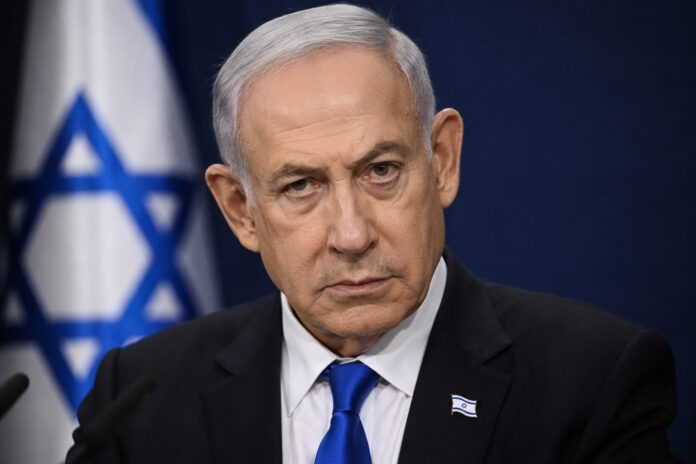
Israeli Prime Minister Binyamin Netanyahu has revealed that he ordered the preparation of a contingency plan to protect Israel’s economy against possible international sanctions, including restrictions on its banking system, with digital currencies among the options under consideration. His remarks prompted an unusually sharp public response from the Bank of Israel, which warned that cryptocurrency cannot provide an effective means of circumventing economic sanctions.
In an interview with Israel’s Economy Channel, Netanyahu acknowledged that he is concerned about the possibility of foreign governments imposing financial restrictions on Israel and said the country must prepare alternative economic mechanisms to protect itself.
“Of course I’m concerned,” Netanyahu said. “You have to understand that there could be sanctions, including banking sanctions. You have to organize an alternative economic system. And you know what that is. You know what digital currencies are, and I’m working on that as well. And there are other things, too.”
Asked whether blockchain technology, which allows financial transactions to be recorded and managed through decentralized digital networks without relying on a central intermediary, could provide an alternative to the traditional banking system, Netanyahu confirmed that the government was examining that possibility.
“Yes, that is one of the ways,” he said. “And I have already requested that a plan be prepared for it.”
The prime minister’s comments indicated that his government is considering how Israel could maintain financial activity if international sanctions were to interfere with access to conventional banking services.
Netanyahu also issued a warning about the future of American military assistance to Israel, saying the country must prepare for the possibility that the substantial financial support it has received from Washington will eventually come to an end.
“If you think we will continue receiving what I secured twice, which amounts to tens of billions of dollars in American assistance for the defense budget, get used to the fact that it won’t continue, because America has changed,” Netanyahu declared. “It’s over. It’s only a question of time.”
His remarks suggested that Israel should not assume that the current level of American security assistance will remain available indefinitely, particularly as political attitudes and priorities in the United States continue to evolve.
The comments drew an immediate response from the Bank of Israel, which issued an unusually forceful statement challenging the economic feasibility of Netanyahu’s proposed approach.
“Cryptocurrencies cannot serve as a route for circumventing sanctions,” the central bank declared.
The bank argued that Israel’s economic interests would be better served by maintaining strong relationships with its principal trading partners and working to prevent sanctions rather than developing mechanisms intended to bypass them.
“The correct course for Israel’s economy is to preserve economic relations with our main trading partners and focus on preventing sanctions and their negative effects on the economy,” the bank stated. “This matter falls within the responsibility of the political leadership, and it would be appropriate to act to advance that objective.”
The statement amounted to a public disagreement between Israel’s central bank and the prime minister over how the country should prepare for the possibility of international financial restrictions.
Responding to the criticism, Netanyahu emphasized that cryptocurrency was merely one option under examination and that no decision had been made to adopt it.
“Cryptocurrency is one of the tools, not the only tool, and it is not certain that it will be used,” Netanyahu said. “I hear the objections and take them into account.”
The prime minister also defended his economic record, suggesting that his previous policies demonstrated his ability to guide Israel through difficult financial circumstances.
“I have received advice from various sources, including the Bank of Israel, and I think that, looking at my record over time, I have led the State of Israel to unprecedented economic prosperity,” Netanyahu said.
“I introduced a free-market economy here, broke up monopolies, reduced waste in the public sector, and we lowered taxes and prices as never before.”
{Matzav.com}
 Matzav6 hours ago
LISTEN:
For more info, email [email protected].

 Matzav12 hours ago
New questions have emerged regarding the cancellation of an El Al flight from Eretz Yisroel to Newark that was diverted to Paris early Friday morning after one of the aircraft’s pilots experienced a medical emergency, leaving passengers scrambling to make alternative arrangements as Shabbos approached.
A passenger aboard Flight LY27 contacted Matzav.com following our original report, questioning whether the approaching onset of Shabbos adequately explained why the aircraft did not continue to Newark after landing in Paris.
The passenger also stated that a frum physician aboard the aircraft had treated the ailing pilot during the flight.
“There certainly was plenty of time for the plane to refuel and reembark to Newark,” said the passenger. “Indeed, many passengers were able to book flights back to the States which took off more than 6 hours after we landed. Also, the pilot was treated by a frum physician on board.”
The Boeing 787-9 Dreamliner had departed Ben Gurion Airport shortly after midnight Friday, October 23, bound for Newark Liberty International Airport. Several hours into the flight, one of the pilots reportedly became ill, prompting the crew to divert to Charles de Gaulle Airport in Paris, where the aircraft landed at approximately 5:30 a.m. local time.
Following the diversion, El Al canceled the remainder of the flight and began arranging alternative transportation for passengers wishing to continue to the United States. Others were accommodated at an airport hotel in Paris, where arrangements were made for kosher meals, minyanim, a Sefer Torah, and assistance from a local rav for Shabbos.
Initial aviation reports attributed the inability to continue the flight to the medical incident and the limited time remaining before Shabbos.
However, the passenger who contacted Matzav.com said that other flights departing considerably later were available to passengers traveling to the United States, raising questions about the specific circumstances that prevented the original El Al aircraft from continuing.
The availability of alternative flights does not necessarily establish that the El Al flight itself could have resumed. A medical emergency involving a pilot can create additional operational complications, including the need for a replacement pilot, crew-duty limitations, and other safety requirements.
Nevertheless, the precise reason for the cancellation of the original flight’s remaining segment has not been publicly clarified.
{Matzav.com}
 Matzav13 hours ago
It is with great sadness that Matzav.com reports the petirah of R’ Naftali Hirschfeld z”l. He was in his nineties.
R’ Naftoli was among the talmidim who had the extraordinary privilege of learning directly under Rav Aharon Kotler zt”l, rosh yeshiva of Beth Medrash Govoha, in Lakewood, whose vision and leadership transformed the landscape of Torah learning in America.
He belonged to the generation that knew Lakewood Yeshiva long before it became the enormous Torah institution recognized throughout the world today. In those early years, BMG was a relatively small but intensely dedicated makom Torah, where a select group of bnei Torah devoted themselves to learning under the personal guidance of Rav Aharon.
As one of Rav Aharon’s talmidim, R’ Naftoli was privileged to witness firsthand the rosh yeshiva‘s extraordinary dedication to Torah, his fiery shiurim, and the uncompromising standards that became the foundation of the Lakewood Yeshiva.
Over the years, R’ Naftoli was recognized as someone who possessed personal recollections of Rav Aharon, his approach to learning, and his leadership during the formative period of the American Torah world.
Those recollections carried particular significance as the years passed and the number of individuals who had personally learned under Rav Aharon steadily diminished.
Following his years in Lakewood, R’ Naftoli continued his involvement in harbotzas haTorah. At one point, he joined Rav Shmuel Feivelsohn in establishing a yeshiva in St. Louis, Missouri, bringing the dedication to Torah learning that characterized Rav Aharon’s talmidim to another American Jewish community.
Later in life, R’ Naftoli pursued a professional career and resided for many years in Queens, New York.
In more recent years, he lived in Lakewood with his son R’ Eli, returning to the community where he had spent his formative years learning under Rav Aharon.
R’ Naftoli and his contemporaries were part of the foundational generation of Beth Medrash Govoha, a group of talmidim whose commitment to Torah helped establish the mosad during an era when the concept of full-time, advanced Torah learning in America was still developing.
The petirah of R’ Naftoli marks the loss of another member of that remarkable generation.
The levayah will take place Sunday at 11 a.m. at the Congregation Sons of Israel Holocaust Memorial Chapel, located at 613 Ramsey Avenue in Lakewood, NJ.
Yehi zichro baruch.
{Matzav.com}
 Matzav13 hours ago
[Video below.] Rav Avraham Moshe Ziskind, rosh yeshiva of Yeshivas Kesser Torah, delivered an emotional address at an emergency election gathering in Telz Stone, recounting a personal experience involving Rav Moshe Hillel Hirsch that he said transformed his understanding of emunas chachomim. According to Rav Ziskind, guidance he received from Rav Hirsch regarding a difficult decision in his life proved accurate in every detail, despite having initially appeared impossible.
The account was shared during a large gathering in Kiryat Ye’arim, also known as Telz Stone, attended by thousands of residents, avreichim, and yeshiva bochurim ahead of the upcoming Knesset elections.
Among the Gedolei Yisroel seated at the dais were Rav Dov Landau and Rav Moshe Hillel Hirsch, who have been leading efforts to address the challenges facing the Torah community during the election campaign.
Rav Ziskind was invited to deliver the concluding address. Rather than speaking exclusively about the elections, he chose to relate an experience from his own life that he said demonstrated Rav Hirsch’s extraordinary insight and ability to foresee developments that others considered impossible.
Opening his remarks, Rav Ziskind told the assembled crowd that he wanted to discuss the meaning of emunas chachomim, explaining that an experience several years earlier had brought him to an entirely different level of understanding.
“I need to share with you a subject called emunas chachomim,” he began. “I once stood at the level of emunas chachomim. But the Ribbono Shel Olam, several years ago, showed me something far greater than emunas chachomim!”
He then described a period when he was confronted with an exceptionally difficult personal decision, one that involved numerous complications and considerable uncertainty.
According to Rav Ziskind, every friend he consulted insisted that the step he was considering was simply not feasible.
Nevertheless, he turned to Rav Moshe Hillel Hirsch for guidance and continued consulting with him repeatedly over an extended period.
“I had a very difficult step to take in my life, something extremely complicated and complex,” Rav Ziskind related. “All my friends told me that taking such a step was completely out of the question. I went in to Maran Rav Moshe Hillel, and I consulted with him many times over a long period.”
Rav Ziskind explained that the guidance he received was difficult for him to comprehend at the time. Each conversation left him wondering how the course of action Rav Hirsch recommended could possibly succeed.
Yet he was struck by the remarkable clarity and depth of Rav Hirsch’s words.
“Each time, I heard things from him that I could not understand. How could such a step possibly be taken? But every sentence I heard from Maran the rosh yeshiva was filled with such extraordinary insight, such honesty, faithfulness, dedication, and profound understanding.”
Although Rav Ziskind said he generally does not have a particularly strong memory for details, he explained that the precise words Rav Hirsch spoke during those consultations have remained with him throughout the intervening years.
“I am not someone who remembers many things, but the exact words I heard years ago from Rav Moshe Hillel are engraved in my memory. I could not believe or understand how a human being could say such things when all my friends were telling me it was impossible!”
The rosh yeshiva then described what happened in the years following those conversations.
Despite his own doubts and the objections of those around him, he had followed Rav Hirsch’s instructions because of the emunas chachomim with which he had been raised.
Over time, he said, events unfolded exactly as Rav Hirsch had predicted.
“It took several years, and the Ribbono Shel Olam taught me and showed me that every word that emerged from his holy mouth was divrei Elokim chaim! Things I never believed could happen in reality took place with absolute precision, exactly as he said!”
Rav Ziskind emphasized that following the guidance had been extraordinarily difficult, particularly because he could not envision how the situation would develop as Rav Hirsch had described.
“It was only because I had been raised with emunas chachomim that I followed his instructions, even though it was unbearably difficult. But I saw with my own eyes how everything I had thought impossible became a simple reality right before me!”
He explained that the experience fundamentally changed the way he understood the authority and guidance of Gedolei Yisroel.
What had previously been a matter of belief, he said, had become something he regarded as knowledge acquired through personal experience.
“That is why I tell you: For me, this has already gone beyond the category of emunah. It has become clear knowledge! The words of the Gedolei Hador are divrei Elokim chaim. The Ribbono Shel Olam gives them the very words to speak, that same ‘kol gadol velo yasaf’ from Maamad Har Sinai!”
Rav Ziskind’s account formed the centerpiece of his remarks, which concluded with an appeal to the assembled public regarding the upcoming elections.
He connected his experience of following Rav Hirsch’s guidance to the broader principle of accepting the direction of Gedolei Yisroel in communal matters.
Referring to the United Torah Judaism list, whose ballot symbol is Gimmel, Rav Ziskind characterized the vote as an expression of confidence in the rabbinic leadership rather than simply a choice between political parties.
“Therefore, voting Gimmel is not a matter of a political party, but a vote and an expression of confidence in the Gedolei and leaders of Klal Yisroel, who have guided us until today and who will continue to guide us forever!”
{Matzav.com}
 Matzav14 hours ago
Eliakim Stark, the 35-year-old Belzer chossid selected to replace longtime Knesset member Yisroel Eichler on the United Torah Judaism slate, has pledged to become a voice for working chareidim and younger members of the community, declaring that the growing population of chareidim who do not fit traditional communal categories can no longer be dismissed as a marginal group.
In his first extensive interview since being chosen as Belz’s new Knesset candidate, Stark also disclosed his close personal friendship with Motti Leitner, chairman of the newly established HaTzibur HaChareidi party, which is competing against United Torah Judaism in the upcoming elections.
Speaking with Yishai Cohen in the Kikar HaShabbat studio, Stark discussed his unexpected entry into national politics, the circumstances surrounding Eichler’s departure, his position on the military draft controversy, and his plans to introduce a more accessible style of political representation.
Stark, who was born in Belgium, moved to Eretz Yisroel at age 16 to study at the Belzer yeshiva in Rishon LeZion. He subsequently served as a rosh chaburah at Yeshivas Mir before becoming involved in communal affairs within Belz.
His selection as the chassidus’s Knesset representative came shortly before the deadline for submitting party lists, marking a significant generational change in Belz’s political leadership.
Stark described the transition from Eichler, who has represented Belz in the Knesset for many years, as an unusually warm and respectful process.
Rather than portraying the change as a political confrontation, he recalled visiting Eichler at his home and discussing how they could publicly demonstrate the cordial nature of the transition.
“I called him as I normally do and asked, ‘Rav Yisroel, can I come up now? They are supposed to make the change. I understand that you have heard about it, that you know, and that you are waiting.’ He said, ‘Yes, yes, come up now,’” Stark related.
“I went up to his home, and he was waiting for me with his radiant smile. We entered the room, talked, laughed, and joked, and said: Let us do this so that all of Klal Yisroel can see how beautiful it is.”
Stark also cited remarks made by the son of the Belzer Rebbe, who was involved in the process leading to his selection.
“Sending a chareidi person to the Knesset requires very broad shoulders, and it must be done in the cleanest possible manner, with genuine consultation, thorough consideration, and all sides presented before the Rebbe, who then made the decision completely and unequivocally, rather than merely agreeing after the fact.”
According to Stark, his appointment followed a process in which the relevant considerations were presented to the Belzer Rebbe before the final decision was made.
Throughout the interview, Stark repeatedly emphasized his intention to establish a closer relationship between elected representatives and the younger generation of chareidim.
He argued that younger voters increasingly expect their representatives to explain decisions, engage in open discussion, and address concerns that might previously have received little attention.
“The plans for the Knesset are to bring a young spirit to the representation,” Stark declared. “I don’t want all the formalities surrounding me. I am part of you. I see it as a mission to involve the younger generation. The younger generation demands what it deserves, but it is not prepared to take for granted everything that has existed here all these years.”
To illustrate his approach, Stark recalled an educational gathering held several years ago at the Belzer Rebbe’s home, attended by mechanchim from around the world.
During that gathering, he said, the Rebbe addressed the changing expectations of younger people and the importance of helping them understand the reasoning behind communal practices and decisions.
“The Rebbe said in Yiddish, from the depths of his heart: ‘Today’s generation is sometimes no longer prepared to accept everything that existed until now as a matter of course. It wants to learn and understand!’ And I think the spirit I bring is truly one of involving the public.”
Stark acknowledged that his relatively young age and lack of parliamentary experience would likely make him a target of scrutiny.
Nevertheless, he said he was prepared to acknowledge mistakes and learn from them.
“I take into account that everyone will be watching me closely, and there will be missteps, and I am also young. I am not embarrassed to say that I made a mistake. I will learn.”
Turning to the military draft controversy, Stark said that resolving the legal status of yeshiva bochurim must remain a central priority for United Torah Judaism in the next Knesset.
He indicated that the party should not accept government positions before securing an arrangement addressing the status of yeshiva students.
“I heard this term, and I want to be precise: ‘Not taking positions.’ In other words, ultimately there is a feeling that a person sits down in his chair… We will truly do our utmost to establish this in the best possible way and bring it about.”
His remarks reflected the position that obtaining government appointments should not take precedence over resolving the conscription issue.
Asked whether United Torah Judaism would categorically reject alternative political alliances if another coalition offered a solution to the draft controversy, Stark declined to rule out possibilities in principle.
“A public representative who enters office must keep the objective before his eyes, and the objective is to be a faithful representative of those who sent him. And who are you to disqualify anyone? After all, this is politics, without disqualifying and without boycotting.”
He nevertheless acknowledged that the question was largely hypothetical, given the composition of the political parties on the other side of the Israeli political spectrum.
One of the interview’s most notable exchanges concerned HaTzibur HaChareidi, the new political party led by Motti Leitner, deputy mayor of Beit Shemesh.
The party has sought to attract younger and working chareidim who believe their interests have not received sufficient attention from the established chareidi political factions.
Stark surprised viewers by revealing that he and Leitner have maintained a close friendship and have discussed the establishment of the new party at considerable length.
“Motti is a very good friend of mine. We have spoken for countless hours, including about the new party. My position is that the greatest change can be created from within the system, from within the establishment.”
Although the two men now find themselves associated with competing political parties, Stark made clear that their personal relationship has not prevented them from discussing the issues confronting the community.
He also acknowledged the underlying concerns that have contributed to the emergence of HaTzibur HaChareidi.
According to Stark, the number of chareidim who identify with a somewhat different communal lifestyle has grown substantially, making it increasingly unrealistic to treat them as an insignificant minority.
“In the past, there were people who were labeled ‘modern chareidim,’ and they were pushed to the fringes,” Stark explained. “Today, those fringes have become very large fringes. They are no longer fringes! Today, the public says: Listen, I want to live this way. I want a shul that suits me, in my spirit, and I am here to stay.”
When Cohen asked whether he was personally committing to represent this population in the Knesset, Stark answered without hesitation.
“Absolutely!”
Stark then recounted an incident in Ramat Beit Shemesh Daled involving a dispute over the allocation of land for shuls.
The disagreement involved the Belzer community and a Kerestir shul associated with Leitner.
According to Stark, some individuals urged him not to engage with Leitner’s community, arguing that doing so would give legitimacy to a group they opposed.
Stark said he refused to accept that approach.
“Various people came to me and said, ‘Listen, this is Leitner. You must not speak with them. Don’t give them legitimacy!’ I said: Absolutely not! I called Motti, we sat down, and we worked things through.”
He said he made it clear that Belz would not pursue its own interests by trampling on the rights of Leitner’s community.
“I said: There is no way Belz will receive an allocation at the expense of trampling on Motti Leitner, his party, and his community! And indeed, boruch Hashem, we worked things out.”
Stark presented the episode as an example of his belief that communal disagreements should be addressed through direct discussion and mutual accommodation rather than through exclusion.
He argued that the growth of the working chareidi population requires a practical response from established communal institutions.
To illustrate the point, he offered an analogy involving a shul in which a small number of bochurim begin talking during davening.
If only three bochurim are talking, he explained, the appropriate response might be to approach them individually and ask them to stop.
But when the number grows dramatically, the situation can no longer be addressed as an isolated disciplinary problem.
“You have a shul with 400 people davening, and you see three bochurim standing outside and chatting during davening. You approach them and reprimand them. When you go outside and see 60 bochurim talking, you understand that this is a phenomenon!”
Stark continued by arguing that communal leaders must respond to such developments by identifying the underlying needs and establishing appropriate frameworks.
“Either you solve it at its root, or you open a separate minyan for them, or you establish activities for them. If you ignore them or think they will be pushed to the side of the road, that will not happen. We need to take care of them and provide them with everything. And I am their representative!”
The remarks were particularly significant given the political controversy surrounding Leitner’s party, which has drawn criticism from senior chareidi rabbonim and political leaders over its decision to compete independently in the Knesset elections.
As previously reported, Rav Dov Landau has issued an exceptionally sharp letter condemning the activities of those involved with HaTzibur HaChareidi, warning that the new party was causing serious harm to chareidi Jewry.
 Matzav14 hours ago
Maran Rav Dov Landau, rosh yeshiva of Slabodka, has issued an unusually forceful handwritten letter condemning the newly established HaTzibur HaChareidi political party, declaring that he will fight its activities with every resource at his disposal and accusing its supporters of causing serious harm to chareidi Jewry.
The letter comes as tensions intensify ahead of Tuesday’s elections for the 26th Knesset, with the new party seeking to challenge the established chareidi factions of United Torah Judaism and Shas.
The recipient of the letter has been identified in Israeli media reports as Rav Yosef Ben Arza, author of the Yosef Daas series, a rebbi at Yeshivas Hesder Mishmar HaTorah, and a descendant of Rav Yaakov Moshe Charlap zt”l.
According to sources, Rav Ben Arza, who supports HaTzibur HaChareidi, recently visited Rav Landau’s home to inquire about his position on the new party. During the visit, he spoke with the rosh yeshiva’s son and raised questions concerning the political representation of chareidim whose circumstances differ from those of full-time yeshiva and kollel members.
After learning of the conversation, Rav Landau personally wrote a letter expressing his opposition to the party and its supporters.
“My son told me what you said, which is great foolishness, if not great wickedness,” Rav Landau wrote.
He then declared that he would actively oppose the party’s efforts, using exceptionally sharp language to convey the seriousness with which he views the matter.
“I will fight against you with all the strength I have and even the strength I do not have, because you are causing great harm to Chareidi Judaism.”
The rosh yeshiva went further, comparing the activities of the party’s supporters to violations of some of the Torah’s most severe prohibitions.
“Your actions are like eating forbidden fats on Yom Kippur and eating chametz on Seder night. I wrote this comparison to emphasize the severity of these matters. Retract, retract your actions, and do not cause harm.”
Despite the warning, however, reports indicate that Rav Ben Arza has not withdrawn his support for HaTzibur HaChareidi.
A source familiar with the exchange told Israeli media that Rav Ben Arza had raised substantive questions during his conversation with Rav Landau’s son, particularly regarding the needs of chareidi men serving in the Israeli military and the economic difficulties faced by working chareidi families.
Among the issues he reportedly raised was who would represent and assist chareidi soldiers and who would address the livelihood concerns of families outside the traditional full-time kollel framework.
According to that source, Rav Ben Arza did not receive answers that satisfied his concerns.
The source further indicated that the subsequent handwritten letter had not caused him to reconsider his support for the new party.
HaTzibur HaChareidi is headed by Motti Leitner, deputy mayor of Beit Shemesh, who has positioned the party as an alternative for chareidi voters dissatisfied with their representation by the longstanding chareidi political parties.
The party’s platform focuses heavily on the needs of working chareidim, employment opportunities, education, and the situation of chareidi men who serve in the military.
Its leadership argues that certain segments of the chareidi population have not received adequate attention from the established political representatives.
On the military draft issue, the party supports enlistment for chareidi men who are not engaged in Torah study, while opposing arrests and punitive sanctions against chareidim.
That position differs from the approach advocated by much of the traditional chareidi leadership, which has placed particular emphasis on protecting the independence of the yeshiva world and resisting government efforts to impose military conscription.
The emergence of the new party has generated considerable controversy within the chareidi community, particularly because it is competing for votes traditionally cast for United Torah Judaism and Shas.
Senior figures within the established chareidi political leadership have expressed concern that the creation of competing lists could divide the chareidi electorate and weaken its representation in the Knesset.
Rav Landau has addressed the issue repeatedly in recent days, urging voters to maintain their allegiance to United Torah Judaism and warning against supporting newly established parties that do not have the backing of the traditional rabbinic leadership.
At an election gathering in Ashdod earlier this week, the rosh yeshiva spoke about dissatisfaction among some chareidi voters, acknowledging that complaints and resentment had developed over the performance of political representatives.
He nevertheless stressed that such frustrations should not lead voters to abandon the party supported by the Gedolei Yisroel.
Rav Landau also addressed concerns that working chareidim have been overlooked by the political establishment, emphasizing that those who earn a livelihood while remaining committed to Torah observance are an integral part of the Torah community.
In a separate development, Rav Landau hosted a gathering at his home attended by dozens of chareidi businessmen and other representatives of the working chareidi community.
The meeting was arranged against the backdrop of complaints that the educational and communal needs of working families have not received sufficient attention from United Torah Judaism’s elected officials.
During the gathering, Rav Landau acknowledged that some families have legitimate grievances concerning the services and representation they receive.
He also indicated that he would personally approach the party’s leadership and Knesset representatives to seek improvements in the handling of those concerns.
Among the issues raised were the availability of suitable Torah educational frameworks for children from working chareidi households and the difficulties encountered by families whose circumstances do not fit the conventional yeshiva and kollel model.
The rosh yeshiva emphasized that working chareidim remain part of the Torah world and that their concerns deserve attention.
His statements at that gathering reflected an effort to address the complaints underlying the new party’s appeal, even as he maintained his opposition to separate political representation.
The dispute has also drawn the attention of Prime Minister Binyamin Netanyahu.
According to Israeli media reports, Netanyahu recently met with Leitner and sought to persuade him to withdraw HaTzibur HaChareidi from the Knesset race.
The meeting came amid growing pressure on the party to avoid competing against the established chareidi factions.
Leitner subsequently acknowledged that he had met with the prime minister and heard his proposal.
On Wednesday, October 21, he publicly announced that the party intended to remain in the race despite the pressure being exerted upon it.
Leitner also accused leaders of Shas and United Torah Judaism of directing threats against his party, allegations that formed part of the increasingly contentious campaign surrounding the new movement.
The party chairman argued that the concerns motivating HaTzibur HaChareidi’s establishment extend beyond the political ambitions of any individual candidate.
He maintained that substantial numbers of chareidim feel politically unrepresented and that the party was established to address their concerns.
The publication of Rav Landau’s handwritten letter has brought the dispute into sharper focus, particularly because the recipient is himself a rav who has publicly associated with the new political initiative.
The exchange highlights a fundamental disagreement over whether the needs of working chareidim and other groups should be addressed through the existing chareidi parties or through a separate political framework.
Supporters of the new party contend that independent representation is necessary to secure meaningful attention to those concerns.
{Matzav.com}
 Matzav14 hours ago
Rav Shabtai Levi, rosh mosdos of Halichos Moshe and rav of the Ramat Aharon neighborhood in Bnei Brak, has issued a letter addressing widespread dissatisfaction with Shas’s political representatives over the past four years, while calling for continued support of the party in light of concerns over the future of the Torah world and assurances that major decisions will be brought before the Moetzes Chachmei HaTorah.
The letter comes amid growing frustration within portions of the Sephardic chareidi community over the conduct of Shas lawmakers during the outgoing Knesset term, particularly against the backdrop of the ongoing confrontation over the draft of yeshiva bochurim.
Rather than dismissing those grievances, Rav Levi acknowledges that serious complaints have been raised against the party’s representatives and indicates that many of them appear justified.
Nevertheless, he argues that political decisions affecting the Torah community must be guided by Torah considerations rather than by disappointment with individual politicians.
A central element of his position is what he describes as a change in the leadership of the Moetzes Chachmei HaTorah, together with a reported commitment to convene the council before major political decisions are made.
Rav Levi presents that commitment as an important safeguard to ensure that the party’s future actions reflect the guidance of Gedolei Yisroel.
In his letter, Rav Levi recalls instructions he personally received from Rav Ovadiah Yosef zt”l, who urged him to work toward strengthening Shas’s representation in the Knesset.
According to Rav Levi, Rav Ovadiah’s request was rooted in concern for the preservation of the Torah world and the welfare of yeshiva bochurim.
That responsibility, he explains, remains particularly relevant under present circumstances, when the status of yeshiva students and the continued functioning of Torah institutions are subjects of intense political and legal controversy.
Rav Levi emphasizes the importance of maintaining political representation capable of defending the interests of the Torah community and supporting its educational institutions.
The letter places particular emphasis on the distinction between supporting the Torah community’s political representation and approving every decision made by its elected officials.
Rav Levi makes clear that his support does not erase the complaints accumulated during the past four years. Instead, he points to the reported commitment to consult the Moetzes Chachmei HaTorah before major decisions as an important development in the party’s leadership.
He stresses that adherence to Daas Torah cannot be replaced by the independent political judgment of party officials, even when those officials believe the appropriate course of action is obvious.
The requirement to convene the Moetzes before major decisions, he explains, is intended to ensure that matters affecting the Torah community are decided under the guidance of its rabbinic leadership.
The letter comes amid a broader dispute within the Sephardic chareidi community over Shas’s handling of the military draft issue.
In a separate development Saturday night, reports emerged that Rav Moshe Tzadka, rosh yeshiva of Porat Yosef and one of the senior Sephardic roshei yeshiva, had signed a letter opposing a vote for Shas over the party’s reported willingness to support conscription of young chareidi men who are not studying in yeshiva.
The reports prompted an unusual intervention by senior members of the Moetzes Chachmei HaTorah, five of whom visited Rav Tzadka’s home in an effort to address his concerns.
Among those who participated were Rav Yitzchak Yosef, Rav Moshe Maya, Rav Avraham Salim, Rav Yehuda Cohen, and Rav Shmuel Betzalel.
According to subsequent reporting, Rav Tzadka clarified during the meeting that although he and his father had not participated in Knesset elections, this did not constitute opposition to Shas, and that those who do vote should support the party for the sake of the Torah world.
The conflicting reports and competing rabbinic positions illustrate the sensitivity surrounding Shas’s campaign, particularly as the question of military conscription continues to dominate discussions within the Sephardic yeshiva community.
Against that backdrop, Rav Levi’s letter reflects an effort to address dissatisfaction with the party’s elected representatives while emphasizing the role of the Moetzes Chachmei HaTorah in determining its future direction.
He concludes by calling upon the public to support Shas, strengthen the standing of Torah, and act in a manner that brings about a Kiddush Hashem.
{Matzav.com}
 Matzav14 hours ago
Former President Barack Obama ridiculed President Donald Trump’s extensive renovations of the White House during a Democratic campaign rally in Cleveland today, comparing the president’s decorating preferences to those of Iraqi dictator Saddam Hussein and mocking the gold accents and major construction projects undertaken during Trump’s second term.
Speaking at Cleveland Public Auditorium on October 24, Obama delivered the remarks while campaigning for Ohio Democratic gubernatorial candidate Amy Acton and Senate candidate Sherrod Brown, with the midterm elections just 10 days away.
The former president used the appearance to criticize Trump’s priorities, arguing that the administration has devoted considerable attention to changes at the presidential residence while Americans contend with economic concerns and other national challenges.
“I mean, I don’t know if you’ve noticed, but he seems very focused on home renovations,” Obama said. “He should be on HGTV.”
Obama then listed several of the president’s projects, including construction of a new White House ballroom, alterations to the Rose Garden, and the installation of an upgraded helicopter landing area on the South Lawn.
He reserved his sharpest remark for Trump’s preference for elaborate gold-colored furnishings and decorative finishes.
“He’s got the White House looking like Saddam Hussein opened a Cheesecake Factory,” Obama quipped.
The comparison drew attention to the president’s decorating style, which has featured prominent gold detailing in several White House rooms.
Trump’s renovation program, however, has involved more than aesthetic changes, with the administration arguing that several projects address longstanding operational needs at the presidential complex.
One of the most visible alterations was the transformation of the Rose Garden in 2025.
Under Trump’s direction, the garden’s central grass lawn was replaced with limestone paving, creating a patio designed to accommodate outdoor receptions, presidential speeches, and other official gatherings.
The traditional rose plantings were preserved along the garden’s perimeter, while the redesigned central area provides a more durable surface for events involving large numbers of guests.
The administration has presented the changes as a practical improvement to an outdoor space frequently used for White House functions.
Trump also oversaw construction of a new granite helipad on the White House grounds, incorporating the presidential seal into the landing surface.
The upgraded facility was unveiled in September, with official White House photographs showing Marine One using the new landing area during a September 21 ribbon-cutting ceremony.
The helipad project was designed to modernize the area used for presidential helicopter arrivals and departures.
Another major undertaking is the construction of a permanent White House ballroom, intended to provide expanded facilities for large official gatherings.
For decades, the White House has relied on temporary tents and other arrangements to accommodate events that exceed the capacity of its existing indoor reception spaces.
The Trump administration has argued that a purpose-built ballroom would provide a more secure and practical setting for state dinners, receptions, and other functions requiring substantial guest capacity.
A National Park Service environmental assessment of the project noted that the need for additional White House event space had been identified in a planning document dating back to 2000.
The ballroom has nevertheless become a prominent subject of political controversy, with critics questioning its scale, design, and impact on the historic presidential complex.
Obama’s criticism of Trump’s construction projects also comes amid scrutiny of the former president’s own major building project in Chicago.
The Obama Presidential Center, constructed in Jackson Park, has faced criticism over its distinctive granite-clad tower, substantial construction expenses, and years of delays.
Some architectural critics have nicknamed the structure the ‘Obamalisk,’ a reference to its imposing, monument-like appearance.
The center’s projected construction costs have reportedly exceeded $1 billion, nearly three times the original estimate of approximately $350 million.
The project has also generated disputes involving subcontractors who allege they are owed millions of dollars for completed work.
Separately, public infrastructure improvements associated with the development have involved hundreds of millions of dollars in taxpayer-funded expenditures beyond the center’s own construction budget.
The comparison between the two presidential construction projects has become part of the broader political debate over the costs and design choices associated with high-profile presidential developments.
Obama’s remarks were not limited to the White House renovations. He also criticized Trump’s handling of the conflict with Iran, blaming the administration’s military decisions for increased energy costs and accusing the president of involving the United States in a conflict that Americans had not sought.
“Most importantly, he decided to start an unnecessary war that nobody asked for and nobody voted for,” Obama said.
The former president also defended the nuclear agreement reached between Iran and world powers during his administration, arguing that the arrangement had prevented Tehran from acquiring nuclear weapons.
“Iran didn’t have nuclear weapons because I had put a deal in place that everybody knows kept them from getting nukes,” Obama claimed.
Trump withdrew the United States from the 2015 Iran nuclear agreement in 2018, maintaining that its restrictions were inadequate and that the arrangement failed to address important threats posed by Tehran.
The president argued that the deal’s temporary limitations on Iran’s nuclear activities, combined with its failure to adequately confront the country’s ballistic missile development and support for terrorist organizations, made it unacceptable.
Under the agreement, Iran received relief from international sanctions in exchange for restrictions on its nuclear program and a system of international inspections.
Inspectors reported Iranian compliance with certain provisions before the American withdrawal, although Tehran subsequently increased uranium enrichment beyond the agreement’s established limits.
The two presidents have long disagreed over the agreement’s effectiveness, with Obama defending it as a diplomatic achievement and Trump maintaining that it provided Iran with financial benefits without sufficiently eliminating its long-term nuclear ambitions.
Obama also criticized the administration’s broader economic policies, arguing that decisions made by Trump have contributed to higher costs for American consumers.
He took aim at the president’s immigration enforcement measures and accused Republican lawmakers of failing to adequately challenge administration policies.
During the Cleveland appearance, Obama additionally criticized Republican gubernatorial candidate Vivek Ramaswamy over a campaign advertisement featuring the estranged mother of Democratic candidate Amy Acton.
The advertisement, which addresses Acton’s personal background, has drawn criticism from some Republicans as well as Democrats. Ramaswamy and his supporters have defended the campaign’s approach.
Obama’s Ohio appearance was part of a broader series of campaign events intended to support Democratic candidates ahead of the November 3 elections.
Following the Cleveland rally, he traveled to Detroit, where he appeared in support of Democratic Senate candidate Abdul El-Sayed and other Michigan Democrats.
During that appearance, Obama continued his criticism of Trump’s economic record, tariffs, the Iran conflict, and White House renovation projects.
He is also scheduled to campaign in Georgia next week as Democrats seek to increase voter participation in the closing days before Election Day.
In Ohio, Acton is challenging Ramaswamy for the governorship, while Brown is attempting to return to the Senate by unseating Republican Sen. Jon Husted.
Brown previously represented Ohio in the Senate before losing his reelection bid in 2024.
Obama carried Ohio in both of his successful presidential campaigns, winning the state in 2008 and again in 2012.
The state’s presidential voting patterns subsequently shifted, with Trump carrying Ohio in 2016, 2020, and 2024.
 Matzav14 hours ago
The publication of the Israeli Agudas Yisroel’s traditional election proclamation has been postponed yet again as disagreements among the courts of the Chassidic Rebbes continue over the document’s wording, particularly a controversial passage that could be understood as condemning voters who support Shas rather than United Torah Judaism.
Yaakov Veltzer, secretary of the Moetzes Gedolei HaTorah of Agudas Yisroel, instructed the editorial offices of Hamodia and Hamevaser not to publish the proclamation on Sunday, as had been anticipated. The new target for publication is Monday, although no final agreement has yet been reached.
The latest delay follows an objection raised by the Gerer Rebbe to language in the original document that appeared to characterize anyone who failed to vote for United Torah Judaism, whose ballot designation is Gimmel, as indirectly participating in a chillul Hashem and bearing responsibility for a particularly serious sin.
The original proclamation had already received approval for publication before it was withdrawn at the last moment on Thursday evening.
According to the report, the Gerer Rebbe questioned how such language could be published when it would seemingly include those voting for Shas, who are themselves following the instructions of their own Gedolei Yisroel.
His objection focused on the implication that a person obeying the guidance of Sephardic rabbonim by voting for Shas could nevertheless be described as committing a serious transgression simply because he had not voted Gimmel.
The concern prompted renewed discussions over the wording of the proclamation, which is traditionally issued by the Moetzes Gedolei HaTorah ahead of elections to instruct the Chassidic public regarding its voting obligations.
A revised version was subsequently proposed in an effort to address the Gerer Rebbe’s concerns while preserving the Moetzes’ clear endorsement of United Torah Judaism.
Under the alternative wording, the proclamation would state that United Torah Judaism is the only electoral list that the Moetzes Gedolei HaTorah calls upon its followers to support.
It would also caution against voting for parties that do not enjoy the approval of the Gedolei Yisroel.
Significantly, the revised draft would eliminate the original declaration that anyone who fails to vote Gimmel is indirectly responsible for a chillul Hashem.
The modification was intended to distinguish between an explicit directive to Agudas Yisroel supporters to vote for United Torah Judaism and a broader condemnation that could be interpreted as applying to voters following other recognized rabbinic authorities.
Veltzer circulated the revised text among the various Rebbes’ courts on Friday and again on Motzoei Shabbos, seeking the approval necessary to proceed with publication.
Despite those efforts, the consultations failed to produce a final consensus, forcing another postponement.
The parties are now considering several possibilities, including adopting the softened language, restoring the stronger warning contained in the original proclamation, or developing an additional compromise that would satisfy the different positions.
The disagreement comes at a sensitive moment in the election campaign, with the chareidi parties working to mobilize their supporters amid continuing disputes over military conscription and the future political representation of the Torah community.
The wording of the proclamation carries particular significance because it is issued under the authority of the Moetzes Gedolei HaTorah and is intended to convey the position of the Chassidic leadership to its followers.
The current disagreement does not concern whether United Torah Judaism should receive the support of Agudas Yisroel voters. Rather, it centers on how strongly the proclamation should characterize the consequences of voting for another party, particularly when that party is Shas.
For the Gerer Rebbe, the concern reportedly lies in ensuring that an endorsement of United Torah Judaism does not inadvertently cast aspersions on Sephardic voters who are following the instructions of their own rabbonim.
The discussions also reflect the challenge of securing agreement among the different Chassidic courts on language that carries both halachic and political implications.
As of Motzoei Shabbos, the revised proclamation had not received the necessary final approval, and the newspaper editors were instructed to hold off on printing it.
Efforts to reach an agreement are continuing, with Monday now being discussed as the next possible publication date.
{Matzav.com}
 Matzav14 hours ago
A massive fire has nearly destroyed Adolf Hitler’s notorious mountaintop retreat in the Bavarian Alps, reducing much of the historic Nazi-era building known as the Eagle’s Nest to ruins as approximately 200 firefighters battled flames through snow, fierce winds, and treacherous mountain conditions. German authorities have arrested a 33-year-old man on suspicion of arson and are investigating whether the blaze was deliberately set.
The fire erupted Friday night at the Kehlsteinhaus, the imposing stone-and-granite structure perched approximately 6,000 feet above sea level near Berchtesgaden in southeastern Germany. By the time emergency crews reached the isolated mountain complex, flames had engulfed the building, which survived World War II largely unscathed and had stood for nearly nine decades as one of the most recognizable surviving landmarks associated with the Nazi regime.
Bavarian Interior Minister Joachim Herrmann said today that investigators believe the blaze may have been deliberately started. Prosecutors are examining the suspect’s possible motives, including whether the incident had a political dimension.
The fire was first reported late Friday evening after an automatic alarm was activated at approximately 9:15 p.m. Firefighters and police immediately began making their way toward the remote property, which sits at the end of a narrow mountain road that winds through the Alps and includes several tunnels.
As emergency vehicles approached, crews could already see flames shooting into the night sky above the mountain.
By the time they arrived, the structure was completely engulfed.
Firefighters faced extraordinary difficulties reaching the building and bringing the blaze under control. The Eagle’s Nest stands at an elevation of 1,834 meters, and the narrow access road severely restricted the movement of emergency vehicles and firefighting equipment.
Weather conditions compounded the difficulties. Heavy rain was followed by snowfall, while powerful winds swept across the exposed mountain summit, complicating efforts to contain the flames.
Firefighters were forced to operate in hazardous conditions, using specialized breathing equipment as smoke and fire spread through the historic building.
Approximately 200 firefighters and other emergency personnel were mobilized for the operation, which continued through the night and into today.
Michael Brandl, a senior fire official, said crews were still working to extinguish the remaining flames this afternoon.
Authorities were particularly concerned about the structural stability of the building. The intensity of the fire had severely weakened portions of the complex, raising fears that walls, roofing, or other sections could collapse without warning.
As a result, firefighters were unable to enter the structure to conduct a full inspection.
Despite the scale of the disaster, officials reported that nobody had been injured.
“We are very lucky that there are no injuries,” Brandl said.
Investigators believe the building was unoccupied when the fire began. The Eagle’s Nest operates as a seasonal tourist destination and was not receiving visitors at the time.
Police announced that a suspect had been apprehended shortly after emergency personnel responded to the fire.
According to Bavarian police official Robert Holzinger, officers traveling toward the burning complex encountered a man riding a red motorcycle without a license plate in the opposite direction, away from the mountain.
The officers stopped the motorcyclist and took him into custody.
Authorities subsequently identified the suspect as a 33-year-old German citizen with connections to the region, although he reportedly does not currently reside there.
Prosecutors said investigators were considering the possibility of a political motive but had also observed indications that the suspect might be suffering from mental illness.
The man was expected to be transferred to a psychiatric facility as authorities continued their investigation.
Police have not publicly established precisely how the fire began, and the suspect’s alleged involvement remains under investigation. Officials have not reported evidence suggesting that additional individuals participated in the incident.
The extent of the destruction became increasingly apparent today as firefighters worked to bring the remaining hot spots under control.
Large sections of the building were severely damaged, and authorities indicated that the structure had been almost completely destroyed.
The blaze represents a remarkable development in the history of a building that survived Allied bombing raids and the collapse of Nazi Germany, remaining largely intact even as many other structures associated with Hitler were destroyed during and after the war.
The Eagle’s Nest was constructed between 1937 and 1938 high above the Obersalzberg area, where Hitler maintained another residence known as the Berghof.
The elaborate mountaintop complex was developed as a prestigious retreat and reception venue for Nazi leaders and visiting dignitaries. It was associated with Hitler’s 50th birthday and intended to serve as an architectural symbol of the regime’s power.
Its remote location and commanding views across the Bavarian and Austrian Alps were meant to impress foreign visitors.
The building was constructed from stone and granite and reached by an extraordinary mountain access route, making it one of the Nazi regime’s most distinctive architectural projects.
Although the property became closely associated with Hitler, historians note that he rarely visited the mountaintop retreat.
He reportedly made approximately 14 visits between 1938 and the end of World War II, preferring to spend time at his nearby Berghof residence.
The Eagle’s Nest was used primarily for selected official visits and receptions rather than as Hitler’s principal residence or military headquarters.
The property nevertheless became an enduring symbol of the Nazi dictatorship responsible for the Holocaust and the murder of six million Jews, along with millions of other victims of Nazi persecution and aggression.
Unlike Hitler’s Berghof residence, which was heavily damaged during the war and subsequently demolished, the Eagle’s Nest survived and was eventually preserved.
Since 1952, the site has operated as a restaurant and tourist attraction, drawing visitors interested in both its panoramic Alpine views and its historical significance.
An exhibition at the property documented its connection to the Nazi era, while the nearby Obersalzberg Documentation Center provided additional historical information about Hitler’s regime and its crimes.
Bavarian authorities have estimated that the Eagle’s Nest attracts approximately 350,000 visitors annually, making it one of the region’s best-known historical destinations.
The property’s own historical presentation has described it as a reminder of the destructive ideology of the Nazi regime and the activities conducted in the Obersalzberg area, where plans for war and mass murder were developed.
The fire has now raised questions about the future of the structure and whether the historic building can be reconstructed after such extensive damage.
Despite the destruction, Bavarian officials have already indicated that they intend to preserve the site’s historical significance.
Interior Minister Herrmann said the building would not simply be abandoned in its damaged condition.
“This house — the entire site and its surroundings — is linked to a specific history. It is important that we continue our work of remembrance,” Herrmann said.
He further declared that the retreat “will under no circumstances be left in a state of ruin”.
The nearby Obersalzberg Documentation Center was not damaged by the fire, allowing its historical exhibits and educational resources to remain intact.
For German authorities, the question of rebuilding the Eagle’s Nest extends beyond preserving an architectural landmark. The property has long presented a complicated historical challenge because of its direct association with Hitler and the Nazi leadership.
Officials have sought to ensure that the site serves as a place for historical education rather than a monument glorifying the Nazi regime.
The destruction of the building, which had stood since 1938, comes amid continuing debates in Germany over how to preserve physical reminders of the Nazi period while confronting the atrocities committed under Hitler’s rule.
Investigators are expected to continue examining the fire scene once the structure is considered sufficiently stable for forensic teams to enter.
 Matzav14 hours ago
[Levayah live video below.] It is with great sadness that Matzav.com reports the petirah of Malka Grossman a”h of Lakewood, NJ, who passed away on Shabbos morning following a three-year battle with illness. She was just 19 years old.
Malka was the beloved daughter of R’ Meir and Tziporah Grossman of Lakewood. Her prolonged illness prompted an extraordinary outpouring of tefillos and zechusim from Jewish communities across the country, as countless individuals united in davening for her refuah sheleimah.
Tens of thousands of girls recited Tehillim on her behalf, while challah bakes were organized in cities throughout the United States as a zechus for her recovery. Her plight touched hearts far beyond her immediate family and community, inspiring an exceptional display of achdus, compassion, and concern for a fellow Yid.
Throughout the three years of her illness, the tremendous efforts undertaken on her behalf reflected the deep connection felt by so many to Malka and her family. The news of her petirah has brought immense sorrow to the Lakewood community and to the many people who had joined in davening for her.
The levayah is scheduled to take place on Sunday afternoon at 1:00 p.m. at Bnos Devorah, located at 360 Oak Street in Lakewood, NJ. Kevurah will follow in Lakewood.
WATCH THE LEVAYAH HERE:
Yehi zichrah baruch.
{Matzav.com}
 Matzav14 hours ago
I’m asking you personally to help. A mother of six, a righteous giyores, is suffering and urgently needs medical treatment. Her family simply cannot afford it.
Please take a moment to watch Rabbi Ari Bensoussan’s message and give whatever you can.
Let’s help this mother get the care she needs. CLICK HERE TO DONATE.
 Matzav15 hours ago
National Security Minister Itamar Ben-Gvir has accused Israel’s chareidi political representatives of preventing the dismissal of Attorney General Gali Baharav-Miara at the beginning of the government’s term, claiming that their refusal helped create the legal and political situation now confronting the chareidi community. In a wide-ranging interview with Bechadrei Chareidim, Ben-Gvir also criticized the arrests of yeshiva bochurim, defended his visits to Har Habayis, expressed concern that Prime Minister Binyamin Netanyahu may form a unity government without him, and revealed that he intends to demand the Defense Ministry in post-election coalition negotiations.
Ben-Gvir claimed that chareidi lawmakers had opposed his efforts to remove Baharav-Miara because they believed maintaining a working relationship with her would help them secure government appointments. He argued that the same attorney general is now pursuing policies harmful to the chareidi community, particularly regarding military conscription.
The Otzma Yehudit chairman also revealed that he wants Likud MK Tally Gotliv appointed justice minister in the next government, saying he considers changes to Israel’s judicial system and security policies essential conditions for joining a future coalition.
Addressing criticism from chareidi politicians who have attacked him during the election campaign, Ben-Gvir insisted that he had consistently assisted their community throughout his time in office.
He said chareidi Knesset members had regularly contacted him whenever they encountered difficulties and that his office had made itself available to them at all hours.
Ben-Gvir recalled that Shas chairman Aryeh Deri had repeatedly described him as a genuine friend of the chareidi community, making the current criticism particularly surprising to him.
He suggested that the change in tone was connected to the approaching elections and accused chareidi politicians of attempting to distance themselves from him for political reasons.
According to Ben-Gvir, their refusal to support the attorney general’s removal early in the government’s term was a serious miscalculation whose consequences are now becoming apparent.
The minister returned to that allegation several times during the interview, portraying Baharav-Miara as the central obstacle to policies sought by both his party and the chareidi factions.
Ben-Gvir said he had advocated her dismissal from the outset but encountered opposition from chareidi representatives who believed they could negotiate effectively with her.
He claimed that some had told him, “We know how to get along with her; we can do deals with her,” using an expression suggesting that they believed they could maneuver around potential obstacles.
Ben-Gvir maintained that he refused to abandon his position despite the political consequences and said those now criticizing him should remember who supported removing the attorney general and who opposed it.
His accusations come amid continuing tensions between the government, the attorney general, and chareidi parties over the enforcement of military conscription requirements for yeshiva students.
Asked about the arrests of yeshiva bochurim and the role of the police under his authority, Ben-Gvir insisted that responsibility for the detentions rests with the military police rather than the Israel Police.
He said the military police were carrying out arrests under the direction of the attorney general and that the national security minister has no authority over those operations.
Ben-Gvir argued that arresting yeshiva students would undermine rather than encourage chareidi enlistment.
He further alleged that Baharav-Miara was pursuing the arrests for political reasons, specifically to damage Israel’s right-wing government.
The minister again criticized chareidi lawmakers for failing to support his earlier attempt to dismiss her, saying their decision had allowed the present situation to develop.
His remarks placed responsibility for the enforcement controversy on the attorney general and the chareidi parties rather than on his own ministry.
The question of responsibility remains contested, however, as military enforcement, government policy, judicial rulings, and the attorney general’s legal positions all play roles in the ongoing conscription dispute.
Ben-Gvir also discussed his efforts to encourage chareidi participation in the Israel Police and Border Police, arguing that these institutions can accommodate religious recruits without requiring them to abandon their way of life.
He said his ministry had developed specialized frameworks with adjustments to training, service conditions, and other requirements intended to make police service more accessible to chareidi men.
According to Ben-Gvir, increasing the number of chareidi officers could also improve relations between the police and chareidi communities, particularly following confrontations during demonstrations over military conscription.
In a separate interview earlier this month, Ben-Gvir claimed that the number of chareidim serving in the Israel Police had increased from several dozen when he entered office to more than 1,000. He also said hundreds of chareidim were now serving in the Israel Prison Service.
The minister has additionally cited his efforts to restrict the use of police crowd-control measures at chareidi demonstrations, including the controversial skunk-water spraying system.
Ben-Gvir has argued that the attorney general’s attempt to remove him from office is connected in part to his demands that police treat chareidi demonstrators according to the same enforcement standards applied to other protesters.
In March, Baharav-Miara asked the Supreme Court to order Netanyahu to dismiss Ben-Gvir, arguing that his involvement in police operations and appointments threatened the independence of law enforcement. Netanyahu rejected the demand, maintaining that the minister had been lawfully appointed and that there was no legal basis for his removal.
Ben-Gvir has portrayed the legal proceedings as an attempt to prevent him from implementing his policies, including those he says are intended to protect chareidi rights.
The interview also addressed criticism from former Sephardic Chief Rabbi Rav Yitzchak Yosef, who recently condemned visits to Har Habayis and criticized political support for Ben-Gvir.
Ben-Gvir responded that he respects Rav Yitzchak Yosef and other leading Torah scholars and does not wish to engage in public disputes with rabbonim.
He said his own conduct is guided by rabbinic authorities, including Rav Dov Lior and Rav Shmuel Eliyahu, who hold different halachic positions regarding visits to Har Habayis.
Ben-Gvir acknowledged that legitimate halachic disagreements exist but maintained that he follows the rulings of the rabbonim upon whom he relies.
His criticism, he explained, is directed at politicians who turn halachic disagreements into instruments of political confrontation.
The question of ascending Har Habayis remains a significant point of disagreement between Ben-Gvir and much of the chareidi rabbinic leadership, which maintains the longstanding prohibition against entering the site because of concerns involving ritual purity and the sanctity of areas where entry is forbidden.
Turning to the approaching elections, Ben-Gvir addressed chareidi voters who are disappointed with their political representatives and considering abstaining.
He said he respects those who follow the voting instructions of their rabbonim and would not interfere with such decisions.
At the same time, he urged dissatisfied voters not to remain home or support parties that fail to cross the electoral threshold, arguing that doing so would weaken the political camp opposed to the attorney general.
Ben-Gvir openly appealed to chareidi voters who are reconsidering their political affiliations to support Otzma Yehudit.
The minister also expressed concern that Netanyahu might abandon his existing coalition partners after the elections and instead establish a unity government with former IDF Chief of Staff Gadi Eisenkot.
He said comments from individuals close to the prime minister had increased his concern about the possibility.
According to Ben-Gvir, Netanyahu has indicated that he would not retain him as national security minister, while Likud officials have publicly discussed forming a unity government.
Ben-Gvir further claimed that messages had been conveyed from the Prime Minister’s Office to foreign governments indicating that he would not be included in the next coalition.
Those assertions were presented by Ben-Gvir as his understanding of discussions surrounding the next government.
He suggested that Netanyahu might prefer a coalition with fewer internal disagreements, particularly because Ben-Gvir has repeatedly challenged the prime minister over security policy and judicial reform.
The Otzma Yehudit leader said he is unwilling to abandon his positions merely to preserve coalition stability.
He maintained that a government’s success should be measured by the policies it implements rather than the absence of disputes among its ministers.
Ben-Gvir’s concerns about a potential Netanyahu-Eisenkot arrangement come as coalition possibilities have become a major issue in the closing stages of the election campaign.
The minister has repeatedly warned that a broad unity government could prevent the policy changes he considers necessary in the judicial and security establishments.
Asked what he would demand in negotiations following the elections, Ben-Gvir made clear that he intends to seek a more powerful position than the National Security Ministry.
He said he wants to become defense minister, a position that would place him in charge of Israel’s military establishment and allow him to pursue major changes in national security policy.
He also revealed that he wants Likud MK Tally Gotliv appointed justice minister, arguing that she would advance substantial reforms within Israel’s judicial system.
Ben-Gvir stressed that participation in any future government would depend on detailed policy commitments and assurances that those agreements could actually be implemented.
 Matzav15 hours ago
Apple’s long-awaited entry into the foldable smartphone market is generating considerable excitement, with reviewers praising the iPhone Duo’s innovative design and impressive display. But the company’s most expensive iPhone is already facing questions about its durability after several early buyers reported cracked screens, including one customer who said the device broke just six hours after purchase.
The $1,999 iPhone Duo officially arrived in stores Friday, marking Apple’s first attempt to compete in a category that Samsung and other manufacturers have been developing for years. Although technology critics have largely applauded Apple’s engineering, they have also identified significant drawbacks involving the phone’s weight, camera performance, software compatibility, and limited multitasking capabilities.
The early reviews reflect a mixture of enthusiasm and reservations. Engadget awarded the Duo an 8.8 out of 10, while The Verge and WIRED each gave the device a 7 out of 10.
Engadget described Apple’s first foldable as “worth the wait,” while The Verge called the experience a “messy, expensive, good time.”
WIRED offered similarly favorable impressions of the hardware, characterizing the Duo as an “astonishingly good first foldable.”
Much of the praise has focused on the device’s folding mechanism and its expansive 7.6-inch interior display, which opens to provide a tablet-like viewing experience.
Apple developed a hinge designed to operate smoothly while allowing the screen to remain open at various angles. Reviewers also highlighted the titanium construction and the company’s efforts to minimize the visible crease that has been a longstanding drawback of foldable smartphones.
The inner display features a matte, anti-reflective finish intended to reduce glare, making the larger screen easier to use under different lighting conditions.
However, the launch was quickly overshadowed by complaints from several customers who reported damage to their new phones.
One Reddit user claimed the device developed a crack along the folding mechanism after only a few hours of use.
“iPhone Duo screen cracked within 6 hours of ownership,” the customer wrote.
According to the account, the problem occurred while the owner was opening the phone to demonstrate it to a friend.
The customer reported having “felt something around the internal hinge, underneath the screen.”
“As I continued opening it, I heard an audible crack, and the screen broke right along the hinge,” the post continued. “There were no marks or damage on the inner screen’s surface or the external hinge to suggest anything had been caught or damaged.”
The owner subsequently returned to an Apple store, where employees reportedly replaced the damaged phone with a new Duo.
Other users shared photographs and video footage showing similar damage near the folding area.
“Looks like some of them are cracking in the exact same area,” one Reddit commenter observed.
Another person posted an image of a damaged handset with the caption, “I’ve seen several iPhone Duos with damage in this exact same spot.”
The complaints have raised questions about whether the failures involve isolated defective units or a more widespread issue affecting the new folding mechanism.
The number of reported incidents remains small relative to the device’s overall launch, and there is not yet sufficient evidence to determine whether the Duo has a systemic durability problem.
Nevertheless, the reports are likely to attract attention because of the phone’s unusually high price and the additional mechanical complexity involved in a folding display.
For a device costing nearly $2,000, customers may be particularly concerned about the possibility of damage occurring during ordinary opening and closing.
The concerns come despite the generally favorable reception of Apple’s hinge engineering.
Reviewers found that the folding mechanism feels sturdy and operates with impressive precision. The interior screen also reduces the prominence of the central crease compared with many earlier foldable devices.
The crease has not been eliminated completely, however. Several reviewers observed that it remains visible under certain lighting conditions and can still be detected when sliding a finger across the display.
The anti-reflective screen coating also involves compromises.
Although it substantially reduces reflections, some critics found that colors appear less vivid and dark images lack the deep black tones associated with Apple’s premium conventional iPhones.
Another frequently mentioned drawback is the Duo’s size and weight.
The device weighs 254 grams and measures 11.3 millimeters thick when folded, making it noticeably bulkier than a standard premium smartphone.
While the interior screen provides considerable space for reading, viewing photographs, and watching videos, the exterior display measures only 5.4 inches.
Some reviewers appreciated the smaller outer screen because it makes the folded device relatively compact. Others found it restrictive, particularly when browsing websites, typing messages, or using applications designed for larger smartphone displays.
The Wall Street Journal delivered one of the more critical assessments of Apple’s new product, describing it as “Too Much iPhone, Too Little iPad.”
The newspaper argued that the Duo’s larger display does not necessarily translate into the productivity advantages users might expect from a tablet.
Although the phone opens into a substantially larger screen, its software does not provide the same flexibility available on Apple’s iPad.
Multitasking, keyboard functionality, and application management remain more limited, reducing the usefulness of the expanded display for certain types of work.
Software compatibility has emerged as another significant weakness.
Apple’s own applications generally transition smoothly between the smaller exterior screen and the larger interior display, but many third-party developers have not yet fully adapted their software to the new format.
As a result, some applications continue to appear in narrow, smartphone-sized windows even when the Duo is completely unfolded.
WIRED reviewer Julian Chokkattu described the resulting display as having “Thick, black bars on the sides, with a phone-sized app in the middle of this tablet-like display.”
Engadget reviewer Sam Rutherford identified the inconsistency between compatible and incompatible applications as “the biggest growing pain you’ll face on Apple’s first foldable.”
The limitations extend beyond applications that have not yet been redesigned.
Even Apple’s own multitasking system imposes restrictions that reviewers found frustrating.
Users can operate two applications simultaneously on the larger screen, but the software requires each to occupy exactly half the available space.
Unlike certain Android foldable phones, the Duo does not permit users to adjust the relative size of the two windows.
Nor can users open a third floating application above the split-screen arrangement, despite Apple having offered similar functionality on iPads for years.
“If you have two apps split-screen on the Duo, Apple won’t let you resize one app to be slightly bigger than the other like you can on Android,” Chokkattu wrote in WIRED.
“Here, a 50-50 split is always enforced. You can’t add a floating third app when in split-screen either, even though Apple has offered a similar capability on iPads for years.”
These restrictions could prove disappointing for customers who view the foldable design as a way to combine the convenience of a smartphone with the productivity features of a tablet.
Some of the software shortcomings may improve as developers update their applications.
WIRED reported that several widely used apps received compatibility improvements during the review period.
Creative Strategies also observed a substantial increase in the proportion of its installed applications optimized for the Duo over approximately six days, suggesting that software support is developing quickly.
Unlike hardware limitations, application compatibility and multitasking features can potentially be improved through future updates.
Other limitations, however, are built into the device itself, including a camera system that does not match the capabilities of Apple’s highest-end conventional iPhones.
Despite being the most expensive iPhone Apple has ever released, the Duo does not include the company’s most advanced photographic hardware.
“Despite being Apple’s most expensive iPhone, the iPhone Duo does not have its most powerful camera system,” Chance Miller of 9to5Mac observed.
The phone’s primary and ultrawide cameras generally received positive reviews, but several critics found that they could not match the iPhone 18 Pro’s performance, particularly when taking photographs in poorly lit environments.
The Duo also includes a concealed 4-megapixel camera beneath its larger interior display, a feature intended to preserve an uninterrupted viewing area.
However, reviewers found that the under-display camera produced noticeably weaker photographs, including images with washed-out colors and reduced clarity.
Gizmodo reviewer Raymond Wong questioned the decision to omit Apple’s most versatile camera hardware from such an expensive product.
“I hear you: it feels absurd that a $2,000 phone—the most expensive iPhone ever—does not have the most versatile camera system that Apple has to offer,” Wong wrote.
He also reported that he “noticed more lens flares coming off streetlights and more smeared details.”
The folding design does offer some photographic advantages unavailable on a conventional iPhone.
Users can take selfies using the higher-quality rear cameras while previewing the photograph on the smaller exterior screen, potentially producing better results than the dedicated front-facing cameras.
The device can also be positioned at different angles without a separate stand, allowing users to capture photographs or videos more easily in certain situations.
Battery performance was another area in which the Duo exceeded some reviewers’ expectations.
Although its large interior display requires considerable power, the phone managed to deliver respectable battery life during testing.
Tom’s Guide recorded 13 hours and 20 minutes of operation during a continuous web-browsing test conducted over a 5G connection while using the larger screen.
That result exceeded the 10 hours and six minutes achieved by Samsung’s Galaxy Z Fold 8 under the same testing conditions.
However, the Duo remained well behind Apple’s iPhone 18 Pro Max, which lasted 17 hours and 31 minutes.
Other reviewers reported that the new foldable could comfortably last through a normal day of use, although prolonged activity on the larger display reduced battery life more quickly.
Apple has equipped the Duo with its A20 Pro processor, a redesigned cooling system incorporating a vapor chamber, and a dual-battery arrangement intended to support the demands of the foldable design.
The device runs iOS 27, which Apple modified to accommodate transitions between the smaller outer screen and the larger internal display.
Apple officially introduced the Duo on September 9, describing it as a major development in the iPhone’s evolution. Preorders opened October 16, followed by the October 23 retail launch.
The handset is available in two colors, star white and night sky, and features a polished titanium exterior.
Apple has emphasized that the Duo’s compact folded dimensions and expansive interior screen are intended to provide users with both smartphone convenience and tablet-style functionality.
The company has also promoted the durability of the precision hinge, making the early reports of broken displays particularly noteworthy.
Additional accounts emerging since Friday’s launch have raised further questions about the device’s reliability.
One customer in Dallas reported that the interior screen cracked before the initial setup process had been completed. According to the customer’s account, the hinge became unusually difficult to move after approximately four openings, followed by a loud popping sound.
The customer said an Apple Store replaced the phone without charge.
Other reports have described discoloration, dark lines, and bright bands of malfunctioning pixels near the folding area.
Photographs circulating online show some affected screens developing a distinctive pattern, with damage extending along the crease and across part of the interior display.
Reports have emerged from the United States, Australia, and China, although the circumstances surrounding some of the photographs remain unverified.
Independent durability testing has also raised concerns.
In a video published by the JerryRigEverything YouTube channel, technology reviewer Zack Nelson subjected the Duo to a series of demanding tests involving scratches, dirt, repeated folding, and bending.
The exterior screen demonstrated substantial scratch resistance, but the flexible interior display proved much easier to mark, a weakness common to foldable smartphones.
During testing, dirt and sand interfered with the hinge mechanism, eventually preventing the phone from closing completely.
A separate bending test damaged the internal display and produced visible screen defects.
Those tests involved conditions considerably more extreme than ordinary daily use, however, and do not establish that the phone will fail under normal circumstances.
Some technology publications have also cautioned against drawing sweeping conclusions from the relatively small number of complaints appearing online.
AppleInsider reported contacting employees at seven Apple stores, including four major locations, and found that none of the stores surveyed had received a Duo for service or return because of a broken display.
That account suggests the early complaints may not reflect a widespread problem, although the device has been available for only a short period.
The distinction is important because isolated manufacturing defects can occur during the launch of virtually any electronic product, particularly one introducing an entirely new mechanical design.
Apple has not publicly identified a common cause behind the reported screen failures.
For affected customers, the company’s standard warranty and return policies may provide protection, depending on the circumstances of the damage.
Some early buyers have already reported receiving immediate replacements at Apple retail locations, although individual experiences may vary.
The mixed reception illustrates the challenge Apple faces in introducing its first foldable smartphone several years after competing manufacturers entered the market.
While the Duo’s engineering, materials, and screen design have impressed reviewers, the product also requires customers to accept compromises that are difficult to overlook at its $1,999 starting price.
Its camera system is less capable than that of some less expensive iPhones, its folded dimensions make it relatively heavy and thick, and its software has yet to take full advantage of the larger display.
At the same time, the phone offers an entirely different experience from a conventional smartphone, allowing users to carry a substantially larger screen in a device that can still fit into a pocket.
Tom’s Guide praised the Duo as the “best designed foldable yet,” reflecting the enthusiasm surrounding Apple’s approach to the category.
9to5Mac, meanwhile, concluded that most consumers would still be better served by a traditional iPhone.
For now, the Duo’s biggest test may have less to do with its innovative features than with how reliably its folding screen performs after weeks and months of regular use.
With reports of cracks appearing within hours of the product’s release, Apple faces an early challenge in reassuring customers that its most expensive smartphone can withstand the ordinary demands of daily operation.
{Matzav.com}
 Matzav15 hours ago
France was rocked by another wave of nationwide unrest today as approximately 410,000 demonstrators poured into the streets to protest rising living costs, stagnant wages, and deteriorating public services. What began as largely peaceful marches descended into violent confrontations in several cities, with nearly 1,000 people arrested, two seriously injured, and police battling masked rioters who hurled explosives, erected barricades, and attempted to overwhelm security forces.
The disturbances marked the second consecutive weekend of major unrest in France, prompting authorities to deploy approximately 70,000 police officers and gendarmes across the country. The massive security operation included armored vehicles, water cannons, and special riot-control units as officials sought to prevent a repeat of the widespread destruction that accompanied the previous weekend’s demonstrations.
Paris experienced one of its largest protest gatherings, with an estimated 110,000 people participating in a sanctioned march through the capital. Demonstrators carried signs demanding higher wages, improvements to public education, greater protection of public services, and economic relief for struggling households.
Although much of the demonstration proceeded peacefully, violence erupted as the march concluded, when groups of masked individuals began confronting police, throwing projectiles, and attempting to move beyond the authorized protest route.
Authorities reported that approximately 500 rioters were involved in the most serious confrontations in Paris, while disturbances were also reported in Marseille, Bordeaux, Toulouse, and other French cities.
The scale of the unrest forced the closure of the Louvre and several other major Paris museums, with officials taking precautions against possible vandalism and attacks on public buildings.
French Interior Minister Laurent Nuñez said nearly 1,000 people had been detained nationwide, a sharp increase from the approximately 385 arrests recorded during the previous weekend’s violence.
Despite the confrontations, Nuñez maintained that the overall security situation had improved compared with the preceding week, when rioters set fires, smashed storefronts, looted businesses, and attacked public facilities.
“The marches went well,” the interior minister said, emphasizing that most participants had demonstrated peacefully.
He nevertheless acknowledged that police had encountered serious violence from organized groups of extremists.
“In Paris, we had a major demonstration that took place peacefully, like most protest marches across the entire country,” Nuñez told reporters.
“But as we had anticipated, several high-risk groups formed, consisting of individuals who disguised themselves, mostly dressed in black, radical far-left and ultra-left activists.”
Nuñez said police had successfully prevented the disorder from spreading into some of the capital’s most sensitive areas, although limited looting occurred.
Unlike the previous weekend, authorities reported “no targeted attacks” against municipal buildings and police stations.
Security forces nevertheless encountered an “extremely high level of violence … with projectiles constantly being thrown and mortar fireworks fired.”
The minister said there were “500 rioters who were absolutely determined to attack internal security forces or carry out looting,” as the Paris march came to an end.
At least two people sustained serious injuries during the nationwide disturbances. In Toulouse, a 20-year-old man suffered devastating injuries when several of his fingers were blown off. Another person was seriously injured in Clermont-Ferrand.
Authorities did not immediately establish whether the injured individuals were protesters, bystanders, or members of law enforcement, nor did they disclose the precise circumstances of the injuries.
The confrontation in Paris intensified near Porte de Vincennes, on the southeastern side of the capital, where the authorized demonstration was supposed to end.
As crowds gathered at the conclusion of the march, riot police deployed high-pressure water cannons to disperse demonstrators attempting to continue beyond the permitted area.
Masked rioters responded by throwing stones, smoke devices, and other objects at police officers. Security forces subsequently used tear gas to push back the crowds.
A police helicopter was dispatched to assist ground units in locating smaller groups that had separated from the main demonstration.
According to authorities, the principal march along Cours de Vincennes “has been completely dispersed along the Cours de Vincennes” and “a Gendarmerie helicopter has been deployed to support ground units and locate any remaining rioters.”
Earlier in the day, Paris police officials had expressed cautious confidence that the demonstrations could be contained.
“For the moment, the situation is pretty much under control, apart from some attempts to block the peripherique, which we stopped,” said Olivier Bourde, the Paris police force’s deputy director for public order.
“Last week, we finished at 2 a.m. Now, it will depend on if the protesters disperse normally, like a normal protest, or if we have breakaway groups.”
The situation deteriorated as evening approached, with officers confronting groups that refused to disperse and attempted to break through police lines.
In Marseille, demonstrators wearing masks constructed makeshift barricades from large sheets of metal near Porte d’Aix, where a permitted march had been scheduled to conclude.
Other protesters threw rocks and glass bottles at riot police, while some launched fireworks directly toward security personnel.
Video recorded by French journalist Nicolas Farmine showed groups of rioters firing red and green mortar-style fireworks toward officers as other demonstrators cheered.
The masked protesters subsequently advanced toward police positions while continuing to launch the fireworks.
Officers responded with tear gas before moving forward with shields and batons to clear the area.
Similar disturbances unfolded in Bordeaux, where protesters and police clashed in the historic Place de la Bourse.
Masked individuals erected barricades and threw objects at officers, prompting police to deploy tear gas across the square.
Local authorities warned residents and visitors to stay away from the area.
“Hostile groups are attacking law enforcement, throwing projectiles and building barricades in Place de la Bourse. Avoid the area,” officials announced.
The unrest also extended to Toulouse, Lyon, and other cities where police maintained a heavy presence to prevent violence and property destruction.
In Paris, groups of demonstrators climbed onto bus shelters, waving French and Palestinian flags alongside other banners while chanting against President Emmanuel Macron and the police.
“Everyone hates the police!” some protesters shouted.
Others called for “Macron demission,” demanding that the French president resign.
The nationwide security deployment included approximately 20 armored vehicles stationed in Paris and Marseille.
The French National Gendarmerie used its Centaure armored vehicles, each weighing approximately 14.5 tons and capable of transporting ten officers.
The vehicles are equipped with ballistic protection and other security features intended to protect officers during violent confrontations.
France has acquired a fleet of approximately 90 Centaure vehicles at a reported cost approaching 70 million euros, or more than $78 million.
Authorities also deployed approximately 15 water cannons as part of the nationwide operation.
Early in the demonstrations, police reported arresting at least 135 individuals, many of whom were allegedly carrying fireworks, metal ball bearings, or other objects that could be used as weapons.
“We have to be ultra, ultra responsive. We have significant calls for disruption from political groups and quite simply from criminals,” Nuñez warned.
“It is going to be a long day.”
As the protests continued, the arrest figures climbed substantially, ultimately approaching 1,000 nationwide.
French officials attributed much of the violence to organized radical groups that joined otherwise peaceful demonstrations and attempted to provoke confrontations with security forces.
Nuñez specifically blamed “ultra-left” activists for an “an extremely elevated level of violence,” arguing that their actions were responsible for much of the disorder.
The demonstrations themselves were driven by a broad range of economic and political grievances.
The latest wave of protests began last month following complaints about staffing shortages at a high school southwest of Paris, a dispute that quickly developed into a wider movement over the condition of France’s education system.
Students have demanded additional teachers, improved educational resources, and the creation of approximately 250,000 additional places in higher education.
They have also called for changes to Parcoursup, France’s national university admissions system, which critics argue places excessive restrictions on students seeking higher education.
Workers and labor organizations have joined the demonstrations to demand increased wages, improved pensions, and stronger protections for public services.
Many protesters say their earnings have failed to keep pace with the rising cost of food, housing, and other basic necessities.
Others have expressed anger over government spending priorities, political corruption, and the handling of international conflicts.
Palestinian flags were visible at several demonstrations, with some participants using the protests to express opposition to Israeli military operations in Gaza.
Economists have described the unrest as the product of several overlapping grievances rather than a single political or economic event.
Andrew Kenningham, chief Europe economist at Capital Economics, said there was no one “single trigger” responsible for the demonstrations.
Some protesters openly defended the violence that accompanied the demonstrations, arguing that peaceful appeals had failed to bring meaningful changes.
Kyara Nissan Olivier, who participated in the Paris protests, said she had joined the movement because she believed the government was ignoring basic public grievances.
“I came here for my rights because apparently they’re still not respected,” Olivier said.
“What the police is doing is not legal. I’m scared to protest and that means it’s the start of the rise of fascism. I’m here for everything — at the start it was the high schools, but it’s like a snowball causing an avalanche.”
Olivier also defended the destruction that occurred during the previous weekend’s riots, suggesting that anger over economic hardship had reached a breaking point.
“The breakage is part of it … It’s not black and white. Violence is a response. There’s people who are angry, there’s people who have suffered. It’s enough. That’s it. It’s a logical response,” she said.
Another demonstrator, Oussama Mendrek, accused police of contributing to the confrontations and said the government needed to address the financial pressures facing working families.
“They have to raise the minimum wage. Because people are scared of working for nothing. People work and by the end of the month they have nothing to eat,” Mendrek said.
The demonstrations have also become a major political confrontation for President Emmanuel Macron, with opposition leaders using the unrest to challenge his administration.
Jean-Luc Mélenchon, leader of the far-left France Unbowed party, participated in the Paris march and praised the scale of the mobilization.
He described the demonstrations as a “total victory for the social movement.”
“The march gathered at the newly authorized location and is now moving forward peacefully, stretching over more than four kilometers,” Mélenchon wrote on X.
“The attempts by the Prefect of Police and (Prime Minister Sebastien) Lecornu to incite disorder have failed completely.”
“It is time for the authorities to yield; otherwise, the only option left to them will soon be the exit door,” he added.
Mélenchon also demanded increased government investment in education, warning Macron that continued resistance to the protesters’ demands could intensify calls for his departure.
“After that, all he’ll have left is the exit door,” he said.
The unrest has also become a prominent issue for Marine Le Pen and the National Rally, France’s nationalist right-wing party.
Le Pen has sharply criticized the government’s handling of the disturbances, arguing that the destruction reflects a broader breakdown in public order and confidence in political leadership.
“You saw yesterday our cities, our streets, our country, battered, mistreated, ransacked,” Le Pen wrote on X on October 18.
“We are living through a profound crisis of trust, of authority that poses a threat to democracy,” she continued.
“This observation must alert us: our country is caught in a vise, or even taken hostage, between violence and powerlessness.”
The protests coincided with the National Rally’s party congress in Orléans, where Jordan Bardella secured another term as party president.
Le Pen and Bardella are positioning their party for the 2027 presidential election, with public concern over security, immigration, and economic conditions becoming central political issues.
Prediction-market prices also shifted during the unrest, with contracts associated with a Le Pen presidential victory trading at approximately 65% on Polymarket and 50% on Kalshi.
Those figures represent market prices rather than election results or scientific polling, and they can change substantially as political developments unfold.
The market movements came as other potential presidential contenders, including Cannes Mayor David Lisnard, saw lower prices on the same platforms.
The demonstrations were not confined to France. A broader wave of protests unfolded across several European countries, with clashes reported in Italy, Spain, Belgium, and Albania.
In Italy, demonstrations over living costs, housing, pensions, education, and government policies spread through Rome, Milan, Turin, Naples, and Bologna.
Italian Prime Minister Giorgia Meloni announced additional security measures, including the deployment of approximately 500 troops to Milan and tougher penalties involving minors accused of participating in violent disturbances.
The additional deployment followed unrest the previous weekend, when approximately 2,000 young demonstrators gathered in Milan and groups of rioters looted clothing and sporting goods stores.
Italian authorities said many of those involved were young people, including second-generation Italians and foreign nationals.
Today’s demonstrations in Milan were largely peaceful and gradually dispersed during the evening, but violence continued in other cities.
In Turin, protesters clashed with police into the night, while in Rome, officers deployed water cannons and tear gas near Piazza della Repubblica after confrontations involving anti-war demonstrators.
Police also intervened in Bologna, where rioters erected barricades using garbage containers and other objects.
Some Italian protesters carried banners bearing slogans such as “No to lies of the state.”
In Spain, hundreds of demonstrators gathered in central Barcelona as student-led protests spread across the country.
Video footage showed a large fire burning in a city street while police vehicles moved through the area attempting to restore order.
Rioters were reported to have caused “damage to vehicles, businesses, and urban furniture,” according to local reporting.
Belgium also experienced unrest, with police using water cannons to dismantle barricades erected by students in Brussels.
In Albania, demonstrators demanding the resignation of Prime Minister Edi Rama set fire to garbage containers and threw stones during confrontations with police.
Security forces responded with water cannons outside the Ministry of Education in the capital, Tirana.
The widespread demonstrations have underscored mounting frustration across parts of Europe over the cost of living, public services, and government policies, although the protests in individual countries have been driven by different local grievances.
In France, the size of today’s demonstrations was disputed by organizers and government authorities.
The Interior Ministry estimated that 410,000 people participated nationwide, including 110,000 in Paris.
The CGT labor union, which helped organize the demonstrations, placed the national turnout at approximately 800,000 and estimated that 250,000 people participated in the capital.
The union accused the government of imposing excessive restrictions on public demonstrations and pledged to continue its campaign.
Organizers have called for another nationwide day of strikes and demonstrations on November 5, indicating that the movement is unlikely to end with the latest weekend of unrest.
The demonstrations have also placed additional pressure on Prime Minister Sébastien Lecornu, whose government is struggling to address public dissatisfaction while confronting difficult budgetary and economic decisions.
In Lyon, where unauthorized gatherings continued despite restrictions, local authorities reported further property damage, injuries, and arrests.
The city’s mayor, Grégory Doucet, criticized the decision to prohibit demonstrations in certain areas, arguing that the restrictions had contributed to gatherings outside approved locations.
He also condemned the destruction of businesses and public property, insisting that such acts had no connection to the legitimate demands of demonstrators.
Marseille Mayor Benoît Payan likewise acknowledged that the security operation had prevented a recurrence of some of the previous weekend’s worst disturbances, while warning that groups of rioters continued attempting to loot businesses.
Police in Marseille worked alongside municipal officers and emergency personnel to contain the violence and protect commercial areas.
The mayor urged residents to remain cautious and allow security and rescue personnel to carry out their duties.
Despite the significant police presence and the large number of arrests, the French government faces the prospect of continued demonstrations in the coming weeks.
Today’s events demonstrated both the scale of public dissatisfaction and the difficulty authorities face in separating peaceful demonstrations from groups determined to engage in violence.
With hundreds of thousands of people taking to the streets, renewed calls for Macron’s resignation, and further strikes already being organized, France remains in the midst of a major confrontation over economic conditions, government policy, and public order.
 Matzav15 hours ago
Rep. Ilhan Omar has enlisted two prominent Washington attorneys with extensive experience in politically sensitive federal investigations as she confronts scrutiny of her immigration history and questions surrounding her family’s finances. The Minnesota Democrat’s new legal team includes an attorney who represented President Joe Biden during the investigation into his use of an autopen and another who played a major role in both impeachment proceedings against President Donald Trump.
The attorneys, Amy Jeffress and Joshua Matz, are partners at the Washington law firm Hecker Fink. Both have handled major legal disputes involving Congress, the Justice Department, and the Trump administration, although neither is principally known for practicing immigration law.
Their involvement comes as federal authorities investigate matters involving Omar’s immigration records and financial disclosures, including questions about the reported value of business interests associated with her husband, Timothy Mynett. The investigation has also brought renewed attention to longstanding allegations about Omar’s earlier marriage, which she has denied.
Jeffress became Biden’s personal attorney in 2025, replacing Bob Bauer, who had served as one of the former president’s closest legal advisers.
In that capacity, she represented Biden as investigators examined his administration’s use of an autopen to sign official documents, including presidential pardons and legislation. The controversy centered on whether the automated signatures had been properly authorized and whether Biden had personally approved the actions taken in his name.
Before joining Hecker Fink, Jeffress worked at the prominent Washington firm Arnold & Porter, where she developed a practice involving high-profile investigations, government enforcement matters, and disputes involving federal officials.
Her previous clients included Lisa Page, the former FBI attorney whose private text messages with FBI official Peter Strzok became a major controversy during investigations into the bureau’s handling of matters involving Trump and the 2016 presidential election.
The messages, which included criticism of Trump, prompted allegations of political bias within the FBI. Page subsequently left the bureau, and the episode became a significant point of contention in congressional investigations of federal law enforcement.
Jeffress also served as outside counsel to the House committee investigating the January 6, 2021, Capitol riot. Her work included assisting the committee in its efforts to obtain testimony and documents from government officials and other witnesses.
Omar’s second attorney, Joshua Matz, has an equally prominent history in legal battles involving Trump and congressional Democrats.
Matz represented House Democrats during both impeachment proceedings against Trump and subsequently worked with the House January 6 committee.
He has also represented several major universities, including Brown University, New York University, and Columbia University, in legal disputes involving the Trump administration.
The selection of attorneys with extensive experience in congressional investigations and politically charged litigation has attracted attention because the federal inquiry reportedly encompasses both immigration-related questions and the financial affairs of Omar’s household.
Federal authorities searched Omar’s Washington, D.C., residence on October 12 as part of an investigation into whether immigration documents submitted decades ago contained false information.
Investigators from Homeland Security Investigations, the investigative division of Immigration and Customs Enforcement, executed a court-authorized search warrant and seized documents, electronic devices, and Omar’s passport.
The search was carried out under restrictions imposed by a federal magistrate judge to protect constitutional interests associated with Omar’s position as a member of Congress.
The investigation reportedly involves questions about immigration paperwork submitted by Omar’s family when they entered the United States after fleeing Somalia. Authorities have also examined whether information concerning her birth date and her father’s background was accurately represented during the immigration process.
Omar has consistently denied wrongdoing and maintains that she obtained American citizenship legally.
The investigation has also renewed attention to allegations involving her former husband, Ahmed Nur Said Elmi. Claims circulated for years that Elmi was actually her brother and that their marriage was connected to immigration fraud. Omar has repeatedly denied those accusations, and the allegations have not been established in court.
Documents associated with the recent search reportedly reference the name Nur Said Elmi, a detail that has attracted attention because of the earlier controversy surrounding her marriage and immigration history.
The immigration inquiry is separate from another federal investigation concerning Omar’s financial disclosures, although both matters have intensified scrutiny of the congresswoman.
Questions surrounding her finances emerged after congressional disclosure forms listed business interests associated with her husband, Timothy Mynett, at values potentially reaching $30 million.
The reported increase attracted attention because earlier filings had placed the couple’s financial holdings at substantially lower amounts.
Omar subsequently amended her disclosures, explaining that accounting errors had resulted in misleading valuations of the businesses. Her office maintained that the original figures did not accurately reflect the couple’s net worth.
Federal prosecutors have nevertheless continued examining the financial filings, while congressional Republicans have sought additional information about Mynett’s business interests.
The congresswoman recently addressed her personal finances during an interview with MS NOW, claiming that she lives “paycheck to paycheck” despite receiving an annual congressional salary of $174,000.
She also described difficulties contacting her legal representatives during the search of her home, alleging that federal agents prevented her from speaking with an attorney for approximately one hour.
The raid prompted an immediate response from Jeffress and Matz, who challenged the manner in which federal investigators conducted the operation.
In a seven-page letter sent to the Justice Department on October 16, the attorneys demanded the return of Omar’s passport, electronic devices, and other property taken from her residence.
They accused federal authorities of disregarding judicial safeguards intended to protect the constitutional rights of members of Congress.
The lawyers also demanded preservation of recordings made during the search and questioned whether investigators had properly complied with requirements involving notification of congressional legal officials.
In their letter, the attorneys characterized the investigation as politically motivated and challenged its legal foundation.
“This vindictive, retributive, and politically motivated criminal investigation into one of the President’s chief congressional critics violates Representative Omar’s constitutional rights and threatens the separation of powers,” the attorneys wrote.
They further argued that federal authorities had failed to establish a legitimate basis for questioning Omar’s citizenship.
The Justice Department rejected the accusations, maintaining that investigators had complied with the applicable legal requirements and the court’s instructions.
The investigation has also expanded beyond Omar herself. Reports indicate that several members of her family received grand jury subpoenas seeking information concerning their immigration histories and documents submitted to federal authorities.
The renewed inquiry follows an earlier examination of Omar’s immigration background during Trump’s first administration. According to subsequent reporting, immigration officials who reviewed similar allegations in 2019 did not find sufficient evidence to justify a full investigation at that time.
Omar’s attorneys have pointed to the earlier review in questioning why the Justice Department is now pursuing allegations that have circulated for years.
The congresswoman has also sought financial assistance from supporters to cover the mounting expenses associated with her legal defense.
In a video recorded inside a moving vehicle and released Tuesday evening, Omar warned that the legal proceedings would impose a substantial financial burden.
“It is going to be a very expensive and challenging time and so we appreciate whether you’re able to send $5, $10, $20,” she said.
A review of Omar’s campaign finance disclosures found no payments to Jeffress, Matz, or their law firm recorded through the October 15 reporting deadline. That does not necessarily establish whether the attorneys have received compensation through other arrangements.
Meanwhile, President Trump has continued publicly criticizing Omar and calling for her departure from Congress.
On Thursday evening, Trump demanded that the Minnesota Democrat “IMMEDIATELY” resign, accusing her of having used a different name when taking her oath of office.
The president has repeatedly raised questions about Omar’s immigration background and has defended the administration’s scrutiny of the congresswoman.
Omar, one of the most prominent members of the progressive Democratic group commonly known as the Squad, has frequently clashed with Trump over immigration enforcement, foreign policy, and other administration priorities.
 Matzav15 hours ago
Barack Obama returned to the campaign trail today with a series of attacks on President Donald Trump and Ohio Republican gubernatorial candidate Vivek Ramaswamy, accusing the administration of fueling higher living costs, pursuing an unnecessary war with Iran, and lowering standards of political conduct. Speaking before a Democratic crowd in Cleveland, Obama also ridiculed Trump’s renovations of the White House and condemned a controversial campaign advertisement targeting Ramaswamy’s Democratic opponent.
The appearance at Cleveland Public Auditorium marked the beginning of a series of campaign events intended to strengthen Democratic candidates ahead of the November 3 midterm elections. Obama appeared alongside former Ohio Senator Sherrod Brown, who is attempting to reclaim his Senate seat from Republican incumbent Jon Husted, and former state health director Amy Acton, who is running against Ramaswamy for governor.
Obama’s speech was particularly critical of Trump’s handling of the economy and the conflict with Iran. He argued that the president had failed to deliver on promises to lower everyday expenses while devoting considerable attention to changes at the White House.
The former president singled out Trump’s construction of a new White House ballroom, renovations to the Rose Garden, and installation of an upgraded presidential helicopter landing area.
“I mean, I don’t know if you’ve noticed, but he seems very focused on home renovations,” Obama told the crowd. “He should be on HGTV.”
Obama then mocked the president’s preference for elaborate gold decorations, drawing laughter from the audience.
“He’s got the White House looking like Saddam Hussein opened a Cheesecake Factory,” Obama said.
The comments referred to several projects undertaken during Trump’s second term, including a new ballroom intended to accommodate large official gatherings. The administration has defended the construction as a practical improvement to the White House, noting that major events have traditionally required temporary facilities on the grounds.
The ballroom project has been among the administration’s more visible construction initiatives, while changes to the Rose Garden and helicopter landing facilities have also drawn public attention.
Obama’s criticism came despite controversy surrounding the cost of his own presidential center in Chicago. The Obama Presidential Center’s projected price has exceeded $1 billion, substantially above its original estimate of approximately $350 million, and the development has faced questions about construction expenses, delays, and associated public infrastructure costs.
Beyond the White House renovations, Obama accused Trump of failing to address the economic concerns that helped return him to office.
He argued that Americans had been promised lower prices but were instead confronting increased expenses, including higher energy costs that Obama attributed partly to the conflict with Iran.
The former president directly criticized Trump’s decision to launch military operations against Tehran.
“Most importantly, he decided to start an unnecessary war that nobody asked for and nobody voted for,” Obama said.
Obama also defended the nuclear agreement negotiated between Iran and world powers during his presidency, asserting that the arrangement had successfully prevented Tehran from obtaining nuclear weapons.
“Iran didn’t have nuclear weapons because I had put a deal in place that everybody knows kept them from getting nukes,” he declared.
Trump withdrew the United States from the agreement in 2018, arguing that its restrictions were inadequate and that it failed to address Iran’s ballistic missile development and support for terrorist organizations throughout the Middle East.
The agreement had provided sanctions relief in exchange for restrictions on Iran’s nuclear activities and international inspections. Although inspectors verified Iranian compliance with several provisions before the American withdrawal, critics argued that the agreement’s expiration provisions and other limitations left significant long-term security concerns unresolved.
Trump has repeatedly defended his decision to abandon the arrangement, maintaining that Iran could not be permitted to develop nuclear weapons and that stronger economic and military pressure was necessary.
Obama also attacked the administration’s immigration policies and trade measures, including tariffs imposed on imports from Canada.
Mocking the administration’s confrontational approach toward America’s northern neighbor, Obama remarked, “These are the people who gave us maple syrup and Martin Short.”
“Canadians are the nicest people,” he added.
The former president also directed criticism at Secretary of War Pete Hegseth, portraying him as excessively concerned with appearances and military culture rather than the administration’s broader responsibilities.
“He’s very focused on very important matters like the jawlines and testosterone levels of our troops and live-streaming executions, because that’s how he thinks you cultivate that manly, warrior spirit,” Obama said.
“How much time do you think this defense secretary spends looking at himself in the mirror in the morning?” he asked.
Hegseth has defended his approach to military leadership as an effort to restore combat readiness, physical standards, and a stronger emphasis on military effectiveness.
Some of Obama’s strongest remarks, however, were directed at Ramaswamy, whose gubernatorial campaign has become embroiled in controversy over an advertisement featuring Acton’s estranged mother.
The advertisement includes accusations by Donna Arthur, Acton’s mother, who challenges her daughter’s account of her childhood and attacks her honesty.
Acton has publicly discussed experiencing abuse, neglect, and homelessness during her childhood. Her campaign has also released court records and contemporary news reports supporting her account of being removed from her mother’s home following serious allegations of abuse involving her stepfather.
Arthur and Acton have reportedly been estranged since 1978.
Ramaswamy’s campaign initially released a 60-second advertisement featuring Arthur, who accused her daughter of lying about her past and questioned her suitability for public office.
The campaign announced plans to spend approximately $4 million promoting the advertisement across Ohio.
The commercial drew criticism from both Democrats and Republicans, including Ohio Governor Mike DeWine, who called for its removal.
Nevertheless, Ramaswamy defended the advertisement, maintaining that questions about Acton’s truthfulness and personal history were legitimate campaign issues.
President Trump and Vice President JD Vance also defended Ramaswamy’s decision to run the advertisement.
By Saturday, the campaign had begun airing a shortened 30-second version that removed some of Arthur’s more personal accusations, including statements questioning Acton’s need for help and disputing her account of having lived in a tent.
Obama devoted part of his Cleveland speech to the controversy, accusing Ramaswamy of crossing basic standards of decency in pursuit of political office.
“In recent days, we’ve seen there is no line he will not cross, no low he will not sink to,” Obama said.
The former president referred to Acton’s accounts of childhood abuse, neglect, and homelessness, arguing that Ramaswamy had improperly turned those experiences into political ammunition.
“There’s a decency we should expect out of our public officials,” Obama continued. “And I don’t know what’s happened where the standards of behavior are so low that somebody could run an ad like that.”
Obama also characterized Ramaswamy as a politician eager for attention and willing to pursue it at the expense of accepted standards of conduct.
The controversy has become a central issue in the closing days of Ohio’s gubernatorial campaign, with Acton accusing her Republican opponent of deliberately exploiting painful events from her childhood.
Speaking at the rally before Obama, Acton addressed Ramaswamy’s campaign directly.
“My opponent has chosen to exploit, intentionally, my childhood to save his stumbling campaign, but it’s not going to work,” she said. “Decency still matters.”
Acton then intensified her criticism of Ramaswamy.
“Mr. Ramaswamy, you are not just out of touch, you are out for yourself and you are a danger to my state. Apparently there is no low to which you won’t stoop.”
Ramaswamy, a businessman who sought the Republican presidential nomination in 2024, has made his gubernatorial campaign a major test of his political appeal in his home state.
The contest has attracted national attention because Ohio has increasingly supported Republican candidates in presidential elections, despite having voted for Obama in both 2008 and 2012.
Trump carried Ohio in 2016, 2020, and 2024, winning the state by more than 11 percentage points in the most recent presidential election.
Ohio has not elected a Democratic governor since Ted Strickland won the office in 2006.
Nevertheless, recent polling has indicated a competitive race between Acton and Ramaswamy, with some surveys placing the Democrat narrowly ahead within the margin of error.
The Senate contest between Brown and Husted has also become an important battleground as Republicans and Democrats compete for control of Congress.
Brown, who previously served three terms in the Senate, is attempting a political comeback against Husted, a Republican who succeeded Vice President Vance in the chamber.
Both Trump and Vance have traveled to Ohio in recent weeks to campaign for Republican candidates, while Democrats are relying on Obama and other prominent party figures to generate enthusiasm among their supporters.
Obama acknowledged during his speech that Trump would remain president for another two years, regardless of the midterm election results.
He argued, however, that voters could change the balance of power in Congress and state governments.
“We’re not stuck with a spineless Congress and Republican governors who are handling lawlessness and carelessness and cruelty and indifference for working people,” Obama said.
He characterized the administration’s first two years as a period of political turmoil and urged Democrats to view the midterms as an opportunity to respond.
“After two years of chaos and cruelty and corruption and incompetence … you get a chance to say enough is enough,” he declared.
The Cleveland rally was the first stop in a broader campaign swing for Obama, who was also scheduled to appear in Detroit on Saturday evening to support Michigan Democratic Senate candidate Abdul El-Sayed.
El-Sayed, a former public health official, is running against Republican Mike Rogers in another closely watched Senate contest.
The Michigan campaign has presented its own complications for Democrats, including earlier criticism of Obama’s political record by El-Sayed himself.
Following Obama’s reelection in 2012, El-Sayed publicly expressed disappointment with the president’s failure to fulfill some progressive campaign promises. More recently, however, he has described Obama as an important influence on his political development.
Obama is also scheduled to travel to Georgia on Wednesday to campaign alongside Democratic Senator Jon Ossoff and gubernatorial candidate Keisha Lance Bottoms.
The former president’s return to the campaign trail reflects the Democratic Party’s efforts to mobilize voters during the final stretch of an election that will determine control of Congress for the remaining two years of Trump’s presidency.
For Republicans, the campaign has centered heavily on defending the administration’s economic and national security policies, while portraying Democratic candidates as offering a return to policies rejected by voters in 2024.
Trump has continued holding campaign appearances of his own, including events supporting Republican candidates in competitive states.
The exchanges between Obama and Trump have also revived their longstanding political rivalry, which dates back to Trump’s emergence as a prominent national political figure during Obama’s presidency.
With Election Day approaching on November 3, Obama’s Cleveland appearance demonstrated that the two men remain central figures in their respective parties’ efforts to frame the stakes of the midterm elections, even though neither is personally on the ballot.
The rally also placed Ramaswamy’s controversial advertisement at the center of the national political discussion, adding another issue to an already contentious Ohio gubernatorial race.
 Matzav15 hours ago
[COMMUNICATED]
Quiet Kavanah is a gentle reminder, a shared commitment to quiet the distractions and focus on what matters.
It isn’t about “shushing” others; it’s about connecting to the meaning of the words you’re saying.
Make a personal commitment or sign up for your shul TODAY at quietkavanah.com.
 Matzav15 hours ago
Elon Musk acknowledged today that SpaceX deliberately restricted access to its Starlink satellite internet network in Ukraine, interfering with military operations that depend on the technology for communications, drone missions, and defense against Russian attacks. The admission came after Ukrainian President Volodymyr Zelenskyy announced that service had finally returned to normal following more than a week of disruptions along the front lines.
Musk’s acknowledgment on X followed Zelenskyy’s announcement that both Starlink and Starshield, the military-oriented satellite communications system, were once again operating at their previous speeds. The restrictions had caused considerable concern among Ukrainian commanders, who reported interruptions to battlefield communications and drone operations.
The controversy has raised questions about who authorized the service limitations, particularly those involving Starshield, which plays an important role in Ukraine’s military communications and unmanned aircraft operations. Ukrainian officials have been seeking answers since the restrictions began last week.
“The speeds are now where they need to be,” Zelenskyy wrote on X, explaining that restoration efforts began overnight and that performance had improved sufficiently by this morning. The Ukrainian president said the return of normal service would help restore battlefield logistics and strengthen efforts to intercept Russian jet-powered Shahed drones.
Musk defended SpaceX’s decision to limit Starlink access, accusing the Ukrainian military of violating the conditions governing use of the commercial satellite network.
“Using Starlink, a civilian commercial service, for offensive drone strikes to kill people has never been allowed, nor should it be,” Musk wrote. “Ukraine military violated Starlink terms of service and used it for offensive drone strikes to kill people. That loophole was closed last week.”
The SpaceX chief distinguished between Starlink, the company’s commercial satellite internet service, and Starshield, its military-focused system. Musk maintained that decisions concerning Starshield restrictions were under the control of the United States government, rather than SpaceX acting independently.
He also pointed to the assistance SpaceX has provided Ukraine since Russia launched its full-scale invasion in February 2022, defending the company’s broader record of supporting Ukrainian communications and military capabilities.
The Starshield restrictions imposed last week reportedly caused serious operational difficulties for Ukrainian forces. Military commanders described drone losses, interrupted missions, and problems coordinating activities in areas where reliable satellite connectivity is essential.
The restoration comes amid a new diplomatic effort by Washington to bring the war to an end. On Wednesday, the Kremlin announced that Russia had agreed in principle to participate in another round of negotiations with the United States and Ukraine next month, potentially reopening talks aimed at reaching a settlement.
A separate diplomatic development emerged Friday, when Russia and Ukraine agreed to a limited ceasefire around Oleshky, a devastated town in the Russian-occupied portion of Ukraine’s southern Kherson region. The arrangement was brokered through an initiative involving First Lady Melania Trump and is intended to permit humanitarian assistance and civilian evacuations. The temporary ceasefire is scheduled to begin October 29.
The satellite communications controversy has further complicated relations between Kyiv and Washington, which were already under pressure following President Trump’s reported agreement concerning Russian diesel purchases. Ukrainian officials viewed that development as a concession to Moscow at a time when they have been seeking stronger American pressure on Russia.
Ukrainian Defense Minister Yevhenii Khmara attributed the restoration of satellite communications to “direct dialogue” and Zelenskyy’s diplomatic engagement with American officials. He emphasized that the return of reliable connectivity was especially important “for our front, for the military, the work of drones, logistics and communications.”
Ukraine’s Defense Ministry reported that its monitoring equipment had detected stable Starlink and Starshield connections on systems moving at speeds exceeding 400 kilometers per hour, or approximately 250 miles per hour. During the restrictions, Ukrainian officials said connections had been disrupted when equipment traveled at approximately 160 kilometers per hour, severely limiting the effectiveness of certain drone operations.
The question of responsibility for the restrictions remains contentious. Trump has denied personally ordering the limitations and has defended Musk against accusations concerning the disruptions. Vice President JD Vance has suggested that the White House coordinated with Musk, while Secretary of State Marco Rubio and Secretary of War Pete Hegseth have denied that the administration directed the restrictions.
Musk’s latest comments clarify SpaceX’s role in limiting the commercial Starlink service, although they do not settle the separate dispute over who authorized changes affecting Starshield. Reuters has previously reported that the directive to restrict Starshield originated within the White House, an account that has been disputed by administration officials.
In his public comments, Musk also stressed that Starlink has been essential to Ukraine’s ability to maintain communications since Russia launched its full-scale invasion in February 2022. He argued that SpaceX has provided extraordinary assistance to Ukraine, while maintaining that its commercial network should not be used for offensive attacks.
The developments unfolded as fighting continued across Ukraine and Russian-controlled territory despite the renewed diplomatic activity.
In Ukraine’s Kharkiv region, a Russian missile strike on the city of Lozova killed one man and wounded two other people, according to local authorities. The attack added to the continuing civilian casualties caused by Russian strikes on Ukrainian cities and infrastructure.
Meanwhile, Russian-installed officials in occupied Crimea reported electricity outages following overnight Ukrainian attacks. The disruptions affected several communities on the peninsula, which Russia seized from Ukraine in 2014.
Ukraine also reported striking military-related industrial facilities deep inside Russian territory. The Ukrainian General Staff announced that its forces had targeted a chemical manufacturing plant in Tolyatti, a Russian city whose industrial facilities produce materials used in rocket fuel.
Tolyatti Mayor Ilya Sukhikh confirmed that an overnight attack had damaged industrial installations in the city, although Russian authorities did not immediately provide a full assessment of the destruction.
Ukrainian forces also attacked an electronics manufacturing facility in Oryol, according to Ukraine’s General Staff. Ukrainian military officials said the plant produces components used in Russian cruise and ballistic missiles, making it a target in Kyiv’s campaign against Moscow’s weapons-production infrastructure.
Local authorities in Oryol reported that three people were killed in Friday’s attack. Ukrainian officials confirmed the strike on the industrial facility but did not provide an independent assessment of the reported casualties.
The attacks extended even farther into Russia, with Ukrainian drones reaching the Omsk region of western Siberia, more than 1,200 miles from the Ukrainian border.
Omsk Governor Vitaly Khotsenko acknowledged that drones had “reached a northern industrial hub,” indicating that Ukrainian unmanned aircraft had penetrated deep into Russian territory.
Russian online retailer Ozon subsequently reported that one of its logistics facilities in Omsk had been struck by a drone. The company said no employees were injured.
Ozon competes with Wildberries, another major Russian online retailer whose facilities have previously been targeted in Ukrainian attacks.
The continuing strikes underscore the intensity of the conflict even as Washington pursues renewed negotiations and limited humanitarian agreements.
For Ukraine, however, the immediate significance of the latest developments is the restoration of satellite communications that have become indispensable to its military operations.
The episode has also exposed the country’s dependence on technology controlled by an American private company and, in the case of Starshield, subject to decisions involving the U.S. government.
Although Kyiv says the systems have returned to their previous operating capabilities, the controversy has raised fresh questions about whether Ukraine can rely on uninterrupted access to the communications networks supporting its battlefield operations as the war continues.
{Matzav.com}
 Matzav15 hours ago
New York City Mayor Zohran Mamdani is facing accusations that his administration is using $1.6 million in taxpayer money to influence the outcome of five ballot proposals that would expand executive authority, eliminate certain layers of government oversight, and reduce opportunities for public input. Critics charge that the city-funded advertising campaign is effectively promoting measures that would transfer important decision-making powers away from elected representatives and local communities.
The controversy centers on five proposed amendments to the City Charter that New Yorkers will decide in the November 3 general election. The measures were placed on the ballot by a 15-member Charter Revision Commission appointed by Mamdani and would make substantial changes to how the city approves outdoor dining structures, street redesigns, government contracts, construction permits, and other municipal matters.
New York City law prohibits public officials from spending government money to campaign for or against ballot proposals. Opponents contend that the Mamdani administration is attempting to circumvent that restriction by presenting its promotional effort as a neutral public education campaign.
The administration and the Charter Revision Commission have launched an extensive advertising effort that includes social media videos, text messages, and other public communications urging residents to participate in the upcoming election. The advertisements repeatedly characterize the proposals as a way to create a “faster government” by eliminating unnecessary bureaucracy.
Critics argue that the campaign highlights the supposed advantages of the amendments while failing to explain that several proposals would also eliminate existing checks on mayoral authority and reduce the influence of the City Council, community boards, and borough presidents.
One video released by the Mayor’s Office last month features Mamdani moving rapidly through City Hall in a comedic sequence accompanied by cartoon-style sound effects. In the video, the mayor declares that “New Yorkers will be able to vote on how fast our government runs.”
Opponents maintain that the presentation amounts to a political sales pitch rather than an objective explanation of the proposals, particularly because it does not address the potential loss of public oversight.
Councilwoman Joann Ariola, a Queens Republican, accused the administration of using government resources to advance the mayor’s political objectives.
“Taxpayer dollars are supposed to be used to serve the public — not bankroll the mayor’s political agenda,” Ariola said.
“The whole thing is completely illegitimate, and we are getting closer to socialist totalitarianism every day with this administration. These proposals want to take power away from the people and put it in the hands of bureaucrats.”
Councilman Phil Wong, a Queens Democrat, similarly questioned whether the advertising effort complies with the restrictions on government-funded election advocacy.
Wong said “we’ve seen” previous mayors “walk right up to the line” separating permissible public information from prohibited political campaigning, but argued that Mamdani’s effort goes considerably further.
“this isn’t even close. It’s way over,” Wong said.
Among the most disputed amendments is a proposal changing the approval process for private structures and installations on public property. The measure covers sidewalk cafes, outdoor dining sheds, accessibility ramps, benches, planters, and similar uses of streets and sidewalks.
The administration argues that the current process imposes unnecessary delays and expenses on businesses and property owners. Under the proposed changes, however, public hearings would no longer be mandatory, and the City Council would lose its existing authority to reject sidewalk cafe applications after approval by the Department of Transportation.
Community boards, borough presidents, and local council members would continue receiving notice of applications and would retain the ability to submit comments, but several formal review requirements would be eliminated. Opponents say those changes would weaken neighborhood influence over decisions affecting public spaces.
Another proposal would accelerate the installation of bus lanes, bicycle lanes, and other transportation projects by eliminating certain consultation requirements currently imposed on the Department of Transportation. Under the proposed arrangement, the agency would have greater flexibility to proceed with street redesigns without the existing mandatory review process involving community boards and other government agencies.
The same amendment would change how the city handles certain sales and leases of municipal property. Some transactions involving unused city-owned land would be transferred to a faster approval process involving the City Planning Commission rather than the existing City Council review.
It would also eliminate several approval requirements for city office leases, including public hearings and reviews by the City Planning Commission and City Council. Supporters argue that the changes would reduce delays and unnecessary expenses, while opponents warn that they would remove important safeguards over decisions involving public property.
The remaining proposals address government contracting, construction permits, and the city’s financial reserves.
One measure would permit the Procurement Policy Board to simplify paperwork required of companies and nonprofit organizations seeking city contracts. It would also require the board to meet at least quarterly and make other changes intended to shorten the contracting process.
Another would establish a centralized construction-permitting system, authorize additional Department of Buildings officials to approve construction documents, and transfer responsibility for certain waterfront construction permits from the Department of Small Business Services to the Department of Buildings.
The fifth proposal would establish a financial reserve target equal to at least 12% of the city’s tax revenue from the preceding year. The money would be intended to help New York City respond to economic downturns, emergencies, and unexpected budget shortfalls.
Although the city already maintains a rainy-day fund, there is currently no comparable target governing the amount it should hold. The amendment would require the administration to develop a methodology for reaching the proposed reserve level, with actual deposits remaining subject to the normal budget approval process.
Opposition to the transportation-related amendment has also emerged among Brooklyn residents concerned about the expansion of bicycle infrastructure and dedicated bus lanes.
A coalition of neighborhood organizations operating under the name “Our Streets! Our Voices! Our Vote!” announced plans for a demonstration outside Barclays Center on Saturday. The groups oppose what they describe as the city’s anti-car policies and object to proposals that would reduce residents’ opportunities to challenge street redesigns.
Their concerns center on the possibility that transportation projects affecting parking, traffic patterns, and neighborhood access could advance with fewer opportunities for public objections.
Within City Hall, Council Speaker Julie Menin has circulated information among council members describing the potential reduction in legislative authority and government transparency if the amendments are adopted.
The City Council has not taken an official position on the five proposals, however, and Menin has indicated that she does not intend to authorize taxpayer-funded advertising concerning this year’s ballot questions.
That position contrasts with the Council’s approach during the 2025 election, when the legislative body, under then-Speaker Adrienne Adams, spent more than $1.5 million opposing charter amendments advanced by then-Mayor Eric Adams.
Those amendments were ultimately approved by voters and changed portions of the city’s land-use approval process, reducing the Council’s authority over certain housing and development decisions.
The earlier campaign has become part of the current debate over whether government institutions should use public money to influence voter decisions on proposed changes to the City Charter.
The controversy has also attracted the attention of Citizens Union New York, a government reform organization that questioned the legal boundaries of the Mamdani administration’s advertising campaign.
In a statement published on X, the organization said “it’s hard to tell” whether the promotional effort crosses “the line into electioneering.”
The organization said “the more honest truth” is that New York City lacks a clearly designated ethics enforcement authority responsible for ensuring compliance with the prohibition on government-funded election advocacy.
Citizens Union called for legislation expressly establishing that the city’s Conflicts of Interest Board “is indeed tasked with regulating the ban on government-funded electioneering.”
The organization’s concern centers on the absence of a clear enforcement mechanism for determining when an official public information campaign becomes an improper effort to influence an election.
The Conflicts of Interest Board, however, has indicated that the matter does not fall within its existing authority.
Board Executive Director Carolyn Miller said the legality of the administration’s advertising campaign “is beyond the scope of the board’s jurisdiction.”
The uncertainty has left critics questioning which government agency, if any, is responsible for investigating whether the taxpayer-funded campaign violates election-related restrictions.
The Mayor’s Office rejected the suggestion that the advertising constitutes improper political advocacy, maintaining that the Charter Revision Commission is fulfilling its responsibility to educate voters about the proposals.
“Per state law, the [Charter Revision] Commission is charged with providing public education and is leveraging the tools available to inform New Yorkers about the proposed ballot props in an effort to encourage them to make their voices heard,” a mayoral spokesperson said.
The administration has also defended the underlying amendments as practical measures intended to make city government more responsive and efficient.
When the Charter Revision Commission released its recommendations in July, officials said the changes could substantially shorten approval periods for outdoor dining applications, accelerate street improvement projects, and reduce delays in government contracting and construction permitting.
The commission has estimated that its proposed changes could reduce the outdoor dining approval process from approximately eight months to two months and shorten certain contracting procedures by as much as 30 days.
Those projected improvements form a central part of the administration’s argument that the amendments would benefit residents and businesses frustrated by lengthy bureaucratic procedures.
Critics counter that administrative efficiency should not come at the expense of public hearings, legislative review, and opportunities for neighborhood residents to influence government decisions.
The debate is unfolding as early voting begins ahead of the November 3 election, when New Yorkers will be asked to vote separately on each of the five proposed amendments.
If approved, the measures would alter several significant aspects of city government, including the authority of elected representatives, the procedures governing public property, and the requirements imposed on agencies before implementing transportation and construction projects.
The controversy over the $1.6 million advertising campaign has therefore become part of a larger dispute over how much authority should rest with the mayoral administration and how much oversight should remain in the hands of the City Council and the public.
With voters preparing to decide the proposals, opponents are demanding greater scrutiny of the administration’s use of taxpayer funds, while City Hall maintains that its campaign is a lawful effort to inform residents about changes it believes would improve the functioning of municipal government.
 Matzav15 hours ago
American intelligence agencies have warned that Iran is escalating efforts to assassinate U.S. officials and diplomats overseas, with some suspected operations already approaching advanced stages of preparation. The alarming intelligence has prompted Washington to reduce staffing at several diplomatic missions across the Middle East amid growing fears of another military confrontation with Tehran.
According to an Axios report, the warning was contained in an intelligence memorandum dated October 23 and sent to Secretary of State Marco Rubio. The document states that Iranian assassination activities have “substantially increased,” with some of the suspected plots reaching “advanced stages.”
The intelligence points to possible attacks against American personnel both within the Middle East and in other parts of the world. However, the memorandum does not publicly identify the intended victims, provide details about the suspected assassination plans, or specify which countries outside the region may be involved.
The State Department has already begun implementing precautionary measures at American diplomatic facilities. Earlier in the week, Washington directed family members and nonessential employees to depart from the U.S. Embassy in Riyadh, Saudi Arabia, as well as the American consulates in Jeddah and Dhahran.
The security measures were expanded Friday, when additional staffing reductions were ordered at U.S. diplomatic missions in the United Arab Emirates, Lebanon, Qatar, and Jordan, according to an American official quoted by Axios.
Unlike the departure orders affecting designated personnel and family members in Saudi Arabia, the American embassies in the four other countries have not been subjected to mandatory evacuations. Those diplomatic missions remain operational, although they are functioning under heightened restrictions.
The intelligence warning originated with Director of National Intelligence Jay Clayton, who sent the October 23 memorandum to Rubio and copied CIA Director John Ratcliffe. The document, which was also reviewed by Reuters and CBS News, describes a growing threat to Americans serving abroad and raises concerns about whether enough government personnel have access to the intelligence needed to protect themselves.
Clayton wrote that U.S. intelligence agencies had received information through multiple channels indicating that Tehran was pursuing increasingly serious operations against American personnel.
“The lethal plotting efforts by the Iranians against U.S. citizens have reached advanced stages in both the Middle East and certain other countries,” the intelligence chief warned.
The memorandum also indicates that senior State Department officials have already been briefed on the underlying intelligence. Clayton expressed concern, however, that the information should reach a wider group of personnel who may be exposed to the threats.
To address that problem, he offered to work toward lowering the classification of as much of the intelligence as possible, enabling Rubio to distribute additional warnings to American diplomatic and government employees who would otherwise lack the necessary security clearances.
The effort reflects the urgency of the situation, as intelligence agencies seek to ensure that officials potentially facing assassination threats are informed without compromising sensitive intelligence sources or methods.
An American official confirmed that the State Department’s latest personnel decisions were influenced by intelligence concerning Iranian assassination efforts, as well as threats from the Iranian-backed Houthi movement in Yemen.
The official explained that Washington continuously reassesses security conditions at diplomatic posts and adjusts staffing when circumstances warrant additional precautions.
“When it comes to our staffing at embassies, we constantly evaluate new information about the security environment,” the official said.
“The threat of Houthi attacks and of Iranian terror plots targeting US officials are informing our decisions on staffing adjustments for embassies on RO Status in the region,” the official added.
The restrictions come amid an increasingly dangerous security environment across the Middle East, where Iranian-backed groups have continued threatening American interests and commercial shipping.
The Houthis have intensified attacks in the region, while shipping through the strategically important Strait of Hormuz has faced renewed threats and disruptions. The developments have heightened concern about the possibility of a broader confrontation involving Iran, Israel, and the United States.
The State Department also updated travel advisories Saturday for more than a dozen countries across the Middle East, including Israel, Saudi Arabia, Qatar, the United Arab Emirates, and Iraq, citing increased threats associated with Iranian-backed Houthi activity.
The latest warnings arrive as the Trump administration considers whether to resume large-scale military operations against Iran following the American midterm elections on November 3.
American military planners have reportedly been preparing options for renewed strikes, including the possible deployment of additional naval forces to the region. The Washington Post reported that preparations could involve as many as three aircraft carriers and their accompanying warships, providing the administration with additional military options.
The possibility of renewed fighting has become a major concern for American diplomats and military personnel stationed throughout the Middle East, particularly as Tehran signals that it may respond more aggressively to another round of U.S. attacks.
Earlier this month, Iranian officials warned that the country was preparing a more forceful response if Washington resumed major strikes against Iranian territory.
President Donald Trump addressed the possibility of additional military action during a campaign rally in Florida on Friday, suggesting that Iran could avoid another American operation by reaching an agreement with Washington.
“We may do another little Operation Epic Fury, or [the Iranians] will agree [to a deal],” Trump said. “If they’re smart, they will just say, ‘Let’s get down to business,’ but I doubt they will do that because perhaps they’re not smart.”
The president’s remarks followed reports that American and Israeli officials have been considering the timing and scope of possible additional military action against Iran.
Although Washington has not announced a decision to launch another operation, the combination of military preparations, Iranian threats, and new intelligence concerning assassination plots has placed American personnel overseas on heightened alert.
The intelligence memorandum does not establish that an assassination attempt is imminent, and officials have not disclosed whether the suspected plots are directed at particular diplomats, military personnel, or other American government representatives.
Nevertheless, the warning that some operations have progressed to advanced stages has prompted the State Department to take additional precautions while intelligence agencies work to distribute the threat information more broadly.
 Matzav15 hours ago
Concern has spread throughout the Gerer chassidus following reports that the Gerer Rebbe, Rav Yaakov Aryeh Alter, is scheduled to undergo medical treatment on Sunday, October 25, at Hadassah Ein Kerem Hospital in Yerushalayim. According to sources, the treatment involves dialysis, which the Rebbe is expected to undergo during the coming period.
The news has prompted calls for tefillos throughout the chassidus and the broader Torah community for the Rebbe’s complete refuah sheleimah.
On Motzoei Shabbos, four of the Rebbe’s sons traveled to the ohel of the Gerer Rebbes in Yerushalayim to daven for their father’s health ahead of Sunday’s scheduled treatment.
Those participating included Rav Avrohom Mordechai Alter, Rav Nechemia Alter, Rav Yisroel Menachem Alter, and Rav Dovid Alter.
The four gathered at the resting places of the Imrei Emes and the Pnei Menachem, where they recited the entire fourth book of Tehillim and offered special tefillos for the Rebbe’s recovery.
Another son, Rav Shlomo Tzvi Alter, was not present at the gathering, as he is currently overseas accompanying orphaned bochurim from the Gerer chassidus.
The Rebbe has undergone medical treatment on several occasions over the past year. In September 2025, he was hospitalized at Hadassah Har Hatzofim Hospital in Yerushalayim after developing pneumonia. He was subsequently released to his home, where he continued receiving medical care and recuperating.
Earlier this year, the Rebbe also underwent treatment relating to difficulties affecting his eyes and vision, including a medical procedure in May followed by a period of rest and recovery.
In June, the Rebbe returned to a medical facility in the Tel Aviv area for additional treatment connected to his eyesight.
The latest reports indicate that Sunday’s scheduled treatment concerns dialysis, a medical procedure used when the kidneys are unable to adequately filter waste products and excess fluid from the blood.
No further details have been publicly confirmed regarding the underlying medical condition, the anticipated duration of treatment, or whether the Rebbe will remain hospitalized afterward.
The public is asked to be mispallel for the refuah sheleimah of Rav Yaakov Aryeh ben Yuta Hena besoch she’ar cholei Yisroel.
{Matzav.com}
 Matzav15 hours ago
Israel officially returned to Winter Time early Sunday morning, October 25, turning clocks back one hour and bringing earlier sunsets across the country. The change took effect at 2 a.m., when the time reverted to 1 a.m., giving residents an additional hour overnight. The new schedule will remain in place until March 26, 2027.
Under Israel’s Time Determination Law of 2013, the country ends Daylight Saving Time annually on the final Sunday in October. Clocks are moved forward again on the Friday preceding the final Sunday in March, marking the return of the longer daylight hours associated with spring and summer.
Most cellphones, computers, and other internet-connected devices should have made the adjustment automatically, provided their time settings are configured for automatic updates and the correct Israeli time zone. Residents using traditional clocks, watches, and appliances without automatic time adjustments must change them manually.
The return to Winter Time shifts an hour of daylight from the afternoon to the morning, meaning sunrise and sunset will both occur approximately one hour earlier according to the clock. The change is intended to better accommodate the shorter daylight hours of the winter months.
For workers and students, the adjustment means more daylight during the early morning commute. However, it also brings darkness earlier in the afternoon, shortening the amount of daylight available after school and work.
The earlier sunset can affect afternoon travel, outdoor activities, and daily schedules, particularly as the days continue to shorten toward the winter solstice in December. More commuters will find themselves traveling home after dark, while families will have fewer daylight hours available for activities later in the day.
The time change also temporarily affects the difference between Israel and the United States. Because most of the United States will not turn its clocks back until Sunday, November 1, Israel will be six hours ahead of New York and New Jersey for the coming week, rather than the usual seven. The seven-hour difference will resume when American clocks are adjusted next Sunday.
Israel’s current system dates to legislation approved by the Knesset in 2013, which extended Daylight Saving Time through the end of October. Previously, Israel often returned to standard time before Yom Kippur, a practice that generated recurring political disputes over the appropriate timing of the seasonal change.
The earlier arrangement was particularly complicated because Yom Kippur falls on different dates of the secular calendar each year. As a result, Israel sometimes ended Daylight Saving Time several weeks before European countries made their own adjustments.
Under the present schedule, Israel’s autumn clock change coincides with the European transition to standard time, while the United States follows a different timetable. The arrangement will remain in effect throughout the winter, with clocks in Israel scheduled to move forward again at 2 a.m. on Friday, March 26, 2027, when the country returns to Daylight Saving Time.
 Matzav15 hours ago
With Israel’s Knesset elections scheduled for Tuesday, October 27, tens of thousands of Israelis living or traveling overseas are making their way back to the country to cast their ballots, in an unusual election-season travel rush that has prompted special flight arrangements, expensive last-minute bookings, and political controversy.
Estimates circulating ahead of the election suggest that approximately 50,000 Israelis abroad may return specifically to participate in the vote, although that figure is a projection rather than a confirmed count of travelers.
Unlike Americans, who can generally vote by absentee ballot while living overseas, most Israeli citizens must be physically present in Israel to participate in national elections. Israeli law provides limited exceptions for certain official representatives stationed abroad, but ordinary citizens living or vacationing overseas generally cannot cast their ballots from another country.
That requirement has created a significant logistical challenge for Israelis determined to participate in an election that could determine whether Prime Minister Binyamin Netanyahu remains in office or an opposition coalition takes power.
For Israelis residing in the United States, Europe, and other countries, voting requires more than simply registering or mailing a ballot. They must arrange transportation to Israel, reach their assigned polling stations on Election Day, and, in many cases, return overseas shortly afterward.
The resulting demand has generated interest in special flights and organized travel initiatives intended to bring eligible voters home before polling stations open Tuesday morning.
The arrangements have also attracted political attention because the arrival of large numbers of voters from overseas could have an impact in a closely contested election, particularly if those travelers are concentrated among supporters of particular parties.
A fresh survey released by Fly&Vote on Thursday has raised the estimated number of returning voters to approximately 67,000, up from the 53,000 projected earlier this month. The updated figure suggests that interest in traveling to Israel for the election has continued to grow as Election Day approaches.
The survey, conducted between October 12 and October 21, included approximately 23,000 Israelis living abroad. Of those surveyed, 79.6 percent said they intended to travel to Israel to vote. The figures reflect the responses of participants in the initiative’s survey and should not be understood as a confirmed count of people who will ultimately arrive.
The organization behind the effort, the American-based AID Coalition, operates an initiative known as Fly&Vote, which helps Israelis overseas identify flights and arrange their return to Israel.
The organization describes itself as nonpartisan and maintains that its purpose is to encourage Israeli citizens to exercise their voting rights, regardless of which political party they support.
Nevertheless, the initiative became the subject of a legal challenge from Netanyahu’s Likud party, which argued that certain forms of assistance provided to overseas voters could violate Israeli election laws.
Likud attorney Ilan Bombach contended that the organization was effectively providing benefits to potential voters through coordinated flight arrangements and related logistical services.
The dispute was heard by Supreme Court Justice Noam Sohlberg, chairman of the Central Elections Committee, on October 6.
Following the hearing, the parties reached a compromise under which Likud withdrew its petition and Fly&Vote agreed to several restrictions on its activities.
Under the agreement, the initiative may not subsidize airfare, provide discounted tickets, arrange free transportation or accommodations, or organize additional flights beyond the six that had already been advertised.
Tickets for those flights must be sold at regular market prices established by the airlines.
The organization also agreed to pay 10,000 shekels toward Likud’s legal expenses.
The settlement allows Fly&Vote to continue providing information about flights, travel documentation, and other logistical matters, provided that its assistance does not constitute a financial benefit to voters.
The organization may also operate informational WhatsApp groups and offer general legal assistance to travelers.
According to information presented during the proceedings, approximately 500 to 600 people were receiving direct assistance through the initiative’s organized flight arrangements, substantially fewer than the tens of thousands estimated to be returning independently.
The distinction is important because the projected 67,000 returning voters are not all passengers on flights organized by Fly&Vote. Most are expected to make their own travel arrangements through commercial airlines.
AID Coalition president Yonatan Bar-Sadeh defended the initiative following the legal proceedings.
“The data clearly show that Israelis living abroad are still Israelis first and foremost – involved and caring, not only in words but also in actions,” he said.
“Fly&Vote will continue working to reduce and remove the obstacles on their way to the ballot box, and to enable every Israeli citizen, woman and man, to exercise their basic right to vote.”
The election-related travel has also generated debate over whether Israelis who have established permanent lives overseas should participate in determining the government that will govern citizens living in Israel.
Supporters of overseas voting argue that Israeli citizenship carries the right to participate in national elections, regardless of where an individual currently resides.
Critics contend that people who live permanently outside Israel do not necessarily bear the same consequences of government decisions concerning military service, taxation, security, and other domestic matters.
The debate became particularly heated after Makor Rishon editor-in-chief Kalman Libeskind questioned whether Israelis who have permanently relocated abroad should return solely to influence the election.
Others rejected that argument, pointing out that Israeli citizens remain legally entitled to vote when physically present in the country, regardless of how long they have lived overseas.
The political implications have added another dimension to the controversy.
Likud officials have expressed concern that many Israelis returning from overseas may support parties seeking to replace Netanyahu.
The Fly&Vote initiative, however, maintains that it does not inquire about travelers’ political preferences and does not endorse any party or candidate.
There is no reliable basis for assuming that every returning voter will support the opposition, and the precise political preferences of those making the journey remain unknown.
Still, the numbers could prove significant in a closely contested election.
The latest estimate of approximately 67,000 returning voters represents a potential voting bloc large enough to affect the allocation of Knesset seats, particularly if the election produces a narrow margin between the competing political camps.
The Jerusalem Post reported that the estimated number of returning voters is roughly equivalent to 1.7 Knesset seats, although the actual electoral impact will depend on how many travelers vote and which parties receive their ballots.
The travel effort has attracted considerable participation from Israelis living in the United States.
Earlier reports indicated that approximately half of those who initially registered interest in returning were based in America, with additional participants residing in Britain, France, Canada, the Netherlands, Switzerland, Australia, and other countries.
Some travelers have reportedly spent thousands of dollars on airfare and accommodations to participate in the election.
Earlier in the campaign, Fly&Vote advertised a direct round-trip flight from New York to Tel Aviv for approximately $1,800, while a round-trip flight from Lisbon was offered for approximately $580.
Those advertised fares illustrate the financial commitment required of voters who must cross international borders to participate.
For some Israelis, the expense has been compounded by the need to take time away from work, arrange childcare, or travel long distances to reach an airport offering flights to Israel.
A previous Fly&Vote survey identified airfare costs as the most frequently cited obstacle to returning, followed by limited flight availability and concerns about the security situation.
The organization’s September survey, which included approximately 17,500 Israelis overseas, found that 72 percent of respondents intended to return for the election and 58 percent reported that they had already purchased tickets or completed their travel arrangements.
The newer survey indicates that the proportion expressing an intention to return has increased.
The legal controversy surrounding the initiative has not prevented Israelis from independently purchasing airline tickets and traveling home to vote.
Nor does the agreement with Likud impose restrictions on the number of Israeli citizens who may enter the country before Election Day.
The dispute concerned the assistance provided by the organization, rather than the voting rights of returning citizens.
For voters arriving in Israel, the remaining requirement is to cast their ballots at the appropriate polling locations on Tuesday.
Israel’s election system does not permit most citizens to vote at an airport simply because they have arrived from overseas. They must generally reach the polling station where they are registered.
 Matzav15 hours ago
Israel’s Shin Bet security agency has uncovered and disrupted a foreign influence operation targeting the country’s upcoming Knesset elections, removing numerous fraudulent social media accounts used to spread misleading information and manipulate political discussions just days before Israelis head to the polls on Tuesday, October 27.
The operation, announced Thursday, October 22, was carried out in cooperation with the Cyber Department of the State Attorney’s Office and the Central Elections Committee. Security officials said the accounts had been identified as part of attempts by foreign actors to interfere with Israel’s electoral process.
The announcement came as a separate investigation by Israel’s Institute for National Security Studies revealed that networks associated with Iran, Russia, and an Islamist organization operating from Turkey have been exploiting divisions within Israeli society in the weeks leading up to the election.
According to the Shin Bet, the accounts identified during the joint operation were removed from social media platforms after investigators determined that they were being used for improper foreign influence activities.
“As part of the joint effort to safeguard the integrity of the elections and thwart attempts at improper foreign influence, these accounts were removed from the internet,” the security agency said.
The Shin Bet emphasized that it would continue working with the relevant government agencies to identify and prevent additional attempts at foreign interference.
Officials did not disclose the precise number of accounts removed, identify the countries responsible for the specific accounts targeted in the operation, or provide details about the messages they had circulated.
However, the broader threat was outlined in a detailed report released Thursday by the Institute for National Security Studies, which examined foreign activity on Israeli social media ahead of the election.
The researchers identified three prominent sources of influence operations: Iranian-linked networks, a Turkey-based Islamist network known as Isnad, and a Russian operation called Doppelgänger.
The report found that these networks have been attempting to deepen existing divisions within Israeli society by inserting provocative material into political discussions, impersonating Israeli citizens, and encouraging ordinary users to circulate their messages.
Among the issues exploited by the foreign networks are the failures surrounding the October 7 massacre, the military draft of chareidi yeshiva students, religious and secular tensions, Israel’s relationship with the United States, and public confidence in the country’s political leadership.
The researchers stressed that the principal objective of many of these operations appears to be undermining public trust rather than securing victory for any particular political party.
Foreign actors, they explained, can benefit from widespread distrust, political instability, and public anger regardless of which party ultimately wins the election.
Iran has been particularly active in attempting to influence Israeli public opinion through social media, having employed similar methods during the 2022 Knesset elections.
According to the report, Iranian-linked accounts have circulated messages appealing to opposing political camps, sometimes promoting contradictory positions on the same issues.
The apparent inconsistency reflects a broader strategy of encouraging confrontation and suspicion among Israelis rather than advancing a single political platform.
The foreign accounts frequently present themselves as ordinary Israeli citizens, using Hebrew names, photographs taken from other sources, or profile pictures generated through artificial intelligence.
Some accounts were created shortly before the election, while others had existed for extended periods before being repurposed for political influence activities.
Investigators discovered one account that had published material in Persian until April 2026 before abruptly beginning to present itself as an Israeli user posting in Hebrew.
Such accounts can be particularly difficult for ordinary social media users to identify because they participate in discussions already taking place among genuine Israeli citizens.
Rather than relying exclusively on their own followers, the operators often post replies beneath messages published by prominent journalists, politicians, and accounts with large audiences.
When Israeli users share those replies or repeat the claims contained in them, the foreign-origin material can spread to much larger audiences without its original source being recognized.
The researchers described this method as a particularly effective way to conceal the involvement of hostile foreign actors.
In some cases, multiple accounts publish nearly identical messages within a short period, creating the appearance that large numbers of people independently share a particular opinion.
One example involving the Isnad network showed seven accounts distributing closely related messages over a two-day period, using language that researchers did not identify in the authentic Israeli discussions they examined.
The report cautioned, however, that coordinated posting is not necessarily evidence of foreign interference, since domestic political organizations also organize social media campaigns.
Investigators therefore examined additional indicators, including account histories, patterns of activity, and connections between suspicious profiles.
The Russian operation identified in the report, known as Doppelgänger, has previously been attributed to Russia by American and European authorities.
According to the cybersecurity and intelligence companies involved in the research, the operation expanded its activity around the Israeli election while simultaneously conducting influence efforts connected to political developments in the United States and France.
The Russian-linked network reportedly operated dozens of accounts that distributed material and more than 1,000 additional accounts that helped amplify it.
One component involved a website designed to resemble a recognizable Israeli news outlet, complete with fabricated Hebrew-language articles.
Researchers determined that the website had been registered in May 2025 and remained available for approximately a year and a half before being used in the period preceding the election.
The material circulated through the Russian-linked network focused heavily on claims that Israel’s relationship with the United States was deteriorating.
Other recurring subjects included the possibility of confrontation with Turkey, economic instability, and Israelis leaving the country.
Unlike some Iranian-linked activity, the Russian operation did not appear to concentrate on specific Israeli parties or candidates.
Instead, researchers concluded that its messaging was directed primarily at weakening confidence in Israel’s relationship with Washington and creating a broader sense of national instability.
The Institute for National Security Studies reported that the accounts it examined as part of the Russian campaign had been suspended by October 19, and its subsequent review did not identify a new wave of Hebrew-language activity from that particular network.
The Turkey-based Isnad network employed a somewhat different approach, concentrating on messages intended to generate pessimism, frustration, and distrust.
Researchers described Isnad as an Islamist volunteer network associated with the Muslim Brotherhood movement, while emphasizing that they had not established that a foreign government directly controlled its activities.
The report also identified a troubling development in which foreign-linked accounts moved beyond online propaganda and attempted to establish direct contact with Israeli citizens.
In several cases, suspicious profiles approached political activists and offered to prepare campaign posters, organize competitions involving prizes, or obtain photographs and videos of their activities.
Other accounts attempted to communicate with journalists through WhatsApp groups.
One profile linked to Iran offered Israeli users “work for good pay,” a tactic resembling recruitment methods previously identified by Israeli security authorities in cases involving suspected Iranian operatives.
The findings are particularly concerning because Israeli authorities have repeatedly warned about attempts by Iranian intelligence agents to recruit Israelis through social media and messaging applications.
Such approaches have included offers of money for seemingly minor assignments, with some cases subsequently developing into requests involving surveillance, photography of sensitive locations, or other activities of intelligence value.
The election-related influence operations therefore raise concerns extending beyond the circulation of misleading political messages.
The researchers warned that foreign networks may also attempt to exploit events on Election Day itself, including technical problems at polling stations, delays in publishing results, or allegations of voting irregularities.
An isolated incident, they noted, could be presented without its original context and circulated widely as supposed evidence of a larger conspiracy.
Accounts that have remained inactive for extended periods could also be activated during or immediately after the election to amplify such claims.
The Institute for National Security Studies emphasized that there is no established evidence that the Iranian, Russian, and Islamist networks are coordinating their activities with one another.
Nevertheless, the groups frequently exploit the same domestic controversies, allowing their messages to reinforce broader feelings of mistrust even when their immediate objectives differ.
The researchers also stressed the importance of distinguishing legitimate political criticism from covert foreign interference.
Israeli citizens are entitled to express sharp disagreements about their government, military policies, religious issues, and political leaders. The security concern arises when foreign operators conceal their identities, impersonate Israelis, and attempt to manipulate those discussions from abroad.
The report further noted that not all material circulated by foreign-linked accounts is necessarily false.
In some cases, the operators distribute accurate information or repeat genuine criticism, relying on the concealed identity of the source and the manner of distribution to influence public opinion.
Separately, Israeli television reported that security authorities have increased preparations for possible disturbances during the election period.
Those preparations include additional security deployments and strengthened command centers in Yehuda and Shomron, where officials are concerned about possible attempts to exploit heightened political tensions.
The IDF has also reportedly restricted leave for combat units until after Election Day as part of its broader security arrangements.
The Shin Bet’s announcement follows increasing cooperation between Israeli authorities and social media companies to identify suspicious accounts and remove content associated with foreign influence operations.
TikTok recently reported that it had removed material violating its policies concerning election integrity, including misleading artificial intelligence content and fake profiles impersonating public officials.
Information concerning Iranian influence campaigns was also shared with Israel’s Central Elections Committee as part of ongoing cooperation between the platform and election authorities.
The latest revelations underscore the growing role of digital platforms in efforts by foreign adversaries to exploit Israel’s domestic political disagreements.
For the Shin Bet and the Central Elections Committee, the immediate priority is preventing covert foreign operations from interfering with Tuesday’s vote.
The Institute for National Security Studies warned that the danger may continue after the ballots are counted, particularly if foreign networks attempt to undermine public acceptance of the results.
 Matzav15 hours ago
Israel’s Supreme Court has handed down a significant ruling just days before Tuesday’s Knesset elections, prohibiting political party representatives stationed at polling locations from electronically collecting voter turnout figures and transmitting them directly to party headquarters. The decision, issued Thursday by a 2–1 majority, overturns an earlier authorization by the Central Elections Committee and could force political parties to revise their Election Day operations at the last minute.
The ruling represents another development in a legal dispute over the information political parties are permitted to obtain from polling stations and how they may use that information to encourage supporters to vote.
For years, Israeli political parties have relied on information gathered by representatives stationed at polling places to determine which supporters have already cast their ballots and which individuals should be contacted before the polls close.
Such information has been especially valuable to parties with extensive voter databases and organized Election Day operations, allowing campaign workers to concentrate their efforts on neighborhoods and communities where turnout appears lower than expected.
Thursday’s ruling restricts the ability of those representatives to provide real-time information to their parties, even when the information consists only of numerical turnout totals rather than the identities of individual voters.
The decision was issued by Supreme Court Justices Khaled Kabub, Ruth Ronnen, and David Mintz. Kabub and Ronnen supported the prohibition, while Mintz dissented.
Because the matter was decided under considerable time pressure ahead of the October 27 election, the court issued its operative ruling without immediately publishing its full legal reasoning. The justices indicated that a detailed explanation would follow.
The latest dispute arose after the Likud party, led by Prime Minister Binyamin Netanyahu, sought permission for its representatives at polling stations to electronically count how many people had voted and report those figures to campaign headquarters.
On October 14, Dean Livne, acting director-general of the Central Elections Committee, issued a clarification allowing party representatives to transmit numerical turnout information, provided that the reports did not identify individual voters.
The clarification followed a request submitted by Likud attorney Ilan Bombach, who argued that political parties should be permitted to gather general turnout statistics to assist their efforts to encourage voter participation.
The distinction was significant because the Supreme Court had already ruled in September that polling station representatives could not transmit information identifying individual citizens who had cast ballots.
Under the earlier ruling, parties were barred from using information obtained through official polling station duties to identify voters and report their participation to campaign headquarters.
The court determined that party-appointed representatives, while serving at polling stations, perform official functions connected to the administration of elections and are not authorized to disclose personal voter information for political purposes.
That September decision was unanimous and overturned an earlier Central Elections Committee ruling that had permitted the practice under certain restrictions.
Following that setback, Likud sought to preserve the ability to collect general turnout figures without recording the identities of individual voters.
The party maintained that numerical information presented a different legal question because it did not disclose which particular citizens had voted.
Livne accepted that distinction and authorized the transmission of anonymous turnout totals.
However, the Israel Democracy Guard organization challenged the decision, arguing that polling station personnel should not be permitted to use information obtained through their official responsibilities to assist the political parties that appointed them.
The organization maintained that removing voters’ names from the reports did not resolve the underlying issue of whether election officials could collect and transmit information for partisan purposes.
The petition ultimately reached the Supreme Court, which overturned Livne’s authorization.
The ruling means that party-appointed polling station committee members and observers may not use electronic systems to count voters and provide continuous turnout updates to their respective parties.
It does not prohibit political parties from encouraging citizens to vote or from conducting ordinary campaign activities outside the official responsibilities of polling station personnel.
The distinction is particularly important for parties that have invested heavily in computerized Election Day operations.
In recent election campaigns, Israeli parties have used applications such as Elector to manage voter databases, coordinate campaign workers, and identify supporters who have not yet voted.
These systems have enabled campaign headquarters to compare information received from polling stations with existing voter lists, allowing workers to contact individuals believed to be likely supporters.
Likud has been among the parties making extensive use of such technology, and its representatives argued during the legal proceedings that restrictions imposed shortly before an election could interfere with campaign preparations.
The dispute has also drawn attention to a new Likud election application known as Victory 26.
According to a report concerning the court proceedings, a former Likud campaign official submitted a sworn affidavit alleging that the application contained capabilities that could enable users to monitor activity inside polling stations and collect detailed voter information.
The allegations included claims concerning a feature that could permit covert listening to activity at polling locations.
Those allegations have not been established as findings of fact by the court, but they became part of the broader controversy over the use of electronic technology during the election.
Israel Democracy Guard argued that such capabilities could potentially violate laws governing unauthorized surveillance and undermine the court’s earlier restrictions on the collection of voter information.
Following Thursday’s ruling, the organization welcomed the decision, emphasizing that polling station personnel have responsibilities that must remain separate from the interests of the parties that appointed them.
The organization said polling station officials “perform a public, politically neutral role on election day—and do not serve as an operational arm of political party headquarters.”
It also called on the Central Elections Committee to ensure that the new restrictions are properly communicated and enforced.
“It is now incumbent upon the Central Elections Committee to ensure that the guidelines provided to all personnel at polling stations are clear, uniform, and enforceable,” the organization said.
The legal battle began in August, when Supreme Court Deputy President Noam Sohlberg, who serves as chairman of the Central Elections Committee, moved to prohibit the transmission of identifiable voter information from polling stations to political parties.
Likud challenged that decision, arguing that Sohlberg could not unilaterally impose the restriction and that the issue should be considered by the full Central Elections Committee.
The committee subsequently voted to permit the reporting of individual voter participation under certain limitations.
Those conditions included restrictions on how the information could be used, prohibitions against sharing it with outside parties, and requirements to destroy the collected data after the election.
Nevertheless, the Supreme Court overturned that arrangement on September 17, ruling that longstanding practice did not provide sufficient legal authorization for the disclosure of personal voter information.
The justices concluded that the official duties of polling station representatives did not authorize them to transfer information obtained in that capacity to political parties for campaign purposes.
The court also determined that the practice raised concerns under Israel’s privacy laws.
Justice Minister Yariv Levin sharply criticized the September decision, accusing the judiciary of interfering with the election process and changing established procedures shortly before voters were scheduled to go to the polls.
“As far as they are concerned, any means are legitimate to tilt the election results,” Levin said at the time.
He also accused the court of “changing the rules of the game in the middle of the game” and attempting to suppress voter participation.
The court, however, maintained that the absence of explicit legal authorization prevented the Central Elections Committee from permitting the disclosure of such information, regardless of how frequently the practice had been used in previous elections.
The latest ruling extends the restrictions beyond identifiable voter information to include electronic reporting of anonymous turnout totals by party representatives stationed at polling locations.
The decision does not mean that turnout information will be unavailable altogether.
Under an arrangement previously established by Sohlberg, the Central Elections Committee is expected to publish official turnout figures for ordinary polling stations at least four times during Election Day.
Those figures will provide political parties and the public with periodic information about voter participation, although they will not offer the continuous updates that party representatives would have been permitted to transmit under Livne’s October 14 authorization.
The difference could be important for parties attempting to organize their Election Day activities around changing turnout patterns.
With the election approaching Tuesday, political parties will have limited time to adjust their systems and instruct representatives about the information they may collect and transmit.
The ruling applies to all political parties, although the legal proceedings have focused heavily on Likud because of its efforts to preserve the reporting arrangements.
It also comes during an election campaign in which turnout could be especially important for smaller parties seeking to cross the electoral threshold and for larger parties attempting to maximize support in closely contested areas.
The 3.25 percent electoral threshold means that parties receiving fewer votes than the required minimum will not enter the Knesset, making Election Day voter mobilization an important part of campaign operations.
For chareidi parties such as Shas and United Torah Judaism, which traditionally rely on organized community-based efforts to encourage voting, the ruling will also require attention to the restrictions governing representatives stationed inside polling locations.
The court’s decision does not prevent those parties from contacting supporters, arranging transportation to polling stations, or conducting other lawful activities designed to encourage voter participation.
It does, however, prohibit their representatives from electronically gathering turnout figures while performing official polling station duties and immediately forwarding those numbers to campaign headquarters.
 Matzav15 hours ago
[COMMUNICATED]
With neither family able to cover the wedding expenses, HaGaon Rav Moshe Sternbuch shlit”a calls upon Klal Yisroel to help this yasom reach his chuppah.
A chasunah is supposed to be one of the happiest days in a family’s life. For a mother marrying off her son, it’s a moment she has waited years to experience. But for one widow, that long-awaited simcha has become a source of overwhelming worry. Her son is preparing to get married, and she simply doesn’t have the money to make it happen.
There is no father to help shoulder the burden. His mother is struggling to cover even the necessary expenses, and the kallah’s family is not in a financial position to help either. Two young people are ready to begin building their home together, but the financial reality facing their families is making what should be a beautiful new beginning painfully difficult.
This chosson’s situation was brought before HaGaon Rav Moshe Sternbuch shlit”a, who described the opportunity to help him as an exceptional mitzvah and urged Klal Yisroel to contribute. When a gadol of Rav Sternbuch’s stature personally calls attention to the plight of a yasom preparing for his chasunah, it underscores just how much is at stake — and what an extraordinary zechus it is to take part in helping him.
The chosson doesn’t need a lavish wedding. He needs the opportunity to stand beneath his chuppah without the crushing worry of how everything will be paid for. His mother deserves to experience her son’s simcha with some measure of peace, rather than carrying the entire burden alone. We cannot replace the father who won’t be standing beside him. But we can make sure this chosson doesn’t have to face the financial burden of his wedding alone.
Help this yasom reach his chuppah with dignity and simcha.
DONATE HERE: https://thechesedfund.com/kollelinternativvvonalinc
 Matzav16 hours ago
A major disagreement has emerged among Israel’s opposition leaders just three days before Tuesday’s Knesset elections, with Gadi Eisenkot exploring the possibility of establishing a minority government even without 61 seats, while Naftali Bennett and Avigdor Liberman insist they will not participate in a coalition dependent on the support of Arab parties.
The dispute could become a significant obstacle to efforts to replace Prime Minister Binyamin Netanyahu, particularly if the election produces another divided Knesset in which neither the current coalition nor the opposition parties secure a clear majority.
According to a report published Saturday, October 24, the opposition parties are already discussing possible arrangements for forming a government after the election. Although they share the objective of replacing Netanyahu, they remain divided over how to accomplish that goal if their combined strength falls short of the 61 seats needed for a majority in the 120-member Knesset.
Eisenkot, chairman of the Yashar party, has raised the possibility of establishing a government supported by only 58 or 59 Knesset members, provided it can obtain enough votes to win an initial confidence vote.
Under Israeli parliamentary rules, a new government does not necessarily need the affirmative support of 61 Knesset members to take office. It must receive more votes in favor than against in the confidence vote, meaning that abstentions or absences could allow a minority government to be approved.
Eisenkot’s proposal would involve establishing such a government and subsequently attempting to expand its parliamentary support by attracting additional lawmakers from parties outside the original coalition.
The plan, however, faces strong opposition from Liberman, chairman of Yisrael Beytenu, who has repeatedly declared that he will not support any government lacking a majority of what he describes as Zionist parties.
Liberman made his position explicit earlier this month, rejecting Eisenkot’s suggestion that a minority government could serve as an interim arrangement until additional coalition partners were secured.
“We will not support any minority government, not even a temporary minority government. We need a Zionist majority government, period,” Liberman declared.
He also ruled out participation in a coalition involving Arab parties or the chareidi parties Shas and United Torah Judaism.
“Our position is clear and unequivocal: We will establish a coalition made up exclusively of Zionist parties. Without Ra’am, without the Joint List, without Shas and without United Torah Judaism,” Liberman said.
The position places Liberman at odds with Eisenkot’s willingness to consider alternative parliamentary arrangements if the opposition fails to win an outright majority.
Bennett and Yair Lapid, who are running together on the B’Yachad list, have also insisted that any government they establish must be based on a Zionist parliamentary majority rather than the votes or abstentions of Arab parties.
Their position creates a substantial challenge for Eisenkot, whose proposal could require at least some cooperation from Arab lawmakers if the Jewish opposition parties secure fewer than 61 seats.
Eisenkot has previously indicated that he would be prepared to pursue the formation of a government even if the opposition wins only 58 or 59 seats.
“If we don’t reach 60, under the circumstances, I will move to swear in a government even with 58 or 59 Knesset members. We will establish that government and immediately try to expand it with additional mainstream Zionist votes,” Eisenkot said in an interview with Kan 11 earlier this month.
At the same time, Eisenkot has maintained that he does not intend to include Arab parties in his coalition and has expressed a preference for establishing a government composed entirely of Zionist factions.
The distinction between formally including Arab parties in a coalition and relying on their votes or abstentions during a confidence vote has become one of the central issues dividing the opposition.
A government could theoretically be approved with fewer than 61 affirmative votes if enough lawmakers abstain, but such an arrangement would leave it vulnerable to future parliamentary challenges.
Eisenkot has not ruled out the possibility of receiving outside parliamentary assistance from Ra’am, led by Mansour Abbas, although no agreement has been announced.
Liberman and Bennett, however, have rejected the idea of establishing a government whose formation would depend on Arab parties, even if those parties remained outside the coalition itself.
Democrats chairman Yair Golan has taken a different position, indicating that he would not automatically reject cooperation with Ra’am.
The disagreement reflects broader divisions among the opposition parties over the composition of a future government, despite their common opposition to Netanyahu.
Liberman has suggested another possible route to forming a majority: persuading Likud Knesset members to break with Netanyahu and join a government led by the opposition.
He has claimed that some Likud lawmakers could be prepared to participate in such an arrangement, although he has not publicly identified any individuals willing to do so.
There have also been no publicly confirmed negotiations with Likud members concerning a possible defection after the election.
Liberman has indicated that he would consider Likud a potential coalition partner if Netanyahu were no longer leading the party.
His proposal would therefore require a significant political realignment within Likud or the broader right-wing bloc, rather than reliance on Arab parliamentary support.
The differences between the opposition leaders have become particularly important because recent election surveys have shown a fragmented political landscape, with the precise distribution of seats varying considerably between polls.
Some surveys have placed the opposition ahead of Netanyahu’s current coalition without giving the Jewish opposition parties enough seats to establish a government independently.
Other surveys have suggested that Netanyahu’s coalition could reach a majority, underscoring the uncertainty surrounding Tuesday’s vote.
The electoral threshold could also play a decisive role in determining the final distribution of Knesset seats.
Under Israeli election law, a party must receive at least 3.25 percent of the national vote to enter the Knesset. Votes cast for parties that fail to cross that threshold do not translate into seats, potentially changing the balance between competing political blocs.
With several smaller parties polling near the threshold, relatively modest shifts in voter support could significantly affect the coalition negotiations that follow the election.
Meanwhile, opposition representatives are discussing another parliamentary initiative that could be pursued even before a new government is formed.
According to today’s reports, there is growing agreement among the parties seeking to replace Netanyahu on an effort to remove Knesset Speaker Amir Ohana, a senior Likud member, from his position.
Unlike the formation of a new government, electing a Knesset speaker does not require a completed coalition agreement.
The opposition could attempt to assemble a parliamentary majority around an agreed candidate for speaker, potentially with the assistance of Arab lawmakers, even if negotiations over forming a government remain unresolved.
Replacing Ohana would give the opposition greater control over the Knesset’s parliamentary agenda, including the scheduling of debates and the advancement of legislative initiatives.
Such a move could also alter the balance of power between the Knesset and Netanyahu’s government if he remains prime minister in a caretaker capacity while coalition negotiations continue.
Several names have reportedly been discussed as possible candidates to replace Ohana.
Among them are Chili Tropper, Matan Kahana, and Elazar Stern of Eisenkot’s Yashar party; Meirav Ben-Ari and Eitan Ginzburg of the Bennett-Lapid alliance; Efrat Rayten of the Democrats; and Oded Forer of Yisrael Beytenu.
No agreement has been announced on a single candidate, and the success of such an effort would depend on the final election results and the willingness of the various parties to cooperate.
The proposal to replace Ohana illustrates how opposition leaders are examining ways to exercise parliamentary influence even if they cannot immediately agree on the composition of a new government.
For Netanyahu, the disagreements among his political opponents could become an important factor in post-election negotiations if the opposition wins more seats than his coalition but remains unable to assemble a governing majority.
The prime minister’s existing coalition includes Likud, Shas, United Torah Judaism, Otzma Yehudit, and Religious Zionism, although the parties have faced disagreements over military conscription legislation and other issues.
The chareidi draft controversy has also become a central point of division between Netanyahu’s coalition and several opposition leaders, particularly Liberman, who has strongly opposed exemptions for yeshiva students.
Eisenkot has likewise excluded the chareidi parties from his preferred coalition framework, citing disagreements over military service and other principles he considers essential to the next government.
Those positions further complicate the parliamentary arithmetic by limiting the number of parties available for potential coalition agreements.
The opposition’s difficulties have drawn comparisons to the political negotiations that followed earlier Israeli elections, when competing party leaders struggled to reconcile ideological differences despite agreeing on the need for a change in government.
In 2021, Bennett and Lapid established a coalition that included Ra’am, marking the first time an independent Arab party formally joined an Israeli governing coalition.
The current opposition leaders, however, are divided over whether any comparable arrangement should be considered following Tuesday’s election.
 Matzav16 hours ago
Tens of thousands of Israelis filled Tel Aviv’s Hostages Square on Motzoei Shabbos, just three days before the country’s Knesset elections, demanding the establishment of an independent state commission of inquiry into the failures that allowed Hamas to carry out its October 7, 2023, massacre. Organizers estimated that more than 100,000 people participated, although police did not provide an official attendance figure.
The massive demonstration, attended by leading opposition politicians, brought together bereaved families, survivors of the Hamas attacks, and former hostages who are demanding a comprehensive investigation into the security, intelligence, and government failures surrounding the deadliest terrorist attack in Israel’s history.
The rally was organized by the October Council, an organization representing families affected by the massacre that has spent years pressing for an independent investigation. Organizers deliberately scheduled the gathering for the final Motzei Shabbos before Tuesday’s election, seeking to make the issue of accountability a central subject of the campaign.
Participants crowded Hostages Square outside the Tel Aviv Museum of Art, with the gathering spilling into surrounding streets. Many carried Israeli flags, while others displayed photographs of relatives murdered during the Hamas attacks or killed while being held captive in Gaza.
The demonstration attracted several of the most prominent figures in Israel’s opposition, including Yashar chairman Gadi Eisenkot, Yisrael Beytenu leader Avigdor Liberman, Democrats chairman Yair Golan, and B’Yachad leaders Naftali Bennett and Yair Lapid.
Eisenkot received an enthusiastic reception when he arrived at the square, with sections of the crowd chanting, “Who’s coming? The next prime minister.”
Golan led supporters of his party in a march from Rabin Square to the main gathering at Hostages Square, where speakers repeatedly called for the establishment of a commission with the authority to examine the decisions and failures preceding the October 7 massacre.
The central demand of the demonstration was the creation of a state commission of inquiry, Israel’s highest-level independent investigative body, which would have the power to summon witnesses, obtain documents, examine government and military conduct, and issue findings concerning responsibility for the disaster.
Prime Minister Binyamin Netanyahu has resisted establishing such a commission under the existing framework, arguing that a panel whose members are selected by the judiciary would be biased against his government.
Opposition leaders and many bereaved families maintain that only an independent state commission can provide a credible accounting of the events leading up to October 7 and the failures that enabled thousands of Hamas terrorists to infiltrate southern Israel.
Among the speakers was Elhanan Danino, whose son Ori was one of six hostages murdered by Hamas terrorists in captivity in August 2024.
Danino accused the government of failing to take the necessary steps to uncover the truth about the massacre, more than three years after the attack.
“A little over three years after that bitter and terrible day on which our sons and daughters, our brothers and sisters, were abducted, massacred, burned, raped and murdered, the leadership has still not made the decision to carry out the most important and necessary thing — an investigation into the truth,” Danino said.
He questioned why successive efforts to establish an official investigation had not produced a commission capable of examining the government’s conduct.
“Whoever evades forming a state commission of inquiry probably has a reason,” he said. “It’s been three years, and they still haven’t found the time to form even a parliamentary or governmental commission of inquiry, probably because there’s something to hide.”
Danino also described the personal anguish that has accompanied him since his son’s abduction, explaining that he has struggled even with the customary Motzei Shabbos greeting of wishing others a good week.
“But I’ll wish us all a week of good news,” he told the crowd, drawing applause.
Another speaker, Mali Zender, whose daughter Noa was murdered by Hamas terrorists at the Nova music festival, spoke about the national implications of the massacre and the responsibility of the government to investigate what happened.
“Tonight I am not standing here just to tell about my personal pain, because the massacre that took place here is not a private tragedy — it is the greatest national disaster in the history of the country,” she said.
Zender urged Israelis to participate in Tuesday’s election, emphasizing that her appeal was not intended as an endorsement of any particular candidate.
“I stand here three days before the most fateful elections of our entire lives here, and I am not asking you to vote for one candidate or another. First and foremost, I am asking you to go out and vote, to do what our children cannot do themselves and vote on their behalf as well — to choose responsibly,” she said.
Eyal Eshel, whose daughter Roni was among the female IDF surveillance soldiers killed at the Nahal Oz military base on October 7, also addressed the demonstrators.
Eshel has been among the bereaved parents demanding answers about the failures that preceded the attack, including the handling of warnings and intelligence concerning Hamas activity along the Gaza border.
“No one has taken responsibility to this day. I want to remind everyone that this was the greatest disaster in the history of the State of Israel,” Eshel said.
He questioned the government’s position that it should determine the mechanism through which its own actions would be investigated.
“How is it possible that those who are required to provide answers want to decide for themselves who will investigate? Is this what accountability looks like? I am a bereaved and broken father, but I am also a father who will never stop fighting for the truth.”
Former hostage Danielle Aloni, who was abducted to Gaza with members of her family and released after 49 days, spoke about the lasting consequences of the attack for the families who endured Hamas captivity.
“On that day, it wasn’t just people who were taken from us. We were also robbed of the basic sense of security that allows us to wake up in the morning, send our children to kindergarten or school, and know they will come home,” Aloni said.
Referring to her daughter Emilia, who was also held hostage, Aloni said the coming election represented an opportunity to shape the future facing the next generation.
“I cannot give [my daughter] Emilia back the childhood that was taken from her, but I can fight for the childhood that still lies ahead of her. In three days, we can start writing a different story for our children.”
Opposition leaders used the gathering to reiterate their commitments to establish an independent investigation if they are able to form the next government.
Golan declared that his party would seek to begin that process immediately following the election.
“Starting this coming Wednesday, we will work to establish a state commission of inquiry that will bring the truth to light and do justice to the families,” Golan said. “This is our duty. This is our mission. We will rehabilitate, build and repair. This is our calling.”
The demonstration also became the subject of a legal dispute in the days leading up to Motzei Shabbos.
Netanyahu’s Likud party submitted a petition to the Central Elections Committee on Thursday seeking to prevent major television networks from broadcasting the gathering, arguing that its proximity to Election Day and the involvement of opposition politicians made it a form of election propaganda.
Justice Noam Sohlberg, chairman of the Central Elections Committee, rejected the petition, determining that the request lacked a sufficient factual foundation to justify the proposed restrictions.
Ahead of the gathering, the October Council also contacted Israel Police Commissioner Danny Levy, warning that individuals allegedly connected to coalition parties might attempt to disrupt the demonstration.
Organizers said they had received information suggesting that provocateurs could attempt to introduce unauthorized signs or flags and create disturbances intended to undermine the rally’s message.
Those allegations were not independently verified, but the organizers requested additional police precautions to prevent disruptions.
The gathering took place amid an intense final stretch of campaigning ahead of Tuesday’s election, with Netanyahu and the opposition parties sharply divided over the government’s handling of the war, the events of October 7, and the question of political accountability.
Several families of October 7 victims have announced plans to stand near polling stations on Election Day holding photographs of their murdered relatives, hoping to keep the memory of the massacre at the forefront of voters’ minds.
{Matzav.com}
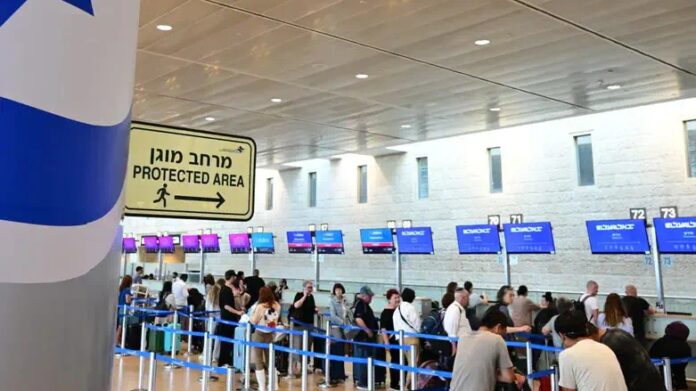 Matzav16 hours ago
Two Chabad bochurim remain in Israeli military custody following a major enforcement operation at Ben Gurion Airport in which 42 young men were detained over their military draft status, setting off protests and renewed criticism from chareidi representatives over the army’s treatment of yeshiva students.
The arrests, which took place as the bochurim were attempting to travel abroad, have intensified the controversy surrounding the IDF’s enforcement of conscription requirements against members of the chareidi community. While 40 of those detained were subsequently released, two bochurim remained imprisoned because of longstanding outstanding draft violations.
According to information released by the IDF, the two remaining detainees had been classified as draft avoiders for more than 540 days, a distinction military authorities cited in explaining why their cases were being handled differently from those of the other bochurim.
The army reported that the other 40 young men were released after agreeing to begin the enlistment process. That account has become a significant point of controversy, particularly among those concerned about the circumstances under which the agreements were obtained.
The operation has drawn attention because of the unusually large number of Chabad bochurim detained at one location and because the arrests occurred at Israel’s principal international airport, where young men seeking to leave the country have increasingly encountered difficulties over unresolved military draft matters.
The incident comes amid a broader crackdown on chareidi draft avoiders, as military authorities face pressure to enforce enlistment requirements following court rulings and government disputes over the legal status of yeshiva students.
For decades, arrangements governing military service for full-time yeshiva students allowed large numbers of bochurim to continue their Torah studies without being inducted into the IDF. The legal framework surrounding those arrangements has since become the subject of extensive litigation and political confrontation.
The resulting uncertainty has left many young men facing the possibility of detention when they encounter military authorities, particularly at border crossings and airports.
The arrests took place Tuesday morning, October 20, when approximately 80 Chabad bochurim arrived in Eretz Yisroel after spending more than a year learning at the central Tomchei Temimim yeshiva at 770 Eastern Parkway in Crown Heights.
The returning bochurim had participated in the Chabad program known as kevutzah, during which young men from Eretz Yisroel spend an extended period learning in Crown Heights. Many of their families had come to Ben Gurion Airport to welcome them home after approximately 14 months abroad.
Instead, military police officers were waiting at the airport. Authorities had received advance information about the group’s arrival and had deployed additional personnel to carry out the arrests.
Forty-two of the returning bochurim were detained over their unresolved military draft status. Several had their passports confiscated, and the detainees were transported under military supervision to the IDF induction center at Tel Hashomer.
According to reports from the Chabad community, some of the young men were handcuffed as they were taken into custody, prompting anger and distress among relatives who had been waiting to greet them.
Military authorities subsequently divided the detainees into groups based on their willingness to comply with enlistment requirements and the length of time their draft obligations had remained unresolved.
The first group consisted of 27 bochurim who, according to the IDF, expressed willingness to enlist and were found medically fit for military service.
They appeared before a military judge, signed commitments relating to their future enlistment, received suspended sentences, and were permitted to return home.
Another 13 bochurim initially refused to cooperate with the enlistment process. Military authorities sentenced them to imprisonment, and they faced transfer to Military Prison 10.
However, following several hours of intervention by Chabad askonim and further discussions with military officials, those 13 were also released later Tuesday.
According to the IDF’s account, the additional detainees agreed to future enlistment procedures, allowing them to receive suspended sentences rather than remain imprisoned.
Chabad representatives, however, described the circumstances surrounding the commitments as coercive, arguing that the young men had been confronted with the prospect of imprisonment unless they agreed to the army’s demands.
The remaining two bochurim were treated differently because military authorities classified them as having failed to comply with enlistment requirements for more than 540 days.
They were transferred directly to Military Prison 10, where they faced further proceedings over their draft status.
The arrests prompted extensive efforts by Chabad askonim, including attorney Menachem Stauber and R’ Shimon Shisha, who worked to secure the release of the detainees.
The Beis Din Rabbonei Chabad was also involved in the matter and had reportedly been in contact with military authorities even before the bochurim’s flight landed.
Those involved in the intervention sought to prevent the young men from being imprisoned and to address the legal complications arising from their draft classifications.
The developments also raised questions within the Chabad community about the practical implications of the agreements signed by the 40 released bochurim.
Although the military reported that the young men had undertaken to enter the enlistment process, Chabad representatives expressed concern about the pressure exerted on them and the potential consequences for their continued learning.
Israeli media reported that some of those released were also subjected to restrictions, including limitations on their ability to leave the country.
The IDF defended the operation as part of its enforcement of the Defense Service Law, maintaining that individuals who had failed to comply with their military obligations were subject to detention and disciplinary proceedings.
The army stated that it would continue enforcing enlistment requirements in accordance with the law.
The incident has attracted particular attention because the bochurim were detained immediately upon returning from a year of learning abroad, rather than during routine encounters with military authorities inside Israel.
The advance preparations by military police, including the deployment of additional officers and transportation for the detainees, indicated that the operation had been organized before the flight arrived.
The arrests also highlighted the increasing difficulties faced by chareidi bochurim whose draft status remains unresolved, particularly when traveling internationally.
Under earlier arrangements, many Chabad bochurim were able to defer military service while learning in yeshiva, including during extended periods of study abroad.
 Matzav16 hours ago
A 26-year-old Chabad chossid who was attacked with a syringe while conducting mivtzoim in Manhattan’s Diamond District returned to the very same streets less than 24 hours later, determined to continue helping fellow Yidden put on tefillin despite the frightening incident.
The attack, which is being investigated by the NYPD as a possible hate crime, occurred while the young man was engaged in his regular outreach activities in Midtown Manhattan, an area frequented by Jewish businessmen and visitors.
According to reports, the victim was approached by an individual who stabbed him with a syringe. The circumstances surrounding the assault raised immediate concerns that he had been deliberately targeted because of his visibly Jewish appearance and religious activities.
The young man received medical attention following the incident, with the use of a syringe raising additional concerns about possible exposure to infectious substances. The contents of the syringe and whether it posed any further medical danger were not immediately established.
Despite the ordeal, the chossid was back in the Diamond District the following day, resuming his regular rounds and offering Jewish men the opportunity to put on tefillin.
His decision to return so quickly attracted considerable attention within the Chabad community, where mivtzoim, the Rebbe’s campaign to encourage Yidden in the observance of mitzvos, has long been a central part of daily life.
For decades, Chabad chassidim have maintained a regular presence in Manhattan’s commercial districts, visiting offices, stores, and businesses to help Jewish men fulfill the mitzvah of tefillin and strengthen their connection to Yiddishkeit.
The Diamond District, centered around West 47th Street between Fifth and Sixth Avenues, has been a particularly active location for these efforts because of its substantial Jewish business community.
The assault has heightened concerns about the safety of visibly Jewish individuals in New York City, particularly those who regularly conduct religious outreach in public spaces.
Surveillance footage from the area captured the disturbing encounter. The video shows a woman following the chossid along the sidewalk, apparently passing other pedestrians while continuing to pursue him.
At one point, the young man attempted to distance himself from the woman by moving around a parked vehicle. She continued following him, and as he stepped toward the street, he felt a sudden, sharp pain in the lower right side of his back.
The attack occurred shortly before 6 p.m. Wednesday, October 21, near West 47th Street and Fifth Avenue.
The suspect, described by police as a woman believed to be in her 40s, was reportedly speaking Russian and making harassing remarks before the assault. Investigators are examining surveillance footage as they attempt to identify and locate her.
Yosef, who requested that his surname not be published, was treated by Hatzolah and transported to Bellevue Hospital. Doctors determined that he had not suffered internal bleeding and did not require stitches. He was released after approximately three hours.
Although the injury was not considered life-threatening, the nature of the weapon caused particular concern. Investigators believe the attacker may have used a large needle or syringe, but it remains unclear whether the object contained any substance.
The NYPD’s Hate Crimes Task Force is investigating the incident as a possible antisemitic assault. As of the latest reports, the attacker remained at large.
Yosef, a Crown Heights resident who recently received semicha, has spent approximately three years visiting Jewish merchants and employees in Manhattan’s Diamond District, encouraging them to put on tefillin and distributing Shabbos candles.
His father works in the jewelry business and had enlisted his son’s assistance after finding that the demand for these activities had grown beyond what he could handle himself.
Yosef subsequently established a regular schedule, traveling from Brooklyn to Manhattan four days a week to visit stores and businesses throughout the neighborhood.
On Thursday afternoon, less than a day after being stabbed, he returned to West 47th Street and resumed those visits.
Several of the businessmen he encountered recognized him from the widely circulated surveillance footage of the attack.
“They were in shock. They were obviously scared for me,” Yosef told the Jewish Telegraphic Agency.
He acknowledged that the experience had left him shaken but explained that he had no intention of allowing the incident to prevent him from continuing his work.
“We can’t allow some hate to stop us,” he said.
Yosef added that he believed it was especially important to continue encouraging Yidden to perform mitzvos in the aftermath of the attack.
“We need more mitzvahs in the world, we need more light in the world,” he said.
Speaking separately with Chabad.org, Yosef described the fear and disbelief he experienced following the assault.
“I’m still shaken,” he said. “I never imagined I’d be stabbed simply for being Jewish, right here in New York City.”
He explained that his response was shaped by the example of his grandparents, Holocaust survivors who endured the horrors of Nazi persecution and subsequently rebuilt their lives and established a Jewish family.
“I know what they’d tell me now: Don’t back down. Go back out there and help another Jew put on tefillin. Do another mitzvah. Stand taller and prouder than ever.”
Yosef said that remembering their determination strengthened his resolve to return to the streets where he had been attacked.
“That’s why I came back today,” he continued. “Their answer to hatred was more Jewish life. Mine will be too. We’ll never back down. We’ll just keep spreading more light.”
On Friday, another group of Chabad chassidim established a tefillin stand at the location of the stabbing, giving additional Yidden an opportunity to perform the mitzvah and demonstrating their determination to continue Jewish outreach in the neighborhood.
The incident comes amid heightened concerns over antisemitic violence in New York City. According to NYPD statistics reported this month, anti-Jewish incidents accounted for more than half of the hate crimes recorded in the city during the first nine months of 2026.
Manhattan Shomrim has been assisting police in the investigation and has appealed to members of the public who may have witnessed the assault or possess relevant video footage.
Anyone with information about the incident, including recordings from security cameras, vehicle dashcams, or cellphones, is urged to contact Manhattan Shomrim at 212-430-2024.
 Matzav16 hours ago
A 29-year-old man has been arrested following an alleged attempt to set fire to the Young Israel of West Hempstead on Long Island.
According to Nassau County police, the suspect allegedly ignited a sign outside the Orthodox shul early Thursday morning, October 22, and attempted to push the burning material beneath a door leading into the building. Investigators say he also set fire to a nearby bush before leaving the scene.
The suspect was subsequently taken into custody and charged with arson and criminal mischief in connection with the incident.
The alleged attack targeted a shul serving West Hempstead’s large Orthodox Jewish community, where numerous families regularly gather for davening, Torah learning, and community activities.
Authorities have not publicly established whether the suspect specifically targeted the building because it was a Jewish institution. The incident nevertheless prompted concern among residents over the possibility of an antisemitic motive.
The attempted fire is particularly troubling because of the danger posed by deliberately igniting materials near an entrance to an occupied or potentially occupied building. Even a relatively small fire can spread rapidly if it reaches combustible materials or enters an enclosed space.
Police have identified the suspect as Azzm Khan, a 29-year-old resident of Lakeview, a community neighboring West Hempstead. He was arrested at the scene without incident and subsequently arraigned Thursday in First District Court in Hempstead.
Investigators say the incident began at approximately 11:30 p.m. Wednesday, when a witness spotted a man damaging the side mirror of a Nassau County Police Department auxiliary vehicle parked near Hall’s Pond Park on Hempstead Avenue. The witness contacted 911, prompting officers to search the surrounding area.
While police were looking for the individual responsible, another person approached the officers and reported seeing someone starting a fire nearby.
Officers proceeded to the Young Israel of West Hempstead, located at 630 Hempstead Avenue, where they encountered Khan and discovered a bush burning outside the building.
According to investigators, Khan had removed a lawn sign from the surrounding neighborhood, set it ablaze, and attempted to slide the burning material beneath the shul’s entrance door. When that effort failed, he allegedly placed the flaming sign into nearby shrubbery, causing the bush to catch fire.
Police say Khan then returned to the entrance and repeatedly kicked the door, damaging it.
In a message distributed to members of the shul, its security committee provided additional details about the incident, reporting that the suspect had initially attempted to force his way into the building by striking the glass entrance with a bat.
The reinforced glass held, preventing him from gaining entry.
The shul’s statement also indicated that the fire went out without spreading into the building, b’chasdei Hashem.
No injuries were reported, and the building did not sustain the extensive fire damage that could have resulted had the flames reached its interior.
Khan was charged with third-degree arson, fifth-degree arson, and two counts of third-degree criminal mischief. According to a report in Newsday, he pleaded not guilty at his arraignment before Judge Maria Boultadakis, who set bail at $500,000.
Authorities also linked Khan to the earlier damage to the police auxiliary vehicle, which had initially brought officers into the area.
Yisroel Szpigiel, first vice president of Young Israel of West Hempstead, expressed concern over the incident, telling News 12 that while the neighborhood has experienced minor vandalism in previous years, nothing comparable had occurred.
“There’s no place for hate in our town. Nobody should have to endure something like this,” Szpigiel said. “Whether it’s our shul or any of the churches or any of the organizations in the neighborhood. We’ll have to be here to protect each other.”
Nassau County Legislator Olena Nicks also condemned the incident and expressed solidarity with the congregation.
“An attack on any place where our neighbors gather to pray is an attack on the whole of our community, and I condemn it without reservation,” Nicks said.
She praised the response by Nassau County police and said law enforcement agencies were working together to protect the congregation and surrounding neighborhood.
“To the rabbi, the leadership, and every member of Young Israel: You are not alone,” Nicks said. “West Hempstead is a community that looks out for one another, and the people of the Fifth District stand with you.”
Following the incident, the shul’s security committee began coordinating with the Nassau County Police Department and the Department of Homeland Security to review existing security arrangements and determine whether additional precautions are necessary.
The committee also received surveillance footage of the incident, which was provided to investigators.
Community members were urged to remain vigilant, immediately report suspicious activity to police and the shul’s security personnel, and avoid confronting suspicious individuals themselves.
Local officials indicated that police patrols in the area would be increased ahead of religious services.
The investigation remains ongoing, and authorities have not publicly established a motive for the alleged attack. Although the circumstances have raised concerns about possible antisemitism, the police department’s initial announcement did not identify the incident as a hate crime.
Police said there were no known continuing threats to the community following Khan’s arrest.
The incident has nevertheless heightened security concerns in West Hempstead, a community with a substantial Orthodox Jewish population and numerous shuls, yeshivos, and other Jewish institutions.
For members of Young Israel, the fact that the suspect was unable to enter the building and that the fire did not spread beyond the immediate area was a source of considerable relief.
The congregation expressed appreciation to the Nassau County Police Department for its response and thanked community members for their concern and support.
Anyone with information about the incident is being asked to contact the Nassau County Police Department’s Fifth Precinct at 516-849-0266 or its Hate and Bias Hotline at 516-500-0657.
 Matzav16 hours ago
A major controversy erupted within the Sefardic chareidi community on Motzei Shabbos after reports emerged that Rav Moshe Tzadka, rosh yeshiva of Yeshivas Porat Yosef and one of the senior Sefardic roshei yeshiva, had signed a letter opposing voting for Shas in Tuesday’s Knesset elections. The development prompted an extraordinary intervention by five members of the party’s Moetzes Chachmei HaTorah, who traveled to Rav Tzadka’s home in Yerushalayim in an effort to resolve the dispute.
The controversy took a significant turn later in the evening when Rav Tzadka reportedly clarified to the visiting rabbonim that although he and his father had never participated in Knesset elections, his personal position should not be interpreted as opposition to Shas. According to a report published following the meeting, Rav Tzadka stated that those who do vote should support Shas in order to protect the Torah world.
The episode unfolded just three days before Israelis are scheduled to head to the polls, creating considerable concern within Shas over the possibility of a public disagreement involving one of the most respected figures in the Sefardic yeshiva world.
The initial controversy centered on a letter reportedly signed by Rav Tzadka opposing support for Shas because of the party’s reported willingness to accept a military draft arrangement under which chareidi young men who are not actively learning in yeshiva would be required to enlist.
That position has become a particularly contentious issue within the chareidi community, where rabbonim and political leaders have expressed differing views about the implications of distinguishing between full-time yeshiva students and other chareidi young men.
According to sources, the letter was prepared following the involvement of Rav Benayahu Shmueli, the noted mekubal and rosh yeshiva of Yeshivas Nahar Shalom, who maintains a close relationship with Rav Tzadka.
News of the letter immediately prompted efforts by Shas chairman Aryeh Deri to prevent its publication or secure a clarification before Election Day.
Deri reportedly contacted senior rabbonim associated with Shas, seeking their assistance in arranging a meeting with Rav Tzadka and addressing his objections to the party’s position on the draft issue.
The efforts resulted in an unusual gathering at Rav Tzadka’s home on Motzei Shabbos, attended by five of the seven members of the Moetzes Chachmei HaTorah.
Among those who participated were Rav Yitzchak Yosef, president of the Moetzet Chachmei HaTorah and former Sefardic chief rabbi; Rav Moshe Maya, the senior member of the Moetzes; Rav Avraham Salim; Rav Yehuda Cohen; and Rav Shmuel Betzalel.
The presence of so many senior members of the Moetzes underscored the importance Shas leaders attached to resolving the disagreement before the election.
During the meeting, the rabbonim discussed Rav Tzadka’s longstanding position regarding participation in Knesset elections and the concerns surrounding the proposed military draft arrangements.
According to sources, Rav Tzadka explained to Rav Yitzchak Yosef and Rav Moshe Maya that neither he nor his father had voted in Knesset elections. He nevertheless clarified that this did not constitute opposition to Shas and that individuals who participate in elections should vote for Shas to help safeguard the Torah world.
The clarification represented a significant development following the earlier reports that Rav Tzadka had signed a letter expressly prohibiting support for the party.
However, the matter did not immediately conclude with the departure of the Moetzes members.
According to the same source, sons of Rav Benayahu Shmueli, who had been involved in arranging the original letter, subsequently returned to Rav Tzadka’s home.
The purpose and outcome of that additional visit were not immediately clear.
Deri addressed the controversy during an appearance on the Israeli television program The Patriots on Motzei Shabbos.
“Rav Moshe Tzadka has never supported elections. We are dealing with it,” Deri said.
The Shas chairman’s remarks reflected the party’s efforts to place the controversy in the context of Rav Tzadka’s longstanding personal approach toward electoral participation rather than treating it as a new rejection of Shas.
Rav Tzadka is widely regarded as one of the senior figures in the Sefardic yeshiva world, and his views carry considerable weight among talmidim and families associated with traditional Sefardic Torah institutions.
His involvement in the election controversy is particularly noteworthy because Shas has historically relied on the guidance and public support of leading Sefardic rabbonim, with its Moetzes Chachmei HaTorah serving as the party’s central rabbinic authority.
The dispute also highlights the growing sensitivity surrounding the military draft issue, which has dominated much of the chareidi political discussion ahead of the elections.
Shas has faced criticism over reports that it is prepared to support legislation distinguishing between bochurim who are actively learning in yeshivos and those who are not enrolled in a recognized Torah study framework.
Opponents of such an arrangement argue that accepting compulsory enlistment for any category of chareidi young men could establish a precedent with broader consequences for the community.
Others within the chareidi political establishment have maintained that securing legal protection for full-time yeshiva students remains an essential priority amid increasing judicial and political pressure over the draft.
Rav Tzadka has previously expressed strong opposition to compromises involving military enlistment quotas and government oversight of yeshivos.
In a 2024 letter addressed to Deri, he warned against agreeing to draft targets or arrangements that would subject the yeshiva world to increased government control.
The latest controversy therefore reflects longstanding disagreements over the appropriate response to efforts to expand military conscription within the chareidi population.
The timing has made the issue especially sensitive for Shas, which is seeking to maintain support among Sefardic chareidi voters as the election campaign enters its final days.
The party has also been confronting broader political challenges, including efforts by smaller Sefardic religious movements to attract voters who traditionally supported Shas.
Against that backdrop, reports of a letter opposing Shas from a senior rosh yeshiva prompted immediate efforts to clarify the matter and prevent further disagreements from developing.
The extraordinary Motzei Shabbos meeting, involving five members of the Moetzes Chachmei HaTorah, demonstrated the lengths to which the party’s rabbinic leadership was prepared to go to address the situation.
By late tonight, the reported clarification from Rav Tzadka had altered the picture considerably, with the rosh yeshiva distinguishing his personal practice of not voting from the question of how those who do participate in elections should cast their ballots.
It remained unclear whether the original letter would be formally withdrawn, amended, or released with an accompanying clarification.
With Election Day approaching on Tuesday, the episode has placed the dispute over the draft law at the center of another major discussion within the Sefardic chareidi community, even as Shas leaders seek to demonstrate unity among the rabbonim guiding the party.
 Matzav16 hours ago
Iran has reportedly prepared plans to destroy critical underwater internet cables in the Persian Gulf if the United States and Israel carry out another round of military attacks, raising concerns that a renewed confrontation could disrupt communications, banking systems, and major technology operations across the Middle East.
Two senior Iranian security officials disclosed the plans to Reuters, saying Tehran is considering attacks on submarine communications infrastructure as part of a broader response to any renewed American or Israeli military campaign. The officials indicated that Iran would also attempt to prevent damaged cables from being repaired, potentially extending the disruption long after the initial strikes.
The warnings come amid growing uncertainty surrounding diplomatic efforts between Washington and Tehran, with Iranian officials signaling that the collapse of negotiations and a return to military confrontation could lead to attacks against targets that were previously considered off-limits.
One of the Iranian officials warned that Tehran would no longer recognize restrictions on the types of facilities it could attack if its territory were struck again.
“If Iran is attacked, there will be no more red lines, from undersea cables to military bases, including covert ones,” the official said, warning Washington not to “play with fire.”
The official further asserted that Iran possesses the means to reach and destroy the underwater cables, although neither official provided specific information about the proposed operations or the locations that might be targeted.
The threats were reinforced Wednesday by Yadollah Javani, the deputy political affairs chief of Iran’s Islamic Revolutionary Guard Corps, who warned that seven major submarine internet cables running beneath the Strait of Hormuz could be attacked if Iranian infrastructure were targeted.
The Strait of Hormuz, which connects the Persian Gulf with the Gulf of Oman, is among the world’s most strategically important waterways. In addition to serving as a major passage for international energy shipments, the surrounding region contains communications infrastructure linking Gulf countries to global internet networks.
Undersea fiber-optic cables form the backbone of modern international telecommunications, carrying approximately 99 percent of the world’s internet traffic, according to the International Telecommunication Union.
Despite the importance of submarine cable networks overall, experts say that an attack on the cables passing through the Strait of Hormuz would likely have a more concentrated regional impact rather than causing a worldwide internet shutdown.
The cables in that particular area account for less than one percent of global international bandwidth, meaning that the consequences would depend largely on which connections were damaged and whether telecommunications companies could redirect traffic through other routes.
Alan Mauldin, research director at telecommunications analysis firm TeleGeography, explained that the severity of an outage would depend on the capacity of alternative connections and the ability of network operators to reroute communications.
Even a geographically limited attack could have serious consequences for Gulf countries that rely heavily on digital connectivity to support their economies.
Simultaneous damage to several cables could interfere with internet access, electronic banking, financial transfers, online commerce, and cloud-based business operations. Companies operating major data centers in the region could also face interruptions if critical international connections were lost.
Restoring damaged infrastructure during an active military confrontation would present additional difficulties. Repair vessels could encounter security threats, insurance premiums could increase sharply, and operators might struggle to obtain the government approvals necessary to conduct work in territorial waters.
Iranian officials have suggested that prolonging those difficulties would be part of their strategy, turning an initial attack on communications infrastructure into a more sustained economic and technological disruption.
The U.S. State Department and Iran’s Foreign Ministry did not immediately respond to requests for comment from Reuters, while governments in the Gulf region had not publicly addressed the reported plans when the information emerged.
The submarine cable warnings are part of a broader series of Iranian threats directed at American-linked technological infrastructure throughout the Middle East.
Earlier in October, senior Iranian security official Mohsen Rezaei warned that facilities associated with American technology companies, including data centers and artificial intelligence installations, could become targets if fighting resumes.
A second Iranian security official told Reuters that Gulf countries investing heavily in American technology should blame Washington for any resulting damage to their communications networks.
The message appears designed to increase pressure on governments in the region that maintain close economic and security relationships with the United States while simultaneously investing billions of dollars in technology projects involving American companies.
Alex Vatanka, who directs the Iran program at the Middle East Institute in Washington, said Tehran is seeking to turn the economic interests of Gulf governments and major corporations into a source of pressure on President Donald Trump.
“Tehran wants Gulf states and corporate executives to press Trump over the risks his policies pose to their investment plans,” Vatanka said.
Iran’s potential ability to threaten international communications infrastructure is not necessarily limited to the Persian Gulf.
Security analysts have also identified the Red Sea as a particularly sensitive location because of the concentration of submarine cables connecting Europe, Africa, and Asia.
The possibility of attacks in that region has attracted attention because of Iran’s relationship with the Houthis in Yemen, who operate near strategically important maritime routes. Tehran, however, has not publicly declared an intention to attack Red Sea communications cables.
According to Mauldin, submarine routes through the Red Sea carry approximately three percent of worldwide international bandwidth demand and roughly ten percent of communications traffic traveling between major geographic regions.
Damage to several cables in that area could therefore have broader consequences for international connectivity than similar attacks confined to the Strait of Hormuz.
The reported Iranian plans come at a particularly sensitive time for Gulf countries, which have been spending heavily to develop advanced technology industries and reduce their economic dependence on oil and gas.
Saudi Arabia, the United Arab Emirates, and other regional governments have pursued major investments in artificial intelligence, cloud computing, and digital infrastructure, frequently partnering with leading American technology companies.
Those investments have made the region increasingly important to the global technology industry while also creating infrastructure that could become vulnerable during a military confrontation.
The danger is not entirely hypothetical. During the fighting in March, Iranian strikes directly hit two Amazon Web Services facilities in the United Arab Emirates and damaged infrastructure near another AWS facility in Bahrain.
Those attacks demonstrated the vulnerability of major commercial technology installations during a regional conflict and raised concerns about the consequences of further strikes against facilities supporting international business operations.
At the height of the March confrontation, the Islamic Revolutionary Guard Corps also publicly identified several prominent American technology companies, including Microsoft, Google, Apple, and Nvidia, as potential targets.
Iran’s latest threats suggest that Tehran may now be considering a wider range of targets, extending beyond buildings and data centers to the physical networks responsible for carrying international communications.
Governments and telecommunications providers have consequently been exploring ways to strengthen the resilience of regional internet systems, including the development of additional land-based connections that could provide alternatives if submarine cables were damaged.
Such routes could allow operators to redirect at least some traffic around damaged underwater infrastructure, although their effectiveness would depend on available capacity and the extent of any coordinated attack.
Microsoft has announced plans to invest more than $400 million in submarine and terrestrial communications connectivity throughout the Middle East by 2030, reflecting the growing importance of the region to international digital networks.
The effectiveness of any Iranian campaign against undersea cables would ultimately depend on how many connections were severed, which countries and facilities relied on those routes, and how quickly telecommunications companies could restore or redirect service.
The reported cable-attack plans have emerged alongside additional warnings about Iranian retaliation. A U.S. intelligence memorandum dated October 23 reportedly warned that Tehran has intensified efforts to target American personnel, including plots that have advanced beyond preliminary planning. The warning has contributed to heightened security precautions at American diplomatic facilities across the Middle East.
President Trump has also indicated that further military action against Iran remains under consideration, while reports suggest that American military officials have presented additional strike options. No decision to launch another major operation has been publicly confirmed.
For now, the threatened attacks on undersea cables remain contingency plans described by Iranian officials rather than operations that have been carried out. Nevertheless, the warnings underscore the possibility that another round of fighting could extend beyond conventional military targets, placing the communications networks relied upon by millions of people and businesses directly in the path of the conflict.
 Matzav16 hours ago
Israeli officials are moving forward with plans to establish two new Jewish communities and six agricultural farms in the southern Chevron Hills following Friday’s deadly terrorist shooting, which claimed the lives of two IDF soldiers. The initiative, announced by the Har Chevron Regional Council, is intended to expand Jewish settlement throughout the area and strengthen security in the wake of the attack.
The eight proposed sites are being advanced in cooperation with the Defense Ministry’s Settlement Administration and the Amana settlement organization, with local officials presenting the initiative as a response to the terrorist attack and an effort to reinforce Israel’s presence in the region.
According to the regional council, the new communities and farms will help connect existing Jewish population centers, safeguard state-owned land, and strengthen security along roads and across open areas that have presented challenges for residents and security forces.
The two planned communities are Magad, which will be situated between Negohot and Eshkolot, and Nofei Gulot, to be established between Otniel and Afeka. Both locations are intended to strengthen the network of Jewish communities in the southern Chevron Hills.
The proposal also calls for six agricultural farms at strategically selected locations throughout the region, with one of them planned near the scene of Friday’s deadly shooting.
Mitzpe Tzur Farm is slated to be established near Telem, in close proximity to the location where the two soldiers were killed. Another site, Noi Farm, is planned between Karmei Yehuda and Adora, while Lev Amit Farm is to be developed between the recently established community of Makeda and Adora.
Three additional farms are planned farther south and east. Eshel Farm will be located between Negohot and Eshkolot, near the proposed community of Magad. Lema’an Achai Farm is planned between Otniel and Shima, while Mitzpe Or Farm will be established between Carmel and a nearby nature reserve in the Judean Desert.
The agricultural farms are intended to serve a broader purpose than farming alone. Such outposts have increasingly become part of efforts to maintain a Jewish presence across large stretches of rural territory, particularly in areas between established communities where access, land use, and security have been longstanding concerns.
The announcement follows Friday’s shooting near the Judea Junction area, where two IDF soldiers were killed in a terrorist attack that prompted widespread mourning and renewed attention to security conditions in the Chevron region.
The attack has also intensified calls among local Jewish leaders for additional security measures and expanded settlement activity, with regional officials arguing that a stronger permanent presence can help improve conditions for residents.
Har Chevron Regional Council head Eliram Azulai said the decision to establish the eight sites reflects the determination of local residents to continue developing the area despite the deadly attack.
“Terrorism seeks to destroy lives, spread fear, and undermine our hold on our homeland, but our historic and Zionist response is being written on the ground. We will not retreat or give in,” Azulai said.
He emphasized that the initiative was being advanced amid the grief surrounding the deaths of the two soldiers, describing the expansion plans as an expression of the community’s resolve.
“Out of the immense pain and grief over the loss of our heroic soldiers, we choose life and deepen our roots. The establishment of two communities and six farms sends a clear message: We are here to stay, build, and grow,” he added.
The announcement marks a significant proposed expansion of Jewish settlement in the southern Chevron Hills, an area that includes established communities, agricultural outposts, and large stretches of open terrain.
Although the council has announced the locations and identified the organizations supporting the initiative, a detailed construction timetable has not been provided. The announcement also does not establish that all necessary government approvals have been completed.
For the residents of Har Chevron, the proposal represents a concrete response to Friday’s tragedy, with regional leaders seeking to turn the aftermath of the attack into an opportunity to strengthen the Jewish presence in the area.
The announcement comes as Israeli security forces conduct a broader counterterrorism operation in the Chevron area following Friday’s shooting. The two fallen soldiers have been identified as Staff Sergeant Ron Yonatan Roytman, 23, of Ashkelon, a squad commander in the Ari Battalion of the Search and Rescue Brigade, and Sergeant Yuval Shai Svilem, 20, of Hod Hasharon, who served in the same battalion. Three additional soldiers were lightly wounded in the attack.
According to the IDF, the two terrorists arrived at the junction in a vehicle bearing Israeli license plates and opened fire on soldiers stationed in the area. The attackers, who were armed with an M-16 rifle and a handgun, were subsequently eliminated by Israeli forces. Military officials said a substantial quantity of ammunition was discovered in their vehicle, raising concerns that the terrorists had intended to carry out additional attacks.
IDF Chief of Staff Lt. Gen. Eyal Zamir said the soldiers’ response prevented a potentially greater loss of life, while Prime Minister Binyamin Netanyahu ordered intensified security operations in the region.
Israeli forces have since launched searches, arrests, and operations against suspected terrorist infrastructure in and around Chevron. The military has also carried out demolitions in areas near the attack site, while Palestinian officials have reported that large numbers of residents were displaced during the operation.
The proposed construction of two communities and six agricultural farms adds a civilian development initiative to the Israeli government’s broader response to the attack, with regional leaders emphasizing their determination to expand the Jewish presence in the southern Chevron Hills.
 Matzav1 day ago
A 21-year-old American yeshiva bochur who spent four months in an Israeli prison over allegations of contact with an Iranian foreign agent was released to house arrest on Friday, just hours before the Shabbos on which he was originally scheduled to celebrate his aufruf, and two days before his planned wedding.
Eli L., an American citizen studying in Yerushalayim, walked out of Gilboa Prison on Erev Shabbos Parshas Lech Lecha following a hearing in the Yerushalayim District Court, bringing an end to four difficult months behind bars.
His release followed a ruling by Israel’s Supreme Court permitting him to be transferred to house arrest, subject to substantial financial guarantees and strict conditions.
Eli had been detained on suspicion of maintaining contact with an Iranian foreign agent. His imprisonment attracted considerable attention among askonim working on behalf of individuals incarcerated in Israel, particularly because of his young age, American citizenship, and approaching wedding.
Friday’s development came after months of legal proceedings and extensive behind-the-scenes efforts coordinated by the Tzedek Association.
The organization retained prominent Israeli attorneys Uri Korb and Menachem Stauber to represent Eli and pursue his release. The legal team worked through the courts to secure an arrangement that would allow the young man to leave prison while the proceedings against him continue.
According to sources, the effort required continuous consultations between Tzedek’s leadership and Yerushalayim askan Reb Shimon Shisha, who worked closely with the organization to explore possible legal solutions and coordinate the various parties involved.
The breakthrough ultimately came when the Supreme Court authorized Eli’s release to house arrest, paving the way for Friday’s District Court hearing to finalize the conditions.
Those conditions included a financial guarantee of 750,000 shekels, approximately $200,000, together with additional security in the form of a residential property valued at approximately 3 million shekels, or more than $800,000.
The property was pledged by a Yerushalayim benefactor who agreed to place his home as collateral to help secure the young man’s freedom.
Arranging such substantial guarantees required considerable effort, with Tzedek and other askonim working to assemble the necessary commitments in time for the court proceedings.
An additional challenge was finding a suitable residence where Eli could remain under house arrest in accordance with the court’s conditions.
That obstacle was resolved when Yerushalayim askan Reb Chaim Meir Hirsch agreed to open his home to the young man, allowing the release arrangement to proceed.
Hirsch’s willingness to provide accommodations proved crucial, since the court required an approved location where Eli could remain while the legal case continues.
On Friday morning, Tedek’s Moshe Margaretten and Shisha held another coordination call to review the final arrangements. Shisha was present at the Yerushalayim courthouse and personally accompanied the proceedings as the release was finalized.
Although the release does not resolve the allegations against him, it means that he will no longer have to remain behind bars as the legal process continues.
Eli will remain under house arrest at Hirsch’s home in Yerushalayim, subject to the restrictions imposed by the court.
His release should not be confused with an acquittal or dismissal of the allegations. The legal proceedings concerning the suspected contact with an Iranian agent remain unresolved.
{Matzav.com}
 Matzav1 day ago
Chewing gum could eventually disappear from store shelves across New Jersey under sweeping new legislation that would prohibit the sale of certain everyday products containing or releasing microplastics, including some chewing gum, tea bags, cosmetics, cleaning supplies, and other household items.
The proposal, known as the Protecting Against Microplastics Act, was introduced on September 14 by Democratic Assemblywomen Shama Haider of Bergen County and Margie Donlon of Monmouth County. The measure would establish new labeling requirements for products containing microscopic plastic particles before eventually prohibiting the sale of several categories of products that contain or release the substances.
The legislation, Assembly Bill A5452, comes amid growing scientific concern over microplastics, tiny particles that have been detected in drinking water, food, blood, and various human tissues. Researchers have been investigating whether repeated exposure to these particles poses long-term health risks, although many questions about their effects on human health remain unanswered.
One of the most attention-grabbing provisions concerns chewing gum, a product consumed daily by millions of Americans.
Researchers have found that chewing gum can release hundreds or even thousands of microscopic plastic particles into saliva during chewing, raising concerns that consumers may unknowingly swallow those particles.
A study presented at a meeting of the American Chemical Society earlier this year found that both synthetic and natural chewing gums released microplastic particles during chewing. Researchers observed that much of the release occurred during the first several minutes, with additional particles released as chewing continued.
The findings have attracted attention because many popular chewing gums contain synthetic polymers that give the product its familiar elastic texture.
Under the proposed New Jersey law, chewing gum containing intentionally added microplastics, or capable of generating certain secondary microplastics, could eventually be prohibited from being sold in the state.
The legislation does not specifically ban all chewing gum. Rather, it targets products containing or generating microplastics as defined by the bill, meaning that gum manufacturers could potentially continue selling products that meet the proposed requirements.
Tea bags are another product specifically identified in the legislation.
Certain tea bags are manufactured using plastic-based materials or contain plastic components that help maintain their shape and durability. Research has suggested that some of these products can release microscopic plastic particles when exposed to hot water, potentially allowing consumers to ingest the particles along with their tea.
The legislation also covers coffee grounds, talcum powder, pet food, cosmetics, and products that may be swallowed, inhaled, or applied to the face.
Cleaning supplies and a broad range of food-related products would also face new regulations.
Plastic plates, disposable forks and knives, food containers, and other foodware would be subject to labeling requirements if they contain intentionally added microplastics or materials capable of releasing them.
However, the bill makes an important distinction between foodware and other covered products. Although foodware would be subject to disclosure and labeling requirements, it is excluded from the legislation’s eventual sales prohibition.
The proposal would be implemented gradually rather than immediately removing affected products from stores.
During the first year after enactment, manufacturers of covered products would be required to disclose the presence of intentionally added microplastics or the potential for their products to generate secondary microplastics.
Beginning two years after enactment, affected products would have to carry a more explicit warning in both English and Spanish stating, “This product contains microplastics.”
The warning would also have to appear in online product listings, extending the disclosure requirements to internet retailers selling products to New Jersey consumers.
Manufacturers would additionally be prohibited from marketing products as free of microplastics if the substances had been intentionally added during production.
Three years after the law takes effect, the sale of certain cleaning products, cosmetics, and potentially ingestible products containing or generating covered microplastics would be prohibited.
The legislation includes an exception for technically unavoidable trace quantities, meaning that manufacturers would not necessarily face penalties for minute contamination that cannot reasonably be eliminated.
If approved, the measure could have far-reaching implications for retailers, manufacturers, and distributors doing business in New Jersey.
Supermarkets, pharmacies, convenience stores, and other businesses could be required to review their inventories and remove products that fail to comply with the new standards.
Manufacturers could also face pressure to reformulate products or modify packaging to continue selling them in the state.
The proposal would give the New Jersey Division of Consumer Affairs authority to investigate violations, conduct audits, and impose financial penalties.
Civil administrative penalties could range from $1,000 to $20,000 per violation, with additional enforcement measures available for continuing violations.
The bill also proposes spending $3 million on microplastics-related initiatives, including $2.5 million for environmental research, monitoring, and programs designed to reduce microplastic contamination, and $500,000 for enforcement activities.
Supporters of stronger microplastics regulations argue that government intervention is necessary because microscopic plastic particles have become increasingly widespread in the environment and are difficult for consumers to avoid.
Microplastics can originate from the breakdown of larger plastic items, synthetic clothing fibers, industrial processes, packaging materials, and numerous other sources.
Scientists have detected the particles in oceans, rivers, drinking water, soil, and food products, prompting growing interest in their potential effects on human health.
At the same time, researchers caution that detecting microplastics in the human body does not, by itself, establish that the particles cause particular diseases. Additional research is needed to determine the risks associated with different types, sizes, and concentrations of plastic particles.
The legislation also raises questions about how broadly the proposed restrictions would be applied, particularly because the bill covers products capable of generating secondary microplastics rather than limiting its provisions to products with deliberately added plastic particles.
That distinction could significantly expand the number of consumer goods affected by the measure.
For New Jersey residents, the proposal could ultimately change which brands and varieties of familiar products remain available in stores, although no immediate restrictions have taken effect.
The Assembly bill has been referred to the Assembly Environment and Solid Waste Committee, where lawmakers may consider testimony, amendments, and questions about implementation before deciding whether to advance it.
A companion measure, Senate Bill S4836, sponsored by Democratic State Senator Linda Greenstein, was introduced on October 15 and referred to the Senate Environment and Energy Committee.
Both chambers would have to approve the legislation before it could be sent to Governor Mikie Sherrill for consideration.
For now, New Jersey residents can continue purchasing chewing gum, tea bags, and other products covered by the proposal.
But if the legislation eventually becomes law, some of the most familiar products found in supermarket checkout aisles, kitchen cabinets, and bathroom drawers could face new warning labels and, in certain cases, disappear from store shelves altogether.
The proposal remains in its early legislative stages, and neither an implementation date nor a final ban has been established. The chewing-gum research cited in coverage of the proposal was presented in March 2025, rather than earlier in 2026.
 Matzav1 day ago
In a significant last-minute development ahead of Israel’s national elections, the Sefardic chareidi Achi party, led by Rav Chaim Yosef David Abergel of Netivot, announced Friday that it is withdrawing from the race for the Knesset and throwing its support behind Prime Minister Binyamin Netanyahu’s Likud party. The decision came following intense negotiations involving Netanyahu, senior Likud officials, prominent rabbonim, and municipal leaders, amid concerns that the party could draw thousands of votes away from the right-wing bloc without winning enough support to enter the Knesset.
The withdrawal, announced just four days before Israelis head to the polls on Tuesday, October 27, followed an intensive effort personally directed by Netanyahu to persuade Rav Abergel to abandon his independent political campaign. As part of the agreement, Netanyahu reportedly promised that a representative of the Achi movement would receive a deputy ministerial position in a future government, along with commitments to advance several of the party’s principal demands.
The negotiations were led by Education Minister Yoav Kisch at Netanyahu’s request. A decisive meeting on Friday brought together Rav Abergel, former Sefardic Chief Rabbi Rav Shlomo Moshe Amar, Netivot Mayor Yechiel Zohar, Ofakim Mayor Itzik Danino, and attorney Lior Katsav, who participated on Netanyahu’s behalf. Deputy Minister Almog Cohen was also involved in efforts to secure the withdrawal.
Following the meeting, the Achi movement issued an official statement explaining that its decision had been reached in consultation with Rav Amar and after obtaining assurances regarding its political priorities.
“In light of the gravity of the hour and out of genuine concern for the fate and existence of the State of Israel and Israeli society, the leader of Achi, Rav Chida Abergel, in consultation with the leading Torah authority, former Chief Rabbi Rav Shlomo Moshe Amar, announces that all the goals of the Achi movement have been fully achieved, that the movement has secured very significant accomplishments, and that it will not participate in the upcoming elections,” the statement declared.
The party said that the understandings reached with Netanyahu’s representatives include commitments to address the military draft controversy, support economically disadvantaged families, provide funding for early childhood education and daycare, strengthen assistance to senior citizens, and promote Jewish education and the Jewish character of the state.
One of the most consequential elements of the agreement concerns the military draft law, which has become a central issue in Israel’s election campaign and a source of deep tensions between chareidi parties and other political factions.
According to reports on the negotiations, Netanyahu agreed to advance a framework under which full-time yeshiva students would be permitted to continue learning without military service, while those not engaged in Torah study would be required to enlist.
During a recorded telephone conversation with Rav Abergel and the participants in Friday’s meeting, Netanyahu praised the decision to withdraw and acknowledged the agreements reached between the sides.
“I cannot tell you how much I appreciate this serious and responsible step, which is concerned with the future of our people, the future of our state, and the future of the heritage of Israel,” Netanyahu said.
Addressing Rav Abergel directly, the prime minister added, “I know, Rav, that you truly care about our people and that you want those who study Torah to continue studying, and everyone else to enlist, and that is exactly the agreement between us. Moreover, I will be happy to advance both this and the other matters included in our joint statement.”
Rav Abergel reportedly expressed hope that the commitments would be fulfilled, with Netanyahu responding affirmatively.
Another major component of the agreement involves the appointment of a deputy minister who would represent the movement’s interests.
Under existing Israeli law, deputy ministers must be members of the Knesset. Since Rav Abergel is not currently a Knesset member, fulfilling the reported promise of appointing him or an outside representative would require legislative changes.
According to the understandings announced by Likud, a deputy minister could alternatively be appointed from among Likud’s own Knesset members to advance the shared objectives of the two movements. Another possibility would involve appointing a representative of Achi if the necessary legal changes are enacted.
The reported promise has already generated controversy. Yaya Fink, a candidate from the Democrats party, filed a police complaint Friday alleging that the offer of a government position in exchange for Achi’s withdrawal constituted election bribery. The allegation remains a political and legal claim, and no finding of wrongdoing has been established.
The withdrawal is particularly significant because Achi had sought to establish itself as an alternative political address for Sefardic chareidi voters, operating outside the traditional Shas framework.
Rav Abergel, a son of the late Rav Yoram Abergel of Netivot, established the movement with an emphasis on Torah education, Sefardic religious identity, and a distinctive approach to relations between the chareidi community and the state.
The party had also promoted greater integration of certain chareidi populations into state-supported educational frameworks and military programs, positions that distinguished it from the established chareidi political parties.
Despite its ambitions, Achi had not crossed the electoral threshold in published opinion polls. Political officials on the right feared that votes cast for the party would consequently be excluded from the allocation of Knesset seats, potentially affecting the distribution of mandates between competing blocs.
Education Minister Kisch described the withdrawal as an important achievement for the Netanyahu camp.
“At the request of Prime Minister Binyamin Netanyahu, Education Minister Yoav Kisch led negotiations with the Achi movement over the past several days regarding its withdrawal from the Knesset race,” Kisch’s office said.
The statement confirmed that the agreement had been finalized at Friday’s meeting and that the movement’s principal demands would be advanced by Likud.
“This is an important move that prevented the loss of tens of thousands of votes from the right-wing bloc, which would have assisted in the formation of a left-wing government headed by Eisenkot, Yair Golan, and Abbas,” the minister’s office declared.
Likud also issued a statement welcoming the decision and urging other smaller right-wing parties that are unlikely to pass the electoral threshold to follow Achi’s example.
The party said it had agreed that a deputy minister in the Prime Minister’s Office would be appointed to promote the principles shared by Likud and Achi, either from among Likud Knesset members or from Achi in accordance with applicable law.
Likud called on other parties facing similar electoral difficulties to withdraw immediately, arguing that votes for lists failing to cross the threshold could affect the balance of power following the election.
Friday’s development comes amid a broader effort by Netanyahu to consolidate support across the religious and right-wing electorate before Election Day.
The prime minister has been working to prevent smaller parties from dividing the vote, particularly in a closely contested election in which the ability of either political bloc to assemble a governing coalition could depend on a relatively small number of Knesset seats.
The Achi withdrawal removes one such party from the contest and gives Likud an additional source of support among voters who had previously considered backing the independent Sefardic movement.
The agreement does not, however, guarantee that all Achi supporters will ultimately vote for Likud. While the movement has transferred its political backing to Netanyahu’s party, individual voters remain free to choose other lists, including the established chareidi parties.
The negotiations have also attracted attention because Rav Abergel was arrested in August 2025 amid an investigation into allegations of sexual offenses involving women. He has denied the allegations. The investigation and the allegations surrounding it are separate from the political agreement announced Friday.
For Netanyahu, the immediate significance of the withdrawal is the removal of a potential source of lost votes from the right-wing camp.
 Matzav1 day ago
President Donald Trump unleashed a blistering attack Friday on the Utah judge overseeing the murder case against Charlie Kirk’s accused assassin, demanding that the trial begin within a month rather than allowing the proceedings to drag on for years. The president accused the judge of mishandling the case and disrespecting Kirk’s memory as attorneys for the defendant seek to postpone the trial until 2029.
Trump’s remarks came amid an escalating dispute over when 23-year-old Tyler Robinson, who is charged with murdering Kirk during a public appearance at Utah Valley University in September 2025, should face a jury. Robinson’s attorneys have requested nearly three additional years to prepare their defense, while prosecutors and Kirk’s widow are pushing for a substantially earlier trial.
In a sharply worded Truth Social post Friday, Trump declared:
“The judge in the Charlie Kirk case is doing a terrible job! This case should be tried within a month, not three years — and it should be over with! The judge is desecrating the memory of the Great Charlie Kirk, while taking forever to ask questions that people already know the answer to. The whole Country is mocking him and our ‘Legal’ System. JUSTICE FOR CHARLIE!”
The president’s criticism was directed at Utah Fourth District Judge Tony Graf, who scheduled a hearing Friday afternoon to determine the timetable for Robinson’s trial. The judge has been considering competing proposals from prosecutors, defense attorneys, and lawyers representing Kirk’s family.
Robinson’s defense team filed court papers Wednesday requesting that the trial begin during the third quarter of 2029, approximately four years after Kirk was assassinated. The attorneys contend that the extraordinary complexity of the case, combined with the possibility of a death sentence, requires extensive preparation.
Defense lawyers estimate that the trial itself could last six to seven months. They argue that they must review tens of thousands of documents and other evidence provided by prosecutors, conduct additional investigations, prepare witnesses, and examine whether Robinson can receive a fair trial in Utah County.
They also anticipate significant legal disputes over jury selection, the possibility of moving the proceedings to another jurisdiction, and challenges involving Utah’s death penalty laws.
The prosecution has proposed a considerably shorter schedule. Utah County prosecutors say they could be prepared to begin trial by October 4, 2027, although they have recommended January 31, 2028, as the preferred starting date to avoid conducting lengthy proceedings during the Thanksgiving and Christmas holidays.
Prosecutors estimate that the trial would last approximately 17 weeks.
Kirk’s widow, Erika Kirk, has strongly opposed the defense’s proposed timetable, arguing that postponing the trial until 2029 would impose an unacceptable burden on her family and unnecessarily prolong the legal proceedings.
In a motion submitted Thursday, her attorney, Jeffrey Neiman, urged the court to enforce the family’s right to a speedy resolution and schedule the trial no later than October 4, 2027.
The filing described the defense’s requested delay as unreasonable and emphasized the emotional consequences for Kirk’s two young children.
“Under the Defendants’ proposed schedule, Mr. Kirk’s two children, who were one and three at the time he was murdered, will be six and eight years old by the time the trial concludes,” Neiman wrote. “They will face the uncertainty of this criminal proceeding longer than they had their father in their lives. Each hearing induces anxiety, pain, and mourning. The Kirk family deserves to have this matter resolved expeditiously.”
The family’s attorneys also raised concerns about the enormous financial cost of prolonging the case.
According to court filings citing reporting by The Salt Lake Tribune, Robinson’s defense attorneys have already received approximately $1.6 million in taxpayer-funded compensation during the first year of the proceedings.
Neiman argued that the defense has sufficient financial resources to prepare its case without requiring years of additional delays.
“With seemingly no limits on spending, the Defense has the resources to prepare for trial on a reasonable schedule,” he wrote. “Charlie’s death should not lead to the lawyers defending his assassin becoming millionaires.”
Robinson is accused of fatally shooting Kirk on September 10, 2025, while the 31-year-old conservative activist was addressing thousands of people at an outdoor event at Utah Valley University in Orem.
Investigators allege that Robinson fired a rifle from the rooftop of a nearby building, approximately 415 feet from where Kirk was speaking.
Kirk, the co-founder of Turning Point USA and a prominent political ally of Trump, was struck by the gunfire and died from his injuries. His assassination prompted widespread condemnation and renewed concerns about politically motivated violence in the United States.
Robinson surrendered to authorities the following day and was subsequently charged with seven criminal offenses, including aggravated murder, felony discharge of a firearm causing serious bodily injury, obstruction of justice, and witness tampering.
Prosecutors have alleged that Robinson targeted Kirk because of his political beliefs. Robinson has pleaded not guilty, and his attorneys have challenged aspects of the prosecution’s case.
During a September hearing, Judge Graf determined that prosecutors had presented sufficient evidence for Robinson to stand trial on the charges.
The judge also ruled that the circumstances of the shooting satisfied the legal requirements permitting prosecutors to pursue the death penalty, including evidence that other individuals were placed at risk.
The ruling cleared the way for the case to advance toward trial, but it did not resolve the increasingly contentious question of when those proceedings should begin.
The next phase of the case is expected to involve extensive pretrial motions concerning evidence, witnesses, jury selection, and other legal questions that could significantly affect the eventual trial.
Trump’s intervention Friday added presidential pressure to a dispute that had already generated intense public attention. His demand for a trial within one month goes substantially beyond even the schedule sought by Kirk’s family, which has requested an October 2027 start.
Although the president has called for immediate proceedings, the decision rests with the Utah court, which must consider the prosecution’s request for a timely trial alongside the defendant’s constitutional right to adequate preparation and a fair hearing.
For Kirk’s family, the central concern remains the possibility that the criminal case could continue for years before a verdict is reached.
With the defense seeking a 2029 trial, prosecutors proposing January 2028, and the Kirk family insisting on October 2027, Judge Graf faces competing demands over the timetable for one of the country’s most closely watched murder prosecutions.
Trump, meanwhile, made clear that he considers the prospect of a multiyear delay unacceptable, ending his public denunciation with an emphatic demand: “JUSTICE FOR CHARLIE!”
{Matzav.com}
Matzav1 day agoPassengers aboard an El Al flight traveling from Eretz Yisroel to Newark found themselves unexpectedly stranded in Paris on Friday after one of the aircraft’s pilots suffered a medical emergency during the flight, forcing an unscheduled landing in the French capital. With Shabbos approaching and insufficient time to complete the transatlantic journey, El Al arranged hotel accommodations and Shabbos provisions for passengers who could not continue their trip, with a replacement flight scheduled for Motzei Shabbos.
The incident occurred aboard El Al Flight LY27, which departed Ben Gurion Airport shortly after midnight Thursday night, early Friday morning, October 23, bound for Newark Liberty International Airport in New Jersey.
According to Israeli aviation reports, the Boeing 787-9 Dreamliner took off at approximately 12:39 a.m. Israel time. Several hours into the journey, one of the pilots became ill and was unable to continue performing his duties, prompting the flight crew to divert the aircraft to Paris Charles de Gaulle Airport.
The aircraft landed safely in Paris at approximately 5:30 a.m. local time, bringing the medical emergency to an end but creating an unexpected predicament for the passengers, many of whom were traveling to the New York area for Shabbos.
The pilot’s precise medical condition has not been publicly disclosed, and no confirmed information has been released regarding the severity of the illness or whether hospitalization was necessary. There were no reports of injuries among the passengers or mechanical problems with the aircraft.
The diversion immediately created a complicated logistical situation for El Al, particularly because the incident occurred on Friday morning, leaving only a limited window before the onset of Shabbos.
With the aircraft now in Paris and the original flight unable to proceed as scheduled, the airline began arranging alternative transportation for passengers who still wished to reach the United States before Shabbos.
El Al offered passengers the opportunity to transfer to flights operated by other airlines departing Paris on Friday. Those who preferred to remain with El Al and avoid traveling during Shabbos were offered hotel accommodations near Charles de Gaulle Airport, with arrangements to resume their journey after Shabbos.
The airline also established a dedicated communication line to assist affected passengers with their travel arrangements and immediate needs.
For the frum passengers, the diversion meant an entirely unexpected Shabbos in France, far from the homes, relatives, and destinations where they had planned to spend the weekend.
As the situation unfolded, efforts were undertaken to ensure that those remaining in Paris would have the necessary accommodations for Shabbos, including kosher food, a place to daven, and rabbinic assistance.
Chabad representatives became involved in helping coordinate arrangements for the stranded travelers. A Chabad rav was scheduled to join the passengers at their hotel for Shabbos, and preparations were made to provide kosher meals and a designated room for tefillos.
The arrangements allowed passengers who had been planning to spend Shabbos in the United States to remain together in Paris with their religious needs addressed.
The unexpected circumstances also presented considerable challenges for passengers traveling with children, those with connecting itineraries, and individuals who had made advance arrangements for Shabbos in the New York and New Jersey areas.
El Al’s decision to provide accommodations and arrange a Motzei Shabbos departure reflects the airline’s longstanding policy of avoiding scheduled flight operations during Shabbos.
Under the arrangements announced Friday, passengers remaining in Paris are expected to board a replacement El Al flight on Motzei Shabbos and continue to Newark.
The airline has not publicly provided a detailed medical update on the affected pilot, and the precise departure time of the replacement flight has not been independently confirmed.
The incident illustrates how an unexpected medical emergency aboard an international flight can create complications extending well beyond the initial diversion, particularly when Shabbos observance becomes a factor in arranging onward travel.
For the passengers of Flight LY27, what began as a routine overnight journey from Eretz Yisroel to Newark turned into an unplanned stop in Paris and an unusual Shabbos spent together in an airport hotel.
In a further update Friday afternoon, sources indicated that the Shabbos arrangements had expanded to include a separate kosher dining area, a designated shul with a Sefer Torah, a minyan, and the assistance of a local rav. These preparations were intended to provide the stranded passengers with a more complete Shabbos environment despite the unexpected disruption.
The replacement flight remains scheduled for Motzei Shabbos, although confirmation of its actual departure will depend on subsequent airline updates.
{Matzav.com}
 Matzav1 day ago
[Video below.] New York City Mayor Zohran Mamdani released a Spanish-language video Friday instructing residents on how to refuse entry to federal immigration agents, remain silent during encounters with Immigration and Customs Enforcement officers, and challenge requests to search private property, as his administration intensifies its opposition to President Donald Trump’s immigration enforcement policies.
The video, released October 23, comes amid escalating tensions between City Hall and federal immigration authorities following a controversial ICE shooting in Manhattan earlier this month. Mamdani has repeatedly demanded that federal immigration operations cease in New York City and has openly called for the agency’s abolition.
In his latest message, Mamdani explains that residents generally have the right to deny ICE agents entry into their homes, schools, houses of worship, and private workplace areas unless the officers possess a judicial warrant signed by a judge or another recognized legal exception applies.
The mayor advises residents to demand proper documentation before allowing agents inside and to explicitly refuse permission if the necessary judicial authorization is not presented.
The guidance distinguishes between judicial warrants, which are issued by judges, and administrative immigration warrants, which are issued by federal immigration authorities themselves. An administrative warrant generally does not authorize agents to enter a private home without consent.
Mamdani also instructs residents to remain calm when approached by federal officers, ask whether they are free to leave, and decline consent to searches when they are legally entitled to do so.
He encourages individuals to consult an attorney before signing immigration-related documents and directs viewers to free, confidential legal assistance hotlines.
The latest video follows a similar message Mamdani released in December 2025, shortly before taking office, in which he explicitly encouraged New Yorkers to stand up to federal immigration enforcement by exercising their legal rights.
“We can all stand up to ICE if you know your rights,” Mamdani declared in that earlier video.
“If ICE does not have a judicial warrant signed by a judge, you have the right to say, ‘I do not consent to entry,’ and the right to keep your door closed,” he said.
Mamdani also warned residents about the tactics federal immigration officers may employ when attempting to gain cooperation.
“ICE is legally allowed to lie to you, but you have the right to remain silent,” he stated.
Addressing individuals detained by immigration authorities, Mamdani advised them to ask, “Am I free to go?” and to repeat the question until officers respond.
The mayor additionally encouraged residents to document immigration enforcement operations, explaining that filming officers is generally permitted as long as individuals do not interfere with their work.
He emphasized that residents should avoid physically obstructing officers or resisting arrest.
“It is important to remain calm during any interaction with ICE or law enforcement. Do not impede their investigation, resist arrest or run,” Mamdani said in the December recording.
The mayor’s campaign against federal immigration enforcement has become increasingly confrontational following an October 8 incident in Marble Hill, where an ICE agent shot 28-year-old Oscar Belgal, a Dominican national, during an attempted immigration arrest.
According to New York City Police Commissioner Jessica Tisch, federal agents were conducting a targeted enforcement operation when they approached Belgal’s vehicle, which also contained his five-year-old son.
At least one federal officer fired seven rounds, striking Belgal in the neck. The child was not physically injured.
Federal authorities maintain that Belgal refused commands to exit his vehicle and struck government vehicles, prompting agents to fire because they feared for their safety. Belgal’s attorneys dispute the federal account, and the circumstances surrounding the shooting remain under investigation.
Mamdani responded with an extraordinary denunciation of ICE, accusing the agency of endangering New Yorkers and demanding an immediate end to its operations throughout the five boroughs.
“What happened today was an outrage,” Mamdani declared during an October 8 press conference.
“We know that ICE is rotten to its core,” the mayor said. “Today’s shooting is only further devastating confirmation of what we have long known, that ICE operates with impunity, that they sow chaos and terror across our country, that they have killed far more of our neighbors than they could ever have claimed to save.”
Mamdani disclosed that he had spoken directly with President Trump and Homeland Security Secretary Markwayne Mullin following the shooting, unsuccessfully seeking Belgal’s release from federal custody.
He also demanded that ICE personnel withdraw from the city.
“This city wants ICE out. We want ICE out of our city, ICE out of our schools, ICE out of our hospitals, ICE out of our streets, ICE away from our kids,” Mamdani said. “We want that because we want to keep the city safe. We do not need them to do so. All they do is terrorize this city.”
The mayor’s latest video reinforces his administration’s commitment to New York City’s sanctuary policies, which generally limit cooperation between municipal agencies and federal authorities in civil immigration enforcement matters.
Those policies, which predate Mamdani’s administration, restrict the circumstances under which city employees and law enforcement personnel may assist federal immigration officers. They do not, however, eliminate federal immigration authorities’ legal power to conduct enforcement operations within New York City.
Mamdani has made protecting the city’s estimated three million immigrants a central priority since assuming office on January 1, 2026.
Federal officials, meanwhile, have defended ICE operations as necessary to enforce immigration laws enacted by Congress and apprehend individuals subject to federal immigration proceedings.
The Trump administration has maintained that local sanctuary policies complicate immigration enforcement and can interfere with efforts to remove individuals who pose public safety threats.
{Matzav.com}
 Matzav1 day ago
United Torah Judaism chairman MK Yaakov Asher has come under criticism after agreeing to participate in an Israeli television program that begins broadcasting before the conclusion of Shabbos, raising questions about the propriety of a senior chareidi politician cooperating with a production that operates on Shabbos.
The controversy comes just five days before Israel’s Knesset elections, with the program scheduled to air this coming Motzoei Shabbos, October 24, on Channel 12.
According to a report by Channel 14, Asher is expected to appear on the popular political interview program Meet the Press, which begins broadcasting at 6 p.m. Shabbos ends in Tel Aviv at 6:36 p.m., meaning the program will already have been on the air for 36 minutes before the conclusion of Shabbos.
Although Asher’s interview is reportedly being recorded on Friday and will not be broadcast until after Shabbos, his decision to participate has nevertheless generated controversy over whether a representative of a chareidi party should lend legitimacy to a television production that operates during Shabbos.
The issue has taken on additional significance because of a report that Rav Dov Landau, Rosh Yeshivas Slabodka, had not authorized Asher’s participation.
Channel 14 reported that an inquiry made at Rav Landau’s home established that no approval had been given for the interview. However, the report did not include a detailed halachic ruling from Rav Landau concerning the particular circumstances.
According to the report, individuals close to Asher and associates of Rav Landau explained that the interview would be recorded before Shabbos, with the segment featuring Asher scheduled to air only after Shabbos had ended.
That distinction, however, has not resolved the broader controversy.
Critics argue that the issue extends beyond whether Asher himself will engage in any activity prohibited on Shabbos. They question whether the chairman of United Torah Judaism should participate in a television program whose production and broadcasting begin while Shabbos is still in effect.
The matter is particularly sensitive given United Torah Judaism’s longstanding identification with the protection of Shabbos observance in Israel. The party has repeatedly made opposition to public Shabbos desecration a central element of its political agenda.
Channel 14 also sought a response from Asher’s representatives regarding his decision to appear on the program.
Their response was brief: “He also comes to be interviewed on Channel 14.”
The reply did not directly address the criticism concerning the program’s Shabbos broadcast schedule.
The controversy has emerged at a politically sensitive moment, as United Torah Judaism is intensifying its campaign to mobilize chareidi voters ahead of Tuesday’s elections.
With the party seeking to present itself as a defender of Torah values and religious observance, the decision by its chairman to participate in a program that begins before Shabbos ends has prompted questions about the message being conveyed to the broader public.
At the same time, the available information does not indicate that Asher intends to personally violate Shabbos. The interview was expected to be recorded on Friday, and the portion featuring him is scheduled to air after Shabbos.
The dispute therefore centers on the appropriateness of cooperating with a television program that operates on Shabbos, rather than an allegation that Asher himself will participate in a live Shabbos broadcast.
 Matzav1 day ago
Rav Dov Landau has issued a blistering condemnation of newly established chareidi political parties seeking to draw voters away from United Torah Judaism in Israel’s upcoming Knesset election, accusing their organizers of deliberately undermining the Torah community and warning that anyone who supports them is harming Torah and those who learn it.
Speaking at a major gathering of Gedolei Yisroel in the Boyaner Bais Medrash in Yerushalayim Thursday evening, the rosh yeshiva delivered an unusually forceful address against independent political lists attempting to capitalize on dissatisfaction within the chareidi community, particularly over the ongoing arrests of yeshiva bochurim and the government’s failure to resolve the military draft crisis.
“These new parties, whose entire purpose is to cause votes to be lost, are parties that do not have the approval of the Chachomim. They are parties outside the camp!” Rav Landau declared.
The rosh yeshiva directed his criticism at two groups in particular: parties claiming to represent working chareidim who feel neglected by the established political leadership, and factions presenting themselves as defenders of yeshiva bochurim against military conscription.
“On the one hand, there are parties that incite and entice with false claims that they will supposedly take care of our brothers who work to support their families. On the other hand, there are parties that, under the guise of false zealotry, create the illusion that they will save the yeshiva bochurim from the sword of the draft decree. These parties are nothing but lies, lies and lies!”
His remarks come amid mounting frustration over the detention of yeshiva bochurim for failing to report to military authorities, an issue that has dominated the chareidi political landscape and generated growing anger among voters who believe the established parties have failed to secure adequate protections for bnei Torah.
Rav Landau rejected the notion that the new political movements offer a legitimate solution to those grievances, accusing their organizers of pursuing personal and political interests at the expense of the broader Torah community.
“It is clear to everyone that their entire objective is to cause votes to be lost, driven by cheap interests and crooked calculations. What they all have in common is that their intention is to cause harm, and one must guard against them and distance oneself from them as far as the flight of an arrow.”
The rosh yeshiva went further, warning that responsibility for the consequences of these political efforts extends beyond the candidates themselves to those who assist their campaigns.
“Anyone who assists them should know clearly that he is harming the Torah and harming those who learn it.”
A central concern among the established chareidi parties is that independent lists will attract enough votes to weaken United Torah Judaism without securing sufficient support to cross the electoral threshold. Under Israel’s electoral system, a party must receive at least 3.25 percent of the national vote to enter the Knesset, meaning that votes for unsuccessful lists do not translate into parliamentary representation.
With the election approaching, the possibility of thousands of chareidi votes being diverted to smaller parties has become a serious concern for the leadership of Degel HaTorah and Agudas Yisroel.
Addressing the appeals being made to working chareidim, Rav Landau emphasized that earning a livelihood does not diminish a person’s place within the Torah community or his responsibility to follow the guidance of Gedolei Yisroel.
“Anyone who believes in the Torah and in Moshe His servant, and wants to see his children grow in Torah and yiras Shomayim, whether he is engaged in Torah learning or works to earn his livelihood, is an inseparable part of the Torah world.”
His comments follow a separate meeting Thursday at his home with chareidi businessmen, during which he heard concerns about the difficulties faced by working families, including challenges involving educational institutions and communal representation.
During that meeting, Rav Landau acknowledged those concerns and indicated that he would raise them with Degel HaTorah representatives in an effort to address the needs of families whose fathers work to support their households.
Nevertheless, he made clear in his election address that dissatisfaction with particular policies or political representatives does not justify withholding support from the established Torah parties.
“Even someone who has complaints, objections or questions, none of this has any bearing whatsoever on his practical obligation to vote for the letter Gimmel. By doing so, he sanctifies the Name of Heaven, and if, Heaven forbid, he refrains from doing so, the Name of Heaven is desecrated through him, Rachmana litzlan.”
{Matzav.com}
 Matzav1 day ago
Rav Yitzchak Yosef has issued a sharp warning to Sephardic yeshiva students considering voting for National Security Minister Itamar Ben-Gvir, urging them to follow the guidance of the Sephardic Torah leadership and support Shas in the upcoming Knesset elections.
Speaking at an election gathering in the Shmuel Hanavi neighborhood of Yerushalayim, the former Sephardic chief rabbi criticized the growing appeal of Ben-Gvir and other right-wing politicians among younger chareidi voters.
His remarks came amid concern within Shas that some Sephardic bochurim, frustrated by the government’s handling of the military draft controversy or attracted by the positions of right-wing parties, may choose to vote for candidates outside the established chareidi political framework.
Rav Yosef emphasized that decisions about political representation must be guided by the rabbonim responsible for protecting the interests of the Torah community.
Rav Yosef’s criticism of Ben-Gvir was particularly forceful. He reiterated his recent halachic ruling against supporting Otzma Yehudit, citing Ben-Gvir’s visits to Har Habayis, which leading chareidi poskim have prohibited.
“It is forbidden to vote for him. Whoever votes for him is considered as though he himself ascended Har Habayis. A person’s agent is considered like the person himself,” Rav Yosef declared.
He then turned to Ben-Gvir’s responsibility for the police, accusing the minister of failing to respond to violence against chareidim.
“Look at how the police beat chareidim. He is the minister in charge of the police. Has he said a word?” Rav Yosef asked.
The Rosh Yeshiva suggested that Ben-Gvir stood to gain politically from public anger directed at chareidi representatives.
“He is happy about it, because then people will become angry with our representatives and he will rise,” Rav Yosef charged.
Questioning what Ben-Gvir had accomplished for the religious community, Rav Yosef asked, “Has he provided a single Talmud Torah? A mikvah? A shul? The bochurim, particularly the Sephardic bochurim, who are thinking of voting for him—how is that even a consideration?”
The criticism followed a written ruling issued by Rav Yosef earlier in the week, in which he argued that supporting a party whose leadership encourages visits to Har Habayis was halachically prohibited.
Rav Yosef also delivered a stark warning about the possibility of a left-wing government taking power after the elections.
“If the left rises to power, it will create difficulties. What we have now is nothing compared to what they are planning to do. If they come to power, it will be many times worse. It is impossible to describe the decrees there will be,” he warned.
He claimed that a prominent left-wing politician had spoken about extending military conscription to girls, in addition to yeshiva students, and invoked the Chazon Ish’s opposition to such a policy.
Rav Yosef urged his listeners to examine the election polls, warning that the opposition could potentially form a government with Arab parties.
“Look at the polls. There is reason for concern. This is not just fear,” he said, warning that such a coalition could seek to weaken the country’s religious institutions and alter the relationship between religion and the state.
He repeatedly stressed that the stakes extended far beyond ordinary political disagreements.
“Gentlemen, the situation is very difficult. It is a matter of spiritual life and death, literally. I am not just trying to frighten you. I receive many reports from different places. The situation is dangerous,” he declared.
Rav Yosef insisted that voting alone would be insufficient and urged those present to persuade relatives, friends, and students to participate.
“You must not stand on the sidelines. Do not play with fire. This is an extremely serious matter. Everyone must vote,” he said.
He specifically addressed individuals who had previously criticized Shas, calling on them to reverse course and actively work on behalf of the party.
“There were people here who were always speaking against it, against it, against it. They should repent. Now they should speak the opposite way and persuade their families, relatives, and students to go out and vote, because this is a matter of spiritual life and death.”
Rav Yosef also rejected the suggestion that his support for Shas was motivated by personal considerations.
“Since Shas was established 42 years ago, I have not received a penny. Nothing. Neither I nor the yeshiva. So should I be bitter? No! I am not bitter, because we act for the sake of Heaven,” he said.
He explained that his involvement was rooted in his determination to preserve the legacy of his father, Rav Ovadia Yosef zt”l, and to continue strengthening Torah observance among Sephardic Jews.
“We do not vote to receive a salary or a position,” he said. “I do everything for the sake of Heaven, to continue the legacy of Maran. That is Maran’s legacy: to bring merit to the public.”
The gathering also featured addresses by Rav Yitzchak Cohen and Rav Chanoch Cohen, who spoke about the importance of strengthening the Sephardic Torah community and supporting its established rabbinic leadership.
Rav Yitzchak Cohen responded to questions about dissatisfaction with chareidi political representatives, acknowledging that improvements could be sought while insisting that criticism did not justify disregarding the instructions of the rabbonim.
When asked about rumors that he had privately advised people not to participate in the elections, he rejected the suggestion outright.
“Heaven forbid! It never happened. We must vote. Anything else is unthinkable,” he said.
The speeches come as Shas faces increasing competition from Ben-Gvir’s Otzma Yehudit party for younger Sephardic and traditional voters, particularly in cities such as Be’er Sheva, Ashdod, and Netanya.
 Matzav1 day ago
[Video below.] A newly released video has sparked outrage in the chareidi community after revealing how Israeli military police allegedly used a fake package delivery to lure a yeshiva bochur out of his home in Yerushalayim’s Bayit Vegan neighborhood before arresting him for failing to report for military service.
The arrest, which took place Wednesday, was carried out so quickly that the bochur was reportedly unable to collect his personal belongings, clothing, or tefillin, or even say goodbye to his parents before being taken away.
According to a report by Channel 12, military police contacted the bochur’s family and informed them that a package had arrived for him and that he needed to come downstairs to sign for the delivery.
Believing that he was going to collect an ordinary package, the bochur left his home and went downstairs. Instead of finding a delivery person, however, he encountered military police officers who had been waiting for him.
Footage of the incident shows the bochur apparently recognizing the officers and attempting to move away. Another military policeman, positioned on the opposite side, intercepted him and prevented him from escaping.
Within approximately 20 seconds, the officers had apprehended the bochur, placed him inside a waiting vehicle, and closed the doors.
The entire incident was captured on video from a single angle, without audio, providing a glimpse of the tactics reportedly being employed by military authorities in their ongoing campaign to arrest yeshiva students classified as draft avoiders.
The operation appears to have been designed to bring the bochur outside without requiring officers to enter his home or engage in a prolonged confrontation at the entrance to the building.
The circumstances of the arrest have generated considerable anger within the chareidi community, particularly because the bochur was allegedly deceived into leaving his home and taken into custody without an opportunity to prepare for his detention.
Critics have described the incident as another troubling example of the military’s increasingly aggressive enforcement measures against yeshiva students who continue learning in accordance with the instructions of their rabbonim.
The footage comes amid a continuing wave of arrests of chareidi bochurim who have not reported for military service, a policy that has triggered demonstrations, public gatherings, and widespread condemnation from chareidi rabbonim and community leaders.
Organizations assisting imprisoned yeshiva students have also expressed growing frustration over what they describe as a decline in public involvement by chareidi elected officials.
According to Channel 12, activists involved in the protest movement claim that chareidi Knesset members who previously made a point of visiting arrested bochurim have recently been doing so less frequently.
The activists contend that the arrests require a stronger public response from the politicians elected to represent the Torah community.
Against that backdrop, representatives of the protest organizations have announced plans to organize another demonstration sometime next week. A specific date and location have not yet been determined.
Channel 12 contacted the IDF Spokesperson’s Office for comment regarding the Bayit Vegan arrest.
The military confirmed that the bochur had indeed been taken into custody but declined to provide additional information about the circumstances of the operation or his legal status.
The video has added another dimension to the growing controversy surrounding the military draft issue, showing the speed with which a yeshiva student can be apprehended after being drawn outside under what was reportedly the pretense of receiving a package.
For many in the chareidi community, the incident has reinforced concerns about the methods being used to apprehend bochurim whose refusal to enlist stems from their commitment to continue learning Torah under the guidance of their rabbonim.
{Matzav.com}
 Matzav1 day ago
IDF Chief of Staff Lt. Gen. Eyal Zamir warned Friday that Israel’s military is maintaining its highest level of operational readiness amid fears of further terrorist attacks, announcing additional troop deployments throughout Yehuda and Shomron following the deadly shooting near Chevron that claimed the lives of two Israeli soldiers.
Zamir delivered the warning during a visit to the scene of the terrorist attack at Yehuda Junction, where he reviewed the circumstances of the shooting and met with senior military and security commanders. He said preliminary findings indicate that the soldiers who confronted the terrorists prevented a potentially far more devastating attack against Israeli civilians.
The IDF chief emphasized that security forces would continue pursuing everyone involved in planning or carrying out the attack, while also preparing for the possibility of additional violence during the sensitive days ahead.
Two soldiers from the IDF’s Ari Battalion, Staff Sergeant Ron Yonatan Roytman and Sergeant Yuval Shai Svilem, were killed in the attack. Their actions, according to military investigators, prevented the terrorists from reaching their intended civilian targets.
During his visit, Zamir toured the area where the shooting occurred and conducted an operational assessment with Central Command chief Maj. Gen. Avi Bluth, 98th Division commander Brig. Gen. Meni Liberty, acting Civil Administration head Brig. Gen. (Res.) Ilan Malka, the commander of the Yehuda Regional Brigade, the regional Border Police commander, representatives of the Shin Bet, and other senior officers.
The military leadership examined the initial findings of the investigation, the response of the soldiers at the checkpoint, and the measures being implemented to prevent additional attacks.
“The outcome of the encounter with the terrorist cell is painful, but the initial inquiry indicates that the actions of the Ari Battalion troops prevented a serious attack against Israeli civilians. We will act decisively, pursue and reach all those involved in the attack,” Zamir said.
The chief of staff said the military had already anticipated the possibility of heightened violence in Yehuda and Shomron and had taken steps to reinforce its presence throughout the region.
Among the measures announced was the deployment of the 98th Division’s headquarters, together with substantial additional forces, to strengthen security operations and provide a rapid response to emerging threats.
Zamir said the military’s recent counterterrorism activity had already prevented numerous attacks and pledged that the security establishment would continue acting against terrorist organizations and their operatives.
“Based on the situational assessment, we prepared for the possibility of escalation in Judea and Samaria, reinforced our troops and deployed the 98th Division headquarters and numerous additional troops to the area. Our troops’ operations in the area have prevented and thwarted numerous attacks in recent weeks. We will act decisively and pursue all those involved in the attack. Anyone who attempts to harm us should know that we will reach them,” he added.
The reinforcement of the 98th Division is part of a broader military effort to strengthen security ahead of Israel’s upcoming Knesset elections. Earlier this month, Zamir warned that intelligence assessments pointed to an increased risk of escalation and ordered additional forces into the region.
The IDF has also raised its readiness across multiple fronts, with commanders instructed to maintain the ability to respond rapidly to attempted attacks while continuing proactive operations against terrorist infrastructure.
At the attack site, Zamir stressed that the military would maintain an aggressive posture toward terrorist threats while exercising restraint and avoiding actions that could unnecessarily inflame the security situation.
“We are at the highest level of readiness and alert across all fronts. Our primary mission is to thwart terrorism and ensure security and stability for Israeli civilians. We will continue to strike and take proactive action wherever necessary, while acting with composure. We will not be drawn into provocations or allow our enemies to influence our actions, particularly as we enter this sensitive week. We will also conduct an inquiry into this attack to learn from it and draw lessons for the future,” the Chief of Staff continued.
The reference to the coming week follows a series of security assessments conducted ahead of Tuesday’s elections, with the military preparing for the possibility that terrorist organizations could attempt to exploit the heightened political tensions.
The deadly shooting also prompted immediate security measures around Chevron. Israeli forces imposed restrictions on movement in the area, while military commanders approved expanded arrest operations and intensified intelligence activity aimed at identifying individuals who may have assisted the terrorists.
Investigators discovered a substantial quantity of ammunition in the attackers’ vehicle, strengthening the military’s assessment that the gunmen had intended to carry out a larger attack against Israeli civilians.
The two terrorists were eliminated after a gun battle lasting approximately 20 minutes. According to the military, the deputy commander of the Ari Battalion and a company commander were among the officers who responded to the shooting and killed the attackers.
The Ari Battalion, part of the Home Front Command’s Search and Rescue Brigade, was carrying out its first operational deployment in Yehuda and Shomron when the attack occurred.
Zamir instructed commanders to examine the circumstances of the shooting thoroughly, including the initial encounter, the deployment of forces and the response that ultimately brought the attack to an end.
He emphasized that the investigation would be used to identify operational lessons and improve the military’s ability to prevent similar attacks.
The chief of staff concluded his visit by paying tribute to the two fallen soldiers and expressing his condolences to their families.
“I extend my deepest condolences to the families of SSGT Ron Yonatan Roytman and SGT Yuval Shai Svilem, who fell while defending Israeli civilians and preventing an even more serious attack. I also wish the wounded a speedy recovery,” concluded Zamir.
{Matzav.com}
 Matzav1 day ago
President Donald Trump is standing firmly behind Republican Ohio gubernatorial candidate Vivek Ramaswamy following a fierce controversy over a campaign advertisement featuring the estranged mother of his Democratic opponent, Amy Acton, who accuses her daughter of being dishonest.
The commercial has provoked criticism from Republicans and Democrats alike, with some political figures condemning the use of Acton’s painful family history in a statewide election campaign. Trump, however, has urged Ramaswamy to continue broadcasting the advertisement, arguing that its effectiveness is precisely why critics want it taken off the air.
In a lengthy message posted on Truth Social, Trump praised the commercial and accused the news media of attempting to pressure the Republican candidate into abandoning a powerful political attack.
“The Press is trying to convince everyone that this Ad is bad, because it’s so good!” Trump wrote. “Who wouldn’t use such an Ad? I would, it’s called, ‘hitting pay dirt.'”
The advertisement features Donna Arthur, Acton’s mother, delivering a sharply critical assessment of her daughter directly to the camera.
“It’s not easy for a mother to say this, but Amy has a serious problem,” Arthur says in the video. “She is a liar.”
The commercial has drawn particular scrutiny because of the deeply troubled relationship between Acton and her mother, which dates back to Acton’s childhood.
According to reporting by The Wall Street Journal, Acton became estranged from Arthur after her stepfather, who has since died, was charged with sexually abusing her. Her mother remained with the stepfather and subsequently relocated to another state.
The circumstances have prompted critics to question the appropriateness of featuring Arthur in a political advertisement attacking her daughter.
Acton’s brother denounced the commercial as a “despicable low,” pointing to the abuse his sister endured as a child and the painful family history surrounding her relationship with their mother.
The controversy has become a major issue in the closely contested race to replace Republican Gov. Mike DeWine, who is barred by term limits from seeking another consecutive term.
Trump has dismissed objections to the advertisement, contending that Democrats and major news organizations would embrace a comparable attack if it were directed at a Republican candidate.
The president also directed his anger at DeWine, who publicly urged Ramaswamy to stop airing the commercial. Trump branded the outgoing governor a “RINO” and questioned his loyalty to the Republican Party.
“He probably wants a Dumocrat to win, and certainly doesn’t want someone who will do a much better job than he is capable of doing,” Trump wrote.
DeWine, however, has maintained that the advertisement crosses an unacceptable line. Speaking to reporters Thursday, the Republican governor said, “It’s just wrong,” and called for the commercial to be withdrawn.
Ohio Republican Sen. Jon Husted, who is running for reelection in his own closely watched Senate contest, also expressed reservations about the campaign’s decision to feature Acton’s mother.
“I would not have run that ad,” Husted said.
Despite their objections, both DeWine and Husted have continued supporting Ramaswamy’s candidacy, separating their criticism of the advertisement from their positions in the gubernatorial race.
Vice President JD Vance has taken the opposite approach, defending Ramaswamy and criticizing fellow Republicans who have complained about the commercial.
Vance argued that “politics is a tough business,” dismissing the suggestion that the controversy required Ramaswamy to abandon the advertisement.
During a campaign appearance in Cincinnati on Wednesday, Vance also urged Republicans to stop complaining about the campaign’s tactics and concentrate on winning the election.
Trump revealed additional details about his involvement while addressing supporters Thursday evening at a rally in Sioux City, Iowa.
According to the president, Ramaswamy personally contacted him to ask whether he should withdraw the commercial amid the growing backlash.
Trump said he advised the candidate to ignore the criticism and continue broadcasting it.
“So I told him, leave it up and look upstairs and say: ‘thank you, God, very much,'” Trump said.
Ramaswamy’s campaign has committed approximately $4 million to promoting the advertisement, which began airing on television Thursday after initially circulating online.
The campaign has defended its decision, arguing that Arthur’s allegations raise legitimate questions about Acton’s credibility.
Acton’s campaign has strongly rejected that characterization, accusing Ramaswamy of exploiting a painful childhood experience for political purposes.
The controversy has also prompted renewed examination of the events surrounding Acton’s childhood. Court records from Mahoning County dating to 1978 document proceedings involving the removal of Acton and her brother from their mother’s household after their stepfather was indicted on a rape charge involving Acton, who was 12 at the time.
The records indicate that the stepfather subsequently disappeared from his last known address and was never taken into custody despite multiple arrest warrants. Arthur remained married to him until his death in 2004.
The documents have drawn additional attention because Arthur’s appearance in the advertisement challenges her daughter’s account of her childhood. Acton’s brother has publicly supported his sister’s description of the abuse and family circumstances.
Acton, a physician who previously served as Ohio’s health director, has said she has not seen her mother since 1978.
The dispute has erupted at a particularly sensitive point in the governor’s race, with several recent surveys showing Acton ahead of Ramaswamy.
A Fox News poll conducted October 15–19 placed Acton at 50 percent and Ramaswamy at 48 percent among likely voters, a two-point difference within the survey’s margin of error.
A separate Marist poll conducted October 15–18 found Acton receiving 50 percent support compared with 43 percent for Ramaswamy. Other surveys have shown smaller differences between the candidates, underscoring the uncertainty surrounding the November 3 election.
The race has attracted national attention because Ohio has not elected a Democratic governor in two decades, while Trump carried the state by approximately 11 percentage points in the 2024 presidential election.
Ramaswamy, a businessman and former presidential candidate, entered the race with Trump’s endorsement and has emphasized reducing taxes, combating crime and advancing conservative policies.
Trump reiterated his support Friday, describing Ramaswamy as “a brilliant and outstanding person” and predicting that his administration would “MAKE OHIO GREAT AGAIN.”
With Election Day approaching, the controversy has become a central feature of the campaign’s closing weeks, placing the candidates’ competing arguments about character and judgment alongside the economic and policy issues that have dominated much of the contest.
 Matzav1 day ago
First Lady Melania Trump has brokered a ceasefire agreement between Russia and Ukraine, securing a temporary halt to fighting in a Russian-occupied Ukrainian city to allow humanitarian supplies to enter and trapped civilians to escape, the White House announced Friday.
The agreement, scheduled to take effect Thursday, October 29, represents an unusual diplomatic achievement for a first lady, who personally helped negotiate the arrangement with officials from both countries amid the continuing war between Moscow and Kyiv.
The ceasefire will apply specifically to Oleshky, a devastated city in southern Ukraine that has been under Russian control since the opening days of the February 2022 invasion. It is intended to provide a safe passageway for civilians and permit desperately needed deliveries of food, medicine and other essential supplies.
The agreement does not constitute a nationwide ceasefire or an end to the war. Fighting elsewhere in Ukraine is expected to continue as President Donald Trump pursues broader negotiations aimed at ending the conflict.
According to the White House, Melania Trump and a representative worked directly with Russian and Ukrainian leadership to establish the terms of the arrangement, including the timing of the ceasefire, procedures for delivering assistance and plans for evacuating residents.
The first lady served as what the administration described as an exclusive intermediary between the two sides, helping coordinate the humanitarian agreement despite the continuing hostilities.
Oleshky, situated across the Dnipro River from the regional capital of Kherson, has experienced catastrophic conditions during more than four years of war.
Before Russia’s invasion, approximately 24,000 people lived in the city. Today, an estimated 1,700 to 2,000 residents remain, most of them elderly people who have been unable to flee. Approximately 50 children are also believed to remain in the area.
Residents have endured severe shortages of food, medicine, electricity and clean water, while destroyed infrastructure, land mines and continued military attacks have made evacuations extremely dangerous.
Melania Trump described the humanitarian emergency in stark terms.
“The situation in Oleshky is dire. Oleshky is a front-line war city on the brink of disaster. Oleshky’s remaining population is comprised primarily of elderly residents who urgently need medical attention, medicine, food, and clean water,” she said.
The first lady said the conditions made direct intervention necessary to prevent further suffering.
“The people of Oleshky have limited electricity, live amid mined roads, and endure regular military attacks. It was abundantly clear that without my intervention, the possibility to bring humanitarian aid into the city and to evacuate the elderly would be impossible.”
Under the agreement, civilian representatives from Russia and Ukraine will cooperate in assessing the needs of residents, coordinating relief deliveries and arranging transportation for those wishing to leave.
Residents will be permitted to choose their preferred destination, including areas controlled by either Russia or Ukraine.
“Non-military, civilian leaders from both countries will work together to visit Oleshky residents in their homes and determine the level of assistance they require. Residents who wish to evacuate will receive coordinated support and transportation to their preferred destination. I anticipate some will want to go to Russia, and some to Ukraine,” Melania Trump explained.
The first lady also announced that an American news organization would accompany the humanitarian teams to document their activities and help ensure that the evacuation process respects the wishes of individual families.
“I have also secured an impartial American media organization to accompany and document Russian and Ukrainian teams on the ground throughout the process. This will play a significant role in ensuring that the wishes of each family are faithfully respected.”
Newsmax subsequently reported that it would participate in covering the humanitarian operation.
The agreement grew out of Melania Trump’s earlier humanitarian efforts involving Ukrainian children who were taken to Russia during the war and subsequently reunited with their families.
According to the White House, the first lady has helped facilitate six separate reunification operations involving 34 children.
The crisis in Oleshky was brought to her attention during a private conversation at her Fostering the Future Together event in New York City, held in conjunction with the 81st United Nations General Assembly.
After learning about conditions in the city, Melania Trump and her representative reportedly contacted Russian and Ukrainian officials through diplomatic channels established during the earlier child-reunification efforts.
“My representative and I immediately leveraged the communication channel we established with Russia and Ukraine through the previous six reunifications of 34 children. Both nations promptly assigned teams to coordinate the complex mechanics involved, including demining. All parties have worked around the clock since that moment,” she said.
The preparations have included discussions about clearing mines, establishing safe transportation routes and coordinating access for humanitarian personnel.
The Kremlin publicly welcomed the agreement Friday, with spokesman Dmitry Peskov acknowledging the first lady’s involvement and praising her contribution to the negotiations.
“We welcome the efforts of the First Lady of the United States, Mrs Melania Trump, who has made a significant contribution to the coordination of the humanitarian operation,” Peskov said.
Peskov indicated that the humanitarian arrangements had also been discussed during a recent conversation between President Trump and Russian President Vladimir Putin.
He said civilians wishing to leave Oleshky would be permitted to do so and that the evacuation operation was expected to continue for several days.
Ukraine’s chief negotiator, David Arakhamia, also confirmed the agreement, saying preparations were underway to establish humanitarian corridors allowing residents to leave and relief supplies to enter.
Arakhamia indicated that the arrangement followed an extended diplomatic effort involving Melania Trump and Pope Leo XIV, whose involvement helped advance discussions between the warring sides.
The Russian military separately announced plans to suspend firing to facilitate the humanitarian operation, although statements from Moscow and Washington gave different indications about the precise timetable for implementation.
The ceasefire represents a significant development for Oleshky, where residents have faced increasingly desperate conditions.
The city suffered catastrophic flooding following the destruction of the Kakhovka Dam in June 2023, with approximately 90 percent of its territory inundated, according to White House figures.
Since then, residents have faced continuing military attacks, damaged infrastructure and severe restrictions on their ability to obtain basic necessities.
Humanitarian organizations have struggled to reach the city because of its location near the front lines and the danger posed by drones, artillery and mined roads.
Ukraine has attempted to deliver food to isolated residents using drones, but such operations have provided only limited relief.
The newly announced agreement is intended to establish a more reliable method of delivering assistance while allowing civilians to leave through designated evacuation routes.
Ukrainian human rights officials have welcomed the diplomatic initiative while cautioning that implementing the ceasefire and safely transporting residents will remain extremely difficult.
The announcement comes as President Trump continues pressing for a broader settlement between Russia and Ukraine, with negotiations complicated by disagreements over territory, security guarantees and the terms of any permanent cessation of hostilities.
Although the Oleshky agreement is limited to a single city, it demonstrates that the two countries remain capable of reaching specific humanitarian arrangements despite their wider disagreements.
For Melania Trump, the agreement represents an expansion of her diplomatic involvement beyond efforts to reunite children separated from their families during the war.
The immediate test will come on October 29, when the temporary ceasefire is scheduled to begin and humanitarian teams are expected to start implementing the evacuation and relief operation.
If carried out successfully, the agreement could provide desperately needed assistance to thousands of civilians who have spent years trapped in one of the war’s most devastated communities.
The White House has not indicated that the arrangement will lead to a broader ceasefire, but officials hope the humanitarian operation will proceed with the cooperation of both Russian and Ukrainian authorities.
For the remaining residents of Oleshky, the agreement offers the prospect of food, medical assistance and a safe route out of a city where war has made ordinary life increasingly impossible.
 Matzav1 day ago
Israel’s chareidi political parties are adjusting their Election Day operations in response to new restrictions on collecting and reporting voter information at polling stations, prompting campaign organizers to establish alternative systems for monitoring turnout and identifying supporters who have not yet voted.
The changes come ahead of Tuesday’s Knesset elections, when United Torah Judaism and Shas are expected to mobilize extensive networks of activists to encourage voters to reach the polls.
For years, party organizations have relied on information gathered by representatives stationed at polling locations to monitor participation throughout the day. The information has helped campaign headquarters determine which supporters have already cast ballots and which voters may require additional reminders or transportation assistance.
Under the new restrictions, party representatives face limitations on collecting and transmitting voter information from inside polling stations.
In response, chareidi campaign organizers are preparing voluntary check-in stations outside voting locations, where supporters will be encouraged to report that they have voted.
The alternative arrangement is intended to allow campaign headquarters to continue tracking participation without relying on information obtained from inside the polling stations.
The ruling at the center of the controversy was issued by Supreme Court Justice Noam Sohlberg, chairman of the Central Elections Committee, who determined that polling-station representatives could not transmit information about individual voters to party headquarters through election applications.
The restriction was subsequently extended to digital reporting of the number of voters who had cast ballots at individual polling stations. The court’s position was that information obtained by officials serving inside polling stations could not be used for partisan turnout operations.
The decision represents a major operational challenge for the chareidi parties, whose highly organized Election Day campaigns have traditionally depended on detailed, continuously updated voter information.
Agudas Yisroel has developed a particularly unusual response, establishing what campaign organizers have dubbed the “Sohlberg Headquarters.”
Under the plan, stations will be positioned outside polling locations where Agudas Yisroel has supporters. Voters will be asked to report voluntarily after casting their ballots, allowing campaign workers to update their records and avoid repeatedly contacting individuals who have already voted.
In addition, Agudas Yisroel intends to establish dedicated tents at groups of polling stations, staffed by kollel members who will assist with the reporting process.
The operation is being organized under the direction of Yerushalayim Deputy Mayor Tzachi Brim.
Campaign organizers have adopted the slogan, “If you voted but didn’t report, you didn’t vote,” emphasizing the importance they attach to keeping headquarters informed throughout Election Day.
The slogan is intended to encourage supporters to report their participation after leaving the polling station. It does not suggest that a ballot is invalid if a voter declines to report.
Degel HaTorah is pursuing a different strategy.
Its original plan called for seminary girls to gather in wedding halls and make telephone calls throughout Election Day, contacting supporters and encouraging them to vote.
Following legal difficulties, party organizers reportedly abandoned that arrangement and instead decided to establish an expanded, paid women’s campaign operation, larger than those employed during previous elections.
The operation will focus on contacting voters and encouraging participation without relying on the restricted information from inside polling stations.
Shas, meanwhile, is preparing a highly structured reporting network designed to track voter participation through multiple levels of campaign leadership.
Under its system, one coordinator will be responsible for approximately 50 voters, ensuring that each person reaches the polls.
Those coordinators will report to supervisors overseeing larger groups, who will transmit information to municipal campaign officials. The information will ultimately reach Shas chairman Aryeh Deri through a dedicated computerized system.
Shas is also expected to operate reporting stations outside polling locations.
The different approaches illustrate the importance all three chareidi factions attach to maximizing turnout, particularly in an election in which smaller political movements are attempting to attract voters dissatisfied with the established parties.
The campaign comes amid continuing tensions over the military draft controversy, which has generated anger among some chareidi voters and raised concerns within the established parties about potential defections or abstentions.
With the election approaching, party officials are attempting to ensure that supporters who intend to vote actually reach their polling stations.
The new restrictions mean that campaign workers will have to rely more heavily on voluntary reporting, telephone outreach, and neighborhood-level organization rather than the automated voter information systems used in previous elections.
For the chareidi parties, the challenge is substantial. Their ability to mobilize voters has long been regarded as one of their principal electoral strengths, particularly in closely contested elections where relatively small changes in turnout can affect the distribution of Knesset seats.
The elaborate preparations now underway reflect their determination to preserve that advantage despite the court’s restrictions, with extensive networks of volunteers and paid workers expected to operate throughout Election Day.
 Matzav1 day ago
Two former senior FBI officials have been criminally charged with lying to Congress about their involvement in investigations concerning Hunter Biden, with federal prosecutors alleging that the pair concealed their roles in shaping the public narrative surrounding his controversial laptop ahead of the 2020 presidential election.
Nikki Floris and Bradley Benavides, who held leadership positions in the FBI’s Foreign Influence Task Force, surrendered to federal authorities Friday after being charged in connection with statements they made during congressional interviews in 2023.
The charges were announced by U.S. Attorney for the District of Columbia Jeanine Pirro and FBI Director Kash Patel, who said investigators had uncovered evidence contradicting the former officials’ assertions that their task force played no role in the Hunter Biden investigations.
“Floris and Benavides allegedly lied to Congress about their roles in the FBI’s Hunter Biden investigations, with one claiming they only learned about it from Wikipedia – despite evidence showing their involvement in helping shape the public narrative about Hunter Biden’s laptop right before the election,” Pirro said.
The case centers on the FBI’s handling of information involving Hunter Biden during the closing months of the 2020 presidential campaign, when questions about the authenticity of his laptop and the bureau’s response to reporting about its contents became the subject of intense political controversy.
According to federal authorities, Floris and Benavides provided misleading accounts of their responsibilities while testifying before congressional investigators examining the FBI’s activities during that period.
Floris served as deputy assistant director overseeing the Foreign Influence Task Force from approximately the middle of 2019 until mid-2022. Benavides held the position of section chief of the same task force beginning in mid-2019 and continuing through the 2020 election.
Patel said both officials denied that the task force had participated in the bureau’s investigations involving Hunter Biden, despite records and testimony that investigators now contend demonstrate otherwise.
“Floris led the FITF as a Deputy Assistant Director from mid-2019 through mid-2022. Benavides was the FITF Section Chief from mid-2019 through the 2020 election,” added Patel.
“Both testified that the FITF was not involved in the Hunter Biden investigations. Documentary evidence, contemporaneous communications, and witness accounts contradict their testimony,” the FBI boss said.
The FBI director also highlighted an alleged private remark by Floris that investigators apparently consider significant in assessing her role during the election period.
“Floris is also on record privately claiming to be ‘running a shadow government’ during the 2020 election in her role on the FITF,” he noted.
The allegation concerning the remark was presented by Patel as part of the government’s case against Floris. The full circumstances in which the statement was allegedly made were not detailed in the announcement.
A person familiar with the prosecution said the allegations arose from sworn transcribed interviews conducted by the House Judiciary Committee in 2023. Floris appeared before congressional investigators on July 19, while Benavides was questioned on September 28.
Both former officials have been charged with one count of making false statements to Congress, a federal offense. Prosecutors allege that their testimony misrepresented what they knew about the FBI’s Hunter Biden investigations and the extent of the Foreign Influence Task Force’s involvement.
Court documents released Friday indicate that investigators relied on internal communications, documentary records and witness accounts in developing the case. Prosecutors maintain that those materials demonstrate that the two officials possessed considerably more knowledge of the investigations than they acknowledged to lawmakers.
The Foreign Influence Task Force was established to address foreign interference in American elections, particularly following concerns about Russian efforts to influence the 2016 presidential race. Its activities during the 2020 campaign have since come under scrutiny from congressional Republicans who questioned whether federal law enforcement improperly influenced public discussion of politically sensitive information.
The controversy surrounding Hunter Biden’s laptop began in October 2020, when the New York Post published reports based on material allegedly recovered from a computer he had left at a Delaware repair shop. The reports generated widespread political debate in the weeks before the presidential election.
Questions subsequently arose over how federal investigators handled the laptop and whether warnings about possible foreign disinformation contributed to skepticism about the reporting. The FBI had obtained the laptop in 2019, and material from it was later used in federal proceedings involving Hunter Biden.
The Justice Department’s criminal complaint alleges that Floris and Benavides attempted to conceal the task force’s involvement in discussions and activities connected to those investigations. The accusations concern their statements to Congress, rather than charges that they personally altered evidence or committed an offense in the underlying Hunter Biden investigation.
The prosecution has already drawn a forceful response from Floris’s attorneys, who accuse the Justice Department of bringing a politically motivated case.
“Nikki Floris is a patriot. She served our nation as a dedicated FBI intelligence officer for nearly 20 years. Yet today, the DOJ has accused her falsely of a crime on the say-so of politicians, not on the facts. It’s no coincidence the government is filing these nonsense charges now, years later, on the eve of an election,” her lawyers said.
Her attorneys also challenged the government’s motives, saying the charges were intended to advance a political narrative rather than address genuine criminal conduct.
“The government’s reasons for charging Nikki are as transparent as they are unjust: to push a false narrative for a shot at political points,” they said.
An attorney representing Benavides was not immediately available for comment when the charges were announced.
Both defendants appeared in federal court in Washington on Friday. Prosecutors did not seek to have them detained while the proceedings continue.
The case was brought through a criminal complaint rather than a grand jury indictment, and a preliminary hearing was scheduled for Tuesday. During the initial proceedings, the judge raised questions about the unusual timing and procedural posture of the prosecution.
The charges were announced just 11 days before the November 3 midterm elections, adding to the political attention surrounding a case involving actions taken during the 2020 presidential campaign.
The Foreign Influence Task Force was disbanded in 2025 after the Trump administration began reviewing the FBI’s handling of politically sensitive investigations and allegations of institutional bias.
For federal prosecutors, the case now centers on whether Floris and Benavides knowingly misled congressional investigators about their knowledge and activities. Their attorneys will have an opportunity to challenge the government’s evidence as the proceedings move forward.
The arrests represent a significant development in the continuing examination of the FBI’s conduct during the 2020 election, although the allegations remain unproven and both defendants are presumed innocent unless convicted.
The case is expected to draw further attention as investigators’ evidence and the defendants’ responses are examined in federal court.
 Matzav1 day ago
Rav Avrohom Salim, member of the Moetzet Chachmei HaTorah of Shas, visited Yeshivas Orchos Meir in the Bayit Vegan neighborhood of Yerushalayim following the sentencing of one of its bochurim, Eliyahu Dabada, to 20 days in military prison over the army draft issue.
The visit, which took place Thursday, was intended to strengthen the yeshiva’s bochurim amid growing concern over the arrest and imprisonment of yeshiva students who have not reported for military service.
Rav Salim delivered a special address to the bochurim, offering words of encouragement and emphasizing the importance of remaining steadfast in their Torah learning despite the uncertainty surrounding the draft controversy.
The imprisonment of Dabada has generated concern among his fellow bochurim and the yeshiva’s leadership, particularly as enforcement proceedings against chareidi young men have become an increasingly contentious issue in Israel.
The case comes against the backdrop of a broader struggle over the status of yeshiva students, with chareidi rabbonim and political representatives warning that the military’s enforcement policies threaten the ability of young men to continue their studies uninterrupted.
Rav Salim’s visit took place Tuesday, October 20, when the yeshiva interrupted its regular afternoon learning session to receive him. Hundreds of bochurim greeted the Rosh Yeshiva with enthusiastic singing as he entered the study hall, accompanied by the yeshiva’s Rosh Yeshiva, Rav Meir Vaknin.
During an approximately 20-minute address, Rav Salim spoke about Dabada’s imprisonment and the responsibility of yeshiva students to remain committed to their learning.
The visit also carried a political message ahead of the upcoming elections. Rav Salim told the bochurim that, in his view, the appropriate electoral choices for a Torah-observant voter were Shas and United Torah Judaism.
His remarks included references to National Security Minister Itamar Ben-Gvir and Finance Minister Bezalel Smotrich, whose parties have attracted some support among younger chareidi voters.
When the question arose as to which party the bochurim should actually support, Rav Salim directed them to consult their own Rosh Yeshiva, Rav Vaknin, and follow his guidance.
Dabada was arrested on October 7 at approximately 4 a.m. at his parents’ home in Be’er Sheva by military police. He was subsequently transferred to Military Prison 10 and sentenced to 20 days of confinement.
Following his arrest, Rav Salim, Rav Moshe Maya, and Rav Shlomo Machpud sent letters offering him encouragement and support.
Hundreds of students and alumni of Orchos Meir also gathered outside Military Prison 10 in a demonstration organized at the direction of Rav Vaknin. The gathering included prayers, singing, and expressions of solidarity with their imprisoned fellow student.
The case has also generated political controversy. According to an October 19 report by Army Radio correspondent Mordechai Halperin, members of Shas’s Moetzes Chachmei HaTorah, including Rav Maya and Rav Salim, had expressed interest in personally visiting Dabada in prison.
Dabada’s family reportedly began coordinating the proposed visits with his attorneys, but the report alleged that Shas officials intervened to discourage the visits because of concerns about their possible effect on the party’s election campaign.
{Matzav.com}
 Matzav1 day ago
A disturbing incident in Bnei Brak has sparked condemnation after the elderly Strikover Rebbe was reportedly assaulted by a group of troublemakers while leaving a wedding this week.
The incident occurred at approximately 11:15 p.m. Tuesday night as the Rebbe was making his way out of a wedding celebrating the marriage of a son of the Leipniker Rebbe, held at the Heichalei HaPaar wedding hall in Bnei Brak.
According to eyewitness accounts, a group of individuals confronted the Strikover Rebbe as he attempted to leave the simcha. The confrontation escalated into physical violence, and during the disturbance, the Rebbe’s hat was knocked from his head.
The incident generated particular outrage because of the Rebbe’s advanced age and his standing as one of the senior admorim of the generation.
Reports of the confrontation spread quickly through Bnei Brak and the wider chareidi community, prompting strong expressions of condemnation over the treatment of an elderly Torah leader.
In the aftermath of the incident, Rav Dov Landau, Rosh Yeshivas Slabodka, paid a personal visit to the Strikover Rebbe to offer chizuk and express his concern.
The precise circumstances surrounding the confrontation have not been fully established, and published accounts differ on certain details, including the identity of those involved and the sequence of events.
However, multiple reports agree that the Rebbe was confronted during the wedding celebration and that the encounter involved physical aggression.
The incident came just days after another confrontation involving a prominent rebbe.
On Sunday evening, the Karlin-Stoliner Rebbe was targeted by extremists as he departed a family wedding in Beit Shemesh. According to reports, individuals shouted insults and hurled stones and other objects at his vehicle.
The Stoliner Rebbe was not injured in that incident, but the attack drew condemnation from across the chareidi community.
The two incidents, occurring within days of each other, have intensified concern over violence and harassment directed at rabbonim and admorim.
In the wake of the Strikover incident, chareidi commentators emphasized that disagreements, however strongly held, cannot justify physical attacks or the public humiliation of Torah leaders.
One published condemnation stated, “Violence is not the way of Torah and should not be directed against anyone, particularly rabbonim and Torah scholars.”
The incident has also renewed discussion about the conduct of fringe elements whose actions have repeatedly generated concern within the chareidi community.
As of now, no confirmed information had emerged regarding arrests or criminal charges specifically connected to the incident involving the Strikover Rebbe.
{Matzav.com}
 Matzav2 days ago
Agudas Yisroel chairman Yitzchok Goldknopf has declared that his party will not automatically support Israeli Prime Minister Binyamin Netanyahu in forming the next Israeli government, even if the right-wing and chareidi parties secure a 61-seat majority in the upcoming elections.
Goldknopf is demanding written commitments addressing the status of yeshiva students and the military draft controversy before agreeing to recommend Netanyahu for another term as prime minister.
The position, outlined in an interview published Thursday, underscores the continuing importance of the draft issue within Agudas Yisroel as Israel approaches Election Day.
Goldknopf made clear that the arithmetic of a potential coalition would not, by itself, be sufficient to secure his party’s support. He wants binding political assurances concerning the future of yeshiva students and the protection of Torah study.
The dispute over military conscription has dominated relations between the chareidi parties and Netanyahu’s government, particularly following court decisions and enforcement measures affecting yeshiva students who have not enlisted.
For Agudas Yisroel, the question is whether a future coalition agreement would provide sufficiently clear commitments to address those concerns.
Goldknopf’s insistence on written guarantees reflects the party’s reluctance to rely solely on verbal promises or general declarations of support for the yeshiva world.
The dispute also reflects a deeper breakdown in trust between Ger and Netanyahu over commitments made during previous coalition negotiations.
Goldknopf has previously recounted that the Gerer Rebbe instructed him to obtain a concrete guarantee that legislation protecting the status of yeshiva students would actually be enacted.
During those negotiations, Netanyahu offered Goldknopf ministerial responsibilities, but Goldknopf later said that the Gerer Rebbe had wanted something more substantial than a government position as assurance that the draft issue would be resolved.
The legislation was never completed to the satisfaction of Agudas Yisroel’s leadership, and the controversy continued to intensify as yeshiva students faced mounting legal uncertainty and enforcement measures.
In a separate statement earlier in the campaign, Goldknopf accused Netanyahu of failing to seriously pursue a solution to the draft crisis and declared that his party would support only a future government that addresses the status of yeshiva and kollel students.
The issue has also contributed to tensions within United Torah Judaism itself, particularly between the Ger faction of Agudas Yisroel and the Degel HaTorah leadership.
In recent days, UTJ chairman Yaakov Asher has held discussions with Goldknopf and the Gerer Rebbe as party officials have attempted to resolve disagreements ahead of the elections.
The Gerer Rebbe has issued a call for his chassidim to support United Torah Judaism, although separate reports Thursday indicated that he was still declining to personally sign the traditional election proclamation of the Moetzes Gedolei HaTorah.
Meanwhile, reports have suggested that Ger representatives may be prepared to abstain rather than oppose the establishment of a government headed by opposition leader Gadi Eisenkot, illustrating the extent to which the movement is reconsidering its longstanding political alignment with Netanyahu.
Those reports have not established what Agudas Yisroel will ultimately do following the elections, when any coalition arrangement would still require approval from the party’s rabbinic leadership.
Goldknopf’s position nevertheless introduces an important qualification into the calculations surrounding a possible Netanyahu coalition: even if the parties traditionally associated with the prime minister collectively reach the required 61 seats, Agudas Yisroel’s participation cannot necessarily be assumed.
{Matzav.com}
 Matzav2 days ago
Jared Kushner, President Donald Trump’s son-in-law and longtime Middle East adviser, is facing explosive allegations that he secretly gained access to approximately $2 billion supplied by Saudi Arabian and United Arab Emirates leaders during Trump’s first administration, including an alleged $1 billion transfer routed through Israel with the assistance of Israeli Prime Minister Binyamin Netanyahu.
The accusations, published Thursday by Vanity Fair in an excerpt from an upcoming investigative book, claim that Netanyahu helped arrange for a massive sum of money to be placed in an account at the Bank of Israel, potentially concealing its connection to Kushner by making the funds appear to belong to the Israeli government.
Kushner has categorically rejected the allegations, calling them fabricated and unsupported by financial documentation. Former U.S. Ambassador to Israel David Friedman, who is accused in the report of serving as an intermediary between Kushner and Netanyahu, has also denied the claims.
The allegations have not been independently substantiated, and no criminal wrongdoing has been established. Nevertheless, the report has generated considerable attention because of the enormous sums involved and the suggestion that senior figures in three Middle Eastern governments participated in undisclosed financial arrangements involving a top White House adviser.
The claims appear in Princes and Thieves: Jared Kushner and Mohamed bin Zayed’s Secret Plot to Remake the Middle East, a forthcoming book by investigative journalist Matthew Cole, whose findings were excerpted in Vanity Fair.
According to Cole, the alleged financial network originated in discussions involving United Arab Emirates leader Mohamed bin Zayed Al Nahyan and Saudi Crown Prince Mohammed bin Salman, both of whom developed close relationships with Kushner during Trump’s first presidency.
The book claims that the Gulf leaders initially considered establishing a fund exceeding $10 billion to support diplomatic and political initiatives associated with the incoming Trump administration. That proposal reportedly evolved into a series of smaller financial arrangements involving accounts in the UAE and Israel.
Cole alleges that approximately $2 billion was ultimately made available through accounts connected to Kushner, although the precise arrangements through which the Saudi and Emirati leaders allegedly contributed the funds remain unclear.
One of the most serious allegations involves a purported $1 billion transfer in 2018.
According to the book, Mohamed bin Zayed arranged for approximately $1 billion to be transferred through Azerbaijan to Israel, where the money was intended for Kushner.
Cole cites a person familiar with the alleged arrangement who claims Netanyahu encouraged Kushner to place the funds in an account at Israel’s central bank, where they would appear to be government assets rather than money associated with an American presidential adviser.
The report further alleges that Netanyahu required Kushner to notify him before conducting transactions involving the account.
Because the Bank of Israel does not ordinarily maintain personal accounts, the alleged arrangement would raise significant questions about how the money could have been deposited and accessed.
Cole claims the account operated under a system requiring two authorized individuals to approve transactions, with Netanyahu allegedly exercising oversight over the funds.
According to the report, Kushner communicated with Netanyahu about the account through Friedman, who was serving as U.S. ambassador to Israel.
Friedman emphatically rejected the allegation, describing it as “100 percent false.”
Kushner’s attorney likewise denied that any such account existed or that the alleged arrangement ever occurred.
The investigation also describes a separate account in the United Arab Emirates, allegedly containing approximately $750 million and maintained at First Abu Dhabi Bank.
Cole claims the account was funded through the Watani Al Emarat Foundation, a UAE government-supported organization allegedly used to facilitate sensitive overseas financial and security operations.
According to the report, Kushner was designated as an authorized signatory, giving him the ability to access the funds even though the account was formally owned by the foundation.
The author alleges that the money was transferred through an Azerbaijani financial institution, making it more difficult to determine its original source.
The alleged arrangement first came to the attention of Dutch intelligence officials, according to Cole, after they obtained access to information from a Russian military intelligence operation.
The report claims that Dutch intelligence officers recruited a Russian hacker who had access to servers operated by Russia’s GRU military intelligence agency. Among the materials discovered were screenshots taken from Kushner’s iPhone.
By early 2018, Dutch specialists had reportedly identified a vulnerability that allowed them to observe activity on Kushner’s phone, including his alleged access to the UAE bank account.
Cole says the surveillance provided investigators with information about financial transfers involving hundreds of millions of dollars, prompting questions about the relationship between Kushner and the Gulf governments.
The author also alleges that some of the money associated with the Israeli account was subsequently transferred through banks in Cyprus, although the report does not establish where all the funds ultimately went.
A third alleged arrangement involved a separate fund connected to possible Israeli military assistance to the UAE in the event of a major Iranian attack.
According to Cole, the proposed arrangement was intended to finance emergency defense cooperation between Israel and the Gulf state as the two countries moved toward closer diplomatic relations.
The allegations are particularly significant because Kushner played a central role in negotiating the Abraham Accords, the historic normalization agreements between Israel and several Arab countries during Trump’s first administration.
Cole raises questions about whether the alleged financial arrangements were properly disclosed under American ethics and financial reporting requirements.
As a senior White House adviser, Kushner was subject to federal disclosure rules governing financial interests and certain relationships with foreign governments.
The report cites several senior officials from the first Trump administration who said they were unaware of any presidential authorization for Kushner to maintain access to the alleged foreign accounts.
Cole also quotes a former federal prosecutor who suggested that, if the allegations were substantiated and financial benefits were exchanged for official influence, the conduct could raise questions under federal bribery and foreign-agent laws.
However, the publication does not establish that Kushner received personal payments, that the alleged accounts existed, or that any laws were violated.
Kushner responded Thursday with an unusually forceful public statement, accusing Cole of inventing the allegations and failing to produce documentation supporting them.
“The allegations made by this author are completely insane and never happened,” Kushner said.
He emphasized that neither the article nor the author had produced the underlying financial records necessary to verify the extraordinary claims.
“We denied every one of these claims on the record, yet the author failed to provide a single shred of evidence to substantiate any of them. No bank statements, wire transfer records, account numbers, transaction dates, or other verifiable details were provided to support these extraordinary accusations.”
Kushner also rejected the suggestion that such arrangements could have escaped scrutiny during the extensive investigations of the first Trump administration.
“I voluntarily cooperated with these investigations, providing over 30 hours of testimony. None of these allegations ever surfaced, because none of these events ever happened,” he said.
He went further in condemning the publication and questioning the author’s motives.
“These are outrageous fabrications being presented as investigative journalism. This is not journalism. It is a mixture of fantasy, fiction, and advocacy, written by someone who is either deeply disturbed or acting with sinister intent.”
Friedman, who was identified in the report as an alleged intermediary, also issued an emphatic denial.
“I know absolutely nothing about any of these allegations,” Friedman said, “and the specific allegations about me or my alleged involvement in this alleged scheme are 100% false.”
Kushner’s legal representatives have likewise maintained that he never held the alleged accounts and complied with applicable legal requirements during his White House service.
The controversy comes as Kushner continues to play a role in President Trump’s diplomatic efforts, working alongside special envoy Steve Witkoff on sensitive international negotiations.
Kushner’s business relationships in the Middle East have previously attracted scrutiny, particularly investments made in his private equity firm, Affinity Partners, after he left the White House in 2021. Those publicly reported investments are separate from the secret financial arrangements alleged in Cole’s new book.
 Matzav2 days ago
In an unusual meeting at his home in Bnei Brak, Rav Dov Landau, Rosh Yeshiva of Slabodka, met with dozens of working chareidi men and businessmen, listened to their concerns about the challenges facing their families, and assured them that they remain an integral part of the Torah community.
The gathering, held Wednesday evening, came amid growing dissatisfaction among some working members of the Litvishe yeshiva community who feel that their educational and communal needs have not received sufficient attention from the established chareidi political parties.
During the meeting, Rav Landau pledged to personally approach Degel HaTorah’s Knesset representatives and party leadership to address those concerns, particularly difficulties involving their children’s education and the need for additional Torah learning opportunities.
“You are part of the Torah world,” Rav Landau told the participants, emphasizing that working chareidim share the same religious outlook and belong fully within the broader Torah community.
The gathering was arranged by a group known as Mateh Amelim, an unofficial Degel HaTorah initiative working with chareidim who earn a livelihood outside the traditional full-time Torah study framework.
Among those present were businessmen, community activists, and other prominent members of the working chareidi community, including Yisroel Reisner, Chaim Goloventzitz, Shuki Feldstein, Rav Rafael Manat, Yedidya Meir, Dovi Weinroth, and others.
The meeting followed an earlier conversation between Rav Landau and Rav Rafael Manat, who brought to the Rosh Yeshiva’s attention the frustrations being expressed by numerous working chareidi families.
According to reports, Manat described complaints from individuals who believe that their representatives have failed to adequately address their particular circumstances, including educational arrangements and other communal concerns.
Some of those individuals have consequently been considering supporting newly established political parties in the upcoming Israeli elections.
Rav Landau agreed to receive a delegation representing this segment of the community and spent considerable time listening to their concerns.
Addressing the gathering, the Rosh Yeshiva explained that he had carefully considered the issues raised and had decided to prepare a written response.
“After listening attentively to their complaints and their pain, I felt it appropriate to put my position on this matter in writing,” he said.
He welcomed the participants as Jews devoted to Torah observance who seek to understand their responsibilities at the present time.
Rav Landau then read aloud a letter he had prepared addressing the upcoming elections and the importance he attaches to maintaining the community’s established political representation.
In the letter, he urged those concerned about their children’s continued adherence to Torah and mitzvos to support United Torah Judaism, whose ballot symbol is Gimmel, rather than newly established political lists.
He warned that abstaining from voting or supporting alternative parties could, in his view, undermine the long-term interests of the Torah community.
The Rosh Yeshiva described the matter as one that caused him considerable anguish, saying that he was writing out of deep concern for the future of Jewish families and their children.
At the same time, Rav Landau acknowledged that the complaints brought before him required serious attention.
In a significant undertaking to the participants, he declared:
“Without making a formal vow, I will approach the Knesset members of Degel HaTorah and the party leadership so that they find a way to assist and address educational matters and other issues requiring solutions for chareidim and G-d-fearing Jews who work to support their families, and to establish Torah classes for them.”
The undertaking addressed one of the central concerns expressed by the delegation: that working chareidi families sometimes encounter difficulties obtaining appropriate educational arrangements and other services within their communities.
Rav Landau made clear that earning a livelihood does not place a person outside the Torah community.
“You are part of the Torah world,” he told the gathering.
He further emphasized that the community shares a common religious outlook and that working chareidim are an inseparable part of the constituency represented by Degel HaTorah.
{Matzav.com}
 Matzav2 days ago
Eight yeshiva bochurim who were imprisoned by Israeli military authorities over their failure to report for army service were released Friday from Prison 10, where they had been held for periods ranging from ten days to approximately five weeks. Their release comes amid continuing controversy over the arrest and imprisonment of chareidi yeshiva students under Israel’s military conscription laws.
Family members, friends and fellow bochurim gathered outside the military prison to welcome the eight young men, greeting them with singing and dancing as they emerged from detention. The celebration was organized with the assistance of the Nosenim Gav organization, which also presented the released bochurim with gifts.
Among those freed was Eliyahu Davda, a talmid at Yeshivas Orchos Meir in the Bayit Vegan neighborhood of Yerushalayim. Davda had been arrested by military police during an early-morning operation at his family’s home in Be’er Sheva and subsequently sentenced to 20 days in prison. Four days were deducted from his sentence, allowing him to return home Friday after 16 days behind bars.
His imprisonment had generated considerable concern among his fellow talmidim and the yeshiva’s rabbonim. The rosh yeshiva, Rav M. Vaknin, delivered words of chizuk to the bochurim, while members of the yeshiva participated in a gathering for tefillah and chizuk outside Prison 10.
Rav Avraham Salim also sent Davda a personal letter of encouragement and subsequently visited the yeshiva in Bayit Vegan, where the regular seder was interrupted so that he could address the talmidim.
Another bochur released Friday was Yakir Ralbag, who previously learned at Yeshivas Chevron in Givat Mordechai and currently attends the yeshiva headed by Rav N. Sosovsky in Beit Meir. Ralbag was arrested in Eilat earlier this month and transferred to military custody. Although initially sentenced to 20 days, he was released after serving 17 days.
Also released was Itamar Shoker, who served 20 days after being handed over to military authorities at a police station in Yerushalayim. Yishai Sogbaker, who was arrested at the Yerushalayim recruitment office, was likewise released after serving 20 days.
Uriel Elnatanov, who was detained at Ben Gurion Airport, completed a 20-day sentence, while Nehorai Dahan, arrested at the airport upon returning from Uman, was freed after serving ten days.
The remaining two released prisoners were Elchanan Neiman, a Chabad bochur who spent 17 days in detention, and Eliya Uzri, who was imprisoned for approximately five weeks after being arrested upon his return from Uman.
{Matzav.com}
 Matzav2 days ago
A massive kinnus is scheduled to take place in Bnei Brak this Sunday evening, with leading Gedolei Yisroel expected to participate in a major gathering organized by Degel HaTorah and United Torah Judaism ahead of Tuesday’s Israeli elections.
The gathering, which will take place under the banner “Lehikahel V’Laamod Al Nafsheinu,” is being organized amid mounting concern over the challenges facing the Torah world and the ongoing controversy surrounding the status of bnei yeshivos.
The kinnus will begin at 7:15 p.m. on Sunday, 14 Cheshvan, along Derech Eim HaMoshavot near the Rav Landau Bridge, in the Sofrim neighborhood of northern Bnei Brak, adjacent to Kiryat Herzog.
Organizers are preparing for tens of thousands of participants from Bnei Brak and other chareidi communities throughout Eretz Yisroel. Public transportation services from major chareidi population centers are being increased, along with train service to the nearby Bnei Brak railway station.
Ahead of the gathering, Gedolei Yisroel issued a special letter describing the present situation as a critical moment for the Torah world and calling upon the chareidi public to regard participation in the kinnus as a sacred obligation.
The letter opens with the posuk, “Eis tzarah hi l’Yaakov u’mimenah yivasheia,” describing the difficult circumstances confronting lomdei Torah and the yeshivos.
In their letter, the Gedolei Yisroel call upon all those who are chareidim l’dvar Hashem to participate in the emergency gathering, which they describe as being held for the preservation and strengthening of Torah and in support of the United Torah Judaism list, represented by the letter Gimmel on the ballot.
The letter emphasizes that the current challenges facing the yeshiva world require a response from the entire Torah community.
“At this time of distress, when the Torah world is being disgraced and bnei Torah are being persecuted, it is impossible to stand on the sidelines. Rather, there is an obligation to stand up and act with all our strength for the sake of Torah and those who study it,” the Gedolei Yisroel write.
They further stress the importance of attending the gathering at what they describe as a decisive hour for the future of the Torah community.
The letter concludes with a special bracha for those who take part in the gathering and the strengthening of Torah and its lomdim.
The Gedolei Yisroel express their wish that participants merit abundant siyata d’Shmaya, bracha v’hatzlacha, and the zechus of seeing their children and grandchildren grow into righteous, G-d-fearing Jews devoted to Torah and mitzvos throughout their lives.
Preparations for the large gathering are already underway, with arrangements being made to accommodate the anticipated crowds and facilitate access to the area.
Organizers announced that the kinus has received authorization from the Israel Police and requested that all participants follow the instructions of the sadranim and security personnel.
Derech Eim HaMoshavot will be closed to vehicular traffic during the hours of the gathering, and participants are being encouraged to utilize the expanded public transportation services.
A designated area will also be established for members of the media and representatives of news organizations covering the event.
The Bnei Brak gathering follows several weeks of visits and chizuk gatherings conducted by leading roshei yeshiva throughout Eretz Yisroel in advance of the elections.
Earlier this week, Rav Dov Landau and Rav Moshe Hillel Hirsch traveled to northern Eretz Yisroel for a series of major gatherings in Charish, Haifa, and Afula, where thousands of bnei Torah assembled to hear their words of chizuk.
Sunday’s gathering in Bnei Brak is expected to serve as the central concluding kinus of the election campaign, bringing together Gedolei Yisroel and thousands of members of the chareidi community shortly before the polls open Tuesday.
{Matzav.com}
 Matzav2 days ago
A 49-year-old Toms River man has admitted responsibility for a shooting in Lakewood that left another man wounded in both arms, pleading guilty Thursday to aggravated assault and a weapons offense in a case dating back to January 2024.
Million Brown-Bey entered his guilty pleas on October 22 before Ocean County Superior Court Judge Kimarie Rahill, according to Ocean County Prosecutor Bradley D. Billhimer. Prosecutors intend to seek a ten-year state prison sentence when Brown-Bey returns to court for sentencing on December 18.
The charges stem from a shooting on January 7, 2024, when Lakewood police received reports of gunfire in the vicinity of the West Gate Shopping Complex.
Shortly afterward, a 27-year-old man arrived at Hackensack Meridian Health Ocean Medical Center in Brick Township suffering from gunshot wounds to both arms. Despite his injuries, the victim had managed to escape the scene and drive himself to the hospital, where he received treatment before being released.
Investigators subsequently determined that the victim had driven to a residence on Hillside Avenue when an individual approached his vehicle and discharged a firearm at least once. The gunfire struck the man in both arms, leaving him injured but able to flee.
Detectives from the Ocean County Prosecutor’s Office Major Crime Unit and the Lakewood Police Department conducted an investigation that identified Brown-Bey as the gunman.
Four days after the shooting, on January 11, 2024, investigators arrested Brown-Bey and transported him to the Ocean County Jail. He has remained incarcerated there since his arrest.
Under the terms of the plea agreement, prosecutors will recommend a ten-year sentence in New Jersey State Prison for aggravated assault, subject to the state’s No Early Release Act, which generally requires offenders to serve at least 85 percent of their sentences before becoming eligible for parole.
The prosecution will also seek a concurrent ten-year sentence for the weapons offense, which carries a mandatory five-year period of parole ineligibility. Because the sentences would run concurrently, Brown-Bey would serve them at the same time rather than consecutively.
The case was prosecuted by Supervising Assistant Prosecutors Christopher Heisler and Kaitlyn Burke.
Prosecutor Billhimer acknowledged the work of investigators from his office and the Lakewood Police Department, along with personnel from the South Toms River Police Department, Lakehurst Police Department and Ocean County Sheriff’s Office, whose combined efforts led to Brown-Bey’s identification, arrest and guilty pleas.
Brown-Bey is scheduled to be sentenced on December 18, 2026.
{Matzav.com}
 Matzav2 days ago
Getty Images, one of the world’s largest and most recognizable suppliers of photographs and video to news organizations, advertisers and businesses, has filed for Chapter 11 bankruptcy protection after struggling with enormous debt, costly legal battles and mounting competition from artificial intelligence-generated imagery.
The company, whose photographs have appeared in newspapers, magazines and websites around the world for more than three decades, filed its bankruptcy petition Wednesday, October 21, in federal bankruptcy court in Delaware. The move is part of a sweeping financial restructuring that will take Getty Images private and place ownership in the hands of investors affiliated with the Getty family and Koch Equity Development.
The bankruptcy marks a dramatic development for a company that has long dominated the commercial photography industry, supplying images of presidents, celebrities, sporting events, breaking news and major international developments to thousands of media outlets.
Getty’s troubles reflect a combination of financial pressures and profound changes in the way businesses obtain visual content. Artificial intelligence tools now allow users to generate sophisticated photographs and illustrations in seconds, reducing the need to purchase certain types of stock photography from traditional licensing companies.
The company has also faced growing competition from digital content platforms, subscription-based image services and other suppliers offering inexpensive or freely available photographs.
Although Getty Images continues to operate a substantial business, its debt obligations and other liabilities have placed increasing pressure on its finances.
At a bankruptcy court hearing Thursday, the company’s attorney said Getty had entered Chapter 11 with approximately $1.46 billion in debt, despite generating roughly $978 million in revenue during the preceding 12 months. Its available cash had fallen to approximately $20 million by the time of the filing.
Getty’s financial difficulties were compounded by a series of expensive legal disputes with investors.
According to the company’s bankruptcy attorney, judgments arising from those disputes totaled approximately $200 million, with potential additional liabilities reaching as much as $275 million.
Getty has also spent approximately $35 million in legal fees over the past four years defending itself against the claims.
The litigation stems from disputes involving stock warrants issued in connection with Getty’s return to public markets in 2022. Investors alleged that the company improperly prevented them from exercising warrants that would have allowed them to purchase shares at $11.50 apiece, even as Getty’s stock briefly traded as high as $32.
Getty has already paid approximately $110 million to two investors following adverse court rulings. Another judgment of approximately $92 million added to the company’s financial difficulties.
A separate blow came earlier this year when Getty’s planned $3.7 billion merger with rival Shutterstock collapsed.
The proposed combination, announced in January 2025, would have brought together two of the world’s largest suppliers of licensed photographs and other visual content.
However, British competition regulators raised concerns that the merger would reduce competition in the market for editorial imagery.
Regulators required Shutterstock to sell its editorial photography business as a condition of approval, a demand Getty ultimately declined to accept.
Getty abandoned the merger in June, leaving the company without a transaction that had been expected to strengthen its position in an increasingly competitive market.
The failed deal also imposed substantial costs. Court documents indicate that Getty incurred more than $100 million in transaction-related fees, along with additional financing and compliance expenses.
Meanwhile, artificial intelligence has been reshaping the commercial photography business.
For decades, companies seeking professional images for advertisements, websites, brochures and other publications frequently turned to Getty Images or similar licensing services.
Today, generative AI platforms can produce custom illustrations, product backgrounds, conceptual images and other visual materials without requiring a traditional photography session or the purchase of an existing stock photograph.
The shift has placed particular pressure on Getty’s iStock business, which serves smaller companies and individual customers seeking affordable images.
According to bankruptcy documents, Getty’s total number of purchasing customers declined from approximately 835,000 in 2022 to about 636,000 during the 12 months ending June 30, 2026, a drop of roughly 24 percent.
The company’s annual subscriber base also declined, reflecting broader changes in how customers acquire photographs and other digital content.
AI competition, however, was only one factor behind Getty’s bankruptcy. The company’s heavy borrowing, rising interest expenses, investor litigation and failed Shutterstock merger all contributed to the financial crisis.
Under the restructuring agreement, investors associated with the Getty family and Koch Equity Development have committed to providing up to $533 million in new equity financing.
The investors will acquire complete ownership of Getty Images once the restructuring is completed, ending its status as a publicly traded company.
Koch Equity Development will also provide financing of approximately $143 million to support the bankruptcy process and maintain operations during the reorganization.
The restructuring is expected to substantially reduce Getty’s outstanding debt, extend repayment deadlines and lower its interest expenses.
Existing common shareholders are expected to lose their equity interests under the proposed plan.
Getty’s stock has already suffered an extraordinary collapse. Since returning to public markets in 2022 through a transaction that valued the company at approximately $4.8 billion, its shares have lost roughly 99 percent of their value.
The New York Stock Exchange began proceedings to delist Getty’s shares in September.
Despite the bankruptcy filing, Getty Images emphasized that it does not intend to shut down its operations.
The company said customers will continue to have access to its photographic archives, news coverage, video footage and licensing services throughout the restructuring.
Photographers, contributors, employees, business partners and vendors are also expected to continue working with the company under normal arrangements.
Getty CEO Craig Peters described the bankruptcy as a mechanism for carrying out a financial agreement already negotiated with the company’s major investors and creditors.
“Today’s filing is a procedural step to implement the financial restructuring previously announced. Getty Images continues to operate normally, serving customers and supporting contributors and partners around the world. This process addresses our capital structure and certain non-operating liabilities and supports expanded investment into our content and services,” Peters said.
Getty expects to complete its reorganization by the end of 2026, subject to bankruptcy court approval.
The company remains a major player in news and editorial photography, an area where original images captured at actual events retain importance despite the growth of artificial intelligence.
Getty’s photographers cover thousands of political, sporting, entertainment and international news events, producing images that publishers rely upon as authentic documentation.
That business differs from commercial stock photography, where AI-generated illustrations and generic images can often serve as substitutes for traditionally licensed photographs.
The bankruptcy nevertheless illustrates the enormous disruption taking place across the visual media industry.
A company that helped build the modern market for digital photography licensing is now attempting to rebuild its finances at a time when artificial intelligence is fundamentally changing the economics of producing and purchasing images.
For Getty Images, the immediate objective is to emerge from bankruptcy with less debt and sufficient financial flexibility to compete in the rapidly changing marketplace.
Whether the restructuring will restore its long-term financial strength remains uncertain, but the filing represents one of the most significant examples yet of the pressures confronting established photography businesses in the age of artificial intelligence.
{Matzav.com}
 Matzav2 days ago
The U.S. Supreme Court ruled Thursday that New Hampshire may prohibit voters from using student identification cards as proof of identity at polling places in the November 3 midterm elections, handing Republican officials a significant legal victory less than two weeks before voters head to the polls.
The decision allows the state to enforce its voter identification requirements without the modifications ordered by a federal district judge, who had determined that election officials were interpreting New Hampshire’s restrictions on student IDs more broadly than the law permitted.
The emergency ruling was supported by the Republican National Committee and comes as New Hampshire prepares for a closely watched U.S. Senate election that could help determine which party controls the chamber.
At issue was whether student identification cards could still be considered as supporting evidence when individuals seeking to vote lacked other acceptable documents establishing their identity.
A federal district judge had concluded that New Hampshire officials could not categorically disregard student IDs in those circumstances. Although the state’s new law tightened identification requirements, the judge determined that officials had exceeded its provisions by refusing to consider student identification alongside other available evidence.
The Supreme Court, however, intervened to prevent the lower court’s order from taking effect during the approaching election.
Rather than resolving the underlying disagreement over the proper interpretation of New Hampshire law, the justices focused on the dangers of changing election procedures shortly before voting begins.
The court relied on a longstanding principle discouraging federal judges from altering election rules too close to an election, particularly when such changes could confuse voters or interfere with election administration.
Known as the Purcell principle, the doctrine has repeatedly figured in Supreme Court disputes involving last-minute changes to voting procedures, ballot requirements, and election administration.
In its brief, unsigned opinion, the majority concluded that the district court had failed to identify circumstances sufficient to justify an exception to that principle.
“Here, the District Court did not point to anything that would justify deviating from that principle,” the majority wrote.
The opinion also referenced recent litigation involving Missouri’s congressional redistricting arrangements, where shifting judicial decisions had created uncertainty about the rules governing upcoming elections.
New Hampshire Attorney General John Formella, a Republican, welcomed Thursday’s ruling as a victory for the state’s ability to administer elections under its established legal requirements.
“New Hampshire has a responsibility to protect the integrity of its elections and ensure that election laws are applied as written,” Formella said in a statement. “The Supreme Court’s decision is an important victory for our efforts to defend those laws and prevent last-minute court orders from creating uncertainty for voters and election officials. We will continue to defend New Hampshire’s election laws and the safeguards they provide.”
The ruling was not unanimous.
Justice Ketanji Brown Jackson publicly dissented, challenging the majority’s conclusion that the lower court’s intervention created the type of disruption the Supreme Court has traditionally sought to prevent.
Jackson argued that the district judge was attempting to correct misleading statements about the state’s voting requirements, rather than impose a new set of election procedures.
In her view, an order requiring election officials to accurately describe existing law would reduce confusion rather than increase it.
“When a federal court determines that material misrepresentations are being made about a State’s election rules, an injunction to prohibit that conduct does not contribute to public confusion, it prevents that very problem,” Jackson wrote.
Her dissent highlighted a central disagreement over how the Purcell principle should apply when a lower court determines that voters are receiving inaccurate information about their legal rights.
The majority viewed the district court’s order as an inappropriate intervention immediately before an election, while Jackson maintained that correcting misinformation about existing requirements should not be treated as a disruptive change.
The Republican National Committee had urged the Supreme Court to grant New Hampshire’s emergency request, siding with state officials in their effort to enforce the student identification restrictions without the district court’s modifications.
In its submission, the RNC criticized the plaintiffs, the Coalition for Open Democracy, for failing to pursue their legal challenge more quickly.
The committee argued that the plaintiffs had allowed substantial time to pass before seeking judicial relief, making the resulting court intervention particularly problematic as Election Day approached.
“Months passed, and election season began, in the time that the Coalition waited,” the RNC’s lawyers wrote to the Supreme Court.
The dispute has taken on heightened political importance because New Hampshire is hosting one of the country’s most closely watched Senate contests.
Democratic Rep. Chris Pappas is competing against former Republican Sen. John Sununu for the seat being vacated by retiring Democratic Sen. Jeanne Shaheen.
The outcome could have implications well beyond New Hampshire, with both political parties battling for control of the Senate in the next Congress.
Against that backdrop, the dispute over student identification cards has become part of the broader national debate over voter identification requirements and the balance between election security and access to the ballot.
Supporters of stricter identification standards argue that clear, enforceable rules are essential to protecting elections and maintaining public confidence in the voting process.
Opponents contend that restrictive identification policies can create unnecessary difficulties for eligible voters, particularly students and others who may not possess the documents accepted under state law.
Thursday’s Supreme Court action does not permanently settle the legal challenge or determine whether New Hampshire’s interpretation of its voter identification statute will ultimately withstand judicial review.
Instead, the ruling addresses the immediate question of which procedures may be enforced during the November election.
The underlying lawsuit will continue, and the dispute could return to the Supreme Court after the midterms, when the justices may have an opportunity to consider the legal questions without the urgency of an approaching election.
For now, New Hampshire election officials may proceed under their guidance excluding student identification cards, while voters will need to satisfy the state’s applicable identification requirements through other acceptable means.
The ruling represents another instance in which the Supreme Court has emphasized its reluctance to permit lower federal courts to change election procedures in the final weeks before voters cast their ballots.
With the November 3 elections approaching and the New Hampshire Senate race attracting national attention, the decision establishes the identification rules that state officials will be permitted to enforce as voters head to the polls.
The legal battle centers on House Bill 323, which was signed by Republican Gov. Kelly Ayotte in April and took effect in June. The legislation eliminated student identification cards issued by high schools, colleges, and universities from the list of documents expressly accepted as proof of identity for voting.
Previously, eligible students could present qualifying school-issued photo identification at polling places. Under the revised rules, voters must generally provide another accepted form of identification, such as a driver’s license, state-issued identification card, military identification, or U.S. passport.
The dispute arose because New Hampshire law also provides a procedure through which election officials can verify the identity of eligible voters who lack standard identification. The Coalition for Open Democracy argued that student IDs should remain available as supporting evidence under that procedure, even though they no longer independently satisfy the state’s identification requirement.
U.S. District Judge Joseph Laplante agreed with that narrower argument in an October 2 ruling. He left the Legislature’s restrictions intact but blocked additional instructions issued by Secretary of State David Scanlan that prevented election officials from considering student identification cards under the alternative verification procedure.
New Hampshire appealed, arguing that the district court’s intervention would force election administrators to revise their instructions shortly before the general election.
The Supreme Court’s October 22 order temporarily suspended the district court’s October 2 and October 5 directives while the appeal proceeds through the U.S. Court of Appeals for the First Circuit.
The justices did not determine whether the state’s interpretation of the identification law is ultimately constitutional or whether student IDs must be considered under the alternative verification process in future elections.
That distinction leaves the central legal questions unresolved while permitting New Hampshire to enforce its existing restrictions for the upcoming midterms.
The decision also means that students who lack other qualifying identification will need to follow the state’s remaining verification procedures rather than rely on a school-issued card.
With the Senate contest between Pappas and Sununu approaching, the ruling settles the immediate question of how New Hampshire election officials may treat student identification cards on November 3, while leaving the broader legal challenge for further proceedings.
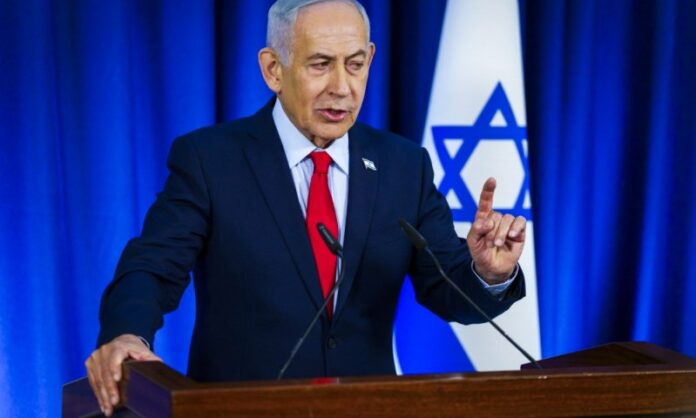 Matzav2 days ago
Israeli Prime Minister Binyamin Netanyahu ordered Israeli security forces to impose an immediate closure on Chevron on Friday following the deadly terrorist shooting at Yehuda Junction, warning that the Hamas-affiliated gunmen responsible had apparently been preparing a much larger attack against Israeli civilians.
The prime minister issued the directive after consulting with Israel’s senior defense and intelligence officials, as investigators uncovered evidence indicating that the two terrorists had been carrying enough ammunition to carry out an attack considerably more extensive than the shooting at the military checkpoint.
Two Israeli soldiers, Staff Sergeant Ron Yonatan Roytman, 23, of Ashkelon, and Sergeant Yuval Shai Svilem, 20, of Hod Hasharon, were killed in the attack. Three additional soldiers were lightly wounded. The two terrorists were eliminated following a prolonged exchange of gunfire.
Netanyahu convened a security assessment with Defense Minister Yisroel Katz, IDF Chief of Staff Lt. Gen. Eyal Zamir, the head of the Shin Bet, the national security adviser, and the commander of the IDF Central Command to review the attack and determine the military’s response.
“I have just concluded a security assessment with the Minister of Defense, the IDF Chief of Staff, the Director of the Shin Bet, the National Security Advisor, and the Commander of the IDF Central Command,” Netanyahu stated.
The prime minister said that the weapons and ammunition recovered from the terrorists pointed to preparations for an attack intended to claim numerous civilian lives.
“It appears that Hamas terrorists were planning a major attack aimed at murdering innocent civilians, as evidenced by the large quantities of weapons and ammunition discovered,” Netanyahu said.
Netanyahu credited the soldiers who confronted the gunmen with preventing the attackers from reaching their intended targets and inflicting even greater casualties.
“Our brave soldiers thwarted this attack with courage and determination. I commend them for their actions and wish our wounded a speedy recovery.”
The IDF’s preliminary investigation found that the two gunmen had traveled from Chevron in a vehicle carrying a substantial supply of ammunition. They were armed with an M4-style assault rifle and a handgun, while an additional container filled with ammunition was discovered inside their vehicle.
Military investigators believe the attackers had intended to reach Route 35, a major roadway connecting the Chevron area with central Israel, where they planned to target civilians. Their plans were apparently disrupted when they encountered a temporary checkpoint operated by soldiers from the Home Front Command’s Ari Battalion.
Unable to continue toward their intended destination, the terrorists reportedly left their vehicle and began shooting at the soldiers stationed at the checkpoint.
The gun battle unfolded at close range and continued for more than 20 minutes, with additional security personnel rushing to the area as the soldiers returned fire.
Both terrorists were eventually eliminated. The IDF said the soldiers’ resistance prevented the attackers from continuing toward their intended civilian targets.
The terrorists were subsequently identified as Mohammad Jaaba and Firas Jaaba, both 27-year-old residents of Chevron and members of the same family. Hamas praised the shooting, although its precise organizational role in directing the attack had not been independently established.
The soldiers involved in the confrontation belonged to the Ari Battalion, a recently established unit of the IDF Home Front Command’s Search and Rescue Brigade that was conducting its first operational deployment in Yehuda and Shomron.
Following the shooting, military commanders ordered additional troops into the area and established roadblocks around Chevron and neighboring communities. Central Command chief Maj. Gen. Avi Bluth directed forces to expand the restrictions as security personnel searched for possible accomplices and additional threats.
The government also instructed the military to prepare for the possibility of a broader closure throughout Yehuda and Shomron, particularly as Israel approaches Tuesday’s Knesset elections.
Netanyahu confirmed that he had authorized immediate restrictions around Chevron along with further measures aimed at preventing additional attacks.
“I have instructed the IDF and security forces to immediately cordon off the city of Hebron and take additional security measures to prevent terrorist attacks originating from Judea and Samaria,” he stated.
The prime minister said Israeli forces were being reinforced and that counterterrorism operations were continuing across the region.
“Our forces are operating with reinforcements to thwart terrorism and are carrying out extensive waves of arrests,” he said.
The heightened security measures come amid concerns that additional attacks could be attempted in the days leading up to the elections. Security officials have also been examining whether the two gunmen operated independently or received assistance from a wider terrorist network.
The discovery of the ammunition stockpile has become a central focus of the investigation, strengthening the military’s assessment that the shooting at the checkpoint was an unintended confrontation that prevented a potentially deadlier attack elsewhere.
Concluding his statement, Netanyahu issued an unequivocal warning to Hamas operatives and those responsible for organizing attacks against Israelis.
“We will pursue Hamas terrorists and those who sent them, wherever they are and at all times.”
“You have nowhere to hide.”
{Matzav.com}
 Matzav2 days ago
A long-awaited step toward shalom between two prominent chassidic leaders took place Thursday afternoon, when the Vizhnitzer Rebbe of Bnei Brak, Rav Yisroel Hager, spoke by telephone with his brother-in-law, the Satmar Rebbe, Rav Aharon Teitelbaum, following several years of estrangement between them.
The conversation, which took place after an extended period during which the two Rebbes had not been in contact, was the culmination of quiet efforts by the Vizhnitzer Rebbe’s sons to restore the relationship between their father and their uncle.
The efforts began approximately a year and a half ago, when the Vizhnitzer Rebbe was in Los Angeles for medical treatment.
At that time, the Rebbe’s son, Rav Yaakov Mordechai Hager, Av Bais Din of Vizhnitz Elad, acting at the request of his brothers, reached out to his uncle, the Satmar Rebbe, in an effort to begin repairing the longstanding rift.
The initial contact opened a discreet channel of communication between the two families, with the hope that the relationship between the Rebbes could eventually be restored.
Over the ensuing year, the efforts toward shalom experienced periods of progress as well as setbacks. Although the initiatives did not immediately produce a breakthrough, contact between the sides was maintained discreetly, allowing the possibility of reconciliation to remain open.
In recent weeks, the Vizhnitzer Rebbe again expressed to members of his family his deep pain over the prolonged separation from his brother-in-law, a situation that he felt had been forced upon him.
His sons subsequently renewed their efforts to bring about a reconciliation.
Working in coordination with his brother, Rav Yaakov Mordechai Hager, the Rebbe’s son Rav Chaim Meir Hager, Av Bais Din of Vizhnitz, became personally involved in the matter, establishing direct contact with the Satmar Rebbe and members of his household.
The renewed efforts ultimately bore fruit Thursday, when arrangements were made for the two Rebbes to speak by telephone.
The conversation took place in a warm, familial atmosphere, with the Satmar Rebbe expressing particular concern for the health of his brother-in-law.
During their discussion, the Satmar Rebbe inquired about the Vizhnitzer Rebbe’s medical condition and extended heartfelt wishes for a complete and speedy refuah sheleimah, renewed strength, and a full return to good health.
The exchange was especially meaningful in light of the Vizhnitzer Rebbe’s health difficulties and the many tefillos being offered by his chassidim for his recovery.
News of the conversation spread quickly among chassidim, generating considerable emotion and relief following years of separation between the two Rebbes.
The development was welcomed as an encouraging step toward restoring the longstanding family relationship and bringing an end to the painful estrangement.
Particular appreciation was expressed for the efforts of the Vizhnitzer Rebbe’s sons, who worked patiently and discreetly over an extended period to bring about the conversation.
{Matzav.com}
 Matzav2 days ago
The IDF has released the names of two Israeli soldiers killed Friday morning in a terrorist shooting attack at the Judea Junction near Chevron, where two Hamas-affiliated terrorists opened fire on a military checkpoint before being eliminated following a 20-minute gun battle.
The fallen soldiers were identified as Staff Sergeant Ron Yonatan Roytman, 23, of Ashkelon, and Sergeant Yuval Shai Svilem, 20, of Hod Hasharon. Both served in the Ari Battalion (775) of the IDF’s Search and Rescue Brigade.
Roytman served as a squad commander, while Svilem was a combat soldier in the same battalion.
Three additional soldiers from the battalion sustained light injuries during the attack. They were evacuated to a hospital for medical treatment, and their families were notified.
According to an initial military investigation, the two terrorists were 27-year-old residents of Chevron affiliated with Hamas. They arrived at the scene carrying an M4 rifle and a handgun, apparently intending to carry out an attack along Highway 35.
Investigators believe the terrorists changed their plans after determining that they could not reach their intended target. They instead opened fire on soldiers stationed at the nearby checkpoint, setting off a prolonged exchange of gunfire.
Israeli forces engaged the attackers for approximately 20 minutes before killing both terrorists and bringing the shooting to an end.
Magen David Adom reported that the other victims injured in the attack suffered light wounds and were receiving treatment at hospitals.
Following the attack, IDF Chief of Staff Lt. Gen. Eyal Zamir held a security assessment with senior military commanders, during which he praised the soldiers’ response and warned that the terrorists had apparently been preparing an even more devastating attack.
“This was a serious terrorist attack. The soldiers’ swift actions prevented an even more severe attack and further harm to civilians and security forces. A large quantity of ammunition was found in the vehicle the terrorists used to reach the scene of the attack, which was intended to be used in a larger-scale attack.”
Additional details emerging from the investigation indicate that the terrorists arrived in a vehicle bearing Israeli license plates and positioned themselves near a scrapyard, where they reportedly observed Israeli troops before launching their assault.
The soldiers had reportedly left a nearby military position to inspect vehicles at a checkpoint when the gunmen opened fire. The ensuing battle continued for approximately 20 minutes before Israeli forces eliminated both attackers.
Emergency medical personnel, including Magen David Adom teams and military medics, responded to the scene and treated the wounded before transporting them to hospitals in Yerushalayim, including Shaare Zedek and Hadassah Ein Kerem.
The IDF deployed additional forces to the area following the shooting, including soldiers from the elite Duvdevan unit, Border Police personnel, and aerial surveillance assets. Security forces also conducted searches to determine whether additional terrorists had been involved.
Israeli authorities imposed a security cordon around Chevron and several surrounding communities, while police closed portions of Highway 35 as investigators examined the scene and collected evidence.
Zamir subsequently approved intensified intelligence operations and additional arrest efforts in the region as the military sought to identify anyone who may have assisted the attackers.
{Matzav.com}
 Matzav2 days ago
President Donald Trump signed an executive order Thursday designed to reduce mortgage-related expenses, ease the financial burden on homeowners, and bring down construction costs as high interest rates continue to squeeze the American housing market.
The measure introduces several initiatives aimed at making homeownership more affordable, including a program that could eliminate certain mortgage insurance premiums, reduce refinancing expenses, and lower borrowing costs for qualifying homebuyers receiving federal assistance.
At the center of the order is a directive to Federal Housing Finance Agency Director Bill Pulte to establish a pilot program under which borrowers with government-backed mortgages could stop paying mortgage insurance premiums once they have accumulated sufficient equity in their properties.
The initiative is intended to prevent eligible homeowners from continuing to pay insurance charges after meeting the required equity threshold, potentially reducing their monthly housing expenses without requiring them to refinance their loans.
Trump also directed the creation of a federal task force charged with finding ways to make residential construction less expensive while improving the quality of newly built homes. The task force will examine how newer manufacturing techniques can be incorporated into housing projects that qualify for federal programs.
According to the White House, the effort will include “facilitating the use of modern manufacturing methods” to help streamline the production of residential units and address some of the expenses associated with building new housing.
In a statement accompanying the executive order, the administration presented the initiative as part of Trump’s broader effort to eliminate unnecessary regulations and expand opportunities for Americans seeking to purchase homes.
“Homeownership is a vital pillar of our great Nation, and President Trump and his Administration are working tirelessly to cut burdensome costs and red tape to make the American dream of homeownership more affordable for all Americans,” the White House said.
The announcement comes during a particularly difficult period for prospective homebuyers, with mortgage rates remaining above 7 percent after climbing sharply in recent months.
The increase has been driven in part by rising Treasury bond yields and higher energy prices associated with the war involving Iran, developments that have pushed up borrowing costs throughout the economy.
Although mortgage rates declined slightly this week, financing a home remains substantially more expensive than it was earlier in the year.
Figures released by Freddie Mac showed that the average interest rate on a 30-year fixed mortgage fell to 7.32 percent from 7.4 percent the previous week, marking the first weekly decline since the middle of August.
Rates on 15-year fixed mortgages also edged lower, dropping from 6.71 percent to 6.68 percent.
Despite those modest improvements, the sustained rise in borrowing costs has weakened demand for housing and made it increasingly difficult for buyers to qualify for affordable monthly payments.
The National Association of Realtors reported that pending home sales fell 7.3 percent between August and September, while declining 11.3 percent compared with the same period a year earlier.
The figures illustrate how rapidly changing financing conditions have affected the real estate market, even as employment and wage growth have provided some support for household purchasing power.
“Market conditions weakened in September due to fast-rising mortgage rates,” said Dr. Lawrence Yun, chief economist of the National Association of Realtors. “Although job growth and income gains can support home purchases, housing affordability is more affected by changes in mortgage rates.”
In addition to addressing mortgage insurance premiums, Trump’s order instructs Pulte to make permanent an existing Federal Housing Finance Agency pilot program that allows certain borrowers to use alternatives to traditional title insurance.
The program is intended to lower the closing expenses associated with refinancing a mortgage by reducing the need for conventional title insurance coverage in qualifying transactions.
The White House said expanding the initiative would “allow more borrowers to utilize cost-friendly alternatives” and provide homeowners with additional opportunities to reduce refinancing costs.
Trump also instructed Agriculture Secretary Brooke Rollins and Veterans Affairs Secretary Doug Collins to pursue lower interest rates on single-family housing loans administered through their respective departments.
Those directives focus on federally supported lending programs that serve eligible rural borrowers and military veterans, among others.
The administration hopes that adjustments to those programs will make home financing less expensive for qualifying households, particularly at a time when conventional mortgage rates remain elevated.
Pulte, who has been among the president’s most vocal supporters, celebrated the executive order Thursday, describing it as the “greatest” presidential action ever taken to address housing affordability.
“Because of President Trump’s bold actions to put Americans First, millions of Americans will save thousands and thousands of dollars,” Pulte wrote on social media.
Pulte, who briefly held the position of acting director of national intelligence earlier this year, has been closely associated with the administration’s efforts to reshape federal housing policy.
The executive order also received a favorable response from the National Association of Realtors, whose leadership has repeatedly warned that elevated borrowing costs and the limited supply of affordable homes are placing homeownership beyond the reach of many Americans.
Shannon McGahn, the organization’s executive vice president, welcomed the administration’s initiative, saying it would help “address the costs associated with homeownership.”
She added that the measure “takes steps toward making homeownership more sustainable” for American households.
The order arrives as housing affordability has become an increasingly prominent economic and political concern, particularly among first-time buyers and families seeking larger homes.
Higher mortgage rates have significantly increased the monthly payments required to purchase a home, while existing homeowners who secured mortgages at substantially lower rates have had less incentive to sell and take on new financing.
That combination has contributed to a difficult market in which buyers face elevated borrowing expenses and sellers remain reluctant to give up favorable mortgage terms.
While the executive order seeks to address several costs associated with purchasing, financing, and constructing homes, its provisions will require implementation by federal agencies before borrowers can begin benefiting from the proposed changes.
The mortgage insurance initiative, in particular, will begin as a pilot program, meaning its eligibility requirements, scope, and potential savings will depend on rules developed by the Federal Housing Finance Agency.
Similarly, efforts to reduce construction expenses and adjust federal loan programs will depend on the actions taken by the agencies responsible for carrying out the president’s directives.
The measures do not directly establish lower interest rates for conventional mortgages, which remain heavily influenced by financial markets and broader economic conditions.
Nevertheless, the administration is positioning the order as a major step toward reducing the additional costs that make buying and maintaining a home more expensive.
With the housing market struggling under the weight of high borrowing costs, Trump is seeking to provide relief through changes to federal mortgage programs, refinancing procedures, and construction policies, even as broader interest-rate pressures continue to challenge prospective buyers.
The new measures are intended to complement existing federal housing programs rather than replace them, with the administration seeking to reduce costs at several stages of homeownership, from construction and financing to refinancing and ongoing mortgage payments.
The White House has not yet specified when the mortgage insurance pilot will begin or how many borrowers will qualify. Those details will be determined as the responsible federal agencies develop and implement the programs.
For homeowners and prospective buyers, the practical impact will depend on how quickly those changes take effect and whether the savings are substantial enough to offset the broader pressure of elevated mortgage interest rates.
Matzav2 days agoHarvard Law School professor emeritus Alan Dershowitz warned Thursday that Rep. Ilhan Omar could face the loss of her American citizenship and eventual deportation if federal investigators establish that fraud was involved in her naturalization, suggesting that the recent search of her Washington residence indicates the government may be pursuing a serious case against the Minnesota Democrat.
Appearing on Newsmax’s The Record With Greta Van Susteren, Dershowitz said the decision to execute a search warrant at the home of a sitting member of Congress was particularly significant and raised questions about what evidence federal authorities had presented to the judge who authorized the operation.
“I think she’s in much, much deeper trouble than she is willing to admit,” he said of Omar.
The legal commentator, a longtime Harvard professor and author of Why I Quit the Dems, argued that the investigation could ultimately extend beyond possible criminal charges to proceedings aimed at revoking Omar’s naturalized citizenship.
Federal agents from Homeland Security Investigations, an investigative division of Immigration and Customs Enforcement, searched Omar’s Washington home before sunrise on October 12. The operation was conducted under a sealed warrant that reportedly identified conspiracy, immigration fraud, and false statements in immigration documents as possible offenses.
According to reporting attributed to individuals familiar with the investigation, authorities are examining whether Omar or her late father provided inaccurate information about her age during the immigration and naturalization process that culminated in her becoming an American citizen in 2000.
Omar has denied engaging in wrongdoing, and no criminal charges had been announced against her as of Thursday.
Dershowitz emphasized that while judges routinely approve search warrants when prosecutors establish probable cause, he believes the circumstances surrounding the search of a congresswoman’s residence warrant particular attention.
Discussing the issuance of search warrants, he said, “usually they’re issued pretty easily, but not against the sitting congresswoman.”
In Dershowitz’s assessment, the authorization of a predawn search involving an elected federal lawmaker suggests that investigators presented a substantial factual basis for their request.
He argued that “there has to be very substantial evidence beyond just a mere probable cause claim.”
The professor contrasted the search with less intrusive investigative measures that federal authorities might ordinarily employ when seeking documents or other evidence from a public official.
“In a situation like this, often you’ll just get a subpoena,” he said, referring to the legal process through which investigators can compel the production of records without entering and searching a person’s residence.
U.S. Magistrate Judge Matthew Sharbaugh authorized the search after imposing safeguards intended to prevent investigators from improperly accessing materials connected to Omar’s legislative duties, according to reporting by Reuters.
Those protections are particularly relevant because members of Congress possess constitutional safeguards concerning certain legislative activities and records.
Dershowitz said the most consequential potential outcome of the investigation would be denaturalization, the legal mechanism through which the federal government can seek to revoke citizenship obtained through the naturalization process.
Such proceedings would require the government to establish that citizenship had been unlawfully procured, including through qualifying fraud or material misrepresentation.
“You have to prove fraud,” Dershowitz said, explaining that the government would need to establish wrongdoing by Omar herself or fraudulent conduct by her father in which she knowingly participated.
He suggested that investigators could examine the original information submitted during the family’s immigration process, along with subsequent documents in which Omar may have repeated details now under scrutiny.
Dershowitz described the investigation as potentially “the beginning of a much deeper search” that could end “very, very likely in her denaturalization and deportation.”
His prediction represents his assessment of the case rather than a finding by investigators or a court. Omar remains an American citizen, and no judicial determination has been made that her citizenship was improperly obtained.
The former Harvard professor also addressed whether the passage of time could prevent the government from pursuing allegations involving immigration documents submitted decades ago.
He noted that the legal deadlines applicable to criminal prosecutions do not necessarily prevent the government from pursuing civil proceedings to revoke naturalized citizenship.
According to Dershowitz, “statute of limitations that apply in criminal cases don’t apply in deportation and denaturalization cases.”
He further suggested that if an individual repeatedly supplied inaccurate personal information in later official documents, investigators might examine whether those subsequent representations constituted separate violations.
If Omar continued using allegedly false information concerning her date of birth, he argued, “this could be a continuing crime.”
The investigation has also renewed public attention to longstanding allegations concerning Omar’s previous marriage to Ahmed Nur Said Elmi, including claims that the two are related.
Omar has repeatedly rejected accusations that she married her brother, describing those allegations as “bigoted lies.”
During a recent appearance on MS NOW, the congresswoman was asked directly whether she was related to her former husband.
“Not to my knowledge,” she replied.
Dershowitz criticized that response, suggesting that Omar should have been able to provide a more definitive answer about the relationship.
“You’re either related to somebody, or you’re not related to somebody,” he said.
The allegations concerning Omar’s former marriage have circulated for years, but the claim that Elmi is her brother has not been established through publicly substantiated evidence. The reported federal investigation has not resulted in a criminal charge involving that allegation.
Meanwhile, efforts are underway to obtain the court documents underlying the October 12 search.
On October 15, a group of 14 news organizations, including Reuters, petitioned a federal judge to release records associated with the warrant.
The requested materials include the affidavit submitted by investigators to justify the search, which could provide important information about the government’s allegations and the evidence presented to the court.
Dershowitz said public access to that affidavit would be particularly valuable in determining whether investigators have identified credible evidence of serious immigration violations or whether the inquiry is being driven by political considerations.
He said the documents could help establish “whether this is just picking on her because of her political views, as she says,” or whether investigators have uncovered significant fraud that might lead to “not only being thrown out of Congress, but being thrown out of the United States.”
The case has drawn heightened political attention because Omar has been among President Donald Trump’s most outspoken congressional critics, and the administration’s investigation has raised concerns among her supporters about possible political retaliation.
Omar has maintained that she has committed no wrongdoing, while the government has not publicly disclosed the full evidentiary basis for the search.
The eventual release of the warrant affidavit could provide a clearer picture of the allegations under investigation and the legal grounds on which federal authorities are proceeding.
For now, Dershowitz’s remarks highlight the potentially serious legal consequences of a successful denaturalization case, even as the underlying allegations against Omar remain unproven and the investigation continues.
Additional reporting indicates that the investigation has extended beyond the search of Omar’s home. Federal prosecutors have issued more than a dozen subpoenas, including at least one directed to a member of her family, while investigators have also spoken with relatives as they examine immigration records dating back to the 1990s.
According to Reuters, one of Omar’s sisters voluntarily spoke with federal agents. Investigators also seized the congresswoman’s personal cellphone during the October 12 operation.
The Justice Department has pursued an increased number of denaturalization cases during Trump’s second term. Reuters reported that at least 164 such cases have been filed, a sharp increase compared with the historical average of approximately 11 cases annually between 1990 and 2017.
Omar’s attorneys have challenged the manner in which the search was conducted, alleging that investigators failed to observe restrictions intended to protect confidential congressional materials. Federal authorities have maintained that the operation was lawful.
The controversy is unfolding less than two weeks before the November 3 midterm elections, adding to questions about the timing of a high-profile investigation involving an incumbent member of Congress.
While Dershowitz believes the investigation could ultimately threaten Omar’s citizenship and ability to remain in the United States, the government would first have to establish the legal grounds for denaturalization. The existence of a search warrant, even one involving a sitting congresswoman, does not itself establish that fraud occurred.
Omar continues to deny the allegations, and the federal investigation remains ongoing.
 Matzav2 days ago
President Donald Trump called Thursday for Rep. Ilhan Omar to resign from Congress after federal prosecutors identified the Minnesota Democrat under another name in a court filing, reigniting longstanding allegations concerning her personal history, immigration records, and previous marriage.
Speaking at a political rally in Iowa, Trump accused Omar of having used a fraudulent name when she entered Congress and suggested that the disclosure should cost Democrats another seat in the House of Representatives.
The controversy erupted after a filing submitted Wednesday by the office of U.S. Attorney Jeanine Pirro in Washington, D.C., referred to the congresswoman as “Ilhan Nur Said Elmi, a/k/a Ilhan Abdullahi Omar.”
The appearance of the name Elmi in a federal court document prompted renewed scrutiny of Omar’s background, particularly because the same surname belongs to a man she previously married and whose relationship to her has been the subject of years of disputed allegations.
Trump seized on the development during his appearance in Iowa, declaring that Omar had obtained her congressional position under a name that was not hers.
“It was just revealed just a little while ago that … her name is not Ilhan Omar, the one that she used to get elected and sworn into Congress,” Trump said. “She used a fake name to be sworn in.
“I assume she must immediately have to resign from Congress.”
The president then suggested that Omar’s departure was already inevitable, telling supporters, “The Republicans have just picked up a seat in the House.”
Despite Trump’s assertions, the court filing does not establish that Omar committed identity fraud or improperly obtained her congressional seat. She has not been charged with any crime, and her office has categorically rejected allegations that she used a fictitious identity.
The disputed identification appeared in documents connected to a federal investigation involving a search warrant for Omar’s Washington residence. Prosecutors submitted the filing while asking a federal judge to keep the warrant confidential as investigators completed its execution.
The New York Times and other media organizations had sought access to the warrant materials, prompting the government’s effort to maintain the documents under seal.
According to Fox News Digital, two individuals familiar with the matter claimed that Omar was not born with the surname under which she serves in Congress. Separately, a source familiar with the investigation told the New York Post that Elmi was her original family name.
Omar’s representatives strongly disputed those accounts.
“This is completely false. Ilhan Omar is her real name,” a spokesperson told Fox News Digital.
The spokesperson also denounced the allegations as a “desperate smear” designed to divert public attention from the Trump administration and Republican leadership, calling it “disgraceful that the media continues to give this lie oxygen.”
Attorney General Todd Blanche was questioned by the New York Post about the name appearing in the Justice Department’s filing. Although he did not publicly establish whether the identification was accurate, he said he did not believe federal prosecutors “would make up names.”
The latest controversy has also revived questions surrounding Omar’s former husband, Ahmed Nur Said Elmi, whom she married in 2009 and divorced in 2017.
For years, political opponents and other critics have circulated allegations that Elmi is actually Omar’s brother and that their marriage was connected to immigration-related misconduct. Those claims have not been substantiated by publicly established evidence, and Omar has repeatedly rejected them.
In 2016, she described the accusation as “absurd and offensive.”
The subject resurfaced Wednesday during Omar’s appearance on MS Now with Chris Hayes, when she was questioned about the allegations and her relationship to her former husband.
Omar dismissed the suggestion as “insane.”
When asked directly whether she was related to Elmi, she responded, “Not to my knowledge.”
That answer drew particular attention from Trump, who repeated it during Thursday’s rally and suggested that the wording was revealing.
“That tells you a lot right there,” the president told the Iowa audience.
Trump also delivered a broader denunciation of Omar, criticizing her political record and making disparaging remarks about Somalia, the East African country where she was born.
“She’s been a scammer for a long time. I’m pretty good at watching that stuff, and she comes from a non-country, basically. Somalia has no government, has no nothing. … All they do is run around shooting each other. Then she comes over here. The Constitution gives me absolute right to freedom of speech,” Trump said.
The dispute comes amid reports of an expanding federal investigation into Omar’s immigration history and the accuracy of information submitted in connection with her entry into the United States.
According to the New York Post, agents from Homeland Security Investigations searched Omar’s residence in Washington on October 12, confiscating her cellphone, computer, and passport.
The newspaper further reported that federal prosecutors in Minnesota have been examining whether Omar supplied inaccurate information on immigration-related documents. Investigative steps reportedly have included interviews with family members and the collection of DNA evidence.
Those investigative activities, as described in the reports, have not resulted in publicly announced criminal charges against the congresswoman.
Omar’s background has long been a subject of political debate. Born in Somalia, she fled the country’s civil war with her family in 1991. The family subsequently spent approximately four years in a refugee camp in Kenya before immigrating to the United States.
Omar has previously stated that her original birth certificate was destroyed, a circumstance that has complicated efforts to independently reconstruct portions of her early personal history.
The congresswoman has consistently maintained that her identity and immigration history are legitimate, rejecting accusations that she engaged in fraud or misrepresented family relationships.
The identification contained in the Justice Department filing nevertheless introduces a new element into the longstanding controversy because it places the disputed name in an official federal court submission rather than solely in political commentary or media allegations.
At the same time, the use of an alternative name in a legal filing does not, by itself, demonstrate wrongdoing. Individuals may legally use different surnames over the course of their lives, and the filing does not explain the basis on which prosecutors included the Elmi identification.
The distinction is particularly significant given Trump’s demand for Omar’s immediate resignation. No court has determined that she assumed a fraudulent identity to take office, and the allegations remain contested.
The president’s remarks also intensified an already bitter political confrontation between the White House and Omar, who has been among Trump’s most outspoken congressional critics.
With federal investigators reportedly continuing their work and the disputed court documents drawing heightened attention, the controversy is likely to remain a major political issue as the November congressional elections approach.
For now, Omar remains a member of Congress, her office continues to deny the allegations, and the Justice Department has not publicly established that the alternative name appearing in its filing reflects criminal misconduct.
Additional reporting has also brought attention to the legal dispute surrounding the search of Omar’s home. Her attorneys, Amy Jeffress and Joshua Matz, have accused federal investigators of disregarding restrictions imposed by a magistrate judge to protect the constitutional rights of a sitting member of Congress.
In correspondence sent to the Justice Department on October 16, the attorneys demanded the return of property seized during the search and requested that investigators preserve any audio or video recordings of the operation.
The legal team characterized the investigation as politically motivated, arguing that the government had improperly targeted one of Trump’s most prominent congressional opponents shortly before the midterm elections.
The Justice Department has maintained that investigators followed lawful procedures.
Meanwhile, the dispute over the search warrant has drawn interest from multiple news organizations and Judicial Watch, which have sought the release of sealed court records.
Federal prosecutors have asked for additional time to respond to those requests, arguing that the search warrant has not yet been fully executed. The government has proposed providing a status update after the warrant’s execution is completed, while also requesting additional time to address the applications for disclosure.
The procedural filing does not explain why prosecutors identified Omar using the Elmi surname, leaving unresolved one of the central questions driving the controversy.
Whether additional court records will clarify that identification, or disclose evidence supporting the government’s investigation, remains uncertain.
 Matzav2 days ago
Vice President JD Vance acknowledged Thursday that Russia and Ukraine remain sharply divided over the terms of a possible peace agreement, warning that significant obstacles continue to stand in the way of President Donald Trump’s efforts to bring the war to an end.
Although both Moscow and Kyiv have agreed to return to negotiations, Vance said the two countries remain far apart on fundamental questions, including territorial control and the conditions necessary for a lasting settlement. His remarks came as American diplomats continued working to arrange another round of discussions next month.
Speaking during an interview with Forbes, Vance was challenged over the prospects for renewed diplomacy, particularly given Ukraine’s repeated willingness to participate in negotiations and Russia’s reluctance to accept previous proposals.
“I think both countries have agreed to come to the negotiating table. The reason we have not yet reached a peace agreement is that they are simply too far apart on the details of those negotiations,” Vance said.
The vice president emphasized that the administration remains committed to pursuing a negotiated resolution, despite the considerable differences separating the two sides and the repeated setbacks that have complicated previous diplomatic initiatives.
Vance pointed to the efforts of Steve Witkoff, Trump’s special envoy, who has recently held discussions with senior Russian and Ukrainian officials in an attempt to identify possible areas of compromise.
According to Vance, Witkoff has remained encouraged by his latest contacts, even as the administration recognizes that reaching an agreement will likely require continued negotiations and additional diplomatic efforts.
“He is optimistic. The nature of these things is that you make an attempt, see how far you can get, and then come back to it again. Sometimes it works, sometimes it doesn’t,” Vance said.
The vice president praised Witkoff and the broader American negotiating team for continuing to pursue an agreement despite the difficulties involved in reconciling the competing demands of Moscow and Kyiv.
His comments followed an announcement Wednesday by Kremlin aide Yuri Ushakov, who indicated that Russia was prepared to participate in another round of three-way negotiations involving Russian, Ukrainian, and American representatives.
Ushakov suggested that the discussions could be held in the United Arab Emirates between November 10 and November 19, potentially providing a new opportunity for the Trump administration to advance its diplomatic initiative.
Witkoff has also described his recent meetings with Ukrainian President Volodymyr Zelenskyy in Oslo and Russian President Vladimir Putin in St. Petersburg as constructive. He indicated that further discussions would take place among officials responsible for working through the technical details of a possible agreement.
Despite those developments, substantial disagreements remain over the future of Ukrainian territory currently occupied by Russian forces, the security arrangements that would accompany any ceasefire, and the broader conditions governing a permanent settlement.
The territorial dispute remains among the most difficult issues confronting negotiators, with the two governments holding fundamentally different positions concerning the future of areas under Russian control.
Questions surrounding security guarantees for Ukraine have presented another major obstacle. Any agreement would need to address Kyiv’s concerns about preventing renewed Russian military action while also confronting Moscow’s objections to certain Western security arrangements.
The Trump administration has repeatedly sought to establish a diplomatic framework capable of ending the fighting, but successive initiatives have failed to produce either a comprehensive peace agreement or a major, lasting ceasefire.
Meanwhile, military operations have continued despite the diplomatic activity.
Russian forces have maintained attacks against Ukrainian population centers and civilian infrastructure, contributing to further destruction and placing additional pressure on Ukraine’s energy and transportation systems.
Ukraine, in turn, has intensified operations against Russian energy installations, including oil refineries and facilities connected to Moscow’s military supply network. Those attacks are intended to disrupt resources that help sustain Russia’s war effort.
The continuing hostilities have complicated the diplomatic environment, with each side seeking to improve its position while negotiations remain unresolved.
Vance’s assessment underscored the gap between securing agreement to hold talks and obtaining the concessions necessary to end the conflict. Although the administration views the willingness of both governments to participate in negotiations as a positive development, the vice president made clear that the central disputes remain unsettled.
The proposed November meetings could provide another opportunity to narrow those differences, but there has been no indication that either Moscow or Kyiv is prepared to make the major compromises required for a final agreement.
For Trump, who has made ending the Russia-Ukraine war a central foreign-policy objective, the challenge remains translating renewed diplomatic engagement into an arrangement acceptable to both governments.
With fighting continuing and the most contentious issues still unresolved, Vance’s remarks suggest that Washington expects the negotiating process to continue, even as the prospect of a near-term peace agreement remains uncertain.
{Matzav.com}
Matzav2 days agoLISTEN:
For more info, email [email protected].
 Matzav2 days ago
A major disagreement has emerged within Agudas Yisroel just days before Israel’s elections, with the Gerer Rebbe reportedly refusing to add his signature to the traditional proclamation issued by the Moetzes Gedolei HaTorah urging the chareidi public to vote for United Torah Judaism.
According to a report Thursday evening by journalist Ari Kalman of i24NEWS, efforts to secure the Gerer Rebbe’s signature have so far been unsuccessful, despite attempts by senior party figures to resolve the matter ahead of the publication of the election appeal.
The election kol korei is traditionally published on the Friday preceding Election Day and bears the signatures of the admorim who serve on the chassidic Moetzes Gedolei HaTorah of Agudas Yisroel. It calls upon the chareidi community to support the party at the ballot box.
In preparation for the upcoming election, the secretary of the Moetzes has been working in recent days to collect the signatures of its members. However, the Gerer Rebbe has thus far declined to sign the document, creating a significant complication for those seeking to publish the appeal in its customary format.
In an attempt to overcome the disagreement, representatives of Ger have proposed issuing the proclamation without the individual names and signatures of the admorim. Under that arrangement, the appeal would instead appear under the collective designation “Moetzes Gedolei HaTorah.”
Such a compromise would allow the traditional election message to be published without requiring each member of the Moetzes to personally sign the document.
Discussions over the proposal are continuing, with party officials working against a tight deadline. The matter must be settled before the newspapers go to print at midnight if the proclamation is to appear in Friday’s editions.
The Gerer Rebbe’s position has remained unchanged despite a personal visit Wednesday evening by MK Yaakov Asher, chairman of United Torah Judaism, who traveled to the Rebbe’s residence in an effort to secure his participation in the party’s election campaign.
Asher’s visit was intended to bring the Rebbe on board with the party’s efforts ahead of Election Day, but according to the report, the meeting did not produce the desired result.
The disagreement comes at a particularly sensitive moment for Agudas Yisroel, as its leadership seeks to present a unified position to voters ahead of the election.
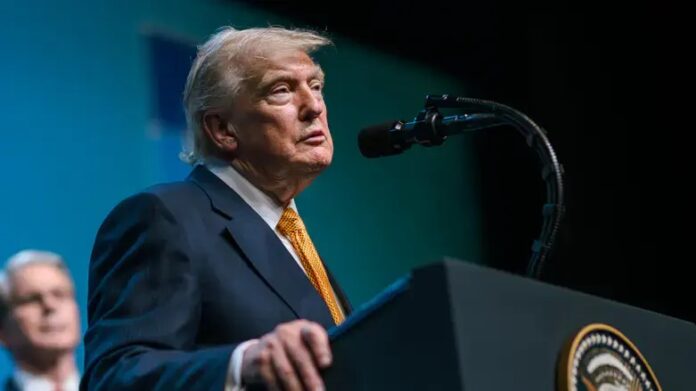 Matzav2 days ago
President Donald Trump is considering a new wave of American military strikes against Iran following the November 3 midterm elections, with plans under discussion for a sustained operation targeting the Islamic Republic’s nuclear program, missile and drone arsenal, and critical energy facilities.
The possibility of another major offensive comes amid growing frustration in Washington over Iran’s refusal to resume negotiations despite months of economic and military pressure. According to a report published Thursday by The Atlantic, administration officials and military planners have been examining options for a campaign lasting several days, although the president has not authorized any new attacks.
The proposed operation would go beyond a limited strike, potentially targeting multiple elements of Iran’s military and strategic infrastructure in an effort to weaken Tehran’s capabilities and increase pressure on its leadership to accept American demands.
Several individuals familiar with the administration’s deliberations indicated that Trump is increasingly dissatisfied with the results of the economic pressure campaign, which had been intended to compel Iranian leaders to return to negotiations before Americans headed to the polls.
Although sanctions and other economic measures have placed considerable strain on Iran, Tehran has continued resisting Washington’s demands, leaving administration officials divided over whether additional military force would improve the situation.
One outside adviser familiar with the discussions expressed confidence that Iran’s leadership is approaching a breaking point.
“The economic pressure is working, and we believe Iran is getting close to the edge.”
The adviser suggested that another American military operation “would push them over.”
Other officials, however, have cautioned that renewed attacks could complicate diplomatic efforts and produce consequences that would undermine Washington’s broader objectives.
The timing of any military action has emerged as a central consideration. According to the report, Trump had previously explored the possibility of authorizing another round of strikes before the midterm elections, with some advisers arguing that a successful operation could strengthen Republican prospects in the closing days of the campaign.
The administration has also been grappling with elevated energy prices, which have created political difficulties for Republicans and added urgency to discussions about how to handle the confrontation with Tehran.
Israeli Prime Minister Binyamin Netanyahu has reportedly advocated an earlier American offensive as well. A White House official told The Atlantic that Netanyahu encouraged Trump to approve additional strikes before Israel’s upcoming election, scheduled for next week.
Despite those appeals, Trump has thus far resisted launching another operation before November 3.
Earlier this month, the president stated publicly on Truth Social that the United States would refrain from carrying out additional attacks until after the American elections.
That position has not ruled out military action afterward, and officials familiar with the discussions emphasized that the president continues to evaluate his options.
Some administration figures believe that leaving Tehran uncertain about whether an attack is coming, and when it might occur, could provide additional leverage without requiring an immediate military commitment.
Meanwhile, developments across the Middle East have fueled speculation that Washington is positioning itself for a possible escalation.
Secretary of War Pete Hegseth traveled to Israel earlier this week, where he met with Netanyahu for discussions centered on the Iranian threat and the security situation in the region.
The visit came as American and Israeli defense officials continued coordinating their approaches toward Tehran, including the possibility of further military action should diplomatic and economic efforts fail to produce results.
Another significant development occurred Wednesday, when the State Department ordered nonessential American personnel and their families to leave Saudi Arabia.
The evacuation directive followed an increase in attacks attributed to the Iranian-backed Houthi movement in Yemen, raising concerns about the safety of American personnel and the possibility of additional regional instability.
The Atlantic reported that the White House did not provide an immediate response to its questions concerning the proposed operation. US Central Command, which is responsible for American military operations in the Middle East, also declined to discuss the matter.
The latest disclosures follow reporting Wednesday by The New York Times indicating that American and Israeli military officials have already developed detailed plans for another series of attacks against Iranian targets.
Those proposals reportedly contemplate an operation beginning after the midterm elections, although no final presidential authorization has been issued.
The discussions come as Iran continues resisting American demands concerning its nuclear activities, including the disposition of enriched uranium, while Washington maintains that Tehran must never be permitted to develop a nuclear weapon.
Trump addressed the possibility of additional strikes Thursday while speaking with reporters outside the White House, defending his administration’s military campaign and acknowledging that Americans have differing views about the confrontation.
“But we can’t let Iran have a nuclear weapon. I mean, in one way, people probably don’t love it. But many people, many great patriots really love it.”
The president also criticized his predecessors for failing to deal more aggressively with the Iranian threat, arguing that the confrontation should have been addressed years earlier.
“This should have been done a long time ago by other presidents, the Iran war. And we’ve knocked the hell out of them. And we may do it a little bit further.”
His remarks reinforced the possibility that Washington’s military campaign against Iran is not yet finished, even as the administration continues to weigh the risks of further escalation against the potential benefits of increasing pressure on Tehran.
For now, the White House has made no formal announcement of a new offensive, leaving open the question of whether Trump will authorize another military campaign once the midterm elections have concluded.
The reporting also indicates that Trump’s advisers remain divided over how much additional military pressure Iran can withstand and whether further attacks would bring Tehran closer to an agreement or deepen the conflict. The Atlantic reported that some officials believe Iran is nearing an economic breaking point, while others question whether its leadership would respond to renewed strikes by making concessions.
The possibility of escalation comes against the backdrop of an American naval blockade and months of fighting that have affected international energy markets. Earlier this month, Trump declared that the blockade would continue but that American forces would not launch fresh attacks before the November 3 elections.
Military planning has continued in the meantime, leaving the president with options should he decide to resume large-scale operations.
The coming weeks will determine whether Washington continues relying primarily on economic pressure or returns to an intensive military campaign intended to force a change in Tehran’s position.
{Matzav.com}
 Matzav2 days ago
In an unusually candid appeal to English-speaking chareidi voters in Eretz Yisroel, United Torah Judaism MK Yitzchok Pindrus has acknowledged that his party failed to accomplish its central objective of protecting the status of yeshiva students, while warning that refusing to vote for UTJ in the upcoming elections would only further endanger the future of the chareidi community.
In a letter addressed directly to English-speaking chareidi communities, Pindrus openly accepted responsibility for the failure to resolve the military conscription crisis, describing the outcome as a serious disappointment that demands acknowledgment rather than excuses.
“Let’s speak openly. When this government was formed, we had one central challenge before us: securing the status of yeshiva students and ensuring their ability to continue dedicating their lives to Torah learning,” Pindrus wrote.
“I look you in the eye and say this plainly: We didn’t succeed. There are valid explanations for this – the courts, the legal advisors to the government and the Knesset – but at the end of the day, the responsibility still rests with us.”
Pindrus went further, declaring that the party must recognize its failure to deliver on the issue that had been at the heart of its political mission.
“We did not succeed in achieving the central objective for which we exist: securing the status of those who dedicate their lives to Torah learning. Public responsibility requires us to acknowledge that we did not succeed and to learn from it.”
The letter comes amid growing frustration within segments of the chareidi community over the unresolved draft crisis, ongoing legal proceedings, and enforcement measures targeting yeshiva students who have not reported for military service.
Pindrus acknowledged that the disappointment has prompted some voters to consider staying home on Election Day, while others have begun openly encouraging voters to withhold their support from United Torah Judaism.
“I hear the voices of disappointment and despair. Some have expressed indifference toward the upcoming elections and say they do not intend to vote at all. Others are calling on people not to vote for United Torah Judaism.”
Despite recognizing those frustrations, Pindrus argued that punishing UTJ at the ballot box would ultimately harm the very community whose interests the party is attempting to protect.
To illustrate his argument, he related a pointed joke about a man who was offered the opportunity to make a wish, with the condition that his rival would receive twice whatever he requested.
After considering the offer, the man made an astonishing request.
“Take out one of my eyes.”
When others expressed disbelief that he would waste such an opportunity, the man explained his reasoning.
“That’s true. But this way, he’ll lose both of his!”
Pindrus used the story to warn voters against allowing their anger at UTJ to produce an outcome that would be even more damaging to their own interests.
“Not voting for United Torah Judaism will not bring about a solution. On the contrary, it will only deepen the harm,” he wrote.
The MK maintained that the political and judicial challenges facing the chareidi community extend well beyond the question of military conscription, warning that reduced chareidi representation in the Knesset could jeopardize funding for educational institutions and other essential community services.
“We have already seen during this past term that the legal establishment and the courts are not stopping at the issue of military conscription. They seek to undermine our kindergartens, our Talmud Torahs, and our schools. As far as they are concerned, the Chareidi community is not entitled to the same rights as everyone else.”
Pindrus emphasized that chareidi lawmakers have spent much of the outgoing Knesset term battling to preserve government funding for institutions serving the community, often facing opposition from the attorney general and other legal authorities.
“These are not empty warnings. Throughout the past term, we fought for every budget allocated to the Chareidi community, for every shekel that Chareidi children are rightfully entitled to receive. In many cases, we succeeded, despite the opposition of the Attorney General. But what will happen if Chareidi representation in the Knesset becomes smaller?!”
The letter reflects the increasingly difficult political position confronting UTJ as it seeks to retain the support of voters who are deeply dissatisfied with the party’s inability to secure a lasting legislative arrangement protecting yeshiva students from conscription.
Pindrus also warned that opponents of the chareidi community are openly seeking to undermine its ability to maintain its traditional way of life, portraying the upcoming election as a struggle over the community’s very future in Eretz Yisroel.
“The plans of those who oppose the Chareidi community are out in the open. They even want to take away our right to vote. In the current election campaign, they are seeking to challenge our very right to exist as a community.”
He urged voters to respond with confidence and pride, invoking the words of Rav Avraham Ravitz zt”l, the founding chairman of Degel HaTorah.
“Our response must be to stand tall with Jewish pride. We need not apologize, nor do we need to ask anyone’s permission. As the first chairman of Degel HaTorah, Rabbi Avraham Ravitz zt”l, famously put it: ‘We exist because we exist!’”
Pindrus concluded by emphasizing that voting for UTJ represents, in his view, an affirmation of the chareidi community’s right to preserve its values, institutions, and identity.
“By voting for United Torah Judaism, we declare that we have every right to live as Chareidi Jews, and that we are proud of who we are.”
“I need your vote. United Torah Judaism needs your vote. The entire Chareidi community needs it, so that we can continue fighting for our children, our institutions, and our way of life.”
He ended the letter with a final declaration: “Because we have every right to be Chareidi.”
The appeal comes just days before Israel’s October 27 election, as UTJ confronts dissatisfaction among voters over the failure to pass legislation protecting yeshiva students from military conscription. Reports have indicated that some communities traditionally aligned with the party have considered withholding their votes in protest.
Pindrus has been addressing those concerns directly in recent days. At a gathering in Yerushalayim this week, he faced pointed questions from chareidi voters who challenged the party’s record and demanded to know why they should support UTJ again after its failure to resolve the draft crisis.
During that discussion, Pindrus maintained that the party would refuse to enter the next governing coalition without an agreement addressing the conscription issue. He has made similar statements in recent interviews, describing a draft arrangement as a fundamental condition for participating in any future government.
His letter to English-speaking chareidim reflects that broader campaign to restore confidence among disillusioned voters, combining an unusually explicit admission of political failure with a warning about the consequences of diminished chareidi representation.
For Pindrus, the message is that the disappointment over the outgoing government’s failures is justified, but withdrawing electoral support from UTJ would leave the community with even less influence over the decisions that will shape its future.
{Matzav.com}
 Matzav2 days ago
Shas chairman Aryeh Deri’s election promise to provide free tefillin to every boy reaching bar mitzvah age in Eretz Yisroel has come under sharp attack from Israeli journalist Amichai Attali, who accused the Shas leader of using a seemingly worthwhile religious initiative as a means of creating government jobs for political associates and distributing public money to his supporters.
Deri announced that Shas would seek to establish a government-funded program under which every Jewish boy celebrating his bar mitzvah would receive a pair of tefillin and a tallis, with the state covering the cost. The proposal would be advanced by Shas in the next government following the upcoming Israeli elections.
Attali, however, questioned whether such a program addresses any genuine need, arguing that tefillin are already readily available throughout Israel and that individuals who wish to fulfill the mitzvah generally have numerous avenues through which to obtain them.
“Every child knows that Israel has an abundance of sets of tefillin. Every day, hundreds of people die and leave behind perfectly kosher tefillin,” he wrote.
The journalist pointed to the widespread availability of tefillin in public places, including businesses that maintain tefillin stations for those who wish to put them on during the day. He also cited charitable organizations and volunteer efforts that purchase tefillin for soldiers, young people, and immigrants who might otherwise have difficulty obtaining their own pairs.
According to Attali, the existing network of private initiatives and communal assistance has already made tefillin accessible to virtually anyone who wants them.
“There is almost no one in Israel who wants tefillin and doesn’t have them.”
Attali then turned his attention to what he believes would be the real consequences of Deri’s proposal: the establishment of an entirely new government operation, complete with administrative offices, employees, vehicles, advisers, and substantial budgets.
In his criticism, he suggested that the program could provide a financial benefit to families who would have purchased tefillin for their sons regardless, while simultaneously creating a new source of government-funded employment.
“So why is Deri a genius? Because he’s bringing in hundreds of soferim (scribes who write tefillin, mezuzot, and Torah scrolls) through the back door, who will make a living from his new bureaucracy. Because he’s putting cash into the pockets of hundreds of thousands of haredim – they’re already buying tefillin for their sons’ bar mitzvahs anyway, so why not shift a substantial portion of the expense onto those who actually work and pay taxes?”
The journalist continued with a lengthy, sarcastic description of the bureaucracy he imagined would emerge from the initiative, referring to a hypothetical government agency that he dubbed the “National Tefillin Administration.”
He predicted that such an agency would quickly become another avenue for political appointments, with Shas associates receiving salaried positions and government resources being directed toward individuals connected to the party.
“Another 20 Shas members will get jobs in the National Tefillin Administration. They’ll rent spacious offices in a new building in Givat Shaul. There will be an exemption from the requirement to hold tenders, so the property owner will surely be a relative of some senior Shas official.”
Attali went on to paint an exaggerated picture of the proposed administration, envisioning officials enjoying leased vehicles, consultants being hired for various responsibilities, and additional layers of management being created to oversee the distribution of tefillin.
Among the positions he mockingly proposed were an “adviser on Rashi tefillin” and a separate adviser on Rabbeinu Tam tefillin, referring to the different types of tefillin worn according to the respective shitos.
His satire continued with the suggestion that the government might eventually establish separate administrations for Sephardic and Ashkenazic tefillin, citing the differing minhagim and practices of the two communities as a pretext for creating additional departments and jobs.
According to Attali’s imagined scenario, these agencies would become entrenched bureaucracies, with positions and benefits distributed among relatives, associates, and political insiders at the expense of taxpayers.
The journalist emphasized that his criticism was rooted in his belief that Deri, as someone who has spent his life in the Torah-observant community, is fully aware that obtaining tefillin is generally not a serious obstacle for those who genuinely wish to perform the mitzvah.
“I’m telling you that Aryeh Deri lives within the religious world no less than I do, and he cannot even imagine that there is a Jew who wants tefillin but cannot obtain them.”
Attali argued that Deri’s familiarity with the religious community makes it difficult to accept that the Shas chairman views a shortage of tefillin as a pressing national problem.
Instead, he maintained that the proposal should be understood primarily as an election-season initiative designed to benefit the party’s constituency and potentially expand its network of political appointments.
Attali concluded by accusing Deri of dressing up what he believes is a political patronage initiative as a program intended to strengthen Yiddishkeit.
“His announcement today is actually about creating yet another unnecessary bureaucracy whose entire purpose is to provide a livelihood for associates while exploiting the public treasury for the benefit of voters. And this is just one more piece of proof that Aryeh Deri is a genius.”
Deri, for his part, has presented the proposal as part of a broader effort to strengthen Jewish identity in Eretz Yisroel. In announcing the initiative, he also pledged that Shas would work to require schools to designate appropriate areas where students who wish to put on tefillin and daven could do so during the school day.
The Shas chairman framed the initiative as a response to statements by Democrats Party chairman Yair Golan concerning religion in public institutions. Deri maintained that providing tefillin to young Jewish boys would reinforce their connection to Torah and mesorah, particularly amid disputes over the place of religious observance in Israeli society.
Golan responded with a competing election message, calling for universal military draft orders for 18-year-olds and emphasizing that putting on tefillin should remain a matter of personal choice.
The proposal has also raised questions about its potential cost. With kosher tefillin frequently costing thousands of shekels per pair, a nationwide distribution program would require substantial government funding. Deri has not yet presented a detailed budget, procurement plan, or administrative framework explaining how the initiative would operate.
The financial questions are particularly relevant because the proposed program would cover all eligible boys, including those whose families are already prepared to purchase tefillin privately. Critics question whether the government should subsidize those purchases across the board, while the initiative’s stated objective is to make the mitzvah accessible to every Jewish boy regardless of his family’s circumstances.
For now, the plan remains an election promise rather than an approved government program. Whether it advances will depend on the composition of the next government, the priorities established in coalition negotiations, and the allocation of the necessary funding.
Attali’s criticism has added another dimension to the debate, shifting attention from the religious significance of tefillin to the question of whether the proposed government initiative would genuinely address an unmet need or create an expensive new bureaucracy.
{Matzav.com}
 Matzav2 days ago
U.S. Ambassador to Israel Mike Huckabee has warned senior officials in Washington that President Donald Trump’s Gaza peace initiative could face serious difficulties because of inadequate staffing, uncertain funding arrangements, and unresolved questions about military support, according to a diplomatic communication obtained by Politico.
The warning comes as the Pentagon prepares to scale back its involvement in an American-led coordination center in Israel, potentially transferring critical responsibilities to civilian personnel who may not yet have the resources or manpower needed to carry them out.
Huckabee outlined his concerns in a cable transmitted Thursday from the U.S. Embassy in Yerushalayim to senior State Department officials. The communication, which bore the ambassador’s signature, raised questions about whether the American diplomatic mission and Trump’s newly established Board of Peace are equipped to oversee the complicated process of disarming Hamas, establishing security arrangements, and rebuilding Gaza.
At the center of the concerns is the International Gaza Support Center, known as the IGSC, which serves as the primary American-led coordination operation connecting the United States, Israel, and international partners involved in implementing the administration’s Gaza initiative.
The Pentagon is planning to reduce the number of military personnel assigned to the center over the next year, with civilian officials gradually taking over duties currently performed by American military representatives.
Huckabee cautioned that neither the embassy nor the Board of Peace presently has the personnel necessary to assume those responsibilities without additional preparations.
“Embassy Jerusalem is not currently staffed to assume these roles, but can be if it has an idea of the human, financial and logistical resources that will be needed,” Huckabee wrote.
“The BoP is working to increase staff but its ability to cover all functions at the IGSC remains unclear.”
The Board of Peace, created by Trump and officially inaugurated in February, was established to coordinate major elements of the administration’s proposed postwar framework for Gaza.
Working under a United Nations mandate, the body is tasked with organizing international financial assistance for reconstruction while helping establish new security and governing structures in the territory.
Although several European governments declined to formally join the organization, some have nevertheless agreed to cooperate with its activities, allowing the board to maintain working relationships with countries outside its membership.
The IGSC is also expected to provide important operational support for the International Stabilization Force, a multinational security contingent that the Board of Peace intends to deploy in Gaza as part of the broader peace arrangements.
The center was originally established last year by U.S. Central Command as the Civil-Military Coordination Center, before being reorganized and given its current name.
According to the diplomatic cable, which was designated “sensitive but unclassified,” the organization is now undergoing another transition after the Board of Peace assumed responsibility for its financing on October 11.
The shift in funding and oversight has created questions about how the center will function once American military personnel begin withdrawing and civilian representatives are expected to take their places.
Huckabee was particularly concerned about the potential consequences for coordination with the Israeli military, especially in areas involving sensitive security information.
He warned that the replacement of American military officials with civilian personnel “could complicate the coordination dynamic” with the IDF, “especially on the intelligence-sharing front.”
Such concerns are significant because the center is intended to coordinate operations involving multiple governments, military organizations, and civilian agencies, all of which must cooperate to implement the Gaza arrangements.
The ambassador sought specific guidance from Washington on how responsibilities would be divided among the Pentagon, State Department, and Board of Peace during the proposed transition.
“How will roles and responsibilities shift to State and the BoP as DoW reduces its presence?” Huckabee asked.
“How will we keep critical IGSC workstreams running and what conditions should be met before this transition begins?”
His questions reflect uncertainty over whether the administration has established a sufficiently detailed plan for transferring responsibilities without disrupting ongoing operations.
The concerns also come at a sensitive stage in the Gaza initiative, with disarmament arrangements, reconstruction efforts, and the establishment of an international security presence all dependent on coordination among the United States, Israel, and other participating countries.
The Board of Peace, however, has not acknowledged the organizational changes described in Huckabee’s communication.
In a response to Politico, the organization said it had not seen the cable and disputed any suggestion that it was unprepared to carry out its responsibilities.
The board said it was “confident in the highly detailed plans that have been developed for improved humanitarian assistance, security, governance, the rule of law, infrastructure development, and reconstruction in Gaza. Our capacities and systems in place are strong and ready for implementation.”
The Pentagon referred questions about the reported cable to the State Department, which declined to provide a comment.
The staffing concerns emerge against the backdrop of other obstacles confronting the Gaza reconstruction initiative. In September, the Board of Peace presented international diplomats with a six-month recovery program involving 66 projects and approximately $2.45 billion in proposed expenditures. However, implementation remains dependent on securing financial commitments and establishing the necessary security arrangements.
There have also been difficulties in preparing for the deployment of international forces. Reports earlier this month indicated that Israel had not authorized construction of a proposed Gaza base intended to accommodate an initial contingent of stabilization troops from Morocco and Kosovo. The proposed facility would house approximately 150 personnel drawn from a larger force.
At the same time, efforts to secure Hamas’s disarmament remain a central unresolved issue. Israeli officials have expressed concern that Hamas continues rebuilding its military capabilities, while the international arrangements intended to replace the terrorist organization’s control of Gaza have yet to become fully operational.
Huckabee himself has previously emphasized that the success of the administration’s Gaza initiative depends heavily on eliminating Hamas’s military capabilities. Earlier this month, he accused the terrorist organization of obstructing progress by refusing to surrender its weapons.
The latest diplomatic communication highlights a separate problem facing Washington: Even if political agreements can be reached and security arrangements finalized, the American-led organizations responsible for implementing them must have sufficient personnel, funding, and operational capabilities to function effectively.
With the Pentagon preparing to reduce its role, Huckabee’s questions leave Washington facing a consequential decision about how quickly military responsibilities can be transferred to civilian authorities without jeopardizing coordination with Israel or disrupting the broader Gaza initiative.
 Matzav2 days ago
A fragment of a Sefer Torah stolen from a Polish shul during the Holocaust and reportedly used by a Nazi SS soldier as wrapping paper for a package sent to Germany will be preserved by a Holocaust remembrance organization in San Diego, following an international uproar over plans to sell the sacred parchment at an auction in Norway.
The fragment, which still reportedly bears military identification information and the address of the package’s recipient on its reverse side, had been scheduled for sale by Valkyrie Historical Auctions in Oslo. The proposed auction sparked widespread condemnation from Jewish organizations and Israeli officials, who objected to the commercial sale of a sacred Jewish artifact desecrated during the Holocaust.
Following the protests, the auction house withdrew the item from sale. Within 48 hours, representatives of RUTH – Remember Us The Holocaust, a San Diego-based Holocaust education and remembrance organization, worked with collaborators to arrange for the parchment to be donated for preservation and eventual public exhibition.
The organization announced Wednesday that it had secured an agreement for the donation and would undertake the necessary conservation work before placing the fragment on display.
According to earlier reporting by Ynet, the parchment originated in a synagogue in Poland and was taken during the Holocaust. At some point, an SS soldier reportedly cut or removed a portion of the sacred scroll and used it to wrap a parcel destined for Germany.
The surviving writing on the back of the parchment, including information identifying the soldier’s military unit and the address to which the package was sent, provides a disturbing reminder of the manner in which the Nazis desecrated Jewish religious objects while systematically destroying Jewish communities across Europe.
The planned auction drew a particularly forceful response from Israel’s Foreign Ministry, which described the proposed sale as a “moral atrocity” in a statement published on X.
The World Jewish Restitution Organization also intervened, urging Norwegian authorities to prevent the sale and take steps to ensure that the artifact would be returned to appropriate custodians rather than treated as a commercial collectible.
The controversy raised broader questions about the handling of Jewish religious artifacts stolen, confiscated, or desecrated during the Holocaust, particularly items that subsequently entered private collections and the international memorabilia market.
For Jewish communities, a Sefer Torah carries profound religious significance, and the use of its parchment as ordinary wrapping material represents an especially painful example of the Nazis’ contempt for Jewish religious life.
Sandra Scheller, founder, curator, and president of RUTH, said her organization immediately recognized the importance of ensuring that the fragment would be treated with the dignity appropriate to both its religious significance and its historical background.
“We recognized the importance of this fragment and the urgency of helping secure its donation,” Scheller said.
“Once it has been inspected and appropriately restored, we will be honored to display it alongside the histories of Holocaust survivors. As we grow from an exhibition into a museum, we hope this effort will open doors to collaboration with organizations around the world dedicated to preserving and respectfully exhibiting Holocaust artifacts.”
The organization said it intends to present the parchment as part of its broader effort to preserve Holocaust history through authentic artifacts and the personal accounts of survivors.
Dr. Moises Salinas Fleitman, RUTH’s executive director, emphasized that the fragment must be handled with particular sensitivity because it is both a sacred religious text and physical evidence of Nazi persecution.
“We acted because this Torah fragment deserves preservation, careful study, and a place where people can learn from its history,” Salinas Fleitman said.
“Our responsibility now is to care for this fragment as both a sacred Jewish text and historical evidence, and to ensure that its exhibition respects both.”
To assist with that responsibility, RUTH has enlisted Dr. Adolfo Roitman, a prominent expert in ancient Jewish manuscripts and former curator of the Dead Sea Scrolls and head of the Shrine of the Book at the Israel Museum in Yerushalayim.
Roitman will provide guidance on the appropriate conservation, handling, and exhibition of the parchment, with particular attention to the religious considerations involved in displaying a fragment of a Sefer Torah.
His involvement is expected to help the organization navigate the delicate balance between preserving the fragment as a historical artifact and maintaining the respect due to a sacred Jewish text.
The parchment will undergo a professional examination to determine its physical condition and identify the conservation or restoration measures necessary to prevent further deterioration.
Because the fragment has survived for more than eight decades and was reportedly subjected to improper handling during the Holocaust, specialists will need to assess its stability before determining how it can safely be transported and displayed.
RUTH has not yet announced when the fragment will be available for public viewing. The organization said that a timetable will be established after conservation experts have completed their initial examination and provided recommendations concerning its treatment.
According to the auction listing, the fragment measures approximately 64 by 46 centimeters, or about 25 by 18 inches, and is made of calfskin parchment bearing handwritten Hebrew text. The listing described fire damage and other deterioration, and said the fragment had been discovered at a flea market in Poland several years ago.
The auction had originally estimated the fragment’s value at between $1,500 and $2,000. Online bidding records subsequently displayed a winning bid of $8,500, which would have brought the total to $10,625 after the auction house’s 25% buyer’s premium.
However, the auction house later maintained that the transaction had not been completed. Separate reporting indicated that the auctioneer had intervened to prevent the parchment from passing into the hands of a private collector.
The auction itself had featured other disturbing Holocaust-related items, including tefillin, a garment bearing a yellow Star of David, and striped clothing associated with a concentration camp. Their inclusion intensified concerns about the commercial trade in personal and religious possessions connected to Nazi persecution.
Israel’s Foreign Ministry also criticized the proposed sale against the backdrop of reports that Norway was considering withdrawing financial support for student visits to former Nazi extermination camps. Israeli officials pointed to the contrast between the commercial sale of Holocaust artifacts and the possibility of reduced educational visits to sites where millions of Jews were murdered.
The auction house subsequently defended its handling of the controversy, saying that questions surrounding the ownership and origins of Holocaust-era artifacts are often complicated. A representative suggested that the Torah parchment might have been abandoned during the war rather than conclusively stolen, although the original auction description itself had identified the fragment as having been taken by German SS soldiers.
The World Jewish Restitution Organization’s intervention underscored the importance of establishing the provenance of such objects and ensuring that artifacts connected to Jewish communities destroyed during the Holocaust are handled appropriately.
For RUTH, the acquisition represents an important step in its efforts to establish a permanent Holocaust museum in San Diego.
The organization currently focuses on preserving survivor testimonies, collecting authentic historical artifacts, and educating the public about the Holocaust, particularly through the experiences of survivors who settled in San Diego and Southern California.
Its long-term plans call for a permanent museum that will bring together personal histories and original artifacts, allowing visitors to understand the Holocaust through the experiences of those who endured it.
The organization operates under the guiding principles “Memory needs an address” and “Never again for anyone, anywhere,” emphasizing the importance of preserving Holocaust history for future generations.
The Torah fragment will eventually become part of that educational mission, with its exhibition intended to explain both the destruction of Jewish religious life under Nazi rule and the responsibility to preserve the surviving remnants of that world.
 Matzav2 days ago
A new survey of Israel’s chareidi electorate suggests that voter participation could climb sharply in next Tuesday’s Knesset elections, potentially strengthening the established chareidi parties while making it increasingly difficult for smaller political movements to cross the electoral threshold.
The survey, conducted by Super Data and published by Kikar HaShabbat, projects turnout among chareidi voters at approximately 88%, compared with 75% in a survey conducted roughly a week and a half earlier.
The findings come amid an intense campaign by rabbonim and chareidi political leaders to encourage voters to support the established parties, Shas and United Torah Judaism, rather than independent lists challenging their leadership.
Pollster Avi Widerman said the projected increase in turnout could have significant consequences for smaller parties attempting to enter the Knesset.
According to his calculations, higher participation across the electorate could raise the number of votes needed to cross the electoral threshold from approximately 167,000 in the previous election to between 185,000 and 190,000.
That would present an especially difficult challenge for new chareidi parties seeking to win seats by attracting voters dissatisfied with the established political leadership.
The survey also examined the influence of rabbinic guidance on voting decisions, finding that 70% of respondents regard following the instructions of their rabbonim in elections as a religious obligation.
Another 33% said they would experience substantial feelings of guilt if they voted contrary to those instructions.
These findings suggest that rabbinic endorsements remain a major factor in shaping chareidi voting behavior, even as independent candidates attempt to appeal to voters frustrated by the handling of the military draft controversy and other issues affecting the Torah community.
The poll also reflects the growing importance of the military draft controversy in the election campaign. Arrests of yeshiva bochurim, uncertainty over the legal status of full-time Torah learners and the failure to enact new legislation have generated considerable frustration among chareidi voters.
Independent parties have attempted to capitalize on that dissatisfaction, arguing that the established chareidi factions have failed to deliver sufficient protection for the yeshiva world.
However, the renewed emphasis by gedolei Yisroel on voting for the established parties could complicate those efforts, particularly among voters who regard electoral participation as an obligation determined by their rabbonim.
The survey’s findings should nevertheless be interpreted cautiously. A stated intention to vote does not guarantee actual turnout, and the projected electoral threshold will ultimately depend on nationwide participation and the number of valid votes cast.
The complete survey methodology, including its sample size and margin of error, was not available in the material reviewed.
With the election approaching, the central question is whether the apparent increase in intended turnout will translate into stronger support for Shas and United Torah Judaism, or whether some voters will still direct their ballots toward alternative chareidi parties.
{Matzav.com}
 Matzav2 days ago
Travelers flying between Eretz Yisroel and New York are finally seeing significant relief from the soaring airfares that have dominated the route in recent years, with ticket prices dropping by an average of 25% over the past six weeks and some round-trip flights now available for as little as $600 with a connection, or $650 nonstop for select dates in early 2027.
The dramatic decline follows the return of major American airlines to Ben Gurion Airport and the introduction of additional flights by Israeli carriers, bringing renewed competition to one of Israel’s busiest international travel markets.
According to a new analysis by the Israeli financial newspaper Globes, the average round-trip fare between Tel Aviv and the New York area across five airlines has fallen to approximately $1,223. The findings suggest that travelers who postponed booking during the expensive Yom Tov season may now be able to save hundreds of dollars.
The turnaround is particularly striking because, just six weeks ago, prices remained exceptionally high despite the anticipated return of American carriers. At the time, El Al and Arkia were the primary airlines operating nonstop service between Israel and New York, and demand continued to exceed the available supply of seats.
That situation changed in September when Delta Air Lines and United Airlines resumed flights to Israel following a suspension of more than six months. Israir also entered the transatlantic market, launching its first New York service on September 15 and becoming the third Israeli airline serving the route.
The increased competition initially did little to reduce fares because of heavy travel demand surrounding the Yomim Noraim and Sukkos. With the busy holiday period now over, however, the additional seats are beginning to translate into lower ticket prices.
Data collected by the Israeli travel platform lastminute.co.il shows that Delta has experienced the steepest decline. Six weeks ago, the average round-trip Delta ticket for post-holiday October travel, including baggage, cost approximately $1,980. A new examination of fares for the second half of October found that the average had fallen to $1,245, representing a 37% reduction.
United Airlines recorded a similarly dramatic decline, with average fares dropping 33%, from $1,844 to $1,237.
The Israeli carriers also lowered their prices, although the decreases were less pronounced. El Al’s average fare fell 13%, from $1,459 to $1,270, while Arkia’s declined 7%, from $1,359 to $1,265.
Looking ahead to November, the average price across all five airlines stands at $1,223, with Israir offering the lowest average fare at $1,135. United follows at $1,190, Arkia at $1,230, Delta at $1,265, and El Al at $1,295.
Asaf Grinberg, vice president of marketing at lastminute.co.il, said the shift has been particularly noticeable among the American airlines, which were substantially more expensive than their Israeli competitors at the beginning of September.
“Within a month and a half, there has been a dramatic change,” Grinberg said. “The American airlines, which were significantly more expensive at the beginning of September, have dropped by more than 30%, and today their prices are almost identical to those of the Israeli airlines.”
He noted that the lower prices are continuing into November, suggesting that the decline is broader than a temporary promotion involving a handful of flights.
Grinberg also pointed to the strengthening of the Israeli shekel against the dollar, which has made dollar-denominated airfare less expensive for Israeli travelers paying in shekels.
Beyond the average fares, the survey uncovered several particularly attractive deals for passengers who can be flexible with their travel dates.
United Airlines was offering round-trip tickets starting at approximately $790 for flights during the final week of November. Israir had a limited number of tickets available from approximately $990 for selected dates in late October and November.
Travelers willing to make a connection rather than fly nonstop can find even cheaper options. According to the Israeli airfare-deals platform Secret Flights, round-trip tickets on Condor, involving a connecting flight, have been advertised for $600 or less.
The savings could be especially significant for families traveling between Eretz Yisroel and the United States, where purchasing several tickets at once can make even a modest difference in airfare amount to hundreds or thousands of dollars.
The lower prices are also extending into the winter travel season, with several airlines offering round-trip tickets below $1,000 for selected dates in early 2027.
A survey by Israeli tourism company Gulliver identified Delta tickets for mid-January at approximately $878 and El Al flights for early March at approximately $773.
Secret Flights also reported finding nonstop Delta round-trip tickets for dates early next year starting at approximately $650, a price considerably below the fares that travelers have faced during much of the past year.
The advertised bargains are date-specific and may be available only in limited quantities. Actual prices can change as seats are sold, and travelers should examine baggage allowances, connection times, ticket restrictions, and other conditions before booking.
Another promotion has been introduced by SuperFly, the travel credit-card club associated with the Rami Levy group. The company recently advertised New York tickets for $909 for eligible cardholders and new members, with travel dates extending through March 2027.
According to the company, the offer includes a checked suitcase weighing up to 23 kilograms, approximately 50 pounds, along with a carry-on bag. SuperFly said hundreds of tickets were available under the promotion.
Despite the substantial reductions, industry analysts caution that the lower fares do not necessarily represent an unprecedented collapse in ticket prices.
SkyGini, a digital travel agency that tracks airline pricing, found that October fares were approximately 18% below summer levels. However, the agency attributed much of that decline to normal seasonal patterns, noting that airfare typically falls after the summer and holiday travel periods.
According to SkyGini, prices on the New York route remain broadly comparable to those recorded in previous years, suggesting that the current reductions reflect a combination of seasonal demand and renewed airline competition.
The timing of Israel’s upcoming elections may also be influencing demand. With Israelis preparing to vote, some travelers may be postponing trips abroad, adding downward pressure on fares.
Israir CEO Uri Sirkis, speaking at a recent investment conference, emphasized that the reduction in ticket prices is occurring despite significantly higher airline operating expenses.
“People need to remember that fuel prices have risen significantly compared with last year, by around $700 per ton,” Sirkis said.
He explained that a wide-body aircraft consumes approximately six tons of fuel per flight hour, meaning that fuel expenses on a long-haul flight can reach roughly $80,000.
Sirkis argued that when those increased expenses are considered, a ticket selling for $1,200 today represents a considerably better deal than the same nominal price would have been last year.
He estimated that without the return of additional carriers, fares on the route could have remained around $1,800.
The latest developments mark a sharp contrast with conditions earlier this year, when airline service between Israel and the United States was severely restricted.
Delta and United suspended their Israel operations during the conflict with Iran in March, leaving travelers with fewer options and contributing to elevated prices.
Both airlines resumed service in September, with Delta returning to the Tel Aviv–JFK route and United restoring flights between Ben Gurion Airport and Newark Liberty International Airport in New Jersey.
Israir’s entry into the market further increased available capacity. The airline invested approximately $85 million in two Airbus A330 wide-body aircraft and associated preparations to establish its long-haul operations.
Its initial New York flights began in September, after the company received the necessary regulatory approvals from Israeli and American authorities.
The carrier has also outlined plans to expand its long-haul fleet, including the use of additional leased aircraft and the eventual introduction of another independently operated wide-body plane during the second half of 2027.
American Airlines, meanwhile, remains absent from the route. The company previously postponed its planned return to Israel until late March 2027, after having suspended regular Tel Aviv–New York service following the October 7, 2023, Hamas attacks.
The current price reductions therefore reflect competition among five airlines rather than a complete restoration of all the carriers that previously served the market.
Tamar Gerzon, CEO of Gulliver, said the return of American carriers and the expansion of Israeli airline operations have substantially improved the options available to passengers.
“The return of the American aviation giants, alongside the Israeli companies that have begun operating on the route, is a significant development for the flight market to the United States,” Gerzon said.
She noted that the shortage of available seats had previously been reflected in both higher prices and fewer travel choices, while the addition of airlines and flights is now beginning to restore competition.
For travelers considering trips to New York in the coming months, the latest figures indicate that the expensive conditions of the recent Yom Tov season have eased considerably, particularly for those able to adjust their departure and return dates.
{Matzav.com}
 Matzav2 days ago
A Chabad shul in Monsey has publicly denied any involvement in the distribution of anonymous booklets criticizing the religious atmosphere in Crown Heights, following speculation about the source of the publications and their connection to the local Lubavitch community.
Congregation Tzemach Tzedek of Monsey issued a statement distancing itself from the material, making clear that neither the shul nor its leadership had authorized or participated in the initiative.
The clarification followed the circulation of booklets raising concerns about standards of religious observance and communal life in Crown Heights, the Brooklyn neighborhood that serves as the international center of Chabad-Lubavitch.
The publication, titled “I sent my son to Crown Heights for Shiur Daled,” was distributed in Crown Heights and mailed to homes in other communities. It was presented from the perspective of a parent concerned about the spiritual environment encountered by young bochurim who travel to Crown Heights to learn near 770 Eastern Parkway.
The booklet carried no author’s name and did not identify any sponsoring organization. However, it included a return address associated with Congregation Tzemach Tzedek in Monsey, prompting questions about whether the shul or individuals connected to it were responsible for the publication.
After the matter received publicity, a member of the shul’s board contacted COLlive to deny any connection.
“This pashkvil did not come from us,” the board member said. “Somebody used our address without permission.”
The congregation subsequently issued a formal statement addressing the matter.
“Congregation Tzemach Tzedek of Monsey wants to state clearly that we had no involvement in the anonymous booklet recently distributed in Crown Heights and mailed to homes elsewhere, as reported in your article ‘Who Is Behind the Mystery Booklet Decrying Crown Heights?’”
The statement continued:
“We did not write, fund, authorize, or distribute it, and we did not know our address would appear on it.”
The congregation also emphasized its longstanding relationship with Crown Heights and the Lubavitcher Rebbe’s neighborhood.
“Our shul has deep ties to Crown Heights and the Rebbe’s shechunah, and we do not endorse the booklet or the way it was put out.”
The controversy has generated considerable discussion within the Lubavitch community, with some readers arguing that the concerns raised in the publication deserve attention regardless of who wrote it, while others have questioned the decision to circulate anonymous criticism of an entire neighborhood.
The booklet’s focus on young bochurim arriving from outside Crown Heights has added sensitivity to the discussion. Crown Heights is home to numerous Chabad educational institutions and attracts talmidim from communities around the world, particularly those seeking to spend time learning in the vicinity of 770.
The anonymous publication raised questions about the responsibility of a community that hosts visiting bochurim and the religious atmosphere those talmidim encounter outside the walls of the yeshiva.
At the same time, the decision to use an established shul’s address without its knowledge has created a separate controversy over the methods employed by the unidentified publishers.
The Monsey congregation’s statement leaves little ambiguity about its position: the shul denies having written, financed, authorized or distributed the material and rejects the suggestion that its address establishes any connection to the publication.
As of Thursday, the identity of the person or group responsible for the booklet remained unknown, and no evidence had emerged publicly establishing who arranged its printing or distribution.
 Matzav2 days ago
President Donald Trump has demanded that NBA superstar LeBron James apologize to the American people and the nation’s fallen military heroes after the basketball player was seen making shooting gestures and swinging his arms during the national anthem ahead of his debut with the Philadelphia 76ers.
The incident occurred before the 76ers’ game against the New York Knicks, as singer Avery Wilson performed “The Star-Spangled Banner.” Rather than standing still throughout the anthem, James appeared to imitate shooting motions and move his arms, drawing criticism from Trump, who accused the veteran basketball star of showing disrespect toward the United States.
Trump posted footage of the incident on Truth Social, accompanied by a sharply worded condemnation of James’ behavior.
“While listening to our National Anthem, LeBron James disrespects our Country,” Trump wrote.
The president went on to demand an apology, invoking the sacrifices of American servicemen and women who gave their lives defending the nation.
“LeBron James should apologize to all of those Great American Warriors and Heroes who died for the American Flag, and all that our Country stands for!” Trump declared.
As of Thursday afternoon, neither James nor the Philadelphia 76ers had publicly responded to the president’s criticism.
The confrontation marks another chapter in Trump’s longstanding disputes with prominent professional athletes over their conduct during the national anthem, an issue he has repeatedly framed as a matter of patriotism and respect for the American flag.
Trump was among the most outspoken critics of former NFL quarterback Colin Kaepernick, whose decision to kneel during the anthem in protest of racial injustice sparked a nationwide controversy over patriotism, free speech, and the responsibilities of professional athletes.
During his first administration, Trump also canceled a planned White House celebration honoring the Philadelphia Eagles following their 2018 Super Bowl victory. The decision came amid disagreements over anthem protests and whether players should be expected to stand during the performance.
The president has consistently maintained that professional athletes representing American sports organizations should demonstrate respect for the national anthem and the flag, particularly in recognition of military personnel who have sacrificed their lives for the country.
James’ actions come amid renewed controversy surrounding anthem observances in professional basketball.
The Golden State Valkyries and Atlanta Dream of the WNBA recently faced criticism after players from both teams left the court before the national anthem during the first three games of the league’s Finals.
The teams rejected suggestions that their departures represented a new form of political protest, explaining that leaving the court before the anthem had long been part of their established pregame routines.
“We’ve been doing that,” Valkyries guard Veronica Burton told reporters before Game 2. “That’s just our pregame routine. We’ve been doing that since last year.”
The controversy has also highlighted differences between professional sports leagues in their policies governing player conduct during the national anthem.
The WNBA does not require its players to remain standing for the anthem, allowing teams greater flexibility in their pregame routines.
The NBA, by contrast, has a longstanding rule requiring players, coaches, and trainers to stand in a dignified posture during the national anthem.
The NFL similarly requires players and team personnel who are present on the sideline to stand during the anthem, although individuals who prefer not to participate may remain in the locker room.
Additional reporting Thursday identified the movements as resembling a golf swing followed by a basketball jump shot. James was standing with his Philadelphia teammates, most of whom remained motionless as the anthem played.
The controversy overshadowed an otherwise successful beginning to James’ Philadelphia career. The 41-year-old, now entering his record 24th NBA season, contributed 14 points, nine rebounds, and seven assists as the 76ers defeated the Knicks 106-100 at Madison Square Garden on Tuesday night.
James joined Philadelphia this summer after eight seasons with the Los Angeles Lakers. His move to the 76ers has attracted considerable attention as he continues one of the longest and most accomplished careers in NBA history.
The dispute also revives the longstanding personal and political tensions between Trump and James, who has frequently criticized the president and supported Democratic candidates. James has used his public platform to speak about racial inequality, voting rights, and other political issues.
 Matzav2 days ago
Germany has summoned an Iranian diplomatic representative following a court case involving an alleged Iranian-backed plot against prominent Jewish figures, including Josef Schuster, president of the Central Council of Jews in Germany, and Volker Beck, a former German parliamentarian and leading Jewish communal official.
The diplomatic confrontation follows the conviction and sentencing of two men connected to the alleged operation, which German authorities have linked to Iranian intelligence activity. The case has renewed concerns about Tehran’s use of operatives and criminal intermediaries to intimidate or attack Jewish and Israeli targets on European soil.
Schuster, who heads Germany’s principal Jewish representative organization, and Beck, president of the German-Israeli Society, were among the individuals identified in reporting about the alleged plot.
The case is particularly significant because of the positions held by the intended targets. Schuster has been one of Germany’s most prominent voices against antisemitism, while Beck has been outspoken in his support for Israel and his criticism of the Iranian government.
On October 15, the Higher Regional Court in Hamburg sentenced the principal defendant, a 54-year-old Danish national identified as Ali S., to eight years and six months in prison for his role in preparing assassination and arson attacks.
His accomplice, 43-year-old Afghan national Tawab M., received a four-and-a-half-year prison sentence.
According to German prosecutors, Ali S. received instructions in early 2025 from operatives associated with the Quds Force, the foreign operations branch of Iran’s Islamic Revolutionary Guard Corps.
The assignment involved gathering intelligence on Schuster and Beck, monitoring their movements and identifying opportunities to carry out attacks.
Investigators also determined that the operation included surveillance of Jewish-owned grocery businesses in Berlin, with preparations for a possible arson attack against a kosher establishment.
The principal defendant subsequently recruited Tawab M., who was accused of helping arrange an attacker and obtain a weapon for an assault on Beck.
The two men were arrested in Denmark in 2025 and subsequently extradited to Germany to face prosecution.
In announcing its verdict, the Hamburg court said the evidence established that the principal defendant had been recruited by Iranian intelligence and incorporated into an operation intended to carry out state-sponsored terrorism in Germany.
Presiding Judge Petra Wende-Spors declared that Iran was attempting to export terrorism to Germany, conduct the court considered unacceptable.
The German Foreign Ministry responded on Monday, October 19, by summoning Iranian Ambassador Majid Nili Ahmadabadi to protest Tehran’s involvement in the operation.
In a public statement, the ministry said, “We will not tolerate attacks on Jewish life and those who defend it—anywhere, least of all in Germany.”
The diplomatic protest prompted a response from Tehran, which summoned Germany’s ambassador to Iran, Axel Wilhelm Dittmann, and rejected the allegations against the Iranian government as baseless.
Schuster welcomed the court’s verdict but warned that the case reflected a much broader danger.
“With the now proven commissioning of these two spies, the regime in Tehran has once again shown its true face. The masterminds are in Iran, and the danger they pose to our open society remains great as long as the mullahs’ regime exists,” Schuster said.
He described the case as “the tip of the iceberg.”
Beck, who was placed under heightened police protection after German security authorities learned of the plot, called for a stronger diplomatic response, including the expulsion of Iran’s ambassador and most of its diplomatic personnel.
According to Beck, he spent six weeks under the highest level of personal protection, during which even routine activities outside his home required police security.
The former Green Party lawmaker said Germany should leave only a minimal Iranian diplomatic presence sufficient to maintain the embassy building.
The convictions have intensified scrutiny of Iranian intelligence operations in Europe, particularly those directed against Jewish communities and individuals publicly associated with Israel.
German officials have repeatedly warned about threats to Jewish institutions, and the Hamburg proceedings provided a documented example of an operation that investigators say moved beyond threats to concrete preparations for violence.
The two defendants have the right to appeal their convictions. Further details of the court’s findings are expected to become available when the complete written judgment is released.
The case has also renewed calls among Jewish communal leaders for stronger measures against Iranian intelligence activity, as Germany confronts the prospect of foreign-directed attacks against Jewish individuals and institutions within its borders.
 Matzav2 days ago
Karoline Leavitt has offered a blunt assessment of Katie Zacharia’s brief and troubled tenure as White House press secretary, declaring that the highly demanding position simply was not suited for her successor, who lasted just five days before leaving the Trump administration.
Speaking to Fox News, Leavitt addressed Zacharia’s rapid departure and acknowledged that even a carefully selected candidate can struggle when confronted with the pressures of representing President Donald Trump before the national media.
Leavitt explained that the position “takes a lot of preparation and sometimes you don’t know how someone will perform until they go out there.”
“We wish Katie the best. The job obviously was not for her, but we wish her and her family well,” she added.
Zacharia’s departure followed a turbulent introduction to the White House briefing room, where she appeared visibly uncomfortable and nervous during her first appearance before reporters. Her performance quickly attracted widespread attention, and her tenure ended before she had completed a full week in the position.
Since returning to her home in California, Zacharia has largely avoided public discussion of her experience in Washington. She has been photographed exercising outdoors and walking through Los Angeles, including an appearance this week in which she wore a Make America Great Again hat.
Leavitt’s comments, however, have angered people close to Zacharia, who believe the previous press secretary should refrain from publicly criticizing the woman selected to replace her.
“It’s unfair for the former press secretary to continue brutalizing President Trump’s hand-picked successor,” a source familiar with Zacharia’s thinking told the New York Post.
The source emphasized that Zacharia has deliberately avoided interviews and opportunities to defend herself publicly because she does not want her brief tenure to distract from the administration’s work.
“Katie has been adamant about not taking any interviews with friendly or hostile press, has declined profile pieces and would like for the coverage to focus on President Trump’s hard work,” the source continued. “She will not go on a self-promotion tour because it does not benefit the president. And she remains ruthlessly loyal while facing unprecedented attacks against her.”
Some administration officials have privately acknowledged that Zacharia was placed in an unusually difficult position, having been given almost no time to familiarize herself with the responsibilities of one of Washington’s most demanding communications jobs.
Her introduction to the administration began when she traveled from California to meet with Trump on the Friday before her appointment. Following the interview, she returned home to prepare for the move and then flew back to Washington over the weekend.
Monday was largely consumed by the administrative requirements associated with entering federal government service, including paperwork, background information, and other onboarding procedures.
By Tuesday morning, essentially her first full working day, Zacharia was already standing behind the White House podium, facing reporters who regularly challenge administration officials on domestic policy, international developments, and the president’s latest statements.
The rushed transition has become a central argument among Zacharia’s defenders, who maintain that she was never afforded a reasonable opportunity to prepare for the role.
Despite the circumstances surrounding her departure, Zacharia has continued to express strong support for Trump and his administration.
“I have always been deeply thankful for the opportunity to support President Trump and his agenda in the media in the years before he asked me to serve as Press Secretary,” Zacharia told the New York Post.
“There is no other president in history like him. He has single-handedly saved America with his effective policies, and no one has been more relentlessly attacked by the media than President Trump.”
She continued: “He deserves fair coverage of the real wins he is delivering for Americans — historic border security, massive new investments in manufacturing and energy, and the women’s health initiative he and the First Lady just launched. I continue to fully support the incredible work he is doing for the American people and for America’s interests around the world.”
The White House is now searching for another press secretary, although administration officials have indicated that an appointment is unlikely before the November midterm elections.
“I wouldn’t expect anything new pre-midterms,” a source familiar with the administration’s plans told the Post.
Leavitt confirmed that she has been involved in discussions about finding a suitable replacement and has offered to assist Trump in identifying someone capable of handling the intense demands of the position.
She described the White House press secretary role as “one of the hardest jobs in politics,” pointing to the extensive preparation, political knowledge, and personal resilience required to succeed.
“I’ve offered my help to the president to help him select someone who can serve him and the country well,” Leavitt told Fox News.
Although she acknowledged participating in the selection process, Leavitt declined to identify any potential candidates or disclose the names being discussed within Trump’s circle.
“I’ll keep my private counsel to the president private, but I do obviously talk to him about what the job entails, and he knows it very well. Nobody understands the press better than Donald Trump. He knows he needs someone who is tough, who is smart, who understands his policies, who is loyal, and who can go out there and put up a fight,” Leavitt said.
“There’s plenty of people who want the job… It’s just up to the president to make that decision.”
Leavitt herself earned considerable praise from Trump supporters for her aggressive defense of the administration and her ability to respond forcefully to hostile questioning during White House briefings.
She stepped down from the position in August after returning from maternity leave, explaining that she wanted to devote more time to her family, including her two young children.
Her departure from the White House did not mark an end to her involvement in Trump’s political operation. She continues to work as a spokesperson for the president’s political organization and remains an influential voice within his circle of advisers.
On Wednesday, Leavitt appeared in Manchester, New Hampshire, at an event associated with the Make Heaven Crowded Tour, where she discussed the preparation that went into her appearances before the White House press corps.
Reflecting on her earliest days in the position, she explained that she devoted considerable time to studying administration policies and consulting senior officials before appearing before reporters.
“I prepared like heck for that first briefing especially,” Leavitt said. “I poured myself into my preparation. I read. I studied. I talked to every cabinet member. I talked to the president.”
Leavitt has previously spoken about the difficult atmosphere inside the White House briefing room, where exchanges between reporters and administration officials can become heated.
During an interview last year with Miranda Devine on the Pod Force One podcast, Leavitt said maintaining professionalism and providing accurate information were essential even when reporters challenged the administration aggressively.
“The press briefing room can be combative, and sometimes it is behind the scenes as well, but I tell our team that we need to be professional and get them facts, and nobody does that better than President Trump,” she said.
Zacharia’s difficulties extended beyond her performance at the podium. Her first White House briefing lasted approximately 14 minutes, during which she answered only three questions, and she subsequently faced questions about her professional credentials.
Although Zacharia graduated from Pepperdine University School of Law, she acknowledged that she had failed the California bar examination and was not licensed to practice law in the United States. The disclosure attracted scrutiny because she had previously been described as an attorney, including in Trump’s announcement of her appointment.
Zacharia defended her professional background, explaining that she had pursued a different career path and had worked in China. She maintained that she had not presented herself as a licensed practicing attorney when providing legal commentary.
The controversy added to concerns within the administration about whether she could effectively handle the relentless scrutiny associated with the position.
Trump himself publicly suggested that Zacharia reconsider remaining in the job, while also expressing sympathy over what he considered harsh treatment by the press.
Before her brief White House tenure, Zacharia had worked as a communications adviser for Trump Media & Technology Group, the company behind Truth Social. She had also served for several weeks in a public affairs position at the Department of Homeland Security earlier this year.
Despite the criticism and her abrupt departure, Zacharia has insisted that accepting the White House appointment was the right decision.
“I’m proud I said yes, stood firm in what I believe, and kept supporting the president even when the circumstances weren’t ideal for me — showing my children what courage looks like in the face of criticism,” she told the California Post.
The search for her replacement continues, with Trump expected to make the final decision after consulting advisers about who can best represent his administration before the White House press corps.
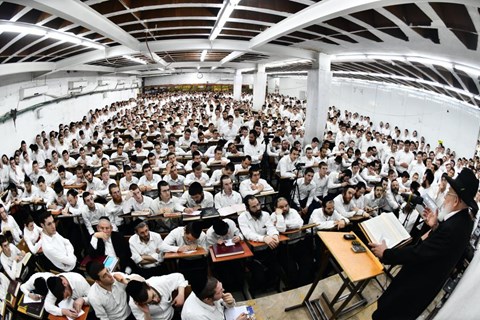 Matzav2 days ago
Israel’s Attorney General Gali Baharav-Miara has informed the High Court of Justice that approximately 90,000 chareidi men are now subject to military draft enforcement proceedings, calling for additional judicial intervention to compel government ministries to implement financial penalties against yeshiva bochurim and others who have not complied with enlistment requirements.
The figures, submitted to the court Wednesday, provide a detailed picture of the growing confrontation over the military draft, with the attorney general accusing government agencies of failing to implement measures previously ordered by the judiciary.
According to the submission, 110,330 Israelis had either been formally classified as draft avoiders or were subject to advanced enlistment enforcement proceedings as of September 8. Approximately 90,000 of those individuals were identified as belonging to the chareidi community.
The filing specifically identified 67,230 chareidi men who had been classified as draft avoiders or had failed to report after receiving military summonses. An additional group, representing approximately 21 percent of the overall total, was also described as chareidi, although the filing did not clearly explain why those individuals were counted separately.
Baharav-Miara argued that the government has failed to establish a comprehensive enforcement policy despite repeated Supreme Court rulings requiring action.
“Enforcement efforts across various fields are far from being fully exhausted, both in the realm of criminal enforcement and due to the absence of a coherent government policy regarding the revocation of benefits for draft-eligible individuals who fail to enlist,” the attorney general wrote.
Her office is asking the High Court to issue further binding instructions requiring government ministries to implement economic restrictions that have been discussed or ordered in previous proceedings.
Among the measures under consideration are the cancellation of municipal property tax discounts, known as arnona reductions, and subsidized public transportation fares for individuals who have not resolved their military draft status.
The attorney general’s representatives also addressed subsidized after-school programs, which provide substantial financial assistance to families with young children.
According to the court submission, the Attorney General’s Office has instructed the Education Ministry to terminate certain after-school subsidies for families of draft avoiders beginning January 1, 2027.
Education Ministry Director General Meir Shimoni has reportedly maintained that implementing the measure is not feasible under the current arrangements.
Legal officials argued that removing the subsidies could exert considerable financial pressure because the benefit may exceed 1,000 shekels per month.
The filing characterized the proposed restrictions as financial incentives intended to increase enlistment rather than criminal punishments.
However, the proposed measures have encountered resistance and administrative delays within several government ministries.
Transportation Minister Miri Regev and Interior Ministry Director General Yisrael Uzan were identified in reports concerning the submission as officials whose ministries have not completed the steps necessary to implement certain restrictions.
The Attorney General’s Office contends that those delays have prevented the government from carrying out the court’s instructions.
The latest submission also included updated figures concerning actual military enlistment among chareidi men.
According to the IDF’s counting methodology, 4,298 chareidi men enlisted during the recruitment year ending in June 2026, compared with 2,811 during the preceding year.
That represents an increase of approximately 53 percent.
The attorney general acknowledged the increase but maintained that enlistment remains substantially below the military’s manpower requirements.
Professional assessments cited in the filing attributed the rise partly to the expansion of military programs designed for chareidi recruits and to increased enforcement activity.
The new figures arrive amid continuing disputes over the arrest of yeshiva bochurim who have not reported to military recruitment offices.
Earlier this week, 42 chareidi travelers were detained at Ben Gurion Airport during a Military Police operation targeting individuals returning to Israel from the United States.
Forty of those detained were subsequently released after making commitments concerning their enlistment status.
Prime Minister Binyamin Netanyahu criticized the operation, describing it as a “deliberate attempt to harm the process of drafting Haredim without coercion.”
The arrests drew sharp criticism from chareidi representatives and contributed to renewed demonstrations against the military draft.
The broader enforcement campaign has also been complicated by disagreements between the IDF and Israel Police concerning responsibility for conducting arrests and providing sufficient personnel.
Recent military figures indicate that although tens of thousands of individuals have been classified as draft avoiders, only a relatively small number have been arrested or criminally prosecuted.
Military authorities have explained that criminal prosecution is subject to procedural requirements, including a lengthy period following an individual’s failure to respond to an initial enlistment summons.
The legal confrontation stems from the Supreme Court’s 2024 ruling that the government lacked a lawful basis to continue granting blanket military service exemptions to yeshiva students.
Since that decision, the Attorney General’s Office has repeatedly pressed the government to expand recruitment efforts and impose additional consequences on individuals who do not comply.
{Matzav.com}
 Matzav2 days ago
Federal prosecutors have identified Rep. Ilhan Omar under a different surname in newly filed court documents, adding another development to an immigration fraud investigation examining longstanding allegations that the Minnesota Democrat married a man who was actually her brother.
In a filing submitted Wednesday to federal court in Washington, prosecutors referred to the congresswoman as “Ilhan Nur Said Elmi, a/k/a Ilhan Abdullahi Omar,” using the same surname as Ahmed Nur Said Elmi, the man she legally married in 2009 and divorced in 2017.
The designation has attracted particular attention because Omar has spent years denying allegations that Elmi is her biological brother and that their marriage was arranged to help him obtain immigration benefits. The appearance of the Elmi surname in a federal document does not, by itself, establish a family relationship or prove that any immigration laws were violated.
According to a source familiar with the investigation, Omar was born with the surname Elmi rather than Omar, raising additional questions about the identity information appearing in her immigration and citizenship records. Fox News first reported the claim concerning her original surname.
Attorney General Todd Blanche addressed the development Thursday, suggesting that prosecutors would have relied on information gathered during their investigation when identifying Omar in the court filing.
“I don’t think [Assistant United States Attorneys] would make up names,” Blanche told the New York Post when questioned about the use of the surname associated with Omar’s former husband.
“Evidence that’s collected is used in motions,” Blanche added.
The investigation is examining whether Omar submitted inaccurate personal information on federal immigration documents, including applications involving citizenship, passports, or other government records. Prosecutors and legal experts have indicated that investigators are examining potential offenses that could fall within a ten-year statute of limitations.
Authorities are reportedly considering whether the use of an alternative identity or an incorrect birth date on official paperwork within that period could provide grounds for criminal charges. No determination of wrongdoing has been established by the information publicly disclosed.
Omar has consistently rejected accusations that her marriage to Elmi was intended to circumvent immigration laws. Her office has previously characterized the allegations as baseless attacks that have followed her since her entry into Minnesota politics.
The controversy resurfaced this week when Omar appeared on MS NOW and was questioned directly about whether she had any family relationship with her former husband.
“Not to my knowledge,” she responded.
Her answer immediately drew criticism from political opponents who questioned why she had not offered a more categorical denial.
President Donald Trump commented on the exchange Thursday, suggesting that Omar’s wording was significant.
“That tells you a lot right there,” Trump said when asked about the interview.
“No, she’s — I’ve never been a big fan of her. I’ll be honest. Let’s see how it all works out. But that statement tells you a lot,” the president added.
Trump has repeatedly criticized Omar and raised the possibility of criminal prosecution over the allegations surrounding her immigration history.
The congresswoman’s latest remarks contrasted with a statement she issued in August 2016, when she was still legally married to Elmi and faced similar questions during her campaign for the Minnesota House of Representatives.
“Insinuations that Ahmed Nur Said Elmi is my brother are absurd and offensive,” Omar declared at the time.
Omar and Elmi subsequently divorced in 2017, ending a marriage that had remained the subject of controversy for years.
Before her marriage to Elmi, Omar had entered into a religious marriage ceremony with Ahmed Abdisalan Hirsi, although the couple did not legally marry until 2018. Their relationship ended the following year.
In 2020, Omar married political consultant Tim Mynett, who had previously worked on one of her congressional campaigns.
The latest revelations emerged as federal authorities continued examining the congresswoman’s immigration records and financial affairs, with investigators seeking access to documents and electronic evidence connected to the inquiry.
Washington, D.C., U.S. Attorney Jeanine Pirro’s office submitted Wednesday’s court filing in an effort to keep a federal search warrant under seal while investigators complete its execution. News organizations, including the New York Times, have sought access to the warrant.
The warrant was partially carried out on October 12, when Homeland Security Investigations agents searched Omar’s Washington residence and removed several items, including her cellphone, computer, passport, and additional materials collected in evidence boxes.
The search marked a significant escalation in the investigation, bringing federal agents directly to the home of a sitting member of Congress.
Federal authorities in Minnesota are also reportedly pursuing evidence concerning Omar’s family background and immigration history. Their efforts have included interviews with relatives and the collection of DNA evidence that investigators believe could help determine whether Omar and Elmi are biologically related.
The reported DNA collection has renewed attention to allegations that first emerged publicly during Omar’s 2016 campaign for the Minnesota Legislature.
The congresswoman has faced questions about her personal history and immigration documentation for approximately a decade. Federal authorities previously examined allegations involving her during Trump’s first administration, although no criminal charges resulted from those earlier inquiries.
Investigators are now reportedly focusing on whether Omar misrepresented information about her birth, family relationships, or immigration status in documents submitted to federal agencies.
Another issue involves the circumstances surrounding Omar’s acquisition of American citizenship following her family’s arrival in the United States as refugees from Somalia.
Omar has explained that her original birth certificate was destroyed amid the upheaval that engulfed Somalia during the early 1990s. Her family fled the country in 1991 and spent approximately four years in a refugee camp in Kenya before eventually resettling in America.
Her father, Nur Omar Mohamed, became a naturalized American citizen in 2000. Under the citizenship rules applicable at the time, Omar’s eligibility to derive citizenship through her father depended in part on whether she was younger than 18 when he naturalized.
According to the birth date currently associated with her official biography, Omar would have been 17 at the time.
However, records previously maintained by Minnesota’s legislative library reportedly listed a birth date that would have made her at least 18 when her father became a citizen, potentially affecting her eligibility for derivative citizenship.
That discrepancy became another subject of scrutiny after records showed that Omar’s congressional staff requested a correction to the legislative library’s birth-date entry in 2019, following her election to Congress.
The circumstances surrounding the original entry, the subsequent correction, and the documentation used to establish her age have become part of the broader controversy over her immigration history.
The Justice Department’s investigation has also prompted a legal dispute over how much information the public should be allowed to see while the inquiry remains active. Prosecutors maintain that releasing the warrant and its supporting materials prematurely could interfere with investigative work that has not yet been completed.
According to the government’s latest filing, the October 12 search warrant has still not been fully executed. Prosecutors have requested additional time before responding to applications seeking disclosure of the records, including requests submitted by multiple news organizations and Judicial Watch.
The investigation has drawn particular scrutiny because it involves a sitting member of Congress just weeks before the November 3 midterm elections. Justice Department procedures traditionally discourage overt investigative actions involving political candidates close to an election, although exceptions are permitted.
Additional reporting has revealed that the federal judge who authorized the search imposed restrictions on investigators’ access to certain materials because of constitutional protections covering congressional activities.
Omar, meanwhile, has maintained that she committed no wrongdoing and has accused the Trump administration of using federal law enforcement to intimidate a political opponent. She has also said she intends to move from her Washington residence following the search, citing concerns about her family’s safety.
The congresswoman has continued campaigning and recently appeared in a video requesting donations from supporters as the investigation attracts national attention.
The government has not publicly explained why prosecutors used the name Ilhan Nur Said Elmi in the court filing, and the designation alone does not establish that Omar was born under that name or that she is related to her former husband. No criminal charges have been announced.
The next major developments are expected to come from the court’s handling of the requests to unseal the search warrant, the continuing examination of immigration and family records, and any decision by federal prosecutors about whether the evidence supports criminal charges.
 Matzav2 days ago
New York City’s horse-drawn carriage industry will be eliminated by June 2028 after the City Council voted overwhelmingly Thursday to outlaw the longtime Central Park attraction, bringing an end to a tradition dating back more than 150 years and setting the stage for a major legal confrontation with carriage drivers who say the city is destroying their livelihoods without providing adequate compensation.
The legislation passed by a veto-proof margin of 40-7, with two council members abstaining, following an unsuccessful last-minute effort to delay the prohibition until 2030. The measure will prohibit horse-drawn carriage operations throughout all five boroughs beginning June 1, 2028, effectively eliminating an industry that has been part of New York City’s identity for generations.
Approximately 200 carriage drivers and owners face the prospect of losing their businesses, with many having invested substantial sums in city-issued licenses, horses, carriages, and other equipment. Their union has announced plans to challenge the measure in federal court, arguing that the city cannot eliminate the value of their businesses without providing meaningful financial compensation.
The Transport Workers Union, which represents carriage industry workers, immediately condemned the council’s decision and warned that the legislation contains serious constitutional deficiencies.
“This bill is a train wreck of constitutional and due process violations,” Transport Workers Union president John Samuelsen said in a statement.
“It offers nothing concrete for blue-collar drivers and carriage owners who will be financially crushed, stripped of their jobs, their licenses, expensive city-issued medallions, small businesses, and way of life,” he added.
“It is not progressive. It is anti-worker. It’s theft.”
The measure, known as Romanch’s Law, was named in memory of 18-year-old Romanch Mahajan, an Indian tourist who died in June following a terrifying incident involving a runaway horse-drawn carriage in Central Park.
Mahajan had been riding with his family when the horse pulling their carriage suddenly became frightened and bolted. During the incident, Mahajan was thrown from the carriage and suffered fatal injuries. His death intensified a longstanding campaign by animal rights activists and elected officials seeking to eliminate the carriage industry.
His family subsequently called on city officials to prohibit the rides, arguing that earlier efforts to ban the industry could have prevented the tragedy.
“If [the prior legislation] had passed, the carriages would have stopped on June 1, 2026 — Romanch died on June 17,” his father, Deepak Mahajan, told a City Council hearing in July.
“This was not an unpredictable accident. Let his death not be in vain,” he added.
The fatal accident followed years of controversy surrounding the treatment of carriage horses, including several highly publicized incidents in which animals collapsed or died while working in the city. Animal welfare organizations have repeatedly argued that forcing horses to operate amid traffic, noise, extreme temperatures, and crowded streets is dangerous for both the animals and the public.
The latest legislative effort gained decisive momentum earlier this month when Mayor Zohran Mamdani and City Council Speaker Julie Menin reached an agreement to support the industry’s elimination. Both cited public safety and animal welfare concerns in backing the measure.
The agreement succeeded where previous administrations had failed. Former Mayor Bill de Blasio had pledged to eliminate horse-drawn carriages shortly after taking office, but his effort collapsed amid opposition from labor unions, carriage operators, and supporters of the longstanding tourist attraction. His successor, Eric Adams, also considered restrictions and a possible ban but never secured the necessary political support.
Thursday’s vote marked a dramatic reversal for an industry that had survived repeated attempts to remove it from Central Park.
Under the legislation, existing carriage licenses will expire at the end of May 2028, and the city will no longer permit the industry to operate. The measure also requires the Mamdani administration to develop a transition plan by April 1, 2027, outlining employment assistance and possible financial support for affected workers and business owners.
That plan is expected to include job placement assistance, career counseling, educational opportunities, and potential employment in the transportation and hospitality industries. However, the legislation does not guarantee that carriage operators will receive compensation for the value of their businesses, licenses, or equipment.
That omission has become a central point of contention for workers who say their entire financial futures are tied to the industry.
Some carriage medallions have been purchased for hundreds of thousands of dollars, and owners fear those investments will become worthless once the prohibition takes effect. Many drivers are immigrants who have spent decades establishing their businesses and have few comparable employment opportunities available to them.
Longtime carriage driver Atakan Aktay recently challenged Mamdani over what he described as an inconsistency between the mayor’s previous support for struggling taxi medallion owners and his current position toward carriage operators.
“Before you became mayor, you participated in a 15-day hunger strike to support yellow taxi medallion owners facing financial ruin,” Aktay said last week. “Now you are mayor, and we face the prospect of losing our businesses without guaranteed compensation.
“Where is that same compassion for us? How can you fight for one group of medallion owners while allowing another group to face financial devastation? To us, that feels hypocritical and humiliating,” Aktay added.
Other drivers have questioned why City Hall has singled out horse-drawn carriages while allowing electric bicycle delivery workers and pedicab operators to continue operating despite frequent complaints about dangerous driving and traffic violations.
Industry representatives have also maintained that carriage horses are already subject to extensive regulations governing their working hours, veterinary care, rest periods, and exposure to extreme weather. They argue that the city could strengthen enforcement of existing protections rather than eliminate the industry altogether.
The union has indicated that it intends to seek a temporary restraining order against the legislation, arguing that the prohibition violates constitutional protections against the taking of private property without just compensation.
Attorneys representing the union have specifically challenged the loss of valuable city-issued medallions and the restrictions that would prevent owners from selling their horses to other carriage businesses.
The city’s Law Department has expressed confidence that the legislation can withstand a legal challenge.
President Donald Trump also weighed in on the controversy Thursday, criticizing the decision to eliminate an attraction he described as a “Great Tradition.”
Trump questioned the reasoning behind shutting down an entire industry because of a tragic accident, arguing that similar logic could be applied to other forms of transportation involved in fatal incidents.
His comments added a national political dimension to a controversy that has divided New Yorkers over animal welfare, public safety, workers’ rights, and the preservation of the city’s historic character.
Meanwhile, questions remain about the future of the horses currently used by carriage operators. Although the legislation requires humane treatment and prohibits selling or transferring the animals for slaughter or use in another horse-drawn carriage business, it does not establish a fully funded program to relocate them.
Animal welfare organizations have proposed sending the horses to rescue farms and sanctuaries throughout the country, where they would no longer be used for commercial carriage rides. Several organizations have already expressed willingness to help arrange placements.
The animal rights group NYCLASS, which has spent years campaigning against the industry, celebrated the council’s decision as a major victory.
“New York City is finally ending deadly horse carriage rides,” the organization declared following the vote.
“We will work with the administration to ensure the horses retire to safe, loving rescue farms where they can finally run free.”
{Matzav.com}
 Matzav2 days ago
Congressman Mike Lawler received the endorsement of the Skverer Rebbe and the leadership of the Skverer kehilla during a visit to New Square on Wednesday, adding another prominent chassidishe endorsement to his reelection campaign in New York’s 17th Congressional District.
Lawler met with the Rebbe on Wednesday afternoon, October 21, as candidates across Rockland County continued meeting with rabbonim and communal leaders ahead of the November 3 elections.
Following the meeting, the Skverer kehilla’s leadership confirmed its support for Lawler’s bid for another term in Congress.
The endorsement comes during a closely watched congressional contest between Lawler, a Republican seeking his third term, and Democratic challenger Cait Conley.
The 17th Congressional District includes significant portions of Rockland and Westchester counties, where the frum community represents an important constituency.
Lawler has maintained relationships with Orthodox Jewish communities throughout his time in Congress, frequently addressing concerns involving antisemitism, Israel and issues affecting religious institutions.
His campaign has emphasized his record on combating antisemitism and supporting Israel, while Conley has criticized aspects of the Trump administration’s policies and Lawler’s alignment with the president.
The congressional race has attracted considerable attention because of its potential implications for the balance of power in the House of Representatives.
The Skverer endorsement follows several other announcements of support for Lawler from chassidishe communities and rabbonim in Rockland County.
Earlier this week, Rav Chaim Schabes, Rav of Knesseth Israel in New Hempstead, issued a letter endorsing Lawler, State Senate candidate Joe Rand and Assemblyman Aron Wieder.
The Viener kehilla and its mosdos in Monsey also announced their support for the three candidates, emphasizing their relationships with the community.
Separately, the Vizhnitzer kehilla and its voting committee announced endorsements that included Lawler, Rand and Wieder.
The latest meeting also comes just days after Governor Kathy Hochul visited New Square and met with the Skverer Rebbe as part of her own reelection campaign.
The Skverer kehilla previously announced its support for Hochul, reflecting the community’s practice of considering candidates individually rather than endorsing an entire party ticket.
During Hochul’s Monday visit, the governor also discussed the State Senate race with Skverer leadership, and the kehilla subsequently endorsed Joe Rand.
 Matzav2 days ago
I’m asking you personally to help. A mother of six, a righteous giyores, is suffering and urgently needs medical treatment. Her family simply cannot afford it.
Please take a moment to watch Rabbi Ari Bensoussan’s message and give whatever you can.
Let’s help this mother get the care she needs. CLICK HERE TO DONATE.
 Matzav2 days ago
A remarkable discovery in the archives of Ford Motor Company has saved Yeshivas Oholei Torah in Crown Heights an estimated $200,000 and up to eight weeks of construction-related work, after a former talmid helped locate original architectural plans for a building that the yeshiva is preparing to transform into a major new Torah campus.
The discovery came as Oholei Torah moved forward with plans to develop its new Rabbinical Campus at 402 Eastern Parkway, a historic property originally constructed by Ford in 1916 as an automobile showroom.
More than a century later, the building is being prepared for an entirely different purpose: accommodating hundreds of bochurim as the yeshiva continues to expand.
The project, which is expected to encompass more than 100,000 square feet, will include three large batei medrash, a modern mikvah, classrooms, dedicated rooms for mashpiim, a student lounge and additional facilities.
But as architects and engineers began planning the extensive renovations, they encountered a costly problem. The building’s original structural drawings were nowhere to be found.
Oholei Torah had retained New York Major as its owner’s representative and contractor, together with the architectural firm FMA, which specializes in educational facilities and has extensive experience designing yeshivos.
The team began examining the existing structure to determine how it could be adapted to meet the needs of the growing yeshiva.
Original architectural plans were essential to that process. Without them, engineers would have to conduct extensive measurements, structural testing, scanning and investigative work to determine how the building had been constructed.
The yeshiva initially hired a company to search records maintained by the New York City Department of Buildings. Although some documentation was located, the original plans were missing.
Officials then turned to the New York City School Construction Authority.
The building had been leased by the Department of Education for approximately four decades and used as a public school, raising hopes that the city’s school construction records might contain the necessary drawings.
The authority was able to provide additional documents, including plans from previous renovations, but the original structural blueprints remained elusive.
With the project facing weeks of additional investigative work and substantial expenses, an unexpected possibility emerged during a planning meeting.
Rav Mendel Blau, the yeshiva’s rosh mosad, recalled that a former classmate from his Oholei Torah bais medrash years, Shlomo Kleinman, was employed by Ford Motor Company in Dearborn, Michigan.
He mentioned the connection to Rav Yehoshua Lustig, the yeshiva’s menahel klali.
Since Ford had originally constructed the Eastern Parkway building, perhaps the company’s archives still contained its century-old architectural drawings.
Rav Lustig contacted Kleinman, who readily agreed to help his former yeshiva.
“I have such great memories of my years in Oholei Torah Beis Medrash,” Kleinman said. “It means a lot to me to play a part in preparing a new Zal for the next generation of Oholei Torah bochurim.”
Kleinman reached out to Leslie Armbruster of the Ford Motor Company Archives department and explained what the yeshiva was attempting to locate.
Armbruster began searching the company’s extensive historical records.
To the delight of the yeshiva’s construction team, the search was successful.
The original architectural drawings for the building at 402 Eastern Parkway had been preserved in Ford’s archives for more than 100 years.
“I was delighted to find the drawings of your building, and am happy to have been able to save your organization both time and money. It’s a lovely reminder of the importance of the work that my team and I do in the Ford Motor Company Archives,” Armbruster said.
The financial implications were substantial.
According to Yiddi Nussensweig of New York Major, having the original plans available will save the yeshiva approximately $200,000 and eliminate six to eight weeks of investigative work.
Although engineers will still need to conduct certain physical tests, scans and structural examinations, the newly discovered drawings provide detailed information about the building’s original construction, significantly reducing the scope of that work.
The discovery comes at a particularly important time for Oholei Torah, which has experienced significant enrollment growth.
This year, the yeshiva welcomed 540 bais medrash talmidim, an increase of 75 over the previous year.
Despite efforts to expand its existing facilities, the yeshiva was unable to accommodate more than 100 additional applicants.
The planned Rabbinical Campus is intended to address that shortage and provide sufficient space for future growth.
The yeshiva hopes to open the new campus for the 5789 school year, with the current architectural planning and design process expected to continue for approximately four more months.
Rav Lustig expressed appreciation to Ford Motor Company and the individuals who helped locate the documents.
“We are deeply grateful to Ford Motor Company for generously responding to our request and making these historic plans available to us,” he said. “We especially appreciate the support of Ford Archives and Leslie Armbruster, along with Shlomo Kleinman for helping connect us with the right team. Ford’s generosity has saved the Yeshiva valuable time and resources and helped move us closer to opening the new campus.”
The discovery has also highlighted an unusual chapter in the history of the Eastern Parkway property.
Constructed during the early years of America’s automobile industry, the building originally served Ford’s commercial operations in Brooklyn before eventually becoming a public school.
Now, the same structure is being prepared to house a major center of Torah learning.
And thanks to a former talmid who remembered his yeshiva and a Ford archivist who located drawings preserved for more than a century, the institution has avoided an estimated $200,000 in expenses as it prepares the building for its next chapter.
{Matzav.com}