
 CrownHeights.info19 minutes ago
Weekly Letter: The Education of Special Needs Children
Weekly Letter: The Education of Special Needs Children
With the beginning of the new school year – we are sharing an important letter of the Rebbe in which he gives clear principles and directives regarding the education of special needs children.
By the Grace of G-d
25th of Teves, 5741
Brooklyn, N.Y.
Dr.
Brooklyn, N.Y.
Greeting and Blessing:
Thank you very much for your letter and for the Conference kit received separately. I appreciate the trouble you have taken to report to me on the Conference and its recommendations. May G-d grant that the Conference will produce the desired fruits, even in excess of expectations. Especially as the zechus Horabim helps, particularly when the Rabim are, in this case, our Jewish youngsters.
With reference to the question at the conclusion of your letter, raised by a mother, to the effect that if the primary purpose of existence is to fulfill G-d’s commandments; and if a Jew is unable from childhood to carry out any of these commandments because of physical or mental limitations; what then is the purpose or meaning of his/her existence?
The answer to this question must be sought in the context of a more embracing general problem, of which the above is but one of many possible facets.
It should be remembered that according to the Torah itself, it is impossible for every Jew, as an individual, to fulfill all the 613 Mitzvos. Apart from mitzvos which are applicable only in Eretz Yisroel and during the time that the Beis Hamikdash is in existence, there are mitzvos which are obligatory only to Kohanim for example, while there are mitzvos which a Kohen is precluded from fulfilling. But by virtue of the fact that all Jewish people are one entity, like one organism, every individual who fulfills his or her obligations to the extent of their G-d-given capacities, share in the totality of the effort and accomplishment.
A similar principle prevails also in every human society in general, where everyone has to contribute to the common weal, though each one is necessarily limited in one’s capacities, be one a plain farmer, producing food or a scientist or inventor of farm machinery and the like. One who excels in one’s particular field of endeavor may be limited or useless in another area. Who is to say which one is more important, which one makes a greater contribution? Only harmonious collaboration and utilization of all human resources make for the utmost completeness and perfection of the society. As for the individual, all that need be said – as indeed our Rabbis have emphasized, is that G-d does not demand of an individual anything that is beyond the individual’s natural capacities. It is not for a human being to question why G-d has endowed one individual with greater capacities than another individual.
To return to the subject of the correspondence, namely, the needs of the special children (or the so-called retarded or developmentally limited, as often spoken of), they are, to be sure, limited in certain areas (and who is not?), but there is no reason nor justification, to generalize all into one and the same category of “limited” or “retarded.” Human experience is replete with examples of individuals who have been severely limited in some aspects, yet they subsequently excelled and made great extraordinary contributions to society in other aspects.
I am quite convinced that if a proper system of aptitude tests were instituted, to determine the particular skills of our special children at an early age and appropriate classes were established to enable them to develop these skills, the results would be enormously gratifying, if not astounding. Needless to say, such an educational method would greatly enhance their self confidence and general development, not to mention also the fact that it would enable them to make an important contribution to society.
With esteem and blessing,

 COLlive50 minutes ago
A Night of Simcha at Boca Simchas Beis Hashoeivah
The joy of V’samachta B’chagecha filled Boca Raton on Wednesday night, 19 Tishrei, as an estimated 2,500 people came together for the second annual Boca Simchas Beis Hashoeivah, a free, community-wide event of Community, Unity and Celebration.
The evening kicked off at 5:00 PM with a Special Kids Concert featuring Rabbi B, making his South Florida debut. Children and parents alike sang, clapped and danced along, setting the tone for a night of pure simcha.
As the crowd continued to grow, Mendy J took the stage and got the dancing going, followed by Eli Marcus, who brought the energy even higher. Circles of dancing filled the grounds as families, friends and neighbors from across the community celebrated together in true Simchas Beis Hashoeivah spirit.
Admission was free for all, made possible by the generous support of sponsors and a community raffle that gave everyone a chance to be part of making the night happen.
Thank You to Our Sponsors
Gold Sponsors
Traditions South
UHP Administrators
CKids Gan Israel FL Jewish Overnight Camp
Carmela’s
Brochure Maven
לע”נ הרה”ח הרה”ת השליח ר’ שמואל יוסף ליטמאן בן ר’ אברהם אליהו ז”ל פלאטקין
Bronze Sponsors
Chabad of Central Boca
Boca Raton Synagogue
Jewish Federation of South Palm Beach County
IPO Realty
Chabad of West Boca Raton
Young Israel of Boca Raton
Chabad of Parkland
Shops at Boca Grove
South Florida Jewish Academy
Chabad of East Boca Raton
Chabad Israeli Center of Boca Raton
Bash Party Rental
Lox & Bagel
Serraf Studio
Zekels Swag & Printing
A special thank you to The Diamond Lab, Yumm Sushi, Smash House, Lox & Bagel and Grill Place for donating this year’s raffle prizes.
May we all merit to celebrate next year’s Simchas Beis Hashoeivah in Yerushalayim, with the coming of Moshiach!


 COLlive1 hour ago
770 Tent Taken Down As Tishrei Guests Return Home
The Tishrei Tent at 770, which bustled with Davening, learning, Farbrengens and more every day of Tishrei, and helped accommodate the overflow crowd of thousands spending the month in Crown Heights, was taken down on Thursday.
The Tishrei Tent was never built by one person. Each year, members of the community have stepped up — some with major gifts, others with $100, $180 or whatever they could give.
That collective support is what turned 100 feet and 10 days into what stands on Eastern Parkway today.
As the Tishrei Tent marks its 10th year, organizers are asking the community to do it again.
Every gift is a piece of the tent. Every donor is part of the story.
Be part of the 10th year — and help write the next chapter at TishreiTent.com.
 CrownHeights.info1 hour ago
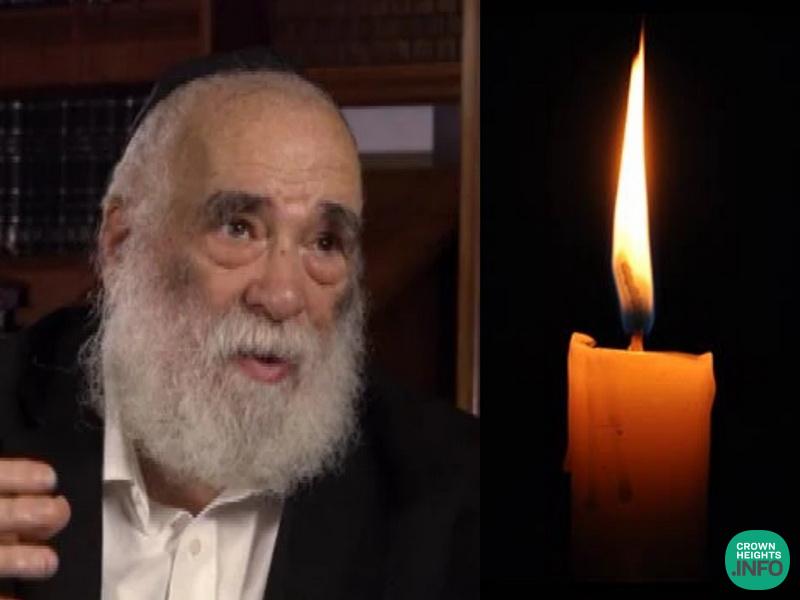
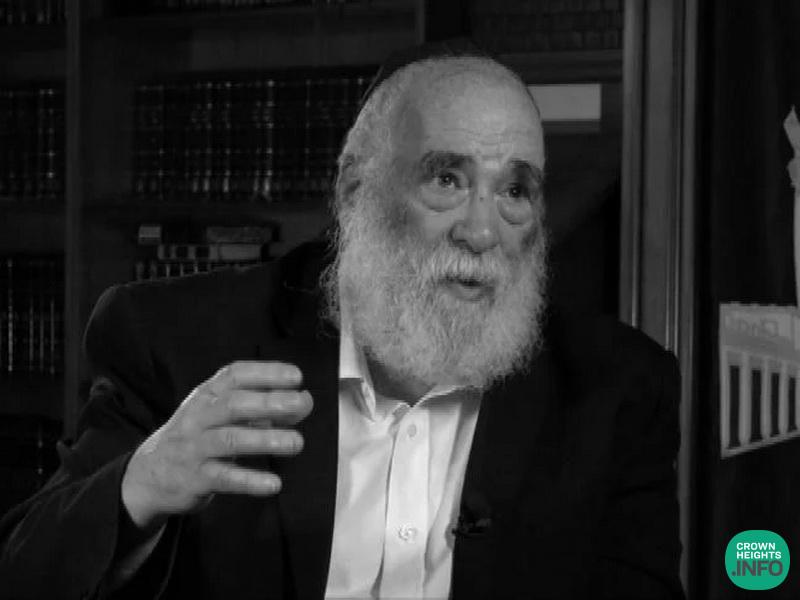
A Tribute to Rabbi Yisroel Rubin OBM, The Rebbe’s Shliach to Albany
A Tribute to Rabbi Yisroel Rubin OBM, The Rebbe’s Shliach to Albany
Author and Historian Rabbi Chaim Dalfin gives a tribute to Rabbi Yisroel Rubin OBM, The Rebbe’s Shliach to Albany for 52 years.
 COLlive2 hours ago
Philanthropist Hosts Mashpiim for Annual Sukkos Farbrengen
As he does each year, philanthropist R’ Sholom Ber Drizin hosted a special Sukkos farbrengen in Crown Heights, attended by Chabad mashpi’im, rabbonim, and community figures.
The gathering, which has become an annual tradition, brought together distinguished participants in the spirit of “Sheves Achim Gam Yachad,” celebrating Chassidic unity and friendship.
Among those in attendance were Rabbi Yekusiel Feldman, mashpia and maggid shiur at Oholei Torah and the Central Yeshiva at 770; Rabbi Shlomo Zalman Lepkivker, rov and member of the leadership of Yeshivas Chabad Tzfas; Rabbi Yosef Yitzchok Ofen, mashpia in Yerushalayim and Tzfas; Rabbi Nachman Schapiro, mashpia at Oholei Torah; and Rabbi Menachem Mendel Wilshansky, Rosh Yeshiva of Yeshivas Chabad Haifa.
Also participating were Rabbi Meir Wilshansky, Rosh Yeshiva in Tzfas; Rabbi Shlomo Benisti, mashgiach in Yeshivas Chabad Tzfas; Rabbi Chaim Hillel Springer, mashpia in Tzfas; Rabbi Boruch Kahana, mashpia in Yeshivas Tomchei Temimim Kiryat Gat; Rabbi Mendel Hendel, chairman of Eshel Hachnosas Orchim; Rabbi Dovid Nachshon, chairman of Chabad Mitzvah Tanks and Tzivos Hashem in Eretz Yisroel; Rabbi Yaakov Chazan, editor of Beis Moshiach magazine and member of Kehot’s Otzar Hachassidim editorial staff; R’ Mati Tuchfeld, Israel Hayom’s senior political correspondent; Rabbi Mendel Schneerson; and other guests.
 COLlive
Chabad Upper East Side Launches The Golden Center for 60 and Over
Related stories
 Matzav2 months ago
 CrownHeights.info2 months ago
 COLlive2 months agoCOLlive4 hours ago
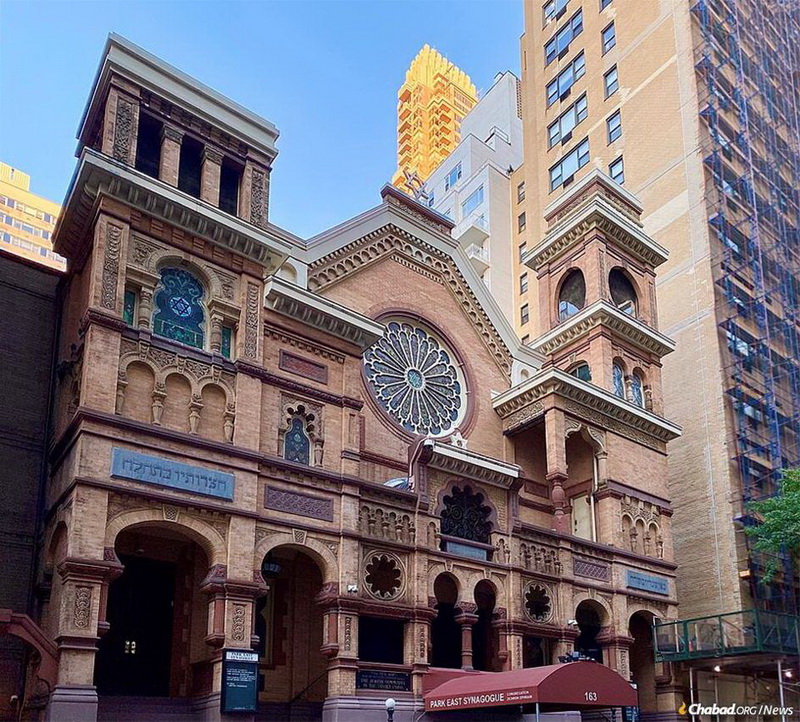
Chabad Upper East Side Launches The Golden Center for 60 and Over
More than 150 guests gathered in the Park East Ballroom on Manhattan’s Upper East Side on Tuesday evening for the launch of the Chabad Golden Center, just two days after Simchas Torah.
The Golden Center is directed by Rabbi Yaakov Krasnianski, whose work with seniors in the community laid the groundwork for the new center. The center grows that work into a full-time division, with regular programs and events for seniors across the Upper East Side.
Rabbi Ben Tzion and Chanie Krasnianski arrived on the Upper East Side with the Rebbe’s blessing in 1991. Since then, Chabad of the Upper East Side has grown into a family of divisions, each serving a different stage of life: young families and Hebrew School, CTeen for teenagers, a college students’ program, and a young professionals’ division, along with Friendship Circle for those with special needs, the Hebrew-speaking community and the Chabad Care hospital network. The Golden Center, serving adults 60 and over, is the latest step in building one community where every member has a place.
The center will run all of its programs at Park East Synagogue, as part of Chabad’s expanding partnership with the synagogue.
The evening was held in collaboration with the Park East Sisterhood and hosted by Donna Pressman, Claudie Tanenbaum and Carla Rothman. Event planner Sara Rabbani oversaw the evening’s setup, décor and catering.
After dinner and time to mingle, Park East board member Edward Tanenbaum welcomed the guests and introduced Rabbi Yaakov Krasnianski. Rabbi Ben Tzion Krasnianski spoke next, reading a letter of the Rebbe before addressing the guests.
The program also included remarks from Donna Pressman, a longtime friend and supporter of Chabad of the Upper East Side; Claudie Tanenbaum, president of the Park East Sisterhood; and Mrs. Chanie Krasnianski. Community member Richard Seaman gave a special musical performance.
“There is surely no need to emphasize to you at length that retiring—withdrawing oneself from active service—can only apply in such matters as business, employment, and the like. It cannot apply, of course, to a lifetime service which is related to Hashem. This Shlichus is, in the words of our Sages, ‘I was created to serve my Creator.'”
— The Rebbe
Related stories
Matzav2 months agoCrownHeights.info2 months agoCOLlive2 months ago COLlive
Rambam In-Depth: Why a False Weight Is Forbidden Even as a Chamber Pot
Related stories
COLlive5 hours agoRambam In-Depth: Why a False Weight Is Forbidden Even as a Chamber Pot
Rabbi Heschel Greenberg has launched a new series of classes on the Rambam’s Mishneh Torah in response to the Rebbe’s call to learn at least one halacha in depth.
The Rebbe initiated a major effort to unite all Jews with the study of the entire encyclopedic work, Mishneh Torah, by learning three chapters a day and completing the entire work in less than a year. Alternatively, one can learn one chapter and complete the entire Mishneh Torah in close to three years. The Rebbe also gave a third option to study Maimonides’ companion work, Sefer Hamitzvos that parallel the Mishneh Torah.
In addition, the Rebbe requested that we learn one halacha in depth.
We recently began the 46nd cycle of Mishneh Torah which inspired Rabbi Greenberg to record brief classes on selected passages of the Mishneh Torah.
Rabbi Heschel Greenberg is a shliach of the Rebbe in Buffalo NY and the Director of the Jewish Discovery Center, and, for over 50 years, has taught thousands of classes on all aspects of Jewish knowledge.
Rabbi Greenberg has also authored dozens of works on diverse subjects including several volumes of commentary on the Mishneh Torah.
Many of Rabbi Greenberg’s classes can be accessed on his website rabbigreenberg.com.
The Torah says “Lo yihyeh lecha b’kischa” — you shall not have two sets of weights in your pocket. The Rambam rules that anyone who keeps an imperfect weight or measure in his home or store violates a negative commandment, even if he turns it into a chamber pot. The reason: someone who doesn’t know it’s defective may come along and measure with it in a sale. Yet the Rambam also rules there are no lashes for this lav, because no action is involved.
That short halacha opens a rich discussion. Is the chamber-pot ruling a rabbinic decree (Minchat Chinuch) or Torah law (the Alter Rebbe and other Rishonim)? If buying chametz on Pesach earns lashes because purchase is an action, why doesn’t buying a false weight? And what does it mean for the Torah itself to forbid one thing because it might lead to another?
Related stories
 COLlive6 hours ago
NYC Sanitation to Collect Schach in Crown Heights on Recycling Days
Following the Sukkos holiday, the New York City Department of Sanitation (DSNY) has announced special collection instructions for the disposal of Schach.
This year, the department is handling the Schach collection a little differently. Instead of a dedicated pickup, DSNY will collect Schach materials on regular neighborhood recycling days.
Residents of Crown Heights are asked to place their Schach out on the curb on their designated recycling day—either this Shabbos, next Shabbos, or on the corresponding weekday if their recycling schedule falls during the week. Since different blocks have different recycling schedules, residents should follow their usual routine for putting out recycling.
Importantly, the Sanitation Department has specified that Schach should be placed in clear plastic bags, not in black garbage bags. This allows crews to recognize that the contents are natural, recyclable materials—such as leaves, bamboo, or palm branches. Bags that are opaque may be mistaken for regular trash and left behind.
In previous years, residents were advised to bundle their Schach with rope before placing it outside. This year’s clear-bag requirement is intended to streamline pickup and ensure that all organic material is properly composted or recycled.
Community members are reminded to keep sidewalks clear and to place all materials neatly at the curb for collection.
Special thanks to Uri Fraenkel from the Mayor’s office for organizing the Schach pickup for the community.
CrownHeights.info6 hours agoBaby Girl!
Shmuly and Geula (nee Katzman) Gniwisch from Houston, TX had a baby girl!

 CrownHeights.info6 hours ago
Vinnytsia Welcomes New Torah Scroll During Sukkot
Vinnytsia Welcomes New Torah Scroll During Sukkot
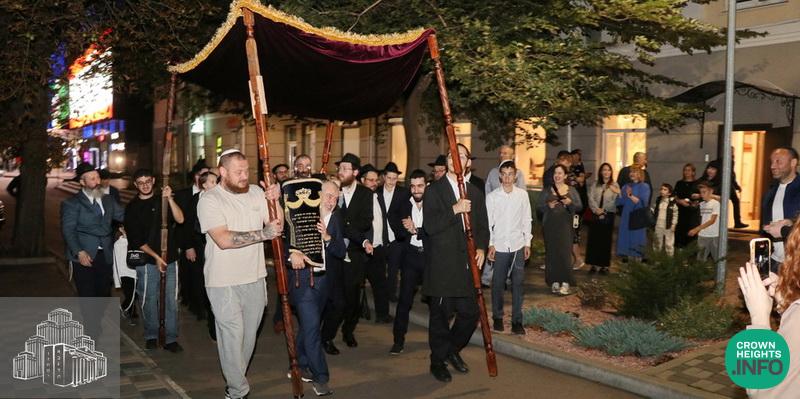
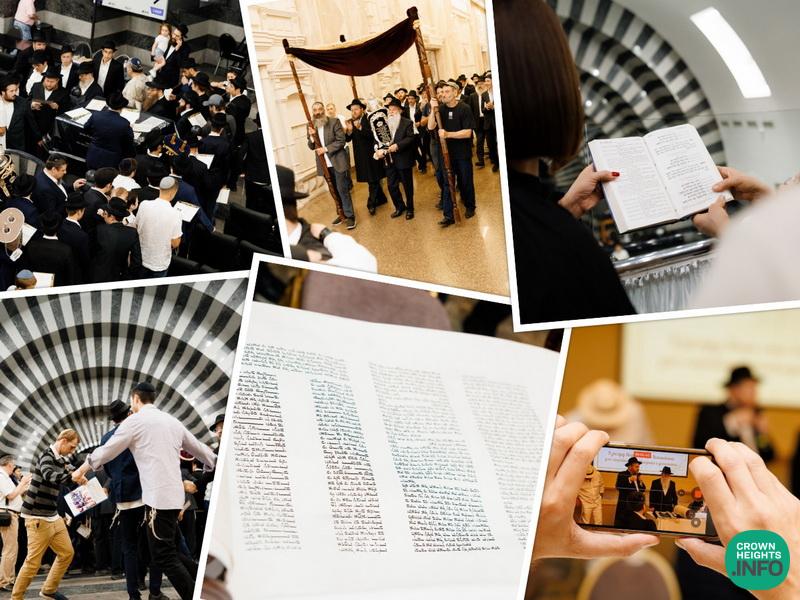
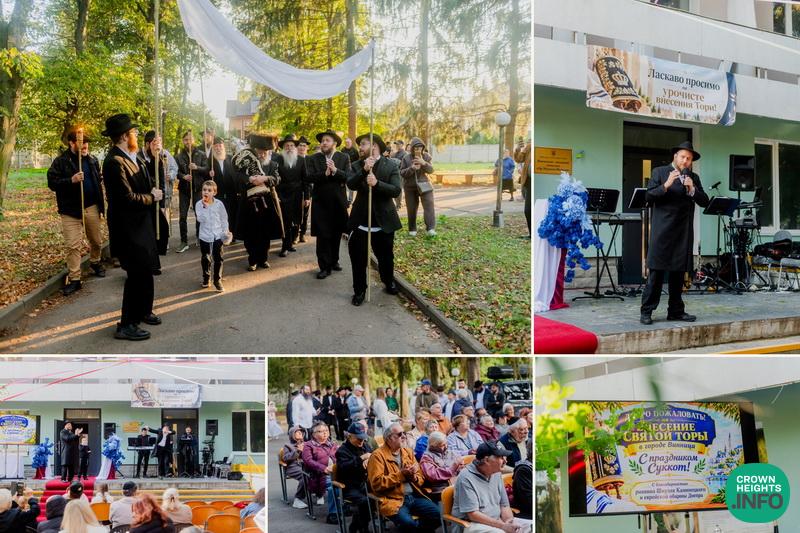
Members of the Jewish community of Vinnytsia, Ukraine, together with guests, rabbis and dignitaries, gathered during Chol Hamoed Sukkot for a moving celebration marking the dedication of a new Torah scroll to the community.
The Torah scroll was generously donated by the Jewish community of Dnipro, with the assistance of Chief Rabbi Shmuel Kaminezki. In honor of the occasion, a festive procession accompanied the Torah through the streets with torches, music, singing and dancing.
Among those who joined the celebration was Rabbi Shlomo Wilhelm, Chief Rabbi of Zhytomyr and Western Ukraine, who offered words of encouragement to members of the community, particularly displaced Jewish families who have joined the Vinnytsia community in recent years.
Rabbi Halperin and Rabbi Moshe Thaler, Chief Rabbi of Berdichev, also participated, together with additional rabbis and Chabad emissaries, as well as students of the city’s Jewish educational institutions.
Members of the Jewish communities of Zhytomyr and Berdichev, together with yeshiva students, traveled to Vinnytsia to share in the celebration. Following the Torah scroll’s arrival at the synagogue, traditional hakafot were held, with participants dancing together in honor of the Torah.
Addressing the gathering, Chief Rabbi of Vinnytsia Rabbi Shaul Horowitz quoted the teaching, “The Torah, the Holy One, blessed be He, and the Jewish people are one,” emphasizing the enduring bond between the Jewish people, their faith and the Torah.
The celebration continued with the mitzvah of the Four Species, followed by a festive meal in the community’s spacious sukkah. Each participant also received a personal souvenir — a piece of fabric from the material used to make the Torah scroll’s cover — as a lasting memento of the special occasion.
 COLlive7 hours ago
Stained Glass Window at Markham Chabad Memorializes Oct. 7
As the Jewish community marks three years since October 7, Chabad of Markham has dedicated a stained glass window that carries a message of memory, Jewish pride, and hope.
The window was unveiled during Simchas Torah celebrations on October 3. Its colorful images follow the Jewish year, with symbols including a shofar, matzah, and dreidel. At its center is an inscription that speaks to the heart of the dedication: “You will be remembered in our hearts throughout the year.”
Hundreds of community members helped bring the window to life by sponsoring individual holidays and images. Lead sponsors, friends and founding members of Chabad, Wilfred and Marcelle Krasin dedicated the window in honor of their family and in memory of all those who perished on October 7.
For Rabbi Avraham Plotkin, Spiritual Leader, Executive Director of Chabad Markham, the window is a lasting reminder that Jewish memory is woven into every part of the year. During the dedication, he reflected on the pain of October 7, the strength of the Jewish people, and the comfort found in coming together through our traditions and holidays.
Rabbi Plotkin, also spoke about the recent safe landing of a FlyDubai flight following an emergency, describing it as a moment that brought a powerful sense of protection and hope.
The Simchas Torah celebration was filled with families from the community. Under the leadership of our Young Chabad Markham families’ directors: Rabbi Sholom Ber and Itta Plotkin, hundreds of children took part in a special program, joined the Hakafot, and enjoyed an inspirational and fun children’s program. Their joyful presence brought a particular warmth to a day of remembrance and celebration.
The new window honors loved ones who are deeply missed, while celebrating the traditions that continue to sustain Jewish life. It will remain a visible reminder, throughout the year, of the community’s shared grief, enduring connection, and hope for brighter days.
 COLlive
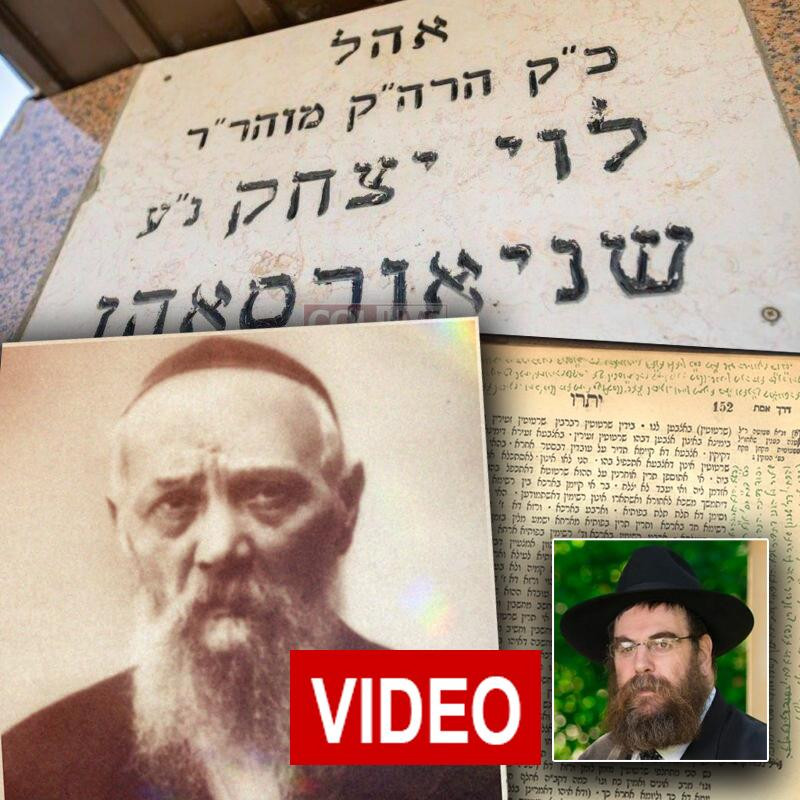
From Reb Levi Yitzchok: 3 Stages of Creation of Adam & Chava
Related stories
COLlive14 days agoCOLlive23 days agoCOLlive1 month agoCOLlive1 month agoCOLlive7 hours agoFrom Reb Levi Yitzchok: 3 Stages of Creation of Adam & Chava
Insights from Toras Reb Levi Yitzchok, a weekly class based on the teachings of Harav Levi Yitzchak Schneerson, chief rabbi of the city of Dnipropetrovsk, Ukraine, during the bloody Bolshevik revolution and the subsequent Communist oppression and father of the Rebbe.
The shiur is presented by Rabbi Dovid Dubov, Director of Chabad of Mercer County in Princeton, New Jersey, and author of Yalkut Levi Yitzchok, an anthology of commentaries collected from the works of Harav Levi Yitzchak, of blessed memory.
Organized by Irguntorah.org and aired on community news service COLlive.com.
From the Rebbe’s Father זצ״ל
Breishis
Hashem caused Adam to fall into a deep sleep, took one of his ribs..
Adam knew Eve his wife, and she conceived
2:21 – 4:1
Question
Adam and Chava were created in 3 steps, different from all creatures – why?
A) First – Adam was created
B) A Rib/Side was separated – Chava was created
C) Adam & Chava united.
לקוטי לוי יצחק בראשית ע׳ טו
Get The Weekly Shiur On Whatsapp: https://chat.whatsapp.com/Gespf7sF2KKK0opfrv3SVO
For more shiurim and podcasts visit: irguntorah.org
Related stories
COLlive14 days agoCOLlive23 days agoCOLlive1 month agoCOLlive1 month ago
 CrownHeights.info8 hours ago
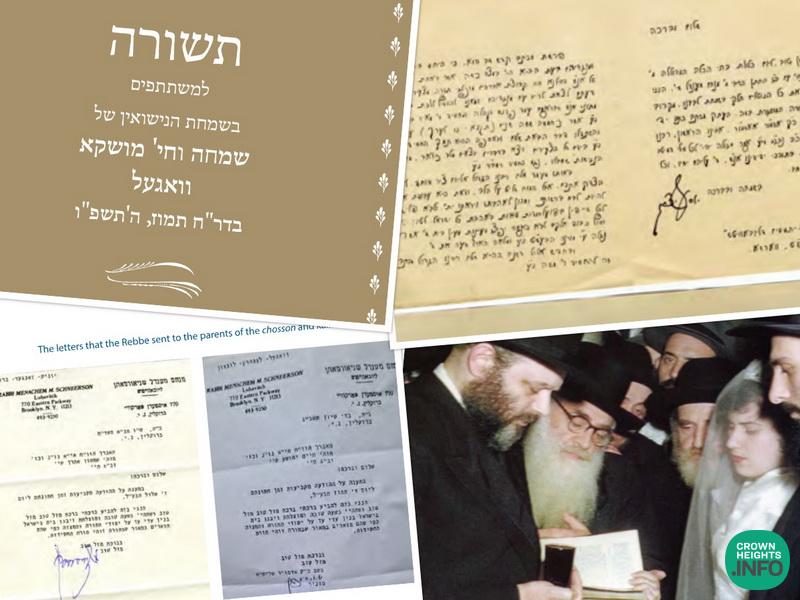
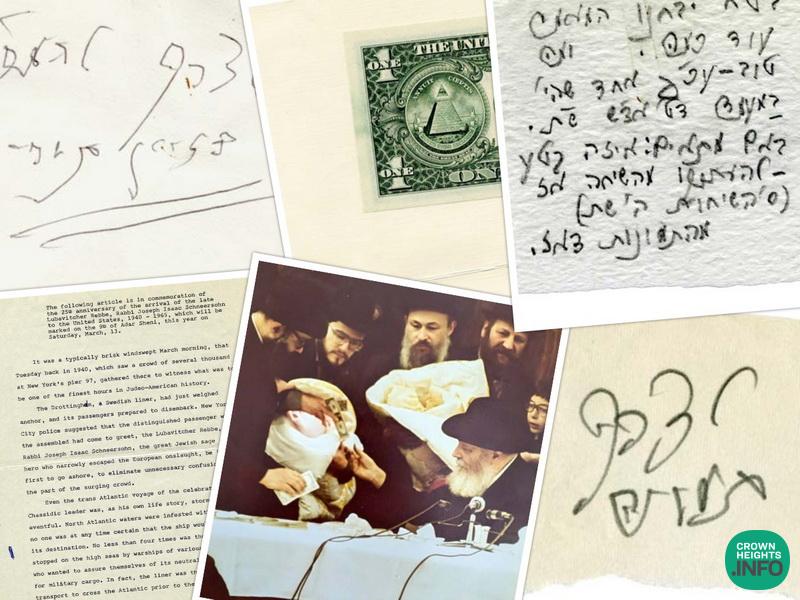
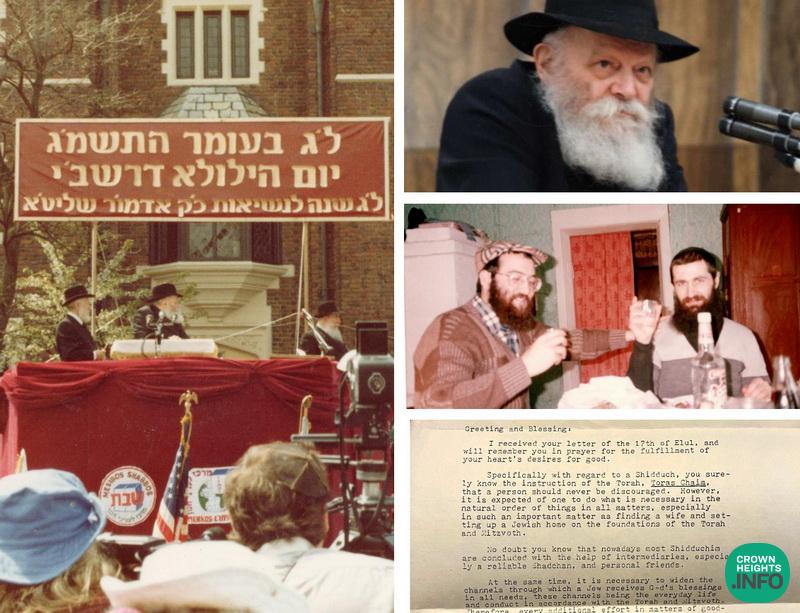
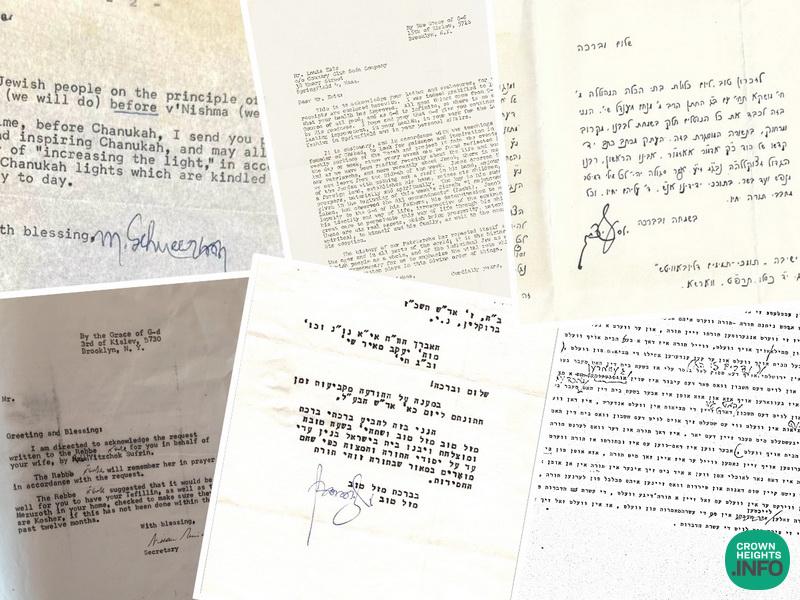
Special Tshurah Distributed At the Engel-Simon Wedding
Special Tshurah Distributed At the Engel-Simon Wedding
A special Tshurah with letters and Maanos from the Rebbe was distributed to attendees of the Engel-Simon wedding this week.
 CrownHeights.info9 hours ago
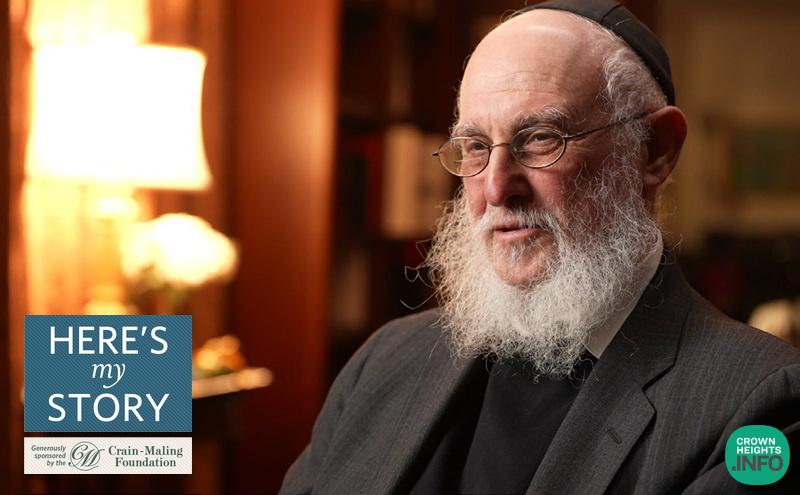
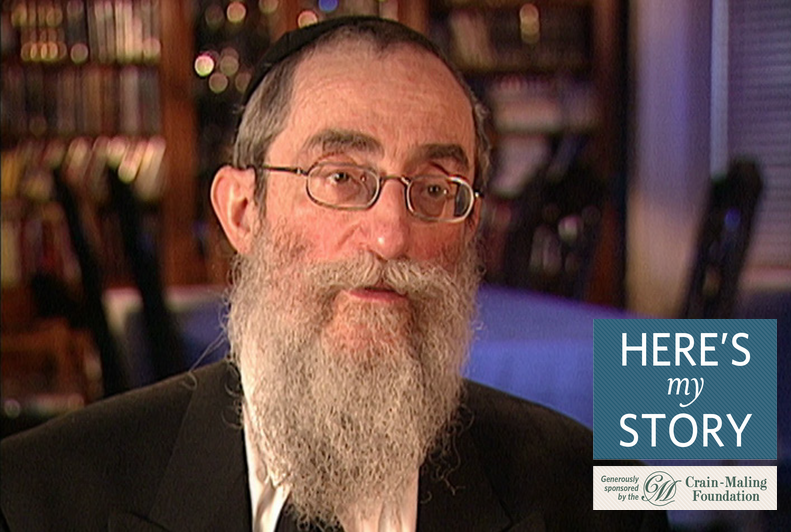
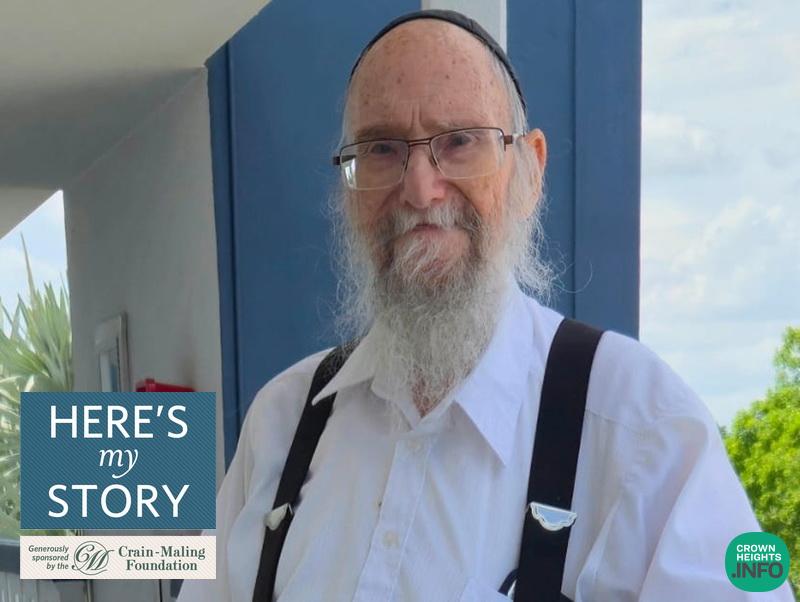
Here’s My Story: You Are Your Brothers Keeper
Here’s My Story: You Are Your Brothers Keeper
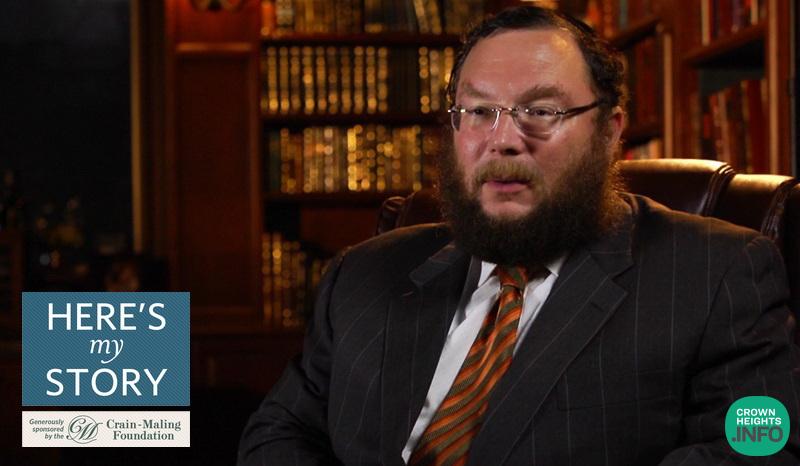
Rabbi Moshe Weiss
Click here for a PDF version of this edition of Here’s My Story, or visit the My Encounter Blog.
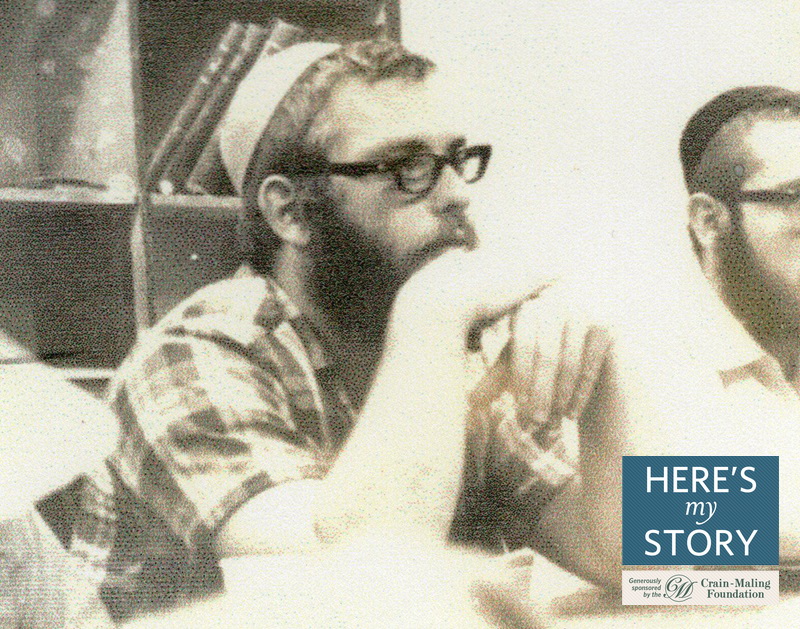
When I was fourteen, a growth was discovered at the base of my spine — an aneurismal bone cyst. Thank G-d, it was benign, but because it was in such a sensitive place, the doctors we consulted were very reluctant to risk performing a procedure to remove it. Medication and radiation therapy helped to subdue it, but eventually this cyst began to affect a nerve in my leg. I was in pain, I struggled to function, and soon I could only hobble around on crutches. The bottom line was that for nearly all of 1974, I was out of commission. Instead of studying Torah in yeshivah, I was in the hospital or in bed at my home in Los Angeles. I had been hoping to join some friends who had gone to study at the Lubavitch yeshivah on Ocean Parkway in Flatbush, New York, but it just wasn’t possible.
As the baby of the family, I didn’t fully realize just how concerned everybody around me was and how hard my parents were taking it all. Long-time supporters of Chabad activities in California, my parents had a very close relationship with the Rebbe and were in constant contact with him about my condition.
Towards the end of that year, we got some really bad news. My doctor felt that if the cyst wasn’t removed completely — by a terribly invasive operation — it would start affecting other organs.
My mother came home from the doctor crying. “I’m going to New York,” she told my father. “I’m going to the Rebbe.”
In addition to seeing the Rebbe, she also wanted to meet with a doctor at New York’s Memorial Hospital for the Treatment of Cancer and Allied Diseases, a world specialist by the name of Dr. Marcove.
My father managed to get her an appointment for an audience with the Rebbe, but although I went with her to see the doctor in New York, I decided not to join her for the audience. At fourteen years old, I already thought of myself as a full-fledged chasid, and I knew that chasidim would normally only have an audience once a year — and I had already been to the Rebbe with my father a few months prior.
But as soon as she came into the Rebbe’s office, he asked her where I was; clearly, he had been expecting me. After explaining my reason for not coming, my mother began to cry as she spoke about my medical situation.
“First of all,” the Rebbe told her, “you’re going to walk your son to the chupah.” (Years later, before I was actually about to get married, I think he even mentioned this to her: “I told you you’re going to take him to the chupah!”)
My parents had sent my medical records to the Rebbe, but he wasn’t impressed with the prognosis I had received. “Are you going to see another doctor here?” he inquired.
“Yes,” my mother answered. “Dr. Marcove in Memorial Hospital.”
The Rebbe was satisfied with this: “They have very prominent specialists there; you have nothing to worry about.” The sense he gave that everything would be fine was a blessing in its own right.
The appointment with Dr. Marcove did bring refreshing news. In contrast to the other doctor, who was actually his student, his opinion was that since the cyst wasn’t spreading, there was no reason to be concerned. All I had to do was work on strengthening my leg, which had atrophied from disuse.
My parents were obviously happy to hear this, and I was itching to go off to the Ocean Parkway yeshivah. But first my mother put the question back to the Rebbe.
“The only way I would agree for him to come to New York is if he brings me a letter from the doctor saying that it’s okay,” the Rebbe answered, before explaining why sending me to this particular yeshivah might not be a good idea: “There are a lot of steps at Ocean Parkway.”
This was true: The only way to get around the Ocean Parkway study hall and dormitory was by walking up and down some five flights of stairs. But what was remarkable — aside from the unusual way the Rebbe put himself into my parents’ position when giving his advice — was that, as far as I know, the Rebbe had never been to the yeshivah.
“On the contrary,” Dr. Markov replied when we expressed the concern about the stairs, “I want you to walk more. It will be good for you!”
He was quite a prestigious doctor, not a person you would typically have a long conversation with, but he agreed to sit down and write a letter, using my legal name: “Dear Rabbi Schneerson. My patient, Howard Weiss, is able to walk five flights of stairs. As a matter of fact, I prefer that he does.”
Steps aside, though, I didn’t acclimate well to Ocean Parkway. With the trauma of the previous year, my parents understood that they couldn’t keep me at home anymore, and I was set on going there. But whether it was because of my newfound freedom, or the cold climate, or the New York chaos, I wasn’t doing well; I was learning Torah, but not as seriously as I should have.
Before long, 1975 passed, and in the beginning of 1976, I found myself in my dormitory room, with a cold — which was really just an excuse to lay in bed and read. Suddenly the door opened, and my brother-in-law Rabbi Sholom Ber Levitin walked in. More than a decade older than me, Sholom Ber ran several Chabad institutions in Seattle and was a very busy man; he didn’t normally have time to visit and chat.
He asked me what I was doing in bed, I told him about my cold, and he walked out. That evening my older brother Yona Mordechai, who was studying in the yeshivah in 770, also came by.
“What’s this about having a cold?” he asked me. “We have to go learn Torah!”
Despite my protestations, he schlepped me down to the study hall. “I’m going to come every night,” he pledged, “and we’re going to have a little study session.” For the next few weeks, he did just that.
But it was only years later that I learned what had actually happened. The night before coming into my room, Rabbi Levitin had entered the Rebbe’s office for a private audience, intending to get the Rebbe’s guidance on some important issues in Seattle. But before he began, the Rebbe turned to him and asked, “What’s happening with your brother-in-law?”
At that moment, the question of how his wife’s brother was doing in yeshivah was probably the furthest thing from Sholom Ber’s mind.
“I want you to find out what’s going on, and get back to me,” the Rebbe told him. “And I want you to tell the older brother that he needs to pay more attention to his younger brother.”
I finally understood why my brother-in-law and my brother had come running to Ocean Parkway.
In a way, I had grown accustomed to receiving such personal guidance from the Rebbe. And yet, when I heard how the Rebbe opened that audience — one with an important emissary, involved in major communal work — by inquiring about the wellbeing of a fifteen-year-old boy who was struggling in yeshivah, it had a profound impact on me. The thought sometimes crosses my mind: Had I known at the time that the Rebbe was paying such close attention to how I was spending my time in yeshivah, I would have been transformed.
Rabbi Moshe Weiss serves as the director of Chabad of Sherman Oaks, California. He was interviewed in September 2011.
 COLlive9 hours ago
Courage, Zionism, and Holding Grief and Joy After October 7
In commemoration of October 7, From The Inside Out Podcast with Rivkah Krinsky and Eda Schottenstein recorded two timely and powerful podcasts.
In this episode, they interview Rabbi Doron Perez, executive chairman of World Mizrachi and president of the World Zionist Organization, about Jewish identity, Zionism, and faith after October 7.
Perez describes his South African upbringing, growing observance, deep Zionist family ties, and making Aliyah twice. He argues anti-Zionism that denies Jewish self-determination “between the river and the sea” is a modern metamorphosis of antisemitism, while noting some opposition stems from ignorance, and stresses Jews must develop courage.
He recounts how his sons Yonatan and Daniel fought at Nahal Oz; Yonatan was wounded and Daniel was killed on October 7 and taken hostage. He explains the family’s decision to proceed with Yonatan’s wedding while Daniel was missing, and his teachings on living with pain without escaping it, yearning as ongoing connection, authentic leadership, rejecting despair, and Daniel’s motto “Im lo ani, az mi?”
In this episode, they talk to Avi and Sam Rosenfeld, who lost their son Natan, a combat engineer soldier killed in Gaza on June 29, and reflects on the rupture of Simchat Torah 2023 and October 7 for the Jewish people. They share Natan’s personality, aliyah from London to Israel when he was seven, and how his friends and community honor him through gatherings, stickers, Torah scrolls, naming newborns, and projects like a pergola in Yerucham and a flower gemach. Avi describes Natan’s death in an RPG incident that he views as involving miracles, and both parents discuss grief, resilience, and their differing relationships with emunah and Hashem, including ongoing struggle, simple faith, and gratitude. They explain why they would make aliyah again, support their son Zevi’s upcoming combat enlistment, and emphasize choosing light, doing good, and living fully in Natan’s memory.

 COLlive9 hours ago
Understanding Niggunim – A Journey Into Chabad Melodies
What exactly makes a Niggun different from an ordinary song?
Why have the Rebbeim placed such importance on Niggunim? And, how can a Niggun become a powerful tool in our Avodas Hashem?
Understanding Niggunim explores these questions and more, offering readers a structured and accessible introduction to the world of Niggunim.
The book begins by examining the essence of a Niggun and what distinguishes it from ordinary music. Rather than simply looking at Niggunim as melodies to be sung, the book explores their deeper purpose and the unique role they play in Chassidic life.
The book continues by presenting a five-step method for analyzing Chabad Niggunim, giving readers a practical framework for understanding the different melodies they encounter. The method looks at elements such as genres, composers, origins, and other characteristics, allowing readers to gain a deeper appreciation for the Niggunim they sing.
Lastly, the book turns to the teachings of the Rebbeim, featuring excerpts from their talks along with light commentary, it explores what the Rebbeim taught about Niggunim and their place in Avodas Hashem.
Whether you are someone who has always been fascinated by Chabad Niggunim, someone who wants to understand the history and background behind the melodies you sing, or simply looking for a deeper way to connect to Niggunim, Understanding Niggunim offers an opportunity to look at familiar melodies from a new perspective.
The book is designed to be both informative and relatable, making the world of Niggunim accessible to a broad audience.
As we pack up from Tishrei, ויעקב הלך לדרכו, pick up a copy so the melodies we sang throughout the month continue to resonate in a deep, meaningful and impactful way.
We all know Niggunim, this book invites us to understand them!
The book is now available in Crown Heights book stores.
It is also available for purchase online at https://a.co/d/0bUJuGfh

 COLlive10 hours ago
Ulyanovsk Jewish Community to Build Magnificent Five-Story Center
Many years of spiritual and material growth have brought the Jewish community of Ulyanovsk, Russia, to a historic milestone, with plans moving forward for a large new Jewish community center in the heart of the city.
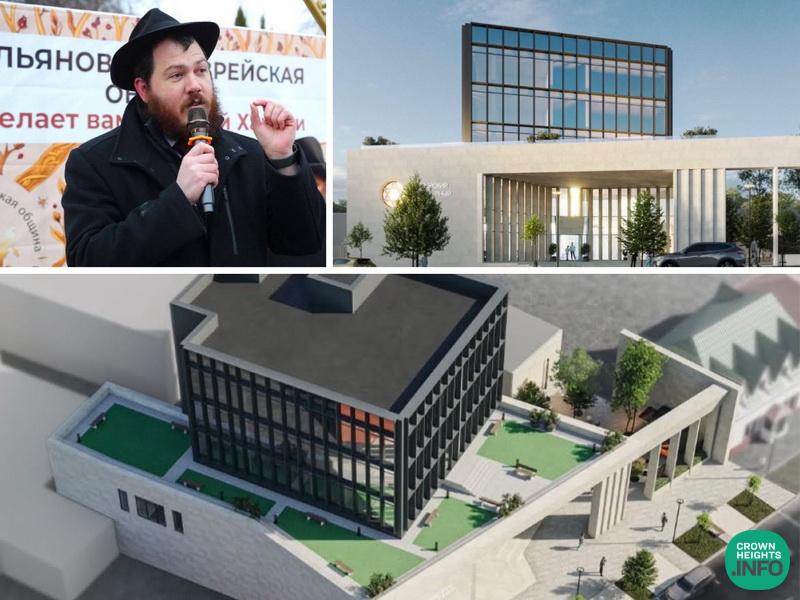
Under the leadership of the city’s Rabbi and Shliach, Rabbi Binyamin Markovitch, the community has expanded significantly, with its current building at 107 Lenin Street no longer able to accommodate its growing activities.
More than 3,000 Jews live in the region, and the existing facility has become increasingly crowded during Shabbos, Jewish holidays and community events.
Plans for a larger center date back more than a decade, with the first version of the project initiated in 5774 by the city’s previous Shliach, Rabbi Yosef Yitzchak Morozov.
A major breakthrough came on Chai Elul, when the Ulyanovsk municipality approved an expansion of the designated construction area in the city’s Leninsky district, along the central Karl Marx Street corridor.
The approval followed an extensive legal and municipal process carried out with the assistance of the Federation of Jewish Communities of Russia, under the leadership of Russia’s Chief Rabbi Berel Lazar. Special permits were secured to allow the project to move forward despite a number of bureaucratic hurdles.
Architectural plans call for an approximately 4,400-square-meter complex rising five stories, along with a large underground level that will include parking.
At the heart of the new center will be a large synagogue, alongside a mikvah built according to strict halachic standards. The building will also include accommodations for Shabbos and Yom Tov guests, a mehadrin kosher cafe and a spacious dining hall.
The dining facilities will enable the community to expand its charitable meal program serving those in need, including elderly and isolated members of the community.
A significant portion of the center will be devoted to Jewish education. Plans include a Chassidic kindergarten, Sunday school, modern classrooms and a Jewish library, as well as a dedicated area for senior citizens and a museum documenting the history and heritage of Jewish life in the region.
Community president Igor Dabakarov and synagogue gabbai Lev Zingarenko, who have been closely involved in advancing the project, said the new facility will provide badly needed space for the community’s expanding activities and enable hundreds of additional families to participate.
With the permits now secured, the community is preparing for a cornerstone-laying ceremony and the beginning of construction. The project is receiving support from the Russia 770 Fund, founded by philanthropist Rabbi Yehuda Davidov.
Organizers noted that construction costs have tripled since the project was originally planned, making support from the community and its partners especially important as work gets underway.
Rabbi Markovitch said the new center represents another step toward fulfilling the Rebbe’s vision of bringing the light of Torah and Chassidus to Jews in every corner of the world.
The community now looks forward to seeing the long-awaited center rise in Ulyanovsk, where it will serve as a permanent home for Torah, tefillah, education and chesed.
 CrownHeights.info10 hours ago
Kingston, N.Y., Jewish Center Playroom Dedicated in Memory of Ariel and Kfir Bibas
Kingston, N.Y., Jewish Center Playroom Dedicated in Memory of Ariel and Kfir Bibas
by Faygie Levy Holt – chabad.org
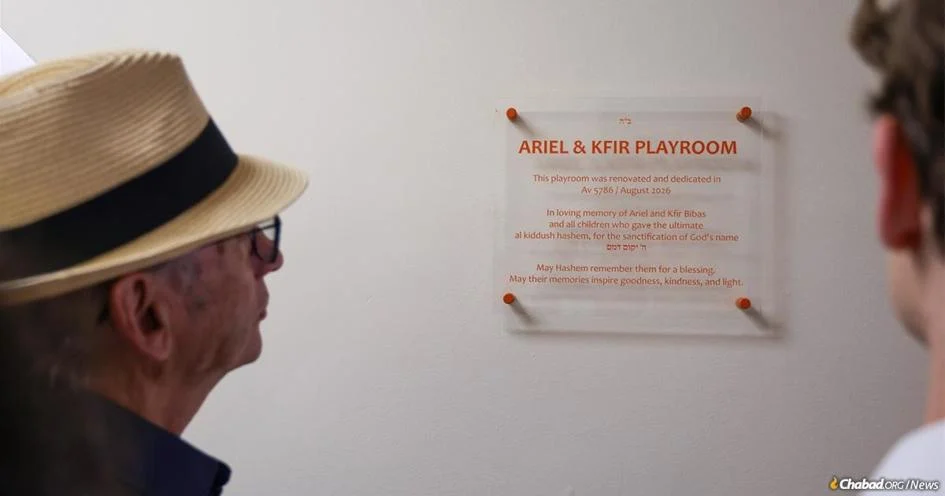
Maurice Shnaider carefully affixed a mezuzah to the doorpost of the newly renovated playroom at Chabad-Lubavitch of Ulster County in Kingston, N.Y..
The room, filled with toys and games for the Jewish community’s youngest members, is named for his great-nephews, Ariel and Kfir Bibas.
Ariel was 4 and Kfir just 9 months old when Palestinian terrorists abducted them, together with their mother, Shiri, from the family’s home in Kibbutz Nir Oz, Israel, on Oct. 7, 2023. Their father, Yarden, taken separately, was tortured for 484 days before finally being released.
That’s when he learned what the rest of the world already knew: His wife and red-headed little boys had been brutally murdered in Gaza.
Chabad of Ulster County’s Ariel & Kfir Playroom was dedicated three years after the family’s abduction, as people of faith and good will around the world mark the anniversary of the devastating attacks.
“We are remembering them with a place of light, laughter and happiness,” said Rabbi Yitzchak Hecht, who directs Chabad of Ulster County together with his wife, Leah.
Maurice Shnaider speaks at a community memorial gathering held outside of Chabad-Lubavitch of Ulster County in Kingston, N.Y., on Oct. 12, 2023. Shnaider’s sister and brother-in-law, Margit and Yosi Silverman, were murdered by Hamas terrorists in their home in Kibbutz Nir Oz, Israel, on Oct. 7. Shnaider’s niece and nephew, and their two sons, Ariel, 4, and Kfir, 10 months, are being held hostage in Gaza. Photo: Bruce Tuchman
Kingston’s connection to the family is deeply personal: Maurice Shnaider, a long time member of Chabad in the region, is Shiri Bibas’ uncle. His sister and brother-in-law, Shiri’s parents, Margit and Yosi Silverman, were also murdered in their home in Kibbutz Nir Oz that day. In the weeks that followed, hundreds of people came to the Chabad center to comfort Shnaider.
The dated playroom had been closed for some time when the Hechts decided it was time to rebuild it as a beautiful, modern space where children could connect with their heritage in a fun way.
With both Schnaider’s blessing as well as that of the Bibas family in Israel, the work got underway.
Orange is the dominant color in the room; an homage to the vibrant red hair of the martyred children that became indelibly linked with them during the year of uncertainty before it was confirmed they had been murdered in captivity.
Children are already enjoying the room, and a Mommy & Me early childhood program is set to begin there in the coming days. The room will also house Shabbat and holiday services geared towards the children of the community.
“My strongest hope is that people see, in a real and tangible way, how we can turn negative into a positive, darkness into light,” explained Rabbi Hecht. “That is what the Rebbe [Rabbi Menachem M. Schneerson, of righteous memory] taught us. So many children will get to experience the joys of Judaism in this room. Yes, it’s a memorial—but it is a memorial that is alive, just like the Jewish people.”
Before beginning the project, Rabbi Yitzchak and Leah Hecht asked the Bibas family for their blessing, which they generously gave.
 COLlive10 hours ago
TOMORROW AT 6 AM: SOMEONE WINS $200,000 — WILL IT BE YOU?
THIS IS IT!
LIVE DRAWING TOMORROW
6AM SHARP
ONLY 280 TICKETS LEFT!
TOMORROW
$200,000 CAN BE YOURS!
BUT YOU NEED TO BUY YOUR TICKET!
LAST CHANCE to buy your ticket and save lives !
 COLlive19 hours ago
Rabbi Reuven Margolin, 60, OBM
Rabbi Reuven Margolin, the head of the National Sofrus Center of Ukraine and one of the pioneers of Jewish revival in Dnipro, Ukraine has passed away on Wednesday, 26 Tishrei, 5787.
He was 60.
Reuven, a native of Dnipro, Ukraine, who returned to Jewish observance under the guidance of the Head Shliach of Dnipro – Rabbi Shmuel Kaminetzki, passed away early Wednesday morning.
With the support and encouragement of Rabbi Kaminetzki, Reuven Margolin had become the Head Sofer of the Dnipro’s Jewish Community and the director of the National Sofrus Center of Ukraine. supplying many Ukrainian Jewish communities with much needed Sifrei Torah. He established the biggest Judaica online store in Ukraine providing thousands of Ukrainian Jews with tefillin, mezuzos, Jewish books and Tashmishei Kedushah.
Rabbi Margolin has trained many Sofrim that continue his work in Ukraine, Israel and around the world. He was instrumental in bringing many members of Dnipro’s Jewish community back to their roots.
He is survived by his wife Leah Margolin (Dnipro, Ukraine), and his children R’ Daniel Aharon (Crown Heights), Sara Margolin (Montreal, Canada), Dov Ber (Dnipro, Ukraine), R’ Chaim Dovid (Eretz Yisroel), R’ Menachem Mendel (Dnipro, Ukraine), as well as grandchildren.
He is also survived by his brothers R’ Shimon Ber (S. Francisco, CA) and R’ Benyomin Hirsh (Dnipro, Ukraine).
The levaya has taken place in Dnipro on Wednesday, 26 of Tishrei
His son Daniel Margolin and daughter Sara Margolin are sitting shiva at 1617 Caroll street Thursday and Monday 2-4pm and 7-8pm.
Boruch Dayan Ha’Emes.

 COLlive21 hours ago
9th Outdoor Fair Showcases Art in Crown Heights
Beautiful paintings and portraits were showcased at 9th outdoor Geulah Jewish Art Fair on Eastern Parkway in Crown Heights on chol Hamoed Sukkos.
The event featured live music and showcased a diverse and varied collection of Jewish art. The fair was hosted by The Leviim Jewish Art Gallery Of Brooklyn, situated in Crown Heights, which boasts hundreds of paintings from around the world and North America. It proudly features the works of over 30 artists and was founded with the aim of highlighting artists and promoting creative expression within the community and beyond.
The Leviim Jewish Art Gallery is open year-round and welcomes visitors at 1089 Lincoln Place, Brooklyn, NY.
For more information visit https://Leviimart.com or on Instagram
 COLlive
Ohr Menachem Boys Spend a Day of Kedusha in Great Outdoors
Related stories
 CrownHeights.info1 day ago
 COLlive1 month ago
 CrownHeights.info1 month ago
 CrownHeights.info3 months agoCOLlive21 hours ago
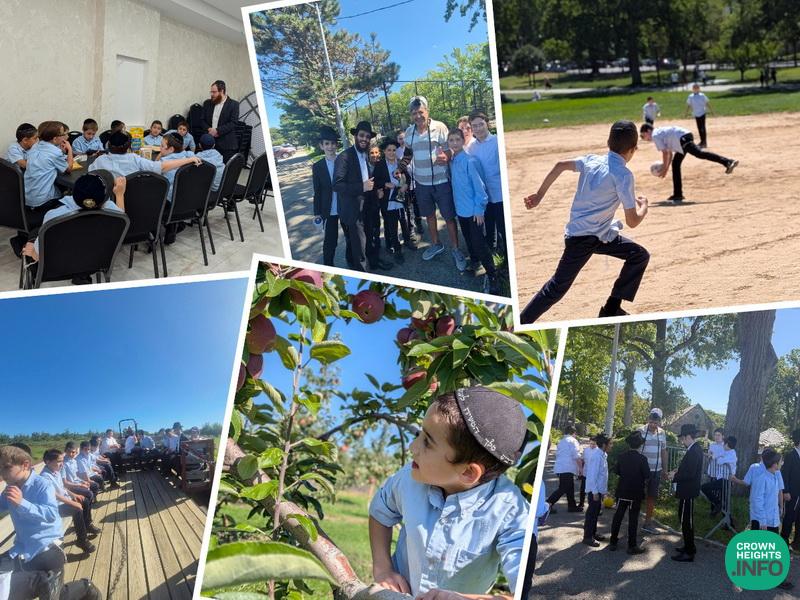
Ohr Menachem Boys Spend a Day of Kedusha in Great Outdoors
With the streets of the Shchuna filled with the annual Labor Day events, Cheder Ohr Menachem once again put the focus where it belongs—on keeping our kinderlach pure, and protecting the special kedusha and taharas hanefesh of a Yiddishe child.
Instead of taking the day off, the Cheder arranged a full day of Torah, Mivtzoim and Niflaos HaBorei. The boys left early in the morning, with some returning home only as late as 10:00 PM, after everything was completely cleared.
The day began with Shacharis at the Bukharian Shul in Queens, followed by a yummy breakfast and Shiurim with their Melamdim. The boys then headed to a local park for Mivtzoim, head and sports, before continuing to apple picking and lunch of tuna sandwiches.
The highlight of the day was a hike to the top of the mountain, taking in the dam and waterfall and seeing firsthand the “mah Rabu Maasecha Hashem.” The day concluded with a sumptuous BBQ, prepared by the talmidim of Kita Zayin.
A special Yasher Koach to the Melamdim who joined and gave of themselves throughout the day: Rabbi Dovber Brysky, Rabbi Leibel Gurevitch, Reb Aryei Eidelman and Hatomim Levi Nemirovski. A special thank you as well to Rabbi Mendel Baron, Rabbi Yehoshua Lefkovitch and Rabbi Yochanan Twerski, who joined for part of the day.
Acharon Chaviv, a tremendous Yasher Koach to the Menahalim, Rabbi Mendel Yusewitz and Rabbi Yossi Overlander, for arranging and leading the entire day with such care and mesirus nefesh.
A beautiful day of Torah, Chassidishkeit, Mivtzoim, achdus and Niflaos HaBorei—giving our kinderlach a true Yiddishe and Chassidishe experience, as we prepare to greet Moshiach Tzidkeinu מיד ממש.
Related stories
CrownHeights.info1 day agoCOLlive1 month agoCrownHeights.info1 month agoCrownHeights.info3 months ago
 COLlive23 hours ago
The Modeh Ani Card Returns for Year Two
The first prayer in the Siddur is short and simple, yet it inspires countless people each morning. The Modeh Ani Card has carried that message to thousands more.
“G-d put us in this world for a purpose,” Jessica from Sydney shared. “This beautiful card helps me remember that every morning. It’s my spiritual coffee.” Jessica is one of thousands who have committed to saying Modeh Ani daily.
The bright, energetic card features the prayer in Hebrew, English, and transliteration, making it accessible to anyone who wants to start their morning with gratitude.
Whether found at a restaurant in LA, given out by a women’s circle in Miami, or posted on social media, the Modeh Ani Card brought meaning to thousands. Many recipients shared it with friends and family, making the impact endless.
Each card comes with a brochure that holds it, making it easy to display or give away.

 COLlive1 day ago
New Torah Begun in Memory of R’ Yishai Kalachy
A new Sefer Torah was started in Crown Heights in loving memory of R’ Yishai Kalachy a”h, marking his sixth yahrzeit.
The writing began on Thursday, 6 Tishrei, at 7:45 p.m. at Anshei Moshe, located at 1334 Lincoln Place.
The event was followed by a Chassidishe farbrengen in honor of Vov Tishrei, the yahrzeit of Rebbetzin Chana, mother of the Rebbe.
The event was organized by the Kalachy, Forta and Biton families.
 COLlive
Levaya Held for Rabbi Arye Leib Prager
Related stories
 COLlive1 day ago
Levaya Held for Rabbi Arye Leib Prager
He is survived by his wife Simcha, his sons Yanky and Berel, and his daughter Devorah Leah Goldstein, all of Crown Heights, and grandchildren and great-grandchildren.
Important Notice: Per doctors’ instructions, the family strictly requests that no mention of this be made to his wife, Mrs. Prager. She has not been informed, and it could pose a severe risk to her health.
Shiva details:
858 Eastern Parkway, 2nd Floor
Hours:
9am – 2pm
5:30pm – 9pm
Shachris 1 – 9:00am
Shachris 2 – 10:00am
Mincha 1 – 6:00
Mincha 2 – 6:15
Maariv 1 – Bizman
Maariv 2 – 7:20
 COLlive1 day ago
Tomorrow: Shmili Landau and Sruly Green Bring the Energy to Brooklyn
Tomorrow night, Shmili Landau and Sruly Green take the stage together in Brooklyn. The invitation is simple: come for two hours of pure fun and enjoyment with all your friends.
Presented by SING Entertainment, “הגיע הזמן” is a Bein Hazmanim farbrengen with an ehrliche heart and a simchadike spirit. There is room for both: the feeling in the singing and the geshmak of a live show. An evening to enjoy the music and feel part of it.
With Shmili and Sruly sharing the microphones, Stehrling Banquet Hall is the place for the chevra this Thursday. The show is for men and boys, Chaim Perlowitz will be the MC, and Bussin’ Chicken has the food covered.
Coming from Lakewood or Monsey? For bussing information, call (908) 395-6527 for Lakewood or (845) 743-1292 for Monsey.
Thursday, October 8 at Stehrling Banquet Hall, 1242 37th St, Brooklyn, NY. Doors open at 8:00 PM; the show begins at 8:45 PM.
Click here to buy tickets: https://buytickets.at/singentertainment/2436110
Use coupon code: SAZIM for an exclusive discount!
 COLlive1 day ago
Lawyer Who Helped Save the Frierdiker Rebbe Honored
Benjamin V. Cohen was a New Deal lawyer who helped rescue the Frierdiker Rebbe from Nazi-occupied Warsaw. Last week, his hometown honored him with a new Indiana state historical marker.
The marker stands in the 500 block of South High Street in downtown Muncie. It was dedicated on the anniversary of Cohen’s birth. The Indiana Jewish Historical Society, led by executive director Michael J. Brown, organized the event.
Cohen was one of President Franklin D. Roosevelt’s most trusted legal minds. He helped draft key New Deal laws and the Lend-Lease program. He later helped write the Civil Rights Act of 1957.
Rabbi Dovid Grossbaum, Chabad Shliach in Carmel, spoke at the ceremony. He described Cohen as “a shy and gentle man” who “preferred to do his work behind the scenes and let others take the credit.” Rabbi Grossbaum said Cohen worked “at the time of the most open antisemitism to plague this blessed land.”
In 1939, the Rebbe, Rabbi Yosef Yitzchak Schneersohn, was trapped in Warsaw under bombardment. American Chassidim “raised money, hired a Washington lawyer, and knocked on every door they could find,” Rabbi Grossbaum said. One of those doors was Cohen’s.
“He was not a Chossid. He was not a follower of the Rebbe. He was not especially observant as a Jew, but he was a Jew and he understood what was at stake,” he said.
Cohen’s quiet diplomacy started a chain that ran from the Secretary of State to Berlin, and then to German military intelligence. It ended with Ernst Bloch, the German officer who found the Rebbe and escorted him to safety. The Rebbe arrived in New York on 9 Adar Sheni 5700 (March 19, 1940).
“Many people had a part in that rescue, but Benjamin Cohen’s was a crucial link,” Rabbi Grossbaum said. He noted that Chabad historian Rabbi David Eliezrie sees Cohen’s role as the most crucial of all.
Rabbi Grossbaum connected the rescue to the Rebbe’s work in America, including the shluchim movement later led by the Rebbe. “I am one of those emissaries,” he said. “We are living out a story that passes directly through the actions of a quiet man from Indiana.”
“Benjamin Cohen could not save the world that was destroyed in Europe,” he concluded. “But he helped save one life, and from that life grew a world he never fully lived to see. May this marker remind every person who walks by that one quiet act of courage can echo for generations.”
 CrownHeights.info1 day ago
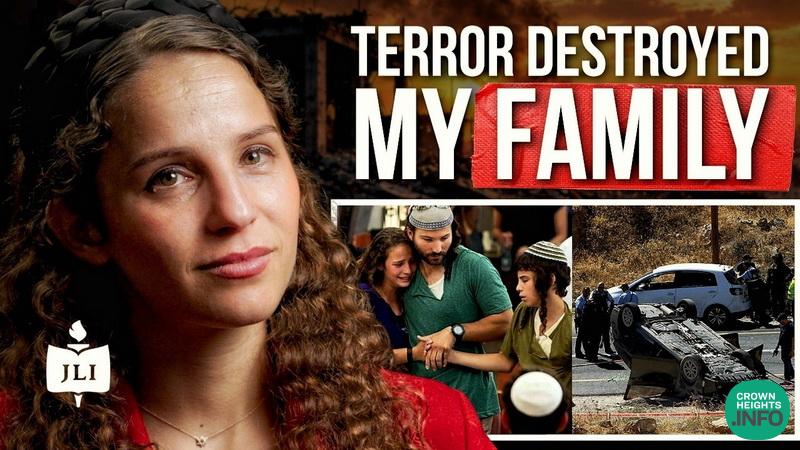
JLI: I Thought the Worst Was Over, Then Came October 7th – The Incredible Story of Orit Mark Ettinger
JLI: I Thought the Worst Was Over, Then Came October 7th – The Incredible Story of Orit Mark Ettinger
She had already experienced unimaginable loss. Then October 7th happened.
In this powerful and deeply personal story, Orit Mark Ettinger shares how terrorism and war changed her family forever.
She opens up about the pain of losing so many people she loved, the question of “Why?”, and her struggle to understand how God could allow such tragedy. Yet through that pain, she found a new sense of purpose, faith, and a determination to bring light to others.
Her story also reflects the resilience of the Jewish people after October 7th, the tragedy and hope surrounding the return of the hostages, and the strength that can emerge from unimaginable loss.
 COLlive1 day ago
800 Attorneys and Judges Discuss Conflicts of Interest Ethics
Over 800 Attorneys and Judges participated in the 20th Annual Jewish Law Symposium on Wednesday September 16th at the Birchwood Manor in Whippany, New Jersey.
The Symposium featured a lively panel discussion on the hot topic of “The Ethics of Conflicts of Interest.”
Highlighting the event was Abbe David Lowell, High-Profile Washington D.C. Defense Attorney and founder of Lowell and Associates. Rabbi Shalom Lubin, Founder of the Jewish Law Symposium & Chabad of SE Morris County moderated a panel discussion featuring Hon. Patty Scwartz, Judge, US Court of Appeals for the Third Circuit , Senator Jon M. Bramnick Esq., Founding partner of Bramnick, Grabas, Arnold & Mangan, and Rabbi Professor Michael J. Broyde, noted Scholar and Author, and Professor of Law at Emory University School of Law.
“Over the past 20 years, we have been navigating the complex topics of Ethics, Morals and Jewish Values through the lens of both civil law, Talmudic Law, and 2,000 years of Jewish ethics and wisdom. This remans the goal for this program, which was most intriguing, exciting and relevant, said Rabbi Shalom Lubin, founder of the Jewish Law Symposium.
“I find this program to be intellectually stimulating and fascinating; I love attending every year! If you come to the Jewish Law Symposium, you will walk away with a body of knowledge you will never forget!” said Event Chair Cary B. Cheifetz Esq.
The Jewish Law Symposium is a project of The Jewish Ethics Acadamy, Chabad of SE Morris County and Rabbinical College of America. For more information, please visit www.JewishLawSymposium.com or call (973) 377-0707.
 CrownHeights.info1 day ago
Registration Open for Kinus Tzeirei Hashluchim 5787
Registration Open for Kinus Tzeirei Hashluchim 5787
Registration is now open for the Kinus Tzeirei Hashluchim 5787, the weekend young Shluchim look forward to all year.
Taking place Friday through Sunday, November 6–8 (26–28 Cheshvan), the Kinus will bring together young Shluchim from around the world for a weekend filled with achdus, inspiration and excitement.
The program will feature opportunities to meet fellow Shluchim, inspiring farbrengens, exciting trips and activities, and the highly anticipated Grand Finale.
This year, there are two ways for boys to participate:
In-Person Kinus in Crown Heights:
For boys in grades 4–8, the in-person Kinus will take place in Crown Heights.
A Taste of the Kinus — Virtual:
For boys in Pre1A through 5th grade, a virtual program will allow young Shluchim from anywhere to experience a taste of the Kinus.
Registration is available at portal.youngshluchim.org, while full details, deadlines and additional information can be found at youngshluchim.org/kinus.
Families are encouraged to register by October 21 to receive the subsidized rate. Registration closes on Thursday, October 29 (18 Cheshvan).
For questions, call 718-221-0500 ext. 0 or email [email protected].
 CrownHeights.info1 day ago
Can Hatzalah Find Your Home?
Can Hatzalah Find Your Home?
In an emergency, every second matters.
Take a moment today to step outside and look at your home from the street. Can you clearly see your house number? Is it large enough and well-lit enough to be easily identified—especially at night?
If you can’t see your address clearly, Hatzalah may not be able to either.
When emergency responders are rushing to your home, a clearly visible address can save precious time and help them get to you faster. Don’t assume they will know which house is yours.
Take a look today. If your address isn’t clearly visible from the street, consider adding a large, easy-to-see address sign.
One option to consider: Click Here!
Check your address. Make it visible. It could make a difference when every second counts.


 CrownHeights.info1 day ago
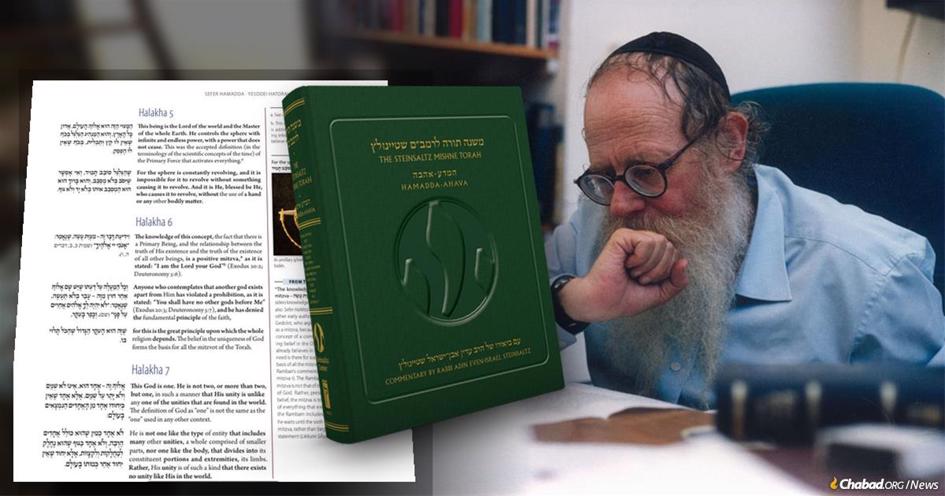
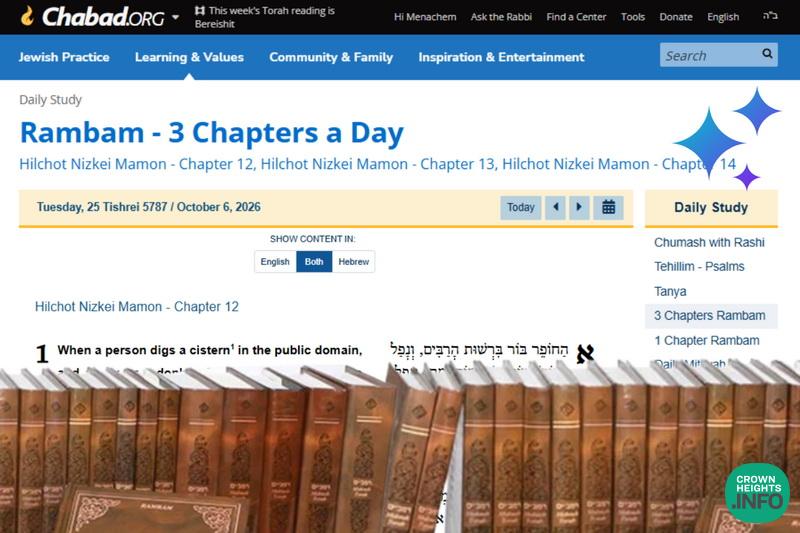
The Most Accurate Online English Rambam Is Powered by AI!
The Most Accurate Online English Rambam Is Powered by AI!
Learning Rambam online just got even better.
Nearly 20 years ago, in 2009, Chabad.org digitized and published the English edition of the Rambam’s Mishneh Torah, translated and elucidated by Rabbi Eliyahu Touger and graciously made possible by Moznaim.
Publishing the Rambam online proved challenging in that era. The original online publication was not complete. Due to the process of conversion from print to digital, it contained some errors, and swaths of the extensive notes and explanations were missing. It included some, but not all, of Rabbi Touger’s thousands of extensive notes and commentary.
Just before yom tov, in partnership with Chayenu, Chabad.org has digitized the remaining notes and published them online.
The Rambam was famously concise when he composed his 14-volume compendium, which encompasses the entirety of Talmudic and Midrashic law. The notes thus provide readers with crucial background and context, as well as scholarship and commentary from Geonim and Rishonim. Having them all online means that a text that was sometimes too cryptic to be understood has now been exposed in all its original glory for the English student.
This project employed multiple rounds of AI-powered review, coupled with our team combing the text for errors, inconsistencies, and other idiosyncrasies. In all, over eight thousand minor and major fixes were implemented, each of which contributed to our effort to make the text as accurate, readable, consistent, and reliable as possible.
“As many and great as these improvements are, we recognize that there is always more to do,” says Rabbi Meir Simcha Kogan, director of Chabad.org. “We are now in the process of reviewing and evaluating yet another round of edits, which we expect to release, G-d willing, in the coming weeks.”


 CrownHeights.info1 day ago
Information to be Menachem Avel Rabbi Chaim Levinson
Information to be Menachem Avel Rabbi Chaim Levinson
Rabbi Chaim Levinson will be sitting Shiva in Crown Heights following the passing of Yanky Levinson OBM.
Shiva will take place at 467 Brooklyn Ave.
Shiva Times:
Wednesday and Thursday: 10:30am -1:30pm, 5:30pm – 9:00 pm
Friday: 10:30 am -1:30 pm
Shacharis: 9 am
Mincha: 6:10 pm
Maariv: 7:10 pm




 COLlive1 day ago
A Proven Torah-Based System for Real Transformation
TIME IS RUNNING OUT — STARTING ON SUNDAY!!! A ground-breaking program for genuine personal transformation. No hacks. No shortcuts. Just a clear, guided path to your truest self.
Combining timeless Torah wisdom with cutting-edge technology, Journey to a Blessed Life offers a proven, structured system to help you move forward and step fully into the life you were created to live.
“It’s life-changing… This can make such a difference. Give it a try… See what a different person you can become.”— HaRav Yitzhak Berkowitz, shlita
Discover this one-of-a-kind journey at – CLICK HERE.
 COLlive1 day ago
77 Shidduchim, 77 New Beginnings
As Tishrei is behind us and we begin the new year, we are taking a moment to look back with tremendous gratitude at the past year at The Shidduch House.
Since last Rosh Hashanah, our incredible team of shadchanim has made a combined 77 shidduchim!
Behind every one of those 77 shidduchim are two people, two families, and countless hours of brainstorming, phone calls, conversations, follow-ups, encouragement, and caring. These numbers represent much more than statistics — they represent 77 possibilities, 77 new beginnings, and 77 potential Jewish homes.
We are so deeply grateful to each and every one of our shadchanim. Thank you for giving your time, your energy, your creativity, and most importantly, your heart. Thank you for continuing to make calls, think outside the box, revisit ideas, and never give up.
Every suggestion matters. Every phone call matters. Every conversation can be the one that changes someone’s life.
We are incredibly proud of what our team has accomplished this year, and we are excited to look ahead.
Our hope for the coming year is to double our success — to reach even more singles, make even more connections, and help create even more Jewish homes.
But before we look toward the next goal, we want to stop and say:
Thank you.
Thank you to every shadchan who put in the time.
Thank you to everyone who brainstormed, called, followed up, and cared.
And thank you to everyone who believed that one more suggestion could be the suggestion.
May we continue to see tremendous siyata d’Shmaya, and may this coming year bring many, many more shidduchim, engagements, and beautiful Jewish homes.
77 this year.
With Hashem’s help, 154 next year!
Wishing everyone a כתיבה וחתימה טובה and a year filled with good news and simchos.
 COLlive1 day ago
Lighthouse ELC Off to an Amazing Start This School Year
The new school year at Lighthouse ELC is officially off to a wonderful start. From the moment the students arrived on day one, the building was filled with genuine excitement, big smiles, and a great energy that set the tone right away.
There was zero hesitation getting into the routine. The children jumped straight into the swing of things, eager to explore their classrooms, catch up with friends, and connect with their teachers. In just the first few days, they are already deeply engaged in creative projects, hands-on play, and new learning activities.
It has been inspiring to see how quickly the kids adjusted and how much enthusiasm they bring through the doors each morning. Between the active classrooms, new discoveries, and constant laughter, it is clear that this is going to be an incredible year of growth and joyful learning for everyone at Lighthouse ELC.
What a fantastic beginning to the school year!
About Lighthouse ELC
At Lighthouse Early Learning Center, we recognize that each child follows a distinct journey. Our team takes great pride in fostering a welcoming, supportive atmosphere where individualized guidance meets every child right where they are.
With our early learners (ages 3 to 5), our approach emphasizes core foundational growth, cultivating vital competencies such as social interaction, imaginative play, and self-expression through caring daily routines.
As children reach school age (ages 5 to 8), we transition toward structured academic progress, offering targeted support in literacy, mathematics, and reading readiness for future success. Across all classes, students benefit from direct care from certified professionals and devoted teachers, acquiring essential tools to flourish in school and beyond.
For more information:
Phone: 718-218-5528 ext 129
Email: [email protected]
Website: lighthouseearlylearning.com
 CrownHeights.info1 day ago
Chaim V’Chessed: New Yorkers in Israel – Make Sure You’re Registered to Vote
Chaim V’Chessed: New Yorkers in Israel – Make Sure You’re Registered to Vote
With the November 3 New York State general election approaching, Chaim V’Chessed is reminding eligible New Yorkers currently in Israel to make sure they are registered and able to participate in the important upcoming election.
New York has one of the largest populations of U.S. citizens living in Israel, and officials have told Chaim V’Chessed that thousands of New York residents currently in Israel may be eligible to vote from abroad.
The upcoming election includes the race for New York State Governor, along with other federal, state and local offices. Eligible overseas voters can register and request an absentee ballot through the appropriate election authorities.
Important deadline: New Yorkers living abroad who are not currently registered to vote must submit their registration by October 24, 2026 in order to vote in the November election.
If you are a New York voter living in Israel, now is the time to make sure you are registered and have taken the necessary steps to vote.
- Check voter eligibility: New York State Board of Elections FAQ
- Register to vote: Register to Vote
- Request an absentee ballot: Request a Ballot
- Track your ballot: Voter Lookup and Ballot Tracker
New York is not the only state holding important elections this year. U.S. citizens living in Israel who are registered to vote in other states should also make sure they understand their state’s requirements and deadlines for voting from overseas.
For information about voting eligibility and participation for U.S. citizens living abroad, visit the Federal Voting Assistance Program (FVAP), which provides state-specific information for overseas voters.
Chaim V’Chessed encourages eligible New Yorkers – and all U.S. citizens in Israel who are eligible to vote – to take the necessary steps now to ensure they can participate in the upcoming elections, and to share this information with family and friends.



 CrownHeights.info1 day ago
Ukraine Marks 85th Anniversary of Babi Yar Massacre
Ukraine Marks 85th Anniversary of Babi Yar Massacre
Ukrainian President Vladimir Zelenskyy was joined by Israeli Minister Ze’ev Elkin, ambassadors, Rabbanim and Jewish community representatives at a memorial ceremony for the 85th Anniversary of Babi Yar Massacre.
A special ceremony marking the 85th anniversary of the massacre of Kyiv’s Jews was held on Wednesday at the Babi Yar memorial site, attended by Ukrainian President Volodymyr Zelenskyy and senior officials and dignitaries from around the world.
Among those taking part were Israeli Minister Ze’ev Elkin, Israeli Ambassador to Ukraine Roey Rosenblit, Yad Vashem Chairman Dani Dayan, senior ministers and members of parliament from Ukraine and Germany, ambassadors from several countries, representatives of Jewish communities, and Rabbanim and Chabad shluchim from Kyiv, elsewhere in Ukraine and abroad.
The participants gathered to commemorate the Jews murdered at Babi Yar during the Holocaust.
During the ceremony, a tree was planted in memory of the victims. Harav Yonatan Markovitch, Chief Rabbi of Kyiv and Chabad shliach in the city, then recited chapters of Tehillim in memory of the Jews murdered.
In his remarks, Rabbi Markovitch stressed the importance of perpetuating the memory of those murdered at Babi Yar, while highlighting the continued existence and flourishing of Jewish life in Ukraine — precisely in the place where the Nazis sought to destroy Kyiv’s Jewish community.
 COLlive
From Caring for October 7th Victims to a Personal Battle for Survival
Related stories

 COLlive1 day ago
From Caring for October 7th Victims to a Personal Battle for Survival
Fighting for His Wife’s Life: From Caring for October 7th Victims to a Personal Battle for Survival.
After months of sacred duty and tireless dedication at Camp Shura, a rescue and identification responder faces the toughest fight of his life: saving his wife. “Relentless medical expenses have pushed us to the absolute brink.”
The morning of October 7th remains deeply etched in the collective memory as a day that changed everything. For one dedicated responder, it was the moment he was directly summoned to Camp Shura—the national center for the identification and care of the fallen.
For days on end, under unimaginable emotional and physical strain, teams worked around the clock as continuous trucks arrived carrying soldiers and civilians killed in the attacks. Working with barely a few hours of sleep over nearly five days, they performed the heartbreaking, holy task of conducting 70 to 80 funerals every single day, ensuring every individual received their final honor.
From National Duty to a Personal Crisis.
His sacred commitment to the nation’s fallen did not stop after those initial weeks, continuing through hundreds of days of service. Yet today, the man who spent months caring for others faces a critical battle at home: saving the life of his wife.
She is currently battling a severe illness that requires complex medical care. The overwhelming financial burden of ongoing treatments has brought the family to the absolute brink, threatening their ability to continue her lifesaving care.
“After hundreds of days of sacred duty caring for our nation’s fallen, I am now fighting the most critical battle of my life: saving my wife,” he shares.
Time to Step Up and Help a man who stood on the front lines for the nation during its darkest hour now urgently needs us to stand by him. This is our moment to step up, lend a hand, and help save her life.
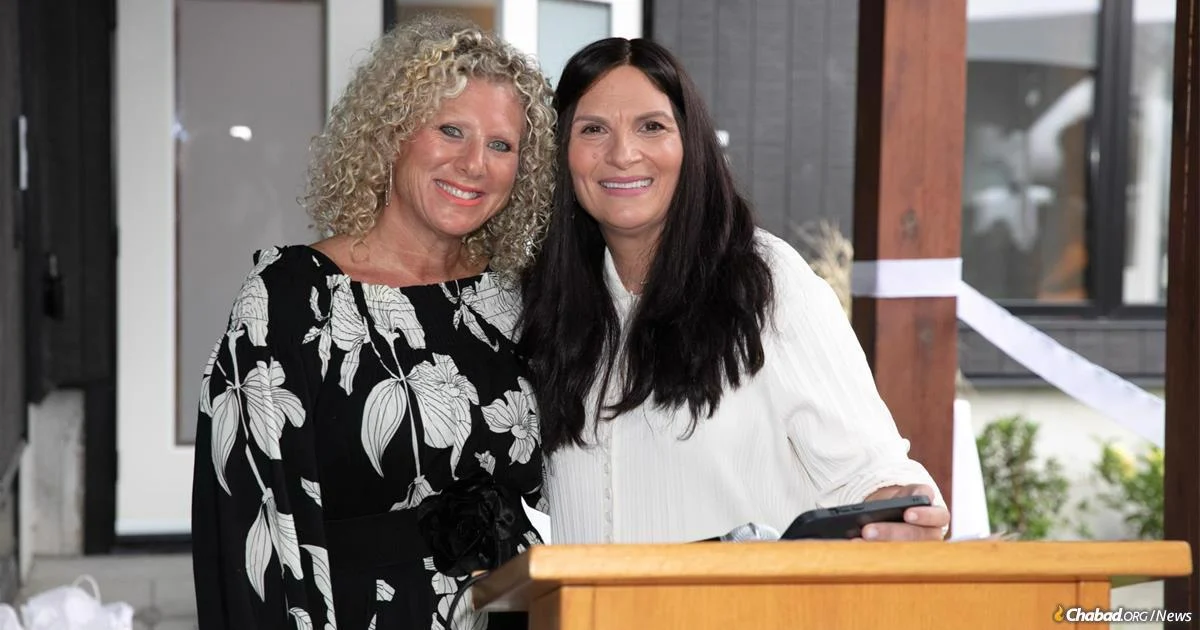 CrownHeights.info1 day ago
Summer Haven Gets Year-Round Mikvah in the Laurentians, Canada
Summer Haven Gets Year-Round Mikvah in the Laurentians, Canada
by Yisrael Eliashiv – chabad.org
Two days before her daughter’s wedding this past June, Sharyn Hoppenheim accompanied her to the mikvah for her first immersion.
Years earlier, Hoppenheim had immersed herself for the first time, at age 50. Her daughter had been there to support her then.
“She had been part of my first experience,” Hoppenheim said. “And now, I was there to share hers. I realized that something had come full circle.”
A month ago, that opportunity widened to the Laurentian Jewish community, as Mikvah Laurentian formally opened in a brand new building beside Congregation House of Israel in Sainte-Agathe-des-Monts, Quebec. The region’s first public mikvah designed to remain open year-round, the $2.5 million facility is located an hour’s drive from Montreal and includes separate mikvahs for women, men, and vessels.
Housed beside Congregation House of Israel in Sainte-Agathe-des-Monts, Quebec, it is the region’s first public mikvah designed to remain open year-round.
Leading the effort was Rabbi Emanuel Carlebach, who has served as rabbi of the Orthodox congregation for 41 years, and his wife, Chani.
Thousands of Jewish families own cottages in the Laurentials or visit for weekends, holidays or summer vacations. While there are many seasonal synagogues in the mountainous area, House of Israel is the only one to keep its doors open on the long winter nights as well. But it did not have its own mikvah.
Seasonal mikvahs catering to the summer crowd would close their doors at the end of the season leaving locals with limited options. The Trout Lake mikvah, several miles away, operated out of a summer building, and Carlebach sometimes covered its winter expenses himself just to keep it open. When it was time for women to use the mikvah, they had a choice: travel to Montreal or try to arrange access to one of the existing facilities, which often meant long walks in the dark if a woman had to go on Shabbat.
The Carlebachs knew this had to change.
Rabbi Emanuel Carlebach wraps tefillin with a community member at the opening celebration.
A Mikvah of Their Own
In 1975, the Rebbe, Rabbi Menachem M. Schneerson, of righteous memory, launched his mitzvah campaign focusing on family purity. At that time, mikvah observance was rarely discussed publicly, and many Jewish families were totally unfamiliar with this foundational mitzvah.
By placing it alongside core mitzvahs like Shabbat and kosher, the Rebbe signaled that family purity was not a marginal practice but a foundational pillar of Jewish life. He urged communities to build and beautify mikvahs immediately, insisting that they be attractive, clean spaces Jewish women would feel proud to use.
The effort to bring a mikvah to the Laurentians took more than 20 years.
An early attempt to purchase property for a mikvah fell through, and the city later rejected plans to incorporate one into a synagogue renovation. Eventually, Carlebach was told that he would need to pursue the project independently.
Groundbreaking took place three years before this summer’s opening. Sam and Naomi Fayer provided the first major gift; Mikvah USA and other benefactors later supplied substantial additional support. The final project cost was approximately $2.5 million.
Sharyn Hoppenheim
‘We Feel Very Blessed’
Hoppenheim’s family has kept a vacation home in the Laurentians throughout her life, and it has been a constant of her Jewish life. Her brother celebrated his bar mitzvah at House of Israel, and the family regularly attended the congregation’s annual Shabbat on the Lake.
Yet she knew little about ritual immersion. A mikvah tour before her daughter’s bat mitzvah opened a longer conversation about bringing more Jewish observance into everyday life. Her connection to the House of Israel congregation deepened through her daughter and son-in-law, as well as her family’s support of the mikvah campaign.
In the weeks before the opening, Carlebach’s wife, Chani, taught Hoppenheim about the new mikvah and walked her through the facility. With a women’s mikvah and a mikvah for dishes and utensils now nearby, Hoppenheim said observance can be woven into ordinary family life for Laurentian Jews rather than requiring a separate trip.
“For me, the mikvah has become so deeply connected to my relationship with my daughter,” she said, “and to the traditions we are continuing to build as a family.”
For Carlebach, completing the project after four decades in the region evoked a deep feeling of gratitude.
“We feel very blessed, very, very fortunate,” he said. “There’s so much simcha, there’s so much joy.”
Hoppenheim is already looking beyond the opening to the women and families who will use the facility in the years ahead.
“Having this here means that Jewish life can become a more natural part of our everyday routines,” she said. “It creates a place where traditions can be practiced, shared between generations, and passed on to our children and grandchildren.”

 CrownHeights.info1 day ago
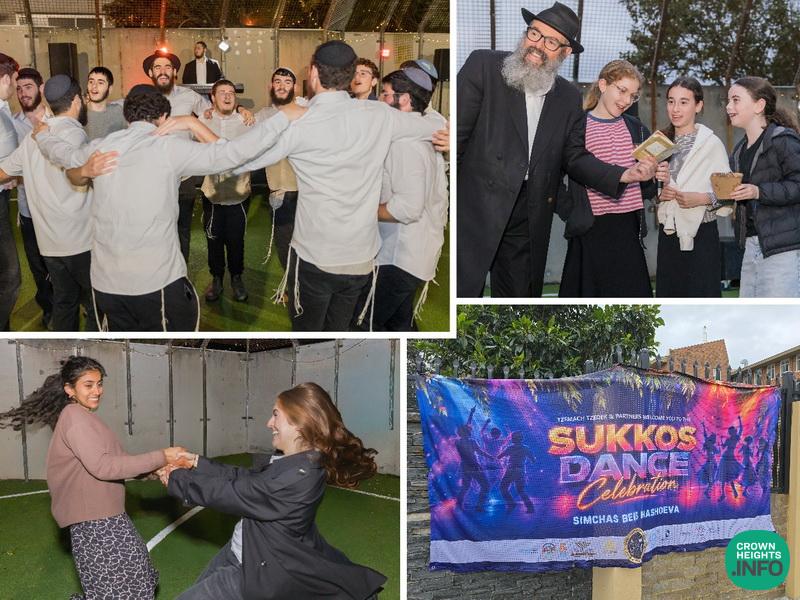
Sydney Community Unites to Celebrate Simchas Beis Hashoeva
Sydney Community Unites to Celebrate Simchas Beis Hashoeva
Back for its third year in a row, Tzemach Tzedek Community Centre and partnering organizations hosted its annual communal Simchas Beis Hashoeva Celebration.
Despite a rainy forecast, the event was held under clear skies, with hundreds turning up to participate. The ‘Simchas Beis Sukkot Dance Celebration’ continues to be an annual Sydney Sukkot cornerstone, growing each year, with plans for further expansion for next year.
The event was organised by Rabbi Menachem Spielman of Tzemach Tzedek Community Centre, beginning with a children’s rally led by Tzivos Hashem’s Rabbi Yehuda Straiton, followed by all-ages communal dancing, a BBQ, pareve gourmet gelato from Sydney’s high-end gelato experts DAÄS Gelato, à la carté fries from Soul Gourmet, a dance floor for teenagers, and children’s entertainment.
Over this Sukkos, Lulav and Esrog were shaken at the Tzemach Tzedek Sukkah-Mobile by hundreds of people, thanks to the mivtzoyim efforts of Rabbi Straiton, the Shluchim to Tzemach Tzedek / Yeshivas Levi Yitzchok (YLY), and additional volunteers.
The event was held in partnership with Chabad of Bondi, Beth Yoseph Synagogue, Jewish Family Centre, Dover Heights Synagogue, Chabad Youth NSW, Adass Israel Congregation, Kehillat Moriah, CTeen, Chabad CBD, Cremorne Synagogue, and Coogee Synagogue.
Tzemach Tzedek expresses its thanks to CSG, Hatzolah, NSW Police, Yeshivas Levi Yitzchok Sydney, the Spielman family, the Deitz/Levin family (in memory of Yehuda Aryeh Leib ben Mordechai Halevi), and all of our vendors and volunteers.
 COLlive1 day ago
Rebbetzin Esther Ita Rubin, 92, OBM
Rebbetzin Esther Ita Rubin, a longtime Crown Heights resident and wife of Rabbi Chaim Rubin obm, passed away on Simchas Torah, 5787, shortly before her 93rd birthday.
She was the wife of Rabbi Chaim Rubin, Rav of Beis Dovid Gershon on New York Avenue.
A loving mother and grandmother, she was also a devoted and beloved teacher at Prospect Park Yeshiva for several decades.
She is survived by her sons, daughters, and many grandchildren and great-grandchildren.
She was the sister of Rabbi Aryeh Leib Prager obm of Crown Heights, who passed away today.
The Rubin family will be sitting Shiva at the family home:
634 Montgomery St, 2nd Floor
Shiva will conclude on Sunday morning.
Minyanim Times:
• Shacharis: 8:45 AM
• Mincha: 6:00 PM
• Maariv: 8:00 PM
Baruch Dayan Ha’emes.
 COLlive1 day ago
Dovid Taub Launches Daily Parshah Games
In recent years, Dovid Taub has created a new Parshah project each year, including the Parshah Rabbit Hole, Parshah songs and the Parshah Almanac. This year, immediately after Simchas Torah, Taub launched “Creative Judaism Games.”
The website offers four daily games. “Parshah Doodle” features a whimsical drawing in Taub’s signature style and challenges the player to determine which Pasuk inspired it. “Parshometry” asks the player to rank five words in order of how many times they appear in the Parshah. “Fraudrash” presents four statements and the player has to figure out which one is not an actual Midrashic teaching. In “Portions,” players are given a target concept and must figure out which two emojis combine to represent it, based on ideas from that day’s Aliyah in Chitas.
Taub says, “Just like with the Parshah Almanac, I tried to find different ways of engaging with the Parshah that work for different people. Some of the games are more fun after you’ve already learned Chitas. Some are fun if you’re just working from memory. Some are more straightforward, others are weird. I hope everyone can find at least one that becomes part of their daily routine.”
Play all 4 games for free here.

 CrownHeights.info1 day ago
A New Way to Make the Daily Mitzvah Part of Every Child’s Day
A New Way to Make the Daily Mitzvah Part of Every Child’s Day
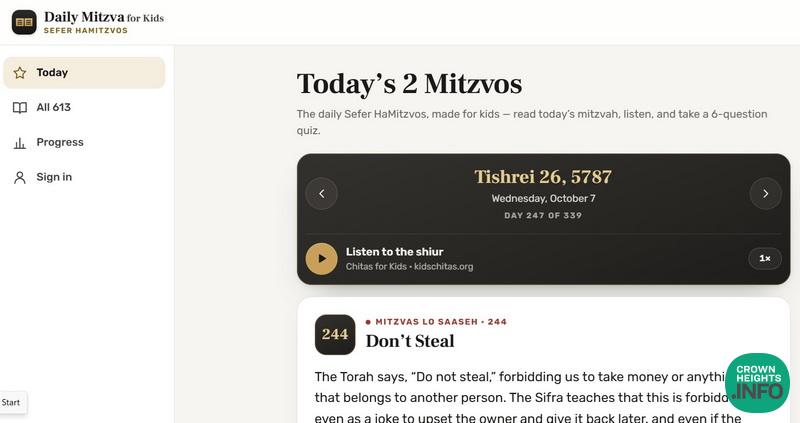
A new initiative is making it easier for children around the world to follow the Rebbe’s call to learn the daily Sefer HaMitzvos.
The goal is simple: Every child. Every day. Every mitzvah.
DailyMitzva.com is a free website created to help families, schools, teachers, shuls and Shluchim make daily Sefer HaMitzvos part of a child’s routine.
Each day, children can visit the site to learn the day’s mitzvos. Some days include one mitzvah, while others include multiple mitzvos. After learning, children answer questions to reinforce what they learned.
The questions are grade-specific, with simpler questions for younger grades and increasingly challenging questions for older students. This allows children of different ages to participate while being challenged at their own level.
A Weekly Challenge
To encourage consistency, DailyMitzva.com holds a weekly raffle.
Children who answer all of the questions for the entire week qualify for that week’s raffle.
The goal is not just the prize. It’s to help children build a daily habit of learning the mitzvos and coming back each day.
Now It’s Your Turn
Parents: Learn the daily mitzvos with your children.
Schools: Make it part of the school day.
Teachers: Give your students a few minutes each day to learn and answer.
Shuls and Shluchim: Share it with the children and families in your community.
Kids: Learn today’s mitzvos, answer the questions, and come back tomorrow!
Imagine thousands of children across the world learning the daily Sefer HaMitzvos together and giving the Rebbe nachas.
START TODAY
Learn the Daily Mitzvos.
Answer the Questions.
Complete the Week.
Qualify for the Raffle.
It’s FREE. It’s DAILY. It’s FOR EVERY CHILD.
Visit DailyMitzva.com today and get started!
 COLlive1 day ago
After Losing Family on Oct 7, Israeli Family Faces New Challenges
Sivan Zohar-Alkobi lost her brother, Israeli photojournalist Yaniv Zohar, his wife Yasmin, and their daughters Keshet, 20, and Techelet, 18, in the October 7 massacre at Kibbutz Nahal Oz. Yasmin’s father, Haim Livne, was also murdered.
The couple’s youngest son, Ariel, then 12, was the family’s only survivor, having left home for his regular morning jog shortly before Hamas terrorists entered the kibbutz.
As previously reported by COLlive, one of Yaniv’s final acts before he was murdered was saving his son’s life. When he spotted terrorists approaching his home, he contacted a kibbutz security guard and asked him to rescue Ariel. The guard located the boy and brought him to safety, but was later killed while defending the community.
During Shiva, when ZAKA volunteers asked Ariel whether there was anything he wanted retrieved from his destroyed home, he requested his father’s Tefillin, which had been passed down from his grandfather, a Holocaust survivor.
The Tefillin were recovered and returned to Ariel ahead of his Bar Mitzvah on 24 Kislev 5784. His story of survival and faith touched Jews around the world. Ariel subsequently moved in with his aunt, Ayelet Zohar-Cohen and her husband Tomer, and their children.
Nearly three years after the tragedy, Sivan Zohar-Alkobi is facing another devastating ordeal. Three months ago, her husband Eli, 46, the father of their two young sons, was diagnosed with colon cancer and began intensive treatment.
“I felt as though the blood was draining from my body,” Sivan recalled of receiving the diagnosis. “It was as if the ground was collapsing beneath my feet all over again.”
Before October 7, Sivan and Eli operated a successful event production and corporate gift business, serving major Israeli and international companies. Following the massacre, Sivan was unable to work for months as she struggled with the loss of her family members.
Now, with Eli undergoing cancer treatment, the family’s financial difficulties have intensified.
Sivan has also spoken out about the lack of government assistance for siblings of civilian terror victims, describing them as “the invisible siblings” whose suffering often goes unrecognized.
Her sister, Ayelet Zohar-Cohen, has launched a fundraising campaign seeking 1.5 million shekels to help the family cover living expenses during Eli’s treatment.
Despite the hardships, Sivan says she is determined to maintain a positive environment for her two young sons while hoping for her husband’s recovery and a return to financial stability.

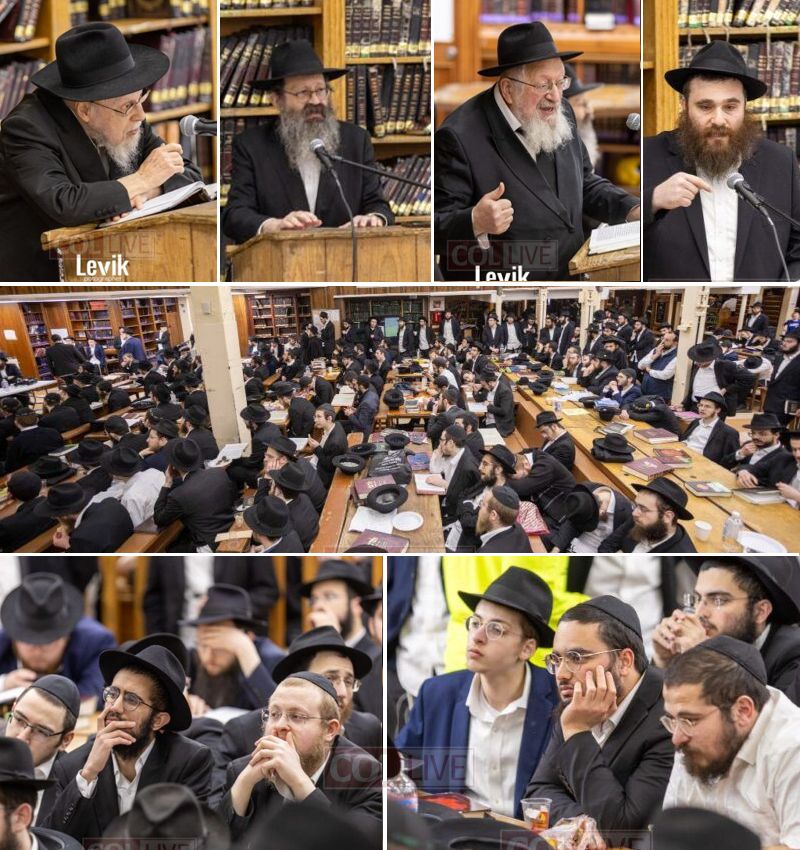
 COLlive1 day ago
Kinus Torah Held at 770 on Isru Chag
The annual Kinus Torah of in-depth learning, organized each year by 770 Rosh Yeshiva Rabbi Shneur Zalman Labkowski, was held Monday, Isru Chag Sukkos, in the main shul of 770 Eastern Parkway in Crown Heights with the participation of bochurim and Chassidim.
The learning is done in accordance with the Rebbe’s instruction that there be an increase in the study of Torah and chassidus during or following Jewish holidays. The annual Kinus Torah at 770 is organized each year by Rabbi Shneur Zalman Labkowski, Rosh Yeshiva of 770 Yeshiva, who has done so for many years with the brachos of the Rebbe.
The shiurim, which were said in Hebrew and Yiddish, were given by prominent Rabbonim, Roshei Yeshiva and Mashpiim.
Rabbi Shneur Zalman Labkowski, Rosh Yeshiva of the Central Lubavitch Yeshiva, was the MC and opened the program. He was followed by speakers: Rabbi Yosef Yitzchok Ofen, Mashpia in Yerushalayim, Rabbi Shlomo Segal of Crown Heights, Rabbi Shmaryahu Labkowski, Rosh Yeshiva of the Chabad Yeshiva in Toronto, Rabbi Sholom Geisinsky, Rosh Yeshiva of Tomchei Temimim Queens, Rabbi Yosef Yitzchok Keller of Florida and Rabbi Shlomo Kaplan, a member of the educational staff at the Central Lubavitch Yeshiva at 770.
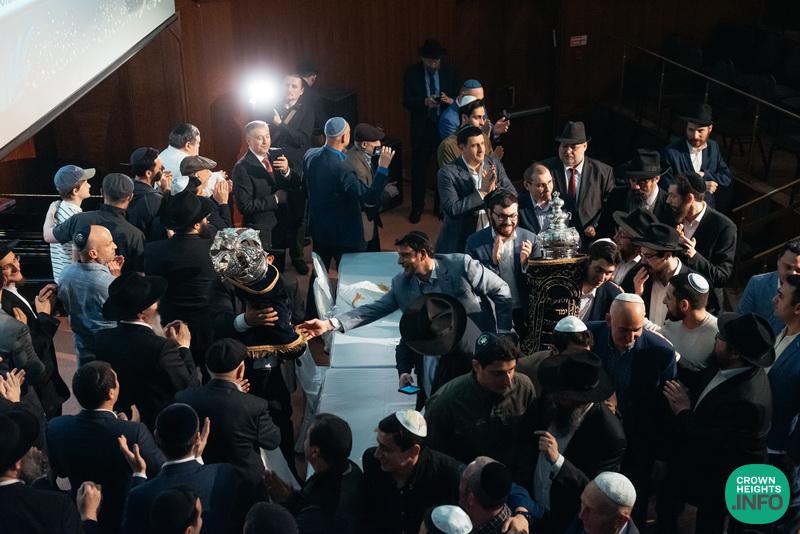

 COLlive1 day ago
Despite Rain, Hundreds at Crown Heights Achdus Hakafos
Despite steady rain, hundreds of men, women and children from numerous Shuls in Crown Heights came out to join and celebrate at the third Annual Achdus Hakafos in Crown Heights, which took place Simchas Torah at the corner of Crown and Albany Avenue.
Children from various Shuls led in the reciting of the 12 Psukim, followed by joyous singing and dancing.
The Achdus Hakafos started three years ago on the first anniversary of the terrible Simchas Torah events of October 7th.
This year’s Hakafos also celebrated the tremendous miracles of the averted plane hijacking of last week that no rain could dispel.
Shuls participating in this Achdus Hakafos were: Beis Levy Yitzchok, Beis Shea, Beis Shneur, Chevra Ahavas Yisroel, Merkaz Sefarad, Ohel Nosson, Shmuels Shul, plus many individuals who came to celebrate.
The Achdus Hakafos was organized by R’ Binyomin Levin of Beis Shneur and Rabbi Lazer Avtzon of the Association of Crown Heights Shuls / Merkaz Sefarad.
A special thank you to Rabbi Yaacov Behrman and to the New York City Police Department for their assistance and support.
 COLlive2 days ago
Tribute to R’ Morty Mayberg at His 10th Yartzeit
BY BRYNA AVIVA (MAYBERG) BLOOM
Hoshana Rabba was the 10th yahrzeit of my father, my teacher, my role model and, most of all, my best friend, Moshe Tzvi ben R. Dovber Hakohain, known to all as Morty Mayberg.
He was born 99 years ago and raised in the out of town community of Providence, Rhode Island, in a home where Yiddishkeit, family and love were at the heart of everything. The values he learned growing up with his grandparents (the Shaulson family) imbued him and his 3 siblings with a unique love of Yiddishkeit. It is so very exceptional that the children and grandchildren of all 4 Mayberg siblings are Bnei Torah.
In the 1950s my father moved to Miami Beach for business reasons. There he met my mother, Judy, marrying soon after, raising 6 children. My father was a pioneer in so many ways, and it was in Miami Beach, at the local shul, that my father’s life profoundly changed when he met Rabbi Abraham Korf (z’l), a young shaliach of the Lubavitcher Rebbe who had only recently arrived in Miami, speaking very little English. My father would drive him and often talk for him when meeting important members of the community.
It was my father who pushed and persuaded Rabbi Korf to open a Chabad school, which today boasts almost 2,000 students. In its early days, when there were only a few families sending their children there, my mother was the bus driver and my father would be writing checks at the last minute to keep the teachers paid and the electricity from being cut off.
From Miami, Chabad spread all throughout Florida and from there throughout the Southeast. But it started in Miami Beach. And my parents were instrumental in its establishment there.
My father was an Ehrliche Yid, well respected by everyone locally and throughout the world. He had a great sense of fashion and always looked so dapper. He was cognizant of his dress and behavior, knowing that he was representing Orthodox Judaism, especially at a time when there were far fewer shomer Shabbos Jews in Miami.
He was also, very much, a Chosid of the Rebbe. And he was privileged to have Yechidus (private meetings) with the Rebbe. When my parents would come to New York each summer, we – all the children – would join them in these private meetings.
My father merited to have a special relationship with the Rebbe, who would often remind him of his status as a Kohain. When he would get lekach (honey cake) from the Rebbe before the High Holidays, the Rebbe would often request that he “also keep him in mind” during Birkas Kohanim. His connection to the Rebbe and pride in being a Kohain were deeply woven into who he was.
For almost ten years my parents had only two daughters, my sister Miriam and me. The Rebbe told them that as a Kohain, my father will need sons to serve with him in the Beis Hamikdash. One year later, my brother Yossi was born, followed soon after by Mendy, Zalman and Shalom. My father longed to serve in the Beis Hamikdash, together with my four brothers.
But what I remember most about my father was the way he made people feel. He was loved and respected by all. Our Shabbos table was often filled with the most interesting people. Some were very successful and sophisticated and others were much less so. He treated them all with such honor and respect. We had people who would stay with us for extended periods of time, including one man who came for a few months every year. He was unkempt and would be ignored by most people. But my father saw the shining spark of each person’s neshama. He would build these people up, including encouraging them to maintain proper hygiene and purchasing nice clothing for them to wear.
As a young girl, I used to imagine these visitors were hidden Tzaddikim. What I came to realize was that it was my father who was the hidden Tzaddik — hiding within plain sight in our home for all to see.
I was so blessed and privileged to be his daughter. I miss him in ways that words can never fully express. And although 10 years have passed, the love between a father and daughter doesn’t have an expiration date.
His kindness, his faith, his humor, and his love continue to live on in me, in my family and in everyone whose life he touched.
 COLlive2 days ago
Shloshim Event for Dr. Plaut in Crown Heights
The Crown Heights community is invited to attend a special Shloshim gathering in memory of Dr. Allan Plaut, honoring his life and the impact he made on those he cared for.
The event, titled “An Evening to Honor and Remember,” will take place on Monday, October 19, Cheshvan 8, at 7:30 PM, at Bais Rivkah, 470 Lefferts Avenue in Brooklyn.
Organizers are encouraging community members to attend and express their appreciation for the beloved Crown Heights doctor.
As part of the tribute, organizers are compiling a commemorative book featuring personal memories, stories, and messages of appreciation from those whose lives were touched by Dr. Plaut.
Community members are invited to contribute their favorite memories, anecdotes, or personal messages by emailing [email protected].
The gathering is open to men and women, and all are welcome to attend.
The event hall is being sponsored by Bais Rivkah School.
 COLlive2 days ago
Sukkos Joy in Every Corner of Northwest Florida
This Sukkos, Chabad of Tallahassee & FSU set out with a simple goal based on theRebbe’s Sicha on 13 of Tishrei: to share the joy and mitzvos of Sukkot with anyone and everyone.
Throughout Tallahassee and across Northwest Florida, Rabbi Schneur and Chanie Oirechman, Rabbi Ari and Rivky Oirechman and Rabbi Shalom and Bryna Oirechman together with their younger children and the Chabad of Tallahassee team, worked to make sure that Jews from every walk of life could experience the special joy of Zman Simchaseinu.
The outreach extended far beyond the walls of the Chabad House.
Students at Florida State University celebrated Sukkot together, gathering in the Sukkah, making a bracha on the Lulav and Esrog, enjoying Yom Tov meals and experiencing the warmth and energy of Jewish life on campus.
At the same time, the Oirechman family and Chabad team spread out across the area to reach those who could not necessarily come to Chabad themselves.
They visited elderly members of the community and individuals who were alone in their homes, bringing along the Lulav and Esrog and, most importantly, the message that they are part of a larger Jewish family and had not been forgotten during Yom Tov.
The joy of Sukkot also reached a population that is often almost completely removed from Jewish communal life: Jewish inmates incarcerated in prisons throughout Northwest Florida. Visits and outreach brought them the opportunity to connect with the Yom Tov and to know that even behind prison walls, the Jewish community was thinking about them.
Chabad’s Sukkot activities also reached Florida’s state leaders, continuing its year-round work of bringing Jewish pride and the message of Torah and mitzvos into the heart of the state capital.
From college students to state leaders, from seniors in their homes to inmates in prisons, the same message traveled throughout the region: the joy of Sukkot belongs to every Jew, wherever he or she may be.
For Rabbi and Mrs. Oirechman, accomplishing so much simultaneously has an additional secret—their large family.
“That’s one of the benefits of having so many children,” Rabbi Oirechman said with a smile. “On Sukkot, everyone can go in a different direction and bring the joy of Yom Tov to another Jew.”
Some were reaching students, others were visiting members of the community, while still others helped bring the mitzvos and spirit of Sukkot to Jews who otherwise might have gone through the holiday without the opportunity to celebrate.
The result was a Sukkot that stretched far beyond any single Sukkah.
“The Rebbe taught us that every Jew matters, and that we have to go out and reach them wherever they are,” Rabbi Oirechman said. “Whether someone is a student on campus, an elderly person sitting alone at home, a state leader, or an inmate in prison, we want them to know that they are part of Am Yisrael and that the joy of Sukkot belongs to them too.”
Chabad of Tallahassee & FSU expressed its gratitude to the many friends, supporters and community members whose partnership makes this extensive outreach possible.
Thank you for making it possible for us to bring the joy of Sukkot to anyone and everyone, throughout Tallahassee and across Northwest Florida.
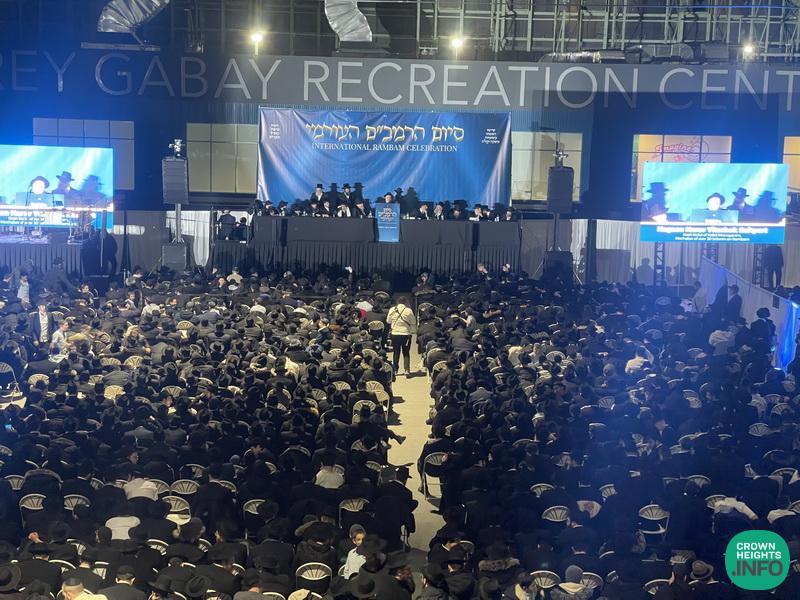
 COLlive2 days ago
Save the Date: 46th Rambam Siyum Set for Bedford Union Armory
The 46th International Rambam Celebration, the Siyum HaRambam HaOlami, will take place b’ezras Hashem on Sunday, Beis Shevat, January 10, 2027, at the Bedford Union Armory in Crown Heights. Anash and communities from across the region will gather to celebrate the daily Rambam learning the Rebbe established in 5744.
This year, the siyum falls in the days leading to Yud Shevat, and the closeness is fitting. The Rebbe spoke about the Siyum HaRambam many times over the years, as cycle after cycle drew to a close. One of those occasions was the Shabbos right after Yud Shevat 5746, a few weeks before the second cycle concluded.
That Shabbos, the Rebbe called for good resolutions to add in the path of the Frierdiker Rebbe, whose hilula had just been marked. The Rebbe specifically called for strengthening Torah study, public shiurim, and especially the daily shiurim in the Rambam’s Mishneh Torah.
The Rebbe went on to say that since the siyum was only weeks away, it was time to prepare, as the Gemara (Beitzah 2b) teaches that an important matter needs preparation.
Furthermore, the Rebbe said “A siyum on even one masechta calls for a celebration, even more so a siyum on the Rambam, which the Rambam himself calls a compilation of the entire Oral Torah. Yidden have long held such a siyum publicly, “b’rov am hadras Melech,” for the King’s glory is in a multitude of people.”
The Rebbe further explained “The Rambam’s work has its own link to hadras Melech, too: many of its commentators put “Melech” in the names of their seforim, among them the Mishneh LaMelech, the Shaar HaMelech and the Yad HaMelech. Its siyum must certainly be b’rov am hadras Melech, with the widest publicity and great splendor.”
In light of the above, the organizers are already at work on what they hope will be the largest Siyum HaRambam yet, and they’ve taken the call to prepare to heart: this notice is going out well ahead so everyone can plan to be there. They thanked the Crown Heights community, whose turnout and support have grown the siyum year after year. This year every detail is being planned for the dignity the occasion calls for, while bringing in as many people as possible.
Coming in the days before Yud Shevat, the siyum is a chance to strengthen our hiskashrus to the Rebbe, the baal hatakanah, who spoke of the daily Rambam again and again.
Mark the date. Come with your family, and bring friends and neighbors along. B’rov am is measured in people, and every person who walks in adds to the hadras Melech.
Together, let us make this year’s siyum a gathering of b’rov am hadras Melech and a true expression of achdus Yisroel.
The Mishneh Torah itself ends with royalty: its last chapters, in Hilchos Melachim, set out the laws of Melech HaMoshiach. May the preparation and unity surrounding this siyum bring us to the ultimate hadras Melech, with the coming of Moshiach, speedily in our days.
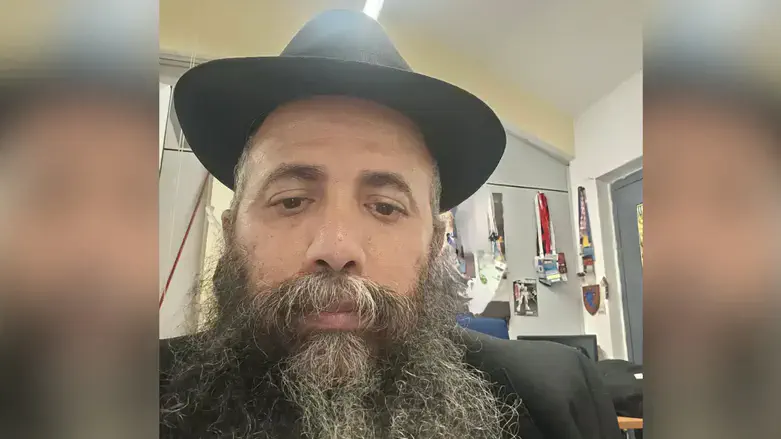 CrownHeights.info
Italy Deports Two Suspects in Attack on Milan Chabad Shliach
Related stories
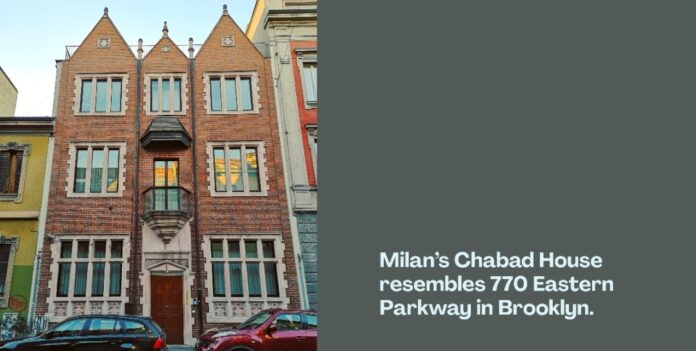
 Vos Iz Neias1 day ago
 Matzav21 days agoCrownHeights.info22 days ago
 COLlive22 days agoCrownHeights.info2 days ago
Italy Deports Two Suspects in Attack on Milan Chabad Shliach
Italy Deports Two Suspects in Attack on Milan Chabad Shliach
by CrownHeights.info
Italy has deported two foreign nationals suspected of taking part in the antisemitic assault on Rabbi Tzemach Mizrahi, a longtime Chabad-Lubavitch emissary in Milan, The Jerusalem Post reported.
Italian Interior Minister Matteo Piantedosi announced the deportations, saying the two men had been returned to their countries of origin and declaring that there is no place in Italy for hatred and violence and that antisemitic acts will not be tolerated.
The attack took place on September 16 at a bus stop in Piazzale Bande Nere in western Milan, near the city’s Jewish community. Rabbi Mizrahi, 51, was waiting for a bus on his way to pick up his children from school when three young men approached him.
According to the rabbi’s account, the men surrounded him, taunted him in Arabic and grabbed his traditional black hat. One of them put the hat on and mocked him. When Rabbi Mizrahi began recording the encounter on his phone, one of the men kicked him from behind, knocking him off the sidewalk and into the street.
Despite the attack, Rabbi Mizrahi did not require medical treatment. He spent several hours providing a statement to police, while footage and photographs he had managed to capture helped authorities identify the suspects.
The three suspects were subsequently identified as young men of Tunisian and Moroccan background. One of them, 21-year-old Tunisian national Battar Zahani, has been deported to Tunisia. The second deported suspect, a Moroccan national whose name was not released, was also returned to his country. A third suspect, Zahani’s 20-year-old brother, Ilyes Zahani, remains in Italy under restrictive conditions and is awaiting trial.
Walker Meghnagi, president of the Jewish Community of Milan, welcomed the deportations, calling them “wonderful news” and expressing hope that Italy would take similar action in future cases of violence against Jews.
For Chabad-Lubavitch, the incident highlights the unique role played by Shluchim around the world. Rabbi Mizrahi has served the Jewish community in Milan for decades, maintaining a visible Jewish presence and providing Torah, tefillah and communal services through Chabad.
Chabad institutions in Milan include the Central Chabad House and the Chabad yeshivah on Via Soderini, where Rabbi Mizrahi has been involved in serving the local Jewish population. Community directories have also long listed him as a rabbi serving the city’s Jewish community.
Following the attack, Rabbi Mizrahi made clear that he would not respond by hiding his Jewish identity. He said he would continue wearing his rabbinic clothing and would not stop openly identifying as a Jew, although he acknowledged that the incident had raised concerns about allowing his children to walk the streets alone.
The attack and subsequent deportations come amid heightened concern over antisemitism in Italy and across Europe. For the Chabad-Lubavitch movement, however, the response remains one of continued Jewish life and public Jewish presence: Shluchim continue their work in cities around the world, even amid an increasingly challenging security environment.
Related stories
Vos Iz Neias1 day agoMatzav21 days agoCrownHeights.info22 days agoCOLlive22 days ago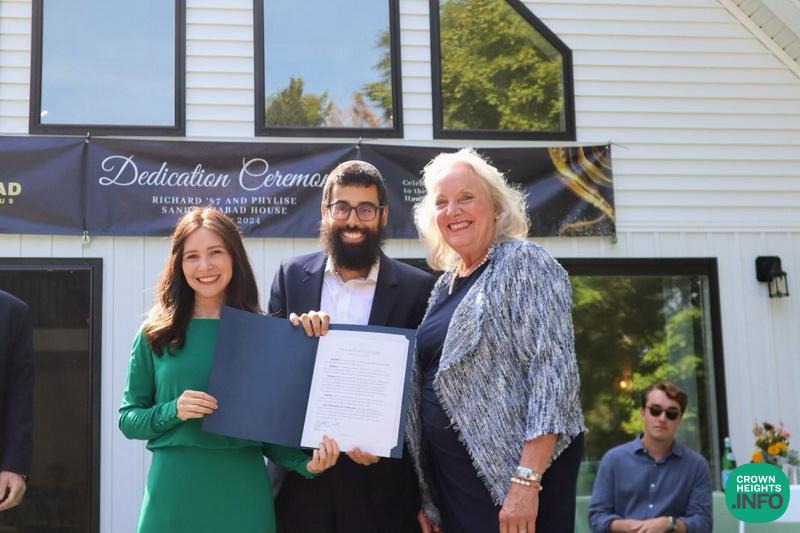 CrownHeights.info2 days ago
Hamilton College Formally Recognizes Chabad Directors Rabbi Didy and Devorah Waks as Campus Advisors
Hamilton College Formally Recognizes Chabad Directors Rabbi Didy and Devorah Waks as Campus Advisors
by CrownHeights.info
Hamilton College has formally recognized Rabbi Didy and Devorah Waks, longtime directors of Chabad of Clinton serving Hamilton College, as official non-faculty/staff campus advisors to the Chabad Student Group.
The designation formally acknowledges the role the Wakses have played for more than a decade in supporting Jewish students at Hamilton and in providing mentorship, guidance and a strong Jewish community on campus.
Hamilton College lists Chabad among its recognized student organizations, alongside Hillel and other religious and cultural student groups. The college’s Spiritual and Religious Life office is headed by Dean Rev. Dr. Colleen Hallagan Preuninger.
For the Wakses, the new designation puts an official framework around a relationship that has existed for years.
Rabbi Didy and Devorah Waks established Chabad of Clinton in 2014, initially hosting students in their home. What began with Shabbat meals and holiday programming grew into a thriving Jewish community serving hundreds of Hamilton students. In September 2024, the community dedicated the new Sands Chabad House at 108 College Street, providing a permanent home for the expanding campus community.
The impact of that relationship was already evident in comments from Hamilton students. In 2024, then-Chabad student group co-president Gabby Nakkab told the Hamilton Monitor that students relied heavily on Rabbi Didy and Devorah for mentorship and guidance, while also receiving assistance from the college with student activities and funding.
The Wakses’ work has extended well beyond formal programming. Chabad’s new facility provides students with a place to eat Shabbat meals, study, celebrate Jewish holidays, receive personal support and simply spend time in a welcoming Jewish environment. Chabad.org reported in 2024 that the center was serving an estimated 350 Jewish students among Hamilton’s approximately 2,000 students, with more than 100 individual students attending meals over Rosh Hashanah.
The college’s recognition comes as an acknowledgment of that unique relationship: while the Wakses are not Hamilton College employees or faculty members, they serve as trusted advisors and community leaders for the students who make up the Chabad Student Group.
The Chabad community expressed appreciation to Dean Preuninger and her team for their partnership and for formally recognizing the role Rabbi Didy and Devorah have already been filling in the lives of Hamilton’s Jewish students.
Since arriving in Clinton, the Wakses have built Chabad into a home away from home for Jewish students—one that has become an established and integral part of Jewish life at Hamilton College.
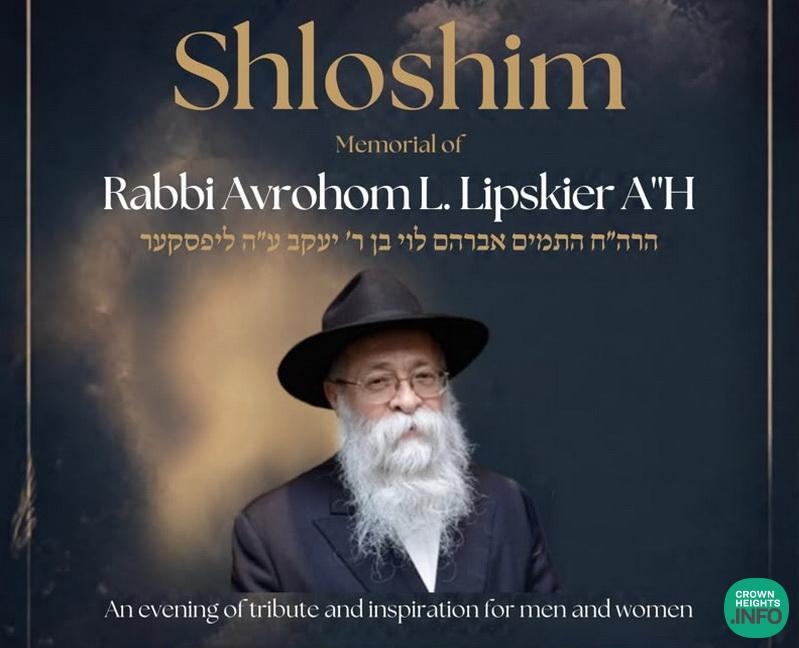
 COLlive2 days ago
Event to Mark Shloshim of Rabbi Avrohom Lipskier
A Shloshim memorial gathering will be held on Thursday evening, October 8, in Crown Heights, marking thirty days since the passing of Rabbi Avrohom L. Lipskier obm.
Family members, students, friends, and admirers are invited to join an evening of tribute and inspiration, honoring Rabbi Lipskier’s life and legacy.
The gathering will take place on Thursday, 27 Tishrei 5787 at Ohel Nosson, located at 580 Crown Street in Crown Heights, and is open to men and women.
Maariv will begin at 7:15 p.m., followed by the memorial program at 7:30 p.m.
The evening will conclude with a Chassidishe farbrengen, providing an opportunity for participants to reflect on Rabbi Lipskier’s legacy and share memories and inspiration.
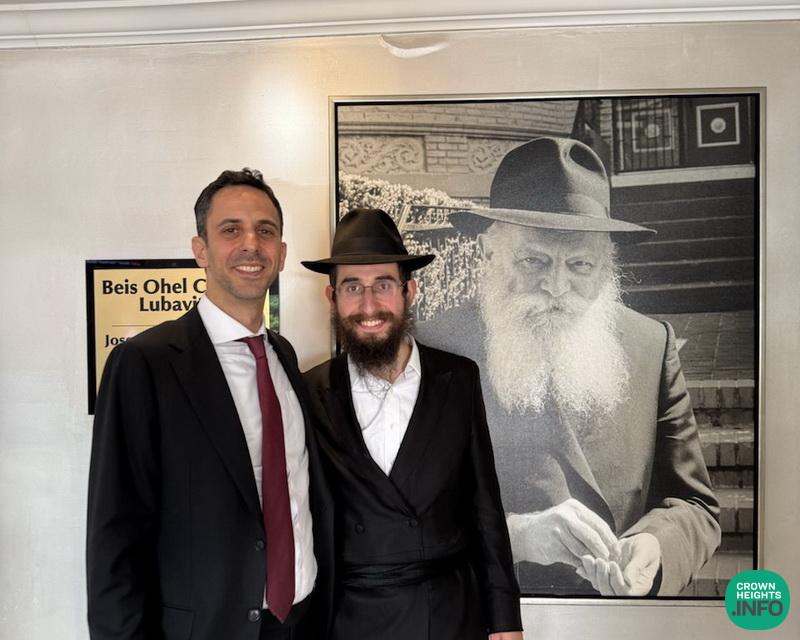 CrownHeights.info2 days ago
Picture of the Day
Picture of the Day
Civil Court Judge candidate Etan Harris visits the Rebbe’s Ohel for the first time, accompanied by Rabbi Mendel Hendel of Chabad of Marine Park.
 CrownHeights.info2 days ago
Information to be Menachem Avel The Rubin Family
Information to be Menachem Avel The Rubin Family
The Rubin Family will be sitting Shiva in Albany, NY following the passing of Rabbi Yisroel Rubin OBM.
Shiva will be taking place:
Tuesday – 122 South Main Ave from 12:00-8:30pm
Wednesday and Thursday – Shabbos House 320 Fuller Rd from 10:00 am- 1:00 pm, 2:30 pm- 8:30 pm
Friday, 10:00 am – 12:00 pm, 1:00 pm- 3:00 pm
Motzei Shabbos 8:30 pm- 10:00 pm
Both at 122 S Main Avenue
Davening times (7 minyanim)
Shachris- 6:15 am, 8:00 am, 9:00 am
Mincha- 6:10 pm
Maariv- 6:55 pm
Friday Mincha – 1:15 pm
Send memories to: [email protected]
CrownHeights.infoNew Engagement!
Related stories
CrownHeights.info2 days agoNew Engagement!
Memke Goldshmid (Valley Stream, NY) to Mushky Gancz (West Palm Beach, FL) L’Chaim: Tonight, Tuesday, 8:30pm at the JCM Upper Level
Related stories
CrownHeights.info2 days agoNew Engagement!
Mendel Minkowics (Crown Heights) to Sara Fajnland (Herndon, VA) L’Chaim: Tonight, Tuesday, 8:30pm at The JCM Lower Level
CrownHeights.info2 days agoNew Engagement!
Sender Lipskier (S. Petersburg, Russia) to Malki Gurewitz (Lyon, France)
 COLlive2 days ago
For 30 Years, Simchas Torah Was a Stab in My Heart
By a shliach
I was nineteen.
That midnight, Motzei Shabbos, I sat upright on my bed with a start. I was woken by a loud piercing sound. It was the Shabbos siren. Then another shriek together with the siren. It was my mother.
In a fleeting memory, I can see her head on her arms, leaning on the cabinet in the kitchen, shivering. I was scared. But in the moment, it didn’t cross my mind that…actually…
The next thing was being in a packed car en route to Manhattan. Outside the hospital I couldn’t see past the crowd — I was short and weak. I only saw the black around me, the black of the sky, and felt moisture on my face.
The moisture stayed with me wherever I went; it was in my lungs, in my mouth. Through the Rebbe’s room. Through the Levaya. I couldn’t find myself.
Many times, during the week of shiva, my knees caved in, and I found myself on my bedroom floor. I would open and close my eyes, each time expecting either the world to disappear, or Techiyas Hameisim.
***
The real ache dawned on me on Simchas Torah the year after. Simchas Torah was the climax for me by the Rebbe. There were only a handful of us standing in the Rebbe’s Daled Amos by the Ohel. There was light rain, and we did the six Hakofos as much as we could. We couldn’t.
And before the seventh Hakafa, we called the Rebbe. I closed my eyes. I saw the Rebbe’s face shining by his Shtender. I heard the Rebbe’s voice clear: “Ata haraisa lada’as…” and everyone roared in response. It was hot. I felt the pressure from both sides of my shoulders from everyone around me. The Rebbe then started R’ Levi Yitzchok’s Niggun, and there was nothing else. The Rebbe’s arms spun as his gaze met ours, and something buried inside of us came alive.
I opened my eyes. Nothing. Crickets, rain, tombstones. There was barely light, barely any people. I was alone. I was hollow. I tumbled down onto the sidewalk, sitting with my head down. I cried. My quiet sobs echoed back.
For years, Simchas Torah was a stab in my heart. I smiled but it wasn’t real. How could I be happy on Simchas Torah?
***
When I got married, I moved out on Shlichus. I would go to the Rebbe for many of the Yomei Depagra, but Simchas Torah was not going to happen — it would make me bitter.
Year by year my pain would lessen. But a scar remained. Looking at my son when he came back from yeshiva, I could only pity him. I wished he had known that world. The Farbrengens. Birchas Habonim. And of course, the highlight, Simchas Torah. The golus is thick and muddy, I thought — the bochurim are not alive. How could they be? Am I…?
One Shabbos, when we were discussing years by the Rebbe, my son Mendel corrected me on one of the dates. He told me things the Rebbe did that I hadn’t known. It caught me off guard. I was there myself, and he knows more than me?
I started seeing the way he koched in a farbrengen. How his eyes shined when he spoke about them. I saw something. I looked twice. I saw…vitality. Something I still can’t fully find in myself. His “pekel” is filled with fire. Mine carries an extinguished candle.
***
I wanted to see more of it. The special liveliness that the Rebbe poured into the bochurim. This Simchas Torah I made the arrangements. I was going in with my son — just this once.
By the seventh Hakafa, I stood in the midst of hundreds of bochurim by the Rebbe’s Daled Amos. The sky was clear, and there was light from the tent. The Rebbe was called up.
“Iz men mechabed, k’vod k’dushas, adoneinu moreinu v’rabeinu…” Silence. The bochurim were closing their eyes with an intensity on their faces. They were listening. And then, Niggun Hakofos. The energy around me was pumping.
Where…?
I looked from face to face. They weren’t pretending.
I closed my eyes. But I wasn’t with everyone else. I saw him. I danced. I sang. I was on my own by Simchas Torah 5750. The Rebbe was dancing. I stopped feeling the crush when we started singing. When the Rebbe left, we continued. On and on and on.
I opened my eyes. The singing continued. There was a circle, and I was pulled in. I felt, for the first Simchas Torah in thirty years, a little happy.
In the corner of my eye, I noticed a bochur sitting on the edge of the sidewalk. His hands covered his face as he shook. I approached him.
I put my hand on his shoulder. I recognized the striped jacket. It was my son.
His face was wet, his eyes were red, and he looked directly at me with longing.
You were by the Rebbe, Simchas Torah. You saw the Rebbe with your own eyes. You felt the presence of the Rebbe. You have something I don’t and never will have.
He was right. Yes, I was there. And you weren’t. I wish with all my heart that you had been.
I looked around at the bochurim. The life. The innocence. But you too have something I don’t and never will have.
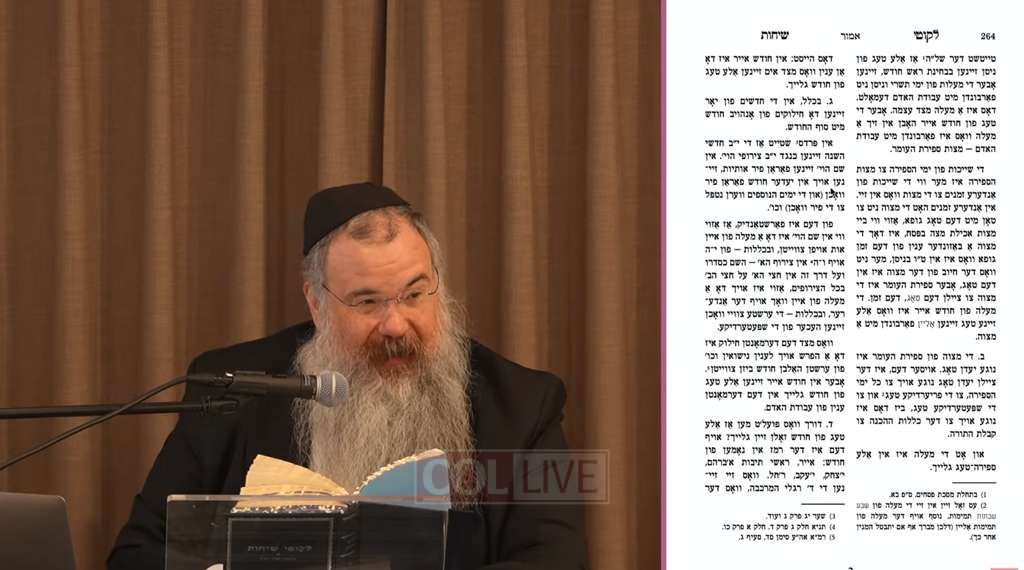
 COLlive2 days ago
Likkutei Sichos Alef and Beis with Rabbi Shais Taub Completed
After a year of weekly livestreams, Rabbi Shais Taub has completed the study of all the sichos in the first two volumes of Likkutei Sichos, covering every parsha from Bereishis through V’Zos Habracha, as well as the yomim tovim. The series concluded last week with the sichos on Simchas Torah.
These volumes contain foundational sichos introducing many of the major themes of the Rebbe’s Torah. Throughout the series, Rabbi Taub highlighted recurring themes and big ideas fundamental to the Rebbe’s teachings.
Each class follows the original Yiddish word by word, with Rabbi Taub translating and explaining it in clear English. Every week’s sichos were covered in full. Some livestreams ran for more than three hours, but not a single word was skipped. His clear explanations make the text accessible to experienced learners and those approaching sichos for the first time.
Viewers can open a sefer and learn along, or download a PDF of the sicha courtesy of Kehot Publication Society. For those seeking an authentic learning experience, the classes offer a way to work through the Rebbe’s own words straight from the source.
With the Torah cycle beginning again, the complete archive is now available to follow week by week. Viewers can make the series part of their weekly learning, preparing for the parsha and upcoming yomim tovim while gaining a deeper understanding of the Rebbe’s Torah.
Watch on YouTube or SoulWords.org/LS. Listen on Spotify or Apple Podcasts.
 COLlive
Thousands Celebrate Hoshana Rabbah and Simchas Torah in Moscow
Related stories
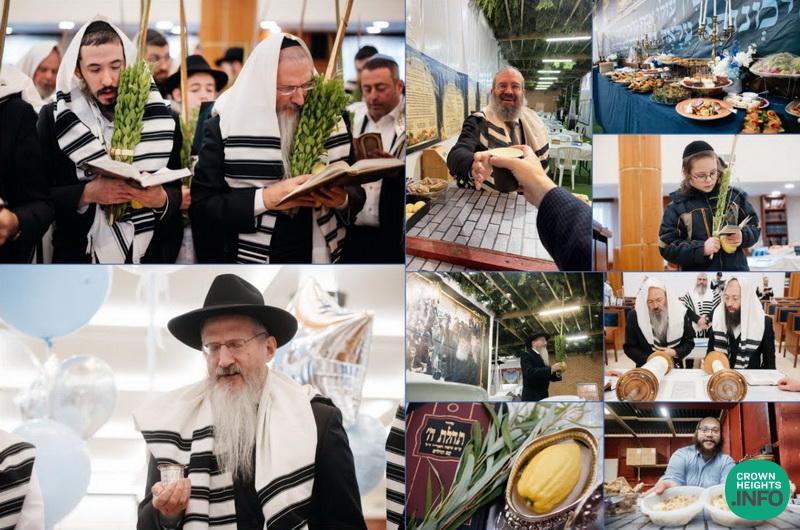 CrownHeights.info2 days ago
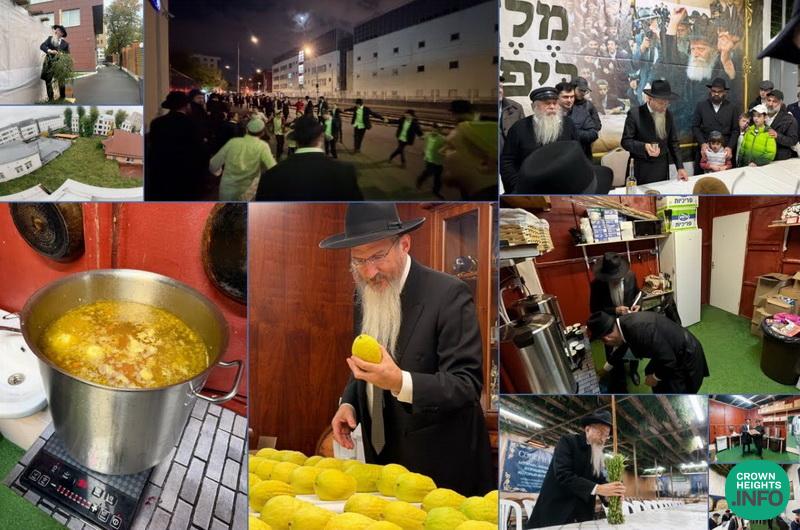 CrownHeights.info8 days ago
 COLlive15 days ago
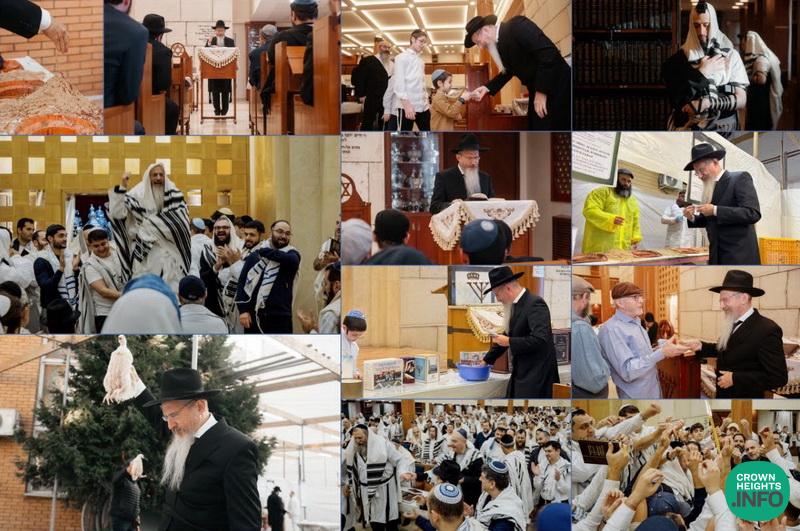 CrownHeights.info16 days agoCOLlive2 days ago
Thousands Celebrate Hoshana Rabbah and Simchas Torah in Moscow
Thousands of Jews gathered at the Marina Roscha Central Synagogue in Moscow for Hoshana Rabbah, Shemini Atzeres, and Simchas Torah, marking the culmination of Tishrei with large crowds, spirited dancing, and celebrations of Jewish life.
Hoshana Rabbah began at midnight, as congregants gathered to recite Sefer Tehillim in accordance with the traditional custom. The synagogue’s large sukkah remained busy throughout the night, with refreshments served in “Grisha’s Zimmer,” the hospitality room within the sukkah complex.
Participants were treated to apples dipped in honey, hot soup, and warm beverages as they spent the night learning and preparing for Hoshana Rabbah, the day traditionally associated with the final sealing of the heavenly decree.
By morning, the synagogue was filled with worshippers attending numerous Shacharis minyanim held throughout the premises to accommodate the large crowds.
The main Hoshana Rabbah minyan was attended by Chief Rabbi of Russia Rabbi Berel Lazar. The morning also included two moving Bris Milah ceremonies, celebrating the entry of two Jewish males into the covenant of Avraham Avinu.
Rabbi Menachem Mendel Zaklas, Shliach and Rav of Bryansk, traveled to Moscow to serve as mohel for the ceremonies.
Meanwhile, extensive preparations were underway for the thousands expected to participate in the Shemini Atzeres and Simchas Torah celebrations.
The synagogue’s gabbaim, together with a team of workers, oversaw the construction of a massive bimah along the eastern wall of the main sanctuary, where community leaders and the Sifrei Torah would be positioned during hakafos.
This year, organizers also introduced illuminated signs throughout the synagogue displaying the current hakafah, helping the large crowds follow the proceedings and participate in an orderly manner.
The celebrations reached their peak on Simchas Torah night, when thousands packed the synagogue for spirited hakafos and dancing with the Torah.
The festivities also included expressions of gratitude to Hashem for the reported miraculous events aboard a Flydubai flight carrying Israelis, which had drawn widespread attention.
Rabbi Lazar delivered emotional words of inspiration, reflecting on the events and the importance of recognizing and giving thanks for Hashem’s miracles, particularly during Shemini Atzeres and Simchas Torah, when the bracha of Shehecheyanu is recited.
At approximately 1:00 a.m., hundreds of participants continued the celebrations outside, filling the streets of Moscow with singing and dancing as they sought to extend the joy of Simchas Torah beyond the synagogue walls.
On Isru Chag, workers began dismantling the large hakafos bimah, bringing the extensive holiday preparations and celebrations to a close.
The gatherings at Marina Roscha once again highlighted the vibrant Jewish life of Moscow’s community, with thousands coming together in an atmosphere of unity, Torah, and Chassidic joy.
Related stories
CrownHeights.info2 days agoCrownHeights.info8 days agoCOLlive15 days agoCrownHeights.info16 days ago CrownHeights.info
Arrest Made in Antisemitic Assault in Crown Heights
Related stories
 COLlive15 days ago
 CrownHeights.info1 month ago
 CrownHeights.info5 months ago
 COLlive6 months agoCrownHeights.info2 days ago
Arrest Made in Antisemitic Assault in Crown Heights
Arrest Made in Antisemitic Assault in Crown Heights
by CrownHeights.info
An arrest has been made in connection with an antisemitic assault on a bochur in Crown Heights, following a collaborative investigation involving the NYPD and Crown Heights Shomrim.
According to Crown Heights Shomrim, the incident occurred at approximately 3:20 a.m. on September 28 near the Eastern Parkway and Utica Avenue subway station. The bochur was allegedly harassed with antisemitic slurs and threats while at the station.
The suspect reportedly followed the bochur after he left the station and assaulted him near Schenectady Avenue and Park Place.
Following the incident, Crown Heights Shomrim worked with the NYPD’s 77th Precinct, Transit District 32 and the NYPD Hate Crimes Task Force to identify and locate the suspect.
The suspect was arrested Monday, according to Shomrim.
The NYPD’s 77th Precinct serves the northern portion of Crown Heights, while Transit District 32 is responsible for subway policing in the area.
The arrest comes amid heightened attention to antisemitic incidents targeting visibly Jewish residents in Crown Heights. In a separate incident last month, a Bronx man was arrested after allegedly threatening and chasing a Jewish man while shouting antisemitic statements, with the NYPD Hate Crimes Task Force investigating that case as well.
Crown Heights Shomrim thanked the NYPD personnel and investigators involved, highlighting the cooperation between the community-based safety organization and law enforcement in bringing the investigation to a conclusion.
View this post on Instagram A post shared by CrownHeights.info (@chinfo.official)
Related stories
COLlive15 days agoCrownHeights.info1 month agoCrownHeights.info5 months agoCOLlive6 months ago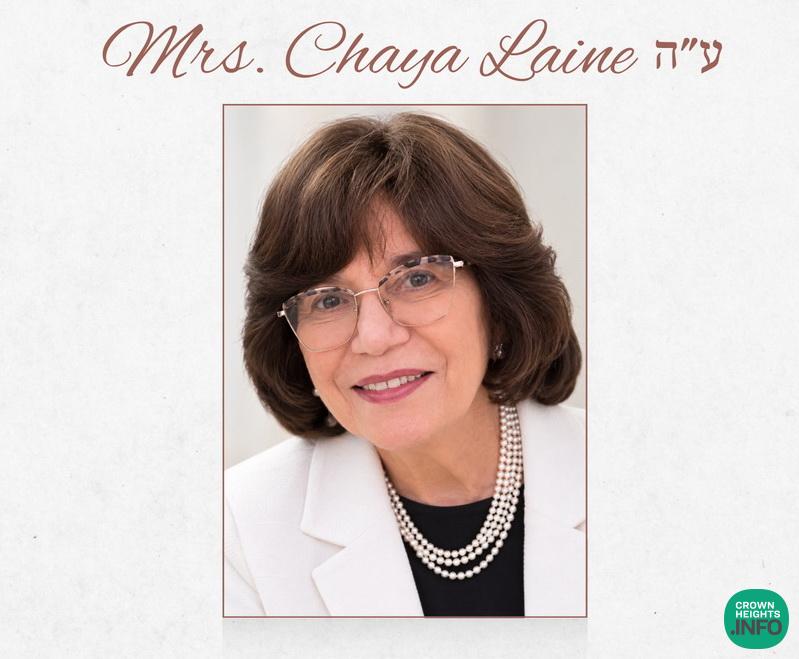

 COLlive2 days ago
Book of Memories to Mark Shloshim of Mrs. Laine
Bais Rivkah and the Laine Family invite you to join us on Monday, Rosh Chodesh Cheshvan, October 12, for a Shloshim event in memory of our beloved teacher and principal, Mrs. Chaya Laine A”H.
For decades, Mrs. Laine devoted her life to Bais Rivkah High School’s General Studies Department. Through her wisdom and unwavering commitment to excellence, she guided generations of students and led the faculty with dedication and care. Her efforts leave a lasting imprint on the lives of countless students, teachers, and the Bais Rivkah community as a whole.
As we come together for the Shloshim to reflect on Mrs. Laine’s life and legacy, we also hope to preserve the many personal memories that speak to the depth of her impact. As part of this tribute, we are preparing a commemorative book of stories and anecdotes from former students and staff, which will be presented to Mrs. Laine’s family. The book will serve as a lasting collection of the memories and experiences that reflect the many ways in which she touched the lives of those she taught and worked alongside.
We invite you to share a meaningful memory, story, or reflection about Mrs. Laine and the impact she had on your life. Stories can be submitted through this form.
We look forward to coming together to honor Mrs. Laine’s legacy and to share in remembering the wisdom, guidance, and dedication she shared with so many.
 CrownHeights.info2 days ago
Historic Milestone in Pervomaisk: New Mikvah Opens After More Than 80 Years
Historic Milestone in Pervomaisk: New Mikvah Opens After More Than 80 Years
A historic and emotional event took place recently in Pervomaisk, in Ukraine’s Mykolaiv region, as the local Jewish community inaugurated a new and beautifully built mikvah — the first to open in the city since the dark days of the Holocaust.
Despite light rain during the ceremony, many members of the community gathered to celebrate the long-awaited occasion, standing together with visible Jewish pride. For the community, which has been active for approximately 28 years, the opening represents a major milestone and a source of renewed strength, purity and hope for the continued development of Jewish life in the city.
The local Chabad emissary, Rabbi Levi Yitzchak Perlstein, who leads the community together with his wife, Chana, shared the remarkable story behind the project. Construction of the mikvah began before the COVID-19 pandemic and continued through years of considerable challenges. Its completion at this time, amid the ongoing crisis, was made possible through the broad support and partnership of numerous donors and organizations.
The ceremony was attended by Rabbi Shalom Gottlieb, Chabad emissary and Chief Rabbi of Mykolaiv and the surrounding region, who spoke about the mitzvah of mezuzah; Rabbi Daniel Lanau, a mikvah kashrut supervisor and Chabad emissary in Kyiv, who explained the central importance of a mikvah in Jewish communal life, noting that Jewish law gives its establishment priority even over the construction of a synagogue. The head of the community, Mr. Michael Shefkin, spoke about his personal Jewish connection and the path of his father. Mr. Shefkin also marked his birthday during the special occasion. Community representative Mr. Michael Yudin shared moving memories from his childhood.
Community representatives Mr. Michael Yudin, Mr. Gennady Borik and Mr. Alexander Piterman were honored with affixing the mezuzahs. Mr. Alexander Gonchar provided the musical accompaniment that added to the festive atmosphere.
Representatives of JRNU, Mr. Eliya Goldberg and Mrs. Maria, who have accompanied and supported the community with dedication, also participated in the ceremony.
The highlight of the event came with the official ribbon-cutting and the opening of the mikvah’s doors. Following the ceremony, participants toured the new facility and learned about its significance and operation before gathering for a festive buffet in a special tent erected alongside the building.
The inauguration also carries a deeply personal historical significance for the Perlstein family. Rebbetzin Chana Perlstein, who currently serves the Jewish community of Pervomaisk together with her husband, is a granddaughter of the Halperin-junik family, whose roots are deeply intertwined with the Jewish history of the city. For approximately 200 years, members of the family served as rabbis and dayanim in the city, formerly known as Bogopol. Among the last in this rabbinic lineage were Rabbi Shimshon Aharon Halperin, of blessed memory, and Rebbetzin Nechama Halperin, of blessed memory.
As part of the revival of Jewish life in Pervomaisk, the new mikvah was built on the very site of the home where members of this rabbinic family once lived. Nearby, plans are advancing for the construction of a synagogue that will serve as a central home for the city’s Jewish community.
The inauguration of the mikvah, designed by mikvah architect R’ Shmuel Levin, therefore represents more than the closing of an historic circle. It is also an important step toward the community’s next goal: the establishment of a central synagogue for the city.
The community expressed its deep gratitude to all the organizations, donors and partners whose support helped make the project possible, and voiced hope that the new mikvah will mark the beginning of a new chapter of continued growth and flourishing Jewish life in Pervomaisk.

 CrownHeights.info2 days ago
Lubavitch International Takes Its Conversation Online With New Substack Platform
Lubavitch International Takes Its Conversation Online With New Substack Platform
by CrownHeights.info
Lubavitch International, the flagship publication of the Chabad-Lubavitch movement, has expanded its digital presence with the launch of a new Substack platform, offering readers a new way to engage with the publication between issues.
The new Lubavitch International on Substack will provide a free weekly email featuring articles selected by the editorial team, along with original digital-only content created specifically for the platform. The content will include essays, videos, podcasts and poetry, with readers also invited to participate through live Q&A sessions and an active comments section.
The launch comes as the Jewish world continues to grapple with the impact of October 7, rising antisemitism and growing divisions between Jewish communities in Israel and the Diaspora.
Those issues are explored in the current issue of Lubavitch International in a symposium titled “What Unites Us Now?” The symposium brings together Jewish voices from Israel and America to examine what continues to unite the Jewish people and what threatens to divide them, drawing on the teachings and perspective of Chabad Chasidism.
The publication points to the recent “Jewish awakening” in Israel as another example of the continuing relevance of Jewish tradition. During Sukkot, passengers aboard FlyDubai Flight 1073 were heard singing the Chasidic phrase, “The whole world is a very narrow bridge, and the main thing is not to be afraid,” following a frightening incident on their flight.
For Lubavitch International, moments such as these reflect the growing connection many Jews are finding with Jewish wisdom and tradition.
The new Substack is intended to extend that conversation beyond the pages of the magazine, providing readers with regular content and a more interactive way to engage with the publication and its contributors.
Lubavitch International’s Substack is free to subscribe to, and readers can sign up to receive the weekly updates and digital-only content.
 COLlive
Chabad Brings Sukkos to Maryland Military Bases, First at 175th Wing
Related stories
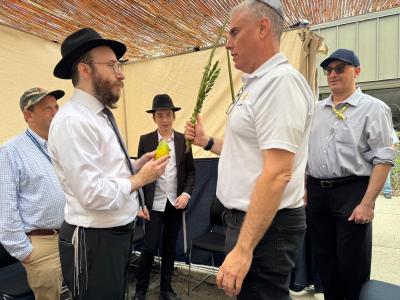
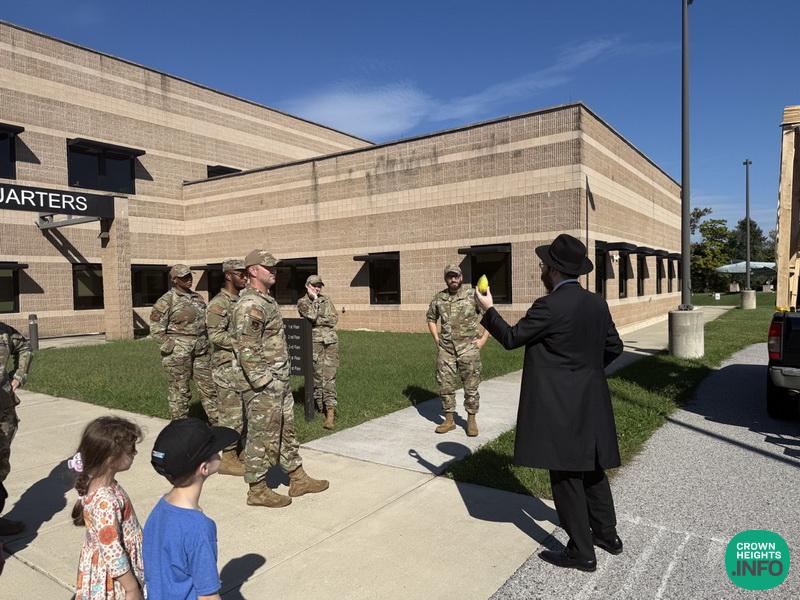 COLlive2 days ago
Chabad Brings Sukkos to Maryland Military Bases, First at 175th Wing
This Sukkos, Baltimore Shliach and Chaplain Rabbi Chesky Tenenbaum, director of the Jewish Uniformed Service Association of Maryland–Chabad (JUSA), brought the joy and traditions of Sukkos directly to Maryland’s military community.
For the first time, JUSA arranged a Sukkah at the 175th Wing at Warfield Air National Guard Base. One Staff Sergeant was especially appreciative, explaining that the Sukkah allowed him to eat his meals in a Sukkah while working on base.
The Sukkah also led to an unexpected Jewish discovery. A Tech Sergeant stopped by the Sukkah and shared that, although she does not identify as Jewish, she said her maternal great-grandmother was Jewish. Rabbi Tenenbaum explained that according to halacha she is considered Jewish.
Rabbi Tenenbaum then explained the significance of Sukkos and the mitzvah of Lulav and Esrog. Intrigued, the Tech Sergeant expressed an interest in participating but explained that she did not speak Hebrew. Rabbi Tenenbaum assisted her in reciting the brocha, and she held the Lulav and Esrog and performed the mitzvah for the first time in her life.
At Aberdeen Proving Ground, the U.S. Army’s oldest active proving ground, JUSA continued its ninth consecutive year of providing a Sukkah in the courtyard of the APG Main Post Chapel.
On the first day of Chol Hamoed, JUSA hosted a Sukkah Party that brought together a strong turnout of soldiers and civilian staff. Participants had the opportunity to recite the blessing over the Sukkah, shake the Lulav and Esrog, and celebrate the joy, unity, and traditions of Sukkos together. During Chol Hamoed, Jewish soldiers and civilian employees were able to use the Sukkah,
JUSA thanks the APG Chapel and the military communities at both installations for helping make these Sukkos celebrations possible.
Throughout Sukkos, the JUSA Chabad House hosted a variety of programs and activities. Among the highlights was a visit from the local Jewish Baltimore Police commander, who joined the JUSA community to do the Mitzvah of Lulav and Esrog.
The JUSA Chabad House located in Baltimore, an affiliate of Chabad of Maryland is the only such Chabad House of its kind dedicated to Maryland Jewish Men and Women in Uniform, including Military and Veterans, Law Enforcement and First Responders. For more information go to, jewishusamd.org.
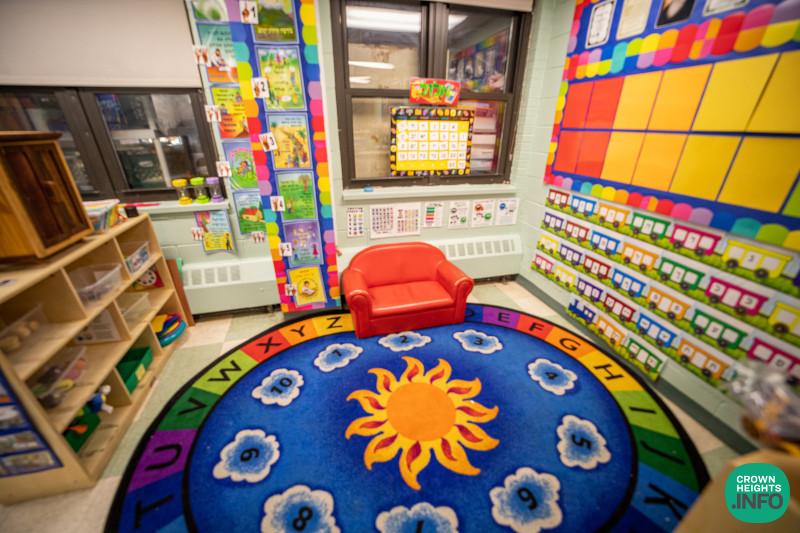 CrownHeights.info
Major Expansion Of Childcare Voucher To Bring 10,000 NYC Children Off of Wait List
Related stories

 Boropark243 days ago
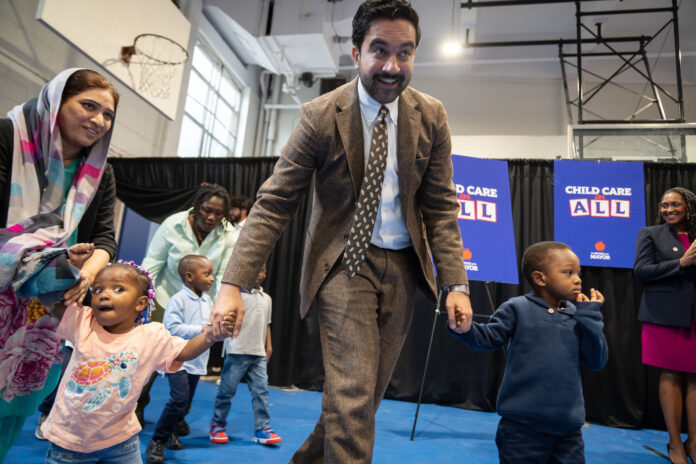 Vos Iz Neias3 days ago
 Boropark243 days ago
 Williamsburg 3653 days agoCrownHeights.info2 days ago
Major Expansion Of Childcare Voucher To Bring 10,000 NYC Children Off of Wait List
Major Expansion Of Childcare Voucher To Bring 10,000 NYC Children Off of Wait List
Today, State Senator Sam Sutton and Assemblyman Simcha Eichenstein released the following statements applauding the announcement that over 10,000 New York City children are finally being moved off the childcare voucher waitlist. The lawmakers emphasized that this monumental step was directly enabled by the state legislature’s landmark $1.2 billion expansion of the Child Care Assistance Program (CCAP), which was passed in the New York State Budget earlier this year with the strong support of Governor Kathy Hochul.
With New York City announcing today that they are beginning the administrative rollout to clear the backlog, Sutton and Eichenstein applauded this long-awaited relief that they championed during the state budget negotiations and celebrated today’s victory which is a direct result of the state fiscal victories secured in Albany during the budget.
“I’ll never stop working to make life more affordable for New Yorkers — and that’s why I took action to expand childcare access and help even more families save thousands of dollars per year,” Governor Kathy Hochul said in a press release announcement today. “Our record investments in childcare across New York will enable communities statewide to continue this progress every day by connecting more families with the support they need and deserve.”
“While we are pleased to see the City finally processing these critical vouchers, let there be no mistake: this day was made possible by the hard work of the State Legislature and Governor Hochul,” said State Senator Sam Sutton. “When we negotiated a historic $1.2 billion addition to childcare funding in the state budget, it was with the explicit intent of delivering direct, tangible relief to working families who have been stuck on waitlists for far too long.”
“Families in our communities have been struggling under the crushing weight of childcare costs, and clearing this waitlist is an incredible victory,” said Assemblyman Simcha Eichenstein. “I want to thank Governor Hochul for championing this funding during the budget season. Proper childcare is a top priority for every parent and often families are forced to weigh the benefits of a quality care program while considering the prohibitive expenses involved. This new funding will ease the burden for thousands of families, allowing parents the much-needed relief during these challenging times.”
Senator Sutton and Assembly Member Eichenstein remain committed to monitoring the administrative rollout to ensure that New York City processes these vouchers efficiently and without unnecessary bureaucratic delays, allowing families to access the state-funded care they were promised.
Related stories
Boropark243 days agoVos Iz Neias3 days agoBoropark243 days agoWilliamsburg 3653 days ago COLlive
Five Nights of Endless Simcha: Simchas Beis Hashoeva 5787 Recap
Related stories
 COLlive6 days ago
 COLlive6 days ago
 COLlive6 days ago
 COLlive7 days agoCOLlive2 days ago
Five Nights of Endless Simcha: Simchas Beis Hashoeva 5787 Recap
Forty-six years ago, on Sukkos 5741, the Rebbe spoke non-stop about the ideas of Simchas Beis and the importance of simcha. That vision continues to inspire this celebration today.
This year’s Simchas Beis Hashoeva was something to remember! Every night the streets pulsed with music, dancing and unfiltered joy, as Crown Heights became a living celebration of Achdus and the community spirit that makes our neighborhood shine. Each night also featured a Sicha of the Rebbe, inspiring and uplifting everyone who came.
Over 95,000 people joined the dancing in the street over Chol Hamoed, and thousands more joined from around the world on the brand-new SBH.live.
This Year by the Numbers:
100,000 views on SBH.live • 95,000 unique people dancing in the street over Chol Hamoed streaming from 5 live cameras for 5 nights.• 20,000 visitors who received an Ohr Hachasidus booklets • 20,000 bottles of water, free • 18,000 pastries, free • 14,000 light-up toys given to kids • 10,000 kids at the nightly kids program • 6,158 Tickets in all the Raffles • 2,500 teens at the farbrengen Sukkah • Over 2,000 donors • 1,400 letters in the Sefer Torah • 500 women at the first-ever women’s Simchas Beis Hashoeva • 42 guest performers and bands, including Joey Newcomb, Eitan Katz and Yoni Z • 10 Farbrengens in English and Yiddish
A tremendous thank you to everyone who helped make this year’s Simchas Beis Hashoeva possible:
Our Partnership
Yossi Cohen and his amazing son, Mendy, for their incredible partnership and dedication.
Community Leadership & Organizations: The Rabbonim, Menahalei Hamosdos of Crown Heights, Vaad Hakohol of Crown Heights, Shomrim — Mendy Hershkop, Hatzalah, Shmira — Yanky Prager and Sruli Yavich, The 71st Precinct, Sergeant Barrata, Detective Connors
Special Thanks: Yossi and Mica Soffer of COLlive, Rabbi Yossi Langsam, Rabbi Yossi Bryski, Shaya Gordon, Yaacov Behrman, Izzy Clapman, Rabbi Shimmy Weinbaum, Rabbi Levi Goldstein, Chanie Greenbaum, Chana Deren, Sara Blau, Mendel Mintz, Moshe Rubashkin
Our Generous Donors: Reb Eliyahu Schlossberg, Pinny and Sary Althaus, Sami Dornbush, Meir Kabakov, Keren Hachomesh, The Minkowitz Family, Moshe Rubashkin, Duchman Family, Keren Hashluchim
Our Corporate Sponsors:
Event Sponsor: Ahava Medical
Gold: COLlive, Voya Jet, Eagle Prep, Brough Cap, Simpo Travel, Biarritz Pizza and Wine Bar.
Silver: Plumbers Haven, Bhired, CH Butcher Grill, Ch Butcher, Bais Shmuel, Tzfasman, IDCC, Mask Parents, Brooklyn Brokerage, Atica, Benzs, Raskin, Everything But The Baby, ODA Medical, Primo, Machon Stam
The Team Who Made It Happen
Headed by our production team, Shmuli Wudowsky and Mendy Hirsch,
Meir Avtzon, Mendel Treitel, Mendel Meretzky, Levi Paris, Levi Mann, Mendel Fogelman
And all the Bochurim who worked tirelessly behind the scenes and gave so much of themselves to make Simchas Beis Hashoeva the incredible success it was.
We are deeply grateful to each and every person who played a part.
Nightly Raffle Winners
Raffle 1 • $1,800 at Tzfasman Jewelers: Moishe Feiglin • Mikvah Meir Pass & a Primo Hat: Solomon Berezin • Chayenu & Derher Subscriptions: Rivkah Goldberg Raffle 2 • $1,200 at Atica Menswear: Hershel Lustig • Everything But The Baby – Doona Carriage: Raizy & Yossi Edelman • Prestige – Leather Tallis Bag Set ($700 value): Leibel Hakohen Raffle 3 • $1,200 at Modway Furniture: Tzeite Shemtov • Mechon Staam Megilah or Rashi Tefillin ($1,600 value): Detty Leverton • $500 at Butcher Grill & $500 at Biarritz Pizza and Wine Bar: Menachem Korf • $1,000 at Tzfasman Jewelers: Chani Kopfstein Raffle 4 • Primo Chosson Package ($1,200 value): Yanki Vorchheimer Elite Sterling ($1,500 value): Yosef Gerlitzky • MacBook Pro: Anonymous • $1,200 at Plumbers Haven: Grand prizes: Shmuel Malkin Dollar from the Rebbe, dedicated in honor of Rabbi Yisroel Shemtov: Devorah Benjamin • x2 round trip tickets to Eretz Yisroel, courtesy of Simpo Travel: Ari Rubinstein • Yom Tov Package from CH Butcher, Eber’s Liquor & Wine and Raskin’s Fish (Bonus $1000 at Modway): Shmuli Shubov
We are still working to reach our goal. Anyone who would like to take part in all of the above can still donate at SBH.live. Every contribution helps cover this year’s production and helps Simchas Beis Hashoeva grow even more next year.
May Hashem give our grandfather many long, happy and healthy years, and may we merit to watch Simchas Beis Hashoeva grow to even greater heights, with the coming of Moshiach now!
With heartfelt thanks and brachos,
**Rabbi Yisroel Shemtov – Director
**and grandchildren, Meir Deren and Arik Deren, organizers
Related stories
COLlive6 days agoCOLlive6 days agoCOLlive6 days agoCOLlive7 days ago COLlive2 days ago
Hundreds Join Simchas Beis Hashoeva in Miami Beach
Hundreds of residents and visitors gathered in Miami Beach for a community-wide Simchas Beis Hashoeva celebration featuring popular Chasidic singer Benny Friedman.
The outdoor event was held on 40th Street, between Prairie and Royal Palm Avenue, bringing together members of the diverse Miami Beach Jewish community for an evening of Sukkos joy and celebration.
Friedman performed a lively selection of Jewish music as participants joined in spirited dancing in honor of Simchas Beis Hashoeva.
Speaking at the event were Rabbi Leibel Schapiro, Rosh Yeshiva of Yeshiva Gedolah of Greater Miami and Rav of Beis Menachem in Miami Beach, and local dignitaries.
The evening also featured music and entertainment for children, providing a festive atmosphere for families throughout the three-hour celebration.
A sukkah was available on the premises, and food was offered for purchase.
The celebration was held with the participation and support of numerous local shuls, Jewish organizations and community institutions, bringing together Jews from across Miami Beach for a shared evening of achdus and Simchas Yom Tov.
 COLlive2 days ago
Women in Conversation: When Opposition Becomes Light
What if the interruptions, resistance and challenges in a woman’s day are not getting in the way of her purpose, but are the very place where her light is waiting to emerge?
In honor of Parshas Bereishis, Sara Blau sits down with author, life coach and public speaker Dr. Chava Green for a candid conversation about “The Feminine Paradox: Ezer Kenegdo, Opposition that Births a Luminous World” and what the Alter Rebbe’s words mean in a woman’s real life.
Green’s book, the first release from the publishing house she founded, Inner World Press, presents the maamer “Lo Tov Heyos HaAdam Levado” from Torah Ohr on Parshas Bereishis in the original Hebrew, in English translation and, as Green puts it, “translated into life.”
At the heart of the conversation is a new way to see opposition.
“The feminine paradox is that we are the ezer knegdo,” Green says. “We are given the power to take whatever challenges come around us and find some sort of additional light.”
That idea does not remain theoretical for long. Green shares how a personal motto from the maamer carried her through a pain-free birth, how a bag of marshmallows transformed a difficult playgroup morning, and how her baby waking just five minutes before the recording became a living example of the very teaching she had come to discuss.
The conversation explores why this maamer speaks so directly to women, how ezer knegdo can turn resistance into growth, and how a woman’s avodah brings the physical and spiritual together. Green also discusses tznius through the lens of klipa nogah, “a shell that shines,” and challenges viewers to coin a word for the work of translating Chassidus into women’s day-to-day lives.
She also offers a preview of her next book, expected next year, which will explore pregnancy as galus, birth as geulah and mother’s milk through a maamer from Parshas Va’eira.
The result is a warm, practical conversation about finding light not after the challenge has passed, but within the challenge itself.
“What a beautiful way to go into Shabbos Bereishis,” Sara Blau says at the close. “The way we are on Parshas Bereishis, that’s how we go all year.”
Watch the full conversation:
“The Feminine Paradox” is available on Amazon.
 COLlive2 days ago
Nassau County GOP Chair Visits the Ohel
Nassau County Republican Chairman Joseph Cairo recently visited and prayed at the Ohel of the Rebbe in Queens, New York.
He accompanied by attorney Howard Fensterman, and businessman Chris Hine.
He was greeted there by Rabbi Shalom Paltiel, Director of Chabad of Port Washington, and Rabbi Anchelle Perl, Director of Chabad of Mineola.
Before entering, both rabbis explained the significance of such a visit. The Ohel reminds us that whatever position or influence we may possess, ultimately we stand before G-d with the same question: How can I use what I have been given to bring more goodness into the world?
The group wrote personal notes and spent quiet moments in prayer at the Rebbe’s resting place.
Afterward, Cairo asked about the traditional washing of the hands—pouring water alternately over each hand three times.
Rabbi Perl offered a Chassidic insight: the six pourings can represent the six emotional attributes of the human personality—kindness, discipline, compassion, perseverance, humility and connection. Each is powerful, but each needs proper direction.
Water symbolizes wisdom and intellect. The message, Rabbi Perl explained, is that our emotions cannot simply run wherever they wish. The heart must be refined and directed by a thoughtful mind.
It was an appropriate lesson for the entire visit, particularly for anyone entrusted with leadership.
Leadership requires heart, but the heart needs direction. Influence is a gift, but also a responsibility.
Perhaps that is what one carries away from the Ohel: we arrive with our prayers and requests for blessing, but we leave asking what we can do to become a blessing to others.
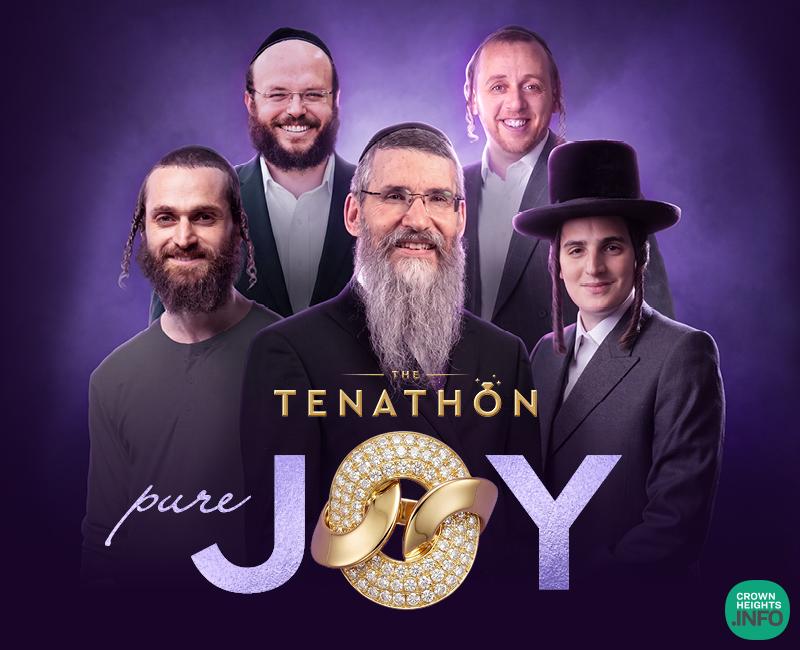


 COLlive2 days ago
The Pure Joy Continues: Tenathon 7 Takes Center Stage
The holidays of Zman Simchaseinu may be behind us, but at Ten Yad, the Pure Joy is only beginning.
The 2026 Ten Yad Auction is officially underway, and with TENATHON 7 just a few weeks away, excitement is building for what promises to be an unforgettable night at the Union-Bedford Armory on Sunday, November 1.
The 2026 Ten Yad Auction is filled with extraordinary opportunities to win, including a personal Sefer Torah, a $20,000 Cartier or Piaget watch, a two-year Tesla or Rivian lease, $18,000 at Molly’s Jewelers, $15,000 in custom furniture, magnificent jewelry, luxury travel, home furnishings, shopping experiences, and dozens of additional prizes.
But the experience does not have to end with the auction.
Special packages bring the Auction and TENATHON 7 together, giving participants both more opportunities to win and the chance to experience the show live at the Armory, subject to availability.
And for those looking to experience TENATHON 7 at its fullest, the VIP All-Access Pass offers full dinner, the opportunity to meet the performers, premium round-table seating, and more.
With limited seating at the Armory, now is the time to choose your auction package and secure your place at TENATHON 7. Explore the Auction + Event packages at TenYad.org.
With every auction ticket you purchase, you enable Ten Yad to provide meaningful assistance to more than 1,300 Kallahs, helping furnish their homes, provide essential household items, beautiful sheitels and gowns, and ease the financial burdens that can overshadow the beginning of married life.
That is Pure Joy.
The pure joy of giving.
The pure joy of winning.
The pure joy of being there when five extraordinary voices fill the Armory.
And above all, the pure joy of helping another Jewish home begin with dignity, confidence, and simchah.
On November 1, it all comes together.
TENATHON 7: An Evening of Pure Joy
AVRAHAM FRIED • MOTTY STEINMETZ • EITAN KATZ • SHMUEL • SRULY GREEN
Sunday, November 1, 2026 | Union-Bedford Armory
Doors Open 6:00 PM | Show Begins 6:30 PM
Secure your Auction Tickets and reserve your Seat for TENATHON 7 at TenYad.org.
 CrownHeights.info
NY Declares State Disaster Emergency Over Measles Outbreak in Rural Communities
Related stories

 5 Towns Central2 days ago
 Yeshiva World News2 days ago
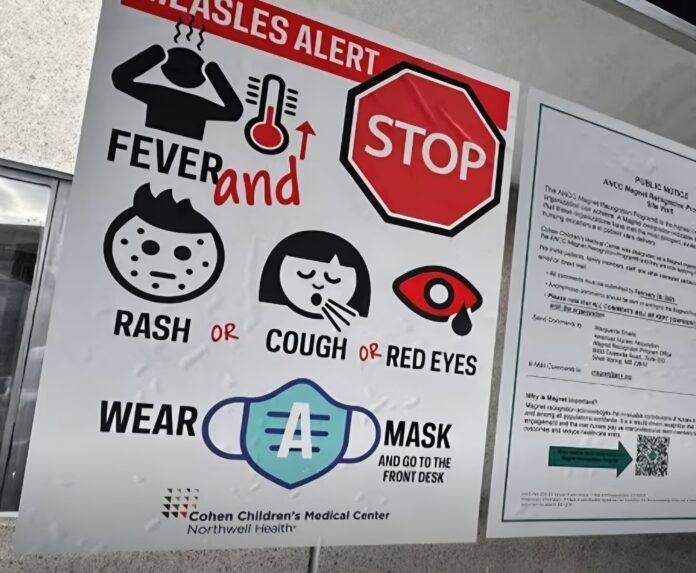 Vos Iz Neias2 days ago
 Matzav3 days agoCrownHeights.info2 days ago
NY Declares State Disaster Emergency Over Measles Outbreak in Rural Communities
NY Declares State Disaster Emergency Over Measles Outbreak in Rural Communities
Gov. Kathy Hochul declared a state disaster emergency on Monday after a surge in measles cases across rural New York and nearby states.
Hochul issued the executive order to allow the state to respond swiftly to the measles outbreak and allow healthcare professionals to vaccinate more New Yorkers against the highly contagious disease.
As of Saturday, there have been seven confirmed cases in New York City and 101 cases in the rest of the Empire State this year.
Related stories
5 Towns Central2 days agoYeshiva World News2 days agoVos Iz Neias2 days agoMatzav3 days ago
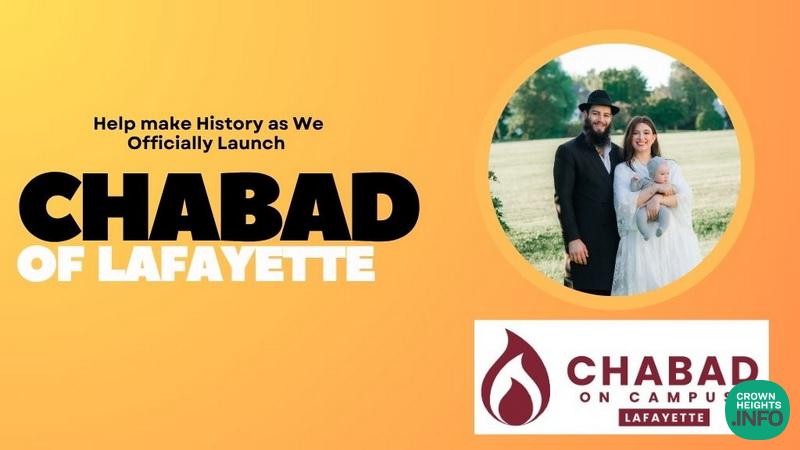 CrownHeights.info2 days ago
New Shluchim to Serve Jewish Students at Lafayette College
New Shluchim to Serve Jewish Students at Lafayette College
by CrownHeights.info
Rabbi Sadya and Chanale Liberow are embarking on a new chapter as they join the Rebbe’s army of Shluchim, taking up a new campus Shlichus at Lafayette College in Easton, Pennsylvania.
The Liberows will serve Jewish students at Lafayette as well as the broader Jewish community in Easton and the surrounding Lehigh Valley, working in connection with Chabad of the Lehigh Valley. Their goal is to establish a warm and welcoming Jewish home on and around the college campus, where students can connect with their Jewish heritage and experience the warmth of Yiddishkeit.
Lafayette has an established Jewish presence, with approximately 250 Jewish undergraduate students—about 9% of the student body, according to local Jewish organizations.
The Liberows hope to complement and expand Jewish life on campus by being a personal address for students throughout their college years—providing opportunities to celebrate Yiddishkeit, build meaningful friendships, learn about their heritage and experience Jewish life in a personal and welcoming environment.
“We are excited and humbled to be embarking on a new chapter of life,” the Liberows said. “We are passionate about this mission and the impact it can have on the Jewish students we meet and the wider Jewish community.”
The couple is now looking forward to bringing the Rebbe’s message of Jewish warmth and light to a new generation of Jewish students in Easton and throughout the region.
To Donate to their Shlichus: Click Here

 CrownHeights.info2 days ago
Information to be Menachem Avel the Chitrik Family
Information to be Menachem Avel the Chitrik Family
The Chitrick Family will be sitting Shiva in Crown Heights for the passing of Mrs. Rivkah Chitrik OBM
Shiva will take place at at 1400 President St throughl Friday 2:00pm.
Shiva Times:
10:00 AM – 2:00 PM.
4:00 PM – 9:00 PM.
Shacharis: 8:00 AM & 9:00 AM.
Mincha & Maariv bizmanom.
Friday 2 Minyonim for Mincha at 1:15PM.
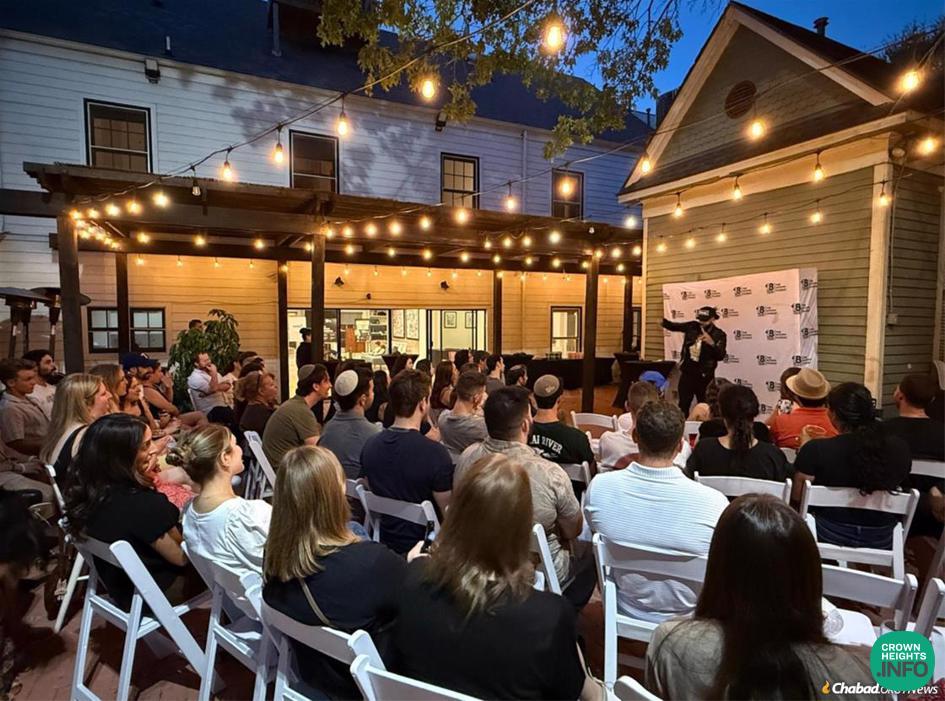 CrownHeights.info2 days ago
In Dallas, Hundreds of Young Jews Fill Synagogue Over Holiday Season
In Dallas, Hundreds of Young Jews Fill Synagogue Over Holiday Season
by Faygie Levy Holt – chabad.org
In a world in which Jewish non-profit professionals and consultants try to come up with all sorts of ways to attract young Jews, The Intown Chabad in Dallas, Tex., has been successfully doing just that.
The secret? Offering young Jews the opportunity to engage with authentic Judaism.
The success of Intown Chabad’s model was on display again over the week of Sukkot and Simchat Torah, when the center kept getting busier as the holiday went along.
“There are lots of companies moving here, and with them, many young Jews along with them, right into our neighborhood,” says Rabbi Mendy Plotkin, who leads the center alongside his wife Mushka. “I get four to five calls each week from the people on the East Coast relocating to Dallas, keen to hear about the local Jewish community. When new people come, they see the Shabbat dinners, classes, and programs and find new friends to socialize with, that’s really comforting.”
Zach Pokroy felt that welcome soon after he moved to Dallas. A friend of his sister’s invited him to a hockey game and mentioned he was also bringing a rabbi along. That rabbi was Plotkin, who, with his wife, had recently moved to Dallas to work with Rabbi Zvi and Aidy Drizin. Their job was to offer programs for the many young professionals moving to the city.
“I just vibed with Rabbi Mendy,” Pokroy recounts. “He told me about all the things he was planning, and I just got plugged right in. They have this go big or go home attitude and they do that very nicely.”
A Chabad Center for the Post-College Crowd
The history of The Intown Chabad dates back to the early 2000s, when Rabbi Mendel Dubrawsky, regional director of Chabad-Lubavitch of Dallas, began offering a weekly class for singles in the Uptown neighborhood. When the Drizins, Dubrawsky’s daughter and son-in-law, arrived in Dallas as emissaries in 2004, they began providing more programming to the young professionals living in the Uptown area, and moved there three years later, and so The Intown Chabad was born.
The Drizins invited the Plotkins to join them in their work in 2022, and have since started a Chabad on Campus at Southern Methodist University (SMU), just three miles away. They remain heavily involved with The Intown Chabad, serving as development directors among other roles.
The Plotkins offer the full range of programming found at any Chabad center, along with programs built for younger Jews. Intown’s ‘First Friday,’ held on the first Shabbat of each month, draws between 250 and 300 people. Most are singles, and new faces keep coming. The evening starts with Friday-night Shabbat prayers, followed by a dinner where people can spend time connecting and meeting each other.
To make their activities as successful as possible, and to make sure they meet the needs of the young people in their community, the Plotkins rely on a leadership team of young adults.
“We want to empower young adults to lead our community today,” Plotkin says. “We can’t wait until they are 40 or 50 years old to lead. Now is when they are choosing who to marry and how to raise a family and incorporate Judaism into their lives.”
‘We Can Have A Huge Impact’
Among The Intown Chabad’s young leaders is Chaia Geltser, a Denver native who says she grew up “disconnected” from her Judaism. She began to explore her Jewish identity as a student at Colorado State University, through the Chabad emissaries there. When she moved to Dallas for medical school, joining Intown Chabad was a no-brainer.
“I have picked up so many things in my Jewish practice because of Intown, whether that’s lighting Shabbat candles or hosting a Shabbat meal, studying Torah or learning more about the holidays or traditions,” she says.
“I think my life centers around Chabad and everyone I have met there. My closest friends are from Chabad, and I see them multiple times a week. We have dinner together. We travel together. We are friends for life. I go to as many Jewish educational events as I can, whether it’s a Tuesday night dinner or ‘Soul Talk’ with the rebbetzin on Shabbat. Intown Chabad is a place for me to learn, meet people and give back with Our Giving Kitchen.”
Our Giving Kitchen
Our Giving Kitchen began as an initiative of Chabad in Pittsburgh, founded by Plotkin’s sister and brother-in-law, Rabbi Chezky and Bassie Rosenfeld. It has quickly become a signature program at The Intown Chabad, providing hundreds of meals to people in need.
“It’s really fulfilling to know that thanks to such a small Jewish community, relative to the rest of Dallas, we can have such a huge impact,” says Geltser. “And the fact that we can share Jewish values with other people, whether they know it or not, is gratifying.”
Geltser and Pokroy both lead fitness programs through the Chabad center. Pokroy organizes basketball, pickleball and golf tournaments, and Geltser leads a running club. They may not sound like typical Jewish events, but they give young Jewish professionals another way to build community and meet other Jews their own age.
“I think we are lucky in Dallas,” says Pokroy, “because if I didn’t have a Chabad center like this, I don’t know if I would be so set on staying here.”
 COLlive3 days ago
17-Year-Old Bochur Critically Injured in Crown Heights
A 17-year-old bochur who was in Crown Heights for Simchas Torah was critically injured following a serious incident.
The bochur, identified as Shneur Zalman Neiman, was among those who had come to spend Simchas Torah at 770 Eastern Parkway.
According to the campaign to help for his recovery, his parents shared that Shneur had fallen and suffered a severe head injury.
He was rushed to the hospital, where he is currently sedated and on life support.
His parents, R’ Shloime and Talia, are on the way to New York to care for him.
Friends and members of the community have urged the public to daven for his complete recovery.
His name for Tehillim is Shneur Zalman ben Talia Natasha.
A fundraising campaign has also been launched to assist the Neiman family during this difficult time.
The devastating situation that has suddenly befallen the family involves enormous expenses, including travel costs, accommodations, and urgent needs to ensure that every possible effort is made, through natural means, to bring about a miracle.
Donate at Charidy.com/shneorz


 COLlive3 days ago
Last Chance: Lemaan Yilmedu’s Semicha for Bochurim Starts Sunday
Lemaan Yilmedu’s Smicha course was created specifically with bochurim in mind, taking the well established classic Lemaan Yilmedu Smicha curriculum and reconfiguring it to better fit the structure of a bochur who wants to learn Smicha while on Shlichus or in Yeshiva. This year the program is being offered at a special subsidized price of $2,040 instead of $3,420.
Every bochur knows that the Rebbe mentioned time and again that it is important for bochurim to learn and receive Smicha before they get married.
The knowledge they acquire will serve as the basis of the home that they will establish upon the foundation of Torah and Yiras Shamayim and will enable them to feel empowered to serve as the ‘Rav’ of their home.
Lemaan Yilmedu’s Smicha course was created specifically with bochurim in mind, taking the well established classic Lemaam Yilmedu Smicha curriculum and reconfiguring it to better fit into the structure of a bochur who would like to learn Smicha while on Shlichus or in Yeshiva. The program begins right after Tishrei and concludes on Gimmel Tammuz, just before all summer plans begin!
The year-long program will cover all of the topics that are generally covered in any Smicha: basar b’chalav, taaruvos and melicha.
At the beginning of the program, every participant will receive all the learning materials of LemaanYilmedu which includes a Shulchan Aruch with summaries and an English Translation, summary booklets and booklets with diagrams as learning aids.
The program will have a daily shiur at 1:15 p.m., for an hour. The shiurim will be given by Rabbi Yossi Barber who has over ten years of experience in giving shiurim in semicha, particularly to bachurim, both at the Machon Lemaan Yilmedu and in kollelim and yeshivos.
The shiur will be given over Zoom so that every bachur can participate wherever he is, in yeshiva or on shlichus. After the shiur, participants will be given access to a recording of the shiur, both video and audio, so they can review it (and in case it wasn’t possible to see the shiur when given live).
During the school year, there will be several tests and those who pass them will receive a semicha certificate signed by top Chabad rabbanim.
The Semicha program for bachurim is subsidized, leiluy nishmas Harav Zushe Wilhelm a”h, head of Machon Lemaan Yilmedu in the U.S., to enable talmidei ha’yeshiva to learn and receive a semicha certificate. Therefore, it is meant only for yeshiva students. Registration for the program requires confirmation that one is attending yeshiva for the upcoming school year.
This year the program is being offered at a special subsidized price of $2,040 instead of $3,420.
Course Details:
Start date: 30 Tishrei 5787, October 11, 2026
Course Duration: 9 Months
Class time: 1:15 – 2:15 pm
For more information and for registration: https://www.lemaanyilmedu.com/product/semicha-bochurim
 COLlive
Chaim already fought so hard. His family thought the nightmare was finally behind them.
Related stories


 COLlive3 days ago
Chaim already fought so hard. His family thought the nightmare was finally behind them.
“Mommy, if I beat cancer once, why did it come back?” 💔
Chaim Rubin is only 7 years old.
A year ago, after more than a year of difficult treatments, his parents finally heard the words they had been praying for: Chaim had beaten cancer.
He went back to school, back to his friends, and back to simply being a child.
But at the beginning of Av, everything changed again.
The seizures returned, and then came the devastating news:
Chaim has already started treatment to help control the disease, but to give him the chance he desperately needs, his family must now get him to the United States for advanced treatment.
The hospital requires a significant deposit upfront, and after already using their savings and everything they had available, the family simply cannot do this alone.
Every donation can bring Chaim one step closer to the treatment he needs and another chance to fight.
🙏 Please open your heart for Chaim ben Yael.
 COLlive3 days ago
Crown Heights Lefferts Park Set for Upgrades and Redesign
Brooklyn Borough Parks Commissioner Marty Maher and Council Member Rita Joseph recently toured Hamilton Metz Park, also known as Lefferts Park in Crown Heights, to assess its condition and discuss a potential redesign and investment in the space.
During the walkthrough, they discussed how the park is used and which improvements would most benefit families, young people, and neighborhood residents.
“As a longtime educator and parent, I understand the critical importance of positive alternative activities. We’re going to work to enhance and upgrade the park,” Joseph told COLlive.
An upcoming community meeting will give residents an opportunity to share their ideas and priorities for the park. Their input will help shape future plans. The date, time, and location will be announced soon, and all community members are encouraged to attend.
Joseph also recently secured a $21 million investment towards upgrading Wingate Park.