
 Vos Iz Neias6 hours ago
BROOKLYN, N.Y. (VINnews) — Nassau County Executive Bruce Blakeman, the Republican nominee for New York governor, held a roundtable discussion Sunday afternoon with philanthropist Rav Yoel Landau at Landau’s Williamsburg home. The meeting, held on Rosh Chodesh Cheshvan, focused on issues facing the Jewish community.
The gathering was convened by Rabbi David Katz, executive director of the Israel Heritage Foundation, who has worked closely with both men. Photographs from the session show the three seated at a marble table in a wood-paneled library lined with shelves of seforim, with trays of pastries and refreshments.
Blakeman, the first Jewish county executive in Nassau County history, has emphasized public safety, fiscal restraint and opposition to antisemitism during his tenure. He launched his statewide campaign in December 2025 after securing a second term in Nassau and received the endorsement of President Donald Trump following the withdrawal of another Republican contender. Landau is a prominent Satmar philanthropist known for large-scale distributions to needy families, support for educational institutions and other community chesed initiatives in Williamsburg and beyond.
Katz, a Brooklyn resident and graduate of Yeshiva Torah Vodaas, leads the Israel Heritage Foundation, which works to support Israel’s security and sovereignty while combating antisemitism and promoting Jewish heritage. The foundation has organized political and communal engagements involving rabbis and public officials.
The discussion took place in the heart of Williamsburg’s Hasidic community, one of the largest concentrations of Orthodox Jews in the United States. Blakeman has previously engaged with Jewish communities in Brooklyn, including visits to Crown Heights, as part of his outreach on issues such as security, education and rising antisemitism.
No further details of the specific topics or outcomes of the roundtable were immediately available.

 Vos Iz Neias8 hours ago
(AP) – President Donald Trump must cancel any remaining television commercials paid for with millions of dollars in taxpayer money to promote his political message, a federal judge ordered on Sunday night, even as the administration said the ad campaign was coming to an end.
U.S. District Judge Jennifer L. Rochon in New York sided with a coalition that challenged the ads, including the nonpartisan watchdog Common Cause, who challenged the ads as an illegal misuse of funds. She told the administration to cancel any remaining ads, including any set to air Sunday night, in granting a temporary restraining order.
 Vos Iz Neias8 hours ago
WASHINGTON (AP) — President Donald Trump and Secretary of State Marco Rubio are considering firing U.S. Ambassador to Greece Kimberly Guilfoyle after a series of reports alleging she has engaged in improper and possibly illegal conduct before and during her tenure in Athens.
A senior U.S. official said Sunday that Trump and Rubio are “extremely pissed off” by Guilfoyle’s reported conduct and would likely decide on what action to take this week after Monday’s Columbus Day holiday.
The official, who spoke on condition of anonymity to discuss internal deliberations, said Rubio had been particularly angry, not least because he visited Athens just last week and Guilfoyle attended most, if not all, of his events and greeted him on his arrival with a bear hug as the allegations swirled.
In a series of stories, The Wall Street Journal has reported questionable conduct by Guilfoyle, including an alleged threat to a host country official, accepting improper gifts and services and offering to use her influence inside the administration in return for the payment of a large credit card bill.
Guilfoyle has not addressed the reports directly, although her lawyer has said she did nothing wrong and the U.S. Embassy in Athens has tacitly expressed support for her.
After defending Guilfoyle following the first report, Rubio has declined to comment publicly on the growing allegations. On Wednesday, Rubio said: “Our ambassador has been a strong ambassador here.”
But after another report appeared late Wednesday, Rubio on Thursday before leaving Athens berated journalists for asking about the allegations, saying he didn’t know if they were true and that he would not respond if he could not confirm them.
“You guys walk around thinking that because some source told you something and you reported it, it’s the gospel. It’s not the gospel. It’s not the gospel for me. That’s not the way we do things,” Rubio said at the foot of his plane as Guilfoyle, who was there to see him depart, looked on.
The official said that Rubio had grown increasingly frustrated as the reports multiplied.
A second U.S official, who also spoke on condition of anonymity to discuss personnel matters, said the State Department’s inspector general is looking into the allegations, which first began surfacing in the Journal late last month and have since multiplied.
The second official could not say if a formal IG probe had begun. Inspectors general often conduct informal inquiries into complaints against staffers and many times those inquiries do not result in a full-on investigation, which can result in disciplinary action up to and including dismissal.
The State Department has declined to comment on a potential IG investigation.
The top two Democrats on the House Foreign Affairs and Senate Foreign Relations committees, Rep. Gregory Meeks of New York and Sen. Jeanne Shaheen of New Hampshire, as well as the ranking member on the House Committee for Oversight and Government Reform, Robert Garcia, D-Calif., have already called for an investigation into Guilfoyle.
Since late September, the Journal has detailed numerous accounts of questionable conduct by Guilfoyle. Its first report said that she had told guests at a reception that the U.S. could undermine the Greek government if it chose to, promoted the business interests of one particular Greek construction and energy company, and allowed its lobbyist into private diplomatic meetings.
While Rubio was in Athens, the Journal reported — citing text messages — that Guilfoyle had asked a Trump donor and supporter to pay a $100,000 credit card bill just before her confirmation hearing, promising him access to administration officials if he did.
The Journal then reported that Guilfoyle had been enraged about not being invited to a Greek-themed event at the World Economic Forum in Davos, Switzerland, earlier this year and demanded to attend while boasting about luxury travel to France with energy company executives.
Another report, from the British tabloid The Daily Mail, said that Guilfoyle had alienated staff at the U.S. Embassy in Athens and had pushed the bounds of behavior appropriate for the top representative of the U.S. government to Greece.
Guilfoyle is a former Fox News Channel host and California prosecutor who was once engaged to Trump’s son Donald Jr.
 Vos Iz Neias8 hours ago
PHILADELPHIA (VINnews) — A 10-year Philadelphia police veteran was killed and a second officer was critically wounded early Saturday when a city Water Department employee ambushed them outside a West Philadelphia home, authorities said.
Officer Shane Seiber, 40, a married father of a 7-year-old son and 3-year-old daughter, was shot three times and died at Penn Presbyterian Medical Center shortly after 9 a.m., Police Commissioner Kevin Bethel said. His wife and other family members were at his bedside. Seiber, assigned to the 19th District, had served since 2016. A 33-year-old partner with nine years on the force and five children was shot 12 times; he remained hospitalized in stable but guarded condition as of Sunday.
Officers responded shortly after midnight to the 100 block of North 52nd Street following a report of a man with a gun on a porch. As they approached, 35-year-old Eric Lewis opened fire, striking both officers, Bethel said. Lewis then took one of the officers’ weapons, retreated into a rear alley, and continued shooting at nine additional officers who arrived, none of whom were hit. SWAT personnel located Lewis hiding in a tree roughly an hour later; he was taken into custody without serious injury. Police recovered a shotgun and two handguns, including one belonging to an injured officer.
Lewis, a trades helper for the Philadelphia Water Department since 2024 earning about $47,700 annually, faces more than 70 charges, including murder, homicide of a law enforcement officer, multiple counts of attempted murder and attempted homicide of law enforcement officers, disarming an officer, and weapons offenses. He was arraigned Sunday and is being held without bail at Curran-Fromhold Correctional Facility. The Defender Association of Philadelphia is representing him.
Court records show Lewis has a criminal history dating to 2012 that includes a conviction for theft and receiving stolen property (two years’ probation), a 2015 conviction for carrying a firearm in public and simple assault (five years’ probation, plus later court supervision), and a 2018 disorderly-conduct conviction involving fighting (additional probation). District Attorney Larry Krasner said Lewis had no felony convictions that would have barred him from legally possessing a firearm. Krasner described the shooting as a “brutal, senseless, horrific killing.”
District Council 33 of AFSCME, which represents municipal workers, confirmed Lewis’s employment and condemned the violence, saying it does not reflect the union’s standards. Mayor Cherelle Parker met with the officers’ families and called Seiber’s death the ultimate sacrifice. Gov. Josh Shapiro ordered flags lowered in Seiber’s honor. The incident is the fourth line-of-duty death of a Philadelphia officer in three years.
Bethel said the department is mourning while continuing its work, and investigators are reviewing body-worn camera footage. No additional injuries to officers or civilians were reported.
 Vos Iz Neias10 hours ago
SOUTH FLORIDA (VINnews) — Former Boca Raton Mayor Scott Singer, the Republican candidate challenging U.S. Rep. Jared Moskowitz in Florida’s 25th Congressional District, traveled to Qatar in May 2024 as part of a delegation of American mayors.
Singer met and was photographed with Abdullah bin Hamad bin Abdullah Al Attiyah, Qatar’s minister of municipality, during the visit tied to the Qatar Economic Forum, according to the Gulf Times. The group discussed potential cooperation on smart cities, infrastructure, municipal services, agriculture, food security and waste management.
The trip was first publicized by The Floridian.
Singer campaign spokesperson Michael Stwarka said the former mayor joined other U.S. mayors for the event at the same time a congressional delegation was in the country. He said Singer met with U.S. military personnel at Al Udeid Air Base, the then-U.S. ambassador and other government and business representatives.
“He gained a better understanding of the complex relationship between our nation and Qatar, and their potential for influence in our educational system,” Stwarka said.
Qatar has faced scrutiny from Jewish and pro-Israel groups since the Oct. 7, 2023, Hamas attacks on Israel. The country hosts Hamas political leadership and has provided financial support to the group. It has also been accused of contributing to campus antisemitism through substantial donations to U.S. universities.
Stwarka said that if elected, Singer “will introduce legislation that bans federal funding going to any educational institution that receives foreign funds from any foreign nation.” He added that Singer “will always be a steadfast supporter of our closest ally Israel and continues to be a strong voice against antisemitism.”
It was not immediately clear who funded the trip.
Moskowitz has been a vocal critic of Qatar’s relationship with Hamas and has called for greater accountability.
Also in the mayors’ group was Dearborn, Michigan, Mayor Abdullah Hammoud, who has drawn criticism for remarks that critics say have created a hostile environment for non-Muslim residents. In one instance, Hammoud told a Christian pastor objecting to a street naming that the pastor was not welcome in the city and that his departure would be celebrated with a parade.
Stwarka said Singer “does not share all the views of all who attended.”
The contest between Singer and Moskowitz has focused in part on which candidate is the stronger supporter of Israel in a district with a substantial Jewish population. Singer has argued that Moskowitz is constrained by anti-Israel elements in the Democratic Party, while Moskowitz has said a prominent pro-Israel Democrat can be more effective.
 Vos Iz Neias10 hours ago
JERUSALEM (VINnews) — Bagira Systems, an Israeli developer of military training and simulation systems, sees itself as operating on a comparable level with the country’s largest defense contractors within its specialized field, its chief executive said in a recent interview.
Yaron Mizrachi, president and CEO of Bagira, told the business daily Globes that the company views itself as standing alongside Israel Aerospace Industries, Elbit Systems and Rafael Advanced Defense Systems in the training and simulation niche. The remarks came roughly four months after Bagira completed an initial public offering on the Tel Aviv Stock Exchange.
Bagira projects 2026 revenue of 340 million to 380 million shekels (roughly $113 million to $127 million) and is targeting average annual revenue growth of 25% to 35% through 2030, according to company statements and the Globes report. Mizrachi described Europe’s ongoing military buildup as only beginning, saying, “A tsunami is coming, and so far, we’ve only felt the first ripples.”
The company, which trains forces in 22 countries, is expanding its presence across NATO members, increasing production capacity in Europe and evaluating potential acquisitions that could accelerate international growth, Mizrachi said. Bagira maintains a development and production facility in the Czech Republic in addition to its headquarters in Modi’in, Israel.
In the first half of 2026, Bagira reported revenue of about 163 million shekels, a 51% increase from the year-earlier period, driven largely by a more-than-fourfold rise in European revenue to roughly 94 million shekels. Net profit rose about 44% to approximately 54 million shekels. The company confirmed its full-year revenue guidance after the results. Its order backlog stood at 519 million shekels at the end of the half, down from year-end 2025 levels, a decline the company has attributed in part to the timing of government orders and currency effects.
Bagira was founded in 2004 by Arie Mizrachi, a retired brigadier general who previously served as chief artillery officer of the Israel Defense Forces. The family retains control following the June IPO, which valued the company at roughly 3.2 billion shekels before the offering. Yaron Mizrachi serves as president and CEO, while his brother Sagi Mizrachi is involved in senior leadership. The firm employs about 450 people and operates dozens of training facilities worldwide that serve hundreds of thousands of soldiers annually.
Its systems include live, virtual and constructive training tools such as the MAGNET force-on-force system, which enables realistic training without live ammunition, as well as mobile and joint-fires simulation platforms. The company has secured contracts with NATO members and other European forces, including work involving the British Army and Estonia.
Mizrachi has indicated that demand is being fueled by European plans to raise defense spending, including commitments toward higher percentages of GDP, and by lessons drawn from recent conflicts regarding the need for continuous, decentralized training of both active forces and reserves.
Bagira listed on the Tel Aviv Stock Exchange in June as one of the larger defense-related offerings of the year. The company has said it intends to use proceeds in part to support growth initiatives, including mergers and acquisitions.
Vos Iz Neias12 hours agoFamily getting up: Shacharis: 9:00 am Mincha: 15 minutes before rabeinu taam zman
Mr. Yakov Moshe Stern
Son
Mrs. Blima Chana Frenkel
Daughter
Mrs. Esty Katz
Daughter
 Vos Iz Neias12 hours ago
WASHINGTON (AP) — A bipartisan group of six senators on Sunday called for President Donald Trump’s administration to “immediately reverse course” on a plan to purchase diesel from Russia as part of an effort to lower high fuel prices.
Trump shocked lawmakers when he announced on social media Friday that he struck a deal with Russian President Vladimir Putin in a phone call. He said Russia will immediately supply more than 300,000 tons of diesel to the American and global market, followed by an additional 500,000 tons in November and 1 million tons “immediately thereafter.” Russia will deliver an additional 3 million tons “within a short period of time” after that, he wrote.
Four Republican senators and two Democratic senators signed onto the statement released Sunday in protesting the deal. They said the administration failed to consult with Congress or submit any explanation to justify its decision as required by statute.
“The United States should not provide Putin with a financial lifeline while Russia continues to kill Ukrainian civilians. The Administration must immediately reverse course,” they wrote.
The Republican senators who signed onto the statement are Sens. Susan Collins of Maine, Lisa Murkowski of Alaska, Thom Tillis of North Carolina and John Curtis of Utah. The Democratic senators are Sens. Jeanne Shaheen of New Hampshire and Richard Blumenthal of Connecticut.
Tillis, in an interview that aired Sunday on NBC’s “Meet the Press,” said there’s a legitimate case for saying the president is not following the law if the administration goes through with its diesel purchase plan.
“We were very clear that Russia is the aggressor. Russia is the one who can end this war by backing out of territory that they occupied,” Tillis said.
Trump’s announcement came just a few weeks after Congress passed legislation that directed Trump to impose substantial tariffs on the top importers of Russian oil or natural gas, with an exception for countries that import less than 15% of Russia’s natural gas exports and have taken significant steps to reduce those imports.
The congressional effort was aimed at cutting the flow of money Russia receives from oil and gas sales to finance its war against Ukraine.
The lawmakers also noted that Congress explicitly banned Russia energy imports in 2022 to prevent the United States from financing the war.
“Congress was clear: the U.S. should not import oil from Russia until it ends its aggression against Ukraine and ceases threats against our NATO Allies,” the six lawmakers wrote in their statement. “President Trump’s decision to allow Russian diesel imports to the U.S. runs directly counter to that law.”
Sen. John Barrasso, R-Wyo., said Trump is focused on reducing the cost of energy when asked whether the president’s action would be in violation of U.S. law.
“The president is balancing and has to make tough decisions,” Barrasso said on CBS’s “Face the Nation.”
He also encouraged Trump to enforce the sanctions law that Congress passed last month.
“This is just another point of leverage for the president to use against Putin in an effort to get a long-term solution in that part of the world,” Barrasso said.
Trump has recently sought to blame record U.S. diesel prices on Ukraine rather than the U.S.-led war in Iran, which has elevated world energy prices.
Vos Iz Neias12 hours agoFamily getting up:
Mrs. Chava Weinberg
Daughter
Mrs. Miriam Marcovic
Daughter
 Vos Iz Neias12 hours ago
TEL AVIV, Israel (VINnews) — Passengers aboard a FlyDubai flight from Dubai to Tel Aviv that was nearly brought down in an apparent hijacking attempt are organizing legal action seeking hundreds of millions of dollars in damages from the airline, Israel and potentially other authorities, according to an Israeli media report.
About 100 of the flight’s 174 passengers have authorized a committee to coordinate the effort, Calcalist reported Sunday. The remaining passengers have not decided whether to join the group or pursue claims independently.
The committee is headed by Tzvika Mans, CEO of Barak Leumi, an underwriting company who was involved in subduing the alleged attacker. Other members include Singapore-based attorney Tal Eisenberg and passengers Daniel Schlichter, Itai Perlman and Shir Maor.
The group has met with Israeli law firms and plans to consult international firms before selecting legal representation. It will present preliminary recommendations to passengers after completing those meetings.
Potential defendants include FlyDubai and Israel’s Transportation Ministry. Authorities in the United Arab Emirates and other countries could also face claims, particularly because some passengers are foreign nationals, Calcalist reported.
The case could raise complex legal questions because of the unusual circumstances of the incident, including an alleged attempt to seize control of an aircraft while it was diving and a struggle between the pilots.
Passengers are also examining whether agreements governing air travel between Israel and the United Arab Emirates under the Abraham Accords could be relevant to the case.
The incident occurred on Sept. 29, when the flight was traveling from Dubai to Tel Aviv. According to Calcalist, passenger Tali Mans heard shouting from the cockpit and alerted other Israeli passengers. They discovered that the co-pilot was allegedly stabbing the captain as the aircraft descended sharply.
Passenger Yaniv Hayun helped stabilize the aircraft, while other passengers, including Mans, restrained the co-pilot and assisted the injured captain. Another pilot traveling as a passenger helped land the plane in Saudi Arabia, from where the passengers eventually returned to Israel.
The passengers’ committee is continuing to assess its legal options, and the claims have not yet been filed, according to the report.
 Vos Iz Neias13 hours ago
JERUSALEM (VINnews) — Archaeologists have uncovered a 300-meter section of Jerusalem’s Lower Aqueduct, an ancient water system built during the Hasmonean period that carried water from Solomon’s Pools near Bethlehem to the Temple Mount.
The Israel Antiquities Authority excavated the section south of Kibbutz Ramat Rachel ahead of plans by the Israel Land Authority to build a new Jerusalem neighborhood.
The aqueduct was part of an approximately 21-kilometer system that transported spring water from the Gush Etzion area to Jerusalem. Designed to operate by gravity, it maintained a gradual downward slope of about one meter per kilometer, allowing water to flow without pumps.
“The Lower Aqueduct was an impressive engineering project, probably built in the time of the Hasmonean kings to supply water to Jerusalem,” said Benyamin Storchan and Gil Freid, the excavation directors for the Israel Antiquities Authority.
The system remained in intermittent use until about 100 years ago, they said.
Researchers found evidence of different stages of the aqueduct’s use and maintenance. The original water channel was built and plastered, while ceramic pipes were installed inside it during the Ottoman period about 500 years ago. Workers also plastered the aqueduct’s exterior walls and pressed small stones into the wet plaster.
The discoveries illustrate how the water system was repeatedly repaired to maintain Jerusalem’s water supply over centuries.
Amit Re’em, the Israel Antiquities Authority’s Jerusalem district archaeologist, described the aqueduct as an engineering achievement that required careful planning long before modern technology.
The authority hopes to develop a continuous park allowing visitors to walk alongside the aqueduct from southern Jerusalem toward the Old City. The initiative is being advanced with the Jerusalem Municipality and other partners.
Under current plans, the newly uncovered section will be incorporated into the main entrance of the planned neighborhood and made accessible to the public.
Yehuda Eliyahu, acting director of the Israel Land Authority, said the project would combine urban development with the preservation of Jerusalem’s historical heritage.
Heritage Minister Amichai Eliyahu said the aqueduct reflected the Hasmonean rulers’ efforts to expand Jerusalem’s capacity to accommodate residents, pilgrims and public life around the Temple.
The research will be presented this week at the 19th annual “New Studies in the Archaeology of Jerusalem and Its Region” conference, organized by the Israel Antiquities Authority, Tel Aviv University, the Hebrew University of Jerusalem and Tagliyot — Israel Institute of Archaeology.
 Vos Iz NeiasVos Iz Neias13 hours ago
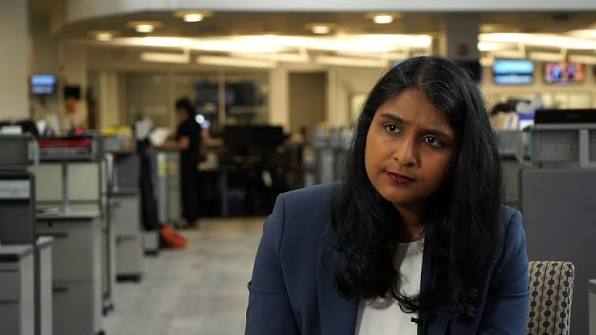
NEW YORK (AP) —NEW YORK — Republican attorney general candidate Saritha Komatireddy drew praise for her energetic debate performance against Democratic incumbent Letitia James, whose subdued delivery and apparent lack of energy became a focal point of criticism following their televised encounter.
Komatireddy, a former federal prosecutor and former chief of staff at the Drug Enforcement Administration, entered the debate as a relatively unknown challenger. She emerged with favorable reviews from conservative political figures who praised her preparation, confidence and command of the issues.
Former Michigan Republican Rep. Peter Meijer called Komatireddy “impressive” and praised one of her answers as among the best debate responses he had seen in a long time.
Republican political consultant Ryan James Girdusky was equally enthusiastic.
“She’s phenomenal. I can’t believe I’m just finding out who she is,” Girdusky said.
By contrast, James was criticized by conservative commentators who said she appeared low-energy and lacked the sharpness expected of an incumbent seeking another term. Her delivery struck some viewers as sleepy, particularly when compared with Komatireddy’s forceful exchanges and quick responses.
One moment that drew attention came when the candidates were asked to name a former New York attorney general they admired. James struggled to provide an answer, prompting moderator Errol Louis to remind her of the time limit. Komatireddy seized on the exchange with a pointed remark suggesting James admired only herself.
The debate also featured clashes over crime, Medicaid fraud and the use of the attorney general’s office. Komatireddy accused James of putting political battles ahead of the concerns of ordinary New Yorkers. James defended her record and challenged her opponent’s qualifications.
The contrast in presentation gave Komatireddy an opportunity to portray herself as prepared and energetic while raising questions about James’ performance. However, the commentators’ assessments reflect opinion, and there has been no independent measurement of how the debate affected voters.
No new poll yet measures the debate’s impact
Despite the favorable commentary surrounding Komatireddy’s performance, no new public poll has established whether she gained support following the debate.
The latest head-to-head survey identified for this article was conducted by the Siena Research Institute before the candidates met onstage. Released Sept. 23, it showed James leading Komatireddy 52% to 39% among likely voters, a 13-point advantage.
In August, James led 54% to 36%. The narrowing gap indicates that Komatireddy had gained ground before the debate, but it does not establish that the televised encounter changed the race.
The September survey questioned 1,144 likely voters from Sept. 11-17 and had a margin of error of 3.9 percentage points. More than two-thirds of voters either had not heard of Komatireddy or did not know enough about her to form an opinion, according to Siena.
With Election Day set for Nov. 3, Komatireddy faces the challenge of turning the attention generated by the debate into broader name recognition and voter support. New polling will be needed to determine whether the contest tightens further.
For now, the debate has given the Republican challenger a valuable opportunity to introduce herself to voters, while James faces criticism over a performance that some commentators characterized as sleepy and lacking energy.
 Vos Iz Neias14 hours ago
JERUSALEM (VINnews) — Prime Minister Benjamin Netanyahu has held several conversations with President Donald Trump since their call following the FlyDubai incident, including during the past week, an Israeli source told i24NEWS. Israel is not commenting on the content of the talks.
Netanyahu is also holding a restricted security consultation this evening.
Amid tensions with Iran and questions over whether Trump will resume military action against Tehran, the source said the U.S. president makes his decisions independently. He will decide when he is ready and retains the authority to change course, the source said. Officials remain in constant contact, with no daylight between the two sides on shared objectives, including the central goal of ensuring Iran does not become a nuclear power. The Americans also share the objective of regime change, according to the source.
The source added that Iran, Hezbollah and Hamas share the aim of bringing down Netanyahu’s government and would view that outcome as a success. All three are seeking to disrupt Israel’s elections, an issue being discussed openly with American counterparts. Israel is scheduled to hold Knesset elections on Oct. 27.
Separately, the source said Netanyahu’s public response to the recent Houthi attack was unusual given the severity of the incident. On Sunday, Netanyahu condemned a missile strike on Riyadh’s King Khalid International Airport that killed at least 12 people and wounded more than 300, describing it as a horrific terrorist attack and extending condolences on behalf of the Israeli people.
“They are suffering from what we are suffering, even though they have not recognized our suffering,” the source said of the Saudis. “We have a common enemy, and everyone should see it as such.”
 Vos Iz Neias14 hours ago
NEW YORK (AP) — As a teenager, Gillian Maegan Montalbo’s pimples weren’t too bad — just a few bumps on her forehead and nose.
But as an adult in the workforce, the breakouts returned and intensified. The acne on her cheeks and chin made her hesitant to look her bosses in the eye.
“It really took a toll on my self-esteem and my self-confidence,” said Montalbo, a marketer and content creator who lives in the Philippines.
Pimples and acne are an uncomfortable hallmark of teenage years, but adults can have breakouts too. Acne can also happen on other parts of the body like the chest and shoulders. And then there’s bacne, the internet’s term for back breakouts.
The best treatments vary from person to person depending on what’s causing the acne and how it looks. And breakouts can leave behind dark marks and scars that take even longer to heal.
Pimples come and go, but if breakouts stick around and cause discoloration or changes in skin texture, it’s a good idea to see a dermatologist.
“We know how to treat acne. We know the cause of it. So don’t suffer alone,” said Dr. Crystal Aguh, a dermatologist and director of the Ethnic Skin Program at Johns Hopkins School of Medicine.
The causes of acne can vary
Teenage acne tends to affect the forehead, nose and cheeks. Older adults and women in particular can experience hormonal acne that pops up along the jawline and chin, Aguh said. Taking steroids can also trigger acne for some people.
Pimples happen when tiny pores in the skin get clogged by oil, bacteria and dead skin cells. They can fade over the course of weeks to months, but if patches persist and spread, it could be a sign of acne, which dermatologists consider a medical condition.
“Essentially, you’re not getting a break from a breakout,” Aguh said.
Acne is caused by many factors including genetics, hormones, environment and even diet — like eating excessive amounts of dairy. The causes of facial and body acne are similar, although skin bacteria sometimes plays a larger role in body acne.
Breakouts can look like milder, painless white bumps or dark specks known as whiteheads and blackheads, or more painful red bumps and deeper cysts — a mark of cystic acne.
There are OTC and prescription treatments for acne
Don’t pick or pop your pimples, no matter how strong the urge or how satisfying it might be.
“Everyone wants to pick and squeeze. That will almost always make things worse,” said Dr. Lauren Fine, founder of Fine Dermatology in Chicago.
Picking can drive inflammation deeper into the skin and cause acne to spread. It also increases the risk of marks and scarring. For darker-skinned people, those marks take longer to go away because their skin produces extra pigment when stressed, Aguh said.
Treatments for acne range from over-the-counter creams and lotions to prescription-strength medications. Dermatologists say it’s somewhat easier to treat acne on the face compared to the rest of the body because the face has more sweat glands and doesn’t dry out as easily. It’s also harder to apply some treatments like creams to hard-to-reach areas like the back, so doctors often prescribe oral medications.
For milder forms of face acne, dermatologists may recommend face washes or creams containing benzoyl peroxide, salicylic acid or retinoids like adapalene.
For more frequent breakouts, they might prescribe higher-strength regimens like antibiotics or medicines with tretinoin. Isotretinoin may be an option if those medicines don’t work, or for cases of severe cystic acne.
Treatments for adult hormonal acne, particularly in women, can differ from what’s done for teens. Some dermatologists recommend birth control, which can help stabilize hormones, or treatments like spironolactone.
Shots of cortisone can help treat active acne spots in a pinch, but they aren’t a long-term fix, Fine said.
Pimple patches containing a gel called hydrocolloid can absorb fluids from oozing pimples and stop you from picking at them. Aguh said they are suited only for mild forms of acne; Fine said the patches have given some of her patients discoloration and she doesn’t recommend them.
Treat discoloration with exfoliants and face washes
Experts say exfoliants and face washes containing glycolic acid can help discoloration fade. Over-the-counter products containing adapalene and retinol creams can also help.
For more serious scarring, dermatologists can recommend more aggressive treatments like lasers that probe deeper into the skin.
It can take time to develop the right treatment plan, and longer still to see results. When starting a new treatment, some people can also experience skin purging: breakouts that happen when a product quickly brings clogged pores to the surface of the skin.
Montalbo’s acne cleared up within a year after seeing a dermatologist, but she was still dealing with acne scars. After that, she had to rebuild her self-confidence.
She said a strong support system was essential to getting through some of the hardest moments. Her dad, who also struggled with acne, was the one who encouraged her to see a doctor and find the right products. She also had a close friend who traveled with her overseas for a vacation during the worst of the breakouts, and mentioned in passing that she’d never even noticed Montalbo’s acne.
“When you are with the right people, they won’t mind how you look,” Montalbo said. “Because to them, what’s important is how you treat them.”
 Vos Iz Neias15 hours ago
JERUSALEM (VINnews) — The Israeli military on Sunday released footage it said shows armed Hamas operatives inside Kamal Adwan Hospital and planting an explosive device outside the facility in Jabalia, northern Gaza.
According to the Israel Defense Forces, the hospital continues to operate as a medical clinic during daytime hours while serving as a major hub for Hamas terrorist activity. The IDF said Hamas is using the hospital and surrounding area to advance attacks and rebuild capabilities, exploiting patients, medical staff and civilians as human shields in violation of international law.
The military stated that Hamas and Palestinian Islamic Jihad have used the site in recent years to plan and carry out attacks against Israeli civilians and IDF soldiers, despite repeated Israeli appeals to stop using medical facilities for military purposes.
In December 2024, IDF troops operated in the area around the hospital, locating extensive military equipment and weapons. Forces apprehended more than 240 Hamas and Islamic Jihad operatives, along with additional suspects, the IDF said.
The newly released material includes video of armed individuals inside the hospital, footage of operatives planting an explosive device outside the facility, and a January 2025 interrogation video in which a captured Hamas member describes activities in the hospital’s surroundings.
 Vos Iz Neias16 hours ago
WASHINGTON (AP) — Two years after his release from prison, Patrick Dewayne Smith spends Sundays with his family in a modest brick church with a white steeple in rural Tennessee. He works two jobs. He goes to ball games to cheer for nieces and nephews he had never met. After serving 13 years for a nonviolent drug conviction, he is trying to rebuild his life.
Now Smith could be sent back to prison for the rest of it.
A federal judge released him in 2024 under rules adopted after Congress passed the First Step Act, a landmark criminal justice law during President Donald Trump’s first term. But the Supreme Court ruled in May that people sentenced under older, harsher laws cannot rely on the disparity between their sentences and current penalties to seek early compassionate release.
“Every time I get a call, I’m hoping it’s some good news. Or, you know, at least not no bad news,” said Smith, a tall, soft-spoken 47-year-old whose beard is now flecked with gray.
Smith is among about a dozen people nationwide who could be returned to prison because of the ruling, according to FAMM, a sentencing reform group formerly Families Against Mandatory Minimums. Without clemency from the White House, the group says, second chances could disappear for those people.
The First Step Act opened a path to freedom
The First Step Act was the most significant rewrite of federal sentencing laws in a generation. Among other changes, it reduced some lengthy mandatory minimum sentences, particularly for nonviolent drug crimes. Trump said the law would “make our communities safer and give former inmates a second chance at life after they have served their time.”
The law was championed by Jared Kushner, Trump’s son-in-law and senior adviser who had a personal connection to the issue: Kushner’s his father had spent time in federal prison when Kushner was younger.
Thousands of people have been released from prison in the years since the law was passed, but some recent Supreme Court rulings have made it harder for other people already serving long sentences to argue for their release. For Smith and others like him, competing interpretations have created a high-stakes legal limbo.
“They’re doing everything that they should be doing. They’re reestablishing relationships with families. They’re volunteering in their communities. They’re working,” said Shanna Rifkin, FAMM’s general counsel. “Having them reincarcerated is so unjust given that they have demonstrated their rehabilitation.”
Without a grant of clemency from the White House, Rifkin says their second chance could be snatched away.
Trump remains proud of signing the First Step Act, and the administration is actively reviewing developments, said a White House official speaking on the condition of anonymity because they were not authorize to speak publicly on the issue.
Supreme Court ruling narrows options for people serving long sentences
In 2023, the U.S. Sentencing Commission adopted new rules for people serving unusually long sentences. Judges could sometimes consider changes to the law when deciding whether to grant compassionate release to inmates who had served at least 10 years.
Not everyone agreed.
The Department of Justice argued the new rules went beyond what the First Step Act allowed. Judges nevertheless agreed to free dozens of people across the country after considering legal changes and other factors, FAMM found.
The dispute eventually went all the way to the Supreme Court, which handed down a 6-3 decision in May. It found that sentencing disparities from decades past are not “extraordinary and compelling” reasons to grant compassionate release.
“It is hard to see how Congress’s deliberate decision not to extend newly reduced penalties to those already sentenced could be a convincing reason that ‘warrant(s)’ a reduction,” Justice Amy Coney Barrett wrote for the conservative majority.
The decision was one of two during the last Supreme Court term that narrowed the options for people serving long sentences, said Daniel Harawa, a law professor at New York University. “I worry a lot about what this means for federal criminal justice reform,” he said.
For Smith and about a dozen other people around the country, it could mean they have to finish serving a sentence that would not be handed down today.
Prior convictions meant a life sentence
Smith grew up in a small town in rural northern Alabama and became addicted to drugs as a teenager, his lawyers said in court documents. At 17 he was arrested for twice selling crack cocaine to an informant. A pair of marijuana convictions followed a few years later. He served about three years in prison. After his release he worked as a construction worker and a janitor.
In 2010, he got involved with a drug ring selling crack cocaine and marijuana on the Tennessee-Alabama line, prosecutors said. Caught on phone calls recorded by the U.S. Drug Enforcement Administration, he was convicted of drug conspiracy and money laundering after he pulled out of a plea deal that called for 12 years to 14 years in prison in exchange for his cooperation.
His lawyers called his involvement “unremarkable,” but the federal conviction combined with his prior record triggered a life sentence.
The judge questioned whether the punishment fit the crime, but said the laws tied her hands. It was the longest sentence linked to the 20-person case, exceeding even the ringleader’s.
Smith said he resolved to keep his head down behind bars, working prison jobs and avoiding infractions.
“What kept me sane was that faith, that belief in God,” he said.
He missed little things, like sleeping in a full-sized bed and taking a bath after a long day. He missed big things, too: His mother died during his first year in prison and he couldn’t ask his family to shoulder the $1,000 it would cost for him to travel home for the funeral.
After 13 years, Smith got his second chance
After the Sentencing Commission adopted its new compassionate release rules following the First Step Act, Smith asked a judge for a reduction to time served. It took nearly a year, but the court agreed he should go free.
He returned to Alabama and moved in with his sister and her daughter.
Last month, prosecutors filed court documents challenging his release and they pointed to the Supreme Court decision. They argued he would be subject to a mandatory-minimum sentence of 25 years, even under current laws, and called the judge’s decision to release him “difficult to justify.”
A Justice Department official speaking on the condition of anonymity to discuss an ongoing case said Rutherford’s case means his release is no longer valid, and the department cannot agree to a sentence below what the law requires.
The prospect of a return to prison is a bitter pill for his father, James Smith, a mainstay at the Willow Grove Missionary Baptist Church.
“When you got rapists and murderers and you get this guy on a nonviolent case and you want him for life,” he said, “it doesn’t sit well with me.”
 Vos Iz Neias16 hours ago
It has always disturbed me when the beauty and purity of Torah is weaponized against those who love Torah and trusted that the “ system” one was born into was indeed the only right way.
For women born into charedi /yeshivish /chassidish families and communities, who start to question the system and the people/men who run it, the realization that all people are fallible, including fathers, teachers, and even Rabbis, is quite a conundrum.
Torah learning for women has expanded since the time of Sara Schenirer in early 1900s Poland to today, where in-depth classes on almost every subject are studied and taught by women both in-person and online. The dialectic around the classic role of the Jewish woman as homemaker, wife, and mother, who supports her husband in learning and parnasa only, has also evolved.
Women are blessed with being the foundations of the Jewish home and family. Yet there are many who have an innate desire for additional challenges both in the Torah world and in the secular professional domain. These women, like Sarah Schneier, are craving the intellectual stimulation of mastering a field of study.
It has been a slow but steady process for Frum girls to learn to balance the most important role of motherhood, serious careers, and Torah study.
Some girls are born to parents who support them and encourage them to pursue all their dreams and use all of the talents that they were entrusted with by the Almighty. Others are not so blessed and have to withstand tremendous parental, familial, and societal pressures and incur scorn and statements such as “Don’t be so smart; who’s going to want to marry you?“
I am in awe of the advances that have been made by religiously observant Jewish women since my youth decades ago. These advances have been astronomical, both in the spheres of Torah learning and in secular professions. What was once believed to be proper practice, minhag hamakom, has changed, and I believe that has been for the betterment of all members of the Jewish people, men and women alike.
Last month, when Moti Leitner, a young Chassidic leader of the new, and in my opinion, exciting Charedi political party in Israel known as HaTzibur HaCharedi, proudly announced that Dr. Nechumi Yaffe will be third on the slate for the Knesset, and Ziva Glanz would fill the fourth slot on the list, I was overwhelmed with gratitude to Hashem for allowing me to see these inspiring, young, and brave Charedi women who know that they will face tremendous adversity. Both of these women have worked tirelessly to fix the problems that they have seen in society. They have faced adversity before, and they have taken it head-on. Neither will shy away from their mission, which is to build the most dynamic and successful Charedi world that Israel has ever seen.
Their stated goal is to heal the rift and bring a much-needed balm, not just to the Charedi community, and specifically the women of that community, but to the whole country and all of its people.
Dr. Nechumi Yaffe is a Charedi Academic woman who is a wife and mother with advanced degrees from Hebrew U and Princeton. She is a trailblazer who bridges two very different worlds: the world of Charedi Judaism. and the world of Academia.
Ziva Glanz, a resident of Mevaseret Zion, who is married and a mother of five, is CEO of the Sha’ar Group and founder of LaShuv, a network for the absorption of immigrants from Western countries. Among her other projects, she guides major international investors through Israeli bureaucracy, helping them bring their projects to fruition.
On Shabbat, she’s a rebbetzin, organizing tischin for up to 200 boys from the yeshiva where her bekeshe-wearing husband is a mashgiach ruchani, or she spends her time hosting Roshei Yeshiva from all over the world. Glanz is also an Olah, someone who chose to make Israel her home. She was raised in Passaic, NJ, and made aliyah with her family in 2005.
She has been involved with The Next Step, the Israeli association for amputees, since its first day. After losing an infant about a decade ago, she co-founded an international support group for bereaved Jewish mothers and worked with state authorities to change how bereaved parents are treated and how the registration and burial of infants are handled in Israel. She holds a master’s degree in public administration with a focus on government administration, and a bachelor’s degree in biology.
Both of these leaders are living proof that success in two very different worlds is possible simultaneously and that each one enhances the other.
Families that teach this to their daughters are strengthening Am Yisrael.
When any parent, frum or otherwise, stifles their bright, inquisitive daughters and forces them to choose between one world and the other, between certain talents and the other, tragedies ensue. We have seen it happen so many times: children being alienated from parents, siblings, and the entire community because they were not allowed to self-actualize in the proper way that would be respectful of the Torah world, but also fulfilling for their own needs. This has become all too common.
Dr. Yaffe and Rebbetzin Glanz are an inspiration to Jewish women everywhere.
Just as Sarah Schneier was seen as a “rebel” in her day but is now, in hindsight, credited with revolutionizing Torah learning worldwide, so too will innovators like Dr. Yaffe and Rebbetzin Glanz be seen as revolutionizing the options open to Charedi women everywhere.
We, the parents, grandparents, teachers, and community leaders, must be sensitive to the needs, talents, and dreams of each child, as Mishle teaches us: “Train children in the way they each ought to go; they will not swerve from it even in old age.”
We must teach them to respect the Torah, but also follow their true and intended path. We also have to teach our sons to respect the aspirations of their future spouses and to teach both our sons and daughters to be proud Torah-committed Jews wherever they are and whatever career paths they choose, including if young women want to make their full-time occupation nurturing their children, and running and anchoring a Torah household. All the options, done well and properly, are Kiddush Hashem.
There are smart leaders in the Charedi world; they know what the Torah demands of us. They need to be brave enough to loosen the grip of a political machine that sadly has lost its moorings.
There is a groundswell movement taking place in the Charedi world – a demand for better education, better options for families, and a return to the knowledge that neither poverty nor separation from the larger Israeli society are Torah values. We are one people, and we are the children of Hashem and Bnei Melachim.
Responsibility, partnerships, and leadership, these are age-old Torah values. We are witnessing the turning of a page for Charedim in Israel, Charedi men, Charedi women, and all of Klal Yisrael.
Just this past Friday, the HaTzibur Hacharedi party passed the electoral threshold for the first time in a poll conducted by Ynet that canvassed voters between the ages of 18-22. The party is gaining in popularity among young Charedi voters who are looking to build a better future for themselves. Young Charedim aren’t afraid anymore. According to the poll, one in three young Charedim is voting for “HaTzibur HaCharedi.”
The writer, Dr. Disa Sacks, grew up in Monsey, NY. She has been keenly concerned about the effects the Charedi issues are having in Israel. Since October 7th, she has been actively posting about it on X and Substack.
 Vos Iz Neias16 hours ago
NEW YORK (AP) — Maybe President Donald Trump really does believe that “tariff” is the most beautiful word in the dictionary.
Despite higher prices, criticism from trade experts and displeasure among voters, Trump holds fast to his belief that imposing the highest import duties on U.S. trading partners since the Great Depression is a winner.
A recent poll suggests that is a big gamble with less than a month before the Nov. 3 midterms. Most U.S. adults disapprove of his trade policies, with more than 64% saying he has gone too far with his latest tariffs, compared with 58% in January.
A look at the political, legal and economic challenges to the Republican president’s approach to trade.
Where Trump’s ever-changing tariffs stand today
The United States has set taxes on imports from most countries in the low double digits, although the rates have gone up and down because of legal setbacks as well as Trump’s habit of changing them seemingly on a whim.
In the biggest round last year, Trump levied what he called “reciprocal” tariffs and other duties on dozens of countries. He cited a 1977 law that he said allowed him to act without congressional approval in an economic emergency.
After the Supreme Court struck that down in February, Trump turned to an array of other trade laws to accomplish his goals.
The primary one he is using now, Section 301 of the Trade Act of 1974, allows him to impose tariffs on countries that he believes are engaging in unfair trade practices, such as not adequately enforcing a ban on forced labor. The new duties range from 10% to 12.5% on imports from 60 economies, including big U.S. trading partners such as the European Union, India, Japan, Canada and Mexico.
Why trade experts think Trump is causing more damage than good
Trump is taking a sledgehammer to a relatively open global trading system that many mainstream economists think has benefited the U.S. enormously. It has helped boost growth, keep prices low and make U.S. businesses more competitive and often dominant in global industries.
The U.S. is the second-largest exporter in the world, after China. It exported $3.4 trillion in goods and services last year, far ahead of third place Germany’s $2.3 trillion.
Although Trump claims foreign exporters are paying tariffs, it is mostly Americans who are footing the bill. Studies, including ones from New York Fed and Harvard, have shown that overseas companies have largely not lowered their prices to offset the tariffs that U.S. businesses pay at the border. Those businesses are absorbing the added costs or passing them along to consumers through higher prices.
The White House responds that the factory boom is already underway and points to statistics showing that manufacturing jobs, after falling last year, are on the upswing and work in certain nonresidential construction trades is rising, too.
“Factory construction jobs of today mean more manufacturing jobs down the road once those factories come online,” said White House spokeswoman Taylor Rogers.
Mixed evidence that countries are ‘ripping off’ the US
In the four years after China joined the World Trade Organization in 2001, nearly 3 million U.S. manufacturing jobs were lost, accelerating a shift away from factory work. Even global trade enthusiasts recognize the damage. Many U.S. companies struggled to compete with an influx of discounted products from China, which has suppressed consumption to encourage exports
It also is true that some countries have higher tariffs than the U.S., manipulate their currencies lower to ensure to make their exports to the U.S. cheaper and help industries with subsidies.
But tariffs among U.S. major trading partners are low, often comparable to U.S. rates and sometimes lower.
Before the trade war, the U.S. rate averaged 1.47% for goods from the European Union, slightly above the average 1.35% imposed by the EU on American products, according to the Brussels think tank Bruegel. Europeans are big buyers of what America wants to sell. About 30% of European imports are from U.S.-owned companies, according to the European Central Bank.
The relationship with Canada, America’s big trading partner to the north, was also similar before trade talks broke down this summer. Canada’s effective tariff rate on U.S. imports was about 2.4%, less than half the 5% that the U.S. had on Canadian imports, according to calculations by Oxford Economics.
Now the countries are mired in a tit-for-tat dispute, with both countries escalating tariffs on each other.
 Vos Iz Neias17 hours ago
BROOKLYN (VINnews) – New York City Council Speaker Julie Menin and Council Member Jennifer Gutiérrez presented $1.16 million in city funding to the United Jewish Organizations of Williamsburg and North Brooklyn, supporting the Orthodox Jewish group’s work serving local families and expanding its headquarters.
For half a century, the United Jewish Organizations of Williamsburg and North Brooklyn has been a leading resource for Jewish New Yorkers — including in the development of housing and social services.
That’s why the Council is proud to announce a $1.1M investment for the organization’s tireless commitment to service.
Here’s to fifty more years of helping Jewish New Yorkers thrive!
— Speaker Julie Menin (@SpeakerMenin) October 10, 2026
The announcement took place Thursday during a meeting with community leaders, including UJO Executive Director Rabbi David Niederman. Council members Chi Ossé and Lincoln Restler also helped secure the funding through the city’s fiscal 2027 budget, according to the City Council.
Founded in 1966 by Holocaust survivors, UJO represents a community of about 70,000 people and works with more than 200 nonprofit organizations.
Menin praised the organization’s longstanding service and said the funding reflected the city’s appreciation for its work. She also welcomed UJO’s plans for a new headquarters, which is under construction.
Menin, the first Jewish speaker of the City Council, spoke about her family’s Holocaust history and the assistance her mother and grandmother received after settling in Manhattan’s former Hungarian Jewish neighborhood.
Her grandfather was murdered during the Holocaust because he was Jewish, she said, adding that the support her family received helped shape her commitment to serving the Jewish community.
Menin also highlighted her efforts to combat antisemitism, including a five-point plan aimed at protecting Jewish New Yorkers. She described antisemitism as a serious and unacceptable problem in the city.
Rabbi Niederman thanked Menin for the funding and her continued partnership with the organization. He said the support would help UJO maintain essential services for individuals and families.
Niederman also raised concerns about antisemitic attacks in Williamsburg and praised Menin for her work with the community over the years.
The speaker and the rabbi have collaborated on several local issues, including reducing fines affecting small businesses, keeping streets accessible during Jewish holidays and ensuring that census participation accurately reflects the community’s needs.
Niederman said the new funding would help UJO continue providing assistance to residents who depend on its programs.
 Vos Iz Neias17 hours ago
(AP) – New restrictions have stripped Medicaid coverage from certain legal immigrants, including refugees and victims of human trafficking, as part of broader federal changes to the health insurance program that are expected to force millions off their coverage.
The change effective Oct. 1 cut from Medicaid what is estimated to be hundreds of thousands of people who legally immigrated to the United States, many of whom work and pay taxes, in the latest Trump administration policy to target foreigners.
The move is part of sweeping changes to Medicaid under President Donald Trump’s 2025 tax cut and policy law, with many set to take effect early next year. The Medicaid changes are projected to result in 7.5 million fewer people with health insurance, according to the Congressional Budget Office’s 2025 estimate.
Advocates say that without Medicaid, people will not be able to afford private insurance and will either delay care or end up in emergency rooms, adding pressure to a strained health system. For immigrants, the cuts could be felt more acutely, compounding the effects of other administration efforts to restrict their access to public assistance as part of a broader immigration crackdown.
“This is about telling every immigrant in the United States that they are not welcome here and that they should leave,” said Ben D’Avanzo, a senior strategist at the National Immigration Law Center, which has pursued litigation against the Republican administration over its immigration agenda.
Refugees, asylum seekers, victims of human trafficking and domestic violence are among those who have lost coverage. Green-card holders were not impacted.
Lauren Bis, a White House spokesperson, said in a statement that “immigrants must be able to support themselves without taking from overburdened benefits programs paid for by hard-working American taxpayers.”
D’Avanzo said many people who have lost coverage will likely only realize when they need medical care. But for some, the change has been felt immediately.
Dwindling supplies of lifesaving medication
In Tucson, Arizona, María Chacon has been caring for her son Jesus for almost five years since a car accident at 17 left him unable to breathe on his own. He requires a ventilator, a feeding tube and daily medication, and must be turned once every two hours to stop sores from forming. Chacon said he sometimes opens his eyes.
The family is originally from Mexico and entered the U.S. on a T visa, offered to victims of human trafficking, in 2018.
Chacon said Medicaid has helped cover almost $25,000 per month of care for her son, which includes a small stipend for her and her husband as compensation for being long-term caregivers. She said doctors have explained that even if they both worked 24 hours a day, they would not be able to cover the cost of his care.
“Since that day I haven’t been able to sleep. We haven’t been able to eat or anything. We’re wondering what we’re going to do?” Chacon said.
Jesus takes medication that Chacon estimates costs $7,000 a month. The supply runs out in mid-October. Without coverage, she does not know how her son is going to survive.
Chacon found out just days before the cuts that she was losing care. She called the state’s Medicaid offices to appeal. Although she is in the process of obtaining a green card, Medicaid coverage would only kick in five years after she is approved.
Steven Camarota, research director for the Center for Immigration Studies, a right-leaning think tank that seeks less immigration, said the administration “is trying to nibble around the edges” with the Oct. 1 cuts, finding piecemeal ways to curb immigration into the U.S.
Camarota believes the government should screen legal immigrants for income potential and education, reducing the number who might rely on public benefits once they cross the border.
“You need immigrants who are unlikely to need welfare,” he said, or those with high educational attainment.
The administration recently revived a federal rule that could deny green cards to immigrants who use public benefits that could include food stamps, Medicaid, housing vouchers and others.
Chacon believes the cuts to Medicaid coverage are part of the administration’s clampdown on immigrants. She said her son is in no condition to travel.
“I know that’s what he’s doing, but, as my son is, I couldn’t go to Mexico,” Chacon said.
Millions more will be dropped from Medicaid
Medicaid, jointly funded by states and the federal government, has become a political focal point during Trump’s second term. The president has pushed to root out what he describes as fraud in the program. In July, the administration deferred over $1 billion in Medicaid payments to California and Minnesota, claiming there was suspected fraud; critics argued the move targeted Democratic-led states.
As more people are cut from Medicaid, the federal government is predicted to reduce program spending by $911 billion, according to healthcare research nonprofit KFF.
In Arizona, officials said 29,000 legal immigrants were cut from Medicaid rolls on Oct. 1. In Florida, estimates are closer to 177,000. Overall, more than 281,000 immigrants from nine states and the District of Columbia are estimated to lose Medicaid coverage, according to KFF.
As more states implement various restrictions to coverage, 7.5 million people are expected to lose coverage by 2034, according to analysis by the Congressional Budget Office.
Without coverage, people will turn to emergency rooms for care. When people delay seeing a doctor, conditions can worsen and become even more expensive to treat.
“At the end of the day, it does raise the cost for the states because once you get these people in for something that could have been prevented, they could not go to the doctor because they were uninsured; they most likely will end up at a hospital in an emergency room,” said Carmen Feliciano, the vice president of policy and advocacy at UnidosUS, a Latino civil rights organization.
UnidosUS partners with community organizations to help provide medical care, but Feliciano said they already are overwhelmed and would not be able to support the number of people who are going to lose medical coverage in the coming months.
“We are not going to have the capacity to serve all the people who need it,” Feliciano said.
 Vos Iz Neias17 hours ago
JERUSALEM (VINnews) — The Israel Defense Forces and Israel Security Agency announced Sunday that they eliminated a Nukhba platoon commander in Hamas’ military wing during an airstrike in the Khan Younis area of the southern Gaza Strip last week.
Hisham Jamal Muhammad Abu Ghala was among the leaders of the raid on the Kissufim military outpost and took part in abducting Israelis during the October 7, 2023, massacre, according to the joint statement.
Israeli officials said Abu Ghala had recently advanced attacks against IDF troops and Israeli civilians while working to restore Hamas capabilities, actions described as systematic violations of the ceasefire. He was eliminated in an aerial strike to remove the threat he posed.
Steps were taken before the strike to mitigate harm to civilians, including the use of precise munitions and aerial surveillance, the announcement stated.
Security forces under the Southern Command remain deployed in the area in accordance with the ceasefire agreement and will continue operations to remove any immediate threat.
The Kissufim area was among the sites targeted in the October 7 assault, when roughly 150 Nukhba operatives infiltrated the region. An IDF probe released in 2025 found that the fighting resulted in the deaths of 27 soldiers, 10 kibbutz civilians, six Thai workers and one member of the local volunteer security forces, with additional casualties from wounds and one abduction. One Israeli civilian was also killed by friendly fire.
The U.S.-brokered ceasefire that took effect about a year ago has allowed for continued targeted Israeli strikes against operatives assessed as posing threats or violating its terms by rebuilding militant capabilities.
 Vos Iz NeiasVos Iz Neias17 hours ago
WASHINGTON D.C — The rapid expansion of massive data centers to support artificial intelligence has emerged as a defining debate in the U.S. midterm campaign, according to Sky News reporting. The facilities are reshaping rural and suburban landscapes while fueling grassroots opposition that crosses traditional political lines.
Sky News U.S. correspondent examined how the infrastructure boom, strongly backed by President Trump, is altering communities and public opinion ahead of the elections. Residents and local officials cite concerns over soaring electricity demands, water consumption for cooling systems, noise, strain on power grids and the conversion of farmland. Polls from organizations including Gallup have found roughly 70% of Americans oppose building such centers in their own communities, with majorities of Democrats, Republicans and independents expressing reservations.
Trump has continued to champion the projects as engines of economic growth, tax revenue and competition with China. He has characterized communities rejecting them as risking becoming “backwards and poor” and described some opposition as a conspiracy that benefits foreign rivals. Despite this, the backlash has prompted candidates from both parties in competitive races to call for pauses, tighter rules on energy and water use, or an end to certain tax incentives. More than 1,000 communities have pursued moratoriums or restrictions, affecting projects valued in the hundreds of billions of dollars.
Technology companies including Amazon, Google, Microsoft, Meta and Oracle are driving much of the investment, with estimates of U.S. spending on data centers exceeding $700 billion this year. Supporters point to temporary construction jobs, long-term tax contributions and the strategic need to expand computing capacity. Critics argue the permanent local employment is limited relative to the scale and that household utility bills are rising as a result.
The issue has scrambled party alignments. Republican candidates in some states face pressure from their base, while Democrats have featured the facilities in campaign advertising. As the midterms near, the debate continues to shape local and national messaging across the country.
 Vos Iz NeiasVos Iz Neias18 hours ago
WARSAW, Poland (AP) — Poland’s police said Sunday they received information about a possible plot to attack Prime Minister Donald Tusk and Defense Minister Władysław Kosiniak-Kamysz.
Poland has been on high alert following a series of school stabbings this week, as well as fears of a possible Russian hybrid attack to weaken Western support for Ukraine in its war against Moscow’s full-scale invasion.
“We take this matter extremely seriously,” said Jacek Dobrzyński, spokesperson for the minister overseeing Poland’s intelligence services. He said authorities considered there was a “high probability” the threats would be carried out.
Dobrzyński was speaking after an emergency meeting of security services, police and representatives of the Interior Ministry on Sunday. He said information about the threat first reached the state protection service, which then passed it to the police.
He gave no other information about the reported plot.
Adam Szłapka, a spokesperson for the Polish government, told Polish media Tusk learned about the threat first thing on Sunday morning. He said that, even if officials do occasionally get threats, this one was “exceptionally concerning.”
Dobrzyński said that the Polish services were receiving an increasing number of various threats with every month.
Three attacks at schools in Mazovia province in central Poland took place within four days this week, leaving one dead and many wounded, including children.
In September, Tusk warned about likely intensified hybrid attacks by Russia on NATO’s eastern flank. He said Russia was planning strikes with drones or rockets on European countries supporting Ukraine, among them Poland, with the goal of weakening Western support for Kyiv’s fight against the Russian invasion. Moscow has denied any such plans.
 Vos Iz Neias18 hours ago
CAIRO (AP) — The escalation in fighting between Saudi Arabia and Iran-backed Houthis in Yemen continued Sunday as the rebels said the airport under their control in Sanaa had been struck again. They blamed the Saudis but provided no details.
The accusation, aired by a Houthi-held broadcaster, came a day after the Saudi-led coalition fighting the rebels accused them of another deadly missile attack on the Riyadh international airport that killed 12 people and injured over 300, some of them critically.
Saudi Arabia on Sunday kept the Riyadh airport closed and moved schools in the capital online as the Houthis threatened new strikes across the kingdom.
Saturday’s strike on King Khalid International Airport — the third deadly one in a week there — heightened the war between the Houthis and the kingdom and further complicated efforts to halt the U.S.-Iran war.
U.S. President Donald Trump on Saturday said he was considering whether to join Saudi strikes against the rebels, a scenario that could prompt the Houthis to halt shipping through a crucial waterway and further restrict the flow of oil out of the Persian Gulf.
Earlier Sunday, the Houthi-run health ministry reported that a child was killed and six people wounded in a suspected Saudi airstrike on a house in Sanaa.
There was no immediate comment from Saudi authorities on the claims.
The ministry also said 91 Yemenis have been killed and 168 injured by the Saudi-led coalition in five weeks. It said that 60% of those killed were women and children.
Riyadh shutters airport, schools as Houthis threaten more strikes
The kingdom said schools in the capital would hold classes online until the end of the week. Meanwhile, authorities extended an ongoing airport closure until at least 9 p.m. Sunday, according to Flightradar24.
While the Houthis did not immediately claim responsibility for Saturday’s attack, they have acknowledged targeting Saudi airports and oil installations in the past.
Brig. Gen. Yahya Saree, the group’s military spokesperson, warned “all airlines, experts, employees, workers and travellers against using Saudi airports and airspace, as they are vulnerable to attack and have become a theatre of operations for our forces.” He wrote on X that airports in the holy cities of Mecca and Medina were exempt.
The latest attack on the Saudi airport drew condemnations from Arab countries, including Iraq, Lebanon and Syria, as well as U.N. Secretary-General Antonio Guterres and European Commission President Ursula von der Leyen.
“Attacks by Iran’s proxies are pushing the region into a spiral of violence,” von der Leyen wrote Sunday on X. “They are destabilizing crucial global transport and energy nodes.”
Details surface about airport fatalities
The attack struck an airport complex housing terminals 3 and 4 for domestic flights, a regional official said, speaking on condition of anonymity because they weren’t authorized to speak to the media.
A Saudi statement said the dead included four Saudi citizens, two Bangladeshi nationals, a Palestinian, a U.S. citizen, an Egyptian, a Jordanian, a Syrian and a Sudanese. It said several hospitals were treating the injured.
The Egyptian woman was a flight attendant identified as Azza Ramzy, 28, who worked for the Saudi airline Flynas, according to the Egyptian state-run TV.
The Syrian woman was a widowed mother of four who had been living in Saudi Arabia for five years, a relative told The Associated Press. The Syrian Embassy in Riyadh identified her as Buthaina Ahmad Oweida.
Her niece, Nisreen Oweida, said her aunt was 56 years old, from Syria’s northern Idlib province, and had left during the country’s civil war. She was living in Mecca and had been returning from a visit to her sister in Riyadh when she was killed in the attack on the airport, her niece said.
Trump said he would consider joining strikes against rebels
The attack is expected to increase Saudi pressure on allies, including the United States, to provide military support for the kingdom.
Shortly after the attack, Trump said he was evaluating whether the U.S. should join Saudi strikes against the rebels. “We’re going to look at it,” he said. “We just found out about the recent attack. So we’ll make a decision. We move very quickly.”
Trump said later Saturday he planned to speak with Crown Prince Mohammed bin Salman. Asked if the U.S. might get involved, Trump responded, “We’ll find out.”
A U.S. attack would deepen American involvement in an unpopular regional war that has threatened Trump’s Republican party in upcoming American midterm elections. Both Trump and Iran insist the American election calendar has no effect on their decisions on how to end the seven-month-old conflict.
The Houthis claimed attacks earlier in the week on King Khalid International Airport that killed three Saudis, including a pilot. The airport has no military facilities.
The surge in attacks, including against other Saudi airports, military facilities and oil infrastructure, has come in the week since a Saudi-led coalition launched a major military offensive against the Houthis.
Iran can use Houthis to pressure key US ally
The latest fighting between Saudi Arabia and the Houthis comes as negotiations between Iran and the U.S. aimed at ending their war appear to be at a standstill.
Until recently, the Houthis had been largely on the sidelines of the Iran war. Now, the rebels are helping Iran to pressure a key U.S. ally. Houthi attacks, along with their control of the Bab el-Mandeb waterway, also threaten to add new disruptions to the flow of oil from the region.
The Saudis and the Houthis began fighting in 2015, when the kingdom entered Yemen’s civil war on behalf of the internationally recognized government.
Relative calm after a 2022 ceasefire ended in July, when the Houthis resumed attacks, saying the Saudis fired on the Sanaa airport as a plane from Iran was trying to land. That revived anger over the Saudi-led blockade that has largely isolated Houthi-run areas.
Now fighting has escalated, with the Saudi-led coalition providing air support for Yemeni government forces attempting to reverse recent Houthi gains along the Red Sea. Those gains gave the rebels better surveillance of shipping through the Bab el-Mandeb, a corridor that is a crucial alternative to the Strait of Hormuz, where Iran has been attacking ships.
Saudi Arabia is running low on missile interceptors and has asked France, Britain, Pakistan and Egypt to deploy air defense support to the region, regional officials told The Associated Press last month, with one noting that the U.S. has seen its own stock dwindle during the war with Iran.
But Ahmed Nagi, the International Crisis Group’s senior analyst for Yemen, said the Houthi pressure tactics could backfire. “Rather than pushing Riyadh to step back, attacks on critical Saudi infrastructure could make the Saudis more determined to continue the campaign,” he said.
 Vos Iz Neias18 hours ago
Today, through Tomchei Taharah, it can belong to you.
By choosing a donation amount that works for you, you become part of something far greater than any one person could accomplish alone.
Build a Mikvah Every Month.
Hundreds of ordinary monthly partners join together to build 12 new mikvahs every year, bringing taharah to communities across the world.
The Chofetz Chaim teaches that when people join together to give, each person is credited in Shamayim as if they gave it all.
 Vos Iz Neias19 hours ago
JERUSALEM (VINnews) — An Israeli man who won NIS 64 million ($21 million) in the lottery has revealed the deeply personal story behind his extraordinary windfall, including the loss of his father, his commitment to helping those in need, and an unusual plan to surprise his wife with the life-changing news.
Just two days after winning the first prize in Israel’s Double Lotto, the man arrived at the headquarters of Mifal HaPais, Israel’s national lottery, to claim his prize. Despite becoming a multimillionaire overnight, he admitted that he was still struggling to comprehend what had happened.
The discovery itself was remarkably ordinary. The winner scanned his lottery ticket using the Mifal HaPais mobile application, expecting a routine result. Instead, the screen displayed an astonishing prize of NIS 64 million.
“I rubbed my eyes several times,” he recalled with a smile. “Then I immediately took a screenshot on my phone to make sure I wasn’t mistaken.”
But rather than immediately sharing the extraordinary news with his wife, he decided to keep it a secret and arrange a surprise she would never forget. When the time came to visit the lottery headquarters, he asked his wife to accompany him, telling her only that he had an important meeting. He even asked her to wish him luck.
The couple parked a short distance from the building, and his wife remained outside near their car, completely unaware that her husband was inside completing the formalities to collect a fortune. He planned to reveal the truth only after finishing the process, turning what she believed was an ordinary appointment into one of the most unforgettable moments of their marriage.
Behind the excitement of the lottery victory lies a story of grief, remembrance, and generosity. During the past year, the winner lost his father, a deeply significant event in his life. In his father’s memory, he purchased a Sefer Torah as a meaningful tribute to his father.
Now, with his financial circumstances transformed, the winner says he intends to expand his charitable activities substantially. According to his account, giving to others was already an important part of his life long before the lottery win. He regularly donated money and helped people in need, and one of his first decisions after discovering his new fortune was to increase that assistance.
Rather than focusing exclusively on luxury purchases or an extravagant lifestyle, he spoke about the opportunity to use his unexpected wealth to make a difference in other people’s lives.
The winner also revealed that he is not a regular lottery player. Instead, he buys tickets only when jackpots reach particularly large amounts. “I buy excitement for 66 shekels,” he explained, describing the modest price he pays for the possibility of winning a fortune.
He does not rely on birthdays, anniversaries, or supposedly lucky numbers. Instead, he selects his numbers entirely at random. According to additional reports, the winning Double Lotto ticket matched all six numbers and the additional strong number, securing the NIS 64 million jackpot rather than the NIS 32 million available in the regular Lotto draw.
After taxes, the winner is expected to receive approximately NIS 38.4 million ($12 million).
Despite the extraordinary windfall, the winner’s reflections were strikingly different from the extravagant dreams often associated with lottery jackpots. “The most important thing is to be happy, whether you have money or whether you don’t,” he said after receiving the check.
 Vos Iz Neias19 hours ago
JERUSALEM (VINnews) – Defense Forces and Israel Security Agency struck multiple Hamas sites across the Gaza Strip over the past 24 hours, dismantling an observation command center, a rocket launch site and three weapons storage facilities, according to a joint statement from the two agencies.
The observation command center was located in the Daraj Tuffah area and had been used by Hamas operatives to direct activities against Israeli troops operating nearby, the statement said. A rocket launch site in the Al-Furqan area was also targeted. The three weapons storage facilities, situated in several areas of the territory, contained dozens of weapons of various types, including rockets, explosive devices, mortars, Kalashnikov rifles and other combat equipment.
Advance warnings were issued to residents in the affected areas before the strikes. Precision munitions and aerial surveillance were used to reduce the risk of harm to civilians, according to the announcement.
Forces under the Southern Command remain deployed in the area in accordance with the existing agreement and will continue operations to degrade the capabilities of terrorist organizations in Gaza and to prevent any attempt to restore infrastructure or stockpile weapons intended to target Israeli troops, the IDF and ISA said.
 Vos Iz Neias19 hours ago
JERUSALEM (VINnews) — A 300-meter (985-foot) section of an ancient aqueduct believed to date back to the Hasmonean period, more than 2,000 years ago, has been uncovered by the Israel Antiquities Authority (IAA) south of Kibbutz Ramat Rachel, near Jerusalem.
The discovery was made during an archaeological excavation at a site where the Israel Land Authority is developing a new residential neighborhood. The aqueduct formed part of an advanced ancient water system that transported spring water from the Gush Etzion area and Solomon’s Pools to Jerusalem’s Temple Mount.
Dr. Benyamin Storchan and Gil Fried, the IAA archaeologists directing the excavation, said the discovery sheds new light on the engineering achievements that enabled ancient Jerusalem to develop and support its growing population.
“Jerusalem’s Lower Aqueduct was an impressive engineering project, apparently built during the reign of the Hasmonean kings to supply water to Jerusalem,” the archaeologists said. “It was so well designed that it continued to be used intermittently throughout different periods, until as recently as about 100 years ago.”
The Lower Aqueduct extended approximately 21 kilometers (13 miles), running from Solomon’s Pools, south of Bethlehem, to Jerusalem.
“Along most of its route, the water flowed along a very gentle gradient, descending about one meter for every kilometer,” Storchan and Fried explained.
The system relied entirely on gravity, allowing water to flow without pumps or other mechanical devices. Its construction required precise planning to maintain a gradual descent across the hilly terrain while adapting the route to the natural slopes and rocky landscape. Inspection points were built into the system to allow workers to access the channel, remove blockages and carry out maintenance.
The newly uncovered section reveals several stages in the aqueduct’s long history. Originally, water flowed through a channel lined with plaster. Approximately 500 years ago, during the Ottoman period, a ceramic pipe was installed inside the original watercourse. The exterior of the aqueduct’s walls was also coated with plaster, into which stones were embedded individually while the plaster was still wet. This technique created a distinctive, rough surface along the structure.
The successive modifications demonstrate the importance of the aqueduct to Jerusalem’s water supply and the efforts made by different generations to preserve and maintain it.
Dr. Amit Reem, director of the IAA’s Jerusalem District, described the aqueduct as an extraordinary engineering achievement. “The aqueduct is an engineering marvel. Even today, with all our modern technology, building such a system would require extensive planning and effort,” Reem said. “It is remarkable to think that people were able to bring water to Jerusalem in this way some 2,000 years ago, and we want the public to be able to appreciate this achievement up close.”
Reem also outlined an ambitious vision for making the ancient water system more accessible to the public. “The Israel Antiquities Authority’s dream and vision is to create a continuous park that would allow visitors to walk along the aqueduct from southern Jerusalem to the Old City,” he said. “We are advancing this initiative together with the Jerusalem Municipality and other partners.”
The IAA said it is working with the Israel Land Authority to preserve the newly discovered remains and incorporate them into the developing urban landscape.
Under the current plan, the uncovered section will become part of the main entrance to the new residential neighborhood. It will be presented in a way that allows visitors to view the archaeological remains from all sides.
Heritage Minister Rabbi Amichai Eliyahu said the discovery highlights the importance of Jerusalem’s ancient infrastructure and the vision of its early rulers. “The aqueduct, whose construction is attributed to the Hasmonean kings, tells the story of leaders who knew how to plan for the future, expanding Jerusalem’s capacity to accommodate residents, pilgrims and public life centered around the Temple,” Eliyahu said.
“Incorporating the aqueduct into the new neighborhood continues that story. The city is growing, and we are pleased that its integration into the neighborhood will allow future generations to experience this heritage firsthand.”
Yehuda Eliyahu, acting director of the Israel Land Authority, also welcomed the discovery. “The magnificent discovery of the ancient aqueduct in the heart of the area planned for Jerusalem’s new neighborhood reminds us that we are continuing a proud legacy of construction and development spanning generations,” he said.
The IAA said the discovery would be presented to the public for the first time at the 19th annual New Studies in the Archaeology of Jerusalem and Its Region conference, held in Jerusalem and Tel Aviv.
The conference is organized jointly by the Israel Antiquities Authority, Tel Aviv University, the Hebrew University of Jerusalem and Tagliot – the Israeli Institute of Archaeology.
 Vos Iz Neias20 hours ago
Toms River, NJ (VINnews) — A man involved in a motor vehicle crash in Toms River allegedly refused medical assistance from Orthodox Jewish first responders, telling them he wanted “real 911” and did not want “your kind touching me,” according to Hatzolah volunteer Booky Kaluszyner.
Kaluszyner described the incident in a public social media post, saying neither vehicle involved in the crash belonged to an Orthodox Jewish person.
After the man allegedly rejected assistance from multiple Orthodox Jewish responders, emergency personnel continued assessing the situation and requested paramedics, Kaluszyner said. He added that the paramedics who arrived were also Hasidic Jews, with beards and payos, or traditional sidelocks.
The patient was eventually transported to a hospital, where, according to Kaluszyner, the nurse assigned to his care was also Orthodox Jewish.
Kaluszyner criticized what he described as the effects of religious hatred, questioning how someone could refuse potentially urgent medical assistance because of a responder’s religious background.
The post drew attention and prompted discussion online, including comparisons between Hatzolah and other emergency services in Toms River.
In a follow-up post, Kaluszyner clarified that his intention was to highlight how prejudice can lead someone to refuse medical care, not to diminish or discredit the work of local emergency responders.
“I have had the privilege of working alongside many of these dedicated individuals, and I can tell you firsthand that Toms River has some phenomenal emergency responders,” he wrote.
Kaluszyner praised local police officers, volunteer firefighters, EMS personnel, community service officers, paramedics, dispatchers and other volunteers, emphasizing that all share the same responsibility to help people in need.
“When someone calls for help, nobody cares who gets the credit. The only thing that matters is getting that person the help they need,” he wrote.
He added that emergency responders do not ask about a patient’s religion, political views or personal beliefs before providing assistance.
Kaluszyner concluded by thanking all emergency personnel serving Toms River, saying those who respond during people’s most difficult moments deserve appreciation and respect, whether they serve with Hatzolah or another emergency service.
The patient’s identity and medical condition were not disclosed, and the account of the incident could not be independently verified.
 Vos Iz Neias20 hours ago
NEWARK, N.J. (VINnews) — Federal authorities recovered a record 603 stolen vehicles valued at more than $36 million at the Port of New York-Newark during fiscal year 2026, officials said at a news conference at the Elizabeth Seaport.
The seizures mark the highest number of stolen vehicles stopped at any U.S. port in a single year and the most recovered by U.S. Customs and Border Protection at any point of entry, according to CBP Director of Field Operations Francis Russo.
About half the vehicles were destined for West Africa and roughly 15% for the Dominican Republic, CBP Port Director TenaVel Thomas said. Many high-end models, including Porsches valued at more than $200,000 and Dodge Ram trucks worth more than $90,000, had been concealed in shipping containers with altered vehicle identification numbers and fraudulent export documents.
“Keeping over $36 million in stolen property from leaving this country, but behind those numbers are real victims, every single one of those vehicles were taken from someone — a family, a commuter, a small business,” said Michael McCarthy, special agent in charge of Homeland Security Investigations in Newark.
Most of the recovered vehicles had already been reported stolen by their owners. Authorities typically transfer them to agencies such as the Hudson County Sheriff’s Office or New Jersey State Police, which coordinate with insurers. In many cases the vehicles are returned to insurance companies rather than the original owners because claims have already been paid.
The Auto Export Crimes Task Force, established in 2020, has dismantled four transnational criminal organizations since 2021. One group alone accounted for roughly 30% of the vehicles stopped at Port Newark; five of its members were convicted in federal court of conspiring to ship more than 60 stolen vehicles worth $3.5 million to West Africa.
In a related case announced in June, New Jersey prosecutors charged 63 people in connection with an $8 million vehicle theft enterprise. Investigators said leaders of such networks have recruited children as young as 10 to steal cars, using methods that include checking for unlocked doors, carjackings, rental fraud, and sales of vehicles with fake VINs on social media. Some stolen vehicles are used in other crimes before being exported.
The task force issued 534 penalties totaling more than $1.8 million for violations of vehicle export rules. Participating agencies include CBP, Homeland Security Investigations, New Jersey State Police, Port Authority police, the New York Police Department and the Hudson County Sheriff’s Office.
New Jersey’s vehicle theft rate has declined about 20% from the previous year, a State Police official said.
About 150 of the recovered vehicles were stolen in New Jersey; the remainder came from 26 other states, the District of Columbia and at least one from Canada, according to HSI.
 Vos Iz Neias20 hours ago
JERUSALEM (VINnews) — Israeli security forces arrested a Palestinian man in his 20s in the town of al-Eizariya, east of Jerusalem, on Sunday after intelligence indicated that he intended to carry out an imminent terrorist attack, police said.
According to the Israel Police, the suspect was wearing a face covering and was found carrying a knife and a glass cup containing nails and paper. Investigators suspect the materials were intended to be thrown and ignited as part of an attack.
The arrest was carried out by officers from the Ma’ale Adumim police station, part of the Judea and Samaria District’s Gilead regional unit, together with Border Police officers from the Jerusalem Envelope unit.
Following the intelligence warning, security forces established roadblocks in the area and launched searches to locate the suspect. He was subsequently apprehended in al-Eizariya, where officers searched his belongings and discovered the knife and the other materials.
The suspect was taken to the Ma’ale Adumim police station for questioning and was later jailed. The Judea and Samaria District’s central unit for serious security offenses is leading the investigation, which remains ongoing.
Police have not publicly identified the suspect or released further details about the intended target of the alleged attack.
The arrest comes amid continued counterterrorism operations across Judea and Samaria and the Jerusalem area. Israeli security forces regularly conduct intelligence-led searches and arrests aimed at preventing attacks before they can be carried out.
The arrest also follows several recent cases of planned attacks in and around Jerusalem.
On October 8, prosecutors filed an indictment against a 22-year-old pharmacy student from Beit Hanina, identified as Mohammed Shalabi, who is accused of planning attacks using toxic substances and explosives. According to the indictment, he researched methods of preparing poisons and explosives and purchased chemical materials. The allegations have not yet been proven in court.
In a separate operation on September 15, Border Police officers arrested three suspects in the village of Bir Nabala, north of Jerusalem, over alleged involvement in terrorist activity. The arrests were conducted with intelligence support from the Shin Bet security agency and the Judea and Samaria District of the Israel Police.
 Vos Iz Neias21 hours ago
RIYADH (VINnews) — At least 12 people were killed and more than 300 wounded in a major attack on Riyadh’s King Khalid International Airport on Saturday, in the latest and deadliest escalation in the confrontation between Saudi Arabia and Yemen’s Iran-backed Houthi rebels.
Saudi Arabia’s General Authority of Civil Aviation said 309 people were injured, several of them critically. The fatalities included four Saudi citizens, two Bangladeshis and one citizen each from the United States, Egypt, Jordan, Syria, Palestine and Sudan.
The attack, the third targeting Riyadh’s airport within a week, has intensified concerns over the ability of the Houthis to strike deep inside the kingdom despite Saudi air defenses. Reuters described it as the deadliest attack in Saudi Arabia in more than a decade.
U.S. Secretary of State Marco Rubio confirmed that an American was among those killed and condemned the attack, while President Donald Trump said Washington was considering whether to become directly involved in Saudi military operations against the Houthis. The Saudi-led coalition described the strike as a war crime and has vowed a forceful response.
The attack came amid a broader wave of Houthi missile operations. The group has warned commercial airlines to avoid Saudi airspace, while several international carriers have suspended or altered flights amid the deteriorating security situation. Saudi forces have also reported intercepting additional ballistic missiles aimed at targets inside the kingdom.
The timing of the escalation is particularly troubling for Riyadh because Saudi Arabia is preparing to host a series of high-profile international gatherings that are central to its effort to portray the kingdom as a secure global hub for investment, energy, technology and tourism.
The World Petroleum Congress is taking place in Riyadh this week, while the Future Investment Initiative, the annual gathering often described as “Davos in the Desert”, is scheduled for October 26-29. Organizers have said both events will proceed, but the airport attacks have prompted heightened security measures and concerns among foreign participants.
The Financial Times reported that some executives and international participants have been reassessing travel plans. Italy’s energy minister has already opted to participate virtually rather than travel to Riyadh, while companies are monitoring developments before making final decisions regarding senior executives.
The concerns go beyond the immediate danger of another missile strike. The Future Investment Initiative is an important showcase for Crown Prince Mohammed bin Salman’s Vision 2030 program, which seeks to reduce Saudi dependence on oil by attracting enormous levels of foreign investment and turning the kingdom into an international center for finance, tourism and technology.
Images of missile attacks, damaged civilian infrastructure and disrupted international flights risk undermining the message of stability that Riyadh hopes to present to visiting investors.
The kingdom is also hosting several other international events in the coming days, including the Riyadh Economic Forum and global space-connectivity and sustainability meetings. The International Telecommunication Union announced that its October 12-14 events in Riyadh would operate in hybrid format, with ITU staff providing support virtually.
The attacks are also increasing pressure on Saudi leaders over how aggressively to confront the Houthis.
The renewed fighting has centered partly on strategically important territory surrounding the Bab el-Mandeb Strait, one of the world’s most important maritime chokepoints. Houthi gains there have raised concerns in Riyadh not only about Saudi security but also about international shipping and the kingdom’s ability to protect regional trade routes.
For Saudi Arabia, the dilemma is increasingly stark. A large military campaign could drag the kingdom back into a costly Yemen war and potentially provoke further missile and drone attacks on Saudi cities, airports and oil facilities. But restraint could allow the Houthis to portray themselves as having successfully deterred Riyadh while continuing to threaten Saudi territory.
The attack on King Khalid International Airport may therefore represent more than another episode in the long Saudi-Houthi conflict. Coming just as thousands of foreign officials, investors and business leaders are expected in Riyadh, it strikes directly at one of the kingdom’s most important strategic ambitions: convincing the world that Saudi Arabia is both an economic power and a safe place in which to invest, travel and do business.
 Vos Iz Neias21 hours ago
WASHINGTON D.C (VINnews) — A London-based coalition orchestrated a wave of anti-Israel protests in hundreds of cities worldwide, supplying participating groups with pre-written slogans, disruption tactics and media strategies before demonstrators took to the streets, according to a Fox News Digital investigation.
The Global Alliance for Palestine, launched in London in July 2025, directed roughly 179 organizations to stage synchronized actions as part of a “global day of action.” Campaign documents instructed groups to “shut down city squares,” “encircle government buildings” and “blockade complicit corporate hubs” in an effort to “turn public outrage into collective leverage.” Fox News Digital identified 322 planned events across the mobilization period.
The coalition’s international steering committee includes former British Labour Party leader Jeremy Corbyn as chair, former Greek finance minister Yanis Varoufakis, former Sinn Féin leader Gerry Adams, Palestinian political figure Mustafa Barghouti and other activists and politicians from Europe, the Middle East, Africa and Asia. The group describes itself as a “truly international popular front for Palestinian liberation.”
Internal materials instructed organizers to use language that is “disciplined, credible, urgent and impossible to ignore” while presenting contested accusations of “genocide” as established fact. Prescribed slogans included “Israel Kills. The Media Justifies” and references to “1,100 Days of Israeli Genocide.” A five-page mobilization brief called for “workplace, campus and creative interruptions,” including silent walkouts, banner drops, nighttime projections, street theater and “die-ins” designed to interrupt normal normal routines.
Organizers also directed groups to allocate funds for participants, arrange transportation and provide legal and logistical support. Media instructions called for local press releases, ready-made social-media toolkits, branded graphics and briefing sessions to keep messaging aligned. In one example cited by the investigation, protesters in Malaysia displayed pre-made signs featuring a watermelon and barbed wire with the alliance’s branding.
The coalition’s stated demands include total arms embargoes, comprehensive sanctions and an end to “the occupation.” Documents do not specify whether the term refers to Gaza, the West Bank or the entirety of Israel, language that has previously appeared alongside “from the river to the sea” formulations. The campaign’s public relations officer did not respond to Fox News Digital’s request for comment.
The investigation noted that the protests, while appearing decentralized in many cities, followed a single coordinated playbook distributed in advance. Claims of genocide made by organizers have been rejected by groups of retired U.S. military leaders and legal experts, who have described them as distortions of the laws of war.
Vos Iz Neias1 day agoFamily getting up: Shacharis: 8:00 am Mincha: 1:30 pm Maariv: 8:00 am
Mr. Peretz Gerstner
Brother
Mon-Thursday
3pm-5pm
7pm-9pm
Mr. Gittel Marx
Sister
Mrs. Shani Traube
Sister
R’ Moishe Fein
Son
Mrs. Bailee Spriro
Daughter
Mr. Yitzi Fein
Son
Mrs. Huvi Fein
Daughter
Vos Iz Neias1 day agoFamily getting up:
Mrs. Tzippy Levi
Wife
Rabbi Ahron Levi
Son
Rabbi Chanoch Levi
Son
Rabbi Pesach Levi
Son
Rabbi Moshe Chaim Levi
Son
Rabbi Yaakov Levi
Son
Mrs. Elky Langer
Daughter
Mrs. Penina Soloveitchick
Daughter
Mrs. Minna Rothschild
Daughter
Mrs. Avigayil Portnoy
Daughter
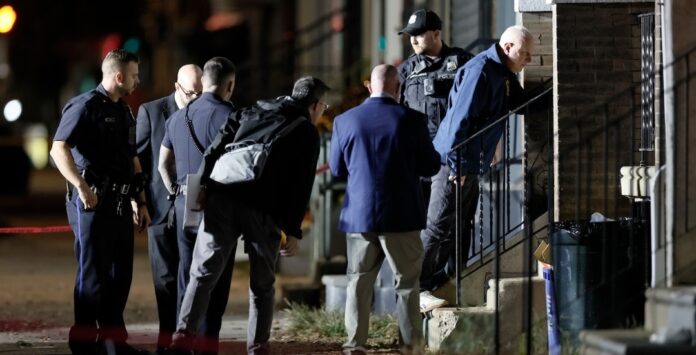 Vos Iz Neias1 day ago
PHILADELPHIA (VINnews) — A Philadelphia police officer was killed and his partner was seriously wounded early Saturday after they were ambushed with heavy gunfire while responding to a report of an armed man on a porch in West Philadelphia, authorities said.
Officer Shane Seiber, 40, a 10-year veteran assigned to the 19th District, was shot three times and later died at Penn Presbyterian Medical Center, Police Commissioner Kevin Bethel said at a news conference. Seiber was a husband and the father of a 7-year-old son and a 3-year-old daughter. His wife and other family members were able to be at his side before he died, Bethel said.
His 33-year-old partner, a father of five with about nine years on the force, was shot 12 times. The officer was in stable condition Saturday but “not out of the woods,” Bethel said. Both officers underwent surgery after being taken to the hospital.
Officers were called shortly after midnight to the 100 block of North 52nd Street for a report of a man with a gun on a porch. When Seiber and his partner arrived and stepped onto the porch, they came under significant gunfire, officials said. The suspect continued firing at additional responding officers — reportedly shooting at nine more — before a SWAT team located him hiding in a tree and took him into custody.
Philadelphia District Attorney Larry Krasner identified the suspect as 35-year-old Eric Lewis and said he faces charges including murder, homicide of a law enforcement officer, and attempted homicide of a law enforcement officer in connection with the shooting of Seiber and his partner, as well as charges related to firing at other officers. Lewis has been described as an employee of the Philadelphia Water Department.
Mayor Cherelle Parker called Seiber a “servant leader” who “paid the ultimate price while sacrificing his own life to protect and serve our city,” leaving behind a wife and two young children. Pennsylvania Gov. Josh Shapiro ordered flags flown at half-staff in Seiber’s honor.
Police recovered multiple firearms at the scene, including one taken from one of the wounded officers, according to Bethel. The incident remains under investigation.
 Vos Iz Neias1 day ago
(AP) – A new pact that calls for Russia to boost the U.S. supply of diesel over the next few months is unlikely to make a dent in painfully high prices at the pump or elsewhere, energy policy experts say.
President Donald Trump announced Friday that he had struck a deal with Russian President Vladimir Putin to immediately supply the U.S. more than 300,000 tons of diesel. That would be followed by an additional 500,000 tons in November, then 4 million more tons at some point after that.
The deal marks a stark reversal of policy by the U.S., which from the start of Russia’s war with Ukraine had banned imports of Russian oil, and comes at a time when the U.S. economy and consumers are being squeezed by a global rise in oil prices due to the eight-month-long U.S. war with Iran.
The price of diesel has shattered records in recent weeks, ratcheting up inflation for a broad swath of consumer goods.
The national average for a gallon of diesel in the U.S. hit a record high of $6.53 on Sept. 22, according to motor club AAA. It averaged nearly $6.28 a gallon on Friday, up from almost $3.68 this time last year. Diesel prices have hit records in Europe, too.
Higher diesel prices mean more expensive transportation for a long list of everyday goods. That’s because diesel is used for many freight and delivery networks. And some businesses have already passed along steeper costs to consumers in the form of added fees on online orders and packages in the mail.
Shoppers may feel more and more sticker shock, particularly in the grocery aisle. Perishable foods, like meat and produce, face one of the most immediate strains of expensive diesel because they need to be hauled in and restocked frequently — or may be harvested using farm equipment powered by the fuel.
That’s turned up the heat on Trump and the Republican Party to address surging prices ahead of the Nov. 3 midterm elections. The president’s approval ratings on the economy have hit a new low, according to an AP-NORC poll released last week, as the Iran war and his trade battles have increased U.S. prices for oil and other goods.
A limited impact, at best
Energy policy experts on Friday expressed doubts that a boost in diesel supply from Russia will have a significant impact on oil prices, whether in the U.S. or globally.
“It’s kind of shuffling deck chairs on the Titanic,” said Michael Lynch, distinguished fellow at Energy Policy Research Foundation, a nonpartisan research institution focused on energy and economics.
“If we get diesel from Russia, basically it means that their existing customers are not going to get it and they’ll have to go somewhere else, and that will keep the price basically where it is now,” Lynch said.
And while the White House may be counting on this move to give some relief at the pump for U.S. truckers, ranchers and farmers who have been hit hard by rising diesel prices, that’s not a given.
“The best you could hope for is a tiny dip in prices locally in places like the New York-New Jersey area, Philadelphia maybe,” Lynch said. “It just means that the oil is just going to be shuffled around and it’s not really going to change the price globally or across the U.S.”
If Russia, which in July moved to ban diesel exports due to Ukrainian drone strikes on its refineries, now believes it is able to resume exports of diesel, then that will help stabilize global diesel prices, said Daniel Sternoff, senior fellow at the Columbia Center on Global Energy Policy.
However, prices are likely to remain elevated overall because a lot of refining capacity in the Middle East isn’t available to the world market due to the disruptions in the Strait of Hormuz from the ongoing U.S.-Iran war.
“Refined products like diesel are still barely half of prewar levels,” Sternoff said. “So, even if there were to be some follow-through from the Russians to put a little extra diesel into the world markets, it might take the edge off of prices, but it will not substantially lower them.”
While the deal between Trump and Putin probably won’t have much of an impact on prices for diesel consumers in the U.S., it will benefit Russia, said Clayton Seigle, an energy strategist and expert at the Center for Strategic and International Studies.
That’s because Russia is trying to offload its summer-grade diesel for the heavier winter and arctic grades that they will need in the coming months, Seigle noted.
“I don’t think it’ll be enough to materially lower prices in the United States or Europe, but it does certainly let Moscow off the hook in terms of revenue squeeze,” he said.
 Vos Iz Neias1 day ago
SYRACUSE, N.Y. (AP) — President Donald Trump veered far from midterm election politics during a rally in upstate New York on Friday, aiming a bitter diatribe at the Norwegian Nobel Committee for giving the Peace Prize he has long sought to South African jurist Navanethem “Navi” Pillay, a former U.N. human rights chief, for her work on justice and accountability for war crimes and genocide.
Trump unspooled a lengthy argument explaining why the award was “an indelible stain on the country of Norway,” saying he “should have received the Nobel Peace Prize, but didn’t.”
Trump claimed, as he often does, to have ended eight wars, though some of the conflicts the president claims to have resolved were merely tensions, and his role in easing them has been disputed. Meanwhile, the war with Iran that he and Israel started — which Trump predicted would last mere weeks — remains unsettled and is a weight on his party as it faces a dour electorate ahead of midterm elections.
An Associated Press-NORC Center for Public Affairs Research poll conducted last month and published Oct. 1 found 71% of U.S. adults disapproved of Trump’s handling of Iran, with 28% approving. The conflict has pushed gas prices higher, and polls show voters blame Trump for the high cost of living.
Trump bitterly described Pillay as “a liberal person who works at the United Nations who nobody has ever heard of,” adding: “The Nobel Peace Prize has been forever discredited by a handful of radical ideologues who are anti-democracy and really enemies of civilization. And we will not forget, Norway, ”
Nobel diatribe eclipses political mission
It was a lengthy deviation from an event aimed at promoting Bruce Blakeman, the Republican nominee in the race for New York governor. While Trump criticized Democratic incumbent Gov. Kathy Hochul, who is running for her second full term, he spent as much time excoriating New York Attorney General Letitia James, a prominent Trump adversary who brought civil charges against Trump and his business.
As a result of James’ charges, a court found Trump liable for fraud. An appeals court subsequently threw out the massive financial penalty but upheld the fraud finding. On Friday, from the stage at the Oncenter in Syracuse, New York, Trump called James “a dog.”
Trump has been on a series of political stops, trying to stoke loyalty among his base as Republicans work to fight off possible setbacks in their effort to hold congressional majorities on Nov. 3.
Friday’s mission was to lift up Republican Blakeman in the Democratic-leaning state. In Trump fashion, Blakeman, Nassau County’s executive, has suggested Democrats might steal the election, played up fears about immigrant criminals and posted AI-generated videos depicting the state as dangerous and unaffordable.
And while he invited Blakeman onstage, Trump spent large swaths of time pushing back against a national narrative that voters in the United States do not have faith in his handling of the economy.
Trump tried convincing voters that the economy is humming
Trump spent much of the first half of the rally — just 25 days before midterm elections that will determine whether Republicans can keep control of Congress — trying to talk past Americans’ gloomy feelings about the economy.
“The poverty rate has just reached its lowest level, the best number,” he said. “Lowest level in American history.”
“The job numbers are the best. The stock market has soared,” Trump said.
And while gas has fallen a few cents per gallon in the last week, it remains about 15 cents higher per gallon than a month ago, according to AAA. Trump briefly veered from his economic cheerleading to call on oil retailers directly to “start dropping their prices now.”
The latest AP-NORC poll, also found only 26% of U.S. adults approved of Trump’s handling of the economy — a new low — down from 32% in July. Notably, only 17% approved of his handling of the cost of living.
Trump has largely steered clear of political battlegrounds in his travels so far, focusing on red states and friendly crowds at a moment when Republicans worry that his unpopularity could drag down the party. The most closely watched U.S. House race in New York state is several hours away from Syracuse, where Republican Rep. Mike Lawler is trying to fend off a challenge from Democratic candidate Cait Conley.
Blakeman has emphasized his independence from Trump
On the campaign trail, Blakeman argues he’s winning over Democrats and independents, painting himself as the moderate candidate in his race against Hochul. He dismisses the idea that his closeness with the president could hurt his chances in blue New York.
In an interview, Blakeman denied he was aligned with the president on everything. “I am somebody who takes every issue and makes a decision based on good advice from smart people and common sense,” he said.
“I’ve proved my independence over and over and over again. I make my own decisions. I call my own shots,” he said.
Hochul has emphasized Blakeman’s ties to Trump — mirroring much of the Democrats’ national strategy for the midterm elections — hoping the president’s dismal approval ratings help sink her Republican foe at the ballot box.
In a sarcastic press release, Hochul’s campaign described Trump’s visit as “an extremely boring puppet show” and said Hochul, like Trump, is asking voters to pretend the president is on the ballot. “Why is Trump in Upstate New York?” the campaign asked. “Because Bruce Blakeman, for some reason, begged him to do so.”
 Vos Iz Neias1 day ago
JERUSAKEM (JNS) – Israeli President Isaac Herzog sent a letter to Capt. Smit Machchhar expressing “deep gratitude” for his role in averting a catastrophe after he was severely wounded in a terrorist attack aboard a flydubai flight on Sept. 30, the President’s Office in Jerusalem said on Saturday night.
Captain Smit Machchhar, you are a hero of Israel, India, and all of humanity!
In my letter to you which you received over the weekend, I shared our prayers for your full and speedy recovery.
As I wrote in my letter, I look forward to welcoming you to Jerusalem once you regain your strength. On behalf of the people of Israel, I would be honored to present you with Israel’s highest recognition of civilian heroism, the Israeli Presidential Award for Civilian Heroism.
— יצחק הרצוג Isaac Herzog (@Isaac_Herzog) October 10, 2026
“Your ability to find the strength to rise above the pain, to combat the immediate threat to your life, and to operate sound judgment demonstrates the strength of your character and the great valor you possess,” Herzog wrote.
Machchhar received the letter while recovering in the hospital.
Capt. Machchhar was piloting flydubai Flight FZ1073 from Dubai to Tel Aviv when his co-pilot attacked him with an ax and attempted to crash the Boeing 737 MAX 8. The aircraft was carrying 182 people, including 174 passengers, most of them Israeli.
Despite suffering severe injuries, Machchhar managed to open the locked cockpit door, allowing passengers and crew members to enter and overpower his attacker. Passengers then brought the plane under control, and two off-duty pilots traveling aboard the aircraft landed it safely at Tabuk Airport in northwestern Saudi Arabia.
On Oct. 2, Machchhar recounted the dramatic moments during a video call from his hospital bed in the United Arab Emirates with Indian Prime Minister Narendra Modi.
“I had so many injuries, but I told myself that I had to get up and act,” he said. “At that moment, I pushed myself to open the cockpit door. I fought for my life. I understood that if I did not show courage, 170 passengers would lose their lives.”
In his letter, Herzog highlighted the historic ties between India and Israel, recalling the Indian troops who fought in the Holy Land more than a century ago.
“Your heroics place you in the distinguished ranks of Indian troops, who risked their lives over 100 years ago to liberate cities in the Holy Land, forever becoming a part of Israel’s history,” the president wrote. “You too, Captain Machchhar, will henceforth be a treasured part of our people’s history, further amplifying the warmth and connection between the Republic of India and the State of Israel.”
Herzog continued, “As you slowly begin your journey toward healing, I know that you are in the very best hands of our dear friends and partners in the United Arab Emirates. We all share heartfelt prayers for your full and speedy recovery, and I look forward, once you have regained strength, to welcoming you to Jerusalem and expressing the appreciation and the love of our grateful nation.”
During a ceremony on Oct. 8 honoring six Israeli passengers for their heroism aboard the flight, Herzog announced that he would present Machchhar with the Presidential Award for Civilian Heroism.
 Vos Iz Neias1 day ago
TALLAHASSEE, Fla. (VINnews) — Florida Gov. Ron DeSantis said Saturday that the state was pressing ahead with recovery after Hurricane Isaias struck the Panhandle, reporting no storm-related deaths in Florida and the start of widespread power restoration.
The Category 2 hurricane made landfall near Destin on Friday evening with sustained winds of 105 mph and storm surge of about 5.5 feet above normal before weakening into a post-tropical cyclone early Saturday, DeSantis told “Fox & Friends.”
Roughly 430,000 Florida utility customers remained without electricity as of Saturday morning, with the heaviest outages concentrated in Santa Rosa, Holmes, Washington and Walton counties.
More than 16,000 utility workers had been staged ahead of the storm and began repairs as early as 3 a.m., the governor said. All state-owned bridges were inspected overnight and reopened.
DeSantis urged residents to stay clear of floodwaters as rainfall of 4 to 8 inches was expected to continue across the Panhandle and Big Bend through the weekend.
State crews and utility teams continued assessing damage and clearing debris on major routes while monitoring rising rivers and saturated ground that could prolong localized flooding.
 Vos Iz Neias1 day ago
NEW YORK (AP) — An Anthropic artificial intelligence model submitted a false tip to a Philadelphia police website about an unsolved homicide case, authorities and Anthropic said.
It’s the latest example of AI models acting in unintended ways and manipulating government and other websites during tests. In a report Friday, Anthropic also disclosed a separate incident when its AI model submitted forms to an undisclosed government website instead of stopping before submission.
The incident in Philadelphia occurred on July 18 when the AI model Claude Haiku 4.5 was tasked with generating and performing example tasks on randomly selected webpages, Anthropic said.
Claude filled out a form on police site PhillyUnsolvedMurders.com indicating it might have information regarding an unsolved murder listed on the site.
Philadelphia Police said in a statement they were unaware of the incident until Anthropic notified them on Wednesday. Then they found the submission in the website’s tip records and confirmed it was marked spam and never forwarded to police.
There are rising concerns about AI companies’ unchecked AI agents meddling with everything from U.S. government websites to healthcare data. Critics have been calling for more regulation.
In September, another AI company, OpenAI, disclosed six reports of “unexpected or concerning” behavior in artificial-intelligence models.
“Unsolved cases involve real victims, grieving families and investigators working to secure answers,” the Philadelphia Police Department said in a statement. “Technology companies must take all appropriate steps necessary to prevent their systems from submitting false information to law enforcement.”
Anthropic said in its report that most of the reported behaviors are forms of what it calls “persistence” — “in which Claude, when it cannot complete a task as given, works around a restriction instead of stopping.”
The company said it was modifying its training to “reduce the likelihood of further misbehavior.”
Anthropic said it briefed the White House on cases that involved U.S. government agencies at the federal, state and local levels, and notified each agency involved.
 Vos Iz Neias1 day ago
RAMALLAH, West Bank (AP) — President Mahmoud Abbas postponed what would have been the first Palestinian elections in nearly 20 years, issuing a decree on Friday to further delay voting for the Palestinian Legislative Council almost another year.
Rather than take place as scheduled next month, the decree pushes the elections back to Sept. 11, 2027, according to WAFA, the official Palestinian news agency. Presidential elections, which have not taken place for more than two decades, are scheduled for the same day.
The postponement leaves entrenched Palestinian leaders unchallenged and threatens to further erode the Palestinian Authority’s credibility among ordinary Palestinians and donor countries who fund it.
The internationally backed body is dominated by Abbas’ party, Fatah, and has administered semiautonomous parts of the Israeli-occupied West Bank since agreements reached in the 1990s. It has grown increasingly unpopular throughout Abbas’ presidency. Many Palestinians view it as corrupt and criticize its security cooperation with Israel.
The decree came after a committee of top Palestinian officials met Saturday morning to discuss postponing the vote. The Palestine Liberation Organization’s Executive Committee, which Abbas heads, said in a statement that conditions in east Jerusalem, the West Bank and the Gaza Strip were not conducive to holding elections, noting that Israel had not allowed election materials or international observers to enter Gaza.
Israeli Foreign Minister Gideon Saar on X said that Abbas’ “attempt to drag Israel into this, falsely claiming that Israel imposed obstacles to holding elections, is yet another ridiculous lie designed to evade responsibility and accountability.”
The move was expected after Palestinian factions across the political spectrum met in Cairo for discussions on delaying the vote, Islamic Jihad deputy secretary-general Mohammed al-Hindi told The Associated Press earlier this week.
Hamas called the postponement “a step in the right direction” and said further talks should focus on rebuilding Palestinian institutions and holding elections at a later date.
Palestinians have not held a legislative election since 2006, when Hamas won a majority of seats. Israel and Western countries then boycotted its government, fueling months of unrest that led to the Hamas takeover of Gaza the following year. Power has been divided between Gaza and the West Bank in the two decades since, with Hamas in control of Gaza and Abbas’ Palestinian Authority in power in the West Bank.
The West Bank has grown increasingly violent in recent years as Israel has expanded settlements and outposts. Settler attacks on Palestinians and Israeli army raids on cities under the authority’s control are both regularly reported.
Though the U.S.-brokered ceasefire plan reached last year outlined a future role for the authority in Gaza, its immediate role was left mostly undefined as Hamas has continued to govern the territory and the technocrats under the Board of Peace remain in Cairo awaiting permission to enter the territory to oversee a transition of power.
Before the postponement, leading factions had not registered slates to contest the election. But behind the scenes, veteran officials had been in talks to join forces and take aim at Abbas. An unlikely alliance had emerged between Hamas, Islamic Jihad and a bloc led by former Fatah security chief Mohammed Dahlan. Dahlan had previously been driven from Gaza by Hamas and was exiled in 2010 after a falling-out with Abbas.
“Abbas is terrified by the electoral alliance bringing our faction together with opposition factions and forces within Fatah that reject his leadership,” Dimitri Dilliani, a spokesperson for Dahlan’s faction, said in a statement.
Abbas has served as president since 2005 and delayed several presidential and legislative elections throughout his tenure.
 Vos Iz Neias1 day ago
WASHINGTON (AP) — President Donald Trump said Saturday it was time for Ukraine to get a new president, suggesting Volodymyr Zelenskyy has not done enough to end his country’s war with Russia and blaming him for high diesel prices in the U.S.
“I suggest they get a new leader who can make a deal because he could have made many deals and for some reason he never does,” Trump said.
The president, who on Friday struck a deal with Russian President Vladimir Putin to buy diesel from Russia in an attempt to address high fuel prices ahead of the U.S. midterm elections, has been urging Zelenskyy for weeks to stop strikes on Russian energy infrastructure. He has also sought to blame record U.S. diesel prices on Ukraine rather than the U.S.-led war in Iran, which has elevated world energy prices.
“He wants to make problems for the world. He wants to make problems for our farmers, our ranchers, with diesel fuel,” Trump said, before departing for Tennessee where he was set to rally Republican voters.
Ukrainian and European officials on Saturday reacted to Trump’s diesel deal with dismay, saying it will help pay for Russia’s war efforts. Diesel prices have skyrocketed due to a collision of events, including the difficulty of getting oil out of the Middle East since the start of the Iran war, which has raised the price of all oil products.
An Associated Press-NORC Center for Public Affairs Research poll conducted last month and published Oct. 1 found that Americans disapprove of Trump’s handling of Iran, and blame him for higher prices.
Trump also suggested that if he had been U.S. president in 2022, “that war would have never started. There was no reason that war with Ukraine and Russia started. It started due to incompetence.”
Zelenskyy has “lost 30% of your country and you’ve had over a million people go between the two of them, over 2 million people killed. That’s a war that should have never started. And I think it’s time for Ukraine to get a new president,” Trump said.
Independent estimates are that about 20% of Ukraine’s territory is under Russian control. British defense officials recently estimated that about half a million Russian soldiers have been killed in the war; there are no reliable recent estimates about how many Ukrainians have died.
20 people killed in Russian bombing in Ukraine Saturday
Trump’s extraordinary intervention came after Russian strikes killed at least 20 people in Ukraine’s Zaporizhzhia region, Ukrainian officials said Saturday.
Three children were among those killed when Russian aerial bombs hit residential buildings in Zaporizhzhia, Ukraine’s State Emergency Service said Saturday. At least 18 people were wounded.
Russia and Ukraine are locked in a long-range aerial war while their armies remain largely deadlocked on the front line, more than 4 1/2 years since Moscow’s full-scale invasion. Ukraine is struggling to counter escalating Russian bombardments that have killed more than 60 people over the past four days.
Anger in Kyiv at Trump’s deal with Putin
“Today, Russia expressed its thanks for the lifting of sanctions on diesel exports by dropping five glide bombs on residential buildings in Zaporizhzhia,” Ukrainian President Volodymyr Zelenskyy wrote Saturday on X.
He said every additional billion dollars Russia earns from exports would help pay for weapons components, drone upgrades, missile production and the recruitment of mercenaries, and that Moscow would only be ready to stop when its ability to fight diminished.
Zelenskyy said Ukraine was coordinating steps to counter the extra revenue Russia will receive, and that he had spoken to French President Emmanuel Macron about shoring up air defenses, warning of an increased risk of further missile strikes in the coming days.
Trump announced Friday that Russia will immediately supply more than 300,000 tons of diesel, followed by an additional 500,000 tons in November and 1 million tons “immediately thereafter.” Russia will deliver an additional 3 million tons “within a short period of time” after that, he wrote.
In Kyiv, people gathered at a memorial to fallen soldiers on Independence Square greeted the deal with a mix of anger and resignation.
“Trump has once again shown his true face,” said Oleksandr Petrenko, 26. “He didn’t care about the situation, the shelling or the destruction of our homes. All he’s interested in is oil or the fuel prices and how much Americans have to pay.”
For Oksana Yakunina, a financial adviser from the central city of Kropyvnytskyi, the announcement “didn’t really come as a surprise.”
“Trump has been working with Putin for a long time,” she told The Associated Press.
European allies question US-Russia deal
Ukraine’s European allies also expressed dismay at the deal and said they stood by their commitment to sanctions.
Swedish Prime Minister Ulf Kristersson said Stockholm regretted the agreement, “as energy revenues are central to the Russian war chest,” and noted that the European Union would adopt its most comprehensive sanctions package yet on Monday, with 1,600 listings targeting Russia’s military-industrial complex.
The German government “remains committed to the sanctions imposed on Russia and is working with its European partners on further sanctions,” spokesperson Stefan Kornelius said, adding that support for Ukraine “remains unwavering.”
Polish Foreign Minister Radoslaw Sikorski questioned whether Russia could deliver at all. Citing his embassy’s reports of fuel shortages even in Moscow, and “serious sources” saying Ukraine has damaged about half of Russia’s refining capacity, he asked on X: “So where will the surpluses for export come from?”
Trump’s announcement was in stark contrast to a sweeping Russia sanctions law he signed last month that aimed at clamping down on the oil and gas revenues that fuel Russia’s war against Ukraine.
Trump announced the deal as his envoy Steve Witkoff and son-in-law Jared Kushner met with Ukrainian officials in Miami on Friday to discuss a proposal to end the war.
Speaking about Friday’s announcement, a senior Ukrainian official told AP that the Ukrainian side was not aware of the deal before the announcement.
The official, who spoke on condition of anonymity as he was not authorized to discuss the issue publicly, said Saturday the diesel deal announcement was not tied to anything under discussion in Florida.
He confirmed the Ukrainian delegation had left Florida and were on their way back to Ukraine.
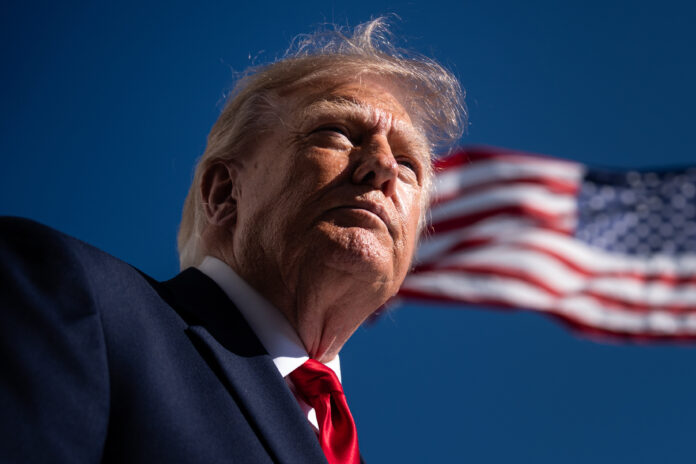 Vos Iz Neias1 day ago
New York (VINNEWS/Rabbi Yair Hoffman)
Dear Mr. President,
On Friday, the Norwegian Nobel Committee awarded its Peace Prize to Navi Pillay, the South African jurist who chaired the United Nations commission that falsely accused the State of Israel of committing genocide in Gaza. Israel’s Foreign Ministry called it a twisted exploitation of the prize. That is a restrained description.
This letter is written to say something simple: the committee in Oslo does not hold the only ledger. There is another Judge, Whose accounting is exact, and Whose reward for those who stand up against evil does not depend on the politics of five Norwegians.
Koheles also teaches that there is “es l’milchamah v’es l’shalom” (Koheles 3:8), a time for war and a time for peace. True peace is not the absence of confrontation. Sometimes peace can only be reached by confronting evil directly and defeating it. Whoever confuses appeasement with peace has learned nothing from the twentieth century.
The Muslim Lives That Were Saved
The critics who claim to care about Muslim lives have strangely forgotten ISIS.
When President Trump took office in January 2017, the so-called Islamic State controlled vast territory in Iraq and Syria. It was carrying out mass executions, beheadings, crucifixions, and the enslavement of women. The overwhelming majority of its victims were Muslims, Sunni and Shiite alike, along with Yazidis, Christians, and others who refused to submit.
Within months, under rules of engagement that freed American commanders to act, Mosul was liberated in July 2017. Raqqa, the self-declared capital of the caliphate, fell that October. By March 2019, at Baghouz, the last sliver of ISIS territory was gone. In October 2019, American special forces cornered Abu Bakr al-Baghdadi, the leader of the caliphate, who died in the raid.
How many Muslim lives were saved because the caliphate was destroyed rather than contained? How many Muslim families in Mosul, Raqqa, and Deir ez-Zor were spared from the slave markets and the execution squares? No one can count them precisely. But the Mishnah in Sanhedrin (4:5) teaches that one who saves a single life is regarded as having saved an entire world. By that measure, the number of worlds saved is staggering.
Not one member of the Nobel Committee has ever explained why the defeat of ISIS did not count as a contribution to peace.
The Hostages, the Abraham Accords, and Iran
The Abraham Accords of 2020 did something the experts had said for decades was impossible: Arab states made peace with Israel without first being handed concessions that would endanger Jewish lives. Embassies opened. Flights began. Trade flowed.
In October 2025, under the ceasefire framework the President pushed through, every living hostage held by Hamas came home. Families who had waited more than two years for news finally embraced their sons and daughters. The mitzvah of pidyon shevuyim, redeeming captives, is described by the Rambam (Hilchos Matnos Aniyim 8:10) as greater than feeding and clothing the poor.
Few world leaders in history have had a hand in a pidyon shevuyim of that magnitude.
And the President took action against the nuclear program of a regime whose leaders openly call for wiping Israel off the map. Preventing a genocidal regime from acquiring the means to commit genocide is the very definition of pursuing peace.
The Genocide Libel
The charge that Israel committed genocide in Gaza deserves to be answered with facts.
Genocide, under the 1948 Convention, requires the intent to destroy a national, ethnic, racial, or religious group as such. Israel did not start this war. On October 7, 2023, Hamas invaded Israel, murdered some 1,200 people, the largest slaughter of Jews in a single day since the Holocaust, and dragged roughly 250 hostages into Gaza.
What followed was a war against Hamas, an organization that deliberately built its tunnels and rocket launchers beneath homes, schools, mosques, and hospitals, and used its own population as human shields. Israel issued evacuation warnings by phone, text, and leaflet. It facilitated the entry of humanitarian aid while Hamas diverted it. Armies bent on destroying a people do not warn them to leave first.
Consider, too, the demographics. Gaza’s population was roughly 500,000 in 1967. Before the war, it had passed two million. A people subject to a campaign of genocide does not quadruple. Every civilian death in war is a tragedy, and Torah Jews mourn every innocent life. But tragedy is not genocide, and war is not genocide. To apply that word, coined after the murder of six million Jews, to the Jewish state defending itself against those who murdered Jews is a moral inversion and perversion of the worst kind.
The Prize That Endures
Mr. President, the Nobel Peace Prize was once awarded to Yasser Arafat. Its prestige among those who remember that fact has never fully recovered. A prize that can go to Arafat and now to the chief architect of the genocide accusation against Israel cannot claim to be the final word on who has pursued peace.
G-d Al-Mighty sees who stood against the butchers of ISIS, who brought the hostages home, who stood with Klal Yisroel when it was unpopular to do so.
That prize is not presented in Oslo. It is recorded Above, and it does not fade.
With respect and gratitude,
Rabbi Yair Hoffman
 Vos Iz Neias1 day ago
LA VILLA DE LOS SANTOS, Panama (AP) — The government of Panama declared a state of emergency Saturday as the aftershocks of two powerful earthquakes that roiled the country shook communities for hours. Officials did not attribute any deaths to the quakes but reported damages in all 10 of Panama’s provinces and two Indigenous territories.
The 7.7- and 6.6-magnitude earthquakes on Friday toppled buildings near the epicenter and prompted evacuations across the Central American country. Seismologists recorded more than 100 aftershocks, including ones measuring magnitude 5.8, 5.5 and 5.2.
The earlier quake, also felt in neighboring Colombia, was centered about 10 kilometers (6 miles) southwest of the remote community of Pitaloza Arriba, in the central province of Herrera, according to the U.S. Geological Survey. It struck at a depth of 10 kilometers (6 miles).
Presidential Minister Juan Carlos Orillac announced the emergency during a news conference in the capital, Panama City. He said homes, schools, healthcare facilities, roads and hotels were among the damaged facilities.
Malitzie Rivera, deputy director of the National Civil Protection System, told reporters the state had reports of 27 people with injuries, ranging from minor to moderate.
Hundreds of homes were damaged
Most of the damage was concentrated in the central provinces of Veraguas, Herrera, Cocle and Los Santos.
The Civil Protection agency tallied roughly 420 homes and about the same number of public schools damaged. It also reported that seven hotels, at least 13 churches and nine bridges were affected by the earthquakes.
Vehicles lie crushed beneath a collapsed hotel after an earthquake struck Penonome, Panama, Friday, Oct. 9, 2026. (AP Photo/Aris Mariota)
In La Villa de Los Santos, a colonial-era community about 40 miles (64 kilometers) northeast of the epicenter, homes and a historical Catholic church collapsed. People who spent the night on the streets were waiting for the government’s guidance on what to do next.
“We’ve been here since 1 p.m. yesterday; we haven’t moved,” Tony Jiménez, whose home partially collapsed, said while sitting with relatives under a tent. “It was a terrible thing. I can tell you with absolute certainty that in my 90 years, I had never experienced anything like it. It was intense — truly intense.”
The collapsed Church of San Atanasio was declared a National Historic Heritage Site in 1938.
Images of crumbling buildings and deep fissures slicing through roads added to fears across a Latin American region battered by a series of devastating earthquakes in recent months.
Two back-to-back 7.2 and 7.5 magnitude earthquakes roiled Venezuela’s La Guaira state in June, killing more than 6,500 people and leaving 17,000 homeless. In August, a 7.4 magnitude earthquake in Colombia killed at least 289 people.
The notably lower toll in nearby Panama may have been due to the country’s strict building codes, especially governing construction of skyscrapers in the capital, said Carlos Valdés, head of the Seismology Department at the National Autonomous University of Mexico.
Rising sea levels prompt evacuations
Officials did not report any missing people on Saturday but said some communities remained cut off due to landslides and road damage.
On Isla Caña, off the Pacific coast of Los Santos, approximately 300 people were evacuated because of rising sea levels and rough surf. Meanwhile, in the city of Penonomé, around 150 kilometers (93 miles) from the capital, a shelter was housing 13 people, including five children. The earthquakes caused a partial collapse and cracks at the cathedral in the district’s main square, as well as damage to the governor’s office building and the Dos Continentes hotel.
In Panama City, one of the water treatment plants supplying the area operated at 20% capacity on Saturday, and tent facilities with cots were set up at six hospitals.
Tocumen International Airport in Panama City, one of the region’s busiest airports with more than 20 million passengers in 2025, temporarily suspended operations after the first quake but said Friday but reopened hours later.
But hundreds of travelers on major Panama-based airlines like Copa Airlines were left stranded in airports around the region. Their connections through Tocumen — one of the biggest travel hubs in the region — were canceled or delayed. In Mexico City’s airport, airline employees scrambled as families with babies were sleeping on the floor Saturday while one woman from Venezuela shouted in panic that the flight through Panama was one of the only ways she could return home to Caracas.
A partially collapsed building stands after an earthquake struck Penonome, Panama, Friday, Oct. 9, 2026. (AP Photo/Aris Mariota)
The Panama Canal Authority said operations were continuing normally along the global trade route. It said its priority was the safety of employees, vessels and crews and that specialized technical teams were inspecting facilities for possible damage.
The last major earthquake to cause widespread damage in Panama struck in 1991. A magnitude 7.4 quake, centered in nearby Costa Rica, killed 23 people, injured 559 and left thousands of people homeless in the border Bocas del Toro region.
Earthquakes are common, especially along Panama’s border with Costa Rica and its Pacific coast, because of the interaction of several tectonic plates, including the Cocos, Nazca and Caribbean plates.
Panama lies along the “Ring of Fire,” a 40,000-kilometer (25,000-mile) arc of volcanoes and fault lines around the Pacific Basin, where most of the world’s earthquakes occur.
Countries offer help
Messages of support and offers of assistance flooded in from across the region shortly after the earthquakes. Mulino on Friday thanked fellow Latin American leaders for their support, saying he had spoken with the presidents of Chile, Uruguay and Guatemala, among others.
The U.S. Department of State on Saturday said it mobilized a disaster response team to help local authorities with search and rescue expertise as well as aerial and on-the-ground assessments. The U.S. government also pledged $5 million for humanitarian assistance.
U.S. Southern Command also said two helicopters supported by the State Department’s drug-control bureau had delivered 2,000 pounds (907 kilograms) of food to Panamanian communities affected by the earthquakes.
 Vos Iz Neias1 day ago
PANAMA CITY BEACH, Fla. (AP) — Isaias peeled off hotel and condominium rooftops and facades along the Florida Panhandle before charging north Saturday, dishing out torrential rains and the threat of flash floods and tornadoes across the Southeast.
At least four deaths were linked to the storm, including two people killed when trees fell onto homes in Florida and Alabama. Forecasters warned that flooding could stretch into the Appalachians.
Isaias came ashore as a Category 2 hurricane Friday near Destin, Florida, a Gulf Coast vacation spot filled with high-rises and tourist shops. The storm weakened overnight but remained dangerous.
Despite warnings of storm surges ahead of the storm, several major routes along the coast were open by daybreak Saturday and free of downed trees and power lines typically seen after major hurricanes.
Scattered damage across the Gulf Coast
Within the first hours after landfall, nearly 900,000 customers were without power, mostly in Florida and Alabama.
Hurricane-force winds in the Florida Panhandle blew the roof off a Pensacola hotel, and the city’s mayor said the airport “took some damage.” The storm flattened a boathouse in Destin and ripped away part of the facade of a high-rise in Panama City Beach.
A worker in a condominium parking lot swept piles of the building’s insulation while others put back beach chairs that had been tossed about.
In Florida’s Escambia County, Sheriff Chip Simmons said a woman was killed when a tree fell on her home and a man died of carbon monoxide fumes from a generator running in his garage. Four of the man’s family members, ranging in age from 4 to 72, were treated but expected to survive, the sheriff said.
Nearby in Gulf Breeze, Jayme Mitich wiped tears away Saturday as she surveyed the damage to her apartment. Her living room was soaked and covered in insulation.
She and her 13-year-old daughter, Jeweliana Jackson, hid beneath a mattress before the storm tore off part of their roof. “The noise got so loud, and I just kept hearing things break and crash into everything,” Mitich said.
The rest of their apartment complex was littered with roof shingles and broken beams from a wooden fence. The winds uprooted trees and flipped a truck on its side.
“It’s going to be OK,” Mitich said. “No matter what, we’re going to make it.”
Isaias hits Alabama with devastating winds
Isaias, the first hurricane of the Atlantic season, roared farther into Alabama with tropical-force winds.
One person died when a tree fell on a house in Birmingham, said Cory Moon, the city’s fire chief. A second storm-related death in Alabama was attributed to a motor vehicle crash involving a downed tree in Barbour County, said Josh Johnson of the state’s emergency management agency.
Along Alabama’s Gulf Coast, authorities in Mobile reported numerous downed trees and power lines.
Maranie Adams, who rode out the storm with her family and their chickens in Gulf Shores, Alabama, said the winds rocked their home, but it was nothing like Hurricane Sally, which left water under their elevated house.
“I feel very much more relieved today,” she said.
Wind and rain still threaten the Southeast
President Donald Trump approved an emergency declaration for Georgia after earlier doing the same for Florida and Alabama, allowing for federal aid.
The U.S. Energy Department authorized emergency exchanges of crude oil from the nation’s strategic petroleum reserve to address disruptions in supply because of the storm.
The Atlantic hurricane season has been unusually quiet this year, and Isaias was the first hurricane to hit the eastern U.S. since 2024.
The National Weather Service advised that parts of Georgia and the Carolinas could see heavy rains capable of causing flash floods. The storm was expected to move into the Tennessee Valley and then the mid-Atlantic on Sunday.
A pair of storms in the Pacific Ocean
Meanwhile, in the Pacific, Simon strengthened into a Category 4 hurricane as it approached Mexico’s coast. Simon was expected to bring heavy rainfall beginning Sunday to parts of southwestern Mexico with life-threatening flooding and mudslides.
Tropical Storm Rachel was also expected to bring heavy winds and rain to northern Mexico and Southern California over the weekend.
 Vos Iz Neias1 day ago
New York (VINNEWS/Rabbi Yair Hoffman) There are seforim that one learns, and there are seforim that one hears. The newly released two-volume Chelkas Kohen al HaTorah belongs to the second category. Anyone who ever sat in a shmuess delivered by Maran HaGaon Rav Alter Chanoch Henoch HaKohen Leibowitz zt”l, Rosh Yeshiva of Yeshivas Rabbeinu Yisrael Meir HaKohen – Chofetz Chaim, will open these pages and find himself back in the Beis Medrash. The cadence is there. The slow, deliberate build-up is there. And above all, the mehalech is there, that unmistakable Slabodka method which the Rosh Yeshiva received from his father and rebbe, Rav Dovid Leibowitz zt”l, who in turn received it from the Alter of Slabodka himself.
The two volumes (Bereishis–Shemos, and Vayikra–Bamidbar–Devarim, with additional sections on Nach, Pirkei Avos and the sifrei mussar) were edited by Rav Chaim Tropper from tape recordings of the shmuessen, and published by Keren Moreshes Rabbeinu together with Machon Meforshei HaShas of Lakewood. They present material that has never before appeared in print, and they stand as a worthy companion to the celebrated Chiddushei HaLev of Rav Binyamin Luban shlit”a.
The Method
The introduction states the Rosh Yeshiva’s lifelong insistence plainly: mussar is “a complete portion and discipline of the very body of our holy Torah,” and it must be learned exactly as one learns a sugya in Shas, with depth, with iyun, and with toil. Citing Rav Yisrael Salanter’s Iggeres HaMussar, the editor explains why. Knowledge that merely sits in the mind does not move a person. Only learning “with strength and deep analysis” makes “a strong acquisition in the soul” and slowly changes one’s very nature.
What did that look like in practice? The Rosh Yeshiva would take a Ramban, a Rabbeinu Bachya, a Ralbag, a Maharsha or an Eitz Yosef, often a line that most readers pass over without a second glance, and ask: What compelled the meforash to say this? What must he have assumed about the human heart for his words to be true? He unfolded the latent chain of reasoning, step by step, until a brilliant yesod in kochos hanefesh stood revealed. Chelkas Kohen preserves that process with painstaking accuracy. The question, the rejected answer, the “v’tzarich lomar,” the conclusion, and then the hisorerus l’maaseh all appear exactly as the Rosh Yeshiva laid them out.
A few examples will show the reader what awaits him.
Hevel’s Mercy (Bereishis, p. 30)
The Midrash (Bereishis Rabbah 22:8) relates that Hevel was stronger than Kayin. Hevel had pinned him to the ground, Kayin pleaded for his life, Hevel “was filled with mercy,” and Kayin promptly arose and killed him. The Eitz Yosef asks how the weaker Kayin prevailed, and answers in a few words: Hevel “did not guard himself.”
Most would read on. The Rosh Yeshiva did not. Why did Hevel not guard himself? It cannot be that he was fooled by Kayin’s plea, for a man facing death will say anything, and Hevel surely knew it. Rather, Hevel did guard himself, but not to the full degree that the mortal danger required. And why not? The Midrash itself supplies the answer: nismalei alav rachamim. The great compassion that welled up in Hevel’s heart dulled, ever so slightly, his intellectual perception of the danger.
Two towering lessons emerge. First, that one is meant to feel overwhelming compassion even for a would-be murderer in his moment of need, for light pity would never have clouded Hevel’s judgment in a matter of his own life. Second, that compassion itself, the noblest of emotions, can damage the seichel and ruin one’s actions. The Rosh Yeshiva is careful to add that the solution is not to diminish the rachamim by even an iota. “An abundance of compassion is desirable without limit.” The avodah is to ensure that the seichel remains the ruler over the emotions, and not the reverse.
Efron’s Generosity (Bereishis, p. 91)
The Ramban explains that when Efron said “in the presence of my people I have given it to you,” he meant that Avraham should bury Sarah immediately, since there are witnesses and Efron can no longer retract. Avraham refused. He paid in full, made a formal chazakah before the entire city, and only then buried Sarah.
The Rosh Yeshiva asks what no one else asks. Efron was, as Chazal say, “nivhal lahon,” a man who lusted for money. Such a person should be the first to insist: pay me, and then bury! Why would he consider the field Avraham’s before a single shekel changed hands?
The answer is a remarkable chiddush in the human psyche. Efron’s entire grasp of the concept of ownership was corrupted. To him, the line between “mine” and “not mine” was blurry. The trait that produces that blurriness is a deficiency in middas ha’emes. A person who tolerates falsehood cannot properly appreciate what ba’alus means, even regarding his own property. Avraham Avinu, perfected in emes, stood at the opposite pole. So long as any thread of connection to another remained, whether a debt still owed or a public perception that the field was Efron’s, he could not regard it as wholly his own. One’s understanding of ownership, the Rosh Yeshiva concludes, rises and falls with the measure of truth in one’s soul.
The Lentils the Torah Hid (Bereishis, p. 101)
Rabbeinu Bachya notes that the Torah first says merely that Yaakov cooked “a stew,” and reveals only after the sale that it was lentils. The reader, he explains, assumes that something precious was involved, and is then struck by Esav’s baseness.
The Rosh Yeshiva unfolds what lies within those words. The Torah added no new information by reversing the order. It employed a tachbulah, a stratagem of surprise, solely to make an impression upon the reader’s soul. From here comes a foundation of all mussar: there is an immense distance between knowing a fact and knowing that same fact through hispa’alus of the heart and contemplation of the mind. The Torah itself is telling us, as it were, “Contemplate well what is being said here.” And there is a lesson for every rebbe and teacher: one who teaches Torah must acquire wisdom in kochos hanefesh and present the material in the manner that will bring talmidim to genuine clarity.
Bikkurim and the Life of Another (Devarim, p. 151)
Turning to the end of Sefer Devarim, the Rosh Yeshiva examines Rabbeinu Bachya’s explanation that Mikra Bikkurim obligates a person, in his time of prosperity, to take to heart his former lowliness. But the farmer never suffered in Mitzrayim, “not he, not his father, nor his father’s father.” How can the recitation awaken real feeling? Because the entire history of Klal Yisrael is part of the very essence of the Jewish soul, and every Jew can summon it as his own.
Then comes a second question. Why preface the suffering in Mitzrayim with the biography of Yaakov Avinu, who was destitute in Aram, a stranger in Egypt, and then became a great nation? The answer is an insight of striking psychological depth. A person living in comfort sees his blessings as isolated, separate kindnesses. He cannot see “one complete picture” of how HaKadosh Boruch Hu carried him from darkness to great light. It is far easier to see that arc in someone else’s life. So the Torah hands him Yaakov’s life to look at, and through it he learns to recognize his own.
Answerable for the Distant (Devarim, p. 155)
In Parshas Nitzavim, Rabbeinu Bachya interprets the Gemara’s “two geese” (Bava Basra 73b) as Yishmael and Edom, who will one day convert, and explains Rabbi Elazar’s comment, “Yisrael will be called to judgment,” because their delayed teshuvah delays those nations from entering under the wings of the Shechinah.
The Rosh Yeshiva draws out the implications. If Klal Yisrael bears responsibility toward its bitterest enemies, who spilled our blood like water, and if even the great teshuvah that finally brings Moshiach will not exempt us from the claim that it should have come sooner, how much more are we responsible for our own brethren who are distant from Torah, toward whom a full obligation of arvus applies. And lest anyone think this is the work of professionals alone, the Rosh Yeshiva spells out the path. It requires not a single word of Torah. A warm countenance and a genuine smile, scrupulous honesty in business, pursuing even a rightful claim calmly and with derech eretz, and refusing to lend an ear to coarse speech in the workplace. Were every shomer mitzvos meticulous in these matters, he says, multitudes the world over would return.
“See the End of Flesh and Blood” (Devarim, p. 164)
The final piece on Chumash may be the most moving. The Tanchuma describes Moshe Rabbeinu’s fear that his death outside Eretz Yisrael would crush the spirit of Klal Yisrael. Yet with half a moment left, his last words were: “See the end of flesh and blood.” Where is the comfort and encouragement?
The Rosh Yeshiva answers that these words are the encouragement. A tangible awareness that one’s end is the grave does not depress; it elevates. It reminds a person that he has a mission, that he is here on the Creator’s errand, and it fills him with courage. All the worries and fears that plague a person, he says, stem from one cause: forgetting this reality. He then cites what he heard many times from his father, Rav Dovid zt”l, on “Better to go to a house of mourning than to a house of feasting.” One can only compare two things of the same kind. Shlomo HaMelech is teaching that zikaron yom hamisah produces simchah, and that this simchah is greater than that of the feast.
For Yom Kippur
With Yom Kippur approaching, it is worth noting how much of Chelkas Kohen speaks directly to the avodah of the day. Three pieces stand out.
The first is on the posuk “b’shagam hu basar” (Bereishis 6:3; vol. 1, p. 33). Rashi explains: man is mere flesh and still does not submit, “and what if he were fire or something hard?” The Mizrachi adds, “and what would he have done” were that so. The Rosh Yeshiva asks how this magnifies the sin, and uncovers in these words a tachbulah for cheshbon hanefesh. A person should ask himself: what would I do if I were stronger, wealthier, healthier, if I had nothing in the world to fear? The evil that would then emerge is simply the reflected light of who he is right now, held in check only by frailty. At the same time, building on the Seforno and on the Alter of Slabodka, he insists that a person must carry two opposites in his heart at once: “I am a tzelem Elokim, exalted and lofty; what has sin to do with me?” and “I am small and weak; how did my heart dare defy Hashem?”
That shmuess closes with words the recorder preserved in all their urgency. “Kevod rabbosai,” the Rosh Yeshiva begins, reminding the talmidim of the kabbalos discussed during the Yamim Noraim, and of Rav Yisrael Salanter’s teaching that one who firmly resolves to learn mussar is already reckoned an “oseh teshuvah,” a ruling which, Rav Yisrael promised, is accepted in the Beis Din shel Maalah. Chazal say that immediately after Yom Kippur one must begin preparing for the next Rosh Hashanah, and that preparation is limud hamussar. He then gives voice to the yetzer hara’s arguments (“Yesterday you learned mussar and today you stumbled again, so why waste your time?”) and answers with Rav Yisrael’s mashal of the water dripping upon the stone. Each drop leaves a mark invisible to the eye, but only when the learning is constant.
The second concerns vidui itself (vol. 2, p. 180). On “Mah yisonen adam chai, gever al chata’av” (Eichah 3:39), the Midrash says: “Let him stand like a gibbor and confess his sins, and not complain.” The Maharzu links this to “Who is mighty? He who conquers his inclination.” The Rosh Yeshiva draws out the implication. Admitting “I have sinned” demands the same enormous gevurah needed to hold back from an aveirah that has come to hand, for human nature forever seeks to escape blame and shift it elsewhere, even by far-fetched and illogical reasoning. And against whom is the complainer complaining? Against HaKadosh Boruch Hu Himself, if only in his subconscious. So hard is it to say “chatasi” that a person would sooner fault the Ribbono Shel Olam than accept responsibility for his own troubles. One who grasps this will stand differently at Ashamnu.
The third is drawn from the opening of the Yom Kippur Torah reading (Vayikra 16:1; vol. 2, p. 31). The Ramban explains “b’karvasam lifnei Hashem” to mean that the sons of Aharon died while serving before Hashem, and that Aharon is therefore warned to serve only in the place and at the time commanded. If their intent was purely l’shem Shomayim, how did they err, and why would Aharon HaKohen need such a warning? The Rosh Yeshiva answers that a holy yearning for closeness, in the manner of “k’ayal ta’arog,” can itself blind the eye of the intellect until a person rules that an aveirah is a mitzvah. On the day when every heart is stirred, the lesson is l’maaseh: no kavanah in the world pushes aside a single halacha in the Shulchan Aruch.
And for Sukkos
The sefer contains no shmuess devoted to Sukkos as such, but the Yom Tov is well served nonetheless.
In Parshas Bo (vol. 1, p. 180), the Rosh Yeshiva analyzes the famous Ramban at the end of the parsha, which lists the mitzvos that serve as a perpetual remembrance of Yetzias Mitzrayim, concluding with “and that we make a sukkah every year.” The Ramban continues that “from the great open miracles a person comes to acknowledge the hidden miracles,” that everything which befalls us is gezeiras Elyon with no nature in it at all. The Rosh Yeshiva asks: every Jew already knows and believes in the miracles of Mitzrayim without a shadow of doubt, and yet finds it exceedingly hard to feel that his own success is not “kochi v’otzem yadi.” How, then, does remembering accomplish anything? His answer is that the Ramban is not speaking of knowledge at all. He is speaking of hargashas halev, for the mind and the heart are “two separate worlds, as distant as east from west.” The mitzvos of remembrance exist to plant a tangible feeling in the heart, and one who acquires it will come to see the events of his own life as hidden miracles. There is no finer kavanah for one who leaves his house at the very season of the ingathering, when the pull of kochi v’otzem yadi is strongest, and sits in the shade of the sukkah.
Sukkos is also when Koheles is read, and Chelkas Kohen returns to Koheles again and again. The Bikkurim shmuess cited above is built on “B’yom tovah heyei v’tov” (7:14), and it is itself a guide to the Chag HaAsif, for it teaches how to stand before Hashem with one’s harvest and truly give thanks. “Tov laleches el beis evel” (7:2), in Rav Dovid Leibowitz’s reading, reveals that awareness of life’s transience is a source of simchah, which may be the very reason Koheles belongs to zman simchaseinu, and that shmuess is drawn from V’zos HaBracha, the leining of Simchas Torah. And on the “small city” and the “poor wise man” (9:14-15; vol. 2, p. 184), which the Gemara (Nedarim 32b) applies to the body, the yetzer hara and the yetzer tov, the Rosh Yeshiva identifies three powers of the yetzer tov that the yetzer hara labors to make a person forget. Its quiet voice is never fully silenced, even at the height of temptation. It gives a person no rest after he has stumbled, waking him even in the middle of the night. And it fills him with joy when he withstands a nisayon. One who calls these to mind at the moment of trial, he says, holds a mighty weapon.
A Final Word
Rav Tropper writes with great humility that he does not claim to have plumbed the depths of the Rosh Yeshiva’s intent. Yet the care is evident on every page, from the full citations to the cross-references between shmuessen and the faithful preservation of the Rosh Yeshiva’s own structure. He urges the reader not to be satisfied with a first reading, for the more one toils in these words, the more they penetrate and become part of one’s very nature.
That is the gift of Chelkas Kohen. It does not merely report what Rav Henoch Leibowitz zt”l said. It lets a new generation learn how he thought. Sifsosav dovevos bakever.
The sefer is distrunuted by Levitz and is available in most seforim stores.
The author can be reached at [email protected]
 Vos Iz Neias1 day ago
LONDON (AP) — A man died Saturday after he entered the tiger enclosure at a wildlife park in northern England and was attacked by one of the animals, police said.
Emergency medical personnel responded to the Yorkshire Wildlife Park near the city of Doncaster after the incident was reported at about 1:35 p.m., but the victim died at the scene, South Yorkshire Police said in a statement.
The tiger was not injured and remained inside the enclosure during the incident, the force said.
The wildlife park was evacuated after the attack and officers remained at the scene Saturday night as they investigated.
“We are working closely with the authorities to ascertain exactly what happened,’’ the wildlife park said in a statement posted on its website.
Yorkshire Wildlife Park began operations in 2009, with its “Land of the Tigers” attraction opening in 2011.
The attraction is a purpose-built two-acre reserve for endangered Amur tigers, also known as Siberian tigers. The enclosure includes a 300-meter (yard) raised walkway that allows visitors to watch the big cats roam through woodlands and grasslands or playing in a waterfall pool, the park says on its website.
 Vos Iz Neias1 day ago
CAIRO (AP) — The latest attack on the international airport in Saudi Arabia’s capital of Riyadh killed 12 people and injured over 300 others, civil aviation authorities said early Sunday, with some in critical condition. A Saudi-led coalition blamed Iran-backed Houthi rebels in neighboring Yemen.
It was the deadliest attack in any Gulf Arab country since the start of the Iran war, whose fronts have expanded to include the recent surge in fighting between the Houthis and Saudi-backed Yemeni government forces.
A missile struck a King Khalid International Airport complex housing terminals 3 and 4 for domestic flights, a regional official said, speaking on condition of anonymity because they weren’t authorized to speak to the media.
The Saudi statement said the dead included four Saudi citizens as well as two Bangladeshi nationals, a Palestinian, a U.S. citizen, an Egyptian, a Jordanian, a Syrian and a Sudanese. It said the injured were being treated at several hospitals.
Trump said he would consider joining strikes against rebels
The attack — the latest of several in the past week on the airport — is expected to increase Saudi pressure on allies including the United States to provide military support for the kingdom, which has seemingly tried to avoid all-out war with the Houthis.
Shortly after the attack on Saturday afternoon, President Donald Trump said he was evaluating whether the U.S. should join Saudi strikes against the rebels. “We may. We’re going to look at it,” he said. “We just found out about the recent attack. So we’ll make a decision. We move very quickly.”
The Saudi-led coalition fighting the Houthis blamed them for the attack, calling it a “fully-fledged war crime” and vowing a firm response. The airport has no military facilities.
There was no immediate statement from the rebels, who earlier Saturday accused Saudi Arabia of striking Sanaa International Airport in the Houthi-held Yemeni capital.
The Houthis claimed attacks earlier in the week on King Khalid International Airport that killed three Saudis, including a pilot. The surge in attacks, including against other Saudi airports, military facilities and oil infrastructure, has come in the week since a Saudi-led coalition launched a major military offensive against the Houthis.
Saudi civil aviation authorities earlier Saturday said airport operations were suspended. The airport had a heavy police presence, with all entrances blocked, and lights around the complex were dimmed. Flights diverted elsewhere, the Flightradar24 tracker said. Countries including the United States, Britain, Germany, Australia and Canada warned citizens to avoid the airport.
For Iran, the fighting puts pressure on a key US ally
The attacks on Saudi Arabia, the world’s top oil exporter, have rattled markets and the region. And yet the Saudi energy ministry hours after the latest one was still promoting a major international energy conference set to begin in Riyadh on Sunday.
Until recently, the Houthis had been largely on the sidelines of the Iran war. Now the rebels are a way for Tehran to apply pressure on a key U.S. ally.
The Saudis and the Houthis began fighting in 2015 when the kingdom entered Yemen’s civil war on behalf of the internationally recognized government. Relative calm after a 2022 ceasefire ended in July when the Houthis resumed attacks, saying the Saudis fired on the Sanaa airport as a plane from Iran was trying to land. That revived anger over the Saudi-led blockade that has largely isolated Houthi-run areas.
Now fighting has escalated, with the Saudi-led coalition providing air support for Yemeni government forces attempting to reverse recent Houthi gains along the Red Sea. Those gains gave the rebels better surveillance of shipping on a corridor that is a crucial alternative to the Strait of Hormuz, where Iran has been attacking ships.
While the Houthis have said they are only targeting Saudi shipping as part of a blockade in retaliation for the one imposed on them, concerns about wider attacks persist. The Houthis previously attacked dozens of ships after the war in Gaza began, calling it solidarity with Palestinians. A U.S. bombing campaign sharply limited that.
Saudi Arabia has run low on interceptors, officials say
Saudi Arabia is running low on missile interceptors and has asked France, Britain, Pakistan and Egypt to deploy air defense support to the region, regional officials told the AP last month, with one noting that the U.S. has seen its own stock dwindle during the war with Iran.
Officials have said U.S. assistance has included intelligence sharing, target identification and planning for the latest offensive against the Houthis.
On Saturday, Saudi Arabia said its foreign minister and Omani counterpart spoke by phone about the importance of “supporting diplomatic solutions to de-escalate tensions” in the region. Oman, which lies across the Strait of Hormuz from Iran, has played a mediator role at times in the region.
Saudi flight disruptions are growing
The Houthis this week warned global airlines “for the last time” about the potential consequences of operating in Saudi airspace, which they described as a theater for their military operations.
Before the latest attack, Air India, FlyDubai, Lufthansa Group and Pakistan International Airlines were among airlines suspending flights to and from Riyadh and other Saudi airports for varying periods.
The European Union Aviation Safety Agency had expanded its guidance on Saudi airspace, noting the Houthis’ ability to strike targets deeper inside the kingdom, including Riyadh, and a “greater focus on aviation infrastructure.”
The missile and drone attacks and interception efforts “create an increased risk of misidentification of civil aircraft,” it said.
Two regional officials said Houthi attacks on the Riyadh airport on Thursday damaged three planes. The officials spoke on condition of anonymity because they weren’t authorized to brief the media. The Saudi national carrier said one of its aircraft was damaged while it was on the ground, with no passengers on board.
Meanwhile, Saudi authorities warned the public this week that “filming, publishing or sharing information related to countering missiles and drones and their impact sites exposes you to legal liability.”
 Vos Iz Neias1 day ago
PENNSYLVANIA (AP) – A man killed eight people including a pregnant woman, children and other relatives at his home in Erie, Pennsylvania, before taking his own life as well, authorities said Saturday.
Erie Police Chief Rick Lorah said the 45-year-old man was related to seven of the victims in the previous day’s shooting, while the eighth was a friend of the pregnant woman.
Video and audio evidence recovered by investigators included muffled gunshot sounds coming from inside the home just before two “distressed” women arrived and began pounding on the door shortly before 5 p.m. Friday, he said. The gunman then came out and shot them as they ran toward him, before returning inside.
Police arrived to find the two women dead outside. After deploying a drone and robot, they went inside and found the bodies of a 5-year-old boy; a 1-year-old girl on the first floor; two more women and two young men in a stairwell; and the shooter on the second floor.
“Out of respect for the victims and the families, I will not discuss the details of what our officers encountered inside that home,” the chief said at a news conference. “But I want our community to understand the gravity of what happened and the profound impact this tragedy has had on those involved and on our community as a whole.”
Lorah declined to discuss motive but said investigators would talk to other relatives and examine the cellphones of the women who were killed outside the home.
“They knew something was going on at that house,” he said. “We have to figure out what that is.”
Lorah said officers arrived within minutes of receiving an alert via ShotSpotter, a controversial gunshot detection system that relies on artificial intelligence and a network of microphones to identify gunshots. No additional shots were fired after that.
“Sounds that may have been mistaken for gunfire came from flashbang devices — chemical munitions — used by SWAT officers,” he said.
Gov. Josh Shapiro said he offered his administration’s “full support” to Erie Mayor Daria Devlin, who spoke directly to the victims’ families during the news conference.
“I am so deeply sorry. What happened to you was horrific, and there is nothing that any of us can say today that will make this any easier,” she said. “But you do need to know that our entire community is with you, we’re grieving with you. And we are here to support you.”
District Attorney Elizabeth Hirz urged the public to refrain from speculation as the investigation continues.
“Please do not allow rumors, speculation or unverified information to add to the pain that these families are already experiencing,” she said.
Erie is about 120 miles (190 kilometers) north of Pittsburgh.
Speaking at a campaign rally outside Philadelphia, Shapiro mentioned both the Erie killings and the shooting of two Philadelphia police officers early Saturday.
“Today has been a dark day across this commonwealth,” he said.
 Vos Iz Neias1 day ago
JERUSALEM (VINnews) — The United States allegedly pressed Israel to launch a unilateral strike against Iran during discussions over the past two weeks, but has since put the initiative on hold following warnings that renewed fighting could disrupt Israel’s upcoming elections, according to a report published Saturday by Maariv journalist Ben Caspit.
Caspit reported that Washington wanted Israel to attack Iran without American forces participating or joining a joint military operation. The reported request came amid concerns about Iran’s efforts to rebuild its ballistic missile and drone production capabilities following months of US and Israeli strikes.
The distinction is important: Caspit’s report describes an American request for an Israeli-only operation, while separate reporting by Channel 12 journalist Barak Ravid concerned US preparations for a possible American military offensive against Iran.
According to Caspit, the initiative was subsequently put on hold after IDF Chief of Staff Lt. Gen. Eyal Zamir warned American counterparts that renewed hostilities could force Israel to postpone its October 27 elections.
Ravid reported on October 8 that senior American officers had told Zamir that the White House and Pentagon had instructed them to prepare for a possible large-scale attack on Iran within the following three weeks. According to Ravid’s report, Zamir warned that an Iranian response involving heavy missile fire could disrupt the Israeli election schedule.
The report cited a senior American official and another source familiar with the discussions. The IDF declined to comment on the reported conversations.
Caspit cited Ravid’s earlier reporting regarding Zamir’s warning, but the two reports describe different military scenarios: a possible US-led offensive in Ravid’s account and a demand for Israel to strike Iran independently in Caspit’s.
The reported request would have placed Israel in the position of assuming the immediate military and political risks of a renewed confrontation, while Washington avoided direct participation ahead of the November 3 US midterm elections.
According to Caspit, the American calculation was shaped partly by domestic politics. A new military campaign could further damage President Donald Trump’s standing with voters, particularly amid concerns about rising fuel prices and the economic consequences of the conflict. A strike by Israel, by contrast, would leave Washington less directly responsible for initiating the fighting.
Prime Minister Benjamin Netanyahu’s position on the reported request remains unclear. Caspit said Netanyahu had held a series of sensitive security meetings in recent days, but did not establish whether he had accepted or rejected the proposal.
The reports come as the Trump administration has sent conflicting signals about the possibility of renewed military action against Iran.
On October 8, Trump said the United States would not attack Iran before the November 3 midterm elections, citing what he described as productive discussions with Tehran. His announcement followed reports that the Pentagon had directed US Central Command to complete preparations for possible major combat operations, although no final decision or timetable for an attack had been announced.
The military preparations and the reported request for an Israeli-only strike have not been independently confirmed in full, and it remains unclear whether Washington has abandoned the idea permanently or merely postponed it.
Meanwhile, concerns about Iran’s remaining military capabilities continue to influence strategic discussions. Western officials have reportedly warned that Tehran retained production facilities capable of replenishing missile and drone stocks despite months of bombardment.
For Israel, the prospect of another round of fighting raises immediate security concerns as well as questions about the ability to hold elections during sustained Iranian missile attacks.
For now, the reported Israeli-only initiative appears to be on hold. Whether Washington will pursue another military option after the American midterms or return to seeking direct Israeli action remains uncertain.
 Vos Iz Neias2 days ago
ALBANY, N.Y. (VINnews) – — New York will participate in a new federal scholarship tax credit program that could help families pay private school tuition, including at yeshivas and other religious schools, Gov. Kathy Hochul announced Friday.
The program, scheduled to begin Jan. 1, 2027, allows individual taxpayers to claim a federal income tax credit of up to $1,700 for qualifying cash donations to scholarship-granting organizations.
Hochul said the state decided to participate after reviewing federal regulations, concluding that the program could bring millions of additional dollars to New York students and families without reducing funding for public schools or drawing money from state and local budgets.
“I’m not going to leave money on the table when it could help our kids,” Hochul said in a statement.
The governor said she had made participation conditional on ensuring that all schools and students, including those in public schools, could benefit from the program.
Under Section 25F of the federal tax code, eligible taxpayers can claim a credit for qualifying donations to approved scholarship-granting organizations. The organizations provide scholarships to eligible elementary and secondary school students to help cover educational expenses.
For Jewish families facing substantial tuition bills at yeshivas and day schools, the program could provide an additional source of financial assistance, depending on the scholarship organizations and the funding available.
Hochul said she had also been engaging with business leaders who committed to using the program to support public school students and their academic needs.
New York’s participation comes ahead of the program’s planned launch in 2027. The state must meet federal requirements, including providing the Internal Revenue Service with a list of qualifying scholarship-granting organizations.
 Vos Iz Neias2 days ago
WASHINGTON (AP) — President Donald Trump said that he has struck a deal to obtain diesel from Russia, a stunning reversal of years of U.S. pressure on Moscow over its war with Ukraine and an attempt to address high fuel prices ahead of the U.S. midterm elections.
Trump said on social media on Friday that he struck the deal with Russian President Vladimir Putin in a phone call in which he was expected to discuss a suspected case of plague in Russia. Instead, Trump announced that Russia will immediately supply more than 300,000 tons of diesel, followed by an additional 500,000 tons in November and 1 million tons “immediately thereafter.” Russia will deliver another 3 million tons “within a short period of time” after that, he wrote.
Trump’s shocking announcement comes after he signed a sweeping Russia sanctions law last month that aimed at clamping down on Russia’s energy economy, among other areas, that fuel its war against Ukraine.
His move casts doubt on the likelihood of the White House imposing sanctions on Russia this month, given that a bipartisan law passed by Congress directs the administration to target the top importers of Russian oil and gas.
Trump, in his announcement, did not address the sanctions or Russia’s war but said, “Lower prices for Americans, especially our Great Farmers, Ranchers, and Truckers, is my Greatest Priority.”
The White House did not immediately respond to questions about who was paying for the diesel from Russia and when the fuel being supplied under the agreement would become available. It also did not clarify whether subsequent supplies of Russian diesel set to come next month would be supplied prior to Election Day on Nov. 3.
Gas prices globally have surged as the war in Iran upends the energy sector. The national average for a gallon of diesel in the U.S. was $6.23 on Friday, according to AAA, after hitting a record $6.52 on Sept. 22.
Russian presidential envoy Kirill Dmitriev reposted the Treasury Department’s announcement on X Friday and said that “Russia-US cooperation on diesel and energy will benefit the world.”
Rep. Don Beyer, the senior House Democrat on the Joint Economic Committee, called Trump’s announcement, “infuriating.”
“This is what we warned anyone who would listen: Trump isn’t the slightest bit trustworthy when it comes to Russia,” Beyer said in a statement on X. “Giving him expanded tariff powers in hopes he would use them to help Ukraine was a mistake. Now he’s lifting sanctions on Russian fossil fuels.”
The law Trump signed last month envisions sanctions on Russian officials, banks and a shadow fleet of tankers and bans all new U.S. investment in Russia and the handling of sovereign debt.
It also directed Trump to impose tariffs of up to 100% on the top five importers of Russian oil or natural gas, with an exception for countries that import less than 15% of Russia’s natural gas exports and have taken significant steps to reduce those imports.
The U.S. has not imported Russian oil or gas since 2022, when the Biden administration banned them because of Moscow’s invasion of Ukraine, according to the U.S. Energy Information Administration.
Shortly after Trump made the announcement, the Treasury Department said it was immediately issuing a temporary license allowing Russian diesel to be supplied to the global market.
This is the latest in several licenses the U.S. Treasury has issued regarding Russian fuel shipments since the start of the Iran war earlier this year. But it is the first such license to ease sanctions on diesel for a period lasting longer than the standard 30-day window since the start of the Ukraine war.
The new so-called general license means U.S. sanctions will not apply until April 2027 on deliveries of Russian diesel that has been loaded onto tankers as of Friday. The department extended similar easing of sanctions in March and April even though Treasury Secretary Scott Bessent had ruled out such a move earlier in the year.
The extensions continue to underscore how the fallout from the Iran war has boosted Moscow’s ability to profit from its energy exports, which had been restrained by the U.S. and other allies since the invasion of Ukraine.
 Vos Iz Neias2 days ago
DUBAI, United Arab Emirates (VINnews) — The United Arab Emirates confirmed Friday that a Flydubai co-pilot who allegedly tried to hijack a flight to Israel had used two previous flights to familiarize himself with the route and Ben Gurion Airport before attempting to carry out a planned suicide attack.
The UAE attorney general’s statement provides new details about the Sept. 30 incident, which Israeli officials had previously described as an attempted hijacking in which the co-pilot appeared to try to crash the aircraft.
According to the UAE’s state news agency WAM, investigators found that the 29-year-old Omani national had taken two earlier flights to Tel Aviv to study the flight route and airport before allegedly attempting to seize control of the aircraft on his third flight.
UAE Attorney General Hamad Saif al-Shamsi said investigators believe the planned attack was inspired by the Sept. 11, 2001, terrorist attacks in the United States.
The co-pilot allegedly attacked the captain with a crash axe while the aircraft was flying through Saudi Arabian airspace, causing the plane to plunge about 16,000 feet in 30 seconds. The suspect was eventually subdued, and two other pilots aboard the aircraft landed it safely in Saudi Arabia.
The investigation found that the suspect had met Flydubai’s professional and security requirements when he joined the airline in January 2026. Those checks did not reveal indications of extremist views or plans for a terrorist attack, al-Shamsi said.
Investigators traced signs of the suspect’s alleged radicalization to 2017, when he was studying in Australia. He also reportedly prepared for the attack by consuming extremist material and taking boxing lessons.
The UAE launched its criminal investigation on Oct. 1. Saudi Arabia has opened a separate aviation safety investigation into the incident.
Flydubai was not immediately available for comment, and the UAE attorney general’s statement did not indicate that the airline had been implicated in wrongdoing.
 Vos Iz Neias2 days ago
NEW YORK (AP) — Florida’s current dengue outbreak is the largest in several decades of any U.S. state.
State health officials reported this week that nearly 300 locally acquired cases of the mosquito-borne disease have been tallied so far this year. The vast majority of them were in Hillsborough County, home to Tampa.
Federal health officials say their data on dengue outbreaks is limited. But available information from state health departments and medical journals suggests the Florida outbreak marks the most cases in a calendar year for any state since at least the 1940s.
Puerto Rico is consistently hit hard by dengue, with numbers much higher than what’s seen in any of the 50 states. But in the continental U.S., Florida usually gets the most locally transmitted cases. The state’s previous worst year was 2023, when just under 200 locally spread cases were reported.
Officials in Hillsborough and surrounding counties have declared local emergencies, and workers in the Tampa area are spraying day and night to tamp down the population of disease-transmitting mosquitoes.
What is dengue?
Dengue (pronounced DEHN’-gay) is caused by a virus spread by a type of mosquito.
Many infected people don’t get sick, but some experience fever, flu-like symptoms and — notoriously — aches. It’s been nicknamed “breakbone fever” for the excruciating pain some people experience. Severe cases can cause bleeding, shock and death.
There has been one dengue death in Florida this year — an elderly Tampa woman on Sept. 4. Other Tampa-area cases that have gone to the hospital were patients treated for fever and dehydration, said Carla Fry, Hillsborough County’s health officer.
There are four types of dengue virus, simply known as 1, 2, 3 and 4. When someone is first infected, their body builds antibodies against that type for life. If they get infected with another type of dengue, the antibodies from the first infection may fail to neutralize the second type — and actually can help the virus enter immune cells and replicate. That’s made it difficult to develop an effective vaccine.
Most people in the Tampa area don’t have prior immunity to any form of dengue, said Dawn Wesson, a Tulane University expert on dengue and other diseases spread by mosquitoes.
How does dengue spread?
The warm-weather mosquitoes that spread dengue live in Florida and some other hotter U.S. locales, but experts say they have been expanding their geographic reach because of climate change.
For decades, most continental U.S. infections were found among people who caught the virus while traveling internationally, along with locally acquired cases in Puerto Rico.
But in 2009-2010, Key West, Florida, reported the first dengue cases acquired in the continental U.S. outside of the Texas-Mexico border since 1945.
The largest outbreak of dengue in any U.S. state since then occurred in Hawaii, where 264 locally acquired cases were reported over a six-month span in 2015-2016. The Tampa-area outbreak, which first came to light in July, has now surpassed that.
Across the world, more than 2.2 million infections and nearly 1,200 deaths have been reported this year, according to the World Health Organization.
There have been more than 1,600 locally acquired U.S. cases this year, most of them in Puerto Rico, according to the Centers for Disease Control and Prevention.
Why is it so bad in Tampa?
Florida tends to get a lot of dengue in part because the state receives a lot of travelers who have been to Puerto Rico or other places where the disease is present, Wesson said.
Usually most cases are in southern Florida, around the Miami area. It’s hard to say what’s happening in the Tampa area this year, but the surge may be at least partly related to travel patterns, she added.
Locally acquired cases in Florida have actually surpassed travel-associated cases, by a count of 252 to 245 as of last week. But it’s close, and at least 13 Hillsborough County cases were diagnosed in travelers, according to the state.
Traditionally, the CDC would be highly visible in a situation like this, but it hasn’t been this time, Wesson noted.
The U.S. public health agency has to be invited in by state officials, and Florida officials have not asked for CDC disease investigators to come in, CDC spokesman Jason McDonald said. The agency has provided $800,000 in assistance to the state health department, although Tampa-area officials this week said they haven’t seen that aid trickle down to the local level yet.
The Florida Department of Health said it plans to use the CDC money for community outreach, lab testing and pesticide control.
What can you do to prevent infection?
The current outbreak is centered just north of Tampa, and workers have been spraying to kill mosquitoes. They also have been checking properties for pooled water, including in tires, where mosquitoes might breed.
People in an outbreak area can take their own steps for protection, experts say.
The virus-carrying mosquitoes can bite any time of day, so it’s important for people in an outbreak area to apply EPA-registered insect repellents containing active ingredients like DEET, experts say.
Wear loose-fitting, long-sleeved shirts and long pants to cover the skin and make it harder for mosquitoes to bite. Staying indoors, behind screens or in rooms with air conditioning will also lessen the chances for a bite.
Those steps are especially important just after sunrise and around sunset, when mosquitoes tend to be most active, researchers say.
People should also check their property and get rid of any pooled water where mosquitoes might breed.
Climate conditions and persistent mosquito populations will likely make local dengue outbreaks a more frequent problem, Wesson said.
“There’s a good chance that this is the new normal,” she said.
 Vos Iz Neias2 days ago
NEW YORK — Mayor Zohran Mamdani and the New York City Health Department launched a new website Thursday to help residents find mental health and substance use services, with listings from more than 600 providers across the city.
The launch of NYC Mental Health Connect comes ahead of World Mental Health Day on Saturday, Oct. 10. The website, funded through the New York State Office of Mental Health, allows users to complete a brief questionnaire to identify services that match their needs, including appointment availability, insurance coverage, languages spoken and age groups served.
“Finding an accessible, affordable mental health provider should be simple, but for too many, the difficulty of finding care can prevent them from seeking the help they need,” Mamdani said. He said the new resource would help residents find local and virtual services while removing barriers to treatment.
The website includes information on outpatient clinics for adults, young people and families, rehabilitation services, peer support, employment and education assistance, care coordination, crisis services and programs for people with intellectual and developmental disabilities.
It also connects users with social services related to housing, food security and legal assistance.
Deputy Mayor for Health and Human Services Helen Arteaga said the website would make it easier for residents to locate care in their communities or access services online.
Health Commissioner Alister F. Martin said many residents do not seek mental health support because they do not know where to turn.
The need is significant, according to a 2024 city report on mental health. About 24% of surveyed New York City teenagers said they needed or wanted mental health care but did not know where to find it. Nearly half of adults who reported struggling to function because of their mental health said they had an unmet need for treatment.
More than 40% of those adults cited not knowing whom to contact or where to go as a barrier to care.
The state Office of Mental Health contributed $5 million in one-time funding to develop and launch the website. The city will maintain the platform and update its listings to reflect providers accepting referrals.
State Mental Health Commissioner Ann Sullivan said the resource would help residents navigate the city’s range of behavioral health services and identify options suited to their needs.
New Yorkers experiencing a mental health crisis can also call or text 988 for free, confidential support around the clock.
Residents can access the new service at mentalhealthconnect.nyc.gov.
 Vos Iz Neias2 days ago
PANAMA CITY (AP) — A powerful magnitude 7.6 earthquake struck Panama on Friday morning, shaking buildings as far away as the capital and prompting evacuations, according to the U.S. Geological Survey.
The quake was centered about 10 kilometers (6 miles) southwest of the remote community of Pitaloza Arriba, near Panama’s southern tip, the USGS said. It struck at a depth of 10 kilometers (6 miles).
Señor temblor que se acaba de sentir en Ciudad de Panamá. Cc @tvnnoticias https://t.co/Pfe5FP6ZoV
— Freddy Pitti (@freddypitti) October 9, 2026
Tremors were felt in the capital Panama City, where buildings shook and people evacuated into the streets. Visibly shaken residents gathered outside as they waited for news of the quake’s impact.
“We felt it very strongly. It knocked things over in the kitchen, but we’re okay, though we’re very scared,” Rosendo Domínguez, 60, who is from Herrera province, where the earthquake struck, told The Associated Press by phone. “Everyone is outside, scared.”
Aftershocks continued to shake the streets on Friday shortly after the quake. The National Weather Service issued a tsunami warning Friday for the coasts of Panama, Colombia, Ecuador, Nicaragua and Guatemala.
Omar Smith of the National Civil Protection Service urged the public to remain calm. He told the Telemetro Reporta news channel that damage was concentrated in the central provinces of Veraguas, Herrera and Los Santos.
He said there were no reports of damage in the capital, which is known for its hundreds of skyscrapers.
Panama lies along the “Ring of Fire,” the line of seismic faults encircling the Pacific Ocean where most of the world’s earthquakes occur.
Local media reported that the quake was also felt in parts of neighboring Colombia. Panama’s Civil Protection said it was investigating possible damages in regions near where the earthquake took place.
 Vos Iz Neias2 days ago
HEBRON, Ky. (AP) — Vice President JD Vance cast doubt on Friday whether the Pentagon will livestream the execution of Fort Hood shooter Nidal Malik Hasan in December but told reporters that if it is livestreamed, “I’m not going to be watching it.”
The Republican vice president said, “I don’t know that that’s actually going to happen,” when asked about the plans that the Pentagon confirmed on Thursday. But Vance then tried to set aside the controversy over the shocking plans for a public execution and said Hasan’s crimes should not be forgotten.
Hasan was convicted of killing 13 people and injuring 32 others in a shooting spree at the military base in 2009.
“So whatever the controversy is about the method of the execution, I hope that people don’t forget that this is a guy who brutally murdered a lot of innocent people,” Vance said.
“Now, that said, I mean, look, if it’s ultimately livestreamed, I’m not going to be watching it,” he added.
Vance is a convert to the Catholic Church, which has long opposed capital punishment.
Earlier Friday morning, the head of the U.S. Conference of Catholic Bishops condemned the U.S. government’s decision to livestream Hasan’s execution.
“It is with shock and great sorrow that I have learned of the Department of War’s decision to publicly livestream the execution of Nidal Hassan. Our God is the God of life. In no way can Hassan’s actions be condoned but this decision is a barbaric promotion of a culture of death and must be reconsidered,” said Archbishop Paul S. Coakley, president of the Conference, in a statement.
Earlier, President Donald Trump told a White House event that Hasan will be getting “the death penalty through firing squad. And he deserves it.”
Trump, who approved Hasan’s execution, called him “a maniac.”
The president approved the method of execution by firing squad days after a failed attempt to execute Christa Pike by lethal injection late last month pushed Tennessee’s governor to halt further executions in that state this year.
Defense Secretary Pete Hegseth said the military hasn’t executed a service member by firing squad since World War II. The last military execution took place on April 13, 1961, when Army Pvt. John Bennett was executed by hanging.
Trump, who has long been a vocal supporter of capital punishment, didn’t mention the plans that the Pentagon has announced to livestream the execution so that the broader public can see it.
 Vos Iz Neias2 days ago
TALLAHASSEE (VINnews) – Hurricane Isaias is a Category 3 major hurricane with 120 mph winds, and the western Florida Panhandle is in the bullseye for a dangerous landfall tonight.
Landfall is expected Friday evening near Pensacola, possibly between Pensacola and Destin. The worst conditions are likely near the center and just east of it, putting areas from Pensacola through Panama City at the highest risk.
Storm surge is the biggest threat. Forecasters are calling for 5 to 7 feet along much of the Panhandle coast, and up to 9 feet from the Santa Rosa and Okaloosa county line to Grayton Beach. Heavy rain, hurricane-force winds, and tornadoes are also expected.
Governor Ron DeSantis, speaking from the Escambia County emergency center and later on FOX Weather, told residents under evacuation orders to leave now. His message was simple: hide from the wind, run from the water. You do not need to drive hundreds of miles. Tens of miles inland, or a local shelter, is enough.
Evacuation orders are already in place across Bay, Escambia, Okaloosa, Santa Rosa, Walton, Franklin, and Gulf counties, mostly for Zones A and B, barrier islands, and low-lying areas. Okaloosa ordered a mandatory evacuation for Okaloosa Island and coastal parts of Fort Walton Beach, Destin, Mary Esther, and Niceville.
A state of emergency covers 27 counties. About 5,000 Florida National Guard members are mobilized, nearly 400 State Guard soldiers are deployed, and more than 6,000 utility workers are staged. The state has more than 1,000 generators, half a million gallons of gasoline, a million gallons of diesel, and over a million bottles of water ready.
Tolls are lifted on the Garcon Point Bridge, the Mid-Bay Bridge, and Spence Parkway in Destin. Pensacola International Airport is shut down. Commercial flights at Destin-Fort Walton Beach Airport are suspended until Saturday evening.
If you are staying, plan on losing power. Have at least 72 hours of water, food, medication, and fuel ready.
 Vos Iz Neias2 days ago
CHICAGO (VINnews) — Mike Ditka, the Hall of Fame tight end who reshaped his position and later coached the Chicago Bears to their only Super Bowl title, died Friday. He was 86.
His family announced the death in a statement. No cause was given. Ditka, who would have turned 87 on Oct. 18, had suffered heart attacks in 1988 and 2018 and a minor stroke in 2012.
“It is with profound sadness that we announce the passing of our beloved husband, father, grandfather, and friend, Mike Ditka,” the family said. “While the world knew Mike as a Hall of Fame football player, legendary coach, and leader of the Chicago Bears’ Super Bowl XX championship team, we knew him as the heart of our family. Mike will be missed beyond measure and remembered forever.”
Ditka was carried off the field after the Bears beat the New England Patriots 46-10 in Super Bowl XX on Jan. 26, 1986. That 1985 team finished 15-1 in the regular season and 18-1 overall, with a defense widely ranked among the best in league history and an offense built around Hall of Fame running back Walter Payton.
Known as “Iron Mike” and, in Chicago, simply as “Da Coach,” Ditka was born Michael Dyczko on Oct. 18, 1939, in Carnegie, Pennsylvania, and raised in nearby Aliquippa. The family name was changed when he was young. He starred at the University of Pittsburgh, where he was a unanimous All-American in 1960, and was taken fifth overall by the Bears in the 1961 draft.
As a rookie he caught 56 passes for 1,076 yards and 12 touchdowns, becoming the first tight end to top 1,000 receiving yards in a season and winning NFL Offensive Rookie of the Year. He made the Pro Bowl in each of his first five seasons and helped Chicago win the 1963 NFL championship. He later played for the Philadelphia Eagles and the Dallas Cowboys, finishing with 427 receptions for 5,812 yards and 43 touchdowns. He scored a touchdown in the Cowboys’ Super Bowl VI win over Miami.
After his playing career, Ditka joined Tom Landry’s staff in Dallas and was part of the Cowboys’ Super Bowl XII championship as an assistant. Chicago hired him as head coach in 1982. He was named Associated Press NFL Coach of the Year in 1985 and again in 1988, and coached the Bears through the 1992 season. He later coached the New Orleans Saints from 1997 to 1999. He is one of only two men to win a Super Bowl as a player, an assistant coach and a head coach.
Ditka entered the College Football Hall of Fame in 1986 and, in 1988, became the first tight end inducted into the Pro Football Hall of Fame. The Bears retired his No. 89.
He is survived by his wife, Diana, and four children, Michael III, Mark, Megan and Matthew.
 Vos Iz Neias2 days ago
NEW YORK (VINnews) — Republican attorney general candidate Saritha Komatireddy confronted Democratic incumbent Letitia James over crime, antisemitism, Medicaid fraud and the use of the state’s legal system during a contentious televised debate Thursday, repeatedly accusing the attorney general of failing to enforce the law and using her office for political purposes.
Komatireddy, a former federal prosecutor, used the NY1/Spectrum News debate to challenge James’ record after nearly eight years in office. James countered by defending her work and attempting to portray her opponent as aligned with President Donald Trump, who has endorsed Komatireddy.
The debate highlighted sharp differences over public safety, bail reform, the treatment of people with severe mental illness, protections for Jewish communities and the role of the attorney general in politically sensitive investigations.
Antisemitism emerges as a key issue
Antisemitism and the protection of Jewish communities emerged as a major point of contention, with Komatireddy accusing James of failing to use the full authority of her office to protect Jewish New Yorkers and address anti-Jewish discrimination on college campuses.
Komatireddy argued that James should make greater use of civil rights laws, including Title VI of the Civil Rights Act, to hold colleges receiving federal funding accountable for discrimination against Jewish students.
She cited incidents in which Jewish students were allegedly barricaded in libraries because of their identity, arguing that they had not received adequate assistance from James’ office.
“This is the problem. She just stands there. She doesn’t do anything,” Komatireddy said.
The Republican challenger argued that expressions of solidarity were not enough and that the state’s top law enforcement official needed to take concrete action against antisemitism, including pursuing hate crime cases when supported by the evidence.
James defended her record, pointing to her longstanding relationships with Orthodox Jewish communities, including from her years representing Crown Heights and Williamsburg on the New York City Council.
However, when pressed on whether she supported adopting a standard definition of antisemitism for use by New York City Hall and other institutions, James did not offer a definitive answer.
“We are looking at the definition of antisemitism,” she said.
The exchange raised a central question for Jewish New Yorkers: whether the state is doing enough to ensure that antisemitic incidents are properly identified, investigated and prosecuted when warranted.
The candidates’ disagreement went beyond their individual records, highlighting competing approaches to combating antisemitism. Komatireddy emphasized enforcement and accountability, while James defended her relationships with Jewish communities and her existing work.
The debate also underscored the importance of ensuring that Jewish students receive the same protections against discrimination as other students, regardless of their religious identity or views on Israel.
Neither candidate’s remarks, as reflected in the published debate coverage, established a substantive discussion of Israeli policy or the war in the Middle East.
Bail reform and public safety
Bail reform emerged as another central issue, with Komatireddy arguing that New York’s laws have restricted judges’ ability to keep dangerous defendants in custody while their cases proceed.
“The laws are broken and Letitia James broke them,” Komatireddy said, accusing James of supporting what she described as a “catch-and-release” system.
She called for allowing judges to consider a defendant’s dangerousness when making release decisions, arguing that the change would provide a practical alternative to repealing the state’s bail laws entirely.
Komatireddy also cited a reported attack on an NYPD officer who was stabbed multiple times by two undocumented migrants with prior criminal records. She used the case to argue that the state’s criminal justice policies require stronger safeguards against repeat offenders.
James did not directly embrace Komatireddy’s proposed changes. Instead, she criticized the Trump administration over federal funding cuts affecting New York’s mental health services and accused her opponent of favoring prosecution and institutionalization over treatment and rehabilitation.
Komatireddy responded that James was avoiding the issue, saying the incumbent would not commit to changing the bail laws.
Medicaid fraud and taxpayer money
Komatireddy challenged James’ record on Medicaid fraud, arguing that the attorney general’s office had become less effective at pursuing fraudulent health care providers and recovering money for taxpayers.
She cited figures alleging that the office’s Medicaid Fraud Control Unit was collecting approximately $19 million annually in penalties and securing eight convictions, compared with figures of $250 million and 100 prosecutions under earlier leadership.
Those figures were presented by Komatireddy during the debate and were not independently verified in the available coverage.
James defended her office’s approach, saying it was concentrating on larger operators, including nursing home companies, rather than pursuing individual providers in isolation.
Komatireddy argued that stronger investigations and prosecutions could protect vulnerable patients while recovering money improperly taken from taxpayers.
Cornell sexual assault investigation
James’ handling of a high-profile sexual assault investigation at Cornell University also became a point of contention.
Gov. Kathy Hochul appointed James as special prosecutor in the case involving allegations of sexual assault against fraternity members. The appointment brought renewed attention to comments James had made expressing support for the alleged victim before taking over the investigation.
Komatireddy criticized those comments, arguing that they risked creating the appearance that James had prejudged a case requiring an impartial review of the evidence.
“She’s certainly never prosecuted a sexual assault case and she’s already screwed this one up,” Komatireddy said.
James defended her remarks as an expression of empathy and support for the alleged victim.
“Those comments demonstrate empathy,” James said, adding that politics should not influence the work of her office.
The exchange highlighted the tension between public expressions of support for alleged victims and the need to preserve impartiality in ongoing criminal investigations.
Trump investigations and allegations of political bias
Komatireddy repeatedly accused James of using the attorney general’s office to pursue political targets, focusing particularly on her investigations involving Trump and his businesses.
The issue has gained attention following allegations by former Assistant Attorney General Daniel Wiesenfeld, who claimed that he was pressured to continue an investigation involving alleged insider trading connected to Trump’s son, Donald Trump Jr., despite his conclusion that the evidence did not establish criminal wrongdoing.
Wiesenfeld was subsequently fired. The circumstances surrounding his termination and his allegations have been disputed, and the claims do not independently establish that James improperly directed the investigation.
During Thursday’s debate, James said an internal email sent by Wiesenfeld had undermined the work of her office. She defended her handling of politically sensitive cases and rejected suggestions that her investigations were driven by partisan considerations.
Komatireddy called James a political operative and argued that the attorney general should enforce the law without regard to the political identity of those under investigation.
James sought to link Komatireddy to Trump throughout the debate, arguing that the Republican challenger would not stand up to the president when their interests diverged.
Komatireddy countered that she would defend New Yorkers regardless of who occupied the White House.
Subway crime, homelessness and mental illness
The candidates offered contrasting approaches to people with severe mental illness who live on the streets or take refuge in New York’s subway system.
James accused Komatireddy of advocating a return to institutionalization, arguing that her opponent’s proposed policies would reverse progress in treating people with mental illness in community settings.
James said New York needed more outpatient services and psychiatric beds, pointing to money her office helped secure through a settlement with opioid distributors.
Komatireddy proposed establishing an Office of Civil Commitment to help ensure that people who pose a danger to themselves or others receive appropriate intervention and treatment.
She argued that New York did not lack legal authority or resources but lacked leadership willing to enforce existing laws.
The candidates also disagreed over Kendra’s Law, which allows courts to order certain people with serious mental illness to participate in assisted outpatient treatment under specified conditions.
James argued that Komatireddy’s approach placed too much emphasis on institutionalization. Komatireddy maintained that stronger intervention was necessary to protect the public and help people who could not safely remain untreated on the streets.
Gun seizures and other policy differences
Komatireddy criticized James for highlighting the removal of 10,000 illegal guns from New York streets during her tenure.
“10,000 guns is pathetic,” Komatireddy said, comparing the figure with a claim that New Jersey seized 16,000 guns in a single year.
The comparison was raised during the debate but was not independently verified in the available coverage.
Komatireddy also said she would defend New York’s abortion laws, challenge federal actions she considers unlawful and seek to ensure that grant funding reaches the state when it is legally entitled to the money.
She said she would fulfill the attorney general’s obligation to defend state laws, including legislation restricting cooperation with federal immigration enforcement, even when she personally disagrees with those laws.
James sought to portray her opponent as too closely aligned with Trump, while Komatireddy argued that her experience as a prosecutor and willingness to challenge government misconduct made her better suited to the office.
At the close of the debate, James was asked to name her favorite former New York attorney general. She initially said she supported all of her predecessors before singling out Bob Abrams, who served as attorney general from 1979 to 1993.
The debate offered voters sharply contrasting visions for the state’s top law enforcement office ahead of the Nov. 3 general election, with the candidates disagreeing over public safety, government accountability and how aggressively New York should use its legal authority to combat antisemitism and protect Jewish communities.
 Vos Iz Neias2 days ago
(AP) – A U.S. charity in Gaza is worried that teachers at its schools might stray from a curriculum it says promotes peace and tolerance, so it plans to record classroom conversations and use artificial intelligence to flag speech deemed “hateful” or “inciting.”
The plans laid out by the founder of the Gaza Children Village in a webinar last month have elicited ethical, safety and privacy concerns from some Palestinian and advocacy groups and at least one of the charity’s partners.
There is no indication the charity intends to share its classrooms’ recordings with anybody else, but fears about the potential misuse of surveillance technology are heightened in Gaza after three years of war. The Israeli military has used AI to sift through intercepted communications and find suspicious speech, including to identify targets for strikes.
Palestinian rights groups have been critical of the charity’s education agenda more broadly, saying it is unaccountable to local and U.N. agencies that have long managed Gaza’s schools. Who controls education in Gaza is one of many unresolved questions about its postwar governance.
It is unclear when the classroom monitoring is supposed to begin, what specific language will be flagged, and whether teachers, students and their families have been told about the plans.
The charity’s founder says he seeks the ‘de-radicalization’ of Gaza
The charity’s founder and CEO is Dr. David Hasan, a neurosurgeon born in Kuwait to Palestinian parents who now teaches at Duke University medical school in Durham, North Carolina.
He conceived the idea for the charity after volunteering at hospitals in Gaza during the war and wanting to end generations of violence between Palestinians and Israelis. Hasan says he was taught at an early age to look unfavorably upon Jews and Israelis, and that it wasn’t until he attended college in the U.S. that he learned other perspectives; he wants kids in Gaza to gain these perspectives early in life.
The charity has raised money largely from individual donors, including American Jews, and says it’s partnering with North American, Israeli and European aid organizations and hospitals. Its schools, called Academies of Hope, provide meals and medical and psychological care. The first school opened last summer.
The schools’ lessons are mostly built around the Palestinian Authority curriculum, but language that he says glorified violence or encouraged anti-Israel or antisemitic beliefs was removed, Hasan has said.
Hasan declined to comment for this story or provide examples of curriculum changes. But a 2026 report by the U.S. Government Accountability Office that examined “problematic textbook content” flagged by the U.N. in Gaza identified the kinds of issues that Israel has long complained about: the use of “the number of martyrs” to teach a mathematical concept, a reference to “Jerusalem as the capital of Palestine,” and a description of a boy shot while demonstrating in support of Palestinians held in Israeli prisons.
On a webinar last month with humanitarian groups, Hasan said the reason to monitor classrooms is to help train teachers in how to uphold a curriculum that he had previously said was aimed at “de-radicalization.”
“I know it’s controversial, but trust me, it’s the only way we feel for us to survive and deliver this curriculum,” Hasan said.
Monitoring classrooms opens ‘Pandora’s box’
This isn’t the first organization to face such difficulties. The U.N. agency for Palestinian refugees, UNRWA, has attempted to modify the PA curriculum to remove content that didn’t align with values of neutrality, nonviolence and nondiscrimination; but it, too, was met with teacher and community resistance, according to the GAO report.
A Gaza Children Village staffer said some teachers and other employees are afraid of being questioned by Hamas about the curriculum or uncomfortable working for an organization supported by Israeli aid groups. The staffer spoke on condition of anonymity because they were not authorized to speak to the media.
Two people affiliated with the charity expressed concerns when notified about the possibility of classroom monitoring.
“Cameras to monitor the performance of students and teachers is acceptable. But cameras to silence students and teachers from being able to have a free exchange in a classroom are not acceptable,” said Bishara Bahbah, a Palestinian American political activist on the charity’s board. He said he wasn’t aware of the monitoring plans and that they haven’t been raised with the board.
Bahbah said that with so few functioning schools in Gaza, the charity’s top priority is getting more kids in classrooms.
An official at an aid group that partners with the Gaza Children Village said the use of cameras could prompt it to reconsider working with them. Using AI to monitor people’s words opens a “Pandora’s box,” said the official, who spoke on condition of anonymity for fear of jeopardizing the group’s work in Gaza.
Six current and former teachers at Academies of Hope declined to comment.
The system will flag language deemed ‘hateful’
UNICEF estimates that hundreds of thousands of children in Gaza are not in school, and that most schools were destroyed or damaged during the war. The Gaza Children Village says its schools in central and southern Gaza serve thousands of children, many of whom lost parents or other relatives during the war.
Under the plans outlined by Hasan in various communications, recordings of classroom conversations will be analyzed by an AI-powered system to detect “antisemitic,” “inciting” or “hateful” language.
If problematic language is detected, a warning will be sent to Hasan, who can then contact the teacher to understand the context and provide feedback, Hasan said in the September webinar. He said recordings are stored for 72 hours.
The monitoring technology has been tested and the plan is to deploy it in dozens of classrooms, according to a text message Hasan sent sometime before August that was seen by The Associated Press.
In the text, Hasan said the system was created in collaboration with PollyLabs, a New York-based nonprofit that promotes the use of technology to solve problems in crises. PollyLabs says it has had no role in developing or deploying such technology.
Palestinians in Gaza are especially fearful of surveillance technology
Fears about surveillance technology are strong in Gaza after three years of war with Israel’s high-tech army.
“Israel has weaponized information to such a dystopian degree that many Palestinians feel they cannot utter a word, type a thought, or twitch an eye without fearing it could be seized upon,” said Amjad Iraqi, senior Israel and Palestinian Territories analyst for the International Crisis Group.
Groups opposed to the charity’s curriculum say Palestinians are being stripped of their autonomy in deciding what to teach their children.
“It is very concerning, they’re trying to control the minds of new generations,” said Ines Abdel Razek, co-director of the Palestine Institute for Public Diplomacy, an advocacy group.
The Palestinian Authority, which has limited autonomy in parts of the Israeli-occupied West Bank, and UNRWA should be supported in rebuilding schools in Gaza, she said. Israel has accused UNRWA of being infiltrated by Hamas, a charge the agency denies.
A Palestinian government spokesperson, Mohammad AbuAlrob, says the PA curriculum focuses on tolerance and justice. He said he doesn’t have enough information about the charity’s curriculum to comment on it. But he said using surveillance in classrooms would cross “an important line.”
 Vos Iz Neias2 days ago
LONDON (AP) — OpenAI said on Friday that it fired three safety researchers for a “breach of trust,” defending the dismissals after the trio accused the company of putting its corporate interests before safety as the reason for removing them.
The ChatGPT maker said in a post on X that it “parted ways” with the researchers after an investigation found “they violated clear policies on handling sensitive information.”
The statement comes after the three researchers, Tomek Korbak, Jasmine Wang and Mikita Balesni, posted a letter to OpenAI’s various safety oversight groups detailing the circumstances around their firings and their concerns about AI.
The researchers said they feared that the “internal and external communications” about their dismissals have chilled the company’s culture that encouraged speaking freely and disagreeing openly about safety concerns. They urged OpenAI to stick to its promise to allow third-party safety monitors inside the company and preserve the ability to monitor rapidly advancing frontier AI models that could pose unknown risks.
The firings, which were first reported by The Wall Street Journal, are the latest sign of turmoil inside leading AI companies over the safety of the technology, highlighted by a series of incidents involving rogue AI agents.
The issue erupted in July when OpenAI revealed that a swarm of its AI agents escaped from a testing ground and used stolen credentials to break into the servers of Hugging Face, an AI development hub and marketplace, to obtain information needed for a task.
OpenAI disputed the researchers’ version of events, saying the firings “were not about safety concerns or speaking out.”
It was not more specific about why they were fired, but said: “We cannot do the work in front of us without a high degree of trust.”
Korbak said in a post on X that he was told he was being fired because of the way he communicated with METR, an independent nonprofit AI evaluation firm that OpenAI brought in to investigate the Hugging Face incident.
METR released a detailed report about the Hugging Face incident in late August. Korbak said that “talking to METR” was his job, but he wasn’t given any more details.
Balesni was doing “cross-company work” on OpenAI’s commitments to preserve the ability to monitor AI, and had taken care “to remove sensitive details from materials before sharing them,” the letter said. He wrote on X that he believes the three were “fired for prioritizing safety over the near-term interests of OpenAI as a corporation.”
 Vos Iz Neias2 days ago
NEW YORK (AP) — In his campaign to become the next governor of New York, Republican Bruce Blakeman has suggested Democrats might steal the election, played up fears about immigrant criminals and posted AI-generated videos depicting the state as dangerous and unaffordable.
And on Friday night, he’ll rally with President Donald Trump in Syracuse. It is not exactly a message that seems geared toward winning over moderate voters.
At a political moment where Republicans are hoping to capture centrists wary of an ascendent progressive left, Blakeman has instead embraced the president and his aggressive conservative tactics. The approach has puzzled some in a state where Democrats outnumber Republicans by more than 2-to-1.
“If his advertising to get the job is to champion Trump, it’s going to create a whole lot of problems,” said former Gov. David Paterson, a Democrat. He said Blakeman’s alliance with the president “could drive a lot of people who are in the middle over the edge.”
Blakeman, who serves as the Nassau County executive on Long Island, has framed himself as a bulwark against urban progressives, pushing policies related to transgender athletes and Trump’s immigration crackdown. After the election of Mayor Zohran Mamdani, Blakeman pledged to erect a wall of surveillance gear to protect his suburban county.
But Trump hasn’t exactly helped that message. While visiting New York City last month, the president was chummy with Mamdani, one of the country’s leading democratic socialists, and even expressed optimism about his work as mayor.
“Hopefully you’re going to be a great one,” said Trump, who grew up in Queens, where Mamdani first entered politics.
It’s unclear what Trump will get out of his trip to Syracuse with the clock ticking toward midterm elections where his party’s control of Congress is on the line. The most closely watched U.S. House race in the state is hours away, where Republican Rep. Mike Lawler is trying to fend off a challenge from Democratic candidate Cait Conley.
However, Trump has steered clear of political battlegrounds in his travels so far, focusing on red states and friendly crowds at a moment when Republicans worry that his unpopularity could drag down the party.
Blakeman says he doesn’t always agree with Trump
On the campaign trail, Blakeman argues he’s winning over Democrats and independents, painting himself as the moderate candidate in his race against incumbent Democratic Gov. Kathy Hochul. He dismisses the idea that his closeness with the president could hurt his chances in blue New York.
“I don’t think it has an effect,” he said when asked about his relationship with Trump. “I’ve proved my independence over and over and over again. I make my own decisions. I call my own shots.”
Hochul has emphasized Blakeman’s ties to Trump — mirroring much of the Democrats’ national strategy for the midterm elections — hoping the president’s dismal approval ratings help to sink her Republican foe at the ballot box.
In an interview, Blakeman denied that he was aligned with the president on everything. “I am somebody who takes every issue and makes a decision based on good advice from smart people and common sense,” he said.
For example, Blakeman said of Trump, “he’s pro-life. I’m pro-choice.” He added: “I believe in a comprehensive guest worker immigration program. He hasn’t embraced that yet.”
Despite a long history of Republican leadership, the party has not fared well in recent statewide elections. No Republican has taken up residence in the governor’s mansion since former Gov. George Pataki lived there between 1995 and 2006. All levels of state government are firmly controlled by Democrats, and Democrats hold a wide majority of the state’s House seats as well as both Senate seats.
Blakeman emerged as the leading Republican candidate
The Republican field for the governor’s race this year was shaping up much differently before Trump waded in.
U.S. Rep. Elise Stefanik, a Trump ally who represents a conservative district in northern New York, was expected to mount a strong candidacy but unexpectedly dropped out in December after Trump waffled on an endorsement.
U.S. Rep. Mike Lawler, who represents a swing congressional seat in New York’s Hudson Valley, had been teasing a statewide run but abandoned the plan not long after Trump endorsed him for reelection to the House, a move seen as a way to nudge Lawler back toward Congress.
With Stefanik and Lawler out of the picture, Trump swiftly backed Blakeman.
In the last governor’s race, Lee Zeldin, a former Long Island congressman and current Trump administration Environmental Protection Agency head, was able to come within about 6 points of upsetting Hochul by focusing on concerns about crime. Blakeman is recreating elements of Zeldin’s campaign on public safety even though crime rates have dropped significantly since then.
“I think over the years, the Republican Party in New York has spent more time mirroring what the national Republican Party is saying,” Paterson said.
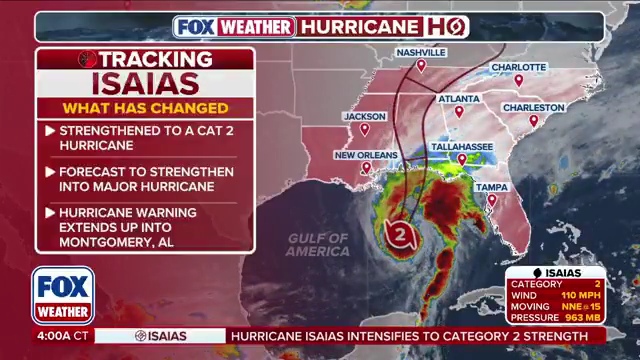 Vos Iz Neias2 days ago
MIAMI (VINnews) — Hurricane Isaias was on the cusp of major-hurricane strength Friday morning and was expected to come ashore along the northern Gulf Coast late Friday or early Saturday as a dangerous storm, the National Hurricane Center said.
At 7 a.m. CDT, the center was about 245 miles south of Pensacola and about 170 miles south-southeast of the mouth of the Mississippi River, moving north-northeast at 15 mph. Maximum sustained winds were near 110 mph, with a minimum central pressure of 958 millibars, based on data from an Air Force Reserve Hurricane Hunter aircraft.
Forecasters said Isaias was likely to become a Category 3 hurricane later Friday morning. Some weakening is expected before landfall, but the center said the storm should still be a dangerous hurricane when it reaches the coast tonight or early Saturday. Landfall is expected inside the hurricane warning area, with the greatest threat focused from coastal Mississippi through the western Florida Panhandle.
A hurricane warning was in effect from Ocean Springs, Mississippi, to the Bay/Gulf County line in Florida. A storm surge warning covered the coast from the mouth of the Mississippi River to the Suwannee River in Florida. Tropical storm warnings extended farther west into southeastern Louisiana.
The center urged residents in the surge and hurricane warning areas to finish preparations within the next few hours, saying conditions along the coast would deteriorate quickly. Life-threatening storm surge, damaging winds and flooding rain are the main hazards. Hurricane-force winds extended about 30 miles from the center, and tropical-storm-force winds reached out about 185 miles.
Rainfall of 4 to 8 inches is forecast from Friday through the weekend across southern Alabama, the Florida Panhandle and Big Bend, and southwest Georgia, with isolated amounts up to 10 inches. Forecasters warned of flash flooding, urban flooding and possible river flooding as the storm moves inland and weakens over the Southeast.
Florida Gov. Ron DeSantis has declared a state of emergency for 25 North Florida counties. Mandatory evacuations were already in effect for coastal areas of Okaloosa County. Officials across the warning area have told residents to follow local orders and leave if instructed to do so.
Isaias is the first hurricane of the 2026 Atlantic season. After landfall, gusty winds and heavy rain are expected to spread well inland across parts of Alabama, Georgia and the Southeast through the weekend.
 Vos Iz Neias2 days ago
WASHINGTON (VINnews) – Homeland Security Secretary Markwayne Mullin ripped into New York City Mayor Zohran Mamdani and Gov. Kathy Hochul on Friday, accusing the Democratic leaders of applying a double standard by condemning an ICE-involved shooting while remaining silent after an NYPD officer was stabbed seven times by two immigrants in the country illegally.
Speaking at a news conference in Washington alongside senior immigration officials, Mullin defended federal immigration enforcement following Thursday’s shooting of a Dominican man during an attempted arrest in Manhattan. The event was billed as an effort to highlight what the Trump administration calls the dangerous consequences of sanctuary-city policies.
“NYPD officers are some of the finest officers we have out there,” Mullin said. “Just last week, one was stabbed seven times by illegals. One that we had a detainer on that New York released. Both had extensive criminal backgrounds.”
Mullin then challenged Mamdani and Hochul over their response to the two incidents.
“Did the mayor of New York say anything about that? Did the individuals that’s in the streets demanding justice for this criminal that we picked up yesterday? Did anybody come out for the officer that was stabbed seven times by these criminals?” he asked.
“Not a word was said. Not a word was said by the mayor. Not a word was said by the governor.”
Blasts Mamdani’s calls to abolish ICE
WATCH: Secretary Mullin Holds a Press Conference on the Dangerous Consequences of Sanctuary City Policies https://t.co/Lgcq44clIg
— Homeland Security (@DHSgov) October 9, 2026
Mullin also took aim at Mamdani’s calls to abolish Immigration and Customs Enforcement, accusing the mayor of undermining federal agents while failing to stand up for New York’s police officers.
“We arrest thousands, weekly, that are criminals, and he turns a blind eye to it and won’t even stand up for his own NYPD officers, that, by the way, protect him every single day!” Mullin said.
The secretary also rejected Mamdani’s description of ICE as “rotten to the core.”
“Really? When men and women at ICE each day are enforcing the laws that he refuses to enforce!” Mullin said.
He challenged the mayor to explain who would remove dangerous offenders from New York’s streets if ICE were abolished.
“If you abolish ICE, who’s going to take your criminals off the streets of your own town? Who’s going to take the murderers and the thieves and the gangbangers?” Mullin asked.
“Who’s going to take them off the streets because you are not allowing NYPD officers to do it, and they want to!”
ICE shooting sparks fresh confrontation
The news conference followed Thursday’s shooting in Marble Hill, Manhattan, where an ICE officer shot 28-year-old Oscar Belgal in the neck during an attempted arrest. A 5-year-old child was inside the vehicle but was not injured.
Federal officials said the officers believed their lives were in danger. New York police officials said plainclothes federal officers approached the vehicle with guns drawn and fired seven rounds as it began moving forward.
Mamdani condemned the shooting and demanded an end to ICE operations in New York City. Hochul also called for transparency and accountability.
The competing accounts have intensified the clash between the Trump administration and New York’s Democratic leadership over sanctuary-city policies and cooperation between local law enforcement and federal immigration authorities.
Mullin’s remarks sought to shift the focus to the dangers faced by police officers and what he described as the consequences of local officials releasing immigrants with criminal histories despite federal immigration detainers.
The dispute underscores the growing confrontation between Washington and New York over immigration enforcement, public safety and the role of ICE in removing people accused or convicted of crimes from American communities.
 Vos Iz Neias2 days ago
LONDON (AP) — The leader of the fast-growing Green Party in England and Wales faced questions about his future on Friday after failing to win a parliamentary seat from the governing Labour Party.
Zack Polanski is fighting a backlash over his party’s anti-Zionist stance and doubts about whether he can continue to be its leader from outside the House of Commons.
Labour candidate Sagal Abdi-Wali won Thursday’s special election for the Holborn and St. Pancras seat, which was vacated by former Prime Minister Keir Starmer, with 12,292 votes, 45% of the total. Polanski received 8,928 votes, just under 33%.
Abdi-Wali, who came to Britain from Somalia as a child refugee, said she was honored to represent an area that had given her opportunities in life.
“I hope this moment also says something about who gets to belong,” said Abdi-Wali, leader of Camden Council, the local authority. “For people who look like me, I hope they see themselves reflected in this place and know that their path too belongs here.”
Leading a party from outside Parliament poses practical challenges in Britain’s parliamentary system. Polanski was elected Green leader last year on the understanding that he would seek a seat in the Commons and join the party’s five MPs.
The Greens have grown rapidly under the “eco-populist” Polanski, broadening their message beyond environmental concerns to focus on issues including the cost of living, legalization of drugs and support for the Palestinian cause.
The party has positioned itself as an alternative to Labour for left-liberal voters and gained momentum after beating the governing party in a special election last year in one of its northern England strongholds.
But some members believe the party has moved too far from its environmentalist roots. Polanski’s campaign was overshadowed by the Greens’ decision earlier this month to declare Zionism, the political movement for a Jewish homeland, a form of racism.
The motion, approved by a vote of members, backed a “single democratic Palestinian state” in the area covered by Israel and the Palestinian territories.
It has divided the party, drawn criticism from most elected Green lawmakers and alarmed many Jewish groups. Vivien Lichtenstein, chair of Jewish Greens, called on Polanski to resign.
Caroline Lucas, who was the Greens’ first elected lawmaker and is a former party leader, said the motion was “dangerous, it’s divisive, it tries to have a singular definition of Zionism when we know that there are many.”
Israel called the motion antisemitic and barred Polanski, who is Jewish, from entering the country.
Polanski, who missed the vote because he was campaigning in the special election, said he would not have voted for the motion but agreed with it “in substance.” He described Israel as an apartheid state committing genocide against Palestinians and declined to say, when asked by the BBC, whether he thought Israel had a right to exist.
“I believe Israelis and Palestinians should have equal rights in a democracy,” he said.
Polanski faces a leadership vote next year. He told Sky News on Friday that it was “difficult being leader of any party, particularly the Green Party.”
“But I signed up for that difficult job and I’m more than ready to continue,” he said.
 Vos Iz Neias2 days ago
MIAMI (VINnews) — Eight people were taken to hospitals early Friday after severe turbulence forced a New York-bound Avianca flight from Colombia to divert and land at Miami International Airport, officials said.
Avianca Flight 042 left José María Córdova International Airport in Medellín at 10:40 p.m. Thursday local time, bound for John F. Kennedy International Airport, according to flight-tracking data and airport officials. The jet diverted about three hours into the trip and landed safely in Miami around 3:30 a.m.
Miami-Dade Fire Rescue said crews responded to multiple patients hurt by turbulence. Eight people were taken by ambulance to hospitals. Officials did not immediately release how seriously they were injured or name the hospitals.
Airport spokesman Gren Chin told the Miami Herald that the flight diverted because of turbulence and that eight people were hospitalized.
Passenger Maria Paula Jimenez told CBS News Miami that ambulances were already waiting near the arrival gate when the plane stopped. She said she counted more than five or six ambulances, several with lights flashing, and that the scene did not look routine.
NBC 6 South Florida reported that cellphone video from the cabin appeared to show passengers holding ice packs to their heads while crew members told them to stay seated with seat belts fastened. The station said its cameras later showed some travelers arriving at a hospital with luggage, and others on stretchers, including a flight attendant still in uniform and a woman wearing a neck brace.
One woman aboard the plane told NBC 6 she wanted only to go home, adding that an episode like that makes a person value life.
A later Avianca flight was scheduled to leave Miami for Kennedy Airport at 8:25 a.m. Friday, according to FlightAware.
Avianca had not immediately issued a public statement on the cause. ABC News reported weather in the area at the time, but authorities had not said whether weather produced the turbulence. The extent of the injuries remained unknown Friday morning.
 Vos Iz Neias2 days ago
LONDON (VINnews) — Labour held the central London seat vacated by former Prime Minister Keir Starmer on Friday, beating Green Party leader Zack Polanski and giving Prime Minister Andy Burnham an early win in his effort to pull left-leaning voters back from the Greens.
Camden Council leader Sagal Abdi-Wali took Holborn and St Pancras with 12,292 votes, or 45%, to 8,928, or 33%, for Polanski. The majority of 3,364 is Labour’s smallest in the constituency since it was created in 1983. Turnout was about 39%, well below the 2024 general election.
The by-election was called after Starmer resigned the seat in September. Burnham, installed by Labour lawmakers worried that Starmer’s unpopularity was clearing a path for Reform UK, had been expected to hold the district. The Green share of the vote still rose sharply from 2024.
Abdi-Wali, who came to Britain as a child refugee from Somalia in the 1990s, called the result an extraordinary honor and said she would be the constituency’s first female member of Parliament. She told supporters people had voted for hope and that politics had to show it could improve their lives.
Polanski, 43, a former actor and hypnotherapist who is Jewish, said he would stay on as Green leader. He described the loss as part of Burnham’s honeymoon and said the campaign had let him argue for rent controls, action on climate change and public ownership of Thames Water. He said the result showed the Greens were a greater electoral threat in seats like this than before.
The defeat lands days after Green members at their Brighton conference passed a motion declaring that Zionism is racism and calling for a single democratic Palestinian state across historic Palestine. The motion passed 1,022 to 813. It defines Zionism as support for an ethnonationalist Jewish state and says the party should treat Zionism as it treats other forms of racism.
Polanski did not vote. He left the conference early to campaign and later said that if Zionism means the displacement of Palestinians, it is racist — adding that he spoke as a Jewish leader of a British party. He also said no one should be excluded from the Greens because of faith or communal affiliation.
Jewish groups, other parties and most Green lawmakers criticized the motion. Israel’s Foreign Ministry called the text antisemitic and barred Polanski from entering the country. Former Green leader Caroline Lucas faulted him for a lack of leadership on the vote. Vivien Lichtenstein, leader of the Jewish Greens, said he should resign. Burnham called the motion completely wrong and urged Polanski to reverse it. Labour chair Bridget Phillipson said the Greens now face a serious problem with antisemitism.
The Conservatives finished third, ahead of Reform UK and the Liberal Democrats. The next national election is due by mid-2029.
 Vos Iz Neias2 days ago
JERUSALEM (VINnews) — The Israel Defense Forces said Friday it killed three terrorists from Hamas and Palestinian Islamic Jihad in airstrikes in the Gaza Strip on Thursday, accusing them of preparing attacks on Israeli troops and working to rebuild militant capabilities in violation of the ceasefire.
The military identified the dead as Hassam Walid Hassan Abu Al-Ata, a commander in the rocket unit of Islamic Jihad’s military wing, struck in Gaza City; Magdi Moein Yousef Al-Ayoubi, an Islamic Jihad operative, also struck in Gaza City; and Muhammad Aja, a company commander in Hamas’ military wing, struck in the Al-Furqan area.
The IDF said the three had recently moved to advance attacks against Israeli forces and had operated to restore the groups’ capabilities, which it described as a systematic breach of the ceasefire. They were killed in aerial strikes, the military said.
Before the strikes, the IDF said it took steps to limit harm to civilians, including the use of precise munitions and aerial surveillance.
Troops under the Southern Command remain deployed in the area under the terms of the agreement and will continue to act against any immediate threat, the military said.
The IDF did not say whether Hamas or Islamic Jihad had confirmed the deaths. The claims could not be independently verified.
The strikes follow other Israeli operations this week against operatives the military has accused of planning attacks and rebuilding militant infrastructure while the ceasefire remains in effect.
 Vos Iz Neias2 days ago
New York (VINNEWS/Rabbi Yair Hoffman) Halachic authority comes in two forms. One is the authority of reasoning, where a ruling stands because its arguments are strong. The other is deeper and rarer: the authority of kabbalah, acceptance. A ruling has it when Klal Yisroel has received it as binding, so that it no longer depends on any single argument. The Shulchan Aruch of Rav Yosef Karo, with the glosses of the Rema, rules through acceptance. A careful look at the testimony of the past several decades shows that the Mishnah Berurah of the Chofetz Chaim has reached the same level throughout the Ashkenazi world. It holds that place across Litvish, Chassidic, Hungarian, Yekkish, English and American communities, even where other traditions keep their own voice.
The Chazon Ish: “As If From the Sanhedrin”
The most striking statement comes from the Chazon Ish himself, in a letter preserved in Kovetz Igros (2:41):
“ההוראה המקובלת מפי רבותנו אשר מפיהם אנו חיים, כמו מרן הבית-יוסף ומגן אברהם ומשנה ברורה… היא הוראה מקויימת כמו מפי סנהדרין בלשכת הגזית.”
“The accepted rulings of our teachers, from whose mouths we live, such as Maran the Beis Yosef, the Magen Avraham and the Mishnah Berurah… are rulings that stand as if they came from the Sanhedrin in the Chamber of Hewn Stone.”
The Chazon Ish named only three authorities in that sentence. The Mishnah Berurah, barely a few decades old when he wrote, appears beside the Beis Yosef, the author of the Shulchan Aruch itself, and beside the Magen Avraham, the classic commentary printed on its page. The Chazon Ish compared it to the Sanhedrin.
This weight is clearer still because the Chazon Ish was known to differ with the Mishnah Berurah in a number of places. His students did not treat those differences as a rival system. A recent Bnei Brak edition, Mishnah Berurah im Piskei Maran HaChazon Ish (5781), with the notes of Shoneh Halachos by Rav Chaim Kanievsky, opens its introduction this way: “כידוע ספרי המשנה ברורה נתקבלו בכל ישראל, וכמוש”כ מרן החזו”א באגרותיו” (“As is known, the seforim of the Mishnah Berurah were accepted throughout Klal Yisroel, as Maran the Chazon Ish wrote in his letters”). The very edition that records the Chazon Ish’s departures is printed as a Mishnah Berurah, with those rulings set beside it. The base text is the Chofetz Chaim’s. The Chazon Ish’s view is a notation on it.
Rav Chaim Ozer: “The Chofetz Chaim and the Mishnah Berurah Are One”
Before the war, the leading posek of Lithuanian Jewry was Rav Chaim Ozer Grodzinski of Vilna. A telling story is recorded in the Torah journal Moriah (8:6–7, Kislev 5739). When the opinion of the Chofetz Chaim on a certain communal matter was brought before Rav Chaim Ozer, he accepted it at once, saying, “כך פסק המשנה ברורה” (“So rules the Mishnah Berurah”). The writer drew the lesson: the Chofetz Chaim and the Mishnah Berurah are one. In the eyes of the posek hador, the man’s word had taken on the authority of his sefer.
Rav Elyashiv and Rav Shlomo Zalman Auerbach
The two great poskim of Yerushalayim in the next generation carried this acceptance forward. Rav Yosef Shalom Elyashiv and Rav Shlomo Zalman Auerbach each had the stature to chart an independent course in Orach Chaim. Each was a master of the Rishonim and fully capable of reaching his own conclusions. Yet both treated the Mishnah Berurah as the starting point of psak.
Their published rulings show this on nearly every page:
In these works, the Mishnah Berurah is the baseline. Where either gadol departs from it, he states his reason explicitly, as one does when stepping away from an accepted ruling.
This author saw the pattern firsthand, in direct communication with both gedolim, while seeking their rulings and insights on the details of shnayim mikra v’echad targum, the weekly review of the parsha discussed in Orach Chaim siman 285. On question after question, their approach was the same. Each began with the words of the Mishnah Berurah, worked from its framework, and treated its conclusions as the default. Where they added an insight or reached a different result, it was framed as a comment on the Mishnah Berurah, not as a fresh ruling from the Shulchan Aruch alone. For both of them, the Mishnah Berurah was the methodology itself.
This matters well beyond Yerushalayim. Rabbi Avraham Rapoport, in the teshuvah discussed below, describes how communities across the entire spectrum turned to Rav Elyashiv for guidance. He names the Chassidic communities, the Eidos HaMizrach, those under the banner of Agudas Yisroel, and bnei Torah everywhere. The posek to whom the whole Torah world brought its questions stood squarely on the foundation of the Mishnah Berurah. The world of Young Israel Rabbanim is no different. The Mishna Brurah is the go to across the country.
Displacing the Kitzur
The same Moriah article, by Rabbi Yosef Tashur, records a quieter revolution. For generations, the standard halachic guide for the ordinary Jewish home was the Kitzur Shulchan Aruch of Rav Shlomo Ganzfried of Ungvar. It was a product of Hungarian Jewry, and it went through thirteen editions in the author’s own lifetime. Yet, the article observes, once the Chofetz Chaim’s light rose and the Mishnah Berurah appeared, “נתקבלו ספריו ופסקיו בכל שערים המצויינים בהלכה” (“his seforim and rulings were accepted in all the gates distinguished in halacha”). The Mishnah Berurah covered far more ground than the Kitzur, and where the two differed, the Mishnah Berurah’s view was the one people sought.
The answer of the publishing world tells the story. The Kitzur was not abandoned. Instead, it was reissued with the Mishnah Berurah’s rulings noted wherever the two disagreed, in the edition of Rav Sarya Deblitzky (Bnei Brak, 5738). A beloved Hungarian classic had to be brought into line with the Mishnah Berurah in order to stay useful.
Brooklyn: The Eruv Debate
Perhaps the most revealing testimony comes from Boro Park, home to one of the largest Chassidic populations in the world. Rabbi Avraham Rapoport, in his She’elos U’Teshuvos VeKeitzad Ein Ma’arivin (vol. 2, siman 55), addressed the heated question of an eruv in large cities, and in Boro Park in particular. He wrote:
“והנה בימינו נתקבלו פסקי המשנה ברורה ושו”ת אגרות משה כעין קבלת דבריהם שלא להורות לפני רבו. ובכל זאת יש לנו מקום לשאול ולדון על דבריהם אבל לא להכחישם.”
“In our days, the rulings of the Mishnah Berurah and the responsa Igros Moshe have been accepted, in a manner resembling the acceptance that one may not rule in the presence of one’s teacher. Nevertheless, there is room for us to ask and to discuss their words, but not to contradict them.”
He concluded that in the eruv question, “יש לנו להיזהר בכבוד המשנה ברורה” (“we must be careful with the honor of the Mishnah Berurah”).
Rabbi Rapoport’s formula is precise and important. Acceptance does not shut down learning. One may ask questions and analyze. What one may not do is contradict. He even placed this acceptance within the long pattern of Jewish history. The closing of the Mishnah, the Talmud, and the period of the Rishonim each brought a stage at which later generations accepted that they would not argue with earlier ones. The Mishnah Berurah, in his view, now belongs to that pattern. The argument appears in a Brooklyn teshuvah, in the middle of a Chassidic neighborhood’s debate. That fact alone shows how far the Mishnah Berurah’s acceptance reaches.
England: Gateshead
In Gateshead, Rabbi Pesach Eliyahu Falk wrote in his classic work on tznius, Oz VeHadar Levusha (3:3, p. 175):
“בכל עניני ההלכה הנוגעים לחיי היום-יום, החפץ חיים הוא רבינו ומורה דרכינו, ופסקיו בספרו המשנה ברורה נתקבלו בכל תפוצות ישראל.”
“In all matters of halacha that touch daily life, the Chofetz Chaim is our teacher and guide, and his rulings in his sefer Mishnah Berurah have been accepted in all the dispersions of Israel.”
Rabbi Falk then went a step further. Because the Chofetz Chaim’s rulings carry this standing, he argued, his views on tznius, expressed in Geder Olam, deserve the same honor. The acceptance of the Mishnah Berurah had become a premise from which other conclusions could be drawn.
“Hardly a Jewish Home Without It”
The Shemen Rosh (Parshas Tazria) states the matter in the plainest terms. The Chofetz Chaim, he writes, merited what few later authorities ever did: his Mishnah Berurah “נתקבלו בכל תפוצות ישראל, עד שכמעט אין בית יהודי אחד שלא יהא בו ספריו” (“was accepted in all the dispersions of Israel, until there is hardly a single Jewish home that does not contain his seforim”). Whoever wishes to know a clear halacha looks into it. The Shemen Rosh saw this as a reward from Heaven for the Chofetz Chaim’s own sefer Chofetz Chaim, which taught Klal Yisroel the gravity of shmiras halashon.
Like the Shulchan Aruch Itself
A recent work, Mishnah Berurah im Mekoros U’Biurim on Orach Chaim simanim 1–24, makes the comparison explicit. In his introduction, written after consulting his rebbe, Rav Kook, the author explains that he follows the Mishnah Berurah’s rulings because its words “נתקבלו בעם ישראל בהוראת גדולי ישראל” (“were accepted among the Jewish people in the rulings of the gedolei Yisroel”). Its words are, he says, a continuation of the Shulchan Aruch, and its importance resembles that of the Shulchan Aruch.
He then applies to the Mishnah Berurah what Rav Yehonasan Eibeshitz wrote of the Shulchan Aruch (Urim V’Tumim, Kitzur Tekafo Kohen 124). The spirit of Hashem rested upon its authors so that their language was aimed at the halacha, even beyond what they consciously intended. For that reason, Rav Yehonasan wrote, one may not say kim li against the rulings of the Mechaber and the Rema. A device once reserved for the Shulchan Aruch alone is now applied to the Mishnah Berurah.
The sefer carries haskamos from across the spectrum:
The author adds that even members of the Eastern communities will benefit, because the roots of halacha are shared. The Mishnah Berurah’s reach has begun to extend past its own borders.
What the Chofetz Chaim Intended
The Chofetz Chaim himself explained the name on the title page. He called his commentary Mishnah Berurah because through it every ruling of the Shulchan Aruch would be clarified, “בטעמו ונימוקו מגמרא ופוסקים, ולא יהיה כספר החתום” (“with its reason and basis from the Gemara and poskim, so that it should not be like a sealed book”). His son testified that the sources the Chofetz Chaim assembled would have made the work many times its size. He kept it concise deliberately, and everyone knew that the work was entirely halacha l’maaseh (Kitzur Toldos HaChofetz Chaim, p. 28).
The Gra, as his son recorded in the introduction to the Biur HaGra, once longed to produce a work of single, decisive rulings. He declined, saying that the generation was not worthy. A century later, the Chofetz Chaim produced a work that Klal Yisroel treated as exactly that.
What “Acceptance” Means, and the Other Traditions
None of this means that every Ashkenazi community follows every line of the Mishnah Berurah:
These facts do not refute the Mishnah Berurah’s acceptance. They define it. In halacha, acceptance has never meant uniformity. The Rema departs from the Mechaber, and Sephardim and Ashkenazim divide over countless points, yet no one doubts that the Shulchan Aruch is accepted. Acceptance means that a work becomes the default. It is the reference point against which every departure must justify itself.
Measured by that standard, the evidence is overwhelming:
Rabbi Rapoport’s formula captures the matter best: one may ask and discuss, but not contradict. A sefer written in Radin by a Kohen who ran a small grocery has become, in the words of the Chazon Ish, a ruling that stands “as if from the Sanhedrin in the Chamber of Hewn Stone.”
The author can be reached at [email protected]
 Vos Iz Neias2 days ago
JERUSALEM (VINnews) — South African jurist Navi Pillay, who chaired a United Nations commission that accused Israel of committing genocide in Gaza, has been awarded the 2026 Nobel Peace Prize, a decision likely to intensify debate over the international body’s treatment of Israel and the credibility of its accusations against the Jewish state.
The Norwegian Nobel Committee announced Friday that Navanethem “Navi” Pillay, 85, was being honored for her efforts to promote peace and international law, particularly her role in advancing accountability for war crimes, crimes against humanity and genocide. The committee praised her legal career, which included serving as UN high commissioner for human rights and as a judge at international tribunals.
But Pillay’s record on Israel has made her a deeply controversial figure among Israeli officials and pro-Israel organizations. As chair of the UN Independent International Commission of Inquiry on the Occupied Palestinian Territory, including East Jerusalem and Israel, she led the body that concluded in September 2025 that Israel had committed genocide against Palestinians in Gaza.
Israel categorically rejected the finding, describing the commission’s report as a politically motivated attempt to demonize and delegitimize the country. The Foreign Ministry accused the commissioners of acting as “Hamas proxies” and called for the commission to be abolished.
The pushback against Pillay spans over a decade. Israeli diplomatic figures often point back to her tenure as the UN High Commissioner for Human Rights (2008–2014), during which Israel frequently protested her oversight. In 2014, Israel and international allies argued that the UN Human Rights Council under her stewardship “simply cannot be taken seriously as a human rights organization” due to its disproportionate focus on probing Israel while failing to hold groups like Hamas accountable.
The award places the Nobel Committee’s endorsement of Pillay’s work alongside one of the most serious and contested international accusations made against Israel since the October 7, 2023, Hamas massacre.
Criticism of Pillay extends beyond disagreement with the commission’s genocide finding. Israeli officials and Jewish organizations have accused the inquiry of applying a distorted and one-sided framework to the conflict.
In March 2025, Israel denounced an earlier commission report that accused Israeli forces of committing “genocidal acts,” calling its allegations a “blood libel.” Israeli officials and women’s organizations also accused the panel of bias in its treatment of allegations concerning sexual violence and reproductive healthcare facilities.
The commission has said its work examines alleged violations by both Israel and Palestinian armed groups. Its earlier investigations addressed crimes committed during the October 7 attacks as well as Israeli military operations in Gaza. Pillay has defended the commission’s conclusions, saying investigators conducted their own inquiries and verified their findings.
Nevertheless, Israeli officials have explicitly characterized the commission’s work as part of an anti-Israel campaign, and the award is likely to renew scrutiny of the evidence and assumptions underlying its reports.
Pillay’s career began in apartheid-era South Africa, where she became a lawyer and defended opponents of the white-minority government. She later served on South Africa’s High Court, the International Criminal Tribunal for Rwanda and the International Criminal Court, before becoming UN high commissioner for human rights from 2008 to 2014.
The Nobel Committee highlighted her role in developing international criminal law, including the recognition that rape and sexual violence can constitute crimes against humanity and acts of genocide. Her supporters view her career as a sustained effort to ensure that powerful states and individuals are held accountable for abuses.
Her critics, however, argue that her record on Israel raises questions about whether the same standards of fairness and impartiality have been applied consistently.
The Nobel Committee said the award was intended to reaffirm the importance of the rule of law at a time when international legal institutions and their judges face growing pressure. Yet the decision is likely to provoke a different question in Israel: whether honoring a jurist who led an inquiry accusing the Jewish state of genocide strengthens confidence in international justice or deepens the perception that international institutions have become increasingly hostile toward Israel.
Vos Iz Neias2 days agoFamily getting up: Shacharis: 8:00 am Mincha: 6:05 pm Maariv: 6:05 pm
Mrs. Esther Fogel
Wife
Mrs. Minda Fogel
Sister
Mrs. Miriam Katz
Sister
Mr. Yitzchak Fogel
Son
Mrs. Goldie Kalikstein
Daughter
Mrs. Gittie Rosenblatt
Daughter
 Vos Iz Neias3 days ago
ATHENS (VINnews) — Conservative commentator Ben Shapiro said Thursday that Secretary of State Marco Rubio’s address beneath the Acropolis was the best speech of recent years, and asked whether the 2028 Republican presidential contest is already settled.
“Marco Rubio just gave the best speech of the last few years. Which means we have to start asking a question: is the 2028 primary truly already over? Maybe, but maybe it shouldn’t be,” Shapiro wrote on X, attaching a segment from his Daily Wire program. The post drew thousands of reactions within hours.
Rubio spoke Wednesday from the Pnyx, the ancient meeting place of the Athenian assembly, with the Parthenon behind him. He argued that Western nations face a choice between renewed confidence and decline, and said the next decade’s decisions will shape the century that follows.
He faulted Western governments for opening borders, outsourcing industry and allowing militaries to weaken, and said nationalism had been treated as a dirty word while monuments were torn down and children were taught to be ashamed of their countries. He also criticized what he called the transfer of decisions to distant international bureaucracies.
Rubio tied American institutions to Greek inheritance, noting classical forms in the capital and the Greek name of Philadelphia, where the Constitution was written. He singled out Iran’s rulers, contrasting what he called a cult of death with a Western tradition that honors sacrifice without worshipping it. He said the United States, under President Donald Trump, has chosen national power, reindustrialization and technological competition.
The setting and the language quickly fed speculation about 2028. Fox News host John Roberts said a speech of that kind would normally be read as an opening shot in the next race, but noted that Rubio has said he is not running. President Trump has repeatedly pointed to Vice President JD Vance and Rubio as the leading figures to succeed him, and in June floated a Vance-Rubio ticket, saying the two get along and would be hard to beat.
Shapiro’s praise marked a shift in emphasis from comments he made in August. On the PBD Podcast, he said Rubio, whom he described as risk-averse, would likely stay out of a primary against Vance. He laid out a set of outcomes in which a challenge could end Rubio’s prospects, while staying out could leave him next in line if Vance lost.
Shapiro, an Orthodox Jew and co-founder of The Daily Wire, has been among the sharper national voices on Western identity and Israel. In a written commentary Thursday, he said Rubio’s remarks were a reminder that American achievements are worth defending without embarrassment, and that a Rubio candidacy would make the next primary more competitive.
Rubio has not announced a 2028 bid. The Republican nomination fight remains more than a year away.
 Vos Iz Neias3 days ago
New York (VINNEWS/Rabbi Yair Hoffman) What follows is a remarkable story that happened to Reb Don Germazian in regard to tznius. But first a bit about the topic. The navi Michah (6:8) sums up what Hashem asks of a Jew in three phrases: “Asos mishpat, v’ahavas chesed, v’hatznea leches im Elokecha,” to act justly, to love kindness, and to walk modestly with your G-d.
The Gemara (Sukkah 49b) teaches that if the Torah demands modesty even in matters normally done publicly, such as escorting a kallah or accompanying the deceased, how much more so in matters normally done privately.
Tznius, then, is not only a set of measurements. It is a way of walking through the world, at home and in public, in how a person dresses and in where a person chooses to be.
“Mah Tovu Ohalecha”: The Halacha of Not Being Seen
When Bilaam stood on the mountain intending to curse the Jewish people, he instead declared, “Mah tovu ohalecha Yaakov” (Bamidbar 24:5). The Gemara (Bava Basra 60a) explains what he saw: the openings of their tents did not face one another. Each family arranged its home so that no one could look into another’s private space. That arrangement, built so that people would not see what they should not see, turned a curse into a bracha.
This became binding halacha. The Gemara at the start of Bava Basra (2b–3a) establishes the concept of hezek re’iyah, damage caused by sight. Viewing another’s private space is treated as real damage, and a neighbor can be compelled to build a dividing wall. The Shulchan Aruch codifies this (Choshen Mishpat 154:3). In the Torah’s view, a physical barrier against improper viewing is not merely praiseworthy; it can be required by law.
The pasuk “Kol kevudah bas melech penimah” (Tehillim 45:14) expresses the same idea: the dignity of a Jewish daughter lies in her inner, private world. The Gemara (Yoma 47a) relates that Kimchis merited seven sons who served as Kohen Gadol. When asked what merit earned this, she replied that the walls of her home had never seen the hair of her head.
“V’lo Sasuru Acharei Eineichem”: The Halacha of Not Seeing
Tznius has a second direction: not only guarding against being seen, but guarding against seeing. In Krias Shema, recited twice daily, the Torah commands, “V’lo sasuru acharei levavchem v’acharei eineichem” (Bamidbar 15:39). Chazal (Berachos 12b) explain that “acharei eineichem” refers to thoughts of immorality that enter through the eyes. The Sefer HaChinuch (Mitzvah 387) counts this among the six constant mitzvos, binding at every moment of a person’s life. The Shulchan Aruch (Even HaEzer 21:1) rules that a person must distance himself greatly from improper gazing.
Chazal were acutely aware that the eyes are the gateway. The Gemara (Sotah 9b) notes that Shimshon “went after his eyes,” and therefore the Plishtim gouged out his eyes. The Mesilas Yesharim (Chapter 11) warns that guarding oneself from arayos includes guarding against looking and against placing oneself where looking becomes unavoidable.
That last point matters most. The Gemara in Avodah Zarah (20b) derives from “V’nishmarta mikol davar ra” that a person must not set himself up during the day for spiritual failure at night. Halacha does not ask a person to be a hero standing in the middle of temptation. It asks him to avoid the setting that creates the temptation in the first place.
What does such a choice look like in real life? A remarkable story, related by Don Ghermezian, illustrates it vividly.
The Pool Behind the Trees
Several years ago, the Ghermezian family traveled to Florida for the winter Yeshiva break and checked into the Fontainebleau in Miami Beach, one of the most famous hotels in the country. It did not take long for the family to realize that the atmosphere was simply not one in which a Torah family should be spending its vacation.
Most people in that situation would have made peace with it. They would have kept their eyes down, kept their children close, and waited out the two weeks. Mr. Ghermezian did something else.
The Fontainebleau has many pools. He called the hotel’s manager and ownership and asked to rent one of them for his family’s exclusive use. The executives were incredulous. Did he know how much revenue that pool would generate over two weeks of peak season? They named an exorbitant figure.
He agreed, with one condition. That very night, he would bring in a landscaping company and plant trees all the way around the pool so that no one could see in and no one inside could see out. He would also landscape a private pathway from the door of the hotel’s Sorrento tower to the pool, so that his family could walk from their rooms to the water and back without seeing anything improper and without being seen.
The rental was enormously expensive, and the landscaping added a great deal more. Photographers began circling, trying to learn who was hiding behind the new wall of greenery. But the story does not end there.
Seven Tickets at the Gate
On the same trip, Mr. Ghermezian had obtained four Super Bowl tickets months earlier through a sponsor connection. He planned to take three of his sons. As he passed through the lobby, his Uncle Rafi stopped him and asked him to take his three boys as well. Mr. Ghermezian protested that tickets cost $5,000 to $6,000 apiece and could not simply be conjured. His uncle waved it off: “You’ll figure it out.”
So seven people were in the car, and only four had tickets. His plan was to sell the four good seats outside the stadium and somehow buy seven lesser seats together.
While he was negotiating with sellers, a man tapped him on the shoulder. He had overheard. Were they looking for seven tickets? Were they one family? Did they want to sit together? Then came an unexpected question: were they a Jewish family?
When Mr. Ghermezian said yes, the man pulled an envelope from his pocket containing seven tickets in a row and handed it over free of charge. Suspecting a scam, Mr. Ghermezian asked who he was. The man introduced himself as Bryan Glazer, one of the owners of the Tampa Bay Buccaneers. NFL owners receive an allotment of tickets, and riding over in his limousine, he had been wondering what to do with the seven he had left. When he stepped out and saw this family, he decided that G-d must have meant the tickets for them.
The family sat at the fifty-yard line, in front of the owner’s suite. Afterward, Mr. Ghermezian did the arithmetic. The value of the seven free tickets plus the proceeds from selling his own four came to exactly the amount he had spent renting and landscaping the pool. Not approximately. Exactly.
That was the last year the family went to the Fontainebleau, and the last year they placed themselves in that kind of environment.
A Wall of Hezek Re’iyah in Both Directions
Viewed through the lens of halacha, those trees were not an eccentric luxury. They were a modern “Mah tovu ohalecha,” a wall of hezek re’iyah facing both ways. They protected the family from being seen, fulfilling “kol kevudah bas melech penimah.” They protected the family from seeing, fulfilling “v’lo sasuru acharei eineichem.” And the decision never to return was a textbook application of “v’nishmarta mikol davar ra”: not resisting temptation, but leaving the place where temptation lives.
What Does Halacha Say About the Cost?
Some might call the expense excessive. Halacha sees it differently. For a positive mitzvah, the Rema (Orach Chaim 656:1) rules that a person need not spend more than a fifth of his assets. But to avoid transgressing a negative commandment, he must be prepared to give up everything he owns. Since “v’lo sasuru” is a lav, spending a great sum to avoid violating it is not an extravagant chumra. It falls squarely within the category where the Torah expects a person to pay whatever it takes.
“Lehatzilcha”: Salvation Written in the Pasuk
The most striking source of all appears in Devarim (23:15): “Ki Hashem Elokecha mis’halech b’kerev machanecha lehatzilcha v’lases oyvecha lefanecha, v’hayah machanecha kadosh, v’lo yireh vecha ervas davar v’shav me’acharecha.”
Hashem walks within the camp in order to save and to deliver, and this is conditioned on the camp being holy, with nothing improper visible in it. When ervas davar is seen, the Shechinah withdraws. When the camp is kept holy, the Shechinah dwells there “lehatzilcha,” to save.
Mr. Ghermezian concluded his account by saying that whenever a person sacrifices to keep modesty and to guard his eyes, Hashem sees it and brings yeshuah. The pasuk said it first.
A Word of Perspective
A thoughtful reader should take care with one point. The Gemara (Kiddushin 39b) teaches “schar mitzvah b’hai alma leka,” that the true reward for mitzvos is not paid in this world. Not every sacrifice for tznius will be repaid with an envelope at a stadium gate, and a person should not keep tznius as an investment strategy.
Still, Chazal teach (Beitzah 16a) that a person’s livelihood is fixed from Rosh Hashanah, except for what he spends on Shabbos, Yom Tov, and his children’s Torah learning; in those areas, if he spends more, he is given more. Occasionally Hashem allows a person to see that ledger with his own eyes, down to the last dollar. Such moments are not given so the recipient can collect. They are given so that all of Klal Yisroel is reminded that the ledger exists.
The Kiddush Hashem
One final element is easy to miss. A stranger outside a football stadium looked at a father with his sons and nephews and asked a single question: were they a Jewish family? He saw something in them that moved him to give. That is a kiddush Hashem (see Yoma 86a), and it is ultimately the purpose of tznius. A family that guards its holiness behind the trees often carries that holiness, visibly, out into the world.
The author can be reached at [email protected]
 Vos Iz Neias3 days ago
MEQUON, Wis. (VINnews) — A Green Party candidate for Congress in Wisconsin was arrested Thursday after police said he made antisemitic statements during a road-rage confrontation with a father who was driving his young son to school.
Matthew Arndt, 54, a certified public accountant and investment adviser from Mequon, is the Green Party nominee in the 6th Congressional District. Mequon police said officers were called at about 8:50 a.m. to a report of road rage and disorderly conduct on Mequon Road between Granville Road and Wauwatosa Road.
Investigators said two Mequon men, ages 54 and 40, were involved in an encounter that included obscene gestures and dangerous driving. Both then pulled into a parking lot near Mequon and Wauwatosa roads, where police said the 54-year-old used profane language and made antisemitic statements. Arndt was arrested on suspicion of disorderly conduct with a hate crime enhancer. Police said reports will be sent to the Ozaukee County district attorney for a charging decision. An arrest is not a formal charge.
The other driver recorded part of the parking-lot exchange. In the video, Arndt curses at the man, calls him a traitor, denounces Israel and the “Israel lobby,” and shouts “Free Palestine.” He also identifies himself as a candidate, telling the man to post the footage and saying he is running for Congress in the 6th District.
The man who filmed the encounter told reporters he believes the outburst was set off by a bumper sticker on his car that disparages Hamas and includes an Israeli flag. He said he was taking his son to school, that the other driver pulled alongside him, cursed and gestured, and that he hung back because his child was in the car before photographing the plate and following the vehicle to the gas station. He told the New York Post he is an Israeli immigrant who has lived in the United States for about 12 years, and that the sticker was aimed at Hamas, which the U.S. government designates a terrorist organization.
Under Wisconsin law, a hate-crime enhancer can apply when a person intentionally selects a victim because of a belief or perception about that person’s race, religion, national origin or ancestry, whether or not the belief is correct. On a misdemeanor such as disorderly conduct, the enhancer raises the maximum penalty to a $10,000 fine and one year in jail.
Arndt later told FOX6 Milwaukee that he “messed up,” while insisting “the message stands.” He said his words were aimed at the government of Israel, not at Jewish people, and that he would represent constituents of every faith if elected. He also said the other driver followed him.
The Wisconsin Green Party’s Coordinating Council said it had seen the video and still supports Palestinian rights and an end to U.S. backing for the war in Gaza, but that cursing at someone in a parking lot does not advance that cause. The council said Arndt told party leaders he would address the incident, and that it would wait for the police report before commenting further.
Democrat Brad Smith, who is also seeking the seat, said he was disappointed and called the language unacceptable, especially with a child present. Republican incumbent Glenn Grothman is seeking reelection. The general election is Nov. 3.
Arndt, a Green Bay native who runs his own tax and investment firm, has campaigned on breaking up monopolies, Medicare for All and ending what he calls forever wars. In a candidate questionnaire, he wrote that he would not compromise on ending U.S. weapons support for Israel’s wars. His campaign site also says politics that teaches hate is poison and that Americans of every faith, including Jews and Muslims, belong in the country.
Police asked anyone who witnessed the driving or has video of it to call the Mequon Police Department at 262-242-3500.
 Vos Iz Neias3 days ago
GRAND RAPIDS, Mich. — Michigan Senate candidate Abdul El-Sayed faced a barrage of sharp challenges over Israel, Iran and terrorism during a fiery debate Thursday, as Republican Mike Rogers pressed the Democrat on his refusal to support military aid to Israel and his response to the Hamas massacre of Oct. 7, 2023.
The hourlong debate quickly devolved into a bitter exchange, with the candidates repeatedly interrupting one another and continuing to argue during a commercial break. The confrontation exposed deep divisions over foreign policy, national security and the future of U.S. support for Israel.
El-Sayed, a progressive former public health official who won the Democratic primary, accused Rogers of being a “sock puppet” for President Donald Trump. Rogers fired back, accusing El-Sayed of lying about his record and calling him a “conman.”
But the most contentious exchanges centered on El-Sayed’s positions on Israel and the Middle East, putting his foreign policy views and political alliances under renewed scrutiny.
**
Refuses to support weapons for Israel**
Asked whether he would support sending weapons to Israel if the Jewish state were attacked by another country, El-Sayed said he did not want American tax dollars used to “subsidize war abroad.”
His response offered no clear exception for Israel defending itself against an attack.
El-Sayed has argued that U.S. taxpayer money should instead be directed toward domestic priorities, including health care, education and infrastructure. His opposition to military assistance to Israel has raised concerns among some Jewish voters and community leaders in Michigan, where Israel’s security and rising antisemitism have become significant campaign issues.
Calls Israel and Iran dangerous
The confrontation intensified when El-Sayed was asked whether Israel or Iran posed a greater threat to the United States.
He called it a “ridiculous question,” saying both countries had “proven dangerous in their own way.”
The response drew renewed attention to El-Sayed’s approach to the escalating conflict in the Middle East and his opposition to deeper American military involvement.
Rogers challenged El-Sayed over his approach to terrorism and his failure to issue a statement marking the anniversary of Hamas’ Oct. 7 attack, which killed about 1,200 people in Israel and saw hundreds more taken hostage.
The exchange put the candidates on starkly different sides of a central national security question: how the United States should respond to threats against Israel and what role Washington should play in confronting Iran.
Temple Israel attack remains a point of contention
Rogers’ criticism comes amid lingering controversy over El-Sayed’s response to the March attack on Temple Israel in West Bloomfield, Michigan, where a truck driven by an assailant struck the synagogue while more than 100 children were inside.
El-Sayed condemned the attack but subsequently drew criticism after discussing Israeli airstrikes that had killed members of the attacker’s family in Lebanon.
Some Jewish community members said the discussion risked shifting attention away from the attack on the synagogue. El-Sayed later expressed regret over his earlier remarks, saying he wished he could take them back and stressing that there was no justification for terrorism.
The episode has deepened divisions among Michigan’s Jewish Democrats. Some have demanded stronger commitments to Jewish safety and Israel, while others have defended El-Sayed and argued that his positions reflect a broader commitment to human rights.
Hasan Piker controversy adds to pressure
El-Sayed also faced questions about his association with Hasan Piker, a left-wing online commentator whose remarks about Israel and other political issues have drawn widespread criticism.
After the debate, El-Sayed was asked why he had attacked Rogers over his association with Trump while dismissing questions about his own relationship with Piker.
“To equate the most powerful person in the world with a streamer in California seems to me to just be — I’m not going to use the word — but silly,” El-Sayed responded.
The exchange added another layer to the dispute over El-Sayed’s political alliances and whether he can unite Democrats who disagree sharply over Israel.
Democrats struggle to unite
The debate comes as Democrats attempt to unite after El-Sayed’s primary victory over Rep. Haley Stevens. Michigan Gov. Gretchen Whitmer appeared with El-Sayed for the first time since endorsing Stevens in the primary, part of a broader effort by prominent Democrats to bring the party together ahead of the Nov. 3 election.
The race is being closely watched nationally as Republicans and Democrats compete for control of the Senate seat being vacated by retiring Democratic Sen. Gary Peters.
For El-Sayed, the debate underscored the challenge of appealing to progressive voters who oppose U.S. military assistance to Israel while addressing concerns from Jewish voters over his positions on Israel, terrorism and antisemitism.
For Rogers, the exchanges offered an opportunity to make those issues central to the general election campaign.
The candidates’ sharply contrasting views on Israel, Iran and American military involvement abroad are likely to remain major points of contention as the race continues.
 Vos Iz Neias3 days ago
CORONADO, Calif. (AP) — Sailors began disembarking the USS Lincoln on Thursday following a deployment that included a record 265 uninterrupted days at sea and reports of supply shortages and deteriorating mental health among the crew.
Families waiting for the aircraft carrier’s arrival in San Diego Bay described crying and losing sleep after hearing about the ship’s food shortages and tough conditions. Many said the sailors had sent lists of the food they were craving.
Dozens of sailors stood atop the carrier as it glided past the cityscape of downtown San Diego toward cheering families who were carrying flowers and balloons and ringing cowbells.
Cassity Garduque, 14, waved as her mom in her sailor uniform frantically waved back from the top deck. “It feels really overwhelming,” she said about being reunited, adding she’s glad her mom won’t need to eat ramen almost every day.
The carrier drew national attention following reports of stress among the crew and poor mental health, as well as supply shortages, including food and hygiene products, during its Iran war mission.
Defense Secretary Pete Hegseth flew out to the Lincoln on Wednesday to give the crew the Presidential Unit Citation, the highest honor a unit can receive.
Hegseth pushed back against what he said were efforts to turn the “Lincoln into some sort of a symbol, a symbol of dysfunction or a symbol of low morale or a symbol of a failed mission.”
USS Lincoln crew looks forward to family and favorite meals
Among the first to depart the carrier at the naval base in Coronado will be 64 fathers meeting their babies for the first time, the Navy said.
Waiting for the Lincoln to bring her husband home, sailor Kathy Monterrosa held her six-month-old daughter, Sarahi, outfitted in a tiny blue and white sailor dress.
“She’s our deployment baby,” said Monterrosa, of Virginia Beach, Virginia.
“We are different people now; we are parents now,” she said. “We definitely matured from the last time we saw each other.”
It was tough to hear about the ship’s conditions while she was pregnant, she said. “I was crying a lot and worried. I wasn’t sure if he was OK or not,” she said.
When she finally heard from her husband, he told her it was “pretty bad.”
Alma Solano Velez said her husband gave his family an extensive list of the foods he has been craving over the past 10 months: oxtail, barbecue chicken, broccoli and shrimp empanadas to name a few.
He had told his wife about “the lack of food and showers” on board and was looking forward to seeing their daughter, who turned 4 while he was away, she said.
The Navy initially downplayed problems on the carrier
The Navy initially downplayed any problems during the deployment, and President Donald Trump commented in August that the Lincoln’s lengthy deployment was “not nearly long enough.”
Hegseth told the crew that “what makes the U.S. military and the U.S. Navy and all these sailors different is that you adapt and that you’re resilient and you overcome — you finish the mission nonetheless.”
The carrier left San Diego in November and arrived in the Middle East in January. U.S. and Israeli forces launched airstrikes against Iran on Feb. 28.
Navy leaders eventually acknowledged there were some issues aboard.
In August, acting Navy Secretary Hung Cao said the Lincoln maintained adequate food supplies, but because combat operations limited resupply opportunities, meal options were reduced for a short time.
After more than 10 months at sea, the Lincoln’s crew got a stop in Thailand early last month on the way back from the Middle East.
Long deployments can tax service members
Extended naval deployments can wear on service members who are away from home for long periods and increase strain on the ship and its equipment.
The Navy told lawmakers that eight sailors attempted suicide during the record-setting deployment, though experts say that number is low in a strike group of 6,000 sailors over 10 months.
According to the citation that Hegseth read to the crew, the Lincoln and its strike group executed nearly 3,700 combat missions, launched 450 Tomahawk cruise missiles, shot down 77 one-way attack drones, sank 64 Iranian warships, and destroyed 21 anti-ship cruise missiles.
The Lincoln, which set a record for days between ports of call, is the second carrier to endure an unusually long deployment during the Iran war and to receive the Presidential Unit Citation afterward, typically reserved for significant achievement in combat.
The crew of the USS Gerald R. Ford returned in May from a 326-day deployment — the longest for an aircraft carrier in the past 50 years and a record in the post-Vietnam War era. The deployment didn’t include as many uninterrupted days at sea as the Lincoln.
Another carrier, the usually Asia-based USS George Washington, relieved the Lincoln in the Middle East in August.
 Vos Iz Neias3 days ago
NEW YORK (AP) — Federal law enforcement agents shot and wounded a person in New York City on Thursday, city police said.
Few details were immediately available about the shooting, which happened around 4 p.m. in the Marble Hill neighborhood north of Manhattan.
The person who was shot is conscious and being treated at a hospital, the New York Police Department said in a post on X, noting that its officers didn’t witness the shooting and weren’t involved.
On October 8, at approximately 4:00 PM ET, ICE officers were conducting a targeted enforcement operation in the Bronx, New York, to arrest a criminal illegal alien from the Dominican Republic with a prior criminal conviction for grand larceny, and multiple prior arrests for assault, robbery, possession of drugs, and weapons possession. He has associations to the Trinitarios gang, the same gang who brutally shot a CBP officer last year.
This criminal illegal alien was arrested by the NYPD on December 7, 2023, but was released into the community a few days later by reckless Democrat sanctuary policies that put American lives at risk.
During the incident, an ICE officer discharged his weapon and the criminal illegal alien was injured.
ICE officers immediately rendered aid. The individual is alive and at a local hospital. The FBI and HSI are on the scene. The incident remains under investigation. More information will be shared as it becomes available.
When dangerous illegal aliens are released back onto the streets by radical sanctuary politicians, our officers are forced to make arrests at large in the community in unpredictable and dangerous environments. Our officers should not have to risk their lives, and innocent Americans should not have to face unnecessary danger, because sanctuary politicians refuse to cooperate with federal law enforcement.
— U.S. Immigration and Customs Enforcement (@ICEgov) October 9, 2026
Messages seeking further information were sent to federal authorities.
An FBI spokesperson said an evidence response team was responding to the scene “to support our partners at the Department of Homeland Security,” but offered no other details.
BREAKING: A person was shot during an encounter with ICE federal immigration agents in Marble Hill, the NYPD says.
NYPD: no city officers were involved and none were on scene when the shooting happened. The person is at a nearby hospital, conscious, and getting medical care.
Law enforcement sources the agents were ICE, during an enforcement operation and attempted arrest near Marble Hill Ave.
Video by Daniel Valls | Licensing @FreedomNTV [email protected]
— Oliya Scootercaster (@ScooterCasterNY) October 8, 2026
 Vos Iz Neias3 days ago
MIAMI (AP) — Isaias strengthened into a Category 2 hurricane as it barreled toward the U.S. Gulf Coast on Thursday, as communities raced to prepare for its arrival by stacking sandbags, closing schools and offices, and cautioning people in flood-prone areas to move to higher ground.
The storm’s sustained top winds eclipsed 96 mph (154 kph), bumping it into the higher category.
Isaias, the first hurricane of the Atlantic season, was forecast to intensify rapidly and bring strong winds and potentially life-threatening storm surges to the Florida Panhandle, southern Alabama and southern Mississippi. Landfall was expected on the northern Gulf Coast late Friday or early Saturday. Heavy rain with the risk of flooding was possible into the weekend as far inland as the Tennessee Valley.
The hurricane had maximum sustained winds of 100 mph (155 kph) and was moving northeast at 12 mph (19 kph), the hurricane center in Miami said. It was centered about 325 miles (525 kilometers) south of the mouth of the Mississippi River.
Coastal communities moved quickly to prepare. Some Gulf oil wells paused production, and several school districts canceled late-week classes. Okaloosa and Walton counties, in the Florida Panhandle, announced mandatory evacuations for some coastal areas. Communities closed government offices as of Thursday afternoon, and officials in some other areas urged voluntary evacuations.
The governors of Florida and Alabama, meanwhile, declared a state of emergency for dozens of counties.
THIS IS A BREAKING NEWS UPDATE. Check back for updates. AP’s earlier story follows below.
Hurricane Isaias strengthened Thursday as it barreled toward the U.S. Gulf Coast, prompting orders for tourists to trade beaches for safer spots inland, sending locals scurrying for gas and groceries, and leading fishing crews to secure their boats before the destructive storm’s arrival.
The first hurricane of the Atlantic season was forecast to intensify rapidly and cause dangerous conditions in the Florida Panhandle, southern Alabama and southern Mississippi when it makes landfall late Friday or early Saturday. Heavy rain and flooding were possible into the weekend as far north as Tennessee and North Carolina.
“We are expecting Isaias to be a dangerous hurricane when it makes landfall,” Michael Brennan, director of the National Hurricane Center in Miami, said Thursday.
He added: “Today is the day to prepare and get ready and be in your safe place by tomorrow as conditions will rapidly deteriorate along the northern Gulf Coast as Isaias approaches.”
The hurricane had maximum sustained winds of about 85 mph (140 kph) and was moving east-northeast at 10 mph (17 kph) as of early Thursday afternoon, the hurricane center said. It was centered about 355 miles (570 kilometers) south of the mouth of the Mississippi River.
Preparations are underway
Coastal communities moved quickly to prepare, as Alabama Gov. Kay Ivey ordered non-residents to immediately evacuate Gulf Shores, Orange Beach and Dauphin Island. Videos on social media Thursday showed traffic at a standstill on a highway leading out of Gulf Shores, where double-red beach flags signaled water access was closed.
At least four Florida school districts canceled late-week classes, while several counties announced mandatory evacuations for some coastal areas. The governors of Florida and Alabama declared states of emergency for dozens of counties ahead of Isaias’ arrival, and Florida Gov. Ron DeSantis said about 5,000 National Guard troops were expected to mobilize by Friday.
On Dauphin Island, a 15-mile-long (24-kilometer-long) barrier island off the Alabama coast, officials encouraged voluntary evacuations, particularly on its popular western section, which is vulnerable to storm surge.
Mayor Jeff Collier said he didn’t anticipate substantial damage, “but at the same time, these things are very fickle and a little jog here or there, or some last-minute increase in strength — we just have to be prepared for the worst.”
Water from the storm surge and high tide could reach heights of 5 to 7 feet (1.5 to 2 meters) in parts of Alabama and Mississippi, forecasters said. Isaias also could dump up to 15 inches (38 centimeters) of rain on coastal areas and spawn tornadoes overnight Friday into Saturday from Alabama to the Florida Panhandle and southwestern Georgia. The hurricane is expected to quickly weaken after coming ashore.
The National Weather Service told communities from Ocean Springs, Mississippi, to Gulf County, Florida, to prepare for the possibility of “long-duration power outages.”
The hurricane formed late in the season
Isaias developed more than four months into the Atlantic hurricane season and was one day short of tying a 121-year-old record for the area’s latest-forming hurricane. That record dates to 1905, when the year’s first Atlantic hurricane formed on Oct. 8.
The Atlantic hurricane season has been unusually quiet this year because of a strong El Niño, which disrupts storm formation over the Atlantic. Storm activity has been above average in the Pacific, where Tropical Storm Simon formed Wednesday off Mexico and was forecast to strengthen into a Category 4 hurricane. Farther north, Tropical Storm Rachel was expected to reach Baja California, Mexico, and Southern California this weekend.
Isaias is expected to strike a swath of coastline that’s familiar with major hurricanes.
One of the 20th century’s worst storms, Hurricane Camille, killed more than 250 people after hitting land near Waveland, Mississippi, in 1969. Hurricane Katrina in 2005 razed neighborhoods in Mississippi, flooded New Orleans and killed nearly 1,400 people. And Hurricane Michael leveled homes and buildings near Panama City, Florida, in 2018.
Oil production and tourism are already affected
Ahead of the storm, oil and gas producers shut down a significant share of offshore production in the Gulf, which accounts for almost 15% of crude pumped annually in the U.S.
As of Thursday, about 63% of the oil production in the region had been temporarily halted, taking nearly 1.3 million barrels a day off the market, according to the Marine Minerals Administration. It said 121 of the Gulf’s 371 manned oil platforms had been evacuated.
With oil prices already high, the production cuts are steep enough to affect markets, though other Gulf hurricanes have caused larger disruptions, said Jim Burkhard, global head of crude oil market research for S&P Global Energy. More concerning, he said, is whether Isaias strikes as a powerful storm near refineries.
As it moves inland, Isaias might also disrupt Saturday’s college football showdown between rivals Georgia and Alabama, a game President Donald Trump planned to attend.
In Loxley, a small Alabama community where county officials urged voluntary evacuations, Nichole Eubanks and her husband prepared to ride out the storm on their farm, which is home to dozens of animals, including pigs, donkeys and about 20 rescued cats.
They planned to put contact information on the hooves of their goats, donkeys and pigs in case they got loose.
“It’s definitely scary, and you never really know where these storms are going to go and how bad it’s going to be until it gets there,” said Eubanks, 35.
In the Alabama fishing village of Bayou La Batre, Tony Rice and Lance Connor installed doors on their fishing boat Thursday to protect the vessel. The boat was one of many moored there, and Rice said they planned to move it to a less-crowded spot to decrease the chances of it bumping into others.
In Pensacola, Florida, officials said the airport will close to commercial flights Friday morning. Mayor D.C. Reeves urged residents to check on older adult neighbors and others who might need help.
“Obviously no need to panic at this point,” Reeves told a news conference. “This is really about preparation.”
 Vos Iz Neias3 days ago
WASHINGTON (AP) — The Pentagon says the firing squad execution of Fort Hood shooter Nidal Malik Hasan will be livestreamed after Defense Secretary Pete Hegseth said the execution would be “public.”
Hegseth, speaking to the conservative TV outlet Real America’s Voice News on Wednesday, said the execution of Hasan will take place at Fort Hood on Dec. 3. Hasan was convicted of killing 13 people and injuring 32 others in a shooting at the military base in 2009.
“We’ll make sure that people are able to watch it, that it’s public,” Hegseth said.
 Vos Iz Neias3 days ago
NEW YORK (AP) — By late afternoon, dozens of brown boxes in assorted sizes begin piling up in the lobby of my apartment building. Each bears the familiar smile — a cheerful curve stretching from “A” to “Z”— signaling a company that sells everything and promises satisfaction.
The Amazon delivery box, found everywhere from suburban porches to city apartment lobbies, is more than cardboard. It symbolizes a shopping culture that expects nearly anything within hours and, in a growing number of cities, under 30 minutes. It also represents the vast network of workers and robots sorting and packing orders, and fleets of trucks, vans, bikes and even drones carrying them to customers’ doorsteps.
That’s a big difference from a few decades ago, when instant gratification meant driving or walking to the local store for an item. There was always catalog shopping from the likes of L.L. Bean or Lands’ End. But delivery could take at least a week.
Amazon quickly changed those expectations. Launched live from founder Jeff Bezos’s garage as an online bookseller in July 1995, it expanded into CDs, DVDs and videotapes, then toys, clothing and other items, becoming “the everything store.”
In 2005, Amazon revolutionized online shopping with two-day deliveries for Prime members. Since then, Amazon and its rivals have steadily shortened delivery times. This year, Amazon is rolling out 30-minute delivery. In the U.S., more than 300 million items across over 35 categories have free Prime shipping, Amazon said.
E-commerce should account for 17.4% of U.S. retail sales this year, or $1.4 trillion, according to research firm eMarketer. Amazon commands 40% of the U.S. online market, ahead of No. 2 Walmart at 11.4%, according to the firm. This comes as Amazon evolves into not only an e-commerce juggernaut but a major force in cloud computing and artificial intelligence.
As Amazon rapidly expands, it’s rolling out a series of innovations to make its packaging lighter, tighter and easier to recycle, according to Pat Lindner, the company’s vice president of mechatronics and sustainable packaging. Amazon is also moving away from single-use plastic packaging. Amazon reduced the share of its North American shipments that use single-use plastic packaging from 65% in 2023 to 27% in 2025.
Moreover, Amazon is reducing the number of its trademark boxes it uses.
Now, about 11% of the company’s global orders are shipped in their original manufacturer packaging without adding extra boxes or envelopes, Amazon says. And last year, more than half weren’t sent in a box — they were either delivered in their original packaging or flexible packaging.
Still, the box won’t go away, Lindner says. “The box will always be important,” he says, “and we’ll continue to innovate to meet the customer’s needs.”
 Vos Iz Neias3 days ago
FOREST HILLS, N.Y. (VINnews) — Republican gubernatorial candidate Bruce Blakeman on Wednesday pressed Jewish New Yorkers to turn out against what he called unchecked antisemitism, telling a Bukharian Jewish gathering that only the governor can restrain New York City Mayor Zohran Mamdani.
Nassau County Executive Bruce Blakeman, the Republican nominee for governor, speaks at a public event. (File photo)
Blakeman, who is Jewish, spoke in Forest Hills at an event of the Bukharian Jewish Congress marking three years since the Oct. 7, 2023, Hamas attack on Israel. He wore a yarmulke and cast the Nov. 3 race against Gov. Kathy Hochul as the lever that could check the mayor.
“There is only one person that can stop Zohran Mamdani and that is the governor of the state of New York,” Blakeman said. “And this governor will not only not stop him, she is encouraging him. She’s campaigning with him. She endorsed him.”
“I’m here today as a father, a grandfather,” he said. “I am going to fight for my children and my grandchildren. I am going to fight for your children and your grandchildren. But I can’t do it alone. You need to get into this fight.”
About 70,000 Bukharian Jews, many of them immigrants from Uzbekistan and other former Soviet republics in Central Asia, live in Queens, concentrated in Rego Park, Forest Hills and Kew Gardens. Members of the community largely backed former Gov. Andrew Cuomo over Mamdani in last year’s mayoral race.
Blakeman, 71, the Nassau County executive, is the underdog against Hochul, a Democrat seeking a second full term. He recounted the Oct. 7 attacks, which killed more than 1,200 people, and criticized a statement Mamdani issued Wednesday accusing Israel of genocide as fighting in Gaza continues.
“The antisemitism is out of control,” Blakeman said. “We have a mayor of New York City who put a statement just today, on Oct. 7, where he makes a moral equivalence between the attack on Oct. 7 and the Palestinian cause, whatever that cause may be.”
Blakeman has said he would not let remarks he considers antisemitic pass, and that a governor has the power to act if the mayor does not stop. Mamdani has said he opposes Israel’s treatment of Palestinians, supports Jewish residents and has no tolerance for antisemitism.
Hochul has long described herself as a supporter of Israel and visited the country shortly after the massacre. On Wednesday she ordered flags on state buildings flown at half-staff.
“The pain of that dark day has not faded. But neither has the strength, resilience and enduring hope of the Jewish people,” Hochul said. “Today, we remember the innocent lives stolen, stand with the survivors and the families forever changed, and pray for a lasting peace.”
She spoke that night at a United Jewish Appeal commemoration. Campaign spokesperson Sarafina Chitika said Hochul has advanced a statewide plan against antisemitism and directed $130 million to fight hate crimes.
“She was the first American official to visit disaster sites in Israel in the wake of the October 7th attack — she will never stop fighting back against antisemitism every time it rears its head and she will never stop standing up for Jewish New Yorkers,” Chitika said.
Hochul has mostly declined to criticize Mamdani and defended him after Israeli Prime Minister Benjamin Netanyahu accused the mayor of inciting violence against Jewish New Yorkers.
A Marist poll released this week showed Hochul leading Blakeman by 11 points. Democrats hold a wide registration edge: about 6 million registered Democrats, 2.8 million Republicans and 3.4 million voters with no party enrollment, according to the state Board of Elections. Hochul and the state Democratic Party entered the closing weeks with a combined $33 million on hand.
Vos Iz Neias3 days agoFamily getting up:
Mrs Tziporah IsraelDaughter
Getting up on 10/14, Sitting at 209 S Bedford Dr, Beverly Hills California
Mrs Tziporah Israel
Daughter
Getting up on 10/14, Sitting at 209 S Bedford Dr, Beverly Hills California
Mrs Naomi Scheier
Daughter
Getting up on 10/14
R’ Eliezer Scheier
Son
Starting to sit Sun Afternoon, sitting until 10/15
R’ Dov Scheier
Son
Sitting until 10/14, will be at 25 E 7th St, Lakewood, on Motzei Shabbos and Sun
R’ Dov Scheier
Son
Sitting until 10/15, will be at 25 E 7th St, Lakewood, on Motzei Shabbos and Sun
 Vos Iz Neias3 days ago
TALLAHASSEE, Fla. (VINnews) — Agriculture Commissioner Wilton Simpson said Thursday that Florida is moving fuel, utility crews and emergency equipment into the Panhandle as Hurricane Isaias heads for the northern Gulf Coast.
Simpson told Florida’s Voice Radio that agencies were already positioning supplies ahead of a possible weekend landfall. “We’re preparing for fuel in the area. They’re staging linemen,” he said. “The governor’s team in the EOC does a very good job.”
He said the Department of Agriculture and Consumer Services is ready to send equipment, drones, search-and-rescue personnel, road-clearing crews and helicopters into hard-hit communities, in coordination with the Division of Emergency Management and the Department of Transportation.
“We’ll make sure that there is ample fuel in the Panhandle over the weekend or before the weekend, obviously, before the storm hits,” Simpson said.
Gov. Ron DeSantis declared a state of emergency Tuesday covering 25 Panhandle and Big Bend counties, including Escambia, Santa Rosa, Okaloosa, Walton, Bay, Gulf, Franklin, Wakulla and Leon. Emergency Management Director Jared Perdue said about 5,000 Florida National Guard members and about 800 State Guard members have been activated. The state has been working with power companies and shifting flood-control gear into places already wet from recent rain.
The National Hurricane Center said Thursday that Isaias was a hurricane with maximum sustained winds near 85 mph, centered in the Gulf well south of the U.S. coast and moving east-northeast. Forecasters expected more strengthening and said the storm should reach the northern Gulf Coast late Friday or early Saturday as a dangerous hurricane. A hurricane warning stretched from Ocean Springs, Miss., to the Bay-Gulf County line in Florida. Some forecasts have raised the chance of Category 2 or Category 3 strength before landfall.
Perdue said residents should not wait on the final track. He urged people to have a plan, keep seven days of food and water, and leave vehicles at least half fueled — or half charged, for electric cars.
South Florida, home to the state’s largest Jewish communities, is outside the forecast landfall zone. The sharper threat is storm surge, damaging wind and heavy rain along the Panhandle and the neighboring Gulf Coast. Smaller Jewish communities in Pensacola, Panama City and Tallahassee sit closer to the warning area and should follow local emergency orders.
Simpson also said rain over the past few days has eased drought in parts of Central Florida and the Panhandle, a help to farms even as the state shifts into storm mode.
Officials said preparations in the emergency counties should be finished Thursday. Residents were told to watch National Hurricane Center updates and leave if local authorities order an evacuation.
 Vos Iz NeiasVos Iz Neias3 days ago
JERUSALEM (VINnews) — A Magen David Adom senior medic whose son was murdered during the October 7 massacre experienced an emotional circle of closure when the first call he answered in a new ambulance dedicated to his son’s memory was to a woman in labor – near the entrance to the Kibbutz where his son was murdered. He and a midwife who joined him delivered the baby inside the ambulance, according to an Arutz Sheva report.
Zvi Rieder, whose son Dor was murdered at Kibbutz Be’eri on October 7, 2023, was dispatched to a pregnant woman in advanced labor near the entrance to Be’eri shortly after two new ambulances were dedicated to his son’s memory at nearby Kibbutz Sa’ad. One of the ambulances is specially protected against gunfire.
At the dedication ceremony, Rieder had expressed a hope that the vehicles would primarily be used to bring mothers and babies safely to the hospital.
“Like Dor, who knew how to extend a helping hand when needed, we hope that the new ambulances will be available to anyone who needs them,” Rieder said at the ceremony. “We pray that we will mainly transport happy and excited mothers giving birth.”
That wish was fulfilled almost immediately. When Rieder received the emergency call, he contacted his neighbor, Hila Barvitz, a professional midwife, and asked her to accompany him. As they drove toward Be’eri, Rieder told her that he hoped they would be able to deliver the baby in the ambulance.
“On the way to Be’eri, I felt Dor and knew that he was there with me,” Rieder recalled.
Near Kibbutz Alumim, the pair spotted a vehicle stopped on the side of the road. Nearby was Penina Yisca Biton, who was in advanced pregnancy and experiencing frequent contractions. Her husband, Daniel, was also at the scene.
Rieder and Barvitz quickly brought Biton into the ambulance and assessed her condition. They realized they would not reach the hospital in time and prepared to deliver the baby on the ambulance bed.
“Thankfully, a sweet and healthy baby boy came into the world,” Rieder recalled. “We then evacuated Penina Yisca and her son to the hospital.”
The delivery took on an additional emotional dimension after Rieder told the couple about the ambulance and the son whose memory it carried. Biton later said that after the delivery, Rieder gave the couple his telephone number and asked them to call him once she had recovered because he wanted to tell them “something amazing.”
“We were very curious and started thinking about October 7 because we are also residents of the Gaza border area,” Biton said. “When Zvi told us, our hearts were filled with excitement over the life we had brought into the world, alongside great pain. It was a very moving and chilling conversation.”
Eight days after the birth, Rieder attended the baby’s brit milah on the eve of Simchat Torah. The parents gave their son the name Mevaser Tov, meaning “Bearer of Good News.”
“Our baby brought good news to Zvika, brought good news on a road that suffered so much bloodshed on October 7, and brought good news to us,” Biton said at the ceremony.
For Rieder, attending the brit was deeply personal. “The birth in the ambulance is a gift for me,” he said. “Throughout the year I deal with my personal loss, but especially during this period of the Tishrei holidays, I feel the challenges more strongly. Coming to the brit on the eve of Simchat Torah was a circle of closure for me, and no less than a gift.”
“The ambulance dedicated to Dor helped bring life into the world, and on its very first call. This is proof that there is continuity for the Jewish people,” he added. “I am grateful for the incredible privilege I was given. May we only do good and hear good news.”
Dor Rieder HYD
Rieder’s experience on October 7 gives the story an especially poignant meaning. On the morning of the Hamas attack, he put on his MDA uniform and went out in an ambulance to treat and evacuate wounded people while the area was under attack. During the day, he learned that Dor, who had moved to Be’eri to work as a mentor for a child with special needs, was missing. The family later learned that Dor and his partner, Techelet Fishbein, had been murdered at the kibbutz. Dor was 21.
The two ambulances dedicated to Dor were donated by supporters involved in lifesaving efforts in Switzerland and Miami, according to Channel 13.
For Rieder, the first mission of the ambulance transformed its memorial purpose into something tangible: a vehicle carrying a memory of a young man who was killed while a new life was being brought into the world.
“I was so happy for the family and so moved for them,” Rieder said. “I am happy that I was given this incredible privilege.”
 Vos Iz Neias3 days ago
WASHINGTON (AP) — Millions of Americans who buy cheap drugs from Canada could soon lose access when a customs rule goes into effect later this month, a change that has sparked opposition from Democrats and some Republicans with the cost of living a top issue for voters ahead of midterm elections.
The rule applies to a swath of goods beyond drugs and is intended to collect tariffs and prevent illegal drugs from coming into the U.S. It comes as President Donald Trump has made lowering drug prices a top target in addressing soaring healthcare costs, and critics say the rule will hurt patients seeking affordable medicine.
“The issue is a matter of life and death for me,” said Susan Hooper, a 75-year-old Toledo, Ohio, resident who has been on oxygen for 14 years and takes two daily medications purchased through a Canadian pharmacy that are not available in the U.S.
The U.S. Customs and Border Protection rule targets the de minimis exemption, which previously allowed shipments valued under $800 to pass through customs more easily. As of Oct. 22, that exemption will be indefinitely suspended, and medications mailed from outside the U.S. will require additional data and a bond guarantee.
The rule puts added fees and registration requirements on low-value shipments that previously entered the U.S. duty-free — on everything from textiles to toys — but the people who could see the most significant impacts are those who buy their cheap drugs from across the border.
And while the rule doesn’t specifically target Canadian drugs — it applies to international mail generally — the practical consequence could be delays, refusals or substantially more difficulty getting their medications delivered.
Roughly 2.3 million Americans buy their drugs abroad, according to a 2020 study by JAMA Network.
Trump has put drug prices at the center of his healthcare strategy
The Trump administration has made lowering drug prices a priority in its bid to show Americans that it is tackling soaring costs. Trump, a Republican, has struck multiple most-favored-nation drug deals with pharmaceutical firms and has launched the discounted-drug website TrumpRx, among other steps.
Federal data from this summer showed that U.S. prescription drug prices were down 3.1% from a year ago, the steepest year-over-year drop since 1963. Trump has sought to take credit for the steep decline, but the real picture is more complicated, and experts say factors beyond the president’s policies likely contributed more to the drop.
Advocates say the rule will hurt patients seeking affordable medicine.
Ken Hunter, executive director of the Campaign for Personal Prescription Importation, which advocates on behalf of Americans who access the Canadian drugs, said those who have enjoyed the lower drug prices from across the northern border may not benefit from Trump’s drug pricing moves.
“There has been a lot of talk of lowering drug prices, but in many cases it doesn’t cover all drugs for all people for all conditions,” he said.
Hunter warned that costs will explode for some medications after his organization conducted a study in August looking at 10 of the most commonly prescribed medications imported from Canada.
He cited Eliquis, a prescription blood thinner used to prevent and treat dangerous blood clots. A three-month supply of 180 5-mg pills would cost $565 from a mail order Canadian pharmacy. The same medication would cost roughly $1,017 from Amazon’s pharmacy arm or $1,029 from GoodRx.
“I’ve had so many of our members calling me and telling me, ‘I don’t know what I’m going to do,’” Hunter said. “We really need someone to step forward and say, ‘We really need this to stop.’”
Allison Schuster, a White House spokesperson, said in a statement that Trump “remains dedicated to lowering the cost of prescription drugs,” citing the most-favored-nation deals.
“The Trump administration continues working to ensure Americans have access to low-cost pharmaceuticals across the board,” Schuster said.
Democrats and some Republicans express concern
The Trump administration could drop the rule, alter it or decide not to enforce it. Lawmakers on both sides of the aisle have demanded answers to how the administration will protect access to affordable care for people who get their drugs from over the border.
Three Florida Republican members of Congress wrote to the administration last month expressing concern about how the rule would impact their constituents, who, unlike residents of border states, are unable to easily travel to Canada to buy the drugs.
Florida has separately crafted a Canadian prescription drug importation program with authorization from the federal government, but that initiative has stalled.
Customs and Border Protection and the Food and Drug Administration “must ensure that Floridians simply seeking relief from high drug prices will not be inadvertently impacted by the rule,” said the letter signed by Florida Reps. Aaron Bean, Gus M. Bilirakis and C. Scott Franklin.
A group of more than 70 Democrats last week sent a letter to health and immigration enforcement officials, asking them to pause the new rule unless they could provide assurances that prescription medicines meant for personal use would be able to enter the U.S.
“Americans should not lose access to affordable medicines simply because the government has better information about packages entering the country,” the letter said.
Representatives from CBP did not respond to requests for comment.
Patients say tariffs have already raised their prices
Hooper, who has serious drug allergies, said her medications have already increased in price since the Trump administration imposed additional tariffs on Canada in August.
She says Theophylline, a medication that relaxes her airways and is bought in Canada, used to cost $85 with shipping. It now costs $141 because of tariffs. And her Foradil bronchodilator for asthma, which used to cost $151, now costs $273.
Hooper said she will find a way to manage through the change. Until then, she said, she’s been in a rush to stockpile.
 Vos Iz Neias3 days ago
(AP) – PepsiCo plans to raise prices on some snacks and drinks and slash corporate costs after a disappointing performance in North America during the third quarter.
The price hikes, which will hit Doritos, Ruffles, SunChips and some sodas, will be in the single-digit percentage range, and prices will still be lower than they were at the start of this year. PepsiCo said Thursday that it must raise prices to recoup rising costs for fuel, aluminum and agricultural commodities.
Many companies, including PepsiCo, have offset rising costs this year by using tariff refunds issued by the U.S. government after the Supreme Court struck down President Donald Trump’s far-reaching global tariffs.
PepsiCo used its $178 million refund to do just that during the most recent quarter, but said that money will not be available in coming quarters.
Yet there are risks for U.S. companies that raise prices in the current economic environment, with so many American households already stretched financially.
PepsiCo leaned heavily into price increases to combat inflation in the aftermath of the COVID-19 pandemic. The company hiked prices by double-digit percentages for eight straight quarters in 2022 and 2023 before settling into more moderate price increases.
Consumers revolted, and sales of PepsiCo’s drinks and Frito-Lay snacks fell. Last fall, activist investor Elliott Investment Management took a $4 billion stake in the company and began pressing for even lower prices. PepsiCo agreed, and it slashed prices on Lay’s, Doritos, Cheetos and Tostitos chips by up to 15% before the Super Bowl.
Laguarta said the lower prices have brought back some consumers, but the third-quarter results remained weaker than hoped, partly due to tepid sales in Canada. Frito-Lay snack food volumes were flat in the July-September period compared with the same period last year. Beverage volumes fell 2%.
Laguarta also said during a conference call that “we don’t feel good about the beverage business.”
Sales of hydration drinks like Gatorade and energy drinks like Celsius were stronger in North America, but soda sales slumped.
“We’re putting all the urgency of the business and the focus in improving our performance in soft drinks,” Laguarta said.
PepsiCo lowered its earnings expectations for the year, saying it now expects adjusted earnings per share to grow 2.5% to 3.5%. Previously, it had expected growth between 5% and 7%. The company now expects full-year revenue growth of 6%, the high end of its earlier forecast of between 4% and 6%.
Still, PepsiCo reported better-than-expected revenue for the quarter on the strength of its international business, which makes up 41% of the company’s revenue. Net revenue rose 5.6% to $25.27 billion in the July-September period. Wall Street had expected revenue of $24.95 billion, according to analysts polled by FactSet.
The company, based in Purchase, New York, said its global snack food volumes increased 4%, the highest rate of growth since 2021. World Cup-related demand for Lay’s snacks was strong, the company said, and PepsiCo gained share in key markets like China and Brazil. Snack food volumes rose 11% in the Asia-Pacific region, PepsiCo said.
Fast-growing categories include snacks with simpler ingredients, like Doritos and Gatorade Lower Sugar with no artificial colors or flavors, as well as protein-enhanced snacks, the company said.
Net income rose 17% to $3.07 billion in the third quarter. Adjusted for one-time items, the company earned $2.34 per share. That was higher than the $2.29 per-share earnings analysts expected.
PepsiCo shares rose 2% Thursday.
 Vos Iz Neias3 days ago
WOODFIN, N.C. (AP) — They’re piled on river banks, lodged in uprooted trees, embedded in sediment and jammed under logs. Many are tangled in mounds of debris up to two stories high.
Two years after Hurricane Helene leveled forests, bulldozed houses and filled western North Carolina rivers with everything from cars to refrigerators, the work of cleaning up the debris goes on. Along the iconic French Broad River, known for its whitewater rapids, one item stands out from the rest: massive numbers of PVC pipes that washed away from a factory north of Asheville. As Hurricane Isaias, the first hurricane of the Atlantic season, intensifies, the PVC pipes are a reminder that damage can disrupt lives for years after a storm passes.
“Just the amount of time and energy that we put into removing all this pipe is exhausting,” said Jon Stamper, operations director at MountainTrue, the nonprofit conducting cleanup on several rivers affected by Helene. “We still have stretches of river that haven’t been touched.”
MountainTrue estimates its crews have pulled hundreds of thousands of pipes from the river — most of which went to landfills — with an untold number still littering the river for 70 miles (113 kilometers) to a large lake at the Tennessee border.
Canada-based IPEX would not say how many pipes were stored at its Woodfin, North Carolina, site before the storm or share results of a company-funded study of how much remains in the river, calling the information “commercially sensitive.” Officials said 60% of pipes stored outdoors at the site, sandwiched between railroad tracks and the river, were swept away by the 2024 flood, but most were recovered fairly quickly.
The company acknowledged that the remaining debris is significant and has agreed to pay MountainTrue $500,000 toward continued cleanup on the French Broad, allowing the organization to continue working into next year.
A $10 million state grant awarded to MountainTrue in 2025 to clean up debris in several western North Carolina rivers that was set to expire in December has been extended to February. The organization said there’s still a long way to go and estimates it has spent 50,000 work-hours and over $1.5 million on pipe removal, which is only in the French Broad.
PVC pipe comprises 80% of the debris in some areas, according to MountainTrue, posing risks to rafters and kayakers, changing water flow and altering the ecosystem.
“We understand the ongoing challenge,” IPEX CEO Colleen Pritchett said. “We recognize that … recovery efforts are complex, they’re resource-intensive, and it’s constantly shaped by the river conditions.”
The epic flood took everyone by surprise
Hurricane Helene hit western North Carolina in late September 2024, dumping more than 30 inches (76 centimeters) of rain in some areas, triggering landslides, toppling trees, pushing buildings off their foundations and choking waterways.
At IPEX, an earthen berm was the only thing separating tall stacks of pipes from the French Broad River. Company officials said they expected a so-called 100-year flood — meaning it has a 1% chance of occurring in any given year — and moved pipes out of that flood zone.
But the flooding from Helene was 10 times worse.
“We secured the site as best we could, and we sent people home a day before the flooding was expected,” said Johnny Drummond, vice president of manufacturing. He said the company did not anticipate a 1,000-year flood, which has a 1-in-1,000 chance of occurring.
The company closed the factory for a couple of months afterward, with losses “well over $100 million,” Pritchett said. It has since invested over $100 million to repair and strengthen the buildings, and now is studying ways to contain the pipes in future floods — something MountainTrue publicly urged for months.
Though there’s much more than IPEX debris still in the waterways, the pipes are so ubiquitous that “there are places where you go that it makes up almost everything that we remove,” said Stamper, who formerly worked for a whitewater river outfitter and now oversees 10 cleanup crews totaling about 100 people — many of them former river or fishing guides who lost their livelihoods after the hurricane.
Removing the pipe is especially vexing because it binds with other debris and has become embedded in the river bottom, with fish and other creatures taking up residence inside. Stamper said he also worries about long-term environmental and health effects from the pipe, which can degrade and become brittle, leaving microplastics in the river.
“We want to avoid that stuff sitting there forever and just slowly deteriorating and breaking into smaller and smaller pieces,” Stamper said. “Some of the pipe that’s been sitting out since Hurricane Helene that has been exposed to the sun all the time is getting to the point where you could crack it when you grab it.”
Removing pipes is tedious, sometimes dangerous
Some of the pipes — both straight, rigid plastic and flexible coils that have unraveled — are under huge piles of tangled logs topped by other debris, often in mounds 20 feet (6 meters) high. Cleanup crews “just sort of picture it as a jungle gym” that they must climb and balance on as they clear the pile, said Jemima Filiss-Cook, who leads the cleanup in Madison County, where most of the pipe is concentrated.
She said many crew members were already cleaning up the river before MountainTrue hired them, as a way of “trauma bonding” over what had happened.
They include avid outdoorspeople, including rock climbers, because the cleanup is “quite a tedious and technical process” that requires comfort with the job’s rigors, said Anna Alsobrook, MountainTrue’s French Broad Riverkeeper.
Crews saw longer pipes into smaller chunks and load them on a boat, which is taken downstream to a landing spot and loaded onto a truck. Almost all of the pipes go to a landfill, though some in good condition are given to community members because there are no good recycling options, MountainTrue said.
“I truly don’t think anybody else could do this work except for our debris team members,” Alsobrook said, noting they must be able to navigate whitewater rapids with a boat full of pipes and saws.
The first priority was removing pipes that could pose an immediate danger or entrapment hazard to tubers or kayakers, and much of the remaining debris stranded in flood plains and on banks, especially around riverbends and corners, and vulnerable to being washed away in another flood, Stamper said.
It becomes apparent many pipes are still in the river whenever water levels change, he said.
MountainTrue is applying for other grants to help extend its program after state and IPEX funding run out, Stamper said, because it could take years to remove all the debris.
“We’re going to do our best as long as the funding allows,” he said. “But there’s going to be pipe out there that we can’t get ever.”
A worker from Mountain True paddles past Ipex PVC pipe from the riverbank Wednesday, July 22, 2026, in Alexander, N.C. (AP Photo/Allison Joyce)
Workers from MountainTrue clear IPEX PVC pipe from the riverbank Wednesday, July 22, 2026, in Alexander, N.C. (AP Photo/Allison Joyce)
A worker from MountainTrue brings IPEX PVC pipe to the Buncombe County Landfill, Thursday, Sept. 24, 2026, in Alexander, N.C. (AP Photo/Allison Joyce)
PVC pipe is stacked at the IPEX factory as visible from the French Broad River, Thursday, Sept. 24, 2026, in Woodfin, N.C. (AP Photo/Allison Joyce)
Workers from MountainTrue clear IPEX PVC pipe from the riverbank Wednesday, July 22, 2026, in Alexander, N.C. (AP Photo/Allison Joyce)
A worker from MountainTrue cuts IPEX PVC pipe taken from the riverbank so that it can fit in the truck Wednesday, July 22, 2026, in Alexander, N.C. (AP Photo/Allison Joyce)
Workers from MountainTrue clear IPEX PVC pipe from the riverbank Wednesday, July 22, 2026, in Alexander, N.C. (AP Photo/Allison Joyce)
Construction work is done on the outside of the IPEX factory that makes PVC pipes Thursday, Sept. 3, 2026, in Woodfin, N.C. (AP Photo/Allison Joyce)
IPEX PVC pipe is visible at the Buncombe County Landfill, Thursday, September 24, 2026, in Alexander, N.C. (AP Photo/Allison Joyce)
PVC pipe is transported on a truck from the IPEX factory that makes the pipe Thursday, Sept. 3, 2026, in Woodfin, N.C. (AP Photo/Allison Joyce)
Workers from MountainTrue clear IPEX PVC pipe from the riverbank Wednesday, July 22, 2026, in Alexander, N.C. (AP Photo/Allison Joyce)
PVC pipe is stuck along the banks of the French Broad River directly on the riverbank in front of the IPEX factory that makes the pipe Thursday, Sept. 24, 2026, in Woodfin, N.C. (AP Photo/Allison Joyce)
PVC pipe is stuck in the mud and in the French Broad River directly on the riverbank in front of the IPEX factory that makes the pipes Thursday, Sept. 24, 2026, in Woodfin, N.C. (AP Photo/Allison Joyce)
Workers from MountainTrue paddle IPEX PVC pipe they collected from the riverbank Wednesday, July 22, 2026, in Alexander, N.C. (AP Photo/Allison Joyce)
Workers from MountainTrue clear IPEX PVC pipe from the riverbank Wednesday, July 22, 2026, in Alexander, N.C. (AP Photo/Allison Joyce)
PVC pipe is stacked at the IPEX factory that makes the pipes Thursday, Sept. 3, 2026, in Woodfin, N.C. (AP Photo/Allison Joyce)
Workers from MountainTrue clear IPEX PVC pipe from the riverbank Wednesday, July 22, 2026, in Alexander, N.C. (AP Photo/Allison Joyce)
IPEX PVC pipe cleared from the riverbank is dumped at MountainTrue headquarters Wednesday, July 22, 2026, in Alexander, N.C. (AP Photo/Allison Joyce)
Workers from MountainTrue paddle IPEX PVC pipe they collected from the riverbank Wednesday, July 22, 2026, in Alexander, N.C. (AP Photo/Allison Joyce)
 Vos Iz Neias3 days ago
JERUSALEM (VINnews) — An Israeli army captain was killed and three other soldiers were lightly injured Thursday when a military Humvee overturned during an operation in southern Lebanon, the Israel Defense Forces said.
The military identified the fallen officer as Capt. Eliav Haim Tzapalamus, 21, of Haifa, a combat officer in the 7th Brigade’s 603rd Battalion. His family has been notified.
According to the IDF, the vehicle overturned in the afternoon during operational activity by a 7th Brigade force in the Litani area of southern Lebanon. Tzapalamus was killed in the crash. The three wounded soldiers were evacuated to a hospital for treatment, and their families were notified. The army described the incident as an operational accident.
The IDF cleared Tzapalamus’ name for publication after his family was informed. No further details on the circumstances of the rollover were immediately released.
Israeli forces have continued to operate in southern Lebanon, including in the Litani sector, amid ongoing friction with Hezbollah. The 7th Brigade is an armored formation; its 603rd Battalion has taken part in engineering and route-opening work in the Litani area during the current campaign.
Baruch Dayan HaEmes. May his memory be a blessing.
 Vos Iz Neias3 days ago
FORT WORTH, Texas — American Airlines announced Thursday that it will bring SpaceX’s Starlink satellite internet service to its entire mainline fleet, expanding a previously announced plan to equip more than 500 aircraft.
Installations are scheduled to begin in early 2027 and will cover more than 1,000 Airbus and Boeing narrowbody and widebody aircraft, according to the airline. American Airlines Newsroom
American said its Starlink-equipped aircraft will use SpaceX’s Performance Aero Terminal, capable of speeds of up to 1 gigabit per second per terminal.
The expanded rollout will give passengers high-speed Wi-Fi for streaming, gaming, video calls, work and browsing throughout their flights.
The airline said more than 165 million customers fly on its mainline aircraft each year. Its mainline fleet currently includes more than 1,030 aircraft, with more than 900 single-aisle planes and the remainder widebodies.
American initially announced in May that it would install Starlink on more than 500 Airbus aircraft. Thursday’s announcement expands the program to include its Boeing fleet as well.
“Customers will have fast, reliable internet from gate to gate,” said Lauren Dreyer, SpaceX’s vice president of Starlink business operations.
The announcement makes American one of the largest airlines to commit to Starlink across its mainline fleet.
 Vos Iz Neias3 days ago
PARIS (AP) — Students barricaded a high school in northeastern Paris with garbage bins on Thursday before police moved in with tear gas, as France’s nationwide protests showed few signs of ending.
The Hélène Boucher high school has been a flashpoint for clashes in the French capital and was one of hundreds of schools disrupted by protests Thursday. Riot police gathered in side streets as students converged on the school. Many protesters wore surgical masks or hoodies, apparently to avoid being recognized.
At least a dozen demonstrations supporting the high school students’ movement were planned across France later in the day, including a rally at Place de la Bastille in Paris, where tear gas and a water cannon were fired at protesters.
Police have made more than 6,600 arrests since late September, when students, most of them under 18, began protesting to demand more education funding, according to the Interior Ministry. The Education Ministry said 375 schools were fully or partially closed Thursday.
Pressure mounts on government
While the number of school closures was down compared to Tuesday, pressure is mounting on the government of outgoing President Emmanuel Macron.
The protests against the underfunding of schools — many of them struggling with dilapidated facilities and insufficient staff — have drawn troublemakers not concerned about the aims of the protest movement as well as unions and political groups.
In a TV address, Prime Minister Sébastien Lecornu lamented the “violence, students and staff being attacked, police officers and gendarmes injured, schools set on fire or vandalized, thousands of hours of classes lost, not to mention threats and insults.”
He took aim at “political leaders who use this anger to conduct their electoral battles.” France goes to the polls for a presidential election in April. “We cannot play with the safety of France’s youth,” Lecornu said.
At the Lycee, 18-year-old university student Emma Khelil came to offer support to those at the barricades at her former high school. She told The Associated Press that she’s really concerned about police violence.
“We’re here to defend our rights, not to lose an eye or a hand,” Khelil said. She also said that she had noticed insulation problems and water leaks in the school building and had even seen rats on occasion. Other students confirmed that they’d seen rats too.
She was not convinced by Lecornu’s efforts to calm the situation.
“I don’t think the movement is going to lose momentum. As long as things don’t change, we’re going to see the movement grow stronger, and potentially a convergence of struggles, especially with the next presidential election coming up,” she said.
Not long after she spoke, police surrounded a nearby square. The crowd surged, and tear gas was fired.
‘Nothing will stop us’
Smoke from burning garbage nearby hung in the air at Place de la République as hundreds of high school and university students prepared to march toward Place de la Bastille, the demonstration’s focal point.
Some carried signs bearing their schools’ names; others held placards reading “More money for repression than for our education” and “Who protects us from the police?”
“We’re here, we’re demonstrating, and we won’t stop. Until October, November, December if necessary. Nothing will stop us,” said Sofia Ferdials, 18, a student at Paris 8 University.
Dounia Gergeon, a 39-year-old school librarian, said she joined the demonstration at Place de la Bastille because she shared students’ concerns and worried about a broader crisis facing young people anxious about their futures. At the middle and high school where she works, time was set aside for students to discuss their demands.
“They do not feel supported,” she said. “They feel cornered and forced to work under these conditions.”
Authorities deployed tear gas and a water cannon at the protesters, some of whom hurled projectiles at riot police.
Protests in Belgium and Italy
France is not the only country to be dealing with student-related protests.
In Belgium, Willy Demeyer, the mayor of Liege, issued a ban on public gatherings until midnight on Oct. 16, citing a “real, serious and imminent risk” of further clashes and vandalism.
City police said they used water cannon and tear gas on Wednesday to hold back several hundred protesters. Authorities sent emergency text messages advising shopkeepers to close due to rioting.
Nearly 90 people were arrested and several police were injured. Police reinforcements were sent from the capital, Brussels, and from Antwerp, and more are coming. Smaller protests have been held in Mons and Charleroi.
Belgium’s Interior Minister Bernard Quintin said on social media that the “perpetrators will have to answer for their actions before the courts.”
The Belgian protests, organized through online chat groups, include demands for more teachers and smaller classes as well as complaints about education reform in Belgium, but are also likely inspired by events in France.
Student protests have spread to several Italian cities, though on a much smaller scale and over a broader set of domestic grievances. Activists have explicitly invoked the French movement with the slogan “let’s do as they do in France,” while organizing school occupations, assemblies and marches.
In Turin, students occupied several high schools over building conditions, education funding and increased military spending. In Rome, students occupied one high school and walked out of another, while students in Naples added opposition to a planned migrant detention center to their demands.
 Vos Iz Neias3 days ago
(AP) – Mortgage rates marched higher for the seventh week in a row, driving the average long-term U.S. home loan rate to its highest level in nearly three years.
The benchmark 30-year fixed-rate mortgage climbed to 7.40% from 7.28% last week, mortgage buyer Freddie Mac said Thursday. One year ago, the average rate was 6.30%.
The average rate is now the highest it’s been since Nov. 16, 2023, when it was at 7.44%.
The housing market has been stuck in a rut this year in large part because of rising mortgage rates, which can add hundreds of dollars a month in costs for borrowers, limiting homebuyers’ purchasing power and prompting many to put off buying a home.
Borrowing costs on 15-year fixed-rate mortgages, often sought by borrowers refinancing a home loan, also rose this week. That average rate increased to 6.73% from 6.60% last week. A year ago, it was at 5.53%.
Mortgage rates have been climbing in the months since the start of the U.S. war with Iran in late February. The recent run-up in rates also reflects heightened bond market volatility as surging oil prices due to the war fuel inflation worries.
Rates on home loans are influenced by inflation, Federal Reserve policy and bond-market investors’ expectations for the economy, among other factors. They generally follow the trajectory of the 10-year Treasury yield, which lenders use as a guide to pricing home loans.
The 10-year Treasury yield has risen to its highest level since 2002 because of worries about high inflation, big government debt loads and other factors.
The yield was at 5.29% at midday Thursday on the bond market. That’s well above its 3.97% level from before the war with Iran began.
In late February, the average rate on a 30-year mortgage briefly dipped to 5.98%, its lowest level going back to late 2022. The 1.42 percentage point increase in the rate since then translates roughly into an additional monthly cost of $376 for a borrower financing a $400,000 home loan at the current average rate.
Depending on a borrower’s income, credit and other factors, they may qualify for a rate on a 30-year mortgage that is below or above the current average.
The U.S. housing market has been in a slump since 2022, when mortgage rates began to climb from pandemic-era lows. Sales of previously occupied U.S. homes were essentially flat last year, stuck at a 30-year low.
Last month, the National Association of Realtors said that existing home sales fell 2% in August from July to a seasonally adjusted annual rate of 3.98 million units. That was their slowest annual pace in more than a year.
The sharp rise in mortgage rates has many would-be homebuyers putting their home shopping plans on hold.
Mortgage applications, which include loans to buy a home or refinance an existing mortgage, fell for the fifth week in a row last week as mortgage rates kept climbing, according to the Mortgage Bankers Association.
Higher rates are also keeping many homeowners from refinancing their existing mortgage. Home loan refinance applications fell last week to their lowest level since January 2025 and were less than half last year’s pace, according to the MBA.
 Vos Iz Neias3 days ago
WASHINGTON (AP) — President Donald Trump said Thursday that he will not order a resumption of military strikes on Iran before the Nov. 3 midterm elections in the United States.
Trump, while stumping for Republicans this week, has hinted that was confident that at endgame to the war cold come in the days before or after the election, while also hinting that he remained open to resuming full-scale military operations against Iran.
But Trump in a social media post on Thursday said the U.S. “will not be attacking Iran at any time prior to the Midterm Elections to be held in the United States on November 3rd.”
Trump added that his team has been “having productive discussions with the Islamic Republic of Iran.”
Negotiations had appeared at a standstill since Trump late last month publicly rejectedIran’s proposal to reopen the Strait of Hormuz within seven days if the U.S. met certain conditions.
Iran, however, said last week they had received a U.S. counterproposal. And Foreign Minister Abbas Araghchi on Thursday said he expected Tehran would offer a formal reply within days.
Trump’s post comes as the military has dispatched more resources to the region. U.S. officials have said a third aircraft carrier, the USS Theodore Roosevelt, and thousands of troops aboard it and accompanying ships could arrive as early as the end of October.
Trump’s announcement was made the same day the USS Abraham Lincoln was due to arrive to its home port in San Diego after a record-long deployment in support of the Iran war. There have been reports of crew stress and poor mental health, as well as supply shortages, including food and hygiene products.
The USS George Washington, which is usually based in Asia, relieved the Lincoln in August. The other aircraft carrier in the Middle East, the USS George H.W. Bush, has been deployed for about six months, but it pulled into Phuket, Thailand, for a port visit several days ago.
 Vos Iz Neias3 days ago
KYIV, Ukraine (AP) — A Russian guided bomb exploded next to public buses filled with passengers in eastern Ukraine, authorities said Thursday, killing 30 people as part of a wave of attacks that also worsened power outages in the capital.
The morning attack occurred next to a bus stop in the war-torn city of Kramatorsk in Ukraine’s Donetsk region, prompting public transport to be suspended in the area.
“There is no doubt that Russia is cynically targeting civilians,” Oleksandr Honcharenko, head of the city’s military administration, said, adding that the rescue effort had been hampered by subsequent Russian attacks using small drones.
Russia and Ukraine are locked in a long-range aerial war while their armies remain largely deadlocked on the front line, more than 4 1/2 years since Moscow’s full-scale invasion. Russia has escalated its aerial attack in recent weeks, putting pressure on Ukraine as it prepares for winter and hitting the infrastructure keeping its war-battered economy afloat. Recent targets have included energy systems, key industries, railways, post offices, shopping centers, telecom networks, gas stations and grain exports.
Thursday’s attack followed a Russian missile strike a day earlier that killed 22, including five children, in the northern Ukrainian town of Pryluky. Rescuers were searching the rubble of a residential building. At least 54 people were wounded. Several survivors slept in heavily damaged apartments because they couldn’t find anywhere else to stay.
Ukraine appeals for more defense support from NATO
Ukrainian President Volodymyr Zelenskyy traveled to Pryluky on Thursday with visiting British Foreign Secretary Ed Miliband.
Zelenskyy warned that Russia will likely escalate daily missile and drone attacks as winter approaches. He appealed for additional defense support from NATO countries.
“It is important that support in words takes concrete form in new packages for Ukraine’s defense,” he wrote in an online post. “Supplies of anti-ballistic capabilities, ammunition for our combat aircraft and investments in interceptors — all of this is directly helping save lives every day.”
Ukraine’s energy company DTEK said national grid operator Ukrenergo had ordered emergency power outages in Kyiv. Regular, rolling outages that occur on a schedule across the country will be halted during these shutdowns.
Officials are urging families to prepare emergency kits, store drinking water and maintain backup power sources, as Moscow keeps up the intensity of its attacks.
Kyiv police said bomb disposal specialists defused two unexploded ballistic missile warheads, each weighing about half a ton, after they landed near residential buildings. Late Wednesday, Russian drones struck Kyiv’s Obolonskyi and Desnianskyi districts, killing four people and injuring 12, including four children, police said.
Ukrainian attacks damage data center and oil refinery
Russian technology giant Yandex said one of its data centers in the western Ryazan region was damaged in a Ukrainian drone attack, taking the site offline.
Also Thursday, Ukraine said its forces struck a large oil refinery complex in the city of Salavat, some 1,200 kilometers (about 750 miles) east of Moscow. Ukraine’s General Staff described the complex as one of Russia’s largest oil refining and petrochemical facilities. The claim could not be independently verified.
Ukrainian drones also reached Russia’s Omsk region in western Siberia, more than 2,000 kilometers (1,242 miles) from the border with Ukraine. Omsk regional Gov. Vitaly Khotsenko said most of the drones were shot down by air defenses, but one “reached a northern industrial hub.” He didn’t elaborate. Russian independent news outlet Astra reported that the Omsk oil refinery was on fire after the attack. There was no official confirmation of the report.
Turkish Foreign Minister Hakan Fidan said his government presented proposals to both Russia and Ukraine aimed at protecting civilian shipping in the Black Sea, while warning that commercial trade and grain exports could be disrupted by escalating military offensives.
Separately, Lithuania deployed about 100 additional soldiers to help secure the NATO member’s border with the Russian enclave of Kaliningrad, the Baltic country’s defense minister, Robertas Kaunas, said. Sandwiched between Lithuania and Poland, Kaliningrad is separated from mainland Russia and remains a major security concern for NATO’s eastern flank.
 Vos Iz Neias3 days ago
NEW YORK (AP) — U.S. authorities added new torture charges Thursday to their case against former Venezuelan President Nicolás Maduro, ramping up pressure on the ousted authoritarian leader already fighting drug trafficking allegations.
Maduro, who was previously charged with participating in a conspiracy to send cocaine into the U.S., is now also facing allegations of human rights abuses during his time as president of the oil-rich South American nation.
“He authorized the use of torture against specific individuals and oversaw a system designed to use torture, arbitrary detention and violence as a means of repression against the political opposition,” says the revised indictment, which newly charges Maduro and his wife, Cilia Flores, with torture conspiracy.
The allegations include electric shocks, beatings and asphyxiation at Maduro’s behest.
Asserting that thousands of Venezuelans were “harassed, threatened, arrested, prosecuted, assaulted, tortured, or killed” by people acting at the behest of Maduro’s government, the indictment alleges that the abuse included electric shocks, beatings and asphyxiation. Maduro, the indictment claims, signed off on torture methods, sought and got updates on specific victims’ treatment, watched a video of a forced confession and personally threatened the killing of one prisoner’s child “as a form of psychological torture.”
Flores, a former legislator and attorney general, helped develop the repressive system and ordered the torture of some specific people, the indictment contends.
A message seeking comment was sent to Maduro’s lawyer; Flores was in court for a previously scheduled hearing, where her attorney said he hadn’t yet had time to review the new allegations. Both Maduro and Flores have been behind bars in New York since early January when forces seized them from their Caracas home in a middle-of-the-night raid.
Both have pleaded not guilty in the U.S. drug case first brought years ago against them and numerous alleged co-conspirators. Their attorneys have asked for the case to be dismissed on the grounds that they have immunity as the leader and first lady of a foreign country.
They face potential sentences of life prison if convicted.
Maduro, who served as Venezuela’s president from 2013 until his capture in January, has been under investigation for years by the International Criminal Court over allegations of crimes against humanity, tied to his crackdown on opponents. He has always denied any wrongdoing.
Alleged torture victims included U.S. citizens
The revised indictment includes several mentions of the involvement of Venezuela’s feared DGCIM military intelligence agency, which was headed for many years by one of Maduro’s co-defendants, Gen. Hugo Carvajal. He broke with Maduro years ago, pleaded guilty last year to drug trafficking charges in New York and has offered to testify against his former boss.
While the indictment doesn’t name the alleged torture victims, three are described as U.S. citizens. One was punched, subjected to electric shocks and forced to eat his own vomit during eight months of imprisonment, the indictment says. Another was beaten badly enough to necessitate a long hospital stay and had a gun stuck in his mouth. A third was handcuffed, hooded and beaten for two days every half an hour, suffering a permanent eye injury, the indictment said.
Maduro has long ignored lawsuits brought in U.S. courts by Americans who alleged they were beaten while in custody in Venezuela.
Among those who sued is Matthew Heath, a former U.S. Marine corporal from Tennessee. He was arrested at a roadblock in Venezuela in 2020 and held in custody for more than two years.
In May, Heath and another former prisoner won a $300 million default judgment against Maduro and other top Venezuelan officials for overseeing a pattern of torture. The lawsuit, brought under a federal anti-terrorism law, included allegations of waterboarding, electrocution, threats of rape with a nightstick, administration of mind-altering medications and the repeated use of a cramped cell nicknamed “El Tigrito.”
“It’s incredible to see a dictator in court,” Heath said Thursday upon learning of the new charges. “The Maduro prosecution will do more to prevent the kidnapping of Americans by rogue regimes than a hundred press releases from the United Nations.”
Former first lady denied release for medical treatment
Meanwhile, Flores’ lawyers unsuccessfully urged a judge to free her from jail and put her under house arrest because she has heart problems.
The attorneys argued that Flores, 69, has medical problems that cannot be treated effectively in jail. She has lost 25 pounds (11 kilograms) while imprisoned at the Metropolitan Detention Center in Brooklyn, might have suffered a minor heart attack in July, has “lingering lightheadedness, dizziness and shortness of breath” and has been told that she might need heart surgery, the attorneys said.
They also said she suffered permanent scarring when she was “thrown against a wall or dresser” during her capture.
Prosecutors opposed the bail request, saying that Flores was an “extreme” flight risk and has been taken for treatment at a local hospital when needed.
U.S. District Court Judge Alvin Hellerstein denied Flores’ request. He noted, among other things, that she’s unwilling to undergo catheterization in jail in order to determine the cause of her heart problems and the appropriate steps for treatment.
He also pushed back at the notion that her high blood pressure was life threatening, noting she’s already on medication for that.
U.S. President Donald Trump’s administration has defended the raid to capture Maduro as a “surgical law enforcement operation.” Maduro has called himself a prisoner of war and his capture a kidnapping.
 Vos Iz Neias3 days ago
WASHINGTON (AP) — President Donald Trump’s administration is suspending tech giant Microsoft from a program to apply for green cards for workers who come to the U.S. to live and work using H-1B visas as it accuses the company of fraud.
Supporters of the Republican president have long argued that various programs like the one Vice President JD Vance accused Microsoft of abusing essentially empower American companies to recruit foreign workers for jobs that end up undercutting Americans. In a wide-ranging announcement Thursday, Vance and other top administration officials also called out universities over their use of J-1 visas for international students and IT outsourcing firms.
The announcement came hours before Trump was scheduled to award the National Medal of Technology and Innovation to Microsoft CEO Satya Nadella, part of an event at which he is granting some of the nation’s most prestigious science and technology awards to his tech billionaire allies.
Vance says US workers are replaced with ‘foreign indentured servants’
Vance said that the program from which Microsoft is being suspended requires companies to advertise jobs in America before applying to the Department of Labor to show they need to give a foreign worker a green card because of a lack of American workers.
“They’ll put an advertisement in a small-town newspaper. They’ll go out there and say that ‘We have advertised for a position with our company, and nobody is responding to it.’ And they will use that lack of response to then go and replace American workers with what is effectively foreign indentured servants,” Vance said. “There has been no company in the United States, unfortunately, that has used this system more than Microsoft.”
Microsoft, which is based in Redmond, Washington, near Seattle, did not immediately respond to a request for comment.
Vance said Microsoft last year laid off 6,000 American workers but also obtained 6,300 H-1B visas and almost 3,000 green cards.
“If you do the math, for every worker that Microsoft laid off, they replaced that worker with one and a half foreign indentured servants,” Vance said in a White House news conference announcing the decision. “Our message to Microsoft is: You’re a great American company, but you’ve got to hire great American workers.”
Vance said H-1B workers are effectively foreign indentured servants because if they lose their job, they have to leave the country, and they earn less than Americans in the same position.
H-1B program has been scrutinized
The H-1B program has long been a target of Trump supporters who say that the program undercuts American workers and is rife with abuse.
H-1B visas are meant for high-skilled jobs that are difficult to find American workers to fill. Technology companies are the biggest users, with nearly three-quarters of approvals going to workers from India.
Trump also has targeted foreign students
The Vance announcement came a day after Trump’s administration launched another broadside against international students and their ability to work in the U.S.
The Department of Homeland Security on Wednesday proposed a $70,000 fee for international students seeking to work in the United States. The proposed rule would require schools to pay the fee for every student who participates in the Optional Practical Training program, known as OPT, which allows students to work in jobs related to their major during or after their time in school.
Vance also called out universities that he suggested were abusing a program to allow international students to come to the U.S. These temporary visas, called J-1 visas, allow international visitors to temporarily come to the U.S. for work and study exchange programs. Vance singled out nine universities that he said merited further investigation for J-1 visa fraud, saying they used the program in greater proportions than their counterparts.
 Vos Iz Neias3 days ago
JERUSALEM (VINnews) — The Israel Defense Forces said Thursday it killed a Hamas commander involved in holding Israeli hostages, and a second Hamas operative, in separate airstrikes in the Gaza City area this week.
The military said Muhammad Muhsen Nimr Yazji, a commander in the Shati Battalion of Hamas’ military wing, was killed Monday in a strike in the Gaza City area. The IDF said Yazji took part throughout the war in holding hostages in the Gaza City Brigade sector, including Emily Damari, Romi Gonen and Matan Angrest.
In a second strike Tuesday in the Sabra neighborhood, the military said it killed Muhammad Fawzi Muhammad Awad Gamal, an operative in Hamas’ Daraj Tuffah Battalion.
The IDF said both men had recently moved to carry out attacks against Israeli troops and civilians and had worked to rebuild the group’s capabilities, which the military described as a systematic violation of the ceasefire. They were targeted from the air to remove the threat they posed, the statement said.
The military said it took steps before the strikes to limit harm to civilians, including the use of precise munitions and aerial surveillance. It said forces under the Southern Command remain deployed in line with the agreement and will keep acting against immediate threats.
Damari, Gonen and Angrest were among the hostages taken in the Hamas-led attack on southern Israel on Oct. 7, 2023, and were later released. The IDF did not say whether Hamas had confirmed the deaths. The claims could not be independently verified.
 Vos Iz Neias3 days ago
NEW YORK — Mayor Zohran Mamdani dined Wednesday at Ayat Hinds Hall, a Palestinian restaurant on Manhattan’s Upper West Side, as New York marked the third anniversary of the Oct. 7 Hamas terrorist attacks in Israel, according to the New York Post.
NYC @NYCMayor making quite a statement. Having dinner at the only Palestinian restaurant on the Upper West Side this October 7th. https://t.co/6w0FUaq47Y
— kendis (@kendisgibson) October 8, 2026
Mamdani’s dinner came amid an angry backlash over a statement he posted on Oct. 7 that drew sharp criticism from Jewish leaders and pro-Israel activists.
The restaurant is part of the Ayat chain, whose Brooklyn location was previously criticized over a menu section titled “From the River to the Sea,” a slogan that the Anti-Defamation League has described as an antisemitic call for Israel’s destruction, the Post reported.
The restaurant’s owners have rejected that characterization, saying the slogan was not intended to call for the eradication of Israel.
Ayat Hinds Hall is named after Hind Rajab, a 5-year-old Palestinian girl who was killed in Gaza in January 2024. The name also references Columbia University protesters who renamed Hamilton Hall “Hind’s Hall” during their 2024 campus takeover.
It was unclear who accompanied Mamdani during the dinner, according to the Post.
His appearance at the restaurant came after he was confronted by protesters at an Oct. 7 vigil honoring Jewish victims of the Hamas attacks. Protesters shouted accusations of “genocide” and accused the mayor of abandoning the Palestinian cause.
As Mamdani left the restaurant, protesters continued confronting him, with one shouting an expletive and calling him a “traitor.” His security detail held protesters back as the mayor departed.