
Orthodox Jewish news website covering breaking news, Israel updates, and community events.
Orthodox Jewish news website covering breaking news, Israel updates, and community events.

 Yeshiva World News18 minutes ago
British Jewish leaders are pressing police and other authorities to strengthen security around Jewish institutions ahead of a major pro-Palestinian demonstration planned for November 20 in London’s Trafalgar Square.
The Board of Deputies of British Jews is seeking safeguards against violence and disruption after protest organizers urged young people to mobilize and declared that “now is the time to escalate.”
The demonstration is being promoted by Youth International Strike, which has called on youth organizations and students to join the protest.
Concerns have intensified following violent unrest in France, where approximately 500,000 people reportedly participated in demonstrations accompanied by widespread destruction. Around 2,400 people were arrested, while approximately 3,000 businesses and public buildings were reportedly looted.
Among the sites targeted was the Ohalei Yaakov shul in Paris’s 19th arrondissement. Rioters reportedly broke into the building, threw siddurim, tefillin and other religious items onto the floor, and vandalized the rabbi’s office.
The planned London protest is also being promoted by anti-Israel groups including SOAS Liberated Zone and the Stop the War Coalition.
Organizers have urged young people across Europe to walk out of classes over what they describe as “colonialism, occupation and genocide,” while demanding a complete severing of ties with Israel.
The Board of Deputies emphasized that freedom of expression does not provide a license for mob violence or looting. It also pointed to the continuing impact on British Jews of hateful rhetoric at demonstrations over the past three years.
The Campaign Against Antisemitism similarly warned that the targeting of Jewish institutions in France demonstrated that rioters viewed Jews as a “legitimate target.”
London Conservative leader Susan Hall sharply condemned the violence in France, describing it as criminal disorder and calling for firm action to prevent similar scenes in the British capital.
Hall urged the mayor, police and national government to take an uncompromising approach to ensuring that the destruction and looting witnessed in France are not repeated on London’s streets.
(YWN World Headquarters – NYC)
 Yeshiva World News23 minutes ago
Prime Minister Benjamin Netanyahu has reportedly postponed several measures connected to Gaza’s future administration until after the elections, including training thousands of Palestinian police officers and preparations to build a new Rafah.
Netanyahu’s office rejected the claim that the decisions were election-related, saying he will not permit reconstruction or a new police force until Hamas fully disarms and the entire Gaza Strip is demilitarized.
According to officials familiar with the discussions, the political leadership issued instructions in recent weeks to delay the measures, conveying that they would proceed after the elections.
The most significant delay concerns a proposed Palestinian police force. The Shin Bet reportedly cleared between 5,000 and 7,000 Palestinians to travel to Egypt for police training, but Netanyahu instructed that their departure be postponed.
The candidates’ names were submitted by the Board of Peace for security screening as part of efforts to implement President Donald Trump’s Gaza agreement. The report said the decision to halt their departure came from the political leadership rather than the Shin Bet.
Other postponed measures reportedly include preparations for a new Rafah, the deployment of a multinational force and the entry of the National Committee for the Administration of Gaza.
The committee was established in January under Dr. Ali Shaath and includes approximately 15 additional technocrats.
“Netanyahu has stopped a great many measures concerning the Gaza Strip in recent weeks and postponed them until after the elections,” one source familiar with the matter said.
The source argued that Israel would ultimately be required to approve the measures despite Hamas’s refusal to disarm, claiming their implementation was being delayed for political reasons.
The measures form part of the agreement reached in connection with the release of the remaining hostages a little more than a year ago.
Meanwhile, officials familiar with conditions in Gaza say Hamas continues rebuilding its strength, enforcing its authority over civilians and collecting taxes on goods entering the territory.
Approximately 600 trucks enter Gaza daily, according to the report, providing Hamas with opportunities to collect substantial revenue.
Israeli intelligence assessments reportedly indicate that Hamas intends to resume terrorist attacks, potentially through the abduction of a soldier or a raid on an IDF position inside Gaza.
Southern Command is preparing for various scenarios, while senior IDF officials have assessed that a return to fighting may eventually become unavoidable.
The U.S. administration is seeking to advance implementation of the agreement, even as Hamas’s disarmament and Gaza’s demilitarization remain unresolved.
Responding to the report, Netanyahu’s office said:
“Without any connection to the elections, the prime minister is not permitting this. Since the release of all the hostages, Hamas has systematically violated President Trump’s 20-point plan. The prime minister has therefore made clear that there will be no reconstruction and no police force in Gaza until Hamas is fully disarmed and the entire Strip is demilitarized.”
(YWN World Headquarters – NYC)
 Yeshiva World News28 minutes ago
Elon Musk has confirmed that SpaceX deliberately restricted Starlink service in Ukraine last week, defending a move that severely disrupted Ukrainian military drone operations, including efforts to intercept Russian attack drones.
Ukrainian President Volodymyr Zelensky and his defense minister said normal operating capabilities have since been restored following approximately a week of disruptions.
Writing on X, Musk said the restrictions were imposed because Ukraine’s military violated Starlink’s terms of service by using the network to conduct lethal offensive strikes.
He said the loophole permitting that use had been closed, while emphasizing that Starlink remained critical to Ukraine’s defense. Musk argued that cutting off the service entirely would cause the Ukrainian front line to collapse immediately.
He also lashed out at those he described as “sanctimonious warmongers,” telling them to “burn in hell” and accusing them of encouraging continued bloodshed without offering a solution.
During the restrictions, Ukrainian drones reportedly lost their satellite connections once they exceeded approximately 160 kilometers per hour, or 100 mph.
The limit effectively prevented Kyiv from operating fast interceptor drones against Russia’s jet-powered Shahed drones and forced the cancellation of missions deep inside enemy territory.
Ukraine’s defense minister now says the systems are operating reliably at speeds exceeding 400 kilometers per hour, or approximately 250 mph.
The incident has also exposed a dispute over responsibility for restrictions affecting Starshield, the military satellite communications system operating alongside the civilian Starlink network.
Musk said that while he controls civilian Starlink operations, Starshield is controlled exclusively by the U.S. government, with decisions made in Washington.
President Donald Trump and senior administration officials denied involvement in restricting the service.
Conflicting American media reports have attributed the decision either to the White House or to Musk himself, leaving responsibility for the military network’s disruption disputed.
The uncertainty has added to tensions between Kyiv and Washington, already heightened by reports of diesel import agreements between the Trump administration and Moscow.
(YWN World Headquarters – NYC)
 Yeshiva World News1 hour ago
More passengers are arriving in Israel than leaving through Ben Gurion Airport ahead of the elections, a trend Israir CEO Uri Sirkis says reflects Israelis returning from overseas to cast their ballots.
Over the past two weeks, an average of approximately 32,200 passengers arrived each day, compared with roughly 26,000 departing passengers—a daily difference of about 6,200.
Writing on LinkedIn, Sirkis pointed to the figures as a sign of Israelis’ determination to participate in the election, including those traveling thousands of miles to return home.
“In recent days, we have been witnessing a clear trend at Ben Gurion Airport. The number of passengers arriving in Israel is greater than the number leaving,” he wrote.
“Behind these figures are Israelis choosing to return home—sometimes from thousands of kilometers away—to take part in the elections and exercise their democratic right to vote.”
Sirkis described the journeys as “an inspiring testament to commitment, a sense of belonging and responsibility.”
“No matter where you are in the world, when your voice matters, you find your way home,” he added.
However, the passenger figures alone do not establish that the elections are driving the gap between arrivals and departures.
Ben Gurion recorded an average of approximately 44,000 arriving passengers per day in August and about 37,300 in September, both higher than the daily average recorded over the past two weeks.
While arrivals currently exceed departures, the figures do not identify how many passengers are returning specifically to vote.
(YWN World Headquarters – NYC)
 Yeshiva World News2 hours ago
Jewish-American billionaire Bill Ackman, one of Israel’s most prominent supporters in the United States, weighed in on Israel’s upcoming Knesset elections Sunday, urging that the next government be formed without National Security Minister Itamar Ben Gvir and Finance Minister Bezalel Smotrich.
In a post on X, Ackman argued that the two ministers have caused significant damage to Israel’s international reputation through their statements and actions, and that excluding them from the next coalition would help Israel repair its standing in the United States and abroad.
Ackman said the international media frequently portrays Ben Gvir and Smotrich as representing the views and wishes of the entire Israeli population, creating what he described as a damaging impression of the Jewish state.
Ackman stressed that he was not endorsing any particular candidate for prime minister, emphasizing that the decision of who should lead Israel belongs exclusively to Israeli voters.
Instead, the billionaire investor said he wanted to offer the perspective of an American who understands how Israel is currently perceived in the United States.
Ackman argued that forming a government without Ben Gvir and Smotrich would send an important message to the international community that Israel is turning a new page.
Such a move, he suggested, could help restore Israel’s credibility, improve its relationships with both Democrats and Republicans, and strengthen support among the broader American public.
He also maintained that excluding the two ministers could improve Israel’s prospects for expanding the Abraham Accords and establishing diplomatic relations with additional Arab and Muslim-majority countries.
Ackman, the founder and CEO of Pershing Square Capital Management, has been an outspoken defender of Israel since the October 7 Hamas massacre, frequently speaking out against antisemitism and anti-Israel activism on American college campuses.
In January 2024, Ackman and his wife acquired approximately 5% of the Tel Aviv Stock Exchange, a significant investment that was widely viewed as a demonstration of confidence in Israel’s economy during the war.
His latest comments come just two days before Tuesday’s Knesset elections, as political parties compete for enough seats to form Israel’s next governing coalition.
(YWN World Headquarters – NYC)
 Yeshiva World News2 hours ago
President Donald Trump and former President Barack Obama traded sharp attacks while campaigning in key states ahead of the November 3 midterm elections, as both parties intensify their fight for control of Congress.
Obama appeared in Ohio and Michigan to support Democratic candidates, while Trump rallied Republicans in Perry, Georgia.
Speaking in Cleveland, Obama criticized Trump’s policies before mocking the president’s extensive renovations at the White House.
“The guy is building a ballroom bigger than the White House itself, paved over the Rose Garden, and there’s gold everywhere,” Obama said.
“What is it with all the gold? He’s made the White House look like Saddam Hussein opened a Cheesecake Factory.”
Obama argued that Trump’s attention to the renovations reflected a failure to focus on Americans’ economic concerns.
The former president later traveled to Detroit to campaign for Democratic Senate candidate Abdul El-Sayed, a Muslim physician of Egyptian descent aligned with the party’s progressive wing.
El-Sayed has sharply criticized Israeli policies and opposes unconditional military assistance to Israel. He faces Republican Mike Rogers, who has Trump’s endorsement, in a race drawing attention from both Jewish and Arab voters.
At his Georgia rally, Trump responded by questioning attendance at Obama’s Michigan appearance.
“I saw Barack Hussein Obama was in Michigan, and the place was empty,” Trump said.
“They said, ‘Oh, the people are coming in slowly,’ but nobody talks about my enormous crowds.”
Local reports, however, described hundreds of supporters waiting for hours to enter Obama’s Detroit event.
Asked about criticism from Obama and former President Bill Clinton, Trump said the two were angry “because we beat them.”
“Obama was a bad president,” Trump said.
“Clinton wasn’t bad, but he got involved in a lot of scandals. Other than the scandals, he could have been a good president,” he added.
Both presidents are expected to continue campaigning in competitive states during the final stretch.
Trump is scheduled to visit Michigan to support Rogers and other Republican candidates, while Obama is expected in Georgia on Wednesday to campaign for Democrats.
Although neither Trump nor Obama is on the ballot, the midterms will determine control of Congress for the next two years and shape the president’s ability to advance his agenda.
(YWN World Headquarters – NYC)
 Yeshiva World News2 hours ago
Senior Hamas officials have explicitly threatened to carry out another October 7-style terrorist attack against Israel, including potential attacks inside Israel, Judea and Samaria, and abroad. The unusually direct threat prompted an urgent warning to Prime Minister Benjamin Netanyahu and Defense Minister Israel Katz, Channel 13 reported.
According to the reports, senior Hamas leaders met last week with UN humanitarian coordinator Ramiz Alakbarov at his office in Gaza, specifically requesting that he relay their warning to Israel. Alakbarov subsequently delivered the message to the IDF’s chief liaison to the Palestinians.
Maj. Gen. Yoram Halevy, the Coordinator of Government Activities in the Territories, detailed the threat in an urgent letter to Netanyahu and Katz. Hamas officials complained that ongoing IDF operations in Gaza, the movement of the Yellow Line, and the Palestinian Authority’s cancellation of elections were undermining their control on the ground.
Halevy wrote that Hamas had explicitly threatened to carry out another attack resembling October 7 wherever an opportunity presented itself, including inside Israel, in Judea and Samaria, and overseas. He described the warning as unusually blunt and direct, noting that Hamas had not previously conveyed such a threat in these terms.
Israel’s security establishment is examining whether Hamas currently possesses the capabilities to carry out such an attack, particularly given the extensive IDF presence in Gaza. Officials are also considering the possibility that the threat could materialize further into the future.
Separately, intelligence briefings presented to Israel’s security cabinet indicate that Hamas has increased preparations for renewed fighting, including stockpiling weapons and transferring them into civilian areas. Hamas reportedly believes Israel is unlikely to launch another large-scale military operation before the November 3 U.S. midterm elections.
The developments come as implementation of President Donald Trump’s Gaza peace plan remains stalled, with Hamas refusing to disarm and Israel maintaining that it will not withdraw from additional territory until that condition is fulfilled. Meanwhile, the IDF continues conducting strikes against terrorists preparing attacks and has gradually expanded the territory under its control by moving the Yellow Line westward.
(YWN World Headquarters – NYC)
 Yeshiva World News2 hours ago
National Security Minister Itamar Ben Gvir says terrorists in Israeli prisons are stockpiling food in anticipation of celebrating if he does not remain in office after the elections.
Speaking Motzoei Shabbos, the Otzma Yehudit chairman said he had received information from Lavi and Ketziot prisons indicating that inmates were saving portions of their limited food rations for a potential celebration on election night.
“They are hoarding food for Tuesday evening,” Ben Gvir said. “They are saying: We want to celebrate if Ben Gvir leaves the prisons.”
The minister also said some Bedouin and Arab residents of the Negev want him removed because of his policy of demolishing illegally constructed homes.
Ben Gvir then turned his attention to Attorney General Gali Baharav-Miara, renewing his call for her dismissal and pointing to her efforts to have him removed from office.
“I am the only minister whom Gali Baharav-Miara wanted to dismiss because, according to her, I disregard her and don’t listen to her,” he said. “It turns out I was right when I asked the prime minister to fire her.”
With voters preparing to head to the polls, Ben Gvir urged supporters to vote for parties that will cross the electoral threshold, warning that votes cast for parties that fail to enter the Knesset could undermine his camp.
“There are people who are confused and want to vote for parties that don’t cross the electoral threshold,” he said. “That is a gift to Gali Baharav-Miara, and it puts us at risk.”
(YWN World Headquarters – NYC)
 Yeshiva World News4 hours ago
HaGaon HaRav Mordechai Galai zt”l, one of Eretz Yisroel’s most respected experts in shechita and kashrus, was niftar early Sunday morning at Mayanei Hayeshua Hospital in Bnei Brak following a serious illness. He was 75.
HaRav Galai served for decades as a senior supervisor and head of shechita operations for Badatz Shearis Yisroel and was widely known as a trusted shochet for Gedolei Yisroel.
Born in Haifa on 11 Kislev 5711, he was the son of HaGaon HaTzaddik HaRav Shalom Galai zt”l, a talmid of the Chofetz Chaim, and Esther Ita a”h.
As a bochur, he learned at Yeshivas Beis Meir in Bnei Brak under HaGaon HaRav Zalman Rotberg zt”l. He later settled in Bnei Brak’s Ramat Elchanan neighborhood, where he maintained a close relationship with HaGaon HaRav Yitzchak Zilberstein.
HaRav Galai was particularly respected for his expertise in shechita and checking knives. Maran HaGaon HaRav Chaim Kanievsky zt”l placed great trust in his work, and numerous Gedolei Yisroel insisted on eating meat only from his shechita.
HaRav Mordechai Galai zt”l with Maran HaGaon HaRav Chaim Kanievsky zt”l. (Photo: Shuki Lehrer)
Despite battling a serious illness over the past year, HaRav Galai continued his work, including examining and training shochtim. Just last week, he reportedly left his sickbed and traveled to Haifa to personally oversee examinations.
Israel’s Chief Rabbi, HaGaon HaRav Kalman Meir Ber, expressed deep sorrow over his petirah, describing him as a leading figure in the world of shechita who remained dedicated to maintaining the highest standards of kashrus despite his suffering.
HaRav Galai suffered a painful loss approximately a year ago with the petirah of his son, the bochur Yechiel Yehoshua Galai z”l. He is survived by his wife, children, grandchildren, and his brother, HaGaon HaTzaddik HaRav Shimon Galai shlita.
The levaya was held Sunday, departing from his home on Avnei Nezer Street in Bnei Brak’s Ramat Elchanan neighborhood, with kevurah in Elad.
Yehi zichro baruch.
(YWN Israel Desk – Jerusalem)
 Yeshiva World News4 hours ago
Prime Minister Binyamin Netanyahu sparked criticism from opposition leaders on Sunday after publishing a simulated image of a nuclear bomb striking Tel Aviv, warning of the threat posed by Iran just two days before Israel’s Knesset elections.
In a post on social media, Netanyahu shared remarks by Yuval Blumberg, a technology entrepreneur and author of the book “The Oslo Trap,” who warned that Iran obtaining nuclear weapons would pose an existential threat to Israel.
Blumberg wrote that Israel faces a genuine and immediate existential danger, arguing that other political controversies have become insignificant compared to the Iranian nuclear threat and the Iranian-led regional axis.
Netanyahu added that the political controversies dominating recent headlines were intended to divert public attention from what he described as Israel’s most important mission: completing its objectives against Iran.
He specifically mentioned the Qatar affair, the controversy surrounding the drafting of Chareidim, and the investigation involving his adviser Yonatan Urich, describing the controversies as a massive smokescreen distracting from the Iranian threat.
Opposition leader Gadi Eisenkot sharply criticized the post, accusing Netanyahu of attempting to frighten voters ahead of Tuesday’s elections.
“Another fearmongering video by Netanyahu. You’re in a panic,” Eisenkot said, accusing the prime minister of returning to what he described as a campaign of lies and intimidation.
Democrats chairman Yair Golan also condemned the image, calling for Netanyahu to be kept away from social media.
“The prime minister of Israel published an image of an atomic bomb on Tel Aviv,” Golan said. “The man and those around him have lost it. The pressure is mounting.”
(YWN Israel Desk – Jerusalem)
 Yeshiva World News4 hours ago
Prime Minister Binyamin Netanyahu is reportedly considering another major military operation against Iran, potentially even if he loses Tuesday’s Knesset elections, amid mounting concerns in Washington over Iranian assassination plots targeting senior American officials.
According to a New York Times report, Netanyahu could consider launching one final strike against Iran before leaving office, believing that his successor might hesitate to authorize such an operation.
The report comes as American intelligence officials warn that Iran has significantly increased its efforts to target U.S. diplomats and government personnel, with several suspected assassination plots reportedly reaching advanced stages.
An October 23 intelligence memorandum warned of Iranian plans targeting American personnel in the Middle East and other countries. American officials also reportedly believe Tehran could attempt to assassinate U.S. ambassadors in the region and officials on American soil.
The threats come amid preparations for another possible round of American and Israeli strikes against Iran. U.S. Central Command has reportedly developed an expanded list of potential targets, including Iranian energy infrastructure and facilities vital to the country’s economy.
President Donald Trump is also weighing renewed military action, with American officials reporting that he has appeared increasingly inclined toward another major operation. However, no final decision has been announced, and the timing remains uncertain.
The developments come ahead of Israel’s October 27 elections and the November 3 American midterms, with both governments facing major political decisions as tensions with Tehran continue.
Diplomats have warned that the combination of Iranian assassination threats and preparations for renewed military operations could trigger a broader regional conflict, potentially following even a relatively minor incident involving American personnel.
For now, both Washington and Jerusalem continue examining their military options, with no official announcement of an imminent strike.
(YWN Israel Desk – Jerusalem)
 Yeshiva World News5 hours ago
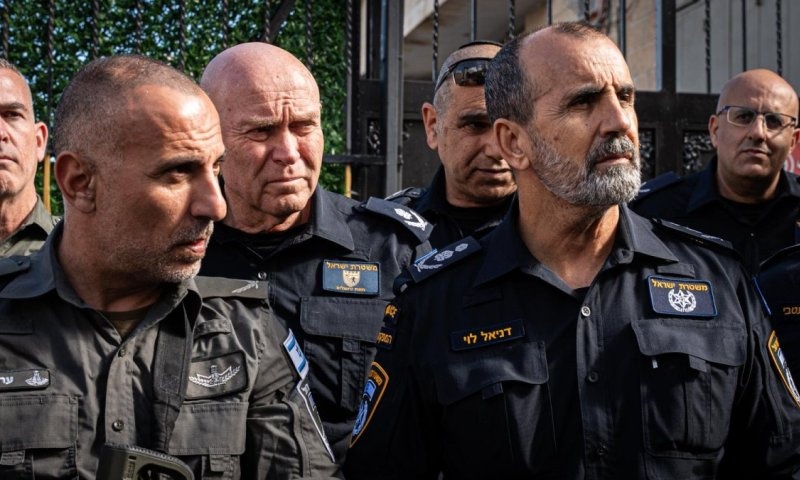
Supreme Court Justice Noam Sohlberg ruled Sunday that Prime Minister Binyamin Netanyahu may proceed with a planned meeting with Israel Police Commissioner Danny Levy, rejecting an objection by Attorney General Gali Baharav-Miara just days before the elections.
The ruling came after the attorney general sought to prevent the meeting, raising concerns over possible political interference in the election process.
The Likud party rejected the criticism, explaining that the meeting was intended to address security threats and was a continuation of discussions previously held with senior security officials.
Likud insisted that the meeting had nothing to do with election integrity and said Sohlberg was welcome to send a representative from the Central Elections Committee to attend.
Opposition leader Gadi Eisenkot sharply criticized Netanyahu, accusing him of improperly involving the police commissioner in political matters ahead of Election Day.
Eisenkot warned that summoning the police chief so close to the elections could undermine public confidence in the electoral process. He also urged civil servants to maintain their professional independence.
In a message directed at public officials, Eisenkot declared, “Your loyalty is to the state, not to the king,” warning against attempts to interfere with the elections.
Despite the attorney general’s opposition shortly before the scheduled meeting, Sohlberg rejected her position and ruled that Netanyahu and the police commissioner could meet as planned.
(YWN Israel Desk – Jerusalem)
 Yeshiva World News5 hours ago
Police launched an extensive manhunt Sunday morning after a suspect stole a handgun from a security guard stationed outside a school in Givat Shmuel, central Israel.
Security camera footage from the scene shows the suspect arriving at the school entrance on an electric scooter before approaching the guard.
The suspect appeared to exchange a few words with the guard, who was standing near the school gate, before suddenly grabbing his handgun.
The suspect managed to take the weapon without any apparent resistance from the guard and immediately fled the scene on his scooter.
According to footage of the incident, the guard was drinking when the suspect approached and grabbed the gun.
A parent who witnessed the incident said the guard was standing at the school’s rear entrance, as he does every morning, when a young man approached, spoke to him briefly, and snatched the weapon before escaping.
Large numbers of police officers from the Dan District arrived at the scene and launched searches for the suspect.
Police believe the incident was criminally motivated, although investigators are continuing to examine the circumstances surrounding the theft.
(YWN Israel Desk – Jerusalem)
 Yeshiva World News5 hours ago
Two German nationals were arrested overnight Sunday outside Damon Prison on Mount Carmel after they were spotted photographing the entrance to the facility, which houses security prisoners, including individuals accused of spying for Iran.
During an examination of their mobile phones, investigators discovered photographs of security installations and security-related activities, raising concerns over the purpose of their presence near the prison.
The two suspects were taken into custody and are being questioned by Israel Police and the Shin Bet.
Authorities are examining the photographs found on their devices as part of an investigation into the circumstances surrounding the incident.
The suspects are expected to appear before a judge for a hearing on extending their detention.
Damon Prison, located on Mount Carmel, houses security prisoners and includes a special wing established for dozens of suspects accused of espionage on behalf of Iran.
Prisoners held in the special wing are reportedly subject to strict security measures, including continuous camera surveillance and restrictions on visits and communication.
Investigators have not yet established the reason the two German nationals were photographing the facility, and the investigation remains ongoing.
(YWN Israel Desk – Jerusalem)
 Yeshiva World News16 hours ago
HaGaon HaRav Dov Landau, Rosh Yeshivas Slabodka, has issued a blistering letter against the newly established HaTzibur HaChareidi party, warning that he will fight its activities with every resource at his disposal.
The unusually sharp letter, revealed by the Israeli publication L’Chatchila and reported by Kikar HaShabbat, was addressed to a Rav associated with the new party who had recently visited Rav Landau’s home to inquire about his position and subsequently spoke with the Rosh Yeshiva’s son.
In the letter, Rav Landau wrote:
“My son told me what you said, which is great foolishness, if not great wickedness.”
The Rosh Yeshiva then issued an unequivocal warning:
“I will fight against you with all the strength I have and even the strength I do not have, because you are causing great harm to Chareidi Judaism.”
Rav Landau concluded with an exceptionally severe comparison intended to emphasize his opposition to the party’s activities.
“Your actions are like eating forbidden fats on Yom Kippur and eating chametz on Seder night. I wrote this comparison to emphasize the severity of these matters. Retract, retract your actions, and do not cause harm.”
The letter comes just days before Israel’s Knesset elections, amid growing tensions surrounding the emergence of alternative Chareidi political parties challenging the established Chareidi factions.
(YWN World Headquarters – NYC)
 Yeshiva World News17 hours ago
The United States has begun evacuating diplomatic and military personnel from several locations across the Middle East amid growing intelligence concerns that Iran is preparing attacks against American citizens and facilities, raising fears of another round of fighting between Washington and Tehran.
According to a report By The Wall Street Journal, American intelligence officials believe Iranian preparations for attacks against US personnel have reached advanced stages, both in the Middle East and in other countries.
The warning was reportedly delivered Friday in a memorandum to Secretary of State Marco Rubio by senior American intelligence officials.
The memorandum warned that Iran had significantly intensified its efforts to target American personnel and that preparations for potentially deadly attacks had progressed considerably.
In response, Washington has ordered the evacuation of diplomatic staff from its embassy in Saudi Arabia and other locations throughout the region.
American officials also confirmed that personnel have been withdrawn from military bases as part of preparations for a possible renewal of hostilities with Iran.
Some of the evacuation measures have been linked to threats from the Iranian-backed Houthis in Yemen, who have increased their activities amid the growing regional tensions.
Meanwhile, the United States has updated its travel warnings for several Middle Eastern countries, including Saudi Arabia, Qatar, the United Arab Emirates, Iraq, Lebanon, and Israel.
The updated advisories warn of the possibility of increased regional aggression by the Houthis and other security threats.
At the same time, American warships stationed in the Middle East are reportedly preparing for a scenario in which President Donald Trump orders renewed military operations against Iran in the coming weeks.
The preparations come amid uncertainty over the future of diplomatic efforts with Tehran and concerns that Iran could launch attacks against American targets.
(YWN’s Jerusalem desk is keeping you updated after tzeis ha’Shabbos in Israel)
 Yeshiva World News17 hours ago
A major development unfolded within Shas on Motzaei Shabbos, as five of the party’s seven Moetzes Chachmei HaTorah members visited the home of HaGaon HaRav Moshe Tzedaka in Yerushalayim, amid efforts to prevent the publication of a letter opposing a vote for Shas in Tuesday’s Knesset elections.
HaGaon HaRav Tzedaka, the elderly Rosh Yeshiva of Porat Yosef and one of the most prominent Sephardic Gedolei Torah, had reportedly been approached to sign a letter prohibiting support for Shas over the party’s position on drafting young Chareidi men who are not learning in yeshivos.
The reported letter prompted an urgent visit by senior members of Shas’s rabbinic leadership, concerned about the potential implications of such a public declaration just days before the elections.
Among those who arrived at HaGaon HaRav Tzedaka’s home were Moetzes President HaGaon HaRav Yitzchak Yosef, HaGaon HaRav Moshe Maya, HaGaon HaRav Avraham Salim, HaGaon HaRav Yehuda Cohen, and HaGaon HaRav Shmuel Betzalel.
The controversy centers on Shas’s willingness to support military enlistment for Chareidi young men who are not enrolled in yeshivos, a position that has drawn opposition from some rabbinic figures.
The initiative to secure HaGaon HaRav Tzedaka’s signature was reportedly led by HaMekubal HaRav Benayahu Shmueli, who maintains close ties with the Rosh Yeshiva.
HaGaon HaRav Yitzchak Yosef and HaGaon HaRav Moshe Maya Meet With HaGaon HaRav Moshe Tzedaka | Photo: Ari Kalman
However, during the meeting, HaGaon HaRav Tzedaka reportedly clarified that although neither he nor his father participated in Knesset elections, their longstanding practice should not be interpreted as opposition to Shas.
He further explained that those who do participate in elections should vote for Shas in order to protect the Torah world.
The clarification was particularly significant given HaGaon HaRav Tzedaka’s standing among Sephardic bnei Torah and the potential impact of a letter bearing his signature.
Following the departure of the five Moetzes members, sons of HaRav Benayahu Shmueli reportedly returned to HaGaon HaRav Tzedaka’s home.
Meanwhile, Shas chairman Aryeh Deri addressed the controversy during a television interview on Motzaei Shabbos.
“Rav Moshe Tzedaka never supported elections. We are dealing with it,” Deri said.
(YWN’s Jerusalem desk is keeping you updated after tzeis ha’Shabbos in Israel)
 Yeshiva World News19 hours ago
Former Mossad Director Dedi Barnea has revealed that Israel deliberately released footage of its agents operating inside Iran to trigger a massive wave of arrests, making it more difficult for Iranian authorities to identify the actual Israeli operatives.
Speaking at the Priority Summit on Thursday, Barnea disclosed new details about the Mossad’s activities during Operation Rising Lion and the operation targeting Hezbollah terrorists through explosive pagers.
According to Barnea, the Mossad’s decision to publish an official video showing agents operating inside Iran was part of a calculated effort to protect those agents from being identified and captured.
The former intelligence chief explained that Israeli officials wanted Iranian security forces to arrest so many suspects that they would be unable to distinguish genuine Mossad operatives from innocent civilians.
Barnea said approximately 21,000 people were arrested on the second day of the fighting, creating precisely the confusion Israeli intelligence had hoped to achieve.
He claimed that even if Iranian authorities had detained one or two genuine agents, they would eventually have been forced to release them along with thousands of others.
Barnea also revealed that some individuals arrested or executed by Iranian authorities on suspicion of working for Israel had never been associated with the Mossad.
According to Barnea, 99.9% of Mossad agents were never identified, and some continue living in Tehran.
He explained that dozens of operatives had been dispatched into Iran weeks before the military operation, fully aware of their assignments and the importance of maintaining secrecy.
By contrast, Barnea said Israeli Air Force pilots were not informed of the planned strikes when they were initially summoned to their squadrons.
The former Mossad chief said he personally approved each agent participating in the operation, meeting them individually before authorizing their assignments.
Barnea also described the tense final minutes before Israel activated the explosive pagers carried by Hezbollah terrorists in Lebanon.
He recalled sitting with Prime Minister Binyamin Netanyahu, the defense minister, the IDF chief of staff, and the head of Military Intelligence at 3:20 p.m., just ten minutes before the operation was scheduled to begin.
Netanyahu suddenly asked what would happen if the devices failed to explode.
Barnea recalled assuring the prime minister that failure was not a possibility, despite privately becoming concerned about the prospect.
He said the operation had undergone hundreds of tests before receiving final approval.
Barnea also disclosed that he repeatedly ordered technicians to reduce the amount of explosives inside the devices to limit the possibility of harming family members of Hezbollah terrorists.
He acknowledged that the decision reduced the operation’s potential lethality but maintained that Israel had established clear limits regarding possible harm to civilians.
According to Barnea, approximately 4,500 Hezbollah operatives in Beirut’s Dahiyeh neighborhood were left with missing limbs following the operation.
He said the operation damaged Hezbollah on three levels: physically injuring its operatives, undermining morale, and creating lasting fear within the terrorist organization.
The following day’s explosions involving Hezbollah’s communications equipment further intensified that fear.
Barnea’s remarks offered a rare account of the planning and deception behind two of Israel’s most significant intelligence operations against Iran and Hezbollah.
(YWN’s Jerusalem desk is keeping you updated after tzeis ha’Shabbos in Israel)
 Yeshiva World News19 hours ago
The Bank of Israel issued an unusual public rebuke of Prime Minister Binyamin Netanyahu on Motzaei Shabbos, rejecting his proposal to use cryptocurrency to bypass potential international financial sanctions against Israel.
The central bank warned that digital currencies cannot provide a reliable alternative to the international banking system, urging the government to concentrate on preventing sanctions rather than attempting to circumvent them.
The controversy began Friday when Netanyahu warned during an interview that Israel must prepare for the possibility of severe economic restrictions, including sanctions targeting Israeli banks.
The prime minister suggested that cryptocurrency and blockchain technology could offer alternative financial channels, revealing that he had already instructed his advisers to prepare a plan examining their potential use.
However, the Bank of Israel rejected the proposal, stating that cryptocurrencies cannot be used to bypass sanctions.
The bank emphasized that maintaining economic relationships with Israel’s principal trading partners is essential and that responsibility for preventing sanctions rests with the country’s political leadership.
Netanyahu responded to the criticism on Motzaei Shabbos, saying he would consider the central bank’s position but would ultimately make his own decisions.
“I hear the resistance; I am taking it into account,” Netanyahu said. “I thank the Bank of Israel for the advice. I listen, but I do what I think [is best].”
The dispute comes after Britain and 11 other Western countries announced sanctions targeting products originating from Israeli communities in Yehuda and Shomron.
Although the measures currently focus on those communities, economists have warned that broader financial restrictions could have serious consequences for Israel’s economy.
Meanwhile, opposition leaders sharply criticized Netanyahu’s remarks just three days before Tuesday’s Knesset elections.
Yashar chairman Gadi Eisenkot accused the prime minister of threatening Israel’s economic future, describing the proposal as a danger to national security.
“The BibiCoin vision is a threat to national security,” Eisenkot declared, accusing Netanyahu of pursuing policies that could disconnect Israel from international financial markets.
Eisenkot questioned how Israeli technology companies would continue receiving foreign investments and payments if international banking relationships were disrupted.
He warned that such a scenario could threaten pensions, investments, employment, and government funding for essential services.
Former Prime Minister Naftali Bennett also criticized the proposal, expressing concern that Netanyahu was preparing Israel for a future of growing international isolation.
Yisrael Beytenu chairman Avigdor Lieberman argued that cryptocurrency transactions are traceable and that international authorities can identify and restrict digital wallets associated with sanctioned entities.
Lieberman also accused Netanyahu of previously obstructing efforts to regulate Israel’s cryptocurrency industry.
The controversy follows Netanyahu’s additional warning that Israel should prepare for a future in which American military assistance is reduced, arguing that changes within the United States could eventually limit Washington’s willingness to continue providing billions of dollars in defense aid.
Netanyahu has maintained that Israel must become increasingly economically and militarily independent, while his political opponents argue that the government’s policies are contributing to the country’s growing diplomatic challenges.
(YWN’s Jerusalem desk is keeping you updated after tzeis ha’Shabbos in Israel)
 Yeshiva World News20 hours ago
A 42-year-old CIA contractor with top-secret security clearance was arrested Friday on suspicion of leaking highly classified American intelligence documents to a journalist, including sensitive reports concerning Israel’s military plans against Iran and warnings of potential internal instability ahead of Tuesday’s Knesset elections.
The suspect, identified as Ian Brinksman of Washington, allegedly exploited his access to classified intelligence systems to obtain reports unrelated to his official responsibilities and secretly pass their contents to journalist Aida Chavez.
According to investigators, the leaked intelligence formed the basis of five published articles, three of which dealt directly with Israel.
One of the most sensitive disclosures concerned a May 28 intelligence report alleging that Israel had privately urged the Trump administration to assassinate Mohammad Bagher Ghalibaf, the speaker of Iran’s parliament.
The same report claimed that Israeli officials had also pressed Washington to resume military strikes against Iran’s oil infrastructure.
Another leaked assessment, published in July, reportedly examined Israel’s efforts to strengthen its involvement in American defense and industrial systems amid concerns that public support for Israel in the United States could weaken after President Donald Trump leaves office.
A third disclosure, published in October, involved an assessment prepared by the CIA’s Red Cell unit, which examines unconventional scenarios and potential future threats.
The report, titled “Fracture From Within,” reportedly warned that Israel could face severe internal instability, including the possibility of civil conflict and the weakening of state institutions.
The assessment identified several potential sources of instability, including Israel’s political divisions, the ongoing dispute over the military draft of Chareidi yeshiva bochurim, and concerns involving armed military veterans suffering from psychological trauma.
The report was presented as an intelligence assessment of possible risks, not as a prediction that civil war would occur.
Other classified documents allegedly leaked by Brinksman concerned Jordan’s involvement in suppressing demonstrations in Bahrain and disagreements among Gulf countries regarding military strikes against Iran.
According to an FBI affidavit, Brinksman worked inside a Sensitive Compartmented Information Facility, or SCIF, where employees are prohibited from bringing cellular phones.
Investigators allege that he repeatedly accessed classified documents, left the secure facility, and then contacted Chavez from his vehicle.
Federal agents compared his access records with more than 800 telephone conversations between the two during 2026.
In numerous instances, investigators found that Brinksman had reviewed sensitive intelligence material shortly before engaging in lengthy conversations with the journalist.
Authorities also reportedly discovered a notebook containing torn-out pages, which investigators suspect was used to remove quotations or notes from classified documents.
An email from November 2025 allegedly showed Brinksman telling a friend that he was helping his partner establish her independent journalism operation.
Chavez, who previously worked for American left-leaning media organizations, has not been charged in connection with the investigation.
Brinksman faces allegations of unlawfully transmitting national defense information under the Espionage Act.
Senior American intelligence and law enforcement officials condemned the alleged disclosures, warning that unauthorized publication of classified intelligence can endanger intelligence sources, personnel, and ongoing operations.
John Eisenberg, head of the Justice Department’s National Security Division, accused Brinksman of deliberately exploiting his security clearance to obtain some of America’s most closely guarded secrets.
FBI Director Kash Patel pledged that authorities would pursue accountability, while CIA Director John Ratcliffe emphasized the agency’s zero-tolerance policy toward intelligence leaks.
In an unusual detail, Brinksman had previously participated in a 2019 Georgetown University research project examining how intelligence agencies could prevent insider threats and unauthorized disclosures.
(YWN’s Jerusalem desk is keeping you updated after tzeis ha’Shabbos in Israel)
 Yeshiva World News20 hours ago
The IDF continued a major counterterrorism operation in Chevron on Shabbos, following Friday’s deadly shooting attack that claimed the lives of two Israeli soldiers and left three others wounded.
According to Palestinian officials, approximately 1,500 residents have been evacuated from their homes as Israeli forces conduct extensive searches, demolish structures, and work to dismantle terrorist infrastructure in the city.
The operation began Friday evening after two terrorists opened fire on soldiers stationed at a temporary military checkpoint near Chevron. The ensuing gun battle lasted more than 20 minutes before both terrorists were eliminated.
The fallen soldiers were identified as Staff Sgt. Ron Yonatan Roytman, 23, from Ashkelon, and Sgt. Yuval Shai Svilem, 20, from Hod Hasharon, Hy”d.
An initial IDF investigation indicated that the terrorists had intended to carry out a larger attack against Israeli civilians traveling on a nearby road. After apparently realizing they could not reach their intended target, they opened fire on the soldiers instead.
The terrorists were identified as Mohammad Jaaba and Firas Jaaba, both 27-year-old residents of Chevron and members of the same family.
Following the attack, Prime Minister Binyamin Netanyahu ordered an extensive military response, announcing that Israel would implement the same aggressive counterterrorism tactics previously used against terrorist strongholds in northern Shomron.
IDF troops, together with Shin Bet personnel, Border Police officers, and Civil Administration forces, have been conducting searches for weapons, questioning suspects, and demolishing structures identified as potential security threats.
The military said the current operation is concentrated in the area from which the terrorists operated and is expected to continue for several days.
Palestinian officials reported that more than 200 families have already been evacuated, with dozens reportedly spending Friday night outside their homes.
Chevron Mayor Youssef al-Jaabari claimed that another 2,500 residents could be ordered to evacuate as the military operation expands into additional neighborhoods.
The IDF has not independently confirmed those figures.
According to the military, residents leaving the operational area are being directed through three designated exit points, where security personnel are conducting inspections and questioning individuals suspected of terrorist activity.
Meanwhile, the Palestinian Authority declared a state of emergency in Chevron and established a committee to assist families affected by the operation.
Palestinian officials accused Israel of imposing collective punishment and called for international intervention.
However, Israeli officials have emphasized that the operation is intended to dismantle terrorist infrastructure and prevent further attacks against Israeli civilians and security forces.
In a separate development, Netanyahu warned that Israel is preparing additional measures against the Palestinian Authority.
Speaking during an interview with i24NEWS on Friday night, Netanyahu was asked whether he supported calls to dismantle the PA following the deadly attack.
Rather than answering directly, the prime minister suggested that significant developments were being prepared.
“I will act to neutralize that threat by means I think are better left unspecified right now,” Netanyahu said.
“We transformed the Middle East. I said that we would change things and we have,” he added.
“There is a very big surprise for the Palestinian Authority as well.”
Netanyahu did not elaborate on the nature of the planned measures or indicate when they might be implemented.
National Security Minister Itamar Ben-Gvir has called for dismantling the Palestinian Authority, while Finance Minister Bezalel Smotrich has demanded a broader military offensive throughout Yehuda and Shomron.
There has been no evidence presented linking the Palestinian Authority directly to Friday’s shooting attack. Netanyahu has associated the terrorists with Hamas, which praised the attack without formally claiming responsibility.
The latest developments come just three days before Tuesday’s Knesset elections, with security concerns in Yehuda and Shomron returning to the forefront of Israel’s political agenda.
Israeli security forces remain on heightened alert as the Chevron operation continues and preparations advance for possible additional counterterrorism operations throughout Yehuda and Shomron.
(YWN’s Jerusalem desk is keeping you updated after tzeis ha’Shabbos in Israel)
 Yeshiva World News20 hours ago
Violent protests swept across several European countries, with nearly 1,000 people arrested in France and serious disturbances reported in Spain, Italy, and Belgium.
French authorities reported that approximately 410,000 people participated in demonstrations nationwide, while the CGT labor union claimed that nearly 800,000 had taken to the streets.
In Paris, approximately 110,000 demonstrators marched through the capital in protests over the rising cost of living and deteriorating public services.
Although much of the demonstration remained peaceful, clashes erupted near the end of the march when protesters threw objects at police officers, prompting security forces to deploy tear gas and water cannons.
France’s Interior Ministry reported nearly 1,000 arrests nationwide as demonstrations escalated into violent confrontations in several cities.
In Marseille, groups of young protesters blocked roads with large metal barriers, set garbage containers on fire, and hurled stones and bottles at police officers.
Authorities also reported attacks on two jewelry stores during the disturbances.
Similar clashes erupted in Lyon, Lille, Nice, and other French cities, where police used tear gas to disperse protesters.
French authorities deployed approximately 70,000 police officers nationwide, supported by helicopters, armored vehicles, and water cannons.
In Paris, more than 20 Metro stations were closed, while the Louvre Museum and Paris Opera shut their doors as precautionary measures.
Meanwhile, the unrest spread to Barcelona, Spain, where hundreds of masked protesters dressed in black clashed with police officers on Saturday evening.
Rioters threw stones and bottles at security forces, damaged bus stops, bicycles, motorcycles, and traffic lights, and set a police barricade on fire.
In Italy, violent confrontations were reported in Rome, Turin, and Bologna during demonstrations over the cost of living and ongoing military conflicts.
Milan, which experienced widespread looting and violent riots last weekend, remained largely calm under heavy security.
Italian authorities deployed an additional 500 soldiers to Milan, introduced drone surveillance, and increased security checks at railway stations.
Store owners across the city boarded up windows and storefronts amid concerns that another wave of violence could lead to widespread looting.
In Brussels, Belgium, police used tear gas and pepper spray during confrontations with hundreds of demonstrators, many of them young people protesting education funding and conditions in the school system.
The latest disturbances come amid growing public frustration across Europe over economic pressures, government policies, and deteriorating public services.
Authorities in several countries remain on heightened alert amid concerns that the demonstrations could continue in the coming days.
(YWN’s Jerusalem desk is keeping you updated after tzeis ha’Shabbos in Israel)
 Yeshiva World News20 hours ago
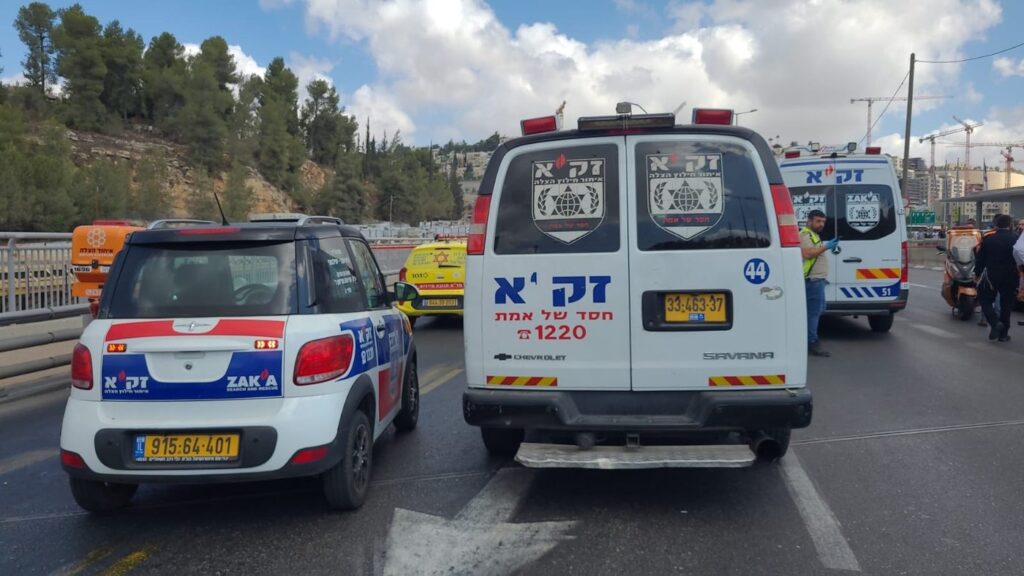
A terrible tragedy struck the Chareidi community in Bnei Brak on Shabbos after a three-and-a-half-year-old boy, Yehuda Neufeld z”l, was found unconscious in his home and was tragically niftar.
Emergency responders were called to the family’s home on Chashav Sofer Street on Shabbos morning after receiving a report of a young child who had been found unresponsive.
Rescue personnel rushed to the scene, but despite their efforts, they were forced to pronounce the child’s death.
Following the tragedy, the child’s body was transferred to the National Institute of Forensic Medicine.
ZAKA volunteers arrived at the family’s home during Shabbos, providing assistance and accompanying the grieving family through the difficult hours.
Immediately after Shabbos, ZAKA personnel, under the direction of operations commander Yechiel Goldman, continued assisting the family and arranging the transfer of the child’s body for kevurah.
A ZAKA ambulance was dispatched to transport the niftar ahead of the levaya.
The levaya of Yehuda Neufeld z”l is scheduled to take place on Motzaei Shabbos at 10:30 p.m. at the Yarkon Cemetery, Petach Tikvah Gate.
Baruch Dayan HaEmes.
(YWN’s Jerusalem desk is keeping you updated after tzeis ha’Shabbos in Israel)
 Yeshiva World News20 hours ago
Prime Minister Binyamin Netanyahu has reportedly ordered a change in Israel’s position regarding the Falkland Islands dispute between Britain and Argentina, in an apparent response to British sanctions targeting Jewish communities in Yehuda and Shomron.
According to a report published by Britain’s Telegraph newspaper, Netanyahu instructed Israeli diplomats to support Argentina’s call for direct negotiations with Britain over the future of the disputed islands.
The reported move comes amid deteriorating relations between Yerushalayim and London, following the British government’s decision to impose sanctions on Israeli communities in Yehuda and Shomron.
Netanyahu, who maintains close ties with Argentine President Javier Milei, reportedly decided to reconsider Israel’s longstanding position on the Falkland Islands as part of a broader diplomatic response to Britain.
However, the reported shift does not mean Israel has formally recognized Argentina’s claim to sovereignty over the islands. Instead, Israel would support Buenos Aires’ demand for negotiations over their future.
The development has raised concerns that Israel could eventually offer Argentina stronger diplomatic backing if Britain introduces additional sanctions against Israeli communities.
Relations between Israel and Britain have already deteriorated significantly, with the diplomatic dispute reportedly leading to a reduction in the status of the British consulate and the expulsion of most of its staff.
Meanwhile, Argentina continues pursuing its territorial claims through legal channels, including efforts to halt oil and gas exploration north of the Falkland Islands.
The dispute has also attracted attention following remarks made by President Donald Trump in September, which reportedly raised questions about whether Washington would support Britain in a future confrontation over the islands.
An official familiar with the matter claimed that the wording of Israel’s proposed statement had received approval from the highest levels of the Israeli government.
“This is the first time Israel has become involved in this dispute,” the official said.
However, Israel’s Foreign Ministry strongly denied the report, insisting that no change in policy had been authorized.
“The report is incorrect. There has been no change in our position on the matter,” the ministry said.
The conflicting accounts leave uncertainty over whether Netanyahu intends to use the Falkland Islands dispute as diplomatic leverage against Britain or whether Israel will maintain its existing position.
(YWN’s Jerusalem desk is keeping you updated after tzeis ha’Shabbos in Israel)
 Yeshiva World News1 day ago
Israel will offer free travel on eligible intercity bus routes and Israel Railways services beginning Monday evening and continuing through the end of service on Tuesday, Election Day.
The Central Elections Committee and Transportation Ministry announced that the arrangement will take effect at 8 p.m. Monday and will be available to the general public.
The free bus service covers designated intercity routes longer than 15 kilometers. Passengers boarding participating routes will not need to present identification or obtain a ticket.
Train passengers will need to collect a designated free travel ticket from station service counters or ticket machines.
Israel Railways emphasized that police restrictions limit passenger numbers on services to and from Jerusalem. Each passenger must therefore obtain a travel voucher in advance for the specific train they intend to take.
Additional service will operate between Jerusalem’s Yitzchak Navon station and Tel Aviv from noon until 8 p.m., with three trains per hour in each direction instead of the usual two.
The additional hourly train will begin or end its journey at Tel Aviv HaHagana station.
Travel to and from Eilat requires a separate eligibility check and advance registration through Egged’s information center at *2800.
Passengers seeking information about which intercity bus routes are included in the free travel arrangement can contact the Transportation Ministry’s information center at *8787.
Train passengers are advised to check service updates through the Israel Railways website or app, its customer service hotline at *5770, or its official WhatsApp channel.
(YWN World Headquarters – NYC)
 Yeshiva World News1 day ago
U.S. Ambassador to Israel Mike Huckabee has reportedly warned Washington that the international framework tasked with implementing President Donald Trump’s Gaza plan faces significant gaps in staffing, resources and operational planning.
In a diplomatic cable, Huckabee raised questions about whether the Peace Council can assume the responsibilities assigned to it without additional support from the American administration.
His central concern involves the International Gaza Support Center, or IGSC, which coordinates efforts between the United States, Israel and international partners.
The Pentagon plans to reduce its personnel at the center over the coming year and transfer some responsibilities to civilian officials. According to Huckabee’s reported cable, however, it remains unclear who will fill the resulting gap.
“The U.S. Embassy in Jerusalem is not currently prepared in terms of manpower to take on these roles,” Huckabee wrote.
The ambassador indicated that the embassy could prepare to assume additional responsibilities, but only after officials establish the personnel, funding and logistical support required.
Although the Peace Council is working to expand its staff, Huckabee reportedly cautioned that “it’s still not clear whether it will be able to fulfill all the roles” at the coordination center.
The warning highlights practical challenges facing the international mechanisms central to the administration’s vision for postwar Gaza.
Under the Peace Council’s roadmap, an international stabilization force would help secure humanitarian aid, train Palestinian police and support implementation of the broader plan. The framework also calls for demilitarizing Gaza and transferring authority from Hamas to a new administration.
Months after the plan’s presentation, however, Hamas’s continued presence and the unresolved question of disarmament remain major obstacles.
For Israel, the staffing concerns carry direct security implications, raising questions about whether the international framework can effectively assume responsibility on the ground.
Israel has maintained that withdrawals and the transfer of territory must rest on concrete security arrangements, with the effective demilitarization of Hamas a central requirement.
The reported cable comes as Peace Council officials seek to move from preparations to implementation. Officials have reportedly expressed hope that work completed in recent months will allow the process to accelerate after the American midterm elections and Israel’s elections.
Huckabee’s warning indicates that fundamental questions about staffing, budgets and operational responsibility remain unresolved as those next steps approach.
(YWN World Headquarters – NYC)
 Yeshiva World News1 day ago
A 28-year-old Tennessee man has been sentenced to 17½ years in federal prison for attempting to provide material support to Hezbollah and carrying out a racially motivated arson attack on a civil rights center.
According to the Justice Department, Reagan Darby Prater obtained a document containing personal information on more than 35,000 Israeli citizens and government employees purportedly connected to the Israeli government.
Prater sent the information to someone he believed was acting on behalf of Hezbollah, encouraging the recipient to begin hunting those listed in the document.
The case also involved Prater’s arson attack on the Highlander Center in New Market, Tennessee, a nonprofit research and educational institution with longstanding ties to the civil rights movement.
Prater admitted in April that he traveled to the center and set its main building on fire using a homemade incendiary device described as a napalm bomb. The attack caused extensive property damage.
Before fleeing, Prater spray-painted the symbol of the Iron Guard, a Romanian fascist and antisemitic movement, in the center’s parking lot.
During questioning, Prater admitted that white supremacist beliefs motivated the attack, along with his opposition to the center’s educational work and values.
In addition to the prison sentence, the court ordered Prater to serve three years of supervised release and pay $1.289 million in restitution for the damage.
(YWN World Headquarters – NYC)
 Yeshiva World News1 day ago
Nine percent of Israelis have switched political blocs since the 2022 election, with former opposition voters more likely to cross between the camps than coalition supporters, according to a new Kantar poll conducted ahead of Tuesday’s Knesset elections.
Among those who previously voted for opposition parties, 15% have moved to the other bloc, compared with 6% of those who supported coalition parties.
The survey also found substantial movement between parties within the same political camp. Just 30% of respondents overall said they expect to vote for the same party they backed in 2022, while 37% have shifted to another party within their bloc. Another 7% remain undecided.
Party loyalty differed sharply between the two camps. Among coalition voters, 62% intend to support the same party again, compared with just 11% of opposition voters. Meanwhile, 60% of opposition voters have moved to another party within their bloc, compared with 37% of coalition voters.
The findings reflect changes in Israel’s political landscape since the last election, including the emergence of Gadi Eisenkot’s Yashar party and Naftali Bennett’s Beyachad party.
Security and economic concerns dominate voters’ priorities nationwide. Personal and national security, together with the war, ranked first at 26%, followed by the cost of living and the economic situation at 23%.
Protecting democracy and the rule of law followed at 12%, while drafting Chareidim and equalizing the burden of military service ranked at 9%. Establishing a commission of inquiry into the October 7 massacre and preserving Israel’s Jewish identity each received 8%, while advancing judicial reform received 7%.
The breakdown by political bloc revealed sharply different priorities.
Among coalition voters, security led with 37%, followed by preserving the country’s Jewish identity at 20% and advancing judicial reform at 16%.
Among opposition voters, the cost of living ranked first at 28%, followed by protecting democracy and the rule of law at 18%, drafting Chareidim at 17%, and establishing an October 7 commission of inquiry at 16%.
Despite the movement between parties and blocs, both camps reported strong intentions to participate in Tuesday’s election. Eighty percent of coalition voters and 82% of opposition voters said they were certain they would cast a ballot.
The poll was conducted online by Kantar on October 21–22 among 1,110 adults representing Israel’s population aged 18 and older, including the Arab sector. The maximum sampling margin of error was 3%.
(YWN World Headquarters – NYC)
 Yeshiva World News1 day ago
President Donald Trump is reportedly considering a major military offensive against Iran immediately after the November 3 congressional midterm elections, with potential targets including nuclear facilities, missile stockpiles and strategic energy infrastructure.
The operation under consideration would involve several days of intensive strikes aimed at dealing a significant blow to Tehran’s military capabilities and potentially destabilizing the ayatollah regime.
After focusing in recent months on tightening economic pressure against Iran, Trump is reportedly becoming more receptive to advisers advocating military action. Potential targets include Iranian nuclear sites, Islamic Revolutionary Guard Corps missile and drone depots, power stations and oil storage facilities.
Some in the president’s circle reportedly believe that combining a concentrated military campaign with the economic pressure already bearing down on Tehran could help bring about a change of regime. That remains an assessment of what such an operation might accomplish, rather than a guaranteed outcome.
The possible timing reflects Trump’s reported reluctance to enter a major military confrontation immediately before Americans head to the polls. An offensive after the election would remove the immediate electoral consideration from the decision.
Economic concerns are also weighing on the calculations. Oil prices climbed sharply Thursday, and a broad military campaign against Iran could send prices even higher, particularly if energy infrastructure becomes a central target.
The report follows a separate account earlier this week that Prime Minister Binyamin Netanyahu sought Trump’s approval for an Israeli strike against Iran on October 10, before the upcoming elections in both Israel and the United States. Trump reportedly blocked the initiative at that time.
The latest account describes an option under consideration; it does not indicate that Trump has issued a final order to launch the offensive.
(YWN World Headquarters – NYC)
 Yeshiva World News2 days ago
Every election cycle brings niche parties claiming to speak for the “working Haredi” sector. The latest entry into this arena is HaTzibbur HaCharedi, led by Moti Leitner.
On the surface, Leitner presents a reasonable pitch: he claims he isn’t attacking anyone, but simply wants to secure funding for modern Haredi schools and give a political voice to working Haredim. It sounds tempting to those with genuine grievances, but beneath the rhetoric lies a deeply flawed strategy: disrespect for Torah leadership disguised as advocacy, and a willingness to burn precious Haredi votes at an existential moment for our community.
Leitner claims he just wants “practical representation” for a neglected demographic, but in Israeli politics, representation requires crossing the electoral threshold. Polling far below that bar, HaTzibbur HaCharedi has no real chance of entering the Knesset. You cannot build classrooms, secure budgets, or protect institutions from outside the Knesset walls. Leading well-meaning voters down a mathematical dead end isn’t advocacy—it is deception.
If winning seats is impossible, why run? Because this campaign has turned into a pure protest vote. The true strategy is to gather a collection of votes simply to signal that a segment of the public is “sick and tired” of mainstream leadership. Leitner insists he is only fighting political askanim, not the Gedolim, but this distinction is pure doublespeak. The Gedolei Yisrael explicitly direct the public to vote for the established Haredi parties to safeguard the Torah world. Telling people to ignore the Moetzet Gedolei HaTorah and Moetzet Chachmei HaTorah is a direct declaration that our Torah giants are naive or out of touch. It takes immense pride to suggest that an entire generation of Torah leaders doesn’t understand their own public.
Worse than the arrogance of “teaching the Gedolim a lesson” is its dangerous real-world cost. Israel’s coalition math is razor-thin, and throwing away Haredi votes into the electoral trash bin directly shrinks the total strength of the religious and right-wing bloc. Naftali Bennett’s pitch to the public relies on pointing directly at the growth of the Haredi public and promising voters that if they give him the power, he will put an explicit stop to it. To express frustration over local issues or school budgets, Leitner’s voters risk enabling a secularist government—a coalition of anti-religious parties eager to pass laws that make Haredi life increasingly uncomfortable, dismantle the status quo on Sabbao observance, and rely on Arab parties whose security positions jeopardize our safety. Moti Leitner is asking voters to gamble with our collective future just to “send a message,” throwing away our voting power to make a point is a luxury the Torah world simply cannot afford.
Ultimately, if you no longer feel a personal adherence to the Haredi framework or Rabbinic Judaism, at least be practical: vote for an established party that will actually hold seats in the Knesset to represent your interests, rather than throwing your vote away on a doomed protest run.
Shmuel Bookman
The views expressed in this letter are those of the author and do not necessarily represent those of YWN. Have an opinion you would like to share? Send it to us for review.
(YWN World Headquarters – NYC)
 Yeshiva World News2 days ago
The IDF on Friday afternoon cleared for publication the names of two soldiers killed in a deadly Palestinian terrorist shooting attack near Chevron earlier in the day.
The fallen soldiers were Staff Sergeant Ron Yonatan Roytman HY”D, 23, from Ashkelon, a squad commander in the Ari Battalion (775) of the IDF Search and Rescue Brigade, and Sergeant Yuval Shai Svilem HY”D, 20, from Hod Hasharon, who served in the same battalion.
Their families have been notified.
As YWN reported, the attack occurred at approximately 7:15 a.m. at Yehuda Junction, near Chevron, when two armed Palestinian terrorists approached a temporary IDF checkpoint established by Home Front Command soldiers.
The terrorists, identified as Hamouda Jaaba and Firas Jaaba, both 27-year-old relatives from Chevron, arrived in a vehicle carrying an M4 assault rifle, a handgun, and a large quantity of ammunition.
According to Israeli security officials, the terrorists had originally intended to reach Routes 35 and 60, major roads used by civilian traffic, where they were planning a potentially devastating attack.
However, the presence of IDF soldiers at the temporary checkpoint prevented them from reaching their intended targets.
Instead, the terrorists exited their vehicle and opened fire on the soldiers, triggering a fierce gun battle at close range that lasted more than 20 minutes.
Several soldiers were struck during the exchange of gunfire as troops fought to neutralize the attackers while simultaneously attempting to evacuate the wounded.
Both terrorists were ultimately eliminated by soldiers from the Ari Battalion.
The IDF said the soldiers’ deployment and swift response prevented a potentially far more deadly attack against civilians.
Lieutenant Colonel L., commander of the Ari Battalion, praised his soldiers for their actions, saying the incident demonstrated the importance of their mission and their operational readiness during their first deployment.
He said the troops maintained a high level of alertness, engaged the terrorists decisively, and prevented civilian casualties.
Following the attack, Israeli security forces launched extensive counterterrorism operations throughout Chevron and surrounding communities.
Troops from the elite Duvdevan unit, Paratroopers Brigade, Search and Rescue Brigade, and Border Police are conducting operations aimed at identifying and dismantling terrorist infrastructure.
A complete security cordon has been imposed around Chevron and Halhul, with dozens of roadblocks established throughout the area.
The elite Maglan unit has also been deployed to reinforce IDF forces in the Yehuda Brigade sector as the military prepares to expand its counterterrorism operations.
(YWN World Headquarters – NYC)
 Yeshiva World News2 days ago
Prime Minister Binyamin Netanyahu announced Friday that the IDF is preparing for a major counterterrorism operation in Chevron, including the evacuation of residents, house-to-house searches, and the destruction of terrorist infrastructure in neighborhoods from which terrorists operate.
Netanyahu made the announcement during a visit to the scene of Friday morning’s terror attack near Tzomet Yehuda, accompanied by Defense Minister Yisrael Katz.
The prime minister said Israel would implement the same aggressive operational strategy previously used against terrorist strongholds in refugee camps, expanding those tactics into residential neighborhoods within Palestinian cities.
“We are going to implement the successful offensive model we used in the refugee camps inside the cities,” Netanyahu declared.
He explained that IDF troops would enter the Chevron neighborhood from which the terrorists responsible for Friday’s attack originated, evacuate residents, conduct house-to-house searches, destroy terrorist infrastructure, and confiscate weapons.
Netanyahu also revealed that the IDF is preparing for a much broader operation throughout Yehuda and Shomron, potentially on a scale not seen in decades.
“The defense minister and I have reviewed a very extensive IDF operation in Yehuda and Shomron, the likes of which has not been carried out since the Six-Day War,” Netanyahu said. “We are ready to carry it out, and we will determine the timing.”
The prime minister said security forces have already imposed closures on Chevron and Halhul, while officials are examining whether to expand the new operational approach to additional Palestinian cities.
He also announced plans to accelerate the removal of illegal structures along major roads in Yehuda and Shomron as part of efforts to improve security.
Addressing Jewish residents of the region, Netanyahu pledged to continue strengthening Jewish communities while dismantling terrorist infrastructure.
“We will destroy the terrorist infrastructure and build the infrastructure of settlement, with more than 100 new communities and farms that we are legalizing,” he said.
Defense Minister Katz, who joined Netanyahu at the scene, warned that Iran and its regional allies are attempting to destabilize Israel ahead of Tuesday’s Knesset elections.
“The Iranian Shiite axis and its proxies, along with the Muslim Brotherhood axis, are planning attacks against IDF soldiers and Israeli civilians in order to disrupt and influence the upcoming elections,” Katz said.
He praised the soldiers who confronted the terrorists, saying their actions prevented a potentially devastating attack against civilians.
“IDF soldiers heroically thwarted an attempt by a Hamas cell from Chevron to carry out a large-scale deadly attack today,” Katz declared.
“The terrorists and those who sent them will pay a very heavy price.”
Katz emphasized that Israel would use whatever measures are necessary to protect residents of Yehuda and Shomron.
“We are determined to ensure the security of Israeli residents in Yehuda and Shomron, and we will do so by all means necessary,” he said.
The announcements mark a significant potential shift in Israeli counterterrorism operations, with the government preparing to expand tactics previously used in refugee camps into densely populated urban neighborhoods.
(YWN Israel Desk – Jerusalem)
 Yeshiva World News2 days ago
Eight yeshiva bochurim were released from Military Prison 10 on Friday morning after serving prison sentences for failing to report for military service while continuing their Torah Learning .
The bochurim, who were arrested in separate incidents across Israel, spent between 10 days and approximately five weeks in military detention.
Among those released was Yakir Ralbag, a bochur at Yeshivas Chevron, who spent 17 days in prison after being arrested in Eilat.
Eliyahu Davda, a bochur at Yeshivas Orchos Meir, was released after 16 days in detention. He had been arrested at his home in Be’er Sheva.
Itamar Shuker was released after serving 20 days in prison, following his detention at a police station in Yerushalayim.
Uriel Elnatanov, who was arrested at Ben Gurion Airport, was also released after 20 days in military prison.
Nehorai Dahan, who was arrested at Ben Gurion Airport upon returning from Uman, was released after 10 days in detention.
Yishai Sogbaker, who was arrested at the military recruitment office in Yerushalayim, completed a 20-day prison sentence.
Also released was Elchanan Neiman, a Chabad bochur who spent 17 days in detention.
Eliyah Uzri, who was arrested upon returning from Uman, was released after approximately five weeks in military prison, the longest detention period among the eight bochurim.
Following their release, a special welcoming ceremony was held outside the gates of Military Prison 10, organized by the Notnim Gav organization.
Dozens of fellow bochurim, family members, and friends gathered to greet the released prisoners with singing and dancing, celebrating their return to freedom after being imprisoned over their refusal to enlist in the IDF.
The organization also presented the bochurim with special gifts in recognition of their determination to continue learning Torah despite their imprisonment.
The releases come amid growing outrage in the Charedi community over the continued arrests of yeshiva bochurim, with the draft crisis remaining a central issue ahead of Tuesday’s Knesset elections.
(YWN Israel Desk – Jerusalem)
 Yeshiva World News2 days ago
Central Elections Committee Chairman Justice Noam Sohlberg ordered Likud on Friday to remove election campaign posters targeting Gadi Eisenkot by 3:30 p.m., ruling that the advertisements could mislead voters just days before Israel’s Knesset elections.
The posters, written in Arabic, feature Eisenkot alongside several opposition leaders and Arab politicians, including Ahmad Tibi and Mansour Abbas, in an apparent attempt to associate Eisenkot’s Yashar party with the Arab parties.
The ruling followed a petition filed by Yashar, which argued that Likud had deliberately designed the advertisements to resemble its own campaign materials, creating the false impression that the posters had been published by Eisenkot’s party.
Sohlberg determined that the advertisements could mislead voters about possible political cooperation between Yashar and the other parties featured on the posters.
He also rejected the argument that the Arabic writing sufficiently identified Likud as the organization responsible for the advertisements.
According to the judge, the posters were displayed in areas where most residents do not speak Arabic, meaning many voters would be unable to identify who was behind the campaign.
The dispute began Thursday when Yashar contacted Likud’s legal adviser, attorney Ilan Bombach, demanding the immediate removal of the advertisements.
The posters featured Eisenkot alongside Naftali Bennett, Avigdor Lieberman, Yair Golan, Ahmad Tibi, and Mansour Abbas, using colors similar to those appearing in Yashar’s official campaign materials.
One advertisement was displayed along Begin Road in Yerushalayim, near genuine Yashar election posters bearing similar colors and designs.
Likud’s campaign is part of a broader effort to portray Eisenkot as politically aligned with Arab parties, particularly following previous statements by Tibi regarding possible cooperation to replace Netanyahu’s government.
Following the petition, Sohlberg ordered Likud to remove the advertisements nationwide before Shabbos, setting a deadline of 3:30 p.m. Friday.
The judge said the detailed reasoning behind his decision would be published separately.
(YWN Israel Desk – Jerusalem)
 Yeshiva World News2 days ago
A new investigative report alleges that Jared Kushner, President Donald Trump’s son-in-law and senior adviser, had access to secret bank accounts containing billions of dollars from Saudi Arabia and the United Arab Emirates, including approximately $1 billion allegedly transferred through Israel with the assistance of Prime Minister Binyamin Netanyahu.
The allegations were published Thursday by Vanity Fair in an excerpt from investigative journalist Matthew Cole’s forthcoming book, Princes and Thieves: Jared Kushner and Mohamed bin Zayed’s Secret Plot to Remake the Middle East. Kushner has strongly denied the claims, calling them completely fabricated.
According to the report, Dutch intelligence operatives gained access to information from Kushner’s iPhone during Trump’s first administration after obtaining material from a Russian military intelligence-linked server.
The intelligence allegedly revealed that Kushner had access to a bank account in the United Arab Emirates containing approximately $750 million transferred through an Azerbaijani bank.
The account was reportedly managed through a UAE government-funded foundation, with Kushner listed as an authorized signatory despite not being its owner.
Cole alleges that senior Emirati and Saudi officials established the financial arrangements to advance diplomatic objectives and gain influence within the Trump administration, particularly regarding efforts to normalize relations between Israel and Arab countries.
However, the most explosive allegation concerns a separate account allegedly established in Israel.
According to the report, approximately $1 billion was transferred to an account at the Bank of Israel in 2018, with Netanyahu allegedly encouraging Kushner to have the funds deposited there.
The report claims that Kushner subsequently communicated with Netanyahu through then-U.S. Ambassador to Israel David Friedman regarding access to the money, with some funds allegedly transferred through accounts in Cyprus.
Cole cites a source who claimed that the money was intended for Kushner’s personal benefit, raising serious questions about potential conflicts of interest involving foreign governments and senior American officials.
The report further alleges that several senior Trump administration officials, including former national security advisers and a former CIA director, were unaware of any presidential authorization for Kushner to access such accounts.
Kushner responded with a forceful denial, accusing the author of publishing extraordinary allegations without providing supporting financial documentation.
“These are outrageous fabrications being presented as investigative journalism,” Kushner said, describing the claims as a mixture of fiction and advocacy.
He maintained that the alleged transactions never occurred and challenged the author to produce bank statements, transfer records, account numbers, or other verifiable evidence.
Kushner’s attorney also rejected the allegations, insisting that his client had not entered into unauthorized arrangements with foreign officials and threatening legal action over the report.
(YWN Israel Desk – Jerusalem)
 Yeshiva World News2 days ago
The Jerusalem District Attorney’s Office filed an indictment Friday against Pinchas Shem Tov Ran, a security coordinator from Itamar and veteran IDF reservist, following a shooting incident in the Arab village of Aqraba in Shomron that left an 18-year-old Arab woman seriously injured.
Ran, whose younger brother, Major Or Yosef Ran, Hy”d, was killed fighting Hamas terrorists on October 7, 2023, faces serious violent offenses and obstruction of justice charges. Prosecutors have requested that he remain in custody until the conclusion of the legal proceedings.
According to the indictment, Ran entered Aqraba, outside his designated area of responsibility, in a Ranger utility vehicle accompanied by a career IDF soldier. Prosecutors allege that he conducted unauthorized identity checks before opening fire with an Arad assault rifle at a vehicle carrying an Arab couple after the driver failed to stop.
Two bullets struck the woman in her upper body, leaving her seriously injured. She underwent surgery and remained hospitalized for several days.
However, Ran disputes the prosecution’s account, maintaining that he acted after believing he and the soldier accompanying him were facing an attempted ramming attack.
According to his version, a vehicle without license plates suddenly approached them at high speed, forcing both men to jump aside to avoid being struck. Ran maintains that he subsequently fired warning shots into the air in an attempt to stop the vehicle, which continued driving toward the village.
The indictment follows a joint investigation by the Israel Police’s Yehuda and Shomron District Central Unit and the Shin Bet.
Ran has an extensive military background, having served in the Paratroopers Brigade before continuing as a reservist in Battalion 697 of Brigade 551. Since the outbreak of the war, he has accumulated more than 600 days of reserve duty, participating in operations in Gaza, southern Lebanon, and Yehuda and Shomron.
His younger brother, Major Or Yosef Ran, Hy”d, a commander in the elite Duvdevan Unit, fell in battle while defending Kibbutz Kfar Aza during the October 7 massacre. Despite the devastating loss, Pinchas continued volunteering for military service.
Several senior officers submitted letters to the court describing Ran’s dedication, professionalism, and conduct throughout years of military service.
Major Dr. Limon Adam, who fought alongside Ran in Gaza and Lebanon, described him as a soldier known for his professionalism and personal responsibility.
“Pinchas exemplifies professionalism, seriousness, personal responsibility, and humanity,” Adam wrote.
He also recalled Ran’s determination to remain with his fellow soldiers even after learning of his brother’s death.
“When he learned that his brother, the late Or Ran, had fallen in battle in Kfar Aza, he refused to leave his fellow unit members.”
Lieutenant Colonel (res.) Tzach Eckstein, Ran’s former battalion commander, also submitted a letter emphasizing his continued service despite the family’s loss.
“Pinchas continued volunteering for reserve duty and reporting for repeated rounds of combat in Lebanon and Gaza. Time and again, he chose to continue shouldering the burden and even volunteered beyond what was required,” Eckstein wrote.
Ran has received several military commendations, including recognition as an outstanding community security coordinator by the commander of the Samaria Brigade.
The court will now consider the prosecution’s allegations alongside Ran’s account of the incident and the supporting testimony submitted on his behalf.
(YWN Israel Desk – Jerusalem)
 Yeshiva World News2 days ago
The IDF has launched an investigation into whether a photographer working for the French news agency AFP received advance information about Friday morning’s terror attack near Tzomet Yehuda, in which five people were injured.
The investigation was opened after unusually clear photographs emerged showing the terrorists during the attack and the subsequent pursuit by Israeli security forces.
According to the report, Israeli security officials are examining how the photographer managed to position himself close enough to capture detailed images of the terrorists while the attack was still unfolding.
Investigators are looking into the possibility that the terrorists provided advance notice of their plans to ensure that the attack would receive international media coverage. However, there has been no confirmation that the photographer had prior knowledge of the attack.
Meanwhile, the IDF released additional details about the attack, revealing that the two terrorists had originally intended to target civilians traveling along Routes 35 and 60.
Soldiers from the Ari Battalion of the IDF’s Search and Rescue Brigade were deployed at checkpoints and fortified positions in the area as part of heightened security measures during the early morning hours.
According to the military, the terrorists spotted the soldiers and realized they would be unable to reach their intended targets. They subsequently changed their plans and attacked an IDF checkpoint instead.
The soldiers engaged the terrorists and eliminated both attackers. A large quantity of ammunition was discovered inside their vehicle, leading military officials to conclude that the soldiers had prevented a potentially far more serious attack.
The battalion commander, identified as Lt. Col. L., praised his soldiers for their quick response, saying they had maintained a high level of operational readiness and acted decisively to eliminate the threat.
He emphasized that the soldiers’ deployment had prevented the terrorists from reaching civilian targets and potentially carrying out a much larger attack.
Following the attack, Israeli security forces launched extensive counterterrorism operations throughout the Chevron area.
Troops from the Duvdevan Unit, Paratroopers Brigade, Search and Rescue Brigade, and Border Police are conducting operations in Chevron and surrounding villages, with preparations underway to expand the offensive.
A full closure has been imposed on Chevron and Halhul, with dozens of roadblocks established throughout the area.
The IDF has also deployed the elite Maglan Unit to reinforce security operations and assist in preventing additional terrorist attacks.
(YWN Israel Desk – Jerusalem)
 Yeshiva World News2 days ago
The traditional election endorsement issued by the Moetzes Gedolei HaTorah of Agudas Yisroel has been postponed until Sunday following objections from several Rebbes over language that they believe could be offensive to Shas voters.
According to a report by Kikar HaShabbat, the secretary of the Moetzes, Rabbi Yaakov Walzer, instructed the Chareidi newspapers Hamodia and Hamevaser to hold off on publishing the official Kol Koreh ahead of Tuesday’s Knesset elections.
The controversy centers on a passage in the original document declaring that anyone who does not vote for United Torah Judaism is causing a Chillul Hashem.
Several Rebbes reportedly objected to the wording, arguing that it unfairly includes those voting for Shas, who are also following the instructions of their own Gedolei Yisroel.
The objections prompted a decision to revise the language before publication.
The delay comes amid a separate controversy involving the Gerrer Rebbe, who refused to sign the traditional election proclamation bearing the individual names of the Rebbes serving on the Moetzes Gedolei HaTorah.
According to the report, the Gerrer Rebbe’s refusal stems from internal disagreements within Agudas Yisroel, particularly allegations that efforts to advance legislation concerning the military draft were undertaken contrary to decisions of the Moetzes.
Following his refusal, most of the other Rebbes reportedly indicated that they would not permit their signatures to appear unless the Gerrer Rebbe also signed.
A compromise was subsequently reached under which the proclamation would be published in the name of the Moetzes Gedolei HaTorah of Agudas Yisroel without listing the individual signatures of its members.
This arrangement is similar to the format used for election proclamations issued by the Moetzes Gedolei HaTorah of Degel HaTorah and the Moetzes Chachmei HaTorah of Shas.
Despite the disagreement, Hamodia has already published an official declaration in the name of the Gerrer Rebbe calling on his Chassidim to vote for United Torah Judaism.
Meanwhile, the Ziditchover Chassidus in Bnei Brak has reportedly not yet issued instructions to its followers regarding participation in the elections. The hesitation comes amid anger over the imprisonment of the Rebbe’s grandson in a military prison, despite efforts by the Rebbe to secure his release and protests over his detention.
The revised Kol Koreh is expected to be published Sunday, pending final approval of its wording.
(YWN World Headquarters – NYC)
 Yeshiva World News2 days ago
Iranian officials reportedly believe that a military confrontation with Israel and the United States is inevitable and are preparing for the possibility of an Israeli-led attack within days, potentially even before Israel’s Knesset elections on Tuesday.
According to a report by Channel 12 journalists Nir Dvori and Ohad Hemo, Iranian sources believe Israel will initiate the next round of fighting, with the United States potentially joining a broader military campaign.
The assessment has reportedly placed Tehran on heightened alert, although no independent evidence has been presented confirming that an Israeli or American attack is imminent.
Meanwhile, Israel’s defense establishment is increasingly concerned about the possibility of a dangerous miscalculation that could trigger a regional war.
Israeli security officials fear that Iranian leaders could misinterpret statements from Israeli politicians and military officials as indications that an attack is imminent, prompting Tehran to launch a preemptive response.
Security officials have reportedly warned that injecting political rhetoric into the already volatile security situation, particularly just days before the elections, could have dangerous consequences.
The IDF remains on its highest level of alert ahead of Tuesday’s vote.
During a security assessment Thursday, IDF Chief of Staff Lt. Gen. Eyal Zamir emphasized the importance of preventing an unnecessary escalation.
“It is important to maintain stability,” Zamir said.
According to the report, Israeli and American forces have continued conducting military exercises and maintaining operational readiness, with joint contingency plans already prepared should military action become necessary.
However, Israeli officials reportedly believe there have been no recent Iranian military developments that would currently justify launching an attack.
For now, Israel’s defense establishment reportedly favors the American strategy of intensifying economic pressure on Tehran, including restrictions surrounding the Strait of Hormuz, rather than immediately escalating to direct military action.
Inside Iran, authorities are reportedly preparing for multiple scenarios while attempting to prevent what they believe could be an imminent attack.
Iranian media have published footage of production lines manufacturing suicide drones, apparently intended to demonstrate the country’s continued military capabilities.
Iranian assessments reportedly envision an initial Israeli strike that could pave the way for a larger American air campaign, potentially including an operation to seize one of Iran’s strategic islands.
Tehran has also reportedly expanded its potential target list for retaliation, with artificial intelligence facilities among the sites being discussed as possible targets.
The escalating tensions come as Prime Minister Benjamin Netanyahu has publicly reiterated his objective of bringing down Iran’s ruling regime.
In an interview with Arutz Sheva, Netanyahu said he had instructed both the Mossad and the IDF to work toward that goal.
“I instructed that the only acceptable solution here is, of course, the overthrow of this fanatical regime,” Netanyahu said.
(YWN World Headquarters – NYC)
 Yeshiva World News2 days ago
New details emerging Friday morning suggest that the two terrorists eliminated by IDF forces following the shooting attack at Yehuda Junction, near Chevron, may have been planning a much larger massacre.
Five Israelis were wounded in the attack, including two who were initially listed in critical condition.
According to Israeli security officials, a large quantity of ammunition was discovered inside the terrorists’ vehicle, raising suspicions that the gunmen intended to continue their journey and carry out a much larger attack against Israeli civilians.
The terrorists were traveling in a vehicle bearing Israeli license plates, apparently allowing them to move through the area without immediately attracting suspicion.
Security officials believe that a temporary IDF checkpoint established in the area may have disrupted their plans, forcing the terrorists to open fire before reaching their intended destination.
The attack began at approximately 7:15 a.m. Friday on Route 35, near Yehuda Junction, when the two terrorists, armed with an M16 rifle and a handgun, opened fire at a group of Israelis.
A prolonged gun battle erupted between the terrorists and Israeli security forces, lasting more than 20 minutes.
Emergency responder Ofer Ohana, who arrived while the shooting was still underway, documented the terrifying scene, describing how the ongoing gunfire prevented rescue teams from immediately reaching the wounded.
IDF soldiers eventually eliminated both terrorists.
Among the soldiers involved were members of the Ari Battalion of the Home Front Command’s Search and Rescue Brigade, which was deployed in the area for operational duties. Additional forces, including battalion commanders, were dispatched to help bring the incident to an end.
According to Magen David Adom, five people were wounded in the attack. Two victims were initially assessed as being in critical condition.
Two additional victims were evacuated to Shaare Zedek Medical Center in Yerushalayim in moderate, stable condition. A fifth victim was transported to Hadassah Ein Kerem Hospital with light injuries.
Rescue teams described an extremely dangerous scene, with medics forced to operate under active gunfire. MDA personnel entered the area using a bulletproof ambulance to evacuate victims suffering from gunshot and shrapnel wounds.
Following the attack, IDF Chief of Staff Lt. Gen. Eyal Zamir instructed the military to prepare for the possibility of deploying additional reinforcements to Central Command.
IDF forces launched extensive operations throughout the Chevron area, imposing closures on several Palestinian villages, establishing additional checkpoints and blocking roads.
Elite Duvdevan commandos and aerial assets were also deployed to assist in searches and investigate whether additional terrorists were involved.
Central Command chief Maj. Gen. Avi Bluth and the commander of the 98th Division arrived at the scene to oversee ongoing operations.
The attack comes amid heightened security concerns ahead of Israel’s upcoming Knesset elections.
During an October 14 security assessment, Zamir warned of the possibility of escalating violence due to an unusually high number of intelligence warnings.
Earlier this week, he ordered additional military readiness measures, including reinforcements to Central Command, increased command presence and restrictions on soldiers leaving their bases beginning Thursday.
(YWN World Headquarters – NYC)
 Yeshiva World News2 days ago
National Security Minister Itamar Ben Gvir visited the scene of Friday morning’s shooting attack near Judea Junction, where he received a briefing from Brig. Gen. Ilan Malka, acting head of the Civil Administration.
“This is a difficult morning. We are praying for the recovery of the wounded. This incident once again demonstrates what I have been saying in the Cabinet for the past four years. We must dismantle this thing called the Palestinian Authority.”
Ben Gvir demanded an end to shared roads used by Israelis and Palestinian Authority residents in Yehuda and Shomron.
“The freedom of movement of Palestinian Authority residents is less important than our right to live,” he declared.
He concluded: “Dismantle the Palestinian Authority, dismantle them! There cannot be a terrorist authority alongside the State of Israel.”
(YWN World Headquarters – NYC)
 Yeshiva World News2 days ago
With just four days remaining before Israel’s Knesset elections, former IDF Chief of Staff Gadi Eisenkot’s Yashar! party has unveiled an ambitious 100-day governing plan that includes sweeping changes to military conscription and government funding for Chareidi educational institutions.
According to draft documents published by Yedioth Ahronoth, Eisenkot’s party intends to require every Israeli citizen to perform either military or national service, introduce financial benefits for those who serve, and advance legislation imposing sanctions on individuals who do not enlist.
The proposals would significantly alter the longstanding arrangements governing military service for Chareidim, placing the contentious draft issue at the center of the party’s agenda.
The plan also targets government funding for Chareidi schools that do not teach the state-mandated core curriculum, including subjects such as mathematics and English.
Under the proposal, independent educational institutions that do not comply with the party’s proposed requirements would lose government funding.
Party officials defended the proposed changes, claiming that approximately half of Israel’s first-grade students do not study the core curriculum.
“Approximately 50% of first-grade students do not study the core curriculum. They have separate autonomy. We must bring everyone in line with state education. Anyone who is not part of the state education framework will not receive funding,” the party stated, according to the report.
The proposal could have significant financial consequences for Chareidi educational institutions that maintain independent curricula and emphasize Limud HaTorah.
The 100-day plan was prepared by a committee established approximately four months ago and headed by Yoav Horowitz, a former director-general of the Prime Minister’s Office.
Other members of the committee included economist Professor Manuel Trajtenberg, former senior Finance Ministry official Shaul Meridor, former Knesset legal adviser Eyal Yinon, and Inbar Harush-Giti.
Beyond military conscription and education, the party’s proposals include establishing a state commission of inquiry, introducing legislation limiting the tenure of prime ministers, implementing judicial changes, and taking steps to address Israel’s cost-of-living crisis.
The party also proposes subsidized daycare for children from birth to age three for working couples who perform military or national service, alongside measures intended to increase the housing supply.
(YWN World Headquarters – NYC)
 Yeshiva World News2 days ago
Five Israelis were wounded, two of them critically, in a Palestinian terrorist shooting attack near Judea Junction in the southern Har Chevron area early Friday morning. Two terrorists were eliminated by IDF soldiers following a prolonged exchange of gunfire and a manhunt.
The attack unfolded at approximately 7:15 a.m., when terrorists opened fire near the junction, wounding five Israelis. Two victims sustained critical injuries, while the other three suffered injuries ranging from light to moderate.
Emergency responders from Magen David Adom (MDA) and United Hatzalah rushed to the scene, but ongoing terrorist gunfire complicated efforts to evacuate the wounded.
Dramatic footage from the scene captured the sounds of sustained gunfire as emergency personnel attempted to reach the victims.
In one recording, a rescue worker can be heard shouting that terrorists had been firing for more than 20 minutes and that medical teams were unable to safely evacuate the wounded.
MDA EMT Tzuriel Edri described the chaotic scene.
“We arrived at a difficult scene while gunfire was still ongoing. We entered the area in MDA’s bulletproof ambulance and immediately began assisting in evacuating the wounded. We loaded a man in his 20s, who was unconscious with gunshot wounds and in very serious condition, into the ambulance and provided him with medical treatment. We evacuated additional wounded people to MDA ambulances that had arrived at the scene and immediately began transporting them to hospitals. Another critically injured casualty was treated by IDF medical forces in a mobile intensive care unit.”
The wounded were evacuated to hospitals in Yerushalayim.
Shaare Zedek Medical Center reported receiving two victims in moderate condition, both conscious and stable. Hadassah Ein Kerem Hospital reported receiving another victim in light condition.
Two additional victims were treated at the scene in critical condition.
According to the IDF, the terrorists fled following the initial shooting, prompting a large-scale manhunt involving numerous military forces, including soldiers from the elite Duvdevan unit and aerial assets.
The two terrorists were ultimately eliminated by soldiers from the Home Front Command’s Ari Battalion, who were deployed in the area on a defensive mission.
The terrorists were armed with an M16 rifle and a handgun.
Following the attack, the IDF imposed a security cordon on several Palestinian villages in the area, along with a complete closure of Chevron, as troops continued searching for possible additional terrorists or accomplices.
The commander of the IDF’s Central Command and the commander of the 98th Division arrived at the scene to oversee military operations.
Prime Minister Binyamin Netanyahu also conducted a security assessment following the attack.
The IDF said troops remained deployed throughout the area as the investigation and security operations continued.
(YWN World Headquarters – NYC)
Yeshiva World News2 days agoIsrael’s High Court of Justice ruled Thursday that party representatives at polling stations may not digitally count voters and transmit those figures to their parties in real time, even when the information contains no names or identifying details.
The decision expands an earlier prohibition on transmitting information identifying which voters have cast ballots, further restricting parties’ ability to monitor turnout and direct their Election Day mobilization efforts.
Justices Khaled Kabub and Ruth Ronen supported the ruling, accepting a petition filed by the Israel Democracy Guard organization. Justice David Mintz dissented.
The case follows the earlier “Elector” dispute, in which the court prohibited parties from receiving live information identifying individual voters who had arrived at polling stations.
Thursday’s ruling extends the restriction to numerical turnout information collected digitally by party representatives at individual polling stations.
The decision contradicts an earlier clarification issued by Central Elections Committee acting director-general Dean Livne in response to a Likud inquiry.
Livne had said party representatives could use smartphones and other digital devices to count voters and relay totals to their parties, provided they did not transmit information that could identify the voters themselves.
The court’s majority rejected that distinction.
Under the ruling, polling committee members and observers representing factions or candidate lists may not “count during Election Day, using digital means, the number of voters who actually voted at a particular polling station, and transmit this information in real time to the party or list on whose behalf they serve.”
Kabub and Ronen made the relevant portion of the court’s conditional order absolute, over Mintz’s opposition.
The ruling followed written submissions and oral arguments from the parties. The court released its operative decision Thursday and said the justices’ detailed reasoning would follow.
(YWN World Headquarters – NYC)
 Yeshiva World News2 days ago
Tens of thousands of Yidden from across Eretz Yisrael are expected to gather in Bnei Brak this Sunday, 14 Cheshvan, for a major United Torah Judaism rally led by Gedolei Yisrael shlita, ahead of Tuesday’s elections.
The gathering, titled “Lehikahel V’Laamod Al Nafsheinu,” will begin at 7:15 p.m. on Em HaMoshavot Road at the HaRav Landau Bridge, near the supermarket complex and Kiryat Herzog.
Ahead of the rally, Gedolei Yisrael issued a special letter calling participation a “sacred obligation” amid the persecution of the Torah world and yeshiva bochurim. They urged the public to strengthen Yahadus HaTorah, whose ballot symbol is Gimmel.
The letter opens with the words, “Eis tzarah hi l’Yaakov u’mimenah yivasheia”—a time of distress for Yaakov, from which he will be saved.
“We hereby call upon all those who tremble at the word of Hashem to regard it as a sacred obligation to participate in the emergency gathering that will take place, b’ezras Hashem, in Bnei Brak this coming Sunday, 14 Marcheshvan, for the salvation of Torah and to strengthen the Yahadus HaTorah list, whose symbol is Gimmel, ahead of the upcoming elections on 16 Marcheshvan,” the Gedolim wrote.
“At this time of distress, when the Torah world is being disparaged and bnei Torah are being persecuted, it is impossible to stand aside. Rather, we are obligated to stand up and act with all our strength for Torah and those who learn it. Therefore, there is a great obligation to participate in this gathering at this fateful hour.”
The letter concludes with a bracha for those taking part:
“Certainly, all those who participate in sanctifying Shem Shamayim and strengthening Torah and its learners will merit abundant siyata diShmaya, bracha and hatzlacha, and nachas d’kedusha from their children and grandchildren, who will grow into tzaddikim and yirei Shamayim, engaged in Torah and mitzvos throughout their lives.”
Public transportation will be reinforced to accommodate the expected crowds, with additional bus service from Chareidi population centers and increased train service to and from the nearby Bnei Brak station.
Em HaMoshavot Road will be closed to traffic during the rally.
The event is being held with police approval, and attendees are asked to follow instructions from organizers, ushers and security personnel.
A designated area will also be provided for journalists and media representatives covering the gathering.
(YWN World Headquarters – NYC)
 Yeshiva World News2 days ago
President Donald Trump accused Iran of staging attacks and spreading false reports about mines in the Strait of Hormuz to drive up oil prices ahead of the American midterm elections.
In a post on his social media platform, Trump said Tehran was deliberately attempting to influence energy markets as voters prepare to head to the polls.
“Iran is doing everything it can to raise the price of oil ahead of the United States midterm elections,” Trump wrote, accusing the regime of fabricating incidents involving attacks and mines.
The president maintained that more oil is currently passing through the Strait of Hormuz than before the conflict began, challenging the picture of disruption presented by Tehran.
Trump did not provide evidence in the post supporting his assertion that the attacks and mine reports were staged.
He also condemned the Iranian regime’s crackdown on protesters, describing its leadership as “truly evil.”
“They continue to kill protesters and anyone who gets in their way,” Trump wrote. “I can only hope that the American public and the world understand just how evil it is.”
Trump said 75,000 protesters had been killed in Iran in less than seven months. That figure has not been independently verified, and he did not identify a source for the number in his post.
The president also blasted the Democratic Party and the international community, accusing them of indifference to the killings.
“It is shocking to see how the world and the so-called ‘Democratic’ Party seem not to care,” he wrote.
Trump concluded with another warning that Tehran would never be permitted to acquire nuclear weapons.
“Iran must not have a nuclear weapon—and it will never have a nuclear weapon,” he declared.
(YWN World Headquarters – NYC)
 Yeshiva World News2 days ago
Prime Minister Binyamin Netanyahu warned Thursday that Iran and its proxies could launch attacks against Israel to influence the upcoming elections, pledging an exceptionally powerful response to any such attempt.
In an interview, Netanyahu said Tehran and its allies were seeking to undermine his reelection by creating a security crisis before Israelis head to the polls.
“Iran and its proxies intended to disrupt these elections and still intend to disrupt them,” he said.
Netanyahu warned that Iran and hostile forces operating from Lebanon and Gaza could use their remaining capabilities to attack Israel in an effort to affect the outcome.
“They can attack us with their remaining forces—Iran, Lebanon and Gaza—to try to influence the elections,” he said.
The prime minister argued that the objective would be to convince voters that “the security situation is not as good as you think,” thereby damaging Likud’s chances.
“If they do this, first, we will act to thwart it, and second, we will respond with extraordinary force,” Netanyahu declared.
During the interview, Netanyahu was also questioned about the investigation involving his close adviser Yonatan Urich and why he had not distanced himself from him despite testimony that Urich received hundreds of thousands of shekels from Qatar during the war.
Netanyahu rejected the criticism and characterized the investigation as politically motivated.
“This matter is being examined in an investigation, and these investigations, as is also becoming apparent from my trial, are agenda-driven, they are political—it is a political witch hunt,” he said.
Netanyahu further asserted that “Judge Mizrahi, who received all the material, says there is nothing here.”
The prime minister also rejected the prospect of a rotation government with the opposition if the election produces no clear winner.
The question followed remarks by Minister Miki Zohar suggesting that Likud should agree to a rotation arrangement if the opposition bloc wins an advantage and its leading party is larger.
Netanyahu dismissed that approach, arguing that sharing the premiership would leave the government unable to function effectively.
“I do not want to talk about it because it is paralysis. It is a recipe for paralysis,” he said. “We have been there before, and we have seen it.”
(YWN World Headquarters – NYC)
 Yeshiva World News2 days ago
Only 35% of Jewish Israelis favor another election in the event of continued political deadlock, according to a new Israel Democracy Institute survey that also found broad support for automatically appointing the leader of the largest party as prime minister.
The flash poll, conducted by the institute’s Viterbi Center ahead of next week’s elections, found no clear public consensus on which bloc is more likely to form the next government.
Among all respondents, 31% gave the opposition’s “change bloc” the better chance, compared with 27.5% who favored the right-wing and Chareidi bloc. Another 16.5% believed the two camps had equal prospects.
The picture differed between Jewish and Arab respondents. Among Jews, 32% expected the right-wing bloc to form the government, compared with 29% who favored the change bloc. Among Arab respondents, 42% gave the opposition the advantage, while just 7.5% favored the right-wing bloc.
Asked about their preferred government, 37% of Jewish respondents chose a broad coalition of Zionist parties excluding the Chareidi parties.
Another 23% favored a right-wing and Chareidi coalition, while 15% preferred a center-left government without Arab parties. A further 14% supported a center-left government with Arab parties participating in the coalition or providing outside support.
Among Arab respondents, 71% favored a center-left government supported by or including Arab parties.
The survey also found substantial Jewish opposition to relying on the Arab parties. Sixty-five percent opposed Ra’am joining the government or providing a parliamentary safety net, while 75% opposed such a role for the Joint List.
Among Arab respondents, 58% supported Ra’am’s participation in a coalition and 51% supported the Joint List’s inclusion.
Security and foreign affairs were the leading voting consideration among Jewish respondents, cited by 42.5%. Social divisions followed at 29%, while 22% identified the cost of living as the decisive issue.
Among Arab respondents, the cost of living ranked first at 43.5%, followed by social divisions at 21.5% and security and foreign affairs at 19%.
Preferences for resolving another political stalemate also varied by political camp.
Among Jewish respondents on the left, 40.5% preferred a minority government, as did 41.5% of those identifying with the center. On the right, 39% preferred another election. Among Arab respondents, 46% favored returning to the polls.
One of the clearest findings concerned changing the rules for forming a government: 61% of all respondents supported legislation automatically appointing the leader of the largest party as prime minister.
Support reached 63% among Jewish respondents, with backing across the political camps.
(YWN World Headquarters – NYC)
 Yeshiva World News2 days ago
Yashar party chairman Gadi Eisenkot launched a sharp attack on Prime Minister Binyamin Netanyahu Thursday evening, citing remarks by close adviser Yonatan Urich that he does nothing without the prime minister’s approval.
“The excuses of ‘they did not wake me’ or ‘I did not know’ are over,” Eisenkot wrote. “Netanyahu’s closest adviser admits: I do nothing without the prime minister’s approval.”
The remarks come amid new disclosures in the Qatargate investigation. According to published interrogation transcripts, Urich acknowledged receiving hundreds of thousands of shekels for work promoting Qatar’s image, with that work continuing after the October 7 massacre and during the war.
Urich told investigators, however, that he had not informed Netanyahu about his work involving Qatar.
Despite that statement and Netanyahu’s denial of knowledge of the Qatar ties, Eisenkot argued that the prime minister bears responsibility for his adviser’s conduct.
“Netanyahu approved, knows and remains silent. He is a full partner,” Eisenkot charged.
Eisenkot further accused Netanyahu of damaging national security and corrupting the Prime Minister’s Office.
“He abandoned Israel’s security and corrupted the Prime Minister’s Office, the state’s inner sanctum,” he wrote.
The Yashar leader concluded with an appeal ahead of Tuesday’s elections, predicting that voters would replace the current leadership.
“In five days, the people of Israel will choose to remove them from office and bring in new, worthy and responsible leadership that will return Israel to the straight path,” he declared.
(YWN World Headquarters – NYC)
 Yeshiva World News2 days ago
Israel Aerospace Industries has launched Boeing 777 passenger-to-freighter conversions in North America, opening a new chapter in its commercial aviation operations through a partnership expected to create hundreds of skilled American jobs.
IAI, Ascent Aviation Services and World Star Aviation announced Thursday that the first Boeing 777-300ER passenger aircraft had arrived at Ascent’s expanded Pinal Air Park campus in Marana, Arizona, for conversion into a cargo aircraft.
The plane, supplied from World Star Aviation’s portfolio, will undergo conversion under IAI’s Boeing 777-300ERSF program. The Arizona facility will serve as the program’s North American conversion site within IAI’s global network.
Under a long-term agreement, Ascent will operate two parallel conversion lines. The expansion is expected to generate hundreds of highly skilled aviation positions in Southern Arizona while increasing capacity for customers seeking long-haul cargo aircraft.
The launch follows the completion of two purpose-built widebody hangars, each measuring 90,000 square feet. The $70 million investment triples hangar capacity at Ascent’s Marana facility and expands its ability to perform heavy maintenance and major aircraft modifications.
IAI President and CEO Guy Bar Lev said converting passenger aircraft into freighters extends their useful lives and helps airlines respond to changing market demands.
“Establishing a conversion presence in North America advances our long-term strategy to strengthen IAI’s position in the global commercial aviation market,” he said.
Yaacov Berkovitz, executive vice president and general manager of IAI’s Aviation Group, described the launch as an important milestone that expands production capacity and brings the company’s conversion capabilities closer to regional customers.
He also credited World Star Aviation with helping bring the first aircraft to Marana and supporting the program.
Ascent CEO David Querio said the aircraft’s arrival marked the beginning of a long-term partnership and the first of many planned Boeing 777 conversions at the facility.
IAI describes its 777-300ERSF program as the world’s first and only certified passenger-to-freighter conversion program for the Boeing 777-300ER.
World Star Aviation partner Yoyo Allalouf said the company selected the program based on its technology, production prospects and the capacity and quality standards available at Ascent’s facility.
Fellow partner Garreth Slevin noted that World Star’s relationship with IAI dates back to the Boeing 747-200 conversion program in the 1990s. He said that longstanding partnership, together with IAI’s experience converting Boeing 747s and 767s, supported the decision to participate in the 777 program.
(YWN World Headquarters – NYC)
 Yeshiva World News2 days ago
Israel is reportedly providing intelligence assistance to Saudi Arabia in its campaign against the Iranian-backed Houthi terrorists in Yemen, while preparing for the possibility that the group will attack Israel as part of a broader regional conflict.
A security official confirmed that Israel’s intelligence community, particularly Military Intelligence Unit 9900, is assisting the Saudi military through American mediation and under instructions from Israel’s political leadership.
The Saudi strikes are degrading the Houthis’ military capabilities while giving Israel an opportunity to study the terrorist group’s weapons, tactics and methods of operation.
The official explained that the campaign serves Israel’s interests by wearing down an enemy preparing for future attacks against the Jewish state. Israeli intelligence is also closely monitoring the fighting to learn about weapons in the Houthis’ possession, including systems that were not necessarily manufactured by the group itself.
Despite the damage, the official cautioned that the Houthis remain a serious enemy with an established military structure capable of sustaining a prolonged conflict. However, the current scale of the fighting presents a significant challenge.
“The Houthis are accustomed to building up their forces, rather than deploying them on this scale,” the official said, adding that the group’s decision to confront its enemies sequentially rather than simultaneously reflects those difficulties.
Other Sunni countries are watching the developments with concern, and additional intervention in support of Saudi Arabia remains possible. The official said Israel assesses that other countries will become involved, although the situation remains open.
Meanwhile, the IDF is preparing for a potential Houthi attack as part of a conflict across multiple fronts that could also involve Iran, Hezbollah and Shiite militias in Iraq.
Those preparations span naval, aerial, ground and electromagnetic operations, and include integrating new technologies and sensors while strengthening connectivity between IDF systems.
(YWN World Headquarters – NYC)
 Yeshiva World News2 days ago
Iranian officials are threatening to attack undersea internet cables in the Strait of Hormuz and broaden their targets in a future conflict, as regime-aligned newspapers mock President Donald Trump and celebrate rising oil prices.
The threats featured prominently in Iran’s establishment media Thursday, alongside warnings that attacks on Iranian infrastructure or the killing of senior officials could trigger retaliation against American political targets and infrastructure.
Yadollah Javani, a political adviser to the commander of the Islamic Revolutionary Guard Corps, warned that undersea internet cables in the Strait of Hormuz would be attacked if Iranian infrastructure is struck. The threat appeared on the front page of the Iranian newspaper Javan.
IRGC spokesman Hossein Mohebbi also signaled that Tehran was abandoning ambiguity about its response to an attack.
“There will no longer be an ambiguous doctrine. If we are attacked, we will both respond and attack,” Mohebbi said. “The geography of the war will expand, and we will surprise America and its allies.”
Meanwhile, the hardline Kayhan newspaper devoted its front page to attacking Trump, describing him as an “addicted gambler” who repeatedly loses against Iran and accusing him of strategic confusion.
The newspaper portrayed oil prices reaching $111 a barrel as an achievement of Tehran’s confrontational approach. It also dismissed mediation efforts by Pakistan’s army chief, claiming he had departed “empty-handed.”
Another Iranian newspaper, Vatan Emrooz, published an image of a Trump effigy and an American flag burning. It claimed that fears of war had become a central issue in the American election campaign and that even Republican candidates were distancing themselves from the conflict.
The messaging also included warnings aimed at Europe, claiming that the economic consequences of an expanded war could trigger protests and unprecedented economic unrest in Western capitals.
Separately, a senior Iranian security official said Tehran is operating on the assumption that an American-Israeli attack will occur and does not trust diplomatic gestures.
The official warned that civilian deaths or the elimination of senior Iranian figures would lead Tehran to consider political targets and infrastructure in the United States and other countries participating in the campaign legitimate targets for retaliation.
He added that Iran already views sanctions, a naval blockade and air restrictions as a continuation of military aggression.
(YWN World Headquarters – NYC)
 Yeshiva World News2 days ago
Republican gubernatorial candidate Bruce Blakeman visited the home of the Munkatcher Rebbe on Thursday as part of a series of visits to Jewish communities ahead of Election Day on November 3.
During the meeting, the Munkatcher Rebbe expressed deep concern over the alarming rise in antisemitism across the United States, drawing a chilling comparison to the situation facing European Jewry in the years preceding the Holocaust.
“Did you expect, five years ago, that antisemitism was going to be a problem in the United States? I just know that in Germany in 1930 it was the same story. This is why we all support you: besides the fact that you are qualified, we must have you,” the Rebbe told Blakeman.
Blakeman, the Nassau County executive, is challenging Democratic Governor Kathy Hochul in the upcoming election.
The visit was part of Blakeman’s outreach to Jewish communities across New York as the gubernatorial campaign enters its final days.
(YWN World Headquarters – NYC)
 Yeshiva World News2 days ago
A Bnei Brak resident approximately 30 years old has been indicted on charges of deliberately setting fire to an occupied apartment building in the city, sending residents fleeing in panic and causing extensive damage to three apartments.
According to the indictment, the defendant arrived at a three-story residential building on HaRav Meshulam Roth Street with a plan to set it ablaze. Prosecutors say he poured a flammable substance near a storage shed in the building’s courtyard, ignited it and ran from the scene.
The flames spread rapidly from the courtyard to the balconies on the upper floors, forcing residents to escape their homes as the fire spread through the building.
Three apartments sustained severe damage. Balconies caught fire, and beams supporting an awning collapsed in the blaze.
Prosecutors maintain that the fire was a premeditated act intended to endanger the building’s residents.
The motive behind the attack was not disclosed.
(YWN World Headquarters – NYC)
Yeshiva World News2 days agoIran’s offshore oil reserves near Malaysia and Singapore have reportedly been exhausted, cutting off a crucial source of revenue as the American naval blockade prevents Tehran from replenishing supplies destined for China.
According to energy research firm Kpler, the floating stockpiles had emptied by mid-October. The reserves, held aboard dozens of tankers off the Asian coast, had allowed Iran to continue supplying Chinese refineries and collecting billions of dollars during much of the war.
“There is no more oil to unload in China,” said Homayoun Falakshahi, Kpler’s head of crude oil analysis.
The loss of those shipments is intensifying pressure on an Iranian economy already struggling with soaring inflation and a currency that has lost approximately one-third of its value against the dollar since early July.
U.S. Central Command said the blockade has deprived Tehran of at least $25 billion in revenue. CENTCOM commander Adm. Brad Cooper said American operations had imposed “devastating costs” on Iran’s security apparatus, undermining its ability to replace destroyed weapons and production facilities.
Oil sales account for approximately 30% to 40% of Iranian government revenue and represent the country’s principal source of foreign currency.
The depletion of the floating reserves followed a brief opportunity for Tehran to rebuild them. After Washington temporarily lifted the blockade in mid-June amid negotiations, Iran replenished the stockpiles to approximately 90 million barrels.
Once the blockade resumed in mid-July, the reserves declined rapidly. By October 5, fewer than one million barrels remained. Kpler says those remaining supplies have since been exhausted.
Other tanker-tracking firms also reported that Iranian exports had fallen close to zero, prompting Chinese refiners to seek alternative supplies from Brazil and countries in West Africa.
The offshore stockpiles were part of an elaborate sanctions-evasion network. Iranian crude was transferred between tankers at sea to conceal its origin and complicate American enforcement efforts.
Tehran is now attempting to move oil by truck through neighboring countries, but analysts say overland shipments cannot come close to replacing the lost maritime trade.
The financial impact may take additional time to become fully apparent. Payments from Chinese buyers typically arrive roughly two months after a sale, meaning Iran could continue receiving some revenue from earlier shipments in the coming weeks.
Meanwhile, other Middle Eastern oil exports have reportedly continued flowing and recently exceeded prewar levels, supported by American protection of shipping through the Strait of Hormuz.
Iranian officials have publicly rejected suggestions that the economy is approaching collapse.
Speaking last week at an International Monetary Fund gathering in Bangkok, Central Bank Governor Abdolnaser Hemmati insisted that “the Iranian economy has demonstrated very good resilience,” dismissing claims of an economic collapse as “nothing more than an illusion.”
(YWN World Headquarters – NYC)
 Yeshiva World News2 days ago
The final Zman Yisrael election poll ahead of Tuesday’s Knesset elections shows Prime Minister Benjamin Netanyahu’s right-wing bloc tied with the Zionist opposition bloc led by Gadi Eisenkot, with each projected to receive 51 seats, 10 short of the 61-seat majority required to form a government. Netanyahu’s Likud gained one seat compared with the previous survey, while Eisenkot’s Yashar party lost three. The Times of Israel reports.
According to the poll, Eisenkot’s Yashar remains the largest individual party with 23 seats, followed by Netanyahu’s Likud with 21. The survey was released after President Donald Trump publicly endorsed Netanyahu, an endorsement that came between the publication of the previous poll and the latest results.
The two Arab-majority parties, the Joint List and Ra’am, are projected to receive 9 and 5 seats respectively. Although their combined 14 seats would bring the broader anti-Netanyahu camp to 65, Eisenkot and nearly all other Zionist opposition leaders have pledged not to form a coalition with the Arab parties.
Meanwhile, Yoaz Hendel’s Reservists party narrowly crosses the 3.25% electoral threshold, receiving 3.6% of the vote and securing four Knesset seats. Hendel has refused to align his party with either political bloc and has pledged not to join a coalition containing Chareidi or Arab-majority parties.
Former IDF general Ofer Winter’s People of Israel party, which has pledged to support a Netanyahu-led government, fails to cross the electoral threshold, receiving 3% of the vote. Had the party crossed the threshold, its seats would have contributed to Netanyahu’s bloc.
The survey also found that an overwhelming 87% of respondents have already decided which party they intend to support, while just 2.4% remain undecided between parties belonging to opposing political blocs.
More than a quarter of respondents said they had changed their voting preferences during the final months of the campaign. Approximately 19.6% switched between political blocs, while another 6% changed their preferred party within the same bloc.
(YWN World Headquarters – NYC)
 Yeshiva World News2 days ago
A federal court filing has identified Rep. Ilhan Omar as “Ilhan Nur Said Elmi, a/k/a Ilhan Abdullahi Omar,” raising new questions about the Minnesota Democrat’s identity amid an investigation involving her immigration records.
Two people familiar with the investigation reportedly said the name Omar uses publicly differs from her birth name. The claims have not been proven in court, and Omar has not been charged with a crime.
The filing’s use of “Nur Said Elmi” has drawn attention because Omar’s former husband is named Ahmed Nur Said Elmi. Omar has previously denied accusations that she married a relative to facilitate immigration.
Asked Wednesday whether she was related to her former husband, Omar replied, “Not to my knowledge.”
Attorney General Todd Blanche, questioned about the name appearing in the filing, said prosecutors use collected evidence in their motions. “I don’t think AUSAs would make up names,” he said.
Investigators reportedly obtained Omar’s DNA and seized her passport and phone during the October 12 search.
Federal authorities are examining possible fraud in her family’s immigration paperwork and have issued grand jury subpoenas to some relatives. The Justice Department has confirmed that the matter is a criminal investigation but has released few details.
Omar has denied wrongdoing and described the search as political intimidation. She said the attention surrounding the operation had left her feeling unsafe and prompted plans to leave her Washington home.
A former federal immigration judge said a proven discrepancy involving an unlawfully assumed identity could raise questions about government applications and other documents. That assessment was conditional; the reported name difference itself does not establish immigration fraud.
(YWN World Headquarters – NYC)
 Yeshiva World News2 days ago
A 29-year-old Long Island man was arrested Thursday after allegedly attempting to set fire to the Young Israel of West Hempstead in the middle of the night, using a burning lawn sign to try to ignite the shul’s entrance before setting nearby bushes ablaze.
The incident occurred at approximately 1:00 a.m. Thursday at the shul, located at 630 Hempstead Avenue in West Hempstead, Nassau County.
According to Nassau County Police and a statement issued by the shul’s security team, the suspect, identified as Azzm Khan, 29, of Lakeview, allegedly attempted to force his way into the building, striking the glass entrance doors with a bat. The doors withstood the attack.
The suspect then allegedly took a lawn sign from the surrounding area, set it on fire, and attempted to push the burning sign underneath the shul’s entrance doors in an apparent effort to ignite the building.
When that attempt failed, he allegedly placed the burning sign in bushes alongside the building, causing them to catch fire. The flames subsequently went out without spreading to the shul.
In a particularly disturbing detail, the shul’s security team reported that the suspect appeared to be receiving instructions from another individual over his cellphone, which was on speakerphone during the incident.
Police have not publicly confirmed that detail or indicated whether another individual is being investigated.
According to News 12 Long Island, police were initially responding to a separate criminal mischief incident at Hall’s Pond Park on Hempstead Avenue, where a witness reported seeing a man damage the side mirror of a Nassau County Police Department auxiliary vehicle.
While officers searched for the suspect, another witness reported seeing someone starting a fire near the shul.
Police responded to Young Israel of West Hempstead, where they discovered a bush burning and identified Khan as the suspect. He was taken into custody without further incident.
Khan has been charged with two counts of third-degree criminal mischief, third-degree arson, and fifth-degree arson.
The shul’s security committee notified members of the congregation Thursday morning, describing the incident as serious and urging heightened vigilance.
“This is a serious reminder of why we do what we do,” the security team wrote. “We ask everyone to remain especially vigilant, maintain heightened situational awareness, and report anything suspicious immediately.”
The congregation said its security personnel responded to the scene after being notified by their security company, and detectives subsequently obtained surveillance footage of the incident.
The shul’s security committee is coordinating with Nassau County Police and Homeland Security and plans to review existing security measures.
Nassau County Legislator Olena Nicks said she had been in direct contact with Police Commissioner Patrick Ryder regarding the attack.
“The Nassau County Police Department is working alongside other law enforcement agencies to protect the congregation and surrounding community,” Nicks said.
Yisroel Szpigiel, first vice president of Young Israel of West Hempstead, expressed alarm over the incident, telling News 12 that although the neighborhood has experienced minor vandalism in previous years, nothing comparable had occurred.
“There’s no place for hate in our town. Nobody should have to endure something like this,” Szpigiel said. “Whether it’s our shul or any of the churches or any of the organizations in the neighborhood. We’ll have to be here to protect each other.”
Authorities have not publicly established a motive for the attack or announced whether hate crime charges are being considered.
Police said there are no known active threats to the community, although the investigation remains ongoing.
(YWN World Headquarters – NYC)
 Yeshiva World News2 days ago
President Isaac Herzog declared Thursday that Yigal Amir must remain behind bars for the rest of his life, firmly opposing any pardon, sentence reduction or commutation for the assassin of Prime Minister Yitzhak Rabin.
Speaking at the state memorial ceremony for Yitzhak and Leah Rabin at Mount Herzl, five days before the Knesset elections, Herzog coupled his rejection of clemency with a warning against political violence and inflammatory rhetoric.
“The vile murderer must spend the rest of his life in prison. Period. Without any reduction, pardon, or commutation whatsoever,” Herzog said. “This is a red line that we, as a society, must uphold.”
Herzog emphasized that condemnation of Rabin’s assassination should transcend political divisions and disagreements over the late prime minister’s policies.
“A person does not have to agree with the decisions of a prime minister or any political leader to be horrified by his murder,” he said. “He does not have to join that leader’s political camp to recognize the disaster inflicted upon the entire country.”
The memorial day, Herzog added, belongs to all Israelis and carries no “political entrance exam,” only a shared obligation of personal and national responsibility.
Turning to the approaching vote, Herzog said elections should represent democracy at its finest, while cautioning that the tense atmosphere could lead to dangerous consequences.
“I stand here and warn: Words kill!” he declared. “Therefore, candidates, leaders, opinion makers, and commentators—all of you—be careful with your words.”
He urged candidates across the political spectrum and the public to remember Rabin’s warning that violence erodes the foundations of Israeli democracy.
“Debate must be respected. Violence must be rejected,” Herzog said. “We must not allow room for violence from any side or of any kind. The red lines must be clear and unmistakable. Remember: Elections are not a civil war.”
Herzog stressed that every political camp must recognize its opponents’ right to win and respect the electoral process before voting, on Election Day and afterward.
“My right to win an election rests on my willingness to recognize your right to win it,” he said.
While disagreement and argument are essential, Herzog added, Israelis must remember that a political opponent remains a neighbor, a brother, a fellow soldier and a partner.
Addressing the Rabin family, Herzog paid tribute to Rabin’s military and public service, recalling his roles as a Palmach commander, IDF chief of staff during the Six-Day War, ambassador to Washington, Knesset member, defense minister and prime minister.
He also quoted Rabin’s final speech: “In a democracy, there can be disagreements, but the decision will be made through democratic elections.”
Herzog said the responsibility arising from those words would be tested in the coming weeks through public rhetoric, the boundaries Israelis uphold and their willingness to accept a lawful electoral outcome.
“Before these graves, we stand in humility, but we promise: We will do everything to protect it for the sake of future generations,” he concluded.
(YWN World Headquarters – NYC)
 Yeshiva World News2 days ago
Protesters blocked approximately 50 aid trucks near the Kerem Shalom Crossing Thursday, demanding that further shipments into Gaza be conditioned on the territory’s demilitarization and the disarmament of Hamas.
The demonstration brought together Tzav 9 activists, residents of Gaza border communities and representatives of several political parties, days before the Knesset elections.
Participants included Yisrael Beytenu MK Yulia Malinovsky and Sigal Kraunik, a candidate for Ofer Winter’s Amcha Yisrael party.
Dozens of activists arrived near the crossing during the morning for a rally attended by representatives from both the coalition and opposition.
“No matter whom you vote for, Israel’s security must never be compromised,” participants declared.
The blockade disrupted aid deliveries, leaving approximately 50 trucks unable to proceed toward Gaza.
Police dispatched to the scene worked to clear the road and restore truck traffic, physically removing activists who were blocking the vehicles.
Protesters argued that aid entering Gaza provides Hamas with revenue and enables the terrorist organization to maintain its grip on power. They demanded an end to shipments they say strengthen Hamas and insisted that further deliveries be tied to demilitarization.
Organizers emphasized that the protest’s security demands crossed party lines, bringing together activists with differing political affiliations ahead of the elections.
(YWN World Headquarters – NYC)
 Yeshiva World News2 days ago
Defense Minister Yisrael Katz launched a blistering attack on opposition leaders, accusing them of weakening Israeli deterrence and encouraging the country’s enemies by questioning the government’s security warnings ahead of the elections.
“Every attack on Israel and every future terrorist attack, if, chas v’shalom, there are any, will be on the heads of Yair Lapid, Naftali Bennett, Yair Golan and their opposition colleagues,” Katz declared.
His remarks followed security warnings that hostile actors could attempt attacks on the eve of the elections or during voting in an effort to influence the outcome.
Katz accused opposition figures of repeatedly attacking Prime Minister Binyamin Netanyahu and himself while casting doubt on their motives for issuing warnings based on intelligence available to the government.
He stressed that the IDF is prepared, both operationally and from an intelligence standpoint, to carry out preventive and defensive operations against Iran and its proxies across all fronts.
The military, he said, would act immediately under instructions from the political leadership to protect Israeli citizens. Katz maintained that the preparations were taking place “without connection to any political process.”
“It is important that our enemies know that the Guardian of Israel does not slumber,” he added.
Katz argued that accusations that the government’s warnings were politically motivated reflected his critics’ own “disconnect and narrow political considerations,” and claimed their statements encouraged Israel’s enemies to act.
He pledged that he and Netanyahu would continue acting forcefully “at any time and in any place” to safeguard the public.
Opposition leader Yair Lapid responded with an equally sharp statement, calling Katz’s remarks “reckless and hysterical” and “a gift to Israel’s enemies.”
“Once again, this government of failure is looking for excuses and people to blame for the failures of Netanyahu and the incompetents around him,” Lapid said.
“They failed to eradicate Hamas, failed to bring down Iran, failed to eliminate Hezbollah, failed in the international arena—and now they blame the opposition.”
Lapid accused the government of demonstrating cowardice and admitting that it could not run the country or provide security for its citizens.
“In their desperation to escape an election defeat, they are now turning the security of the State of Israel into a circus,” he said.
“If they remain, there will be more October 7s, more Flydubai incidents and a further strengthening of Iran,” Lapid warned.
(YWN World Headquarters – NYC)
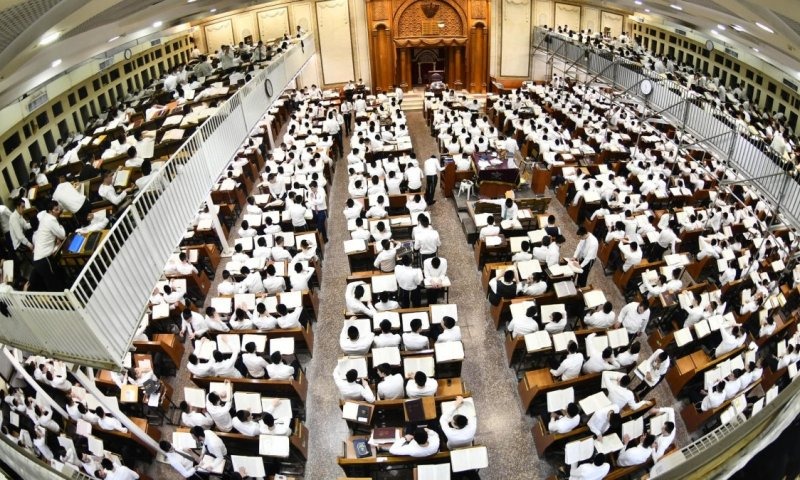 Yeshiva World News2 days ago
Attorney General Gali Baharav-Miara has informed Israel’s High Court of Justice that 67,230 Chareidi men are classified as draft evaders or have failed to report to military enlistment offices after receiving conscription orders. Israeli media reports.
In her submission, the attorney general said that approximately 110,000 people nationwide have failed to comply with military reporting requirements, with the Chareidi sector accounting for a substantial portion of the total.
The filing acknowledged that Chareidi enlistment rose during the past year. According to the figures presented, 4,298 Chareidi men joined the military during the enlistment year ending in June 2026, compared with 2,811 during the previous year.
Government legal officials attributed the increase to expanded military service tracks for Chareidim and increased enforcement measures. At the same time, the attorney general argued that current enlistment levels remain far below the IDF’s operational needs.
Baharav-Miara urged the court to consider additional enforcement mechanisms, including steps that could affect government benefits for individuals who fail to comply with conscription requirements.
The submission follows the recent arrest of dozens of Chareidi men at Ben Gurion Airport after their return from the United States, a move that drew criticism from Prime Minister Netanyahu and intensified the political debate over military service.
(YWN World Headquarters – NYC)
 Yeshiva World News2 days ago
The United States has reportedly reduced personnel at several military bases across the Middle East amid continuing Iranian threats, as a senior official in Tehran warned that Iran is preparing for a possible joint American-Israeli attack.
American officials said the military had quietly lowered troop numbers in recent days at bases in Jordan, Qatar and Kuwait. The State Department has also reportedly directed additional reductions in diplomatic staffing.
The precautions resemble steps taken around the outbreak of the war with Iran on February 28. Officials described the latest moves as a response to Tehran’s ongoing threats.
Meanwhile, a senior Iranian security official said the regime is operating on the assumption that a combined American-Israeli strike will occur.
The official said operational commanders had been informed that, should a broader conflict involve the elimination of senior Iranian figures and civilian deaths, Tehran would consider American political targets and infrastructure in any country participating in the fighting legitimate targets for retaliation.
The official maintained that Iran already considers itself engaged in an active war with Washington, portraying the current economic, naval and air restrictions as a continuation of the military campaign that began in February.
He also claimed that pressure is growing among the Iranian public for decisive action to break the blockade, framing such action as an exercise of Iran’s right to self-defense.
The official dismissed Washington’s diplomatic statements as “meaningless” and rejected the prospect of a peaceful settlement.
He claimed Iranian leaders had concluded that American policy in the region was being dictated by Israel and that Israel would prevent a diplomatic resolution because, in his words, “for Trump, Israel comes first.”
The official said that assessment had been reinforced by Secretary of State Marco Rubio’s speech in Athens, which Tehran interpreted as casting the conflict with Iran in broader historical and civilizational terms.
(YWN World Headquarters – NYC)
 Yeshiva World News2 days ago
The U.S. Treasury Department has imposed sanctions on an international law firm accused of helping Iran disguise the ownership of vessels involved in transporting oil and other commodities, expanding Washington’s campaign against Tehran’s shadow shipping network. Reuters reports.
The firm, Karnakis & Karnakis, operates in Greece and Panama and allegedly spent years establishing shell companies that disguised the ownership of vessels carrying Iranian petroleum, petrochemicals and steel.
U.S. officials said the arrangements helped move millions of barrels of Iranian oil and generated revenue that benefited the Islamic Revolutionary Guard Corps Quds Force as well as the Houthis.
Treasury Secretary Scott Bessent said American enforcement efforts would continue targeting not only shipping companies and vessel operators but also the professional service providers who facilitate Iranian sanctions evasion.
Treasury’s Financial Crimes Enforcement Network also issued an administrative subpoena to a Greek bank as part of an investigation into possible Iranian links, while additional European banks reportedly received requests for information concerning their dealings with sanctioned Iranian entities.
The measures are part of a broader U.S. pressure campaign that includes naval interdictions, shipping restrictions and financial sanctions aimed at constricting Iran’s oil trade and foreign-currency access.
(YWN World Headquarters – NYC)
 Yeshiva World News2 days ago
Michigan Democratic Senate candidate Abdul El-Sayed has hired a Jewish outreach director as his campaign seeks to expand support among Jewish voters in an increasingly competitive race. Jewish media outlets report.
The campaign brought on Lenore Goldman, an experienced political consultant with past involvement in Jewish communal and civic work, to help strengthen outreach efforts ahead of the election.
The move comes amid continuing tension between El-Sayed and parts of Michigan’s Jewish community over his criticism of Israel and positions related to the Israeli-Palestinian conflict.
Campaign officials appear to view the hire as an effort to build dialogue with Jewish voters and blunt Republican attacks in a race that could be decided by narrow margins.
Michigan remains home to large Arab-American and Jewish populations, making Middle East issues unusually prominent in the political conversation surrounding the Senate campaign.
The development highlights how candidates in battleground states are navigating coalition politics, foreign-policy concerns and the shifting domestic impact of the war in the Middle East.
(YWN World Headquarters – NYC)
 Yeshiva World News2 days ago
The Pentagon and Lockheed Martin have reached a preliminary long-term agreement covering the production and maintenance of at least 850 F-35 Lightning II fighter jets over the coming decade, setting a framework for one of America’s most important military aircraft programs. Reuters reports.
Under the arrangement, Lockheed Martin expects to maintain production at roughly 156 aircraft annually while also providing maintenance support, spare parts and equipment for the expanding fleet.
The company has also committed to privately financing at least $7 billion in program-related initiatives, including investments aimed at strengthening production capacity and supply chains.
The F-35 remains a central component of American air power and is also operated by key U.S. allies, including Israel. The aircraft is used in a variety of missions, including air superiority, precision strikes and intelligence-gathering.
The proposed framework is expected to support hundreds of thousands of American jobs and generate substantial economic activity tied to manufacturing, logistics and maintenance across the United States.
The agreement remains preliminary. Final contract terms, pricing and production schedules will still require additional approvals and procurement authorization.
(YWN World Headquarters – NYC)
 Yeshiva World News2 days ago
President Donald Trump said Thursday that the United States is not currently negotiating with Iran and warned that a significant development could take place in the near future amid growing speculation about another round of American and Israeli military action. The New York Times and other outlets report.
Speaking before boarding Air Force One, Trump flatly rejected suggestions that active diplomatic talks are underway with Tehran.
The president said that “something will happen one way or another fairly soon,” while acknowledging widespread speculation that any major development might come after the November 3 midterm elections.
His remarks came as reports circulated that American and Israeli officials had drawn up plans for renewed strikes on Iranian targets, including military and nuclear-related infrastructure.
Trump did not specify whether he was referring to a possible military operation, a political decision or some other development, and he did not give a timetable.
The comments are likely to intensify attention on the administration’s next steps at a time when regional tensions remain extremely high and military preparations on all sides continue.
(YWN World Headquarters – NYC)
 Yeshiva World News2 days ago
The American Israel Public Affairs Committee has informed members that it will stop directly endorsing congressional candidates and making campaign contributions through its political action committee, marking a significant change in the organization’s political strategy. Multiple outlets in the Jewish and political press report.
AIPAC leadership said the organization will instead focus on directing contributions from individual supporters to pro-Israel candidates.
The shift does not mean the group is withdrawing from elections. Its affiliated United Democracy Project super PAC will continue operating and spending money on congressional races, though federal law bars super PACs from coordinating directly with campaigns.
United Democracy Project has already spent tens of millions of dollars during the current election cycle, making it one of the most active political spending organizations in the country.
Before launching its PAC and super PAC in 2021, AIPAC largely concentrated on grassroots advocacy and encouraging political giving by private individuals rather than intervening directly as an institutional donor.
The decision comes amid a more difficult political environment for the organization, with criticism emerging from multiple directions and some candidates preferring to avoid public alignment with AIPAC even while backing strong U.S.-Israel ties.
(YWN World Headquarters – NYC)
 Yeshiva World News2 days ago
Israel Police will deploy more than 20,000 officers and volunteers for Election Day, with reserve forces preparing for potential unrest after polling stations close.
Among the scenarios being considered is an attempt to storm the Knesset, similar to the breach of the U.S. Capitol. Police emphasized, however, that there is no specific intelligence indicating that such an attack is being planned.
“We are taking such a scenario into account, even though there is no information that it is going to materialize,” said Commander Elad Klein, head of the police Operations Department.
“The Capitol incident in the United States happened some time after the elections ended, but we are preparing for similar scenarios here as well. Here, it is not Capitol Hill—it is the Knesset.”
Police will also operate a special command center to address false information circulating on social media. Officers will secure polling stations, protect the integrity of the voting process and respond to public disturbances.
The deployment includes preparations for terrorist threats and coordination with other security agencies to protect candidates.
Klein said the heightened preparations are intended to ensure that voting proceeds normally, while leaving police ready to respond to unusual developments during the evening.
“The current election campaign is very sensitive, and we are aware of that,” he said. “That is why we are concentrating substantial reserve forces that will operate particularly from the evening onward.”
“We currently have no information that any particular group intends to disturb the peace or do anything more extreme, but we are prepared for such a scenario.”
(YWN World Headquarters – NYC)
 Yeshiva World News2 days ago
The number of Americans filing new unemployment claims has fallen to one of its lowest levels in nearly six decades, underscoring the continued resilience of the U.S. labor market despite inflation concerns and war-related economic uncertainty. Reuters reports.
Initial applications for unemployment benefits declined by 6,000 to a seasonally adjusted 194,000 in the latest reporting week, coming in below economists’ expectations.
The figure approached the 189,000 level recorded earlier this year, which was the lowest since 1969.
Economists said the data suggests employers remain reluctant to lay off workers even as higher borrowing costs, tariff concerns and Middle East instability complicate the broader economic outlook.
At the same time, businesses have remained somewhat cautious about adding staff, reflecting concern about costs, slower growth and the possibility of additional monetary tightening.
The latest figures arrive as the Federal Reserve weighs its next move on interest rates and as political leaders continue arguing over the economic impact of the Iran war and rising energy prices.
(YWN World Headquarters – NYC)
 Yeshiva World News3 days ago
Finance Minister Bezalel Smotrich has described Israel’s upcoming election as a historic crossroads, saying the results will shape the country’s security policy, relationship with the United States and approach to major domestic issues. JNS reports.
Speaking at a private gathering in Yerushalayim alongside Religious Zionist Party MK Ohad Tal, Smotrich addressed the war with Iran, Chareidi enlistment, economic matters and Israel’s policies in Judea and Samaria.
Smotrich emphasized the importance of Prime Minister Netanyahu’s relationship with President Donald Trump, arguing that the alliance between the two leaders plays a central role in strategic decisions concerning Iran.
He also discussed the security importance of Judea and Samaria, stressing the strategic implications of the territory’s geography and warning against policies that could weaken Israel’s position there.
On the issue of Chareidi enlistment, Smotrich said efforts to increase military service must take into account the practical and social realities within the community and warned that heavy-handed measures could backfire.
MK Ohad Tal also addressed the gathering and warned right-wing voters about the risk of supporting smaller parties that may fail to cross the electoral threshold, potentially affecting the final bloc arithmetic in the Knesset.
(YWN World Headquarters – NYC)
 Yeshiva World News3 days ago
Shin Bet Director David Zini visited Paris this week for meetings with senior French intelligence officials, with discussions reportedly addressing terrorism and radical Islam amid the recent unrest in France.
The working visit was scheduled in advance, but the riots provided an additional backdrop for talks about the security challenges facing French authorities.
Zini met with senior officials from both of France’s principal intelligence agencies: the DGSI, responsible for domestic security and considered the French counterpart to the Shin Bet, and the DGSE, the foreign intelligence service comparable to Israel’s Mossad.
The meetings took place amid diplomatic tensions between Jerusalem and Paris, as France advances measures against Israel, including a proposed ban on imports from Israeli settlements.
The Shin Bet’s experience in preventing terrorist attacks and gathering intelligence within civilian populations could provide a basis for cooperation as French security agencies confront threats involving radical Islam.
The Shin Bet declined to confirm or elaborate on the substance of the meetings, saying it does not comment on the director’s schedule.
(YWN World Headquarters – NYC)
Yeshiva World News3 days agoSenior Israeli military officials have presented American counterparts with intelligence indicating that Hamas is actively rebuilding its military capabilities in Gaza and has no intention of surrendering its weapons as part of any future arrangement. Haaretz reports.
According to the Israeli assessment, Hamas has restored portions of its underground tunnel network and accumulated weapons in areas of the Strip that remain under its control.
Military officials reportedly estimate that Hamas currently maintains between 30,000 and 40,000 operatives, a figure approaching the size of its forces before the October 7 massacre.
The intelligence assessment further indicates that Hamas has succeeded in reestablishing governing authority throughout areas under its control and does not currently face a serious internal challenge to that authority.
Israeli security officials believe Hamas will refuse to cooperate with any international framework requiring disarmament and that diplomatic pressure alone will not compel the terror organization to surrender its weapons.
The assessment comes as American-led discussions over Gaza’s future remain stalled, with key disputes centering on security control, disarmament and Israel’s military presence in the territory.
(YWN World Headquarters – NYC)
 Yeshiva World News3 days ago
Chareidim account for nearly 14% of Israel’s population but only 10.5% of eligible voters in the upcoming Knesset election, according to newly released figures from Israel’s Central Bureau of Statistics. JNS reports.
The data highlights the unusually young age profile of the Chareidi population, which results in a smaller share of voting-age adults relative to the sector’s overall percentage of the population.
A similar pattern exists in the Arab sector, which makes up a larger share of the general population than of the eligible electorate, partly because of demographics and partly because not all residents in certain areas hold Israeli citizenship.
The figures also point to major differences among cities. Yerushalayim has one of the lowest proportions of voting-age eligible residents, reflecting its large young population and the presence of many Arab residents who are not Israeli citizens.
By contrast, many other major Israeli cities have far higher percentages of residents eligible to vote, often reaching 70% to 80% of the population.
The numbers offer important context ahead of the election, particularly as parties targeting Chareidi and other young sectors seek to translate demographic growth into greater political influence.
(YWN World Headquarters – NYC)
 Yeshiva World News3 days ago
Israel’s Shin Bet security agency announced Thursday that multiple social media accounts identified as part of a foreign influence campaign have been removed ahead of the country’s October 27 elections. Israeli media reports.
The operation was carried out jointly with the Cyber Department of the State Attorney’s Office and the Central Elections Committee.
According to the Shin Bet, the accounts were believed to be part of an attempt by outside actors to improperly influence the upcoming vote through online activity and coordinated messaging.
The security agency did not identify the country or organization behind the suspected effort, nor did it disclose how many accounts were removed.
Officials also did not specify which political themes or candidates were targeted, but the announcement underscores growing concern over digital interference and the vulnerability of election-related discourse online.
The move comes as Israel enters the final days of a hard-fought national campaign in which both domestic political tensions and regional security concerns are playing a major role.
(YWN World Headquarters – NYC)
 Yeshiva World News3 days ago
Protective netting against drones has been installed at Prime Minister Binyamin Netanyahu’s private home on Gaza Street in Jerusalem, following two days of extensive construction that disrupted traffic in the Rechavia neighborhood.
Two cranes blocked the major neighborhood thoroughfare while at least 10 workers carried out the installation at the property, which is designated an alternative official residence.
Netanyahu and his wife, Sara, are currently staying at another property nearby. The official prime minister’s residence on Balfour Street remains under renovation, with work not expected to finish before early 2027.
The drone protection is the latest addition to approximately a year and a half of construction at the Gaza Street property. Previous work has included installing an elevator, steel scaffolding, a protective shelter, barriers restricting traffic and concrete security blocks, as well as replacing a bathtub.
Neighbors say the repeated construction and security restrictions have disrupted daily life and raised concerns about their own protection.
“This is a residential neighborhood in the center of the capital, with very dense construction,” one resident said. “If you are worried about drones, perhaps do us a favor and take care of the neighbors too, instead of just creating anxiety? This protection is really frightening. What about us?”
The work comes amid a sharp increase in spending on security projects at prime ministerial residences.
Between 2023 and October 2026, the Prime Minister’s Office paid NIS 127,432,277 for residential security projects. The reported spending included work at properties on Balfour Street, Gaza Street and in Caesarea.
Annual payments rose from approximately NIS 10.9 million in 2023 to NIS 27.8 million in 2024, before reaching NIS 72.5 million in 2025. Another NIS 16.2 million was paid between the beginning of 2026 and October.
The Prime Minister’s Office clarified that the figures cover residences used by both serving and former prime ministers. It attributed the increase to changes in the threat level requiring substantial investment in protective measures.
The heightened security follows the 2024 drone strike on Netanyahu’s Caesarea home.
Separately, another unusual security project was recently undertaken at the Gaza Street property ahead of Yom Kippur.
The Shin Bet and the Prime Minister’s Office security division began constructing an enclosed, air-conditioned passage approximately 15 to 20 meters long, connecting the house to a nearby street. The secured route was intended to allow Netanyahu to reach shul safely.
However, construction was halted before completion. The project incurred expenses and caused further disruption for nearby residents, but Netanyahu ultimately did not use the passage or attend the shul during Yom Kippur.
(YWN World Headquarters – NYC)
 Yeshiva World News3 days ago
Prime Minister Binyamin Netanyahu has warned that Mojtaba Khamenei ordered Iran to advance work on the weaponization systems needed for a nuclear bomb, as Tehran moves to protect its nuclear infrastructure underground.
In an interview, Netanyahu described the directive as a significant development in Iran’s pursuit of nuclear weapons.
According to the intelligence information cited in the report, Iran holds approximately 450 kilograms of enriched uranium. The Islamic Revolutionary Guard Corps is also working to relocate nuclear facilities and centrifuges to underground sites at four locations to shield them from attack.
Netanyahu said the enriched uranium remains buried underground, consistent with previous statements by President Donald Trump.
The prime minister identified the overthrow of the Iranian regime as a strategic objective and emphasized Israel’s continuing coordination with Washington. According to the report, the decision on a potential strike against Iran’s nuclear facilities and its timing rests with Trump and his team within that coordination.
Meanwhile, the United States is reinforcing its military presence in the Middle East with aerial refueling aircraft and a carrier strike group.
Israeli and American assessments indicate that Iran’s worsening economic crisis could push the Revolutionary Guards to accelerate the nuclear program.
Netanyahu also addressed the threat Wednesday evening during an officers’ graduation ceremony at the IDF’s Bahad 1 training base.
“The regime in Iran still has not learned its lesson. Mojtaba Khamenei, the latest dictator, has decided to follow in his father’s footsteps,” Netanyahu said.
“He has taken the safety off, and Iran is once again trying to develop bombs of death.”
Netanyahu declared that removing the regime was the only way to eliminate the threat permanently.
“There is only one way to remove this threat once and for all—to topple the regime in Iran. And that is my directive to the IDF, the Mossad and the security services,” he said.
(YWN World Headquarters – NYC)
 Yeshiva World News3 days ago
Mr. Shloime (Sol) Werdiger, one of New York’s most prominent Jewish communal leaders, askan and philanthropist, has endorsed Governor Kathy Hochul for reelection, citing her historic decision to bring New York into the new federal scholarship tax credit program. Werdiger, who has a longstanding personal relationship with the governor, made the endorsement days after Hochul formally announced that New York would participate in the federal program, a move expected to provide significant financial relief to thousands of yeshiva families across the state.
As YWN previously reported, the program, established under President Donald Trump’s “One Big Beautiful Bill Act”, allows taxpayers to receive a dollar-for-dollar federal tax credit of up to $1,700 for contributions to approved scholarship organizations. Those organizations can then distribute scholarships to eligible families for educational expenses, including yeshiva tuition.
The program begins in 2027 and could bring tens of millions of dollars in additional educational funding to New York without requiring state funding.
Werdiger played a significant role in the effort to secure Hochul’s support. The governor previously met with Orthodox Jewish leaders at Werdiger’s office, where she first indicated her willingness to participate in the program.
Following Hochul’s formal announcement, Werdiger praised the decision, stating, “Opting in is good for all New Yorkers. We thank Governor Hochul for putting students before politics.”
(YWN World Headquarters – NYC)
 Yeshiva World News3 days ago
Senior Israeli military officials have presented intelligence to their American counterparts indicating that Hamas has no intention of surrendering its weapons and is actively rebuilding its military capabilities in preparation for another full-scale war with Israel.
According to a report published Thursday by Haaretz, the intelligence was shared with Washington in recent days and has also been presented to Israel’s political leadership.
The findings indicate that Hamas has no intention of cooperating with international organizations seeking to oversee its disarmament, with Israeli security officials assessing that military force is the only realistic way to remove the terrorist organization’s weapons.
The IDF believes Hamas has managed to repair significant portions of its underground tunnel network and replenish weapons supplies in areas of the Gaza Strip that remain under its control.
Even more concerning, Israeli intelligence estimates that Hamas currently has between 30,000 and 40,000 operatives, roughly the same number it maintained before the October 7, 2023, massacre.
The assessment suggests that despite extensive Israeli military operations throughout the war, Hamas has succeeded in rebuilding a substantial portion of its fighting force.
Israeli security officials also believe that Hamas has reestablished its governing authority throughout the areas it controls in Gaza, with no significant rival organization capable of challenging its rule.
The intelligence findings raise serious questions about the prospects of implementing a diplomatic arrangement that would require Hamas to surrender its weapons and relinquish control of the Gaza Strip.
American-led efforts to negotiate a comprehensive agreement involving Hamas’ disarmament and an Israeli military withdrawal from Gaza have stalled amid disagreements over how such an arrangement would be implemented.
The latest assessment indicates that Hamas is preparing for the possibility of renewed large-scale fighting rather than taking steps toward disarmament, increasing concerns that another major military confrontation could become unavoidable.
(YWN Israel Desk – Jerusalem)
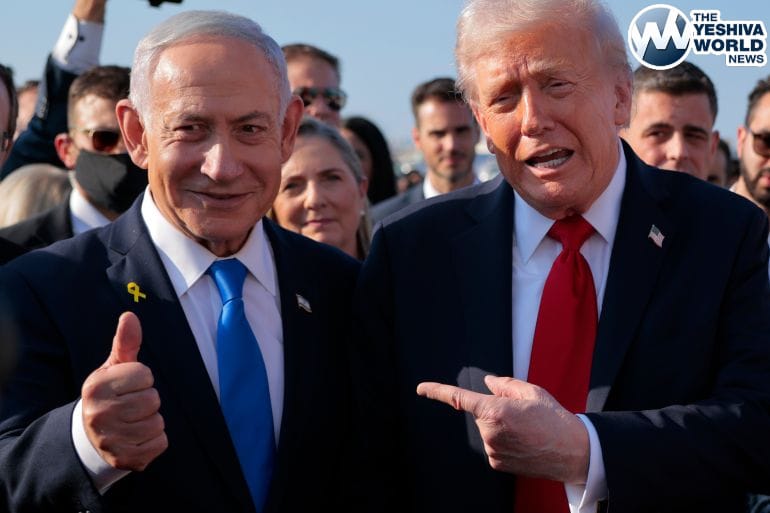 Yeshiva World News3 days ago
Prime Minister Binyamin Netanyahu rejected reports Thursday claiming that President Donald Trump prevented Israel from launching another military strike against Iran, dismissing the allegations as false amid growing speculation about a renewed confrontation with Tehran.
In an interview with Arutz Sheva, Netanyahu was asked about reports suggesting that Israel had prepared to carry out another attack against Iran but was stopped by the American president.
“That report is not true,” Netanyahu responded, declining to provide further details about Israel’s military plans.
The prime minister also discussed his previous coordination with Trump ahead of Israeli military operations against Iran, emphasizing that Israel had been prepared to act independently if necessary.
“Our existence is not a subject for negotiation,” Netanyahu declared.
According to Netanyahu, he made clear to his advisers that he intended to inform Trump of Israel’s operational plans rather than request American permission to proceed.
During a meeting with Trump, Netanyahu presented Israel’s military preparations and offered Washington an opportunity to participate in the operation, particularly in targeting Iran’s heavily fortified Fordow nuclear facility.
“I told him: ‘I would be very happy if you joined. There is a bunker there in a place called Fordow. You can bring the B-2 to bomb it. If not, we will do it, but it will be more difficult. You decide,'” Netanyahu recalled.
Trump did not immediately commit to participating, but Israel continued preparing for the operation. The United States eventually joined the military campaign on its tenth day, carrying out strikes against Iranian nuclear facilities.
Netanyahu also revealed that he had issued direct instructions to the Mossad and IDF to work toward overthrowing the Iranian regime, arguing that destroying its nuclear infrastructure alone would not eliminate the long-term threat to Israel.
“I am not demanding, I am giving instructions,” Netanyahu said. “I have instructed that the only acceptable solution here is, of course, the overthrow of this fanatical regime. I instructed the Mossad and the IDF. That is the job, that is the objective, that is the mission.”
The prime minister warned that Iran remains determined to rebuild its military capabilities despite the damage inflicted during previous Israeli and American operations.
“Israel is stronger than ever, and Iran and its axis of evil are weaker than ever,” Netanyahu said.
(YWN Israel Desk – Jerusalem)
 Yeshiva World News3 days ago
HaGaon HaRav Dov Landau hosted an unusual gathering at his home in Bnei Brak on Wednesday evening, meeting with dozens of Charedi businessmen and working professionals ahead of next Tuesday’s Knesset elections.
The gathering, described as unprecedented, was organized by an unofficial Degel HaTorah campaign group known as Mateh Amelim, which seeks to strengthen support for United Torah Judaism among working Charedim.
Among those attending were prominent businessmen and community figures, including Yisrael Reisner, Chaim Goloventzitz, Shuki Feldstein, HaRav Rafael Manat, Yedidya Meir, Dovi Weinroth, and others.
The meeting followed a conversation earlier this week between HaRav Landau and HaRav Rafael Manat, who raised concerns about growing frustration among working Charedi families over their treatment by political representatives.
Some members of the community have complained that Degel HaTorah has failed to adequately address their educational and other needs, leading some to consider supporting newly established political parties.
HaRav Landau listened to their concerns before delivering a strong message urging them to remain loyal to United Torah Judaism.
The Rosh Yeshiva read aloud a letter he had written following the discussions, warning that supporting alternative Charedi parties or abstaining from voting would undermine efforts to preserve Torah education and Yiddishkeit for future generations.
He repeatedly urged those present to vote for Gimmel, emphasizing the importance of every vote in the upcoming elections.
In an unusual commitment, HaRav Landau promised to personally approach Degel HaTorah’s Knesset representatives and party leadership to address the concerns of working Charedi families.
“Bli neder, I will approach the Knesset members of Degel HaTorah and the party leadership and ask them to find ways to assist and address the educational needs and other issues that require attention,” HaRav Landau promised.
The Rosh Yeshiva also called for additional Torah shiurim to be established for working members of the Charedi community.
“You are part of the Torah world,” HaRav Landau told the participants, emphasizing that working Charedim share the same hashkafah and remain an inseparable part of the community represented by Degel HaTorah.
The gathering comes amid growing concern within United Torah Judaism over the possibility that smaller Charedi parties could draw votes away from Gimmel in the October 27 elections.
HaRav Landau has participated in several major election gatherings in recent days, including an emergency gathering of Gedolei Yisroel in Bnei Brak and a campaign trip alongside HaGaon HaRav Moshe Hillel Hirsch to Charedi communities in northern Israel.
At those gatherings, the Gedolei Yisroel emphasized the importance of voter turnout, warning that every vote could prove decisive in determining the Charedi parties’ representation in the next Knesset.
(YWN Israel Desk – Jerusalem)
 Yeshiva World News3 days ago
Shas chairman Aryeh Deri announced Thursday a new election initiative that would provide every Jewish boy in Israel with a free pair of tefillin upon reaching Bar Mitzvah age, as part of a broader effort to strengthen Jewish identity throughout the country.
Under the proposed program, called “Tefillin for Every Child,” every boy turning 13 would receive a Bar Mitzvah package from the Israeli education system containing a pair of tefillin and a tallis.
Shas also intends to introduce legislation requiring educational institutions to provide designated areas where students who wish to put on tefillin and daven can do so.
The announcement comes just days before Israel’s October 27 Knesset elections and follows controversial statements by Democrats Party chairman Yair Golan and a Tel Aviv municipal councilwoman concerning religion in public spaces.
Deri strongly condemned those statements, warning that Israel’s Jewish identity was increasingly coming under attack.
“Recently, we have been hearing disturbing statements threatening the Jewish identity of the State of Israel,” Deri said. “They want to turn it into a country like all other nations. That will never happen!”
Deri said the proposed initiative would serve as Shas’ response to Golan, whom he accused of seeking to remove religion from public life.
“These are shocking statements. Therefore, Shas is committed to passing a new program in the next government: ‘Tefillin for Every Child.’ This is Shas’ response to Yair Golan, who wants to erase religion from the public sphere,” he declared.
The Shas chairman emphasized the importance of tefillin as a symbol of the Jewish people’s connection to Torah and Yiddishkeit throughout the generations.
“Tefillin are a symbol of the Jewish people throughout the generations,” Deri said, adding that the initiative would strengthen the connection between young Jews and their heritage.
Quoting the posuk, “And all the peoples of the earth shall see that the name of Hashem is called upon you, and they shall fear you,” Deri noted that Chazal explain the reference as referring to the tefillin worn on the head.
“Tefillin are our spiritual strength to defeat all our enemies,” he declared.
Deri concluded by presenting the initiative as a choice over the country’s future Jewish character.
“The choice is clear: Either we strengthen the Jewish state, or we deteriorate into a country like all other nations, chas v’shalom. Chazak, chazak, v’nischazek.”
(YWN Israel Desk – Jerusalem)
 Yeshiva World News3 days ago
At least five yeshiva bochurim were injured overnight Wednesday during violent confrontations with police in Elad, amid serious allegations that officers entered several yeshiva campuses and threw stun grenades toward bochurim, including those who had not participated in the protests.
The unrest erupted following the arrest of a third-year bochur from Yeshivas Torah B’Tifartah, who had reported to a police station in Kfar Saba over a traffic violation. After discovering that he was classified as a military draft evader, police transferred him to the Military Police.
The arrest sparked demonstrations near Kfar Saba and the Ra’anana Junction before protests spread to the entrance of Elad, where yeshiva bochurim gathered to protest their fellow bochur’s arrest.
Demonstrators blocked Route 444, leading to confrontations with police. Footage from the scene showed protesters striking a police vehicle, while another video captured a garbage bag being thrown at the commander of the Rosh HaAyin police station.
Police reported that an officer suffered a head injury after being struck by a stone and was evacuated for medical treatment.
However, the most serious allegations concern what occurred after police dispersed the demonstration at the entrance to Elad.
Officers entered the campuses of Yeshivas Torah B’Tifartah, Yeshivas HaRav Ettinger, and a nearby yeshiva, throwing stun grenades toward bochurim in the courtyards and near dormitory buildings.
At least five bochurim were reportedly injured by the stun grenades, with one evacuated to Beilinson Hospital. Witnesses insisted that some of those injured had not participated in the demonstrations and were simply standing near their dormitories.
One bochur described the police conduct as completely unjustified, saying he had witnessed demonstrations before but had never seen officers enter three separate yeshiva campuses and indiscriminately throw stun grenades.
He described seeing injured bochurim, including one bleeding, and said grenades were thrown near rooms, caravans, and dormitory entrances.
“There’s absolutely no justification for this, even if the commander was hit by a garbage bag,” the bochur said.
The allegations have sparked outrage among bochurim, particularly because the institutions involved are mainstream Charedi yeshivos rather than those affiliated with the Peleg Yerushalmi, which has traditionally organized large demonstrations against the military draft.
Bochurim also expressed anger toward Charedi Knesset representatives, accusing them of failing to respond forcefully enough to reports that police entered major yeshivos and injured students.
In its official statement, Israel Police said dozens of demonstrators gathered near the Elad Junction, threw stones at officers, and disrupted public order.
Police said officers declared the gathering unlawful, ordered protesters to disperse, and acted to restore order and protect motorists.
However, the police statement did not directly address the allegations that officers entered yeshiva campuses, threw stun grenades near dormitories, or injured bochurim who were not participating in the protests.
(YWN Israel Desk – Jerusalem)
 Yeshiva World News3 days ago
Despite repeated declarations that they are no longer committed to Prime Minister Binyamin Netanyahu’s political bloc, Shas and United Torah Judaism are expected to renew their alliance with Likud following next Tuesday’s Knesset elections, according to a political analysis published Thursday by Israel Hayom.
The Charedi parties have publicly insisted that they are not committed to either political bloc, amid growing frustration within the Charedi community over the continued arrests of yeshiva bochurim and the failure to resolve their military draft status.
However, the report suggests that the public distancing from Netanyahu is primarily intended to reassure Charedi voters that their representatives will not enter another government without securing meaningful guarantees.
Netanyahu’s recent interview with Charedi journalists Yisrael Cohen and Yaki Adamker reinforced expectations of renewed cooperation. During the interview, Netanyahu expressed support for passing legislation addressing the draft issue before the next government is sworn in and criticized the ongoing arrests of yeshiva bochurim.
A senior United Torah Judaism source told Israel Hayom that the party would be prepared to join Netanyahu if his bloc secures 61 Knesset seats, but only after legislation resolving the draft issue is approved.
“If he has 61, we’ll join,” the source said. “But the agreement will only be signed once the draft law passes, before anyone even sits in their chair. As far as we’re concerned, that’s the red line.”
The report argues that cooperation with the opposition remains highly unlikely, particularly as opposition leaders, including Yair Lapid and Naftali Bennett, continue campaigning for tougher military draft requirements and financial sanctions against those who do not enlist.
However, if neither political bloc secures a majority, the Charedi parties could find themselves holding the balance of power, with approximately 15 Knesset seats potentially determining the outcome of crucial votes.
In that scenario, United Torah Judaism and Shas could support individual government measures without formally joining a coalition, negotiating their demands separately on legislation, budgets, and other parliamentary matters.
“If nobody has 61, our seats will become the deciding factor in the Knesset,” the UTJ source said, adding that parties seeking support for budgets or major legislation would have to negotiate with Charedi lawmakers on each vote.
Meanwhile, Netanyahu’s efforts to convince Motti Leitner, chairman of the Charedi Public Party, to withdraw from the elections are being viewed as further evidence of his determination to preserve the Charedi vote.
Netanyahu reportedly met Leitner late at night in Petach Tikvah and urged him to withdraw, fearing that votes for his party could prevent the right-wing bloc from securing the 61 seats needed to form a government.
Leitner, however, has rejected the pressure and announced that his party will remain in the race.
“We are not withdrawing. The monopoly of United Torah Judaism and Shas is over,” Leitner declared.
(YWN Israel Desk – Jerusalem)
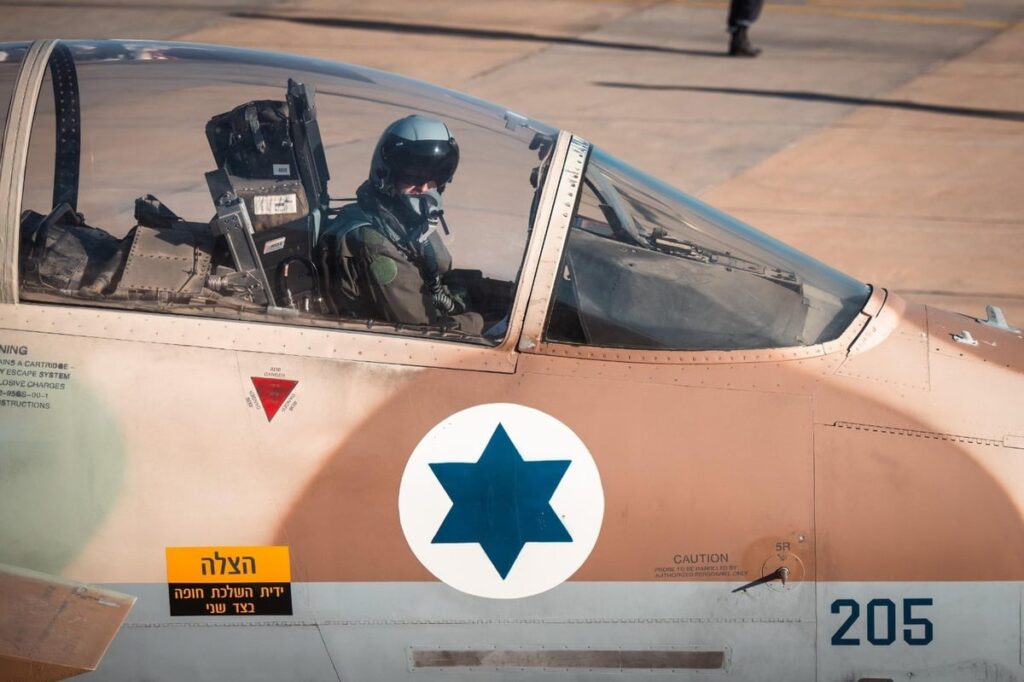 Yeshiva World News3 days ago
The Israeli Air Force has significantly increased fighter jet training exercises over the past two weeks amid growing concerns that Israel and the United States could soon resume military operations against Iran, according to reports Thursday.
Senior Israeli security officials believe the likelihood of another confrontation with Tehran is increasing as diplomatic efforts remain stalled. The IDF is preparing for the possibility of extensive strikes targeting Iran’s nuclear facilities, ballistic missile production sites, and other strategic military infrastructure.
A senior security official told Walla that the prospects of renewed fighting are becoming increasingly likely as time passes.
“As time goes on, we will have to go through a confrontation with Iran. Everything could change, but between a reality in which we reach an agreement with Iran or launch an attack, the likelihood of war is increasing,” the official said.
According to security assessments, a final decision on military action is unlikely before Israel’s October 27 elections and will be made in close coordination with Washington.
Prime Minister Binyamin Netanyahu and Defense Minister Yisrael Katz are reportedly determined to pursue the collapse of the Iranian regime, while President Donald Trump has opposed launching another major offensive before the November 3 U.S. midterm elections.
According to the Financial Times, the IDF had prepared for a large-scale bombing campaign over the weekend of October 10, involving several days of strikes against Iranian nuclear facilities, power stations, and other strategic infrastructure.
Israeli military planners have since updated their target bank to include additional facilities that were not attacked during previous operations.
Meanwhile, Fox News reported that Israeli fighter jets flew eastward over Syria and Iraq during an overnight exercise between Monday and Tuesday, apparently rehearsing a potential operation against Iran.
Reports from local sources cited by Middle East Eye also described Israeli fighter jets operating over southern Syria and Iraq’s southern Muthanna province.
The senior security official said the IDF is conducting continuous assessments involving its various military branches and U.S. Central Command, with coordination and intelligence updates taking place daily.
“We are prepared for all scenarios in coordination with the United States and countries in the region,” the official said.
Israeli security officials are also closely monitoring Iran’s regional proxies, particularly Hezbollah, amid concerns that Tehran could pressure its allies to join another confrontation.
According to the report, Israel has delivered stern warnings to the Lebanese government to restrain Hezbollah, making clear that any renewed attacks from Lebanon would trigger a severe Israeli response.
The heightened preparations follow reports that the IDF and U.S. military have completed detailed operational plans for renewed strikes against Iran, potentially targeting nuclear installations, energy infrastructure, missile stockpiles, and drone facilities.
(YWN Israel Desk – Jerusalem)
 Yeshiva World News3 days ago
A Jewish man from Crown Heights was attacked from behind Wednesday afternoon in Midtown Manhattan by a woman suspected of being emotionally disturbed, in an incident being investigated as a possible antisemitic hate crime.
The attack occurred at approximately 5:30 PM near 15 West 47th Street, between Fifth and Sixth Avenues, when a woman believed to be in her 30s allegedly approached the visibly Jewish victim from behind and stabbed him with what is believed to have been a needle or syringe.
Sources familiar with the incident say the victim was not the first Jewish person the suspect allegedly attempted to attack. The woman reportedly passed numerous other pedestrians who were not visibly identifiable as Jewish without targeting them, raising concerns that she was deliberately selecting victims based on their Jewish appearance.
The incident is being investigated as a suspected hate crime, particularly because the victim was visibly identifiable as an Orthodox Jew through his clothing.
The victim was treated at the scene by Hatzalah volunteers before being transported to Bellevue Hospital, where he was reported to be in stable condition.
The suspect, described as a white woman approximately 5 feet 9 inches tall, was reportedly wearing a shirt, blue jeans and white sneakers, with a dark sweater tied around her waist.
She reportedly fled westbound toward Sixth Avenue following the attack. Detectives and Manhattan Shomrim are searching for the suspect.
(YWN World Headquarters – NYC)
 Yeshiva World News3 days ago
A massive and inspiring gathering was held at the Mir Yeshiva in Yerushalayim to commemorate the 15th yahrtzeit of its legendary Rosh Yeshiva, Hagaon Harav Nosson Tzvi Finkel zt”l, with dozens of siyumim on Shas Bavli and Talmud Yerushalmi.
The extraordinary maamad brought together bnei Torah and talmidim of the Mir, celebrating the completion of dozens of entire cycles of Shas by dedicated lomdei Torah.
The gathering was attended by Mashgiach Hagaon Harav Don Segal, who joined the special occasion honoring the memory and enduring legacy of the late Rosh Yeshiva.
Harav Nosson Tzvi Finkel zt”l, who was niftar in 2011, devoted his life to building the Mir into one of the largest and most prominent Torah institutions in the world. Despite suffering from Parkinson’s disease for many years, he continued delivering shiurim, guiding thousands of talmidim, and expanding the yeshiva with extraordinary determination.
Fifteen years after his petirah, the remarkable display of hasmadah and limud haTorah served as a powerful tribute to his lifelong mission of spreading Torah.
The event was documented for YWN by renowned photographer Shuki Lerer, who captured the moving scenes of the siyumim and the gathering at the Mir.
(YWN World Headquarters – NYC)
Yeshiva World News3 days agoThe United States and Israel have developed detailed military plans for renewed strikes against Iran following the November U.S. midterm elections, including a potential intensive three-day campaign designed to inflict significant economic damage and pressure Tehran into making concessions over its nuclear program and control of the Strait of Hormuz, The New York Times reports, citing U.S. officials and individuals briefed on the preparations.
The proposed military operation would target Iran’s nuclear facilities, missile and drone arsenals, and potentially its energy infrastructure. Some American military planners believe a concentrated three-day assault could cause sufficient economic damage to force Iranian leaders to reconsider their negotiating positions.
Preparations are already underway, with U.S. and Israeli forces conducting additional military exercises, including flights over Iraq to rehearse strike maneuvers. Defense Secretary Pete Hegseth met with Prime Minister Benjamin Netanyahu in Israel this week to discuss the potential operation.
The United States is also assembling a substantial military force in the Middle East, including three aircraft carriers, thousands of Marines, fighter jets, and Special Operations forces. The deployment is expected to be fully in place by early November, providing President Trump with additional military options.
According to U.S. and Israeli defense officials, the two countries came close to launching a joint attack earlier this month, with both air forces placed on their highest state of alert. However, Trump postponed the operation shortly before it was scheduled to begin. He has not yet authorized a new campaign, and officials believe political considerations could lead him to wait until after the November elections.
The report also identifies Iran’s deeply buried Pickaxe Mountain nuclear facility as a potential target. Trump recently discussed the possibility of using the 22,000-pound Massive Ordnance Air Blast bomb, known as the Mother of All Bombs, against the site, although weapons specialists have questioned its effectiveness against heavily fortified underground facilities.
Meanwhile, Iranian officials are warning that another round of American and Israeli attacks would trigger expanded retaliation. Tehran has threatened to target regional energy infrastructure, commercial shipping, data centers, and underwater internet cables. An Iranian political analyst also warned that attacks on Saudi oil refineries could be used to drive up global energy prices.
Diplomatic efforts are continuing alongside the military preparations, with American negotiators seeking concessions on Iran’s nuclear activities and the Strait of Hormuz. Iranian negotiators have so far resisted making concessions on the nuclear program, while U.S. officials continue developing options for additional military action.
(YWN World Headquarters – NYC)
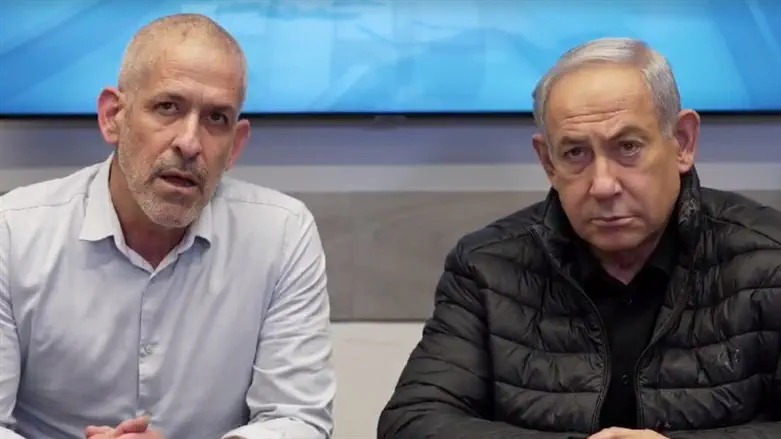 Yeshiva World News3 days ago
A veteran Shin Bet agent who served Israel’s domestic intelligence agency for 37 years has revealed that he issued a serious warning about suspicious Hamas activity just two days before the October 7 massacre, accusing former Shin Bet Director Ronen Bar of failing to act on intelligence that reached the highest levels of the organization. The former agent says the warning was never passed to Prime Minister Benjamin Netanyahu and that he subsequently faced threats and retaliation after speaking out about the failure, Channel 14 reports.
The former agent, identified only as “A,” served in sensitive intelligence positions involving counterterrorism, cyber operations and intelligence gathering through human sources. He began working with the Shin Bet at age 17 and was involved in operations targeting terrorist networks responsible for attacks against Israeli civilians and soldiers.
According to his account, the first indication of unusual activity emerged on October 2, 2023, five days before the Hamas massacre. Intelligence personnel discovered that a Gaza-based terrorist coordinator had suddenly disappeared from electronic communications, stopped using WhatsApp and severed contact with individuals he had previously directed.
Three days later, on October 5, the agent received another troubling report: a second terrorist coordinator in Gaza had similarly disappeared. When he attempted to contact the individual through his known WhatsApp number, an unfamiliar man with a Gazan accent answered and informed him that the person was unavailable indefinitely. Asked about additional contacts, the man responded that the others were also unavailable.
The unusual pattern immediately raised concerns. The agent asked his superiors whether Israel was preparing to eliminate a senior Hamas figure, reasoning that such an operation might explain the sudden disappearance of several terrorist coordinators. When he was informed that no such operation was planned, he became convinced that something significant was approaching.
At approximately 4:00 p.m. on Thursday, October 5, less than 48 hours before Hamas launched its devastating assault, the agent says he transmitted his warning through the Shin Bet’s intelligence channels. He maintains that the information was immediately passed from his unit to a department head, then to the deputy director and ultimately to Shin Bet Director Ronen Bar.
The most serious allegation concerns what happened after that warning reached senior leadership. The former agent says Bar received the intelligence but failed to ensure that it was acted upon and that the information was never communicated to Netanyahu. He directly holds Bar responsible for the intelligence failure, arguing that the Shin Bet director bore ultimate responsibility for the handling of warnings within the organization.
The former agent also described disturbing developments inside the Shin Bet after the massacre. When he reminded his superiors that he had warned them before October 7, he says their attitude toward him changed dramatically. He was subsequently instructed to undergo a polygraph examination, during which investigators questioned him about possible contacts with foreign intelligence organizations and Israeli intelligence bodies.
In another incident, he says officials asked whether he was considering harming himself, a question he interpreted as a veiled threat against his life. The agent alleges that he subsequently received additional threats, including death threats, and was eventually removed from the Shin Bet. He did not publicly identify the individuals responsible for the alleged death threats.
The Shin Bet categorically rejected his account, saying that internal investigations and documents recovered from Gaza established that even senior Hamas officials were kept unaware of the precise timing of the October 7 attack until shortly before it began.
Bar issued a separate denial, describing the allegations as entirely fabricated. He maintained that the Shin Bet’s investigations, interrogations and captured Hamas documents contradicted the suggestion that senior Hamas figures had entered emergency preparations during the week preceding the massacre.
Following those denials, Channel 14 again contacted the former agent and presented him with the responses from the Shin Bet and Bar. He stood by his testimony and offered to undergo a polygraph examination at any location selected by investigators, provided the examination was conducted independently of the Shin Bet.
(YWN World Headquarters – NYC)
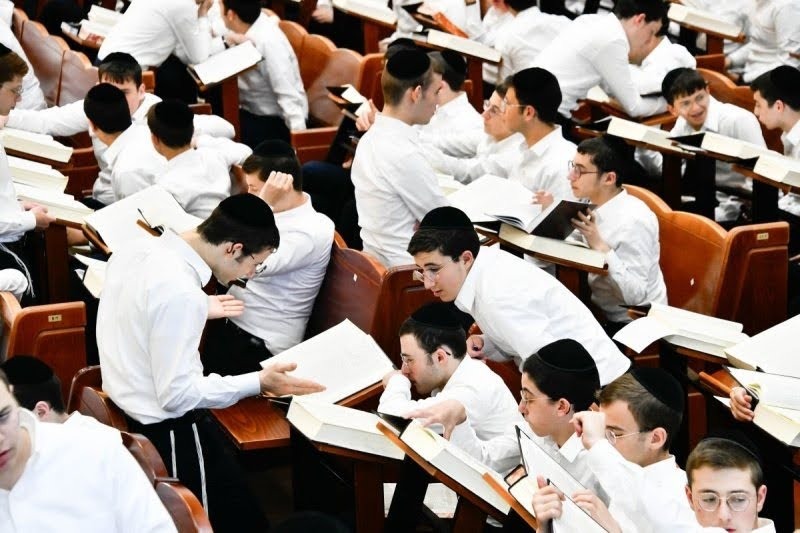 Yeshiva World News3 days ago
Israel’s Attorney General Gali Baharav-Miara has called on the High Court of Justice to order the revocation of financial benefits for approximately 110,000 Israelis classified as IDF draft evaders, the overwhelming majority of whom are Chareidim. In a legal opinion submitted to the court Wednesday, Baharav-Miara accused the government of failing to fully utilize its enforcement powers against those who have not reported for military service, prompting a furious response from Shas chairman Aryeh Deri, who accused her of deliberately targeting Torah learners just days before Israel’s national elections.
According to the figures presented to the court, approximately 110,000 Israelis are currently classified as draft evaders, with military estimates indicating that roughly 80% are members of the Chareidi community. The number has increased dramatically since the beginning of 2026, when approximately 75,000 individuals were classified as draft evaders.
The sharp increase follows the activation of tens of thousands of additional military draft orders, with officials expecting the number to continue rising. Baharav-Miara argued that the state has failed to exhaust the enforcement measures available under existing law and urged the court to intervene by ordering the withdrawal of economic benefits from those who have not fulfilled their military service obligations.
Deri responded with an unusually sharp attack against the attorney general, accusing her of pursuing a politically motivated campaign against the Chareidi community ahead of next Tuesday’s Knesset elections.
Describing Baharav-Miara as a “Kaplan activist,” a reference to the anti-government protest movement, Deri accused her of continuing to persecute Torah learners in an effort to help bring the political left to power.
“As far as she is concerned, the state is still not cruel enough,” Deri declared, warning that the measures being pursued against Chareidim demonstrated the extent of what he described as the attorney general’s aggressive campaign against the community.
The latest legal confrontation follows a unanimous High Court ruling last month overturning legislation intended to halt the arrests of yeshiva bochurim classified as draft evaders. The ruling was issued by an expanded panel of nine justices, including several considered judicial conservatives.
The court determined that the legislation suffered from a fundamental procedural defect because it had not passed a first reading in the Knesset. Eight of the nine justices additionally found that the amendment was unconstitutional because it seriously violated the constitutional right to equality.
The legislation had passed the Knesset in July by a vote of 58 to 54, with supporters seeking to prevent the continued arrest of yeshiva bochurim who had not reported for military service.
Following the court’s decision, Shas accused the justices of deepening divisions within Israeli society and interfering in the elections. The party argued that aggressive arrests would not produce additional IDF recruits and accused the judiciary of attempting to undermine legislation passed by elected lawmakers.
Despite the High Court’s decision to invalidate the legislation, authorities have largely refrained from conducting proactive arrest operations against Chareidi draft evaders in recent weeks. The new legal opinion submitted by Baharav-Miara seeks additional enforcement measures, particularly financial sanctions, against those classified as draft evaders.
(YWN World Headquarters – NYC)
 Yeshiva World News3 days ago
The Shin Bet has increased security around former Prime Minister Naftali Bennett, reportedly doubling his protection and raising it to the level provided to the defense minister following recent threats and incidents.
Bennett, chairman of the B’Yachad party, was informed of the upgraded arrangements in recent days.
The decision comes against the backdrop of an incident during a visit to Bnei Brak, where a saltshaker was thrown toward Bennett during a gathering at a local political discussion group.
The object struck a female staff member, who required medical treatment. The incident followed other confrontations at similar gatherings around the country.
Bennett has recently been campaigning in Likud strongholds, seeking to persuade supporters of Prime Minister Binyamin Netanyahu to switch their backing to him.
The heightened protection also comes amid reports over the past year that attempts by foreign cells to target Bennett were thwarted. Those reported plots were linked to his actions against Iran during his tenure as prime minister.
Security arrangements have also drawn attention in the cases of Yashar party chairman Gadi Eisenkot and Democrats chairman Yair Golan, whose parties have covered the costs of their protection.
Bennett’s security arrangements are also connected to his previous official positions, with the latest increase prompted by the threats against him.
(YWN World Headquarters – NYC)
 Yeshiva World News3 days ago
A nine-year-old boy from Kedumim in Shomron helped prevent a potential disaster Tuesday after spotting a suspicious object near the community and immediately alerting his father.
The boy was walking near Kedumim when he noticed an unidentified object in a field. He kept his distance and informed his father, who contacted the community’s security hotline.
IDF troops and police arrived and identified the object as a missile fuel tank left in the area during the war with Iran. Security forces safely removed it, and no injuries were reported.
Kedumim Council head Ozel Vatik praised the child’s response, noting that the discovery came just one week after a deadly tragedy in northern Israel.
“The nine-year-old boy from Kedumim showed exemplary civic responsibility,” Vatik said. “He did not put himself at risk, kept his distance and reported it immediately.”
Vatik urged parents to review safety instructions with their children and make sure they understand how to respond if they encounter an unfamiliar or suspicious object.
The council warned that dangerous objects could still be found in and around Kedumim, including remnants from the war with Iran and explosive devices planted by terrorists.
Residents were instructed never to touch or move suspicious objects, to move away and keep others at a safe distance, and to immediately notify security forces.
(YWN World Headquarters – NYC)
 Yeshiva World News3 days ago
Tensions across the Middle East are escalating amid reports of mysterious explosions in southern Iran and preparations by the United States to reduce its diplomatic presence in several Gulf countries, raising concerns about the possibility of another military confrontation involving Tehran.
Iran’s Fars News Agency reported Wednesday that multiple explosions were heard in the Sirik region of southern Iran, near the strategically important Strait of Hormuz. The cause of the explosions remains unknown, and there has been no confirmation of whether they resulted from military activity, sabotage, or another incident.
The Strait of Hormuz is one of the world’s most critical shipping routes, serving as a major passageway for global oil exports. Any military confrontation in the area could have significant consequences for international energy markets and maritime security.
Meanwhile, Reuters reported, citing American officials, that Washington is preparing for the possible evacuation of some diplomatic personnel and their families from U.S. embassies in Gulf countries.
According to some of the officials, the preparations are connected to the latest escalation involving the Iranian-backed Houthi terrorist organization in Yemen.
The reported contingency measures come as Washington assesses growing security threats to American diplomatic facilities and personnel throughout the region.
In Tehran, senior Iranian officials have also intensified discussions about the confrontation with the United States and Israel.
Iranian Parliament Speaker Mohammad Bagher Ghalibaf met with Supreme Leader Ayatollah Ali Khamenei to discuss the latest regional developments.
According to an official Iranian statement, the meeting focused on “the latest developments concerning the military, economic and psychological warfare being waged by the American-Israeli enemy.”
Ghalibaf reportedly presented parliamentary plans intended to address the challenges facing the Iranian regime.
Iranian Foreign Minister Abbas Araghchi, meanwhile, issued a public warning to Washington while signaling that Tehran remains open to renewed diplomatic engagement.
“Iran is ready to give diplomacy another chance if we see strong evidence of a sincere willingness by the United States to build trust and reach a fair solution,” Araghchi wrote on X.
“But if the United States chooses war over diplomacy, it will certainly lead to an even greater strategic failure.”
Earlier Wednesday, Araghchi confirmed that Iran and the United States remain engaged in indirect negotiations through a third-party mediator over a proposed seven-day ceasefire agreement first raised in September.
He claimed that Washington is attempting to introduce additional provisions into the proposed agreement, complicating efforts to reach an understanding.
The developments come less than a week before Israel’s elections, with renewed tensions involving Iran adding another layer of uncertainty to an already volatile regional security situation.
(YWN World Headquarters – NYC)
 Yeshiva World News3 days ago
Former IDF Brigadier General Ofer Winter, chairman of the Amcha Yisrael party, declared Wednesday that he will not withdraw from Israel’s upcoming elections in exchange for a government position, rejecting an offer from Religious Zionism chairman Bezalel Smotrich and accusing political rivals of attempting to pressure his party out of the race.
In a public statement, Winter insisted that his political movement was established to bring meaningful change rather than secure government appointments.
“I heard Smotrich, who previously falsely claimed that he offered me the top spot in his party, offering me another position this evening in a government that hasn’t even been formed yet,” Winter said.
“Friends, you’ve got it wrong. We didn’t come for a job, as you’ve become accustomed to. We came to make changes. We came to lead the way.”
Winter reaffirmed his identification with Israel’s political right, pointing to his 34 years of military service as evidence of his longstanding positions.
“From the first day, I said we are part of the right-wing camp. I haven’t changed my positions in 34 years of service in the IDF, and I have no intention of changing them today,” he said.
However, Winter made clear that his party would not automatically support another government led by Prime Minister Binyamin Netanyahu.
“There will be no blank check here,” he declared. “I said yes, and I said but. If they deliver, they’ll get our support. If they don’t deliver, they won’t.”
Among Winter’s demands is legislation granting greater recognition and benefits to Israelis serving in the military, particularly combat soldiers, alongside policies aimed at achieving a decisive victory in Gaza and encouraging voluntary emigration from the territory.
Winter also categorically ruled out joining a government headed by left-wing politician Yair Golan.
“We will not take our votes and establish a government with Yair Golan. That will never happen,” he said.
At the same time, Winter took aim at the influence of Chareidi political parties, arguing that a strong Amcha Yisrael faction could allow Netanyahu to establish a broader right-wing government without depending on United Torah Judaism chairman Yitzchak Goldknopf and other political power brokers.
Winter also leveled serious allegations regarding the campaign against his newly established party.
He claimed that party candidates and their children have been harassed, private investigators have been dispatched to follow them, pressure has been placed on rabbonim, and even a Pulsa Denura ceremony was conducted against a mother who lost a child in the war.
The allegations were presented by Winter without independent evidence in the statement.
“From the moment we said we deserve more — for those who serve, for young people, for soldiers, for the periphery — an ugly and unimaginable campaign was directed against us, primarily from within our own camp,” he said.
“That is yesterday’s politics. We will not surrender to it.”
Winter also addressed voters who support his positions but are concerned that his party might fail to cross the electoral threshold, urging them not to be influenced by campaigns questioning its viability.
“Don’t believe the scare tactics. Don’t believe the fake news and blatant lies,” he said.
“If you believe in us, not only will we cross the threshold, but we will have tremendous power to change what truly matters to you.”
Concluding his remarks, Winter addressed soldiers and reservists supporting his campaign.
“I have never abandoned my people, and we will do everything to be worthy of the tremendous trust you are placing in us. You are the reason we entered politics.”
Winter’s refusal comes amid efforts by established right-wing parties to consolidate their electoral support ahead of the elections, with his decision to remain in the race adding another dimension to the competition for right-wing voters.
(YWN World Headquarters – NYC)
 Yeshiva World News3 days ago
Israeli Social Equality Minister May Golan was questioned under caution Wednesday by investigators from the Lahav 433 national police unit as authorities continue examining allegations of bribery, fraud and breach of trust involving her ministry.
Golan, a member of Prime Minister Netanyahu’s Likud party, appeared at the police unit’s offices in Lod after previously declining to attend questioning sessions over an extended period.
The investigation concerns suspicions that public funds were improperly used for private purposes and that fictitious employment positions were arranged for associates and relatives of influential supporters. Investigators are also examining allegations involving false declarations and other financial irregularities.
Police had previously completed much of their investigation and transferred the case to prosecutors. The State Attorney’s Office requested additional investigative work, including an opportunity for Golan to respond to the evidence before prosecutors decide whether to file charges. Golan has maintained that she acted properly.
(YWN World Headquarters – NYC)
 Yeshiva World News3 days ago
President Isaac Herzog warned Tuesday evening about rising antisemitism worldwide, citing a figure that three out of every five students in Britain experience antisemitism and calling for a united Jewish response.
“Our responsibility is to fight this together,” Herzog told the international gathering of the Voice of the People leadership network in Budapest, Hungary. “We must understand the magnitude of our responsibility, stand united in the face of these challenges, and remember that ‘Kol Yisrael Areivim Zeh Lazeh.’”
The conference showcased the work of the first cohort of Voice of the People, a global initiative Herzog founded to strengthen connections between Jewish communities and develop responses to challenges facing the Jewish people.
Its current council includes 150 Jewish entrepreneurs and leaders from Israel and the Diaspora.
Shirel Dagan-Levy, the organization’s CEO, said the shared mission had become a central focus of participants’ lives. Some members, she said, had even left their regular jobs to devote themselves to developing initiatives through the network.
Addressing divisions within the Jewish world, Herzog said disagreements have always been part of Jewish history, but stressed the need to build connections during the current period.
“The State of Israel is the home of the Jewish people and will always care for every Jew and Israeli around the world, regardless of their views or the country in which they live,” Herzog said.
“We are all part of the great historical story of a nation that continues to struggle for its future.”
Herzog concluded his Budapest visit with a meeting with local Jewish community leaders. Discussions focused on challenges facing the community, efforts to combat antisemitism, and Hungary’s solidarity with Israel since the October 7 attacks.
(YWN World Headquarters – NYC)
 Yeshiva World News3 days ago
A retired NYPD detective has been arrested and charged with murder following a shocking road rage shooting on the George Washington Bridge that left a 46-year-old father of two dead Tuesday evening.
Victor Romero, 62, of Haverstraw, Rockland County, was taken into custody Wednesday, less than 24 hours after Koran Irvine, a longtime Con Edison employee from Valley Cottage, was fatally shot while driving home from an overtime shift.
Romero, who retired from the NYPD in 2001 after serving with the department’s Narcotics Borough Brooklyn North, was charged with murder and was awaiting arraignment Wednesday night.
The shooting unfolded at approximately 7:15 p.m. Tuesday on the New Jersey-bound upper level of the George Washington Bridge, near the West 179th Street entrance ramp in Manhattan.
According to law enforcement sources, investigators believe the deadly confrontation began when Irvine’s vehicle appeared to drift slightly toward another car as the motorists approached the bridge.
Surveillance footage reviewed by investigators reportedly shows the other vehicle moving back into the middle lane before pulling alongside the rear passenger side of Irvine’s dark blue Volkswagen Golf.
Moments later, Irvine’s vehicle suddenly jerked, apparently when the gunshot was fired.
Investigators believe a single bullet penetrated the rear passenger window, grazed a headrest, struck Irvine in his right shoulder and exited through the left side of his neck.
His vehicle subsequently rolled into the median and came to a stop, while the other driver fled the scene.
Police initially responded to reports of a single-vehicle crash but discovered Irvine unconscious and unresponsive behind the wheel with a gunshot wound.
Emergency personnel transported him to Englewood Hospital in New Jersey, where he was pronounced dead.
Investigators recovered ballistic evidence and reviewed surveillance footage from the bridge and surrounding roadways. Law enforcement sources identified a black Range Rover as a vehicle potentially involved in the shooting.
Romero was subsequently identified as a suspect and taken into custody Wednesday. Authorities have not disclosed whether anyone else was inside his vehicle at the time.
The shooting triggered a massive police response and forced the closure of westbound lanes on the bridge’s upper level for several hours, creating significant traffic disruptions during the evening rush. The affected lanes reopened overnight.
Irvine had recently celebrated his 20th anniversary working for Con Edison and was known for regularly accepting overtime shifts.
He leaves behind his wife, a son and a daughter.
Relatives described him as a hardworking, devoted family man who stayed out of trouble and dedicated his life to his loved ones.
“He’s a family man. Has always been a family man, and he lived his life 100% for his family, stayed out of trouble. And I am in disbelief at this point in time,” a cousin told the New York Post.
“He was a man that lived for his family 100%, the only thing that he loved near and dear to his heart as much as his family was the Jets.”
Family members also recalled Irvine’s sense of humor, outgoing personality and devotion to his wife and children.
Con Edison issued a statement mourning the longtime employee.
“We are heartbroken by the tragic loss of a member of the Con Edison family in this senseless act of violence. Our deepest condolences go out to his family, friends, colleagues, and everyone who knew and loved him.”
The investigation remains ongoing as authorities work to establish the precise circumstances surrounding the confrontation.
(YWN World Headquarters – NYC)
 Yeshiva World News3 days ago
Donald Trump Jr. has privately expressed concerns to President Trump about the war with Iran, reportedly opposing the military campaign from its outset because of his longstanding opposition to American involvement in Middle Eastern conflicts.
According to a report citing two sources, the president’s eldest son has kept his objections private while maintaining public loyalty to his father.
A person close to Trump Jr. said he would never publicly challenge the president on an issue of this magnitude, but suggested that his personal opposition would come as little surprise to those who know him. Another source who spoke with the president described Trump Jr. as the most committed to MAGA principles.
The account highlights divisions within Trump’s political base over the conflict. Some supporters view an extended military campaign in the Middle East as a departure from the “America First” agenda and its emphasis on avoiding prolonged foreign wars.
Vice President JD Vance has also been described as skeptical of the war, reflecting his longstanding reservations about military intervention in the region, although his role has changed since the United States began its military strikes on February 28.
The late conservative activist Charlie Kirk, who was close to Trump Jr., had opposed the initial strikes against Iran in June 2025. Trump Jr. frequently referred to Kirk, who was murdered last year, as a younger brother.
The conflict has also created economic and political challenges for the administration. Global fuel shortages linked to the fighting have driven up gasoline prices in the United States, complicating Republican efforts to defend their narrow congressional majorities in the upcoming midterm elections.
The White House is working to address living costs as voters continue to rank economic concerns among their highest priorities.
A spokesman for Trump Jr. declined to comment on the report. A White House official defended the military campaign, saying Iran had been battered and predicting that the confrontation would end very soon.
(YWN World Headquarters – NYC)
 Yeshiva World News3 days ago
Large crowds are expected to visit Kever Rochel in Beis Lechem beginning Wednesday evening, as the yahrtzeit of Rochel Imeinu on 11 Cheshvan brings mispallelim to the tzion for tefillos on behalf of Klal Yisrael and their individual needs.
Mosdos Kever Rochel has arranged 24 consecutive hours of tefillah, alongside an extensive hachnosas orchim operation and special transportation arrangements coordinated with the authorities.
Beginning Wednesday afternoon and continuing throughout the yahrtzeit, hundreds of talmidei chachamim who learn in the kollelim at Kever Rochel throughout the year will participate in rotating tefillah shifts under the leadership of HaRav Kluger.
Names and individual requests submitted to the organization’s hotline, *8631, will be included in the tefillos. Organizers have added staff to handle the anticipated volume of calls and recommend submitting names early.
Mosdos Kever Rochel also recalled the words of Maran HaRav Chaim Kanievsky, zt”l, regarding tzedakah supporting its activities, describing it as a powerful segulah through which many had experienced yeshuos.
Tens of thousands of portions of food, refreshments and drinks are being prepared for distribution at a designated hachnosas orchim area. Teams will operate throughout the day and night to assist the visiting public.
Authorities have announced special access arrangements intended to reduce traffic congestion and lengthy waits aboard buses. Private vehicles will not be permitted to enter the complex.
Dedicated buses will drop passengers near the yellow gate along the Rosmarin approach. Mispallelim will then continue along the Rachel access road, a walk of approximately 10 minutes in each direction.
Pedestrian access between the Rosmarin junction and Kever Rochel will be permitted subject to security instructions. Small vehicles will be provided to assist elderly visitors and people with disabilities.
Visitors are encouraged to travel to the western parking lot of Teddy Stadium in Yerushalayim, near Gates 8–9, where dedicated routes 662 and 663 will provide service to the designated drop-off point and back.
According to the published arrangements, service will operate during the following hours, all in Israel local time:
The dedicated routes will charge the regular urban public transportation fare. Passengers should load their Rav-Kav cards beforehand with stored value or an appropriate travel pass, as loading will not be available at the departure point.
Light rail service toward Teddy Stadium, identified in the notice as route 3L, is scheduled to continue until 2 a.m. overnight Wednesday into Thursday.
Bus routes serving Teddy Stadium include 5, 6, 9, 12, 14, 17, 18, 31, 33, 35, 77, 504, 506, 509, 516, 531 and 540, subject to their individual operating schedules.
Additional service changes listed in the notice include:
Visitors should anticipate crowds and possible waits, follow police and stewards’ instructions, and check official updates before departing.
(YWN World Headquarters – NYC)
 Yeshiva World News3 days ago
Hezbollah’s attempt to mobilize street protests over the seizure of an explosives-laden truck reportedly drew barely 10 people, highlighting what Lebanese political sources describe as a dramatic decline in the terrorist organization’s domestic influence.
Lebanese security forces intercepted the truck while it was traveling from the Bekaa region toward Beirut’s Dahieh district. Hezbollah subsequently called for an angry demonstration in the Baalbek area, demanding that authorities return the vehicle.
But parliamentary sources cited in a Lebanese report said “barely 10 people” answered the call, turning the attempted show of strength into an embarrassment for the organization.
According to those sources, Hezbollah’s public messaging increasingly reflects an acknowledgment that its ability to dictate events inside Lebanon has weakened substantially.
They said the domestic and regional balance has changed, making a repeat of May 2008 impossible. During that confrontation, Hezbollah seized parts of Beirut by force to pressure the Lebanese government.
The truck seizure has also become a test of the government’s willingness to confront Hezbollah, as Washington and other Western governments increase pressure on Beirut.
American diplomatic sources described Lebanese President Joseph Aoun’s demand to confiscate the truck and prosecute those involved as an “immediate and urgent test” of the government’s readiness to enforce its laws.
Washington has also stressed that ongoing IDF operations in southern Lebanon do not relieve the Lebanese army of its responsibility to dismantle unauthorized military infrastructure.
The American message, according to the report, is that Lebanese authorities must act against Hezbollah’s independent military apparatus and end its exceptional status within the country.
(YWN World Headquarters – NYC)



